
The auction of Impressionist and Modern art at Christie’s this season in New York achieved a world record, totaling $491 million, which shattered the record for any auction sale in history.1 It was over $200 million higher than any previous auction’s total. The unprecedented success was largely based on the sale of four paintings by Gustav Klimt that had been returned to the heirs of the rightful owners. These paintings, which had belonged to the family of Adele Bloch-Bauer had been confiscated from the family in 1938 upon Germany’s annexation of Austria.
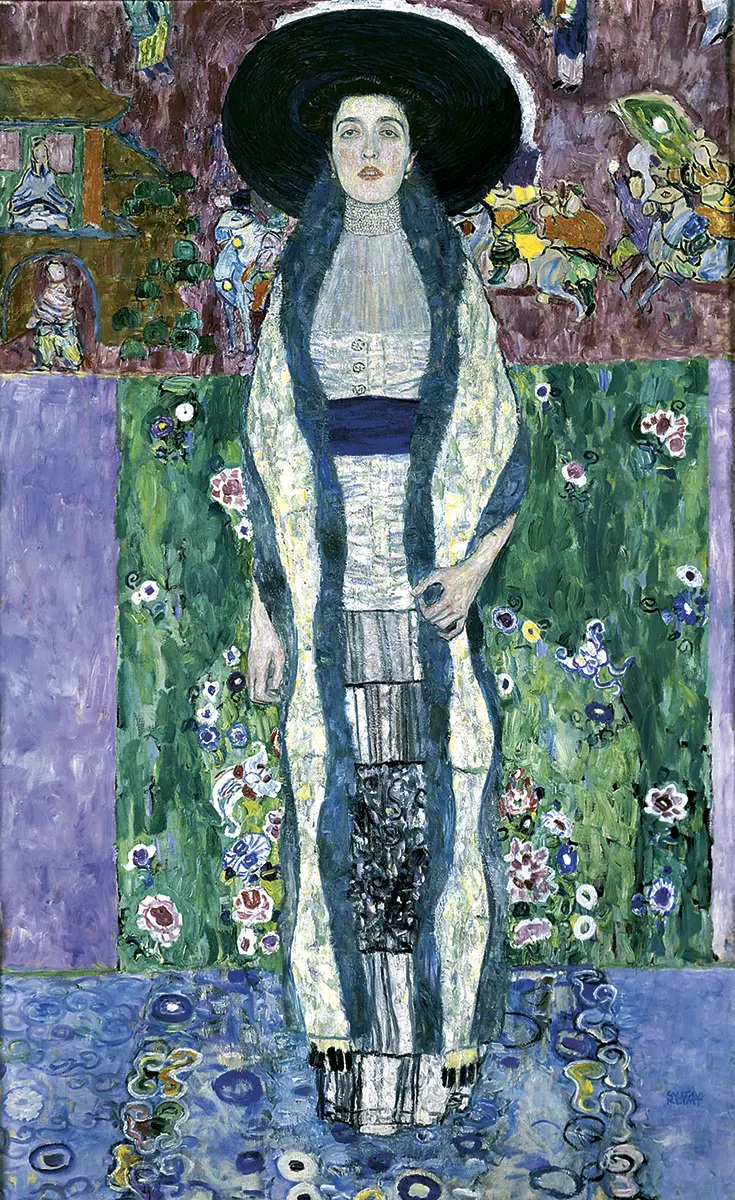
Adele Bloch-Bauer II, a portrait from 1912, sold for $87.9 million, far above the estimated $40–60 million. This picture was far less important than the golden masterpiece Portrait of Adele Bloch-Bauer I, which had been purchased directly from the heirs by Ronald Lauder for his museum of German and Austrian art, the Neue Galerie in New York, for the outstanding amount of $135 million, making it the most expensive painting in the world (far above the previous record set by the early Picasso, Boy with a Pipe, which sold at Sotheby’s in May 2004, for $104 million).
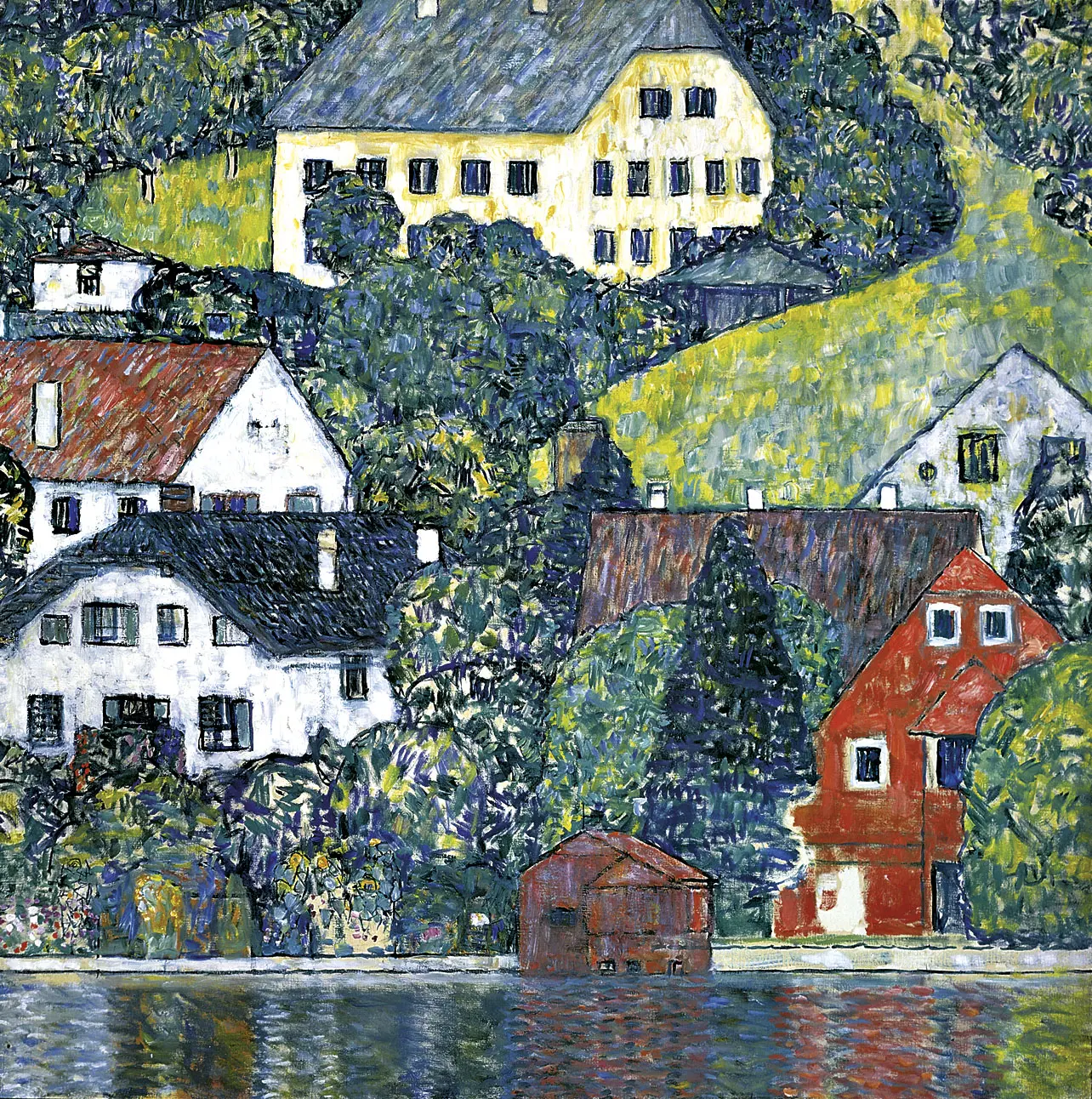
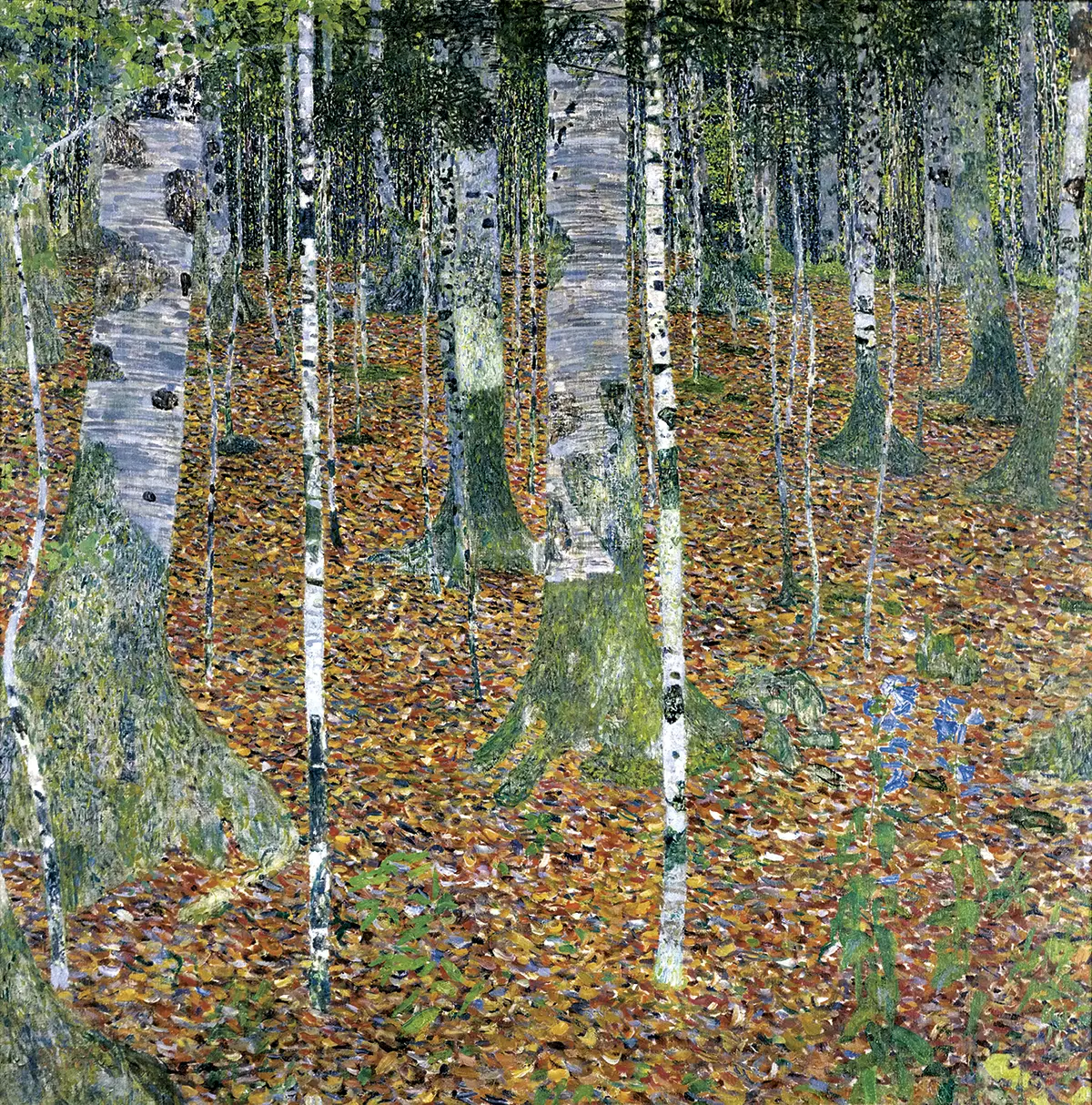
This huge amount paid for a Klimt, whose previous auction the record was $29.1 million, was certainly amazing, but the changing art market has attracted new buyers from rising economies in Asia and Russia, and the soaring demand for German and Austrian Expressionism has fueled a change in the price scale.2 The three other Klimts, all landscapes, also brought strong results above the estimated prices. Birch Forest (1903), one of the artist’s few woodland images, depicts an autumn scene of fallen leaves and sold for $40.3 million, well above its high estimate of $30 million. Houses at Unterach on the Attersee (1916), a view of a resort town in the Austrian countryside that was estimated at $18–25 million, sold for $31 million, and Apple Tree I (1912), a richly colored canvas, sold for $33 million, far above its estimate of $15–25 million.
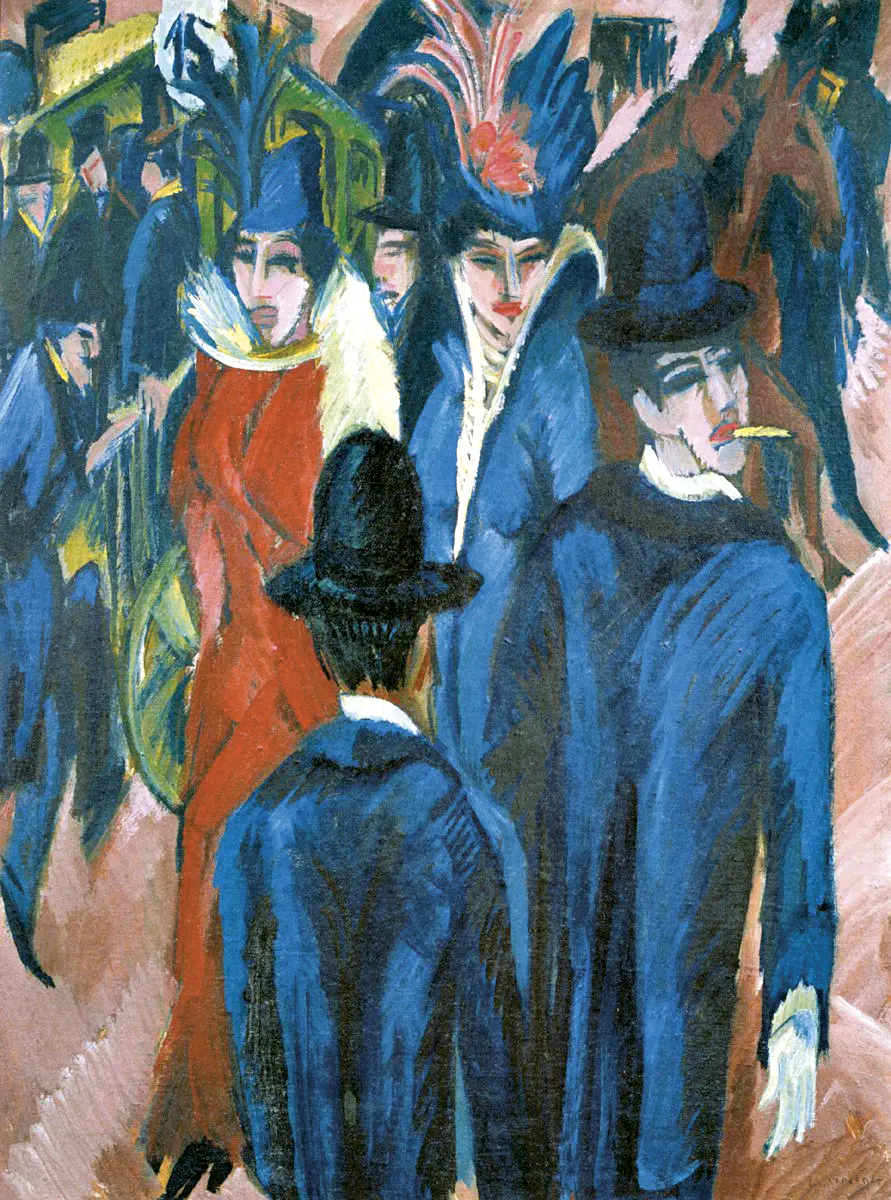
Another major work of art in the sale was also the result of a restitution order. Karl Kirchner’s Berlin Street Scene came from the Brücke Museum in the same city and had been returned in early 2006 to the heirs of its former owners, Alfred and Tekla Hess.3 In this colorful canvas of a Berlin street crowd, an aggressive prostitute poised on the left wears bright red, contrasting with the surrounding crowd of blue-coated men. It was expected to bring in $18–25 million. Ms. Luxembourg, a private dealer in New York, bid on behalf of the Neue Galerie and paid $38 million, which was also a new world record for the artist.
A less publicized painting also resulting from restitution was a Picasso, Still Life, from 1906. The painting went to auction after having been in an American family collection for generations, following a settlement between the recent owner, Duncan V. Phillips (the grandson of Duncan C. Phillips, the legendary collector and founder of The Phillips Collection in Washington, D.C.) and the heirs of its pre-World War II owner, Ernst Schlesinger, a collector from Hamburg.
When the Phillips family recently learned that the painting had originally belonged to the Ernst Schlesinger collection, who was dispossessed during the war years, they decided that they could not enjoy the art at the expense of another family’s suffering and offered the picture for sale, with the agreement that the proceeds would be divided equally between both families and thus render justice to its original provenance.

Both Christie’s and Sotheby’s now carefully check the provenance of any property assigned to be sold at auction, as the houses want to be certain that restitution issues are properly addressed. Christie’s in particular has been at the forefront of selling restituted property. In 1995, it held an auction at the Museum of Applied Arts (MAK) in Vienna that cleared the storehouse of works at the Mauerbach monastery in Austria. The 1045 lots comprising over 8,000 items of unclaimed looted works of art that had been stored by the Nazis at the Altsee salt mines were sold to benefit the Federation of Jewish Communities of Austria while a smaller part went to Austrian associations of victims of Nazism.4
In 1999, Christie’s London also held a sale of the property restituted to the Vienna branch of the Rothschild family, who were represented by Ralph Lerner, a well-known New York lawyer who is an international authority of art law. The Rothschild family is known worldwide for their art collections, and this sale, which totaled nearly $90 million, was one of the most successful sales in the history of auctions in Europe. The artworks had originally belonged to Albert and Nathaniel von Rothschild but were confiscated by the Nazis during their occupation of Austria.
There is no question that the process of restitution has been one of the most important forces during the recent auctions for Impressionist and Modern art in New York, and it certainly accounts for the large share that Christie’s presently holds on that market. This holds true even if the dispute is not always readily resolved, such as the case of the Blue-period Picasso that was offered at Christie’s sale on the same evening that the Klimts went under the hammer. The present owner of the Picasso, Sir Andrew Lloyd Webber had purchased the painting at a Sotheby’s auction a few years ago and was offering the work with the intention of benefiting his foundation, but there was a claim made on the picture at the eleventh hour. Christie’s president, Marc Porter, explained it to the press as follows:
Despite the favorable ruling of the federal court dismissing their claims there, we have been informed by the litigant’s attorneys that they intend to file another suit in state court. The litigant and attorneys of Portrait by Angel de Soto have been recklessly placed a cloud of doubt on the very eve of this long-scheduled and highly publicized sale. We have thus been compelled to withdraw the Portrait from tonight’s sale. Christie’s and our client remain confident that the underlying claim has no merit and we reserve the right to seek damages for harm caused by this picture, the charity that rightfully owns it, and Christie’s. We particularly regret that the plaintiff’s actions will unnecessarily delay the sale of the picture and thereby spoil the charitable purposes for which the picture was being sold by the Foundation.5
Despite the regretful withdrawal of the Picasso, the evening’s success was more than secure with the consignment of the Bloch-Bauer’s Klimts.
On the evening of the Impressionist/Modern sale, Maria Altman, the spokeswoman for the heirs of the Adele Bloch-Bauer estate, addressed questions at a special press conference held at Christie’s before the auction. Mrs. Altman, a gracious and elegant lady, entered the conference accompanied by Stephen Lash, Chairman of Christie’s North and South America, who has worked consistently for several years on the restitution projects for the house. It is, in fact, due to her friendship with Mr. Lash that Mrs. Altman and her family decided to favor Christie’s with the sale of the remaining Klimts.6
An Austrian journalist was the first one to address a question to Mrs. Altman, asking her whether she would mind that he asked the question, and that she answers, in German, to which Mrs. Altman graciously acquiesced. After the exchange, which was well understood by the German press and left the non-German speakers in suspense, the journalist volunteered its translation.
He had wanted to know whether there was any truth to the rumor circulating in Vienna earlier that day: that the Belvedere director had called Mrs. Altman with a huge offer to keep the paintings in Austria. Mrs. Altman denied the rumor; she said that she had been contacted by the director of the Belvedere in the early stages of the devolution of the pictures to her family but that she had referred him to the family lawyer who was handling the affair, as she was just a relative in the family and was not making any decisions on her own. She further clarified that she had not received any direct or indirect offers from the L.A. County Museum, where the pictures were first shown, prior to the special viewing at the Neue Galerie where they were briefly rejoined by Portrait of Adele Bloch-Bauer I, nor had Mr. Lauder made any bids either for a single picture or the group that remained after his purchase of the portrait.
Answers to further questions explained that Adele had left the pictures to her husband after her death, with the understanding that he would leave them to the Belvedere Museum upon his own demise. This, however, was never implemented since the pictures were confiscated before Ferdinand Bloch-Bauer died, and he himself had to flee the country, first to live in what is now the Czech Republic and later to Switzerland where he died soon after the war. He had by then left a new will, which included the paintings as part of the inheritance of his niece, Mrs. Maria Altman, and her siblings. It was this document that had given the descendants the incentive to fight for the restitution of the pictures to the family.
The restitution of the paintings to Mrs. Altman was a happy ending to a legal battle. In the world, there are many other works that are unclaimed by their rightful owners, yet these families may be unaware that this is a possibility. Hopefully, the enormous publicity given to the sale of these pictures will encourage more success stories. In fact, just as the sale ended, the press announced that Austria was returning Edvard Munch’s Summer Night on the Beach to the heirs of Alma Mahler, a painting that she left behind when she left Austria in 1938 but could never recover in her own lifetime.7
There is no question that the long and difficult road toward full restitution of confiscated artworks during WWII is in process in Europe. Anyone that has documentation on a claim should pursue the claim through the appropriate legal channels, get the expert opinion of experienced lawyers, and go forward toward a reversal of misfortune.
NOTES
1. Carol Vogel, “$491 Million Dollar Sale Shatters Auction Record,” The New York Times, November 9, 2006.
2. Eileen Kinsella, “Gold Rush,” Art in America
(January 2007): 111. See also Stefan Koldehoff,
“Open Cases, Closed Doors,” Art News (December 2006): 138–139.
3. Adrian Dannatt, “New York Diary,” The Art Newspaper (January 2007).
4. Hector Feliciano, “The Mauberbach Case: An Equivocal Sale,” Letzte Anderung website, December 1996.
5. Christie’s press release/announcement, November 8, 2006.
6. Kinsella, 112.
7. Charlotte Higgins, “Family Gets Back Looted Munch Masterpiece After 53-Year Battle,” The Guardian, November 9, 2006.
* All images illustrating this article are Copyright: Christie's Images Ltd., 2006.
ALBERTO BARRAL
Art advisor and private dealer, New York.