
Today, poetry’s status as a literary expression of the greatest subjectivity has been diminished in favor of poetic works of art with minimalist suggestions of conflicts involving larger numbers of people. Ariel Orozco (born 1979, Cuba) is not a poet inscribed in contemporary art but a visual artist who deliberately seeks out the poetic. This interest drove him to undertake a journey from the private to the public. By thinking about the synthesis of romanticism and pragmatism, he has articulated a disposition of the object and the action in which weight and lightness interact like fugues or approaches to real and imagined histories.
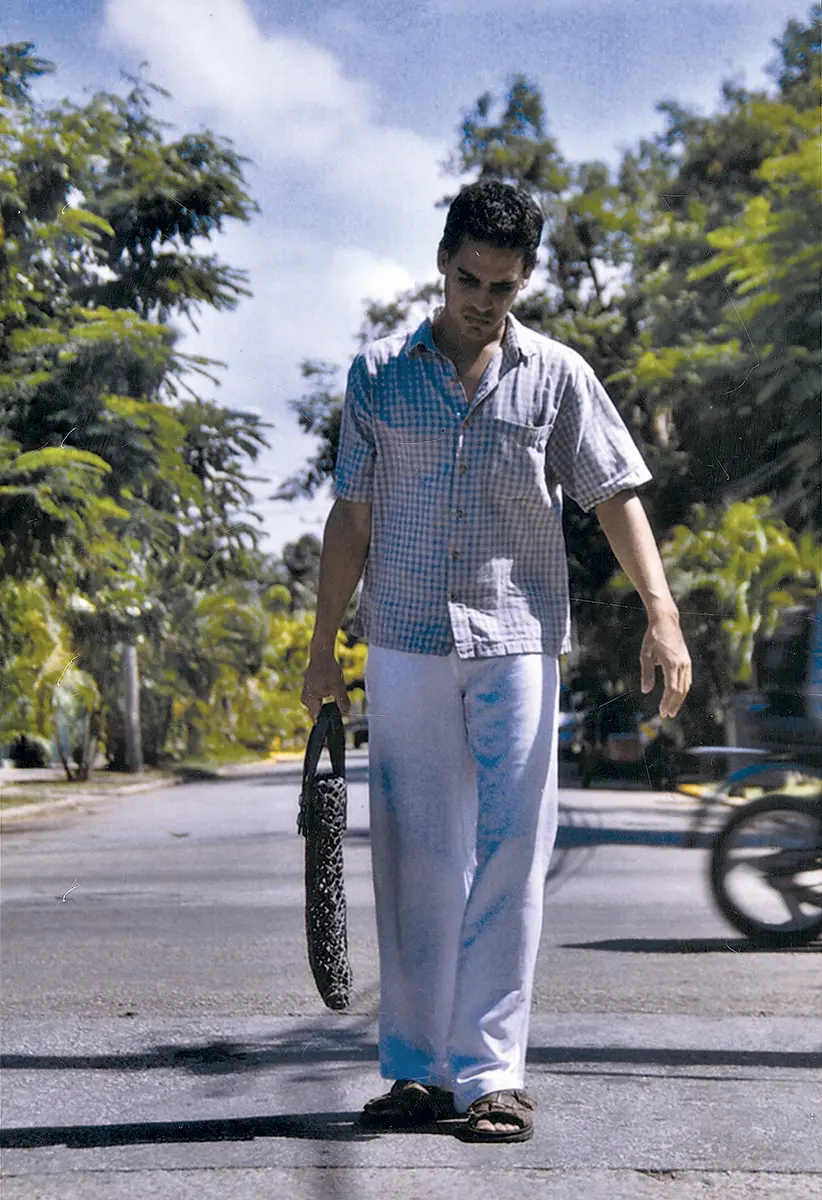
Orozco’s early work was nourished by his life experience. The impact of dramatic personal events influenced his approach to art as a cure, recalling Michel Foucault who said, “One must be one’s own doctor.” Orozco’s “energy releases,” in which weight functioned as the connecting metaphor for actions documented in video or performed live, belong to this period. For example, in one work Orozco traveled six kilometers from his home to the hospital to bring the oxygen tank used by his mother until her death. Another work consisted of the lead reproduction of a shopping bag used by his mother; carrying the bag, Orozco performed a weighty exercise along the route between the cemetery and home over the course of eight days. A contrast was made between the object’s physical emptiness and the symbolism of loss when confronted with the memento.
Orozco’s visual work does not aspire to be seen as “behavior art” or art of “social assistance.” Unmediated by utopian complexes, one infers a “perspective shift” toward micro-spaces or ordinary facts translated into objects or actions. The operation of miniaturizing chaos becomes a policy of chance, helpful in neutralizing the work’s social and pamphleteering aura. Maneuvering an idea that disappears as a consequence of its lightness implies the challenge of preserving a given weight in the spectator’s memory, or not.
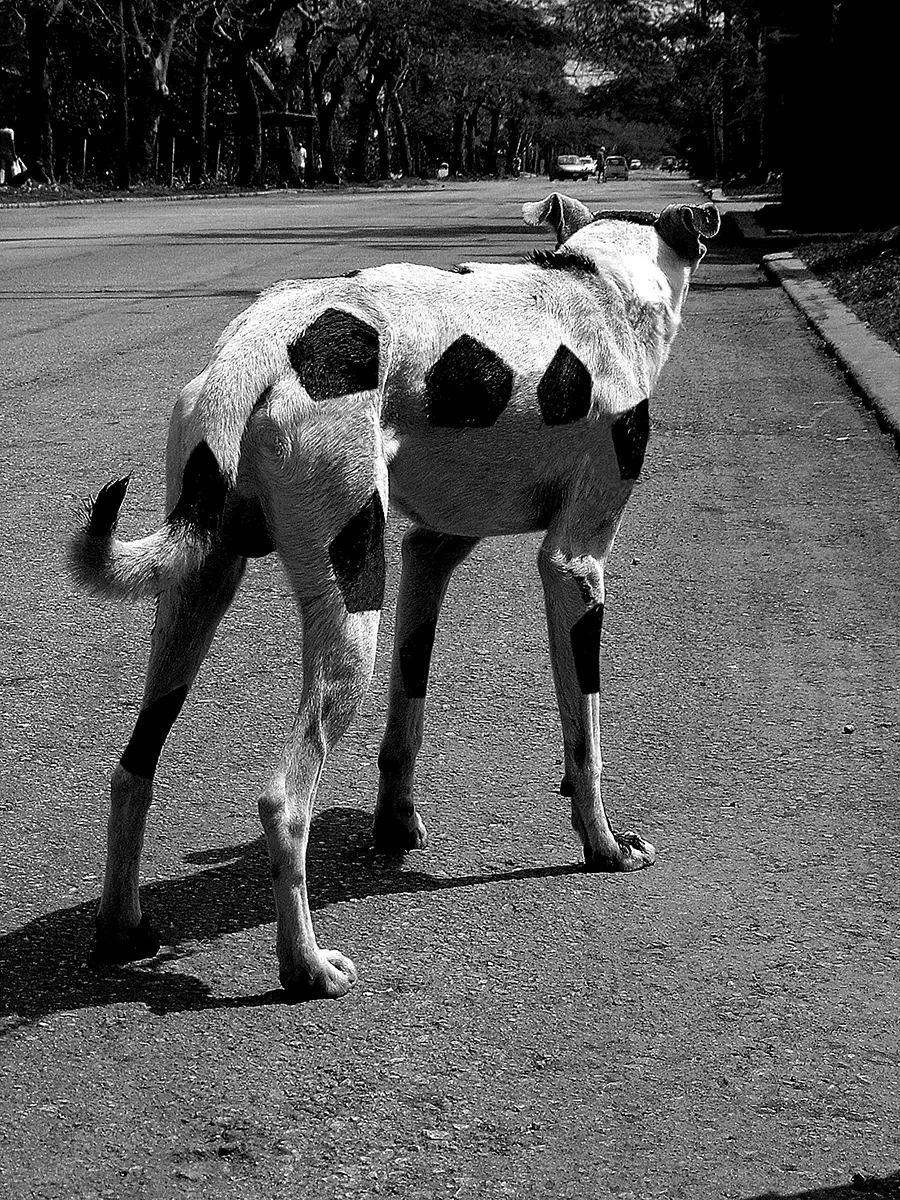
The construction of certain performed fictions illustrates a relationship between the aesthetic as an image for consumption and the phantasm-like ethics as an idea. The work Football Dogs (2004) featured a white, stray dog on which Orozco painted black pentagons like on a soccer ball. What was more important in this work, in which the harshness of abandonment was translated into photographic beauty? Were the fifteen minutes of fame granted to the ambulatory readymade symbolically legitimized? In that sense, certitude was equal to the false doubts that arose from manipulation. In the end, one noted a return to the point of departure: the animal continued to be ignored as a living creature, while it served the purpose of providing a comforting visual message or a social warning.
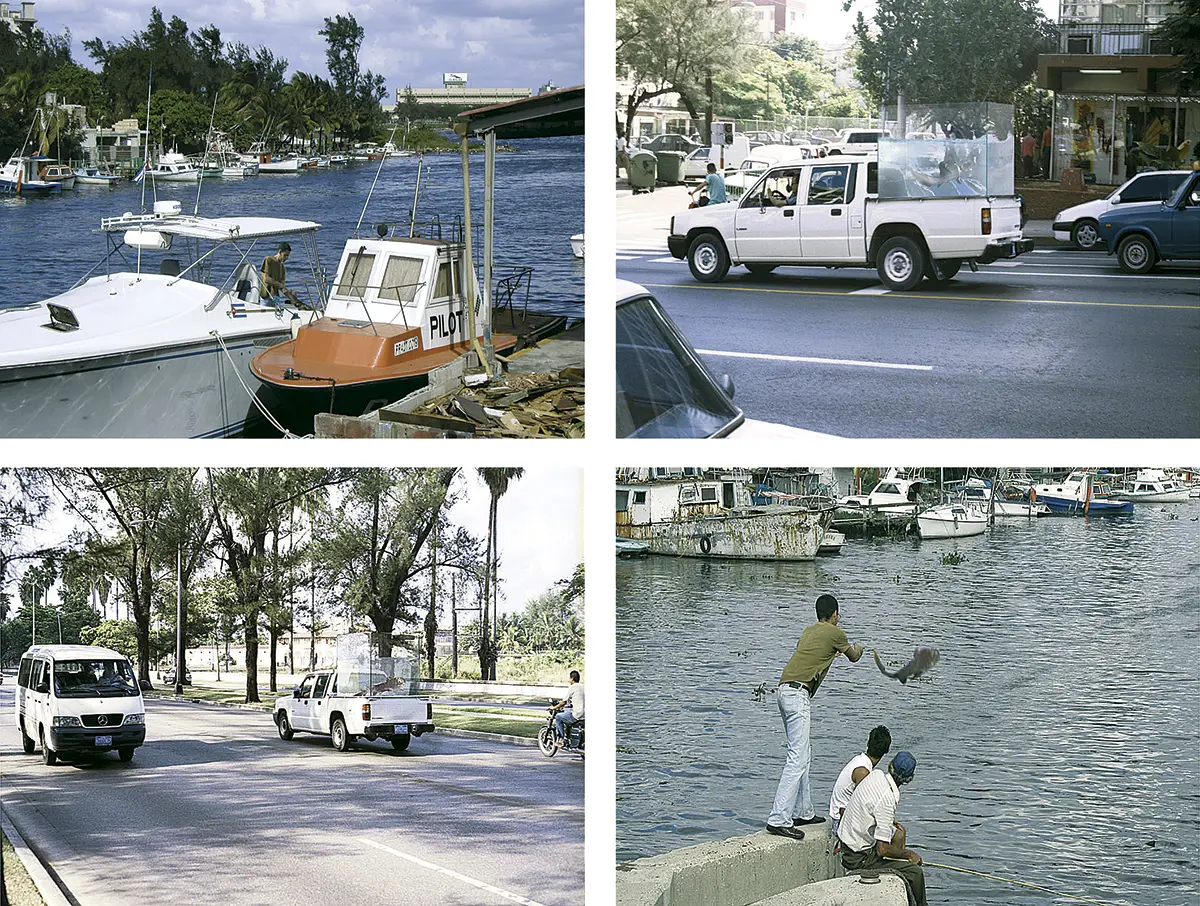
One of Ariel Orozco’s performances was to capture a shark and mount it in a tank on an automobile, regaling it with a tour around the city. The intention of this gesture included the desire to bring together different worlds. In the first place, the end focused on the possibility of revealing the enigmas presupposed in the change of habitat and the alteration of the city’s visual routine. Against the tradition of exhibiting the body as proof of artistic credibility, this tour insinuated a flirtation between art and politics. In politics, our self-preservation instinct makes us skirt any vital risk, and the artist did the same, assuming a position as just another manipulator. Alongside the shark’s short trajectory through the city, this simulacrum of body art left behind the pose of a creator immersed in the purity of a utopian link between art and life.
However, there are moments when the body makes it possible to attain equilibrium through an ephemeral act of resistance. Counter-Weight (2004–2005) was a photographically documented performance in which Orozco climbed a flagpole and held his body perpendicular to the pole, forming his own flag. But the acrobatic display was of such a short duration that the descent was as vertiginous as the ascent. Accompanied with minimal narration, this work alluded to equilibrium and the oscillation between physical limits, longing, and impossibility.
Many artists and intellectuals of Cuba’s diaspora do not believe in exile as a fate. Established in Mexico City since 2005, Orozco has avoided the traps of an anticipated political polarization in his work. This political vice often accompanies many Cubans who seek the opportunities abroad that they imagine as their due in their native country. Such an attitude makes it easy to substitute the fullness of resentment for the vacuum of art and life latent anywhere in the world.
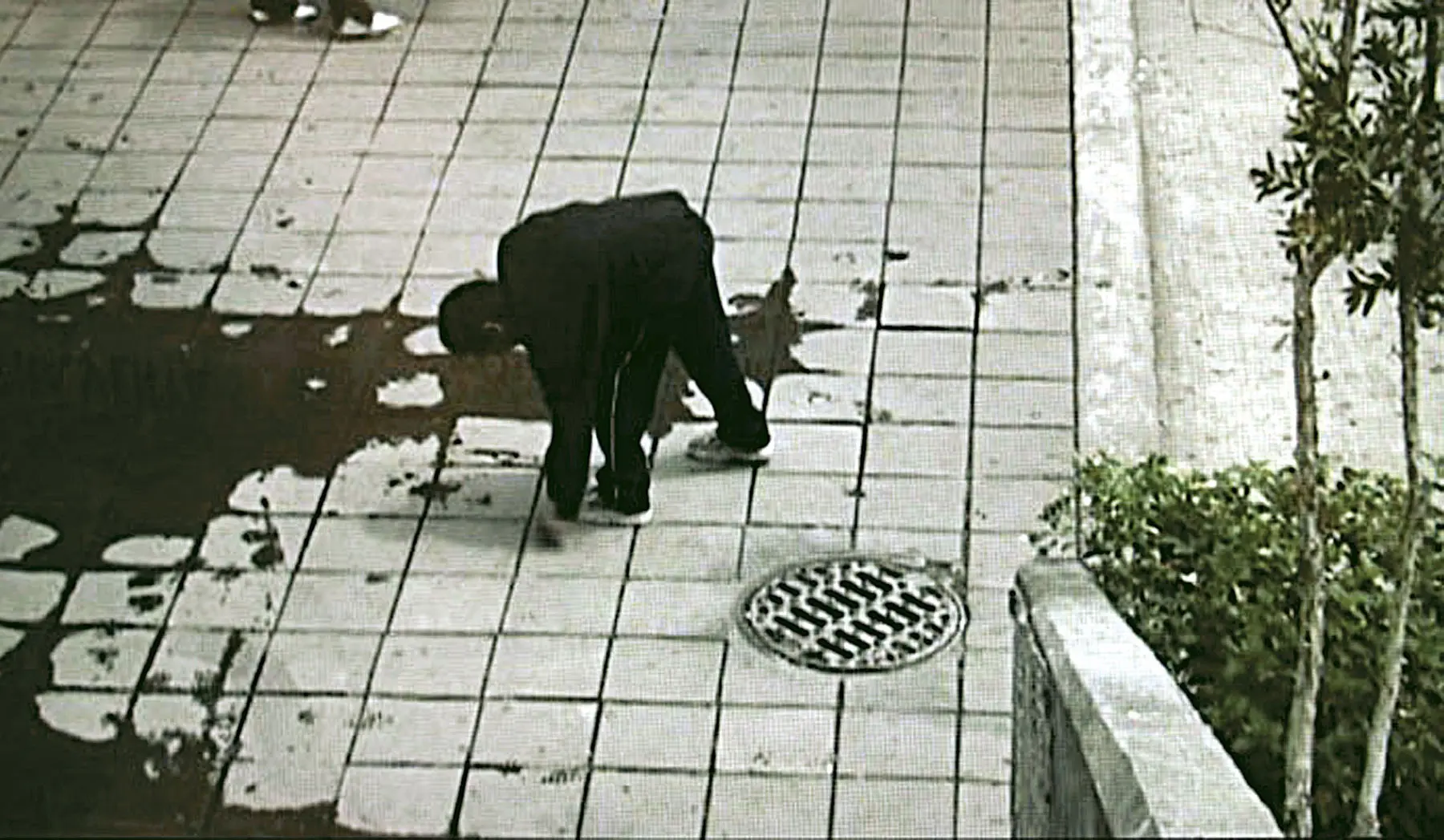
50 actos de suerte (2006) attempted to form a chronicle of hope in the public realm. This action was the result of exchanging one thousand Mexican pesos for fifty out-of-circulation twenty-peso coins. These were later placed in the street, where a hidden camera recorded the moments when people found them. Some threw them away, noticing they were no longer valid; most, however, made the sign of the cross and thanked God for their luck. Does monetary value explain the “symbolic remuneration as trophy” incarnated in those who pursue something that is so crucial in their existence? The abstract and the concrete as means or as ends became fused into a single work in which people mentally constructed an act of faith.
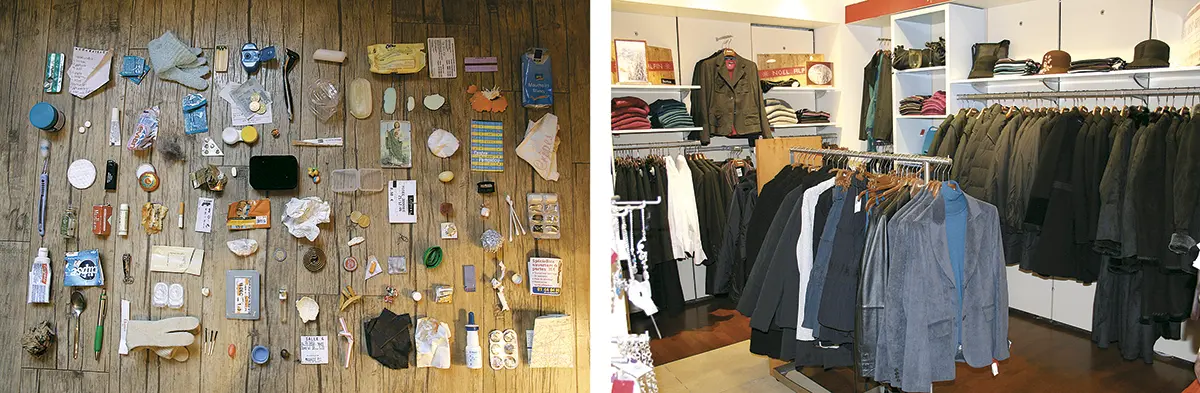
Intent on becoming unpredictable or unclassifiable, Orozco does not hang onto a specific operational dogma. Thus, he produces situations where an inconspicuous action is made equivalent to the object’s uncertain destiny. In a 2006 intervention in Paris, the artist entered a boutique and placed one hundred discarded objects accumulated during his stay in the city inside one hundred luxury pieces of clothing. This work established a relationship of “distant closeness” with the casual shopper, who would be as surprised as he would be befuddled by finding a toothbrush or a museum map inside a newly purchased jacket. In this work, 100 objetos colocados en 100 piezas de ropa, the artist loses control of the result of his clandestine maneuvers. The work’s materiality implies an evolving act that should be discovered and contemplated in its original context, not while being exhibited in a museum or a gallery. As in the 50 actos de suerte, value, and exchange are illusions that vanish as one verifies the possession of chance.
Among the facets in Orozco’s process of fabulation is the idea of grieving emptied of all pathetic tone in favor of a poetic symbolism belonging to all and to no one. Espacio sin espacio (2006), a work executed in Paris, consisted of a rectangular mirror placed on a randomly chosen flat grave such that the sky was reflected on its surface. What prevailed was the notion of an infinite sculpture, like support that can trigger perpetual movement based on its own immobility. If the content is dispersed in form, the finite becomes infinite, and the mirror remains as the protagonist/mediator. Orozco transcends the mystical cliché to conceive his “sculpture in a specific place,” where time flows without the need to violate space and the objects that animate it. Espacio sin espacio evoked the British essayist John Ruskin who wrote, “Art is holding a mirror to life.”
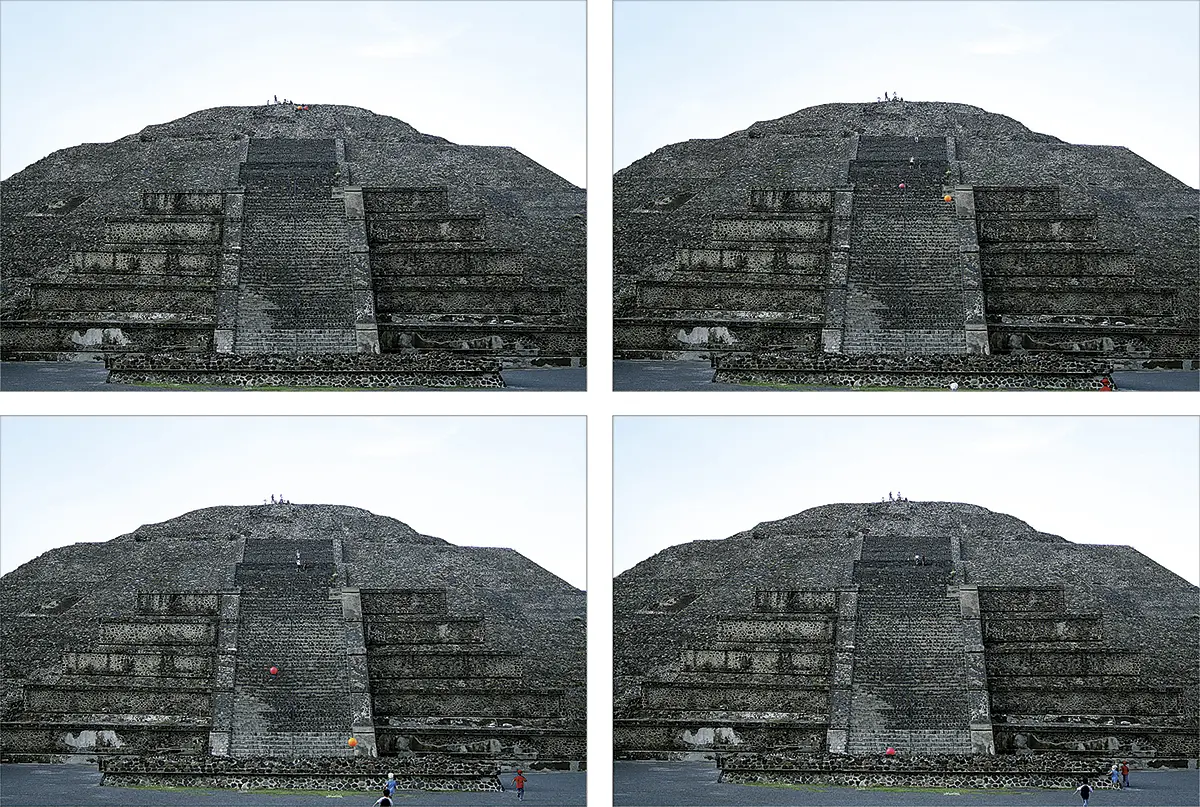
This uprootedness regarding the canons of art and life reached its “best definition” in Tourists (2005). This action consisted of throwing two fluorescent balls from the Moon Pyramid in Teotihuacán, Mexico. Devoid of formal or conceptual aspirations, the work was resolved in a gesture in which the transparency of an innocent game imposed itself on the solemnity of a misleadingly humanistic act. The result was a colorful transit of light that left no mark upon the solid monument. On that path, the struggle to impose drama on fiction was discarded. Faced with the fate of stumbling downhill, the banality of purpose became even more absurd. The contingencies of life and art were emphasized due to the denial of their true dangers. Inscribed there were invisible traces and their historical course, traumatic emblems reverted by virtue of a performance fantasy of the tourist who descends at high speed down a mountain.
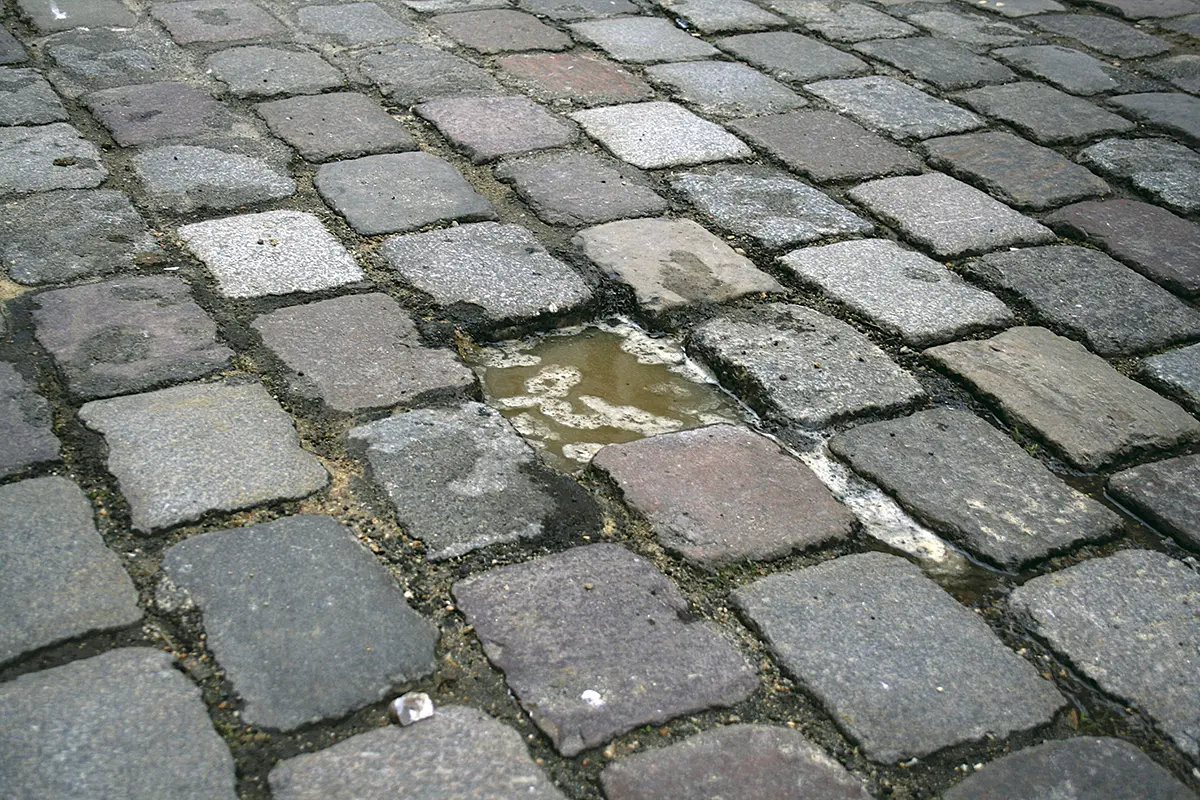
During the May 1968 riots in France, students lifted bricks from the streets of the Latin Quarter and threw them at the police, shouting this slogan: “Under the bricks, the beach.” This was a symbol of the power of freedom against the rigidity and censorship of the state. After the rebellion was squashed, the government of General Charles De Gaulle passed a law that prohibited lifting street bricks. Defined as a punishable offense, this action was subject to large fines and even jail time. Based on these events and also on the fact that urinating in the streets is more or less prohibited, Orozco covertly extracted one brick from a Parisian avenue. Later, he filled the empty space with urine. The result was an illegal intervention in which both the solid and the liquid possessed ephemeral connotations. The forgetting of past abuses was made equivalent to intolerance in the present. The combination of object and action created the sculpture as a recipient of illegality. The muteness of the work reverted to a political abstraction, resistant to any affirmation or negation of the anecdote as a reflexive pretext.
Orozco tells the story of how he tried to explain to his father where he lived in Mexico City, attempting to convey an image of the surrounding nature. After several minutes of conversation, he noticed that no matter how much he tried to approach reality, the experience was left entirely outside of the conversation. “Then I thought of doing an abstract sculpture on the telephone where I could reach the degree zero of the anecdotal,” the artist confesses in his journal.
2067 km was the physical distance between both interlocutors and provided the title to the work, a commission. Orozco’s process de-legitimized the idea of the commission while retaining the tradition of manual artistic labor, of kneading the earth with one’s own hands. Once finished, the work was to be mounted on a pedestal alongside a loudspeaker of similar size. This speaker was to broadcast a forty-three-minute recording of the phone conversation, in which the artist gives his father directions to create the sculpture just as he finishes his.
At first glance, a plot is revealed based on the unknown character of the final result. Derived from this purpose are questions that help one understand the intention: How does one build fables based on a circumstance that has not emerged from a properly artistic meditation? Is it possible to structure a believable anti-structure based on fiction? Is it possible to connote without connoting in a meaning-laden universe?
In completing the task, the abstract sculpture became a pretext that disappeared into its own finality. 2067 km dissolved the minimalist/conceptual pretension of granting a commissioned work an irrefutable legitimacy. Let’s remember Sol LeWitt’s mural drawings in which the idea, translated by an assistant and a team of collaborators, must be accepted by the consumers of early tenets of contemporary art. What is inherent in the present case is the energy of history between two people without the obligation of accepting a fixed idea. Safe from the tyranny of connotation, the kilometers separating the protagonists of the story favor the sharing of an experience: making art without thinking about what it is to become, the form and the content of a piece of ceramic material atop a pedestal inside a museum.
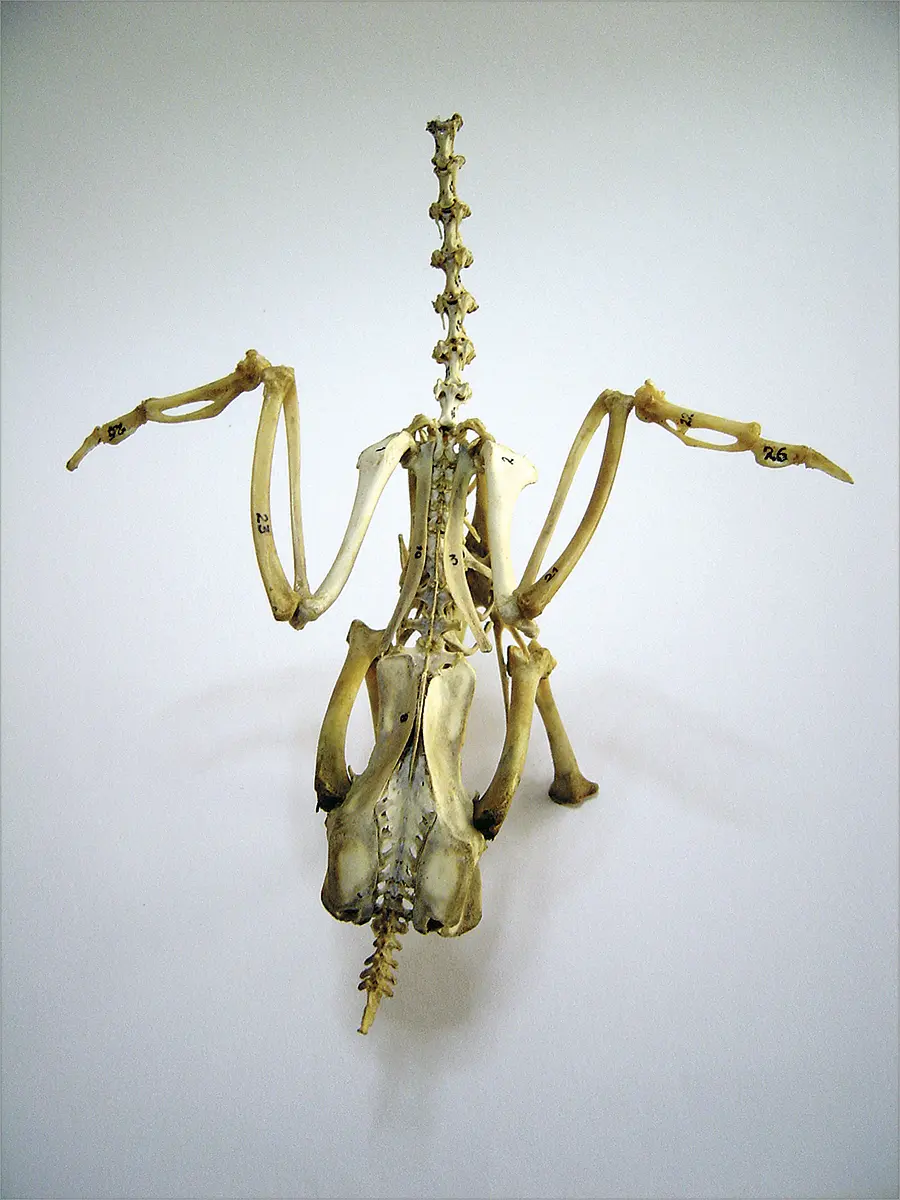
Puzzle (2004) comprised the selection of twenty-seven Havana restaurants and requesting leftover chicken bones from their customers. Each bone was classified with a number in a journal according to the different parts of the bird. As soon as the required number of bones was gathered, a perfect chicken skeleton was assembled. The work’s originating process was revealed only with the exhibition of the related information; a list linked each restaurant visited by the artist. The impersonal character of the reconstructed animal was something like a “social sculpture” that subtly investigated socio-political relationships. Could it be that all customers asked for the same piece of chicken in every restaurant? The simplicity of Orozco’s humble or hubristic gesture transcended its origins of suspected homogenization.
In the beginning, Ariel Orozco strove to recreate the biographical incidents that drove him to transform painful experiences into art. Now, his greatest concern is to communicate the evolution of the complicity between art and poetry, without offering a denouement. Thus, what prevails is a process that disappears as an idea while at the same time becoming abstract as form. Orozco makes a kind of sculpture that travels without moving, hides under history, embodies a multiplicity of fragments, disperses in the bustle of cities, and aspires to the dissolution of its canonical identity. At the moment of experiencing such despair, the artist’s inventiveness suggests everything that ceases to signify.
*All images illustrating this article are courtesy of Myto, Mexico City.
HÉCTOR ANTÓN CASTILLO
Independent journalist and art critic. Lives in Havana.