
One of the salient characteristics of contemporary art is its versatility in the use of materials and resources, to the point that immaterial elements can become valid tools in artists’ investigations. This exhibition curated by José I. Roca was an excellent example of how such possibilities operate.
The curatorial investigation began in the year 1799 when the end of the revolutionary decade in France coincided with the presentation of a performance that fascinated Paris. The Belgian physicist Etienne Gaspar Robertson shocked the Parisian public by presenting the disquieting, sinister images that combined the advances made by the magic lantern technology with sonic, olfactory, and theatrical effects. Robertson displayed advances in optics and their potential to trick the human eye, provoking terror and surprise among his viewers. Unsurprisingly, these extremely popular performances held in Paris and London are considered to be the “prehistory of film.”
Fantasmagoria: Specters of Absence brought together twelve artists who in their respective installations proposed meditations on the notions of loss, vanishing, and death. Despite the somber nature of the theme, they were able to arouse feelings in the viewer that ranged from anguish to irony and even to mirth. As Roca wrote, “These works want the viewer to see beyond the appearance of things and to penetrate into more complex aspects of their reflections concerning death and vanishing, involving visitors by means of perceptual displacements, bodily interaction, or mere visual trickery.”1
In terms of the use of materials, there were two dominant trends in this show. One group of artists experimented with breath, vapor, and smoke, taking advantage of these elements’ fleeting, transitory character. These unstable supports appeared and disappeared and provoked reflection on absence, loss, and inexorability.
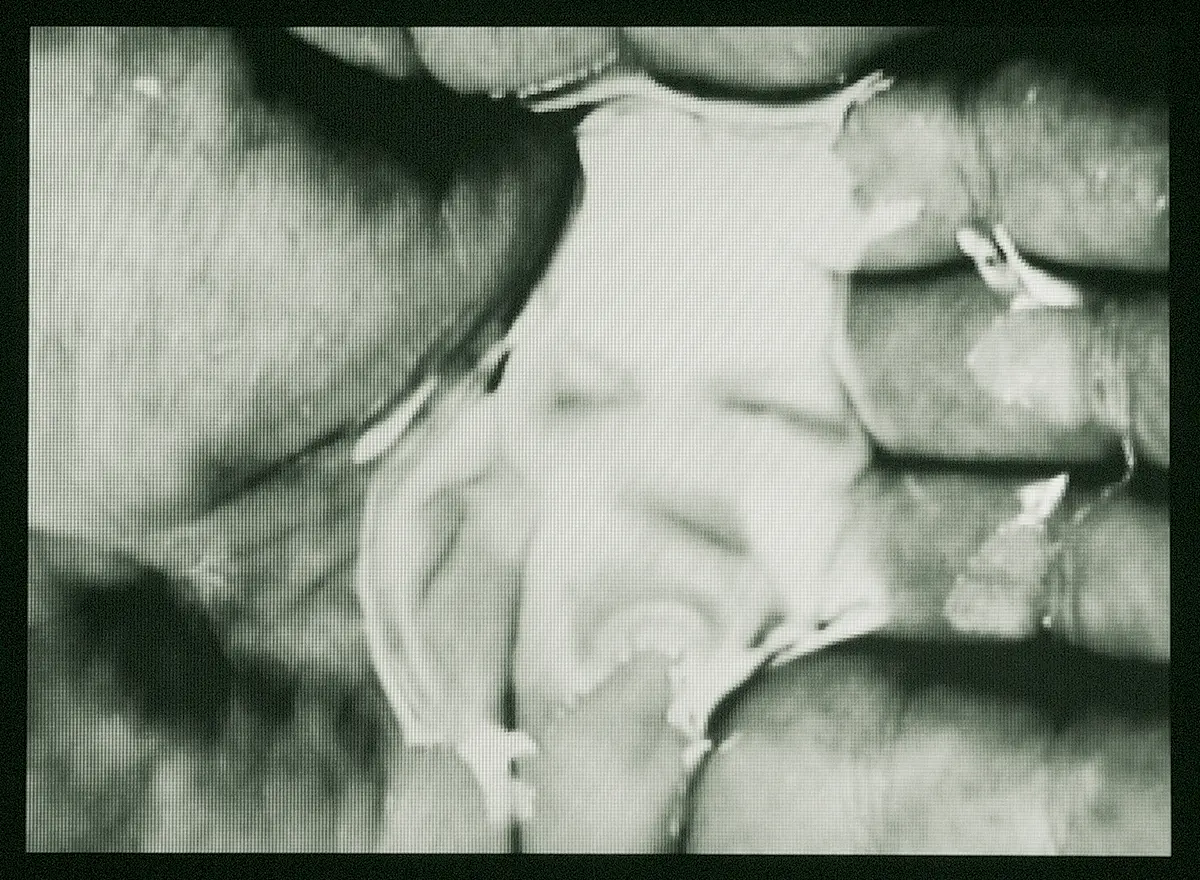
Working along this line was Óscar Muñoz, who, with Aliento, granted the viewer the chance to give an absent figure a few moments of visibility. Teresa Margolles, in Aire, used the vapor produced by humidifiers installed in the gallery to present the “souls” of those who were absent, in the threads of vanishing smoke. In his Barca humeante, Jeppe Hein similarly employed smoke and made this volatile element envelop the viewer, who saw her own figure disappear in a mirror. The support used by Rosângela Renno was also immaterial; the smoke curtain of her Experiencia de cine made the image volatile and confronted viewers with their own ghosts.
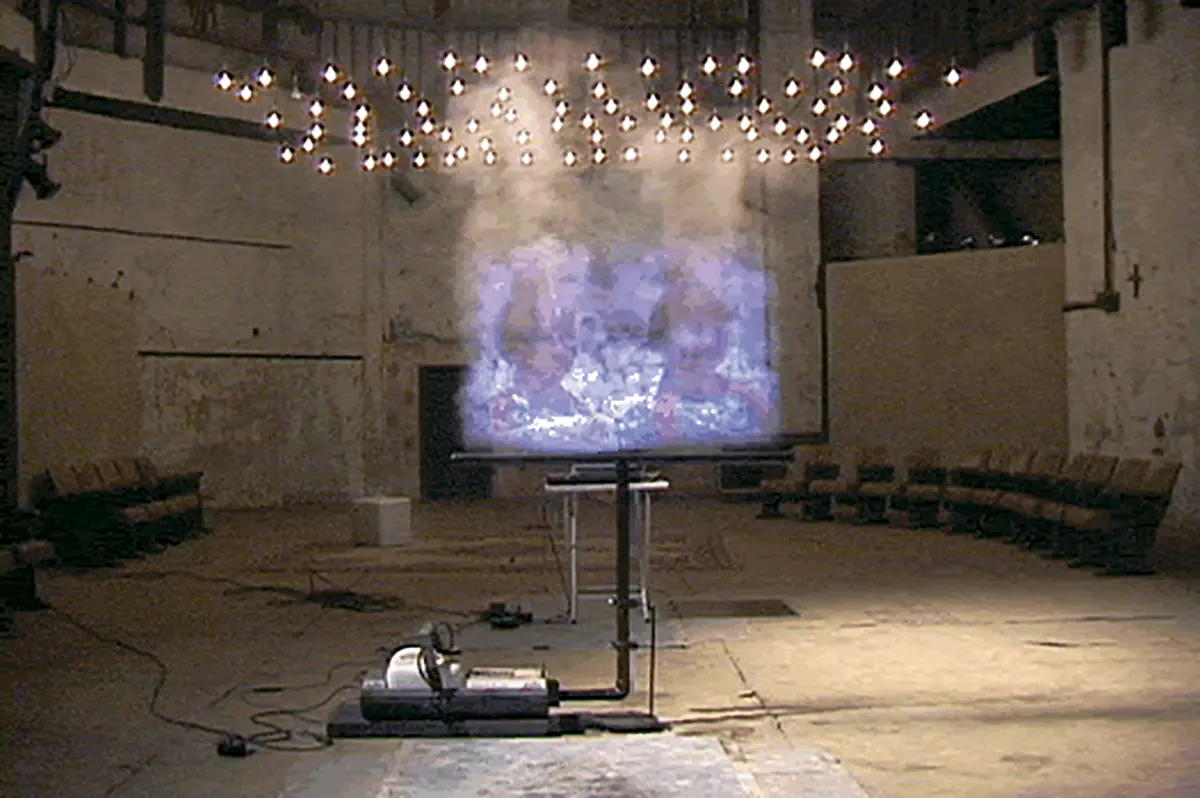
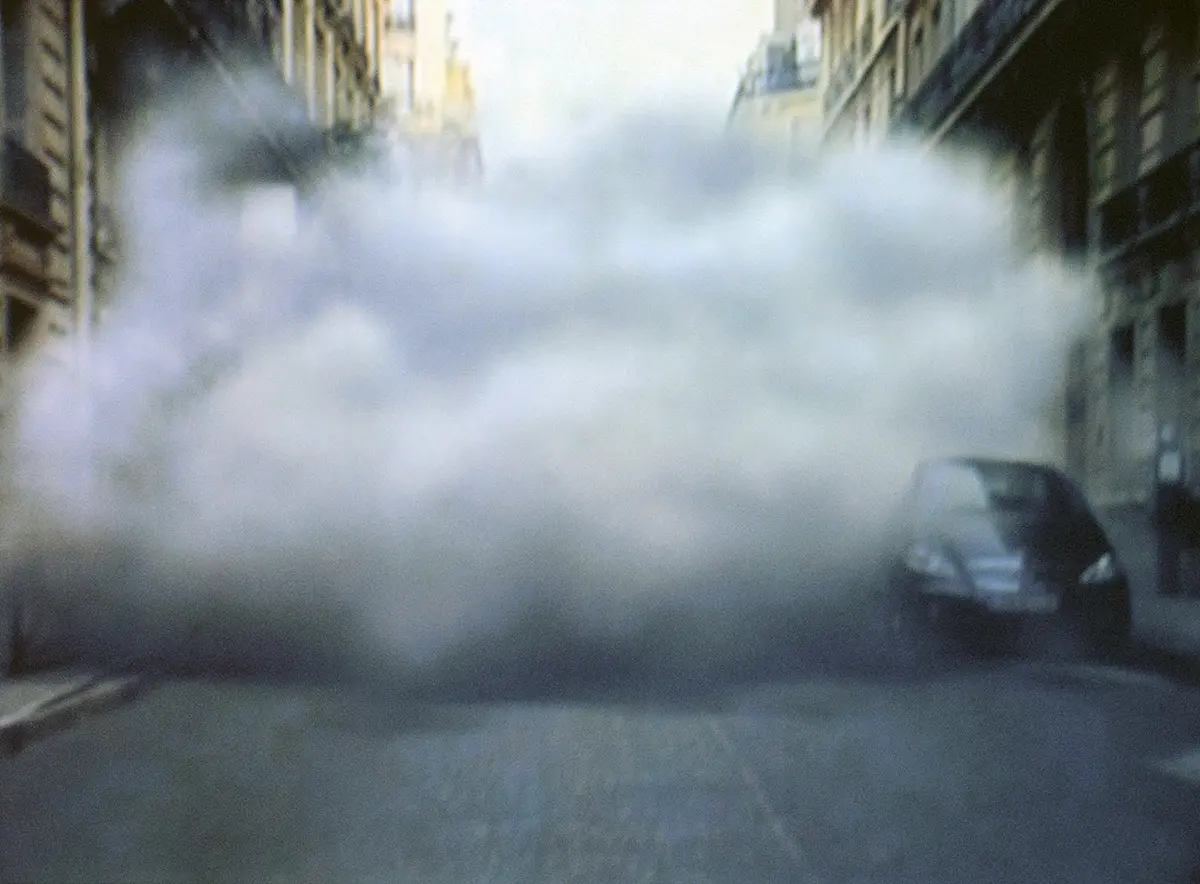
Water was the protagonist in Michel Delacroix’s Lisette, Ferdinand, Saverio, Edward. In this work, a thin layer of water covering the mirrors made it impossible to discern faces; all one saw were distorted images, apparitions that brought to mind a theatrical phantasmagoria. Laurent Grosso confronted the viewer with a screen showing a menacing dust cloud moving through the streets, threatening to absorb those who watched it, making the viewer feel helpless against its inexorable advance.
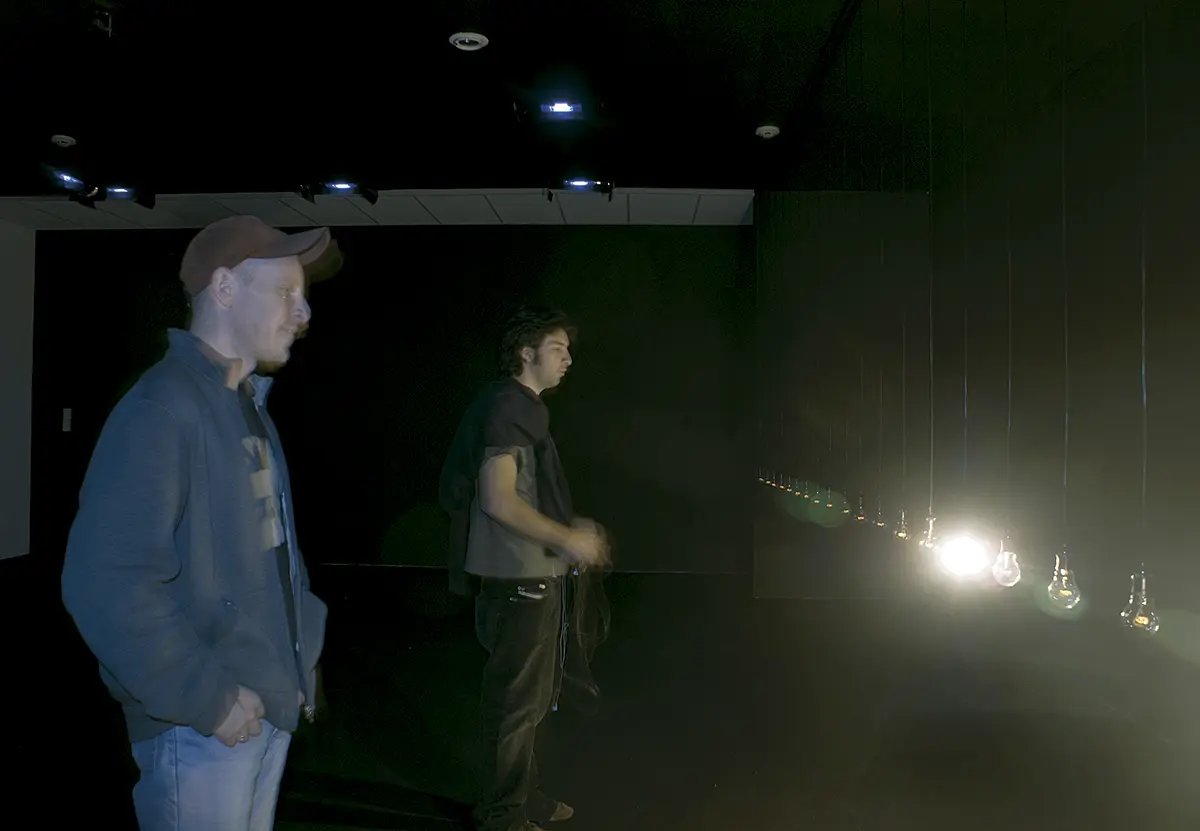
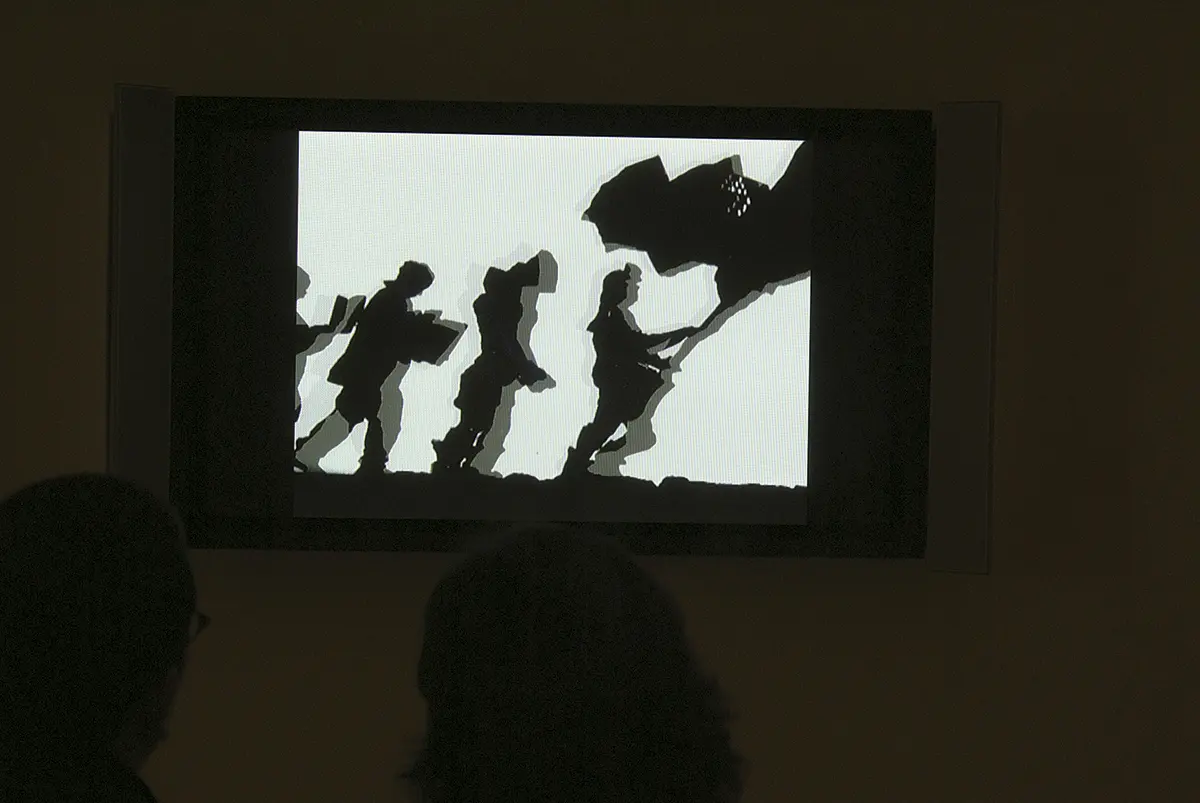
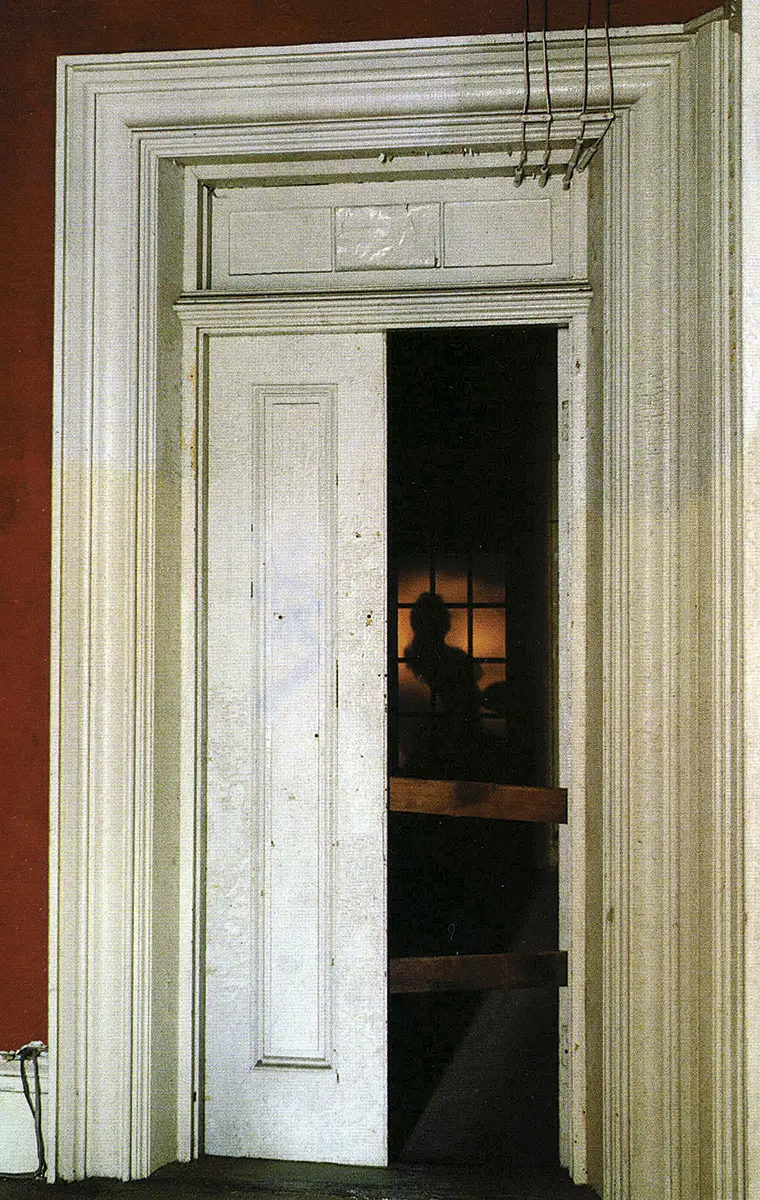
Another theatrical, pre-cinematographic source of inspiration was the theater of shadows. Using basic resources such as a light source and a projection, artists generated their own ghost worlds. With Shadow Procession, William Kentridge built a series of exhausted characters that moved aimlessly through a desolated South African landscape, suggesting flight, displacement, and anguish over the situation. Christian Boltanski revealed La muñeca española through a half-open door; a figure moved slowly, playing with the distortion of shadows that greatly enlarged the projection of a given figure compared with its original size.
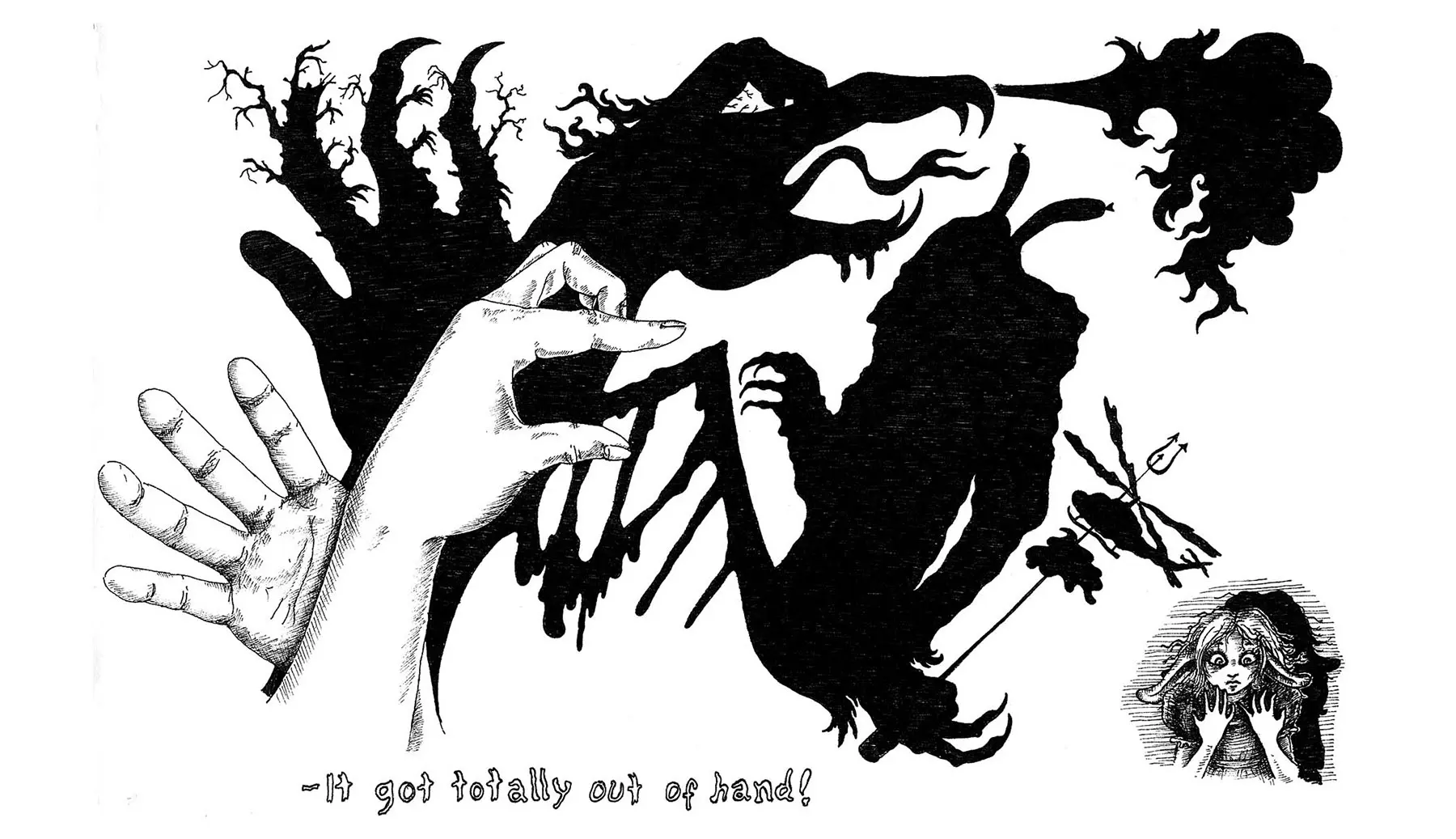
Regina Silveira dealt ironically with perspective and broke the connection one normally perceives between an object and the shadow it produces. Julie Nord took a similar approach in Las manos, building a mural drawing in which shadow producers lost control over the shapes they generated, and shadows became frighteningly autonomous.
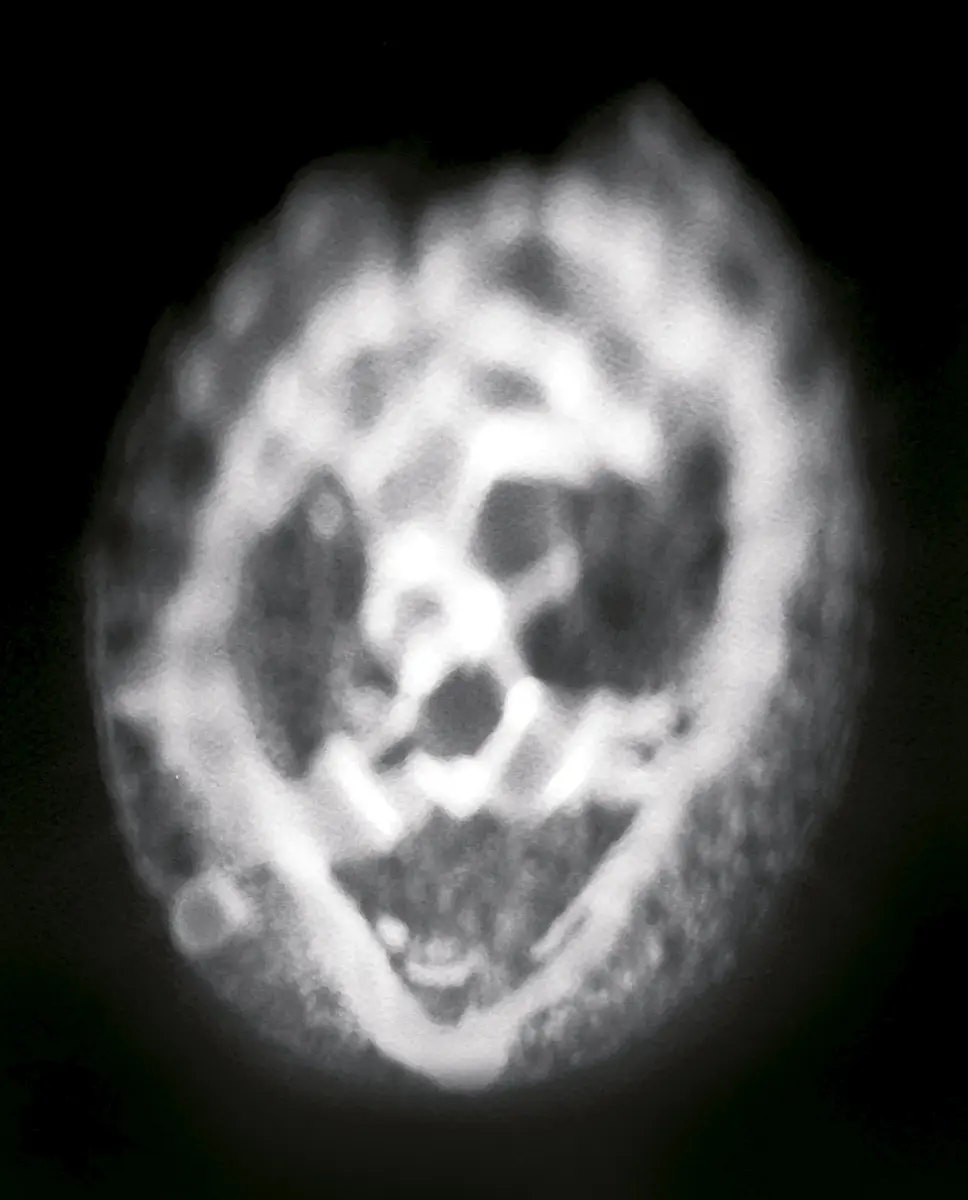
Jim Campbell started with a photograph of the New York Public Library building; with an electronic system, he created a series of spectral, uncanny shadows that moved over the static image. In Coincidencia sostenida, Rafael Lozano-Hemmer took advantage of electronic resources such that viewers, as they entered the space, perceived their shadows as trailing them, which broke one’s usual relationship with one’s shadow.
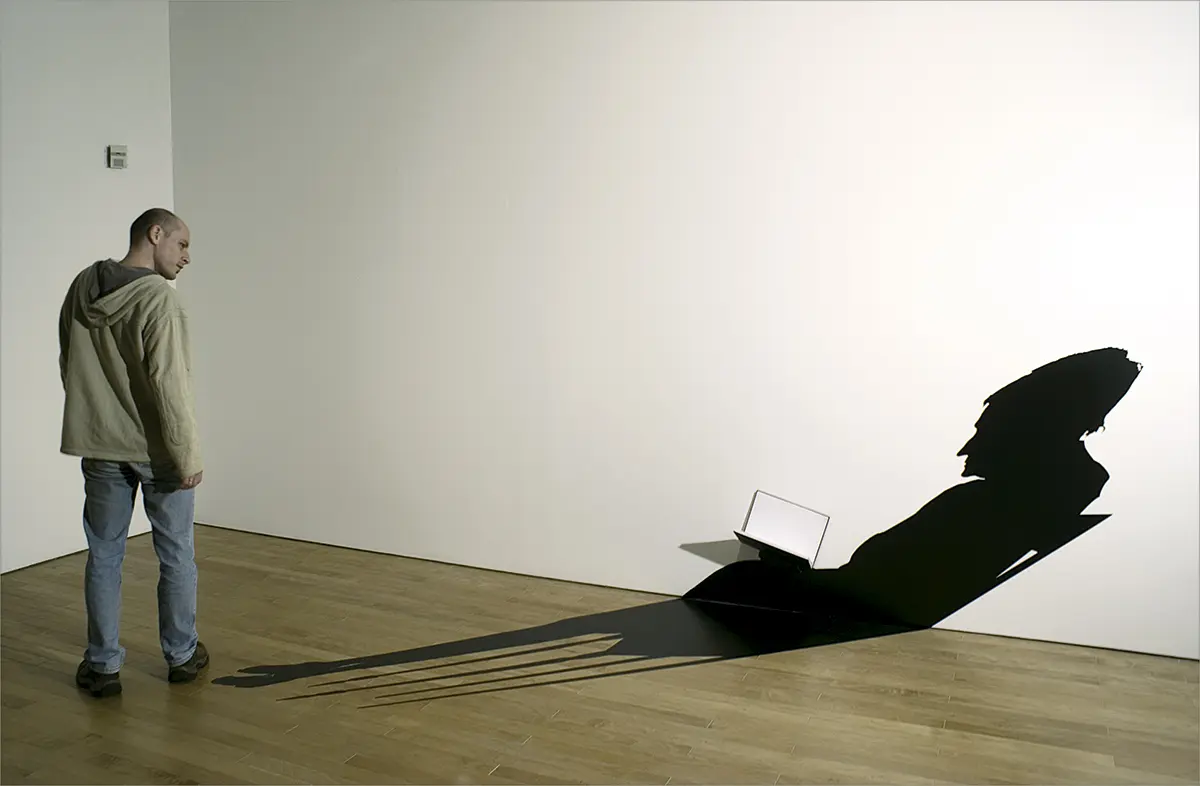
For these twelve artists, harking back to the theater of shadows and to the tradition of phantasmagoria made it possible to generate the immateriality of breath, vapor, and smoke. It was an opportunity for explorations that confronted the viewer with the silence of absence and of life’s finitude, provoking questions that transcended the ephemeral image and interrogated existence and its inevitable end.
NOTE
1. José Roca. Fantasmagoria, Specters of Absence, Guía de estudio 52. Banco de la República, Biblioteca Luis Ángel Arango, Bogotá, 2007.
IVONNE PINI
Art historian and critic. Teaches at Universidad Nacional de Colombia and Los Andes.