
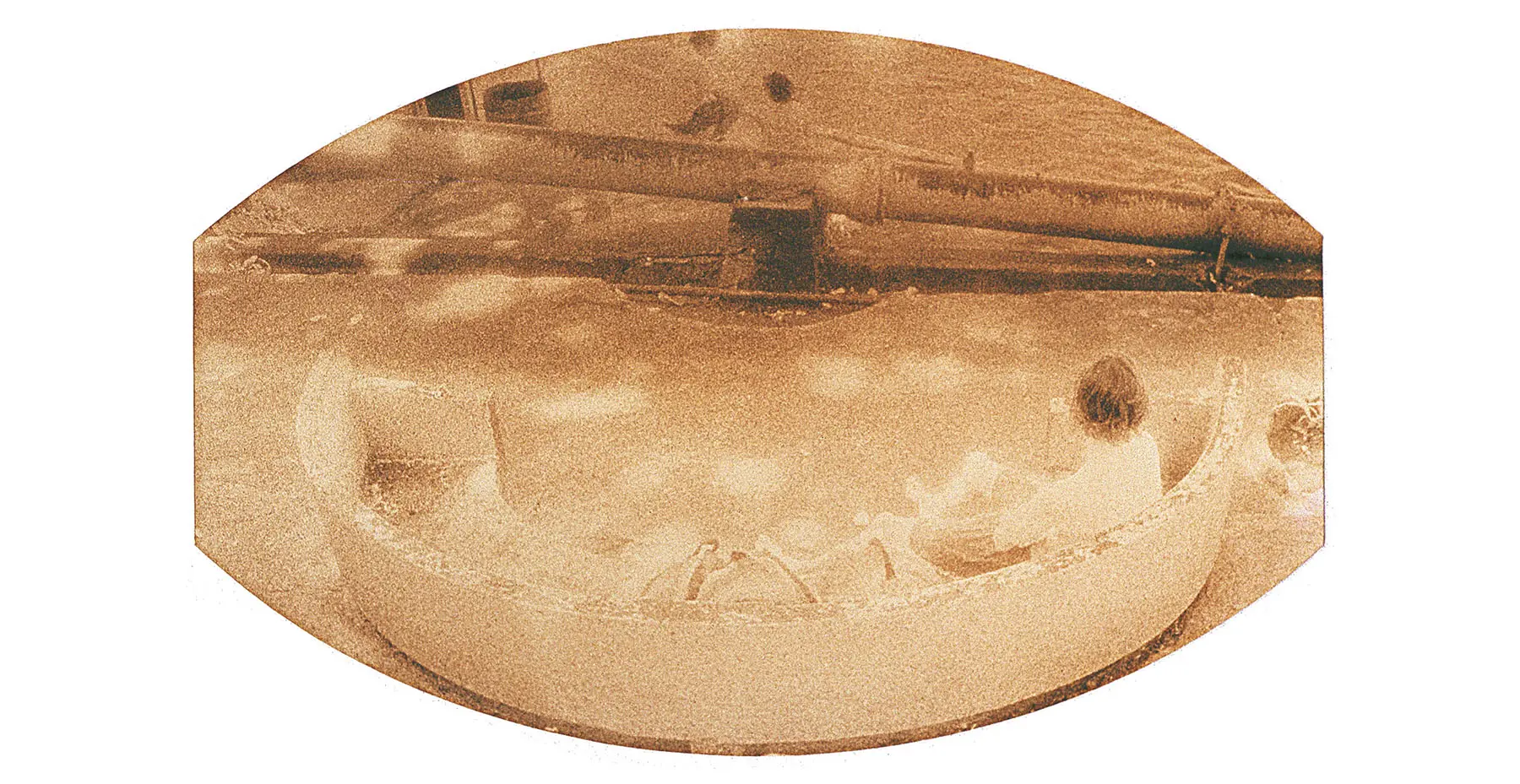
Three notions—love, time, and memory—traverse this title, deliberately lifted from Paul Celan. These same notions interest the production of one of Central America’s most visceral artists: Jaime David Tischler.2 Like Celan, Tischler resolves in his work—in this case, photography—the deconstruction of an apocryphal memory. For both artists, this memory touches on the Holocaust, a topic that has not lost its power to move. Celan himself went through this experience and survived; Tischler is its offspring.
Jean-Luc Goddard said once that poets are the true historians. A close dialog with Tischler establishes his inclination for poetry as a discourse, one of the few that displays the greatness of brevity. This is probably related to the fact that his Jewishness drives him to confront thought from the standpoint of genetics or of theology, more than that of history: "I, controlled by no gaze/ See you visible from afar,/ I who are endless silence,/ I will give you the word..."3 Perhaps in this way, this reflection can be justified, deploying poetry as a theoretical model.
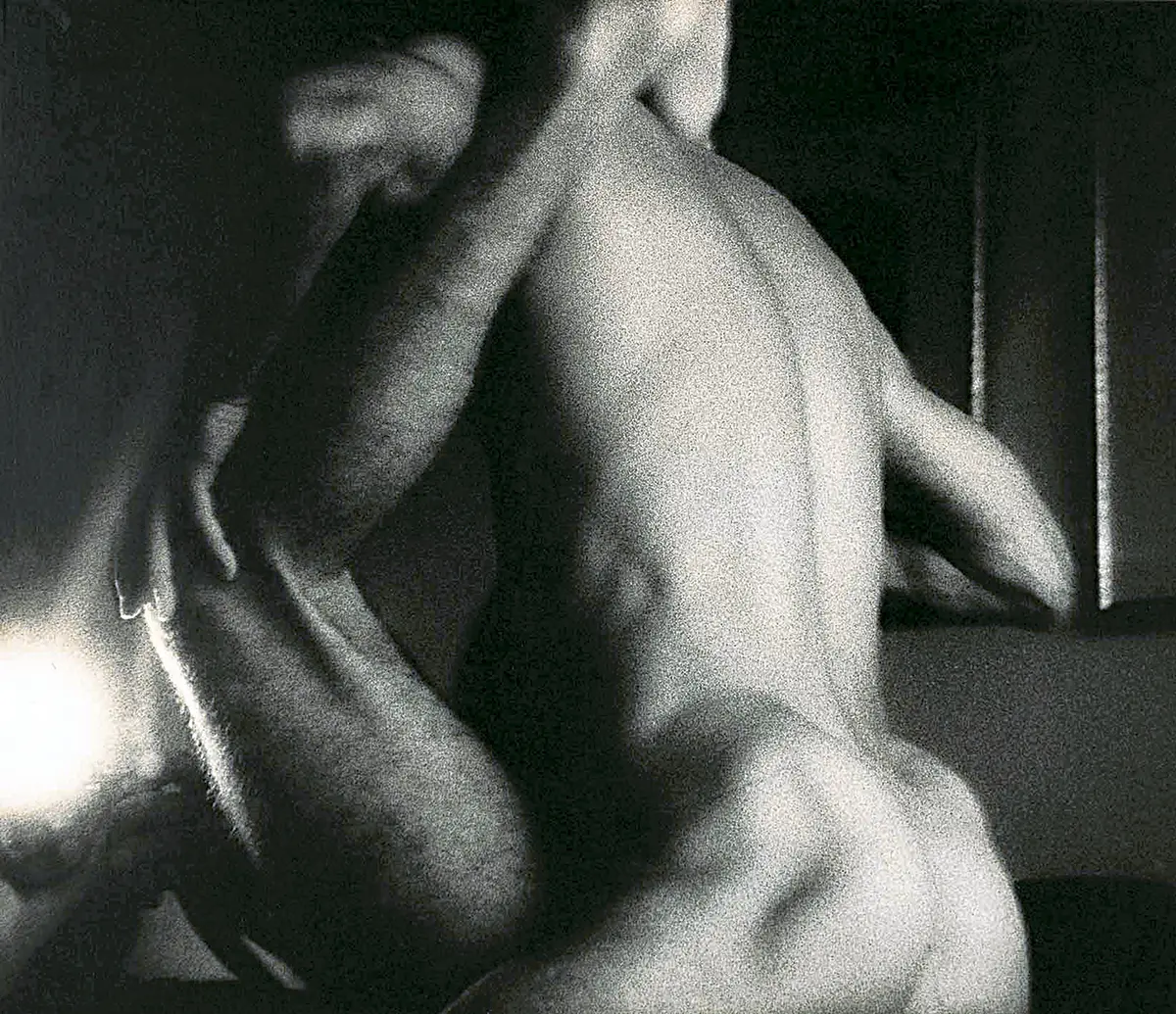
Tischler’s photography almost exclusively uses the medium’s expressive resources inherent to photographic technique—like the photogram, solarization, and double exposition. He has been insistently resistant to hybrids that dialog with other artistic disciplines, although those can be found in his installation work. This has become one of his most significant authorial marks, evident in series like Bajar al cielo, Hilos del deseo, or Fragmentos de un deseo mendicante. Bajar al cielo is his first attempt at reestablishing an intimate history, with a kind of photography articulated on the logic of the past. The influence of the pinhole camera can be appreciated in works like A puerta cerrada and La otra mitad de su pensamiento. Several of these photographs were taken in Ojo de agua—a Costa Rican resort area very popular during Tischler’s adolescence and where the artist visited with his father—and recreate a quiet, bucolic realm. Tischler’s insistence in transforming the process of forgetting into anamnesis through his personal, subjective memory establishes this landscape as a map to his sentimental education and his possible search for a “place.”
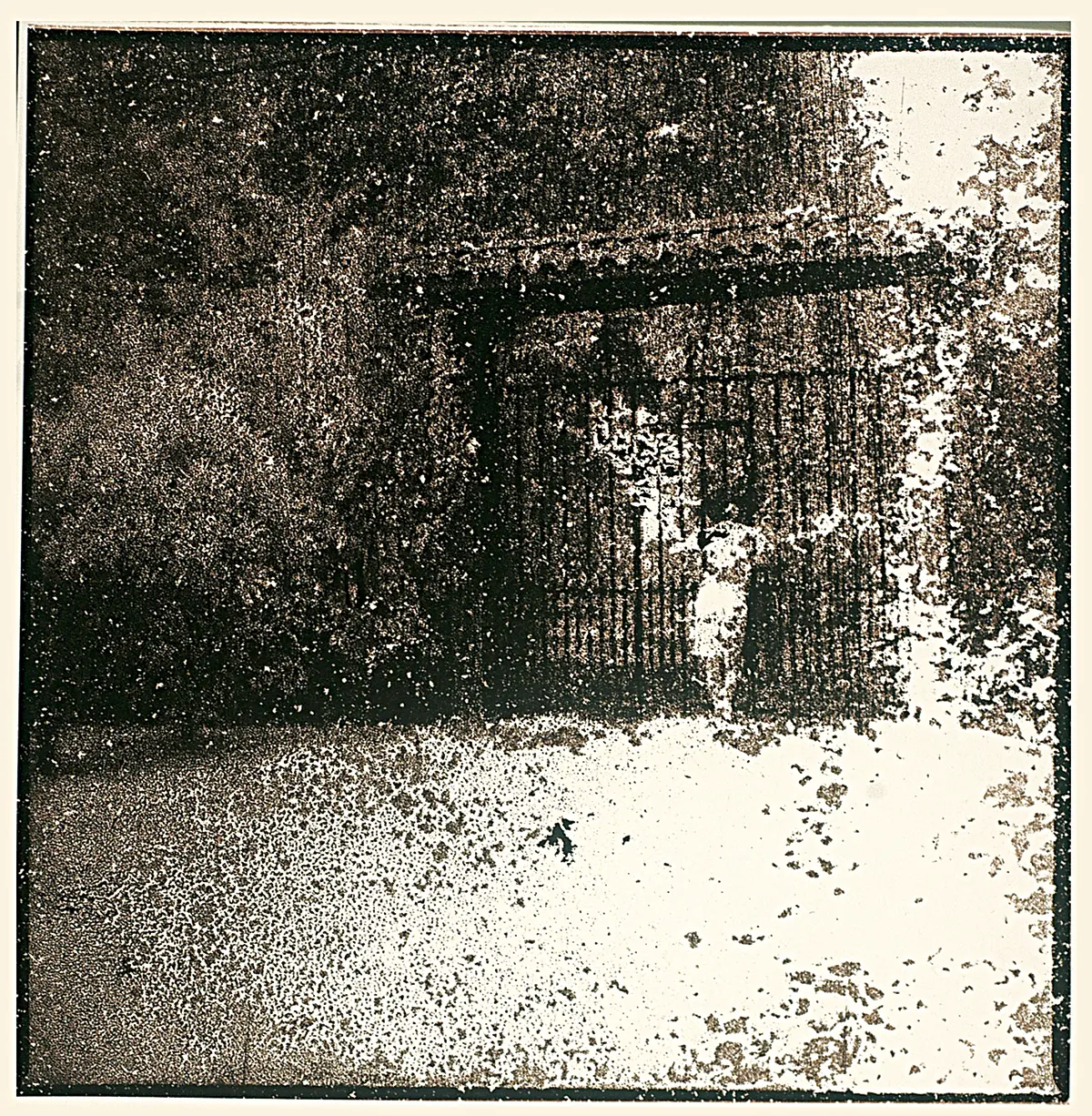
While Latin American photography has been conceptualized and defended as an instrument for the definition, representation, and conservation of identity—understood as a historical reality and as a social and cultural being—the experiences in photographic representation of the last two decades mark a shift not only in formal, technical, or stylistic terms but also in ideological ones. Tischler adopted, in the reconstruction of his past, part of what has historically been associated with photography: its documentary potential. This is visible in the veracity of the black-and-white, in the pixilation, and, later, in their precocious aging. Thus, any reformulation of realism is rooted in his discourse of a “photographic document.”
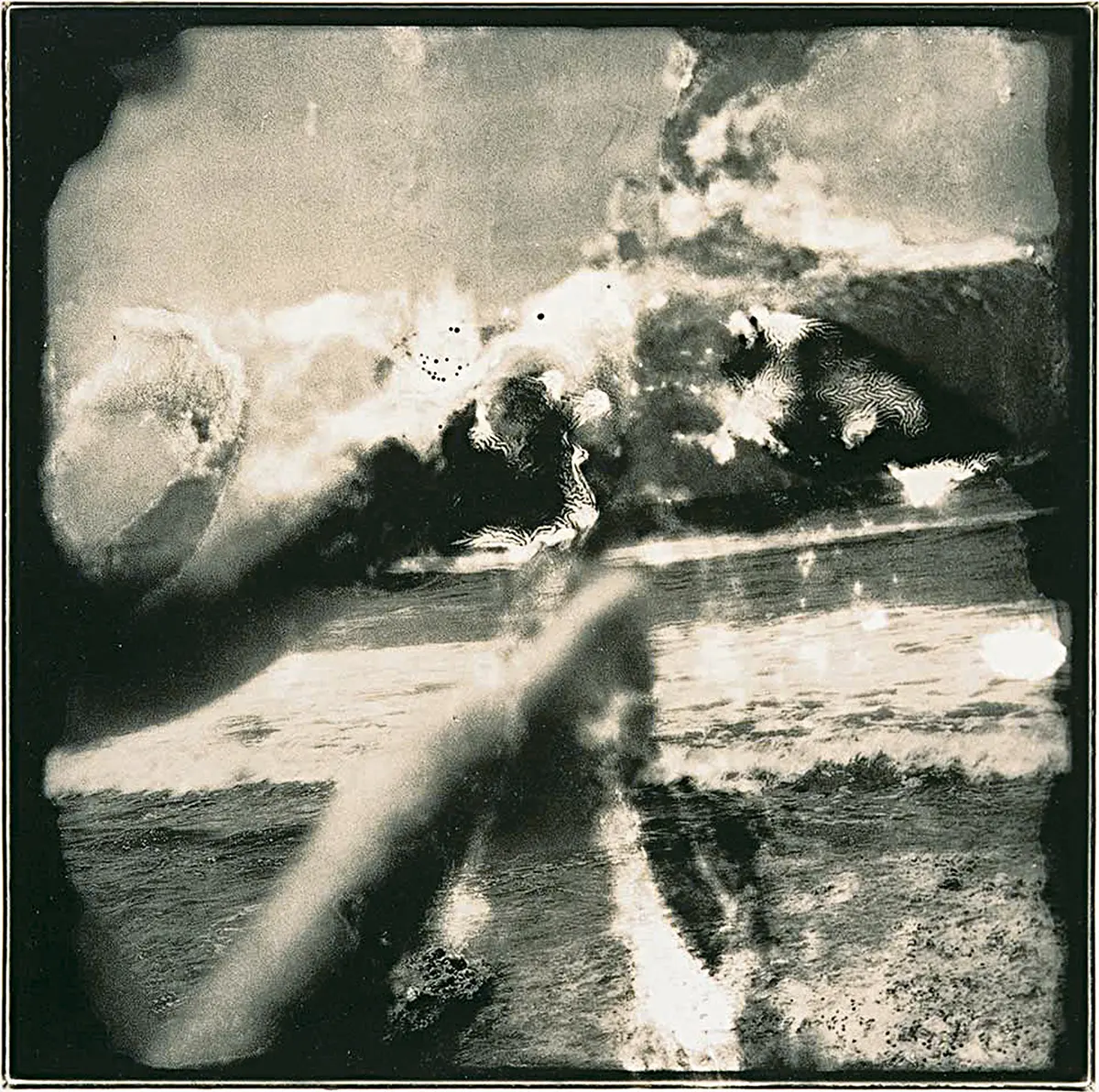
Two other series, however, made Tischler one of the most “scandalous” artists of the 1990s: Hilos del deseo and Fragmentos de un deseo mendicante. Both are the climax of an “obstinate” homoerotic rigor, which permeated a large part of the decade, and in them, Tischler achieved what Roland Barthes would call the “photographic punctum”: that which fascinates us and we can never name it.4 Tischler has insisted that faith is part of his genetic process; the photographs of his desire—which in these two series is made ostensible by the mark of sexuality—attempt to create a tension between Tischler the man and Tischler the Jew. These works bring to the fore the sharpness of his professional practice, because if one remembers in them, one remembers the traces of a pained desire. Therefore, the subconscious is not the remembrance of forgetting, but, rather, the fantastic memory of a desire that leaves its trace. For psychoanalysis, the reality is the inscription of desire’s traces: to be alive is to painfully follow those traces. The artist quotes Lacan, because, like him, “the only thing he feels guilty about is to have ceded to the pressure of his desire,” and it is in this way that this work becomes a personal identity card, the discovery of the potential of the nude and of the body, and a struggle between pleasure and punishment.
However, another tension is also visible in Tischler’s work: the tension that is displaced in the commitment to and legacy of the formal and conceptual renewal of photographic language—an heir to Man Ray’s style, respecting technical discourse in an orthodox way—to the absolute degradation of photography. It is not only a conceptual or evolutive disintegration but also one that goes to its most precarious, almost organic fate.
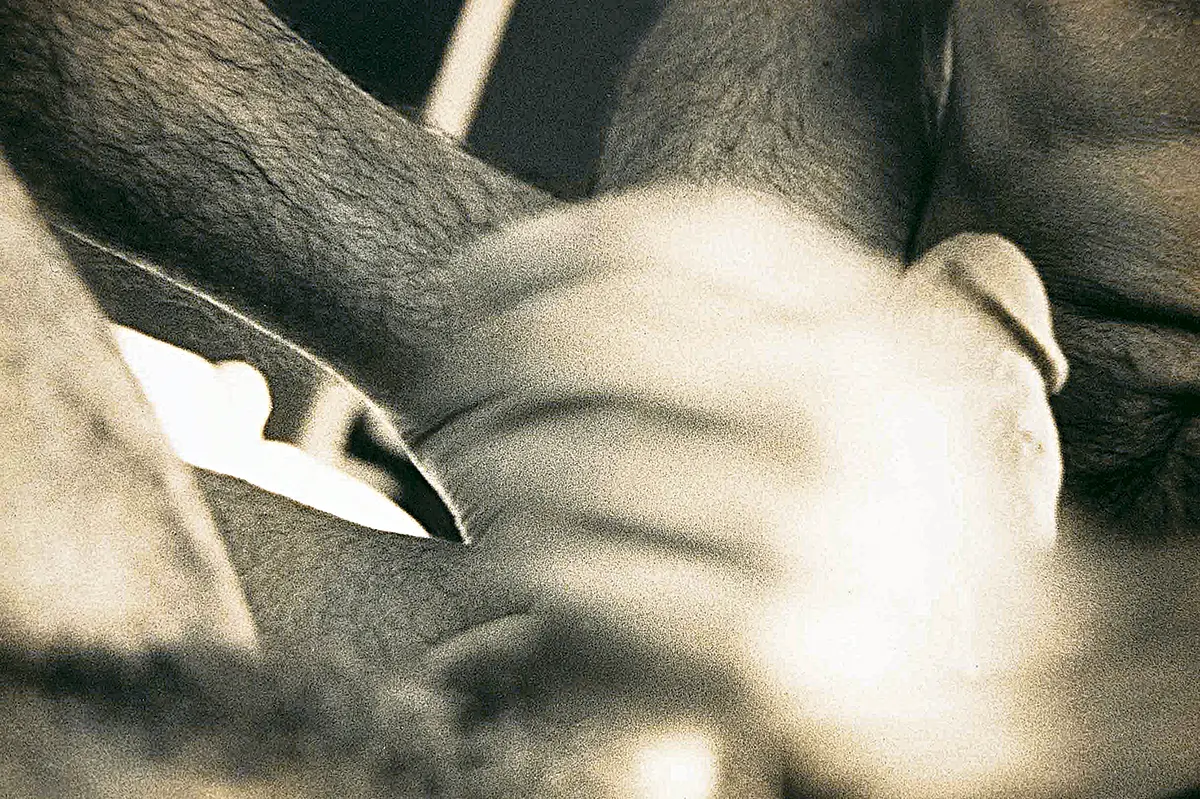
“photographs in my album I can’t remember
I will burn them all, what for”
(Ana Wajszczuk: The Book of the Polish)
“Today I tell you that I believe in the past
as a point of arrival”
(Raúl Gómez Jattin: The Leopard)
Another poet, Baudelaire, interpolated by his own creation, says: “he who draws, even if looking at a model, is not engaged in an act of perception, but in an act of recollection.”5 Perhaps Baudelaire is proposing to sacrifice perception in order to impose the aesthetic act of remembering. Sacrifices, we know, imply anguish.
It is difficult to speak of anguish in photography as an abstraction or a generality, which is in truth a form of abstraction. Better, as Tischler does, to lean on the crutches of example and in the end destroy what is being built, a kind of apologia of anguish. Tischler’s life and work know anguish—a word derived from Latin meaning “narrowness” or “difficulty”—by heart, not only in the definitions established in abstract realms by academia but also in biological realms. This detail could be symptomatic for the work of this photographer, who notes: “I have sought nature and biology in the face of the limitations that were imposed on me by History itself.”
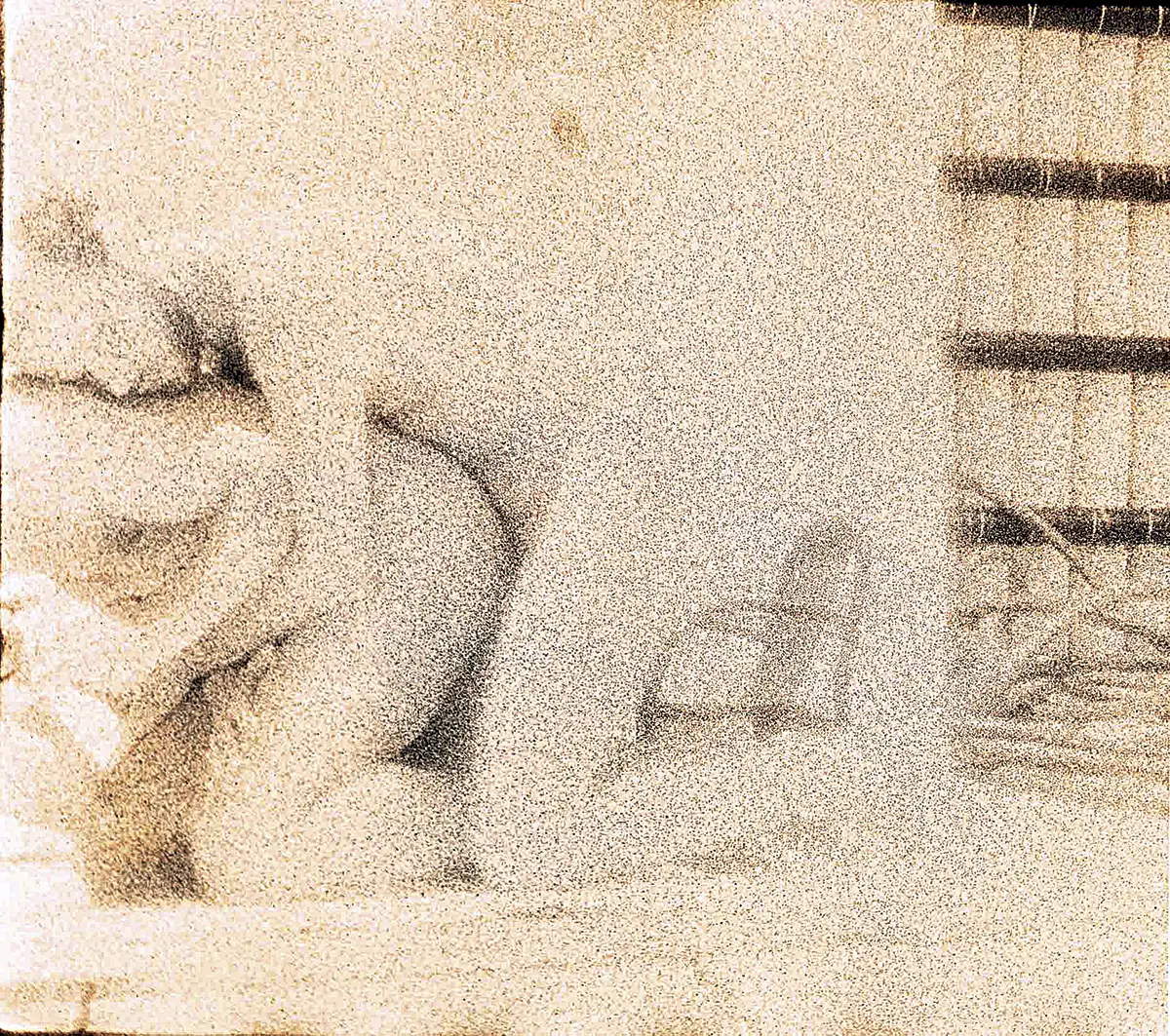
In his best apocalyptic style, George Steiner says that it is difficult for the West to equal the great creative moments of its past, fundamentally because it has renounced its theological baggage. Regardless of the genre, documentary or fiction, Tischler’s photography does not avoid the theological preoccupations that penetrate it like a lance. It not only becomes a current document or a reconstruction of history through quotation, as Benjamin would have preferred but also brings forth a syncretic component between the religious and the profane. Tischler himself has told me of his intention to redirect his own life toward the condition of a rite.
In such rituals, the artist attempts to remind us with an “interior monologue” of his continued presence in images. Everything passes through the filter of his memory as a man and as a photographer, which subjects the materials to a process of appropriation and adaptation to the oeuvre’s discourse: the perennial re-writing on the negative and his insistence in eroding that text, exposing them to an accelerated vision of time. If Walter Benjamin announced that the work of art was to lose forever its “aura,” which is to say its cultural character in the process of contemplation, Tischler’s work reconfigures photography’s “aura” in the very act of its disappearing.6 Walter Benjamin, The work of art in the age of mechanical reproduction, in Illuminations. Schocken, 1969.
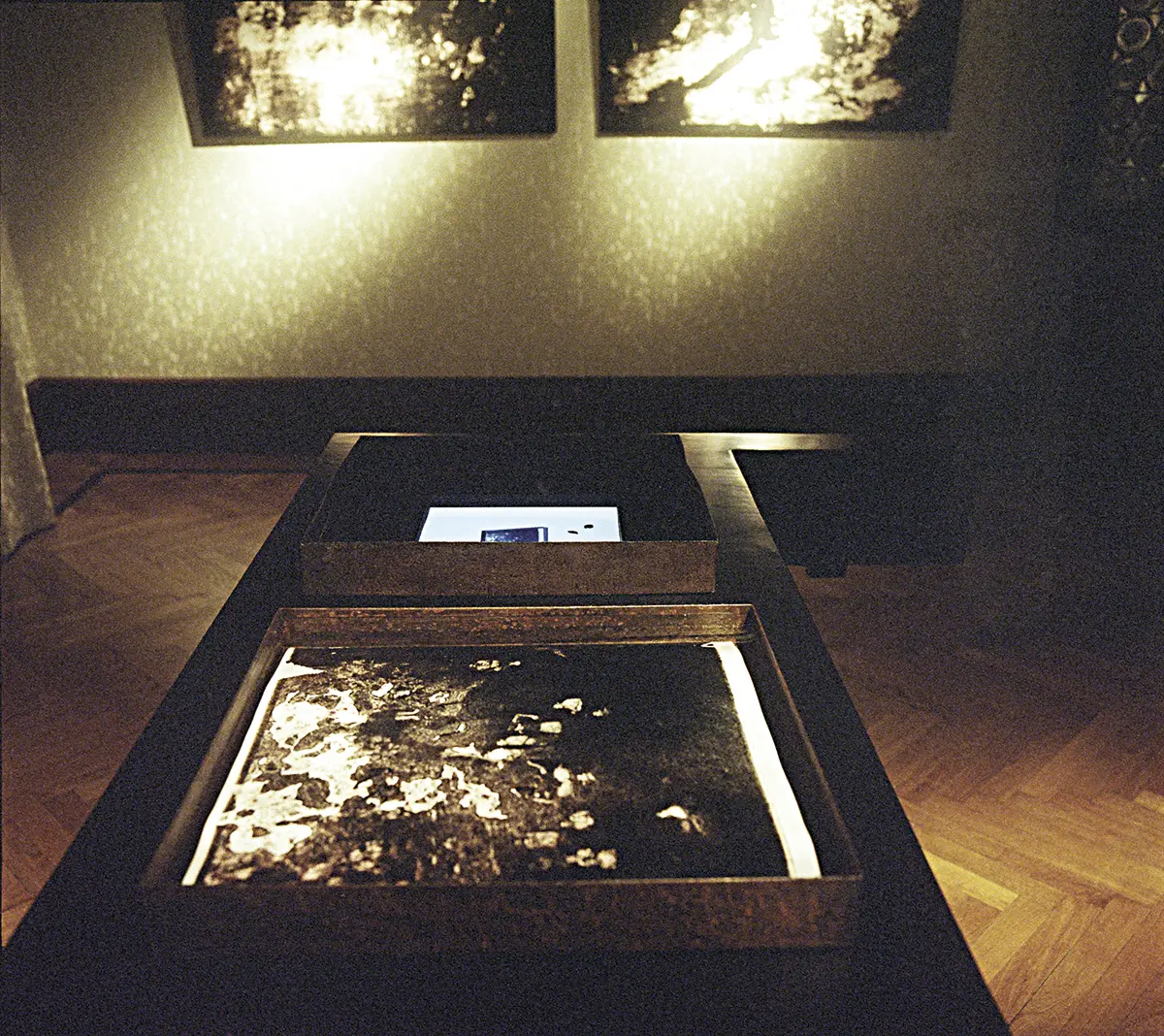
This is a remembrance that goes against the documents—an exercise that checks them, that creates them apocryphally, and then destroys them. This process has marked Tischler’s path between La fractura del tiempo and Miedo a la muerte—two of his most effective series—that display the eloquence of a dialog with temporality not only at the visual level but also in terms of thematic choices. It is devoid of illusory traps, becoming evident (and cruel) in the work that Tischler presented for his second invitation to the Venice Biennale: La máquina del tiempo, a photograph in the process of being destroyed. Surrounded by some of the photographs that compose Miedo a la muerte, a title that ironizes and dramatizes the fact itself, the viewer approaches the disaster for closer inspection as a Yiddish song titled Cigarettes begins and obsessively repeats a single phrase. It is relevant that the dying photograph is titled Ponar; we must not forget Abba Kovner’s warning to the Jewish people in August of 1942: “All roads lead to Ponar. And Ponar is death!” For many, this work implies a gesture of complicity toward the “logic of representation” displayed in the work of the Colombian artist Óscar Muñoz, and to a certain degree death and the impossibility of recovery are part of both artists’ works. However, for Tischler, the son of Holocaust survivors, this is an exercise in tautology, a family martyrdom he doesn’t entirely ignore but, suffering, one he attempts to exorcise. It is not by chance, then, that a song in the bastard language of exile, the subject of cigarettes—objects that disappear quickly—and a perpetual restarting are the ideal metaphors of his inability to reach completion.
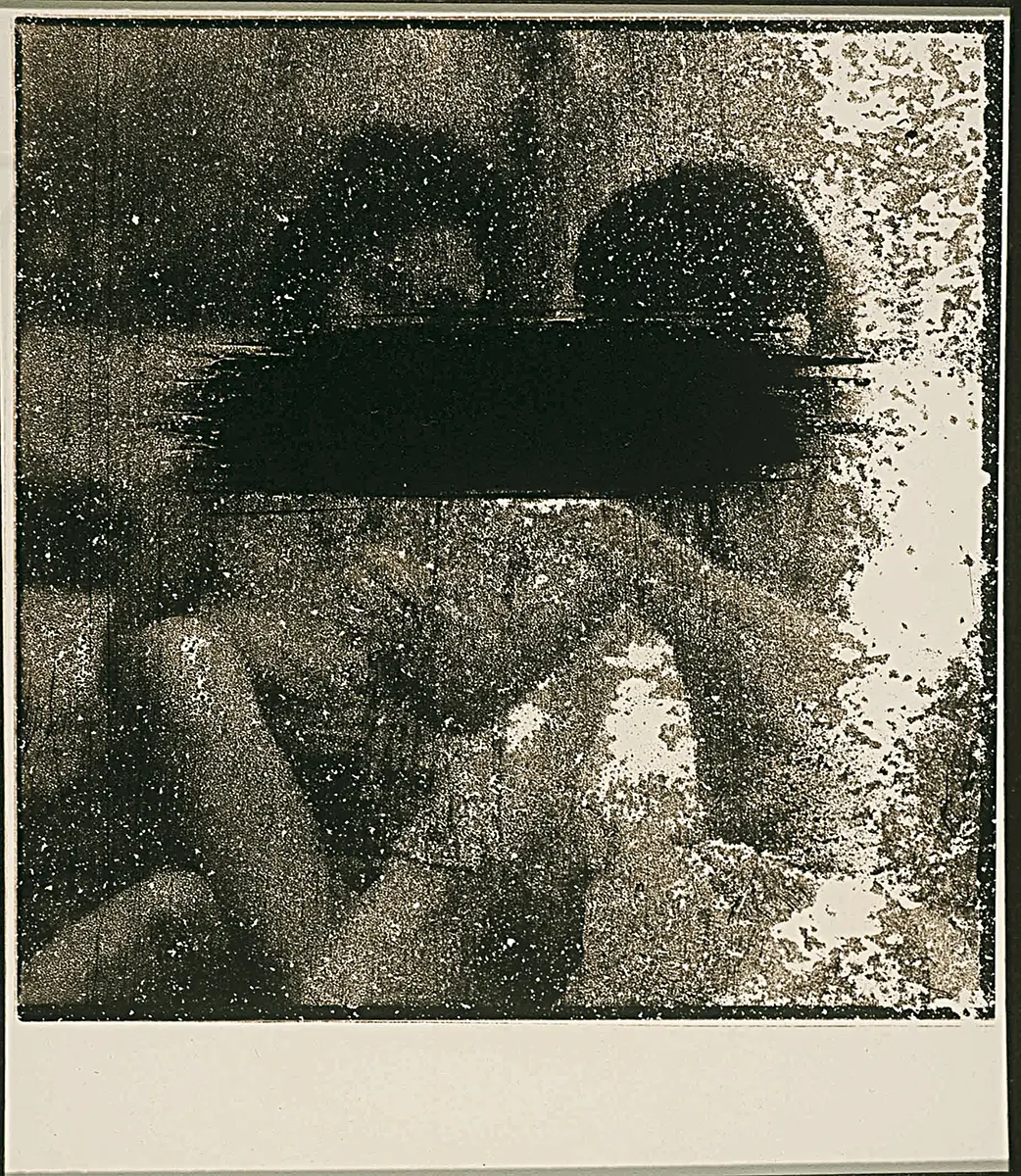
“I dream of what I don’t say, I assume myself this one who is, I remember having seen myself. I forget myself as I see myself frontally, I strive to grow old…”.
(Evgen Bavcar, Self-Portrait).
A self-portrait is only known as such by conjecture; there is nothing in the image itself to guarantee that the subject and the creator are the same person. Yet, there may be no image that isn’t a self-portrait of its observer—that is to say, an imaginary projection of whatever lacks in the one who observes the image. For this reason, an image is the very orientation of one’s gaze as desire and one’s very constitution as a subject who gazes. Thus, I believe that Tischler’s oeuvre is in sum a large self-portrait in fragments.
Perhaps these exercises by Tischler are already preset in Lacan’s mirror stage, in terms of the “dialectic of Other-identification”; this is why the artist has insisted on the apocryphal not only in the sense of theological falsity but also as the evisceration of time as a notion of distance. Thus, he tends to recuperate and speed up the irreversible process of death for life to acquire more than one meaning: that of his parent’s silenced history, of a whole culture, of a constant exile. Los años de ti a mí is a demand to the artist, by the artist himself. The distance between Tischler and Tischler, that is, the distance between Tischler desired and reconstructed, the one observed by the camera while “the Other” shoots—that distance is just time.
NOTES
1. ‘’The years from you to me” is a poem by Paul Celan. It has been translated into English (in Hamburger, Michael, tr. Nineteen Poems. Oxford: Carcanet; Chester Springs, PA: Dufour, 1972. 40 pp.) as: “ Your hair waves once more when I weep. With the blue of your eyes / you lay the table of love: a bed between summer and autumn. / We drink what somebody brewed, neither I nor you nor a third: / we lap up some empty and last thing. / We watch ourselves in the deep sea’s mirrors and faster pass / food to the other: / the night is the night, it begins with the morning, / beside you, it lays me down.
2. The word “interest” here refers to one of the term’s meanings, that which speaks of alteration of or damage to a region of the body.
3. Supervielle, Jules. “Dieu pense à l'homme”, in La fable du monde. Paris: Gallimard, 1983.
4. Roland Barthes. Camera Lucida. Notes on Photography. Hill and Wang, 1982.
5. Jacques Baudelaire, L’Art, Paris: Gaumont, 1989.
CLARA CONCEPCIÓN ASTIASARÁN
Cuban art critic based in Costa Rica since 2001. Currently works as Coordinator of Visual Arts at Centro Cultural de España.