
Like a book that contains the story of humankind’s eternal attempt to create a constructed world, the city is where the narrative of Roberto Behar and Rosario Marquardt unfolds.1 Much of their work takes place in the city, and some of their projects have been specifically conceived for Miami: a young city, just over one hundred years old, which (taking into account the age of many cities, even in the Americas) is a short existence. For Behar and Marquardt, the possibilities offered by this city’s brief life are many since it can be said that the city is still in a foundational stage, in which the architect/artist collaborators have been able to observe, analyze, and even participate within.
The founding of a city, when everything must emerge anew—with no monuments, no streets, no houses, just unrestrained nature waiting to be colonized and conquered, occupied and tamed— is an idea that ignites anyone’s imagination.2 It has also become a motif for Behar and Marquardt’s reflections on the idea of foundation. In Miami, a city still waiting for monuments, parks, and an element to restrain (not nature but the sprawling suburb it has become), Behar and Marquardt see the potential for a contribution toward the building of memory and, in the process, toward reminding Miami of its condition as a city. Many of their projects have been conceived for and built-in public spaces, creating an awareness of the importance of public and monumental space in the urban fabric. Their public sculptures act as points of inflection within the general text of the city, shifting perceptions of the familiar and the assumed and generating different readings of location and context.
The Foundation
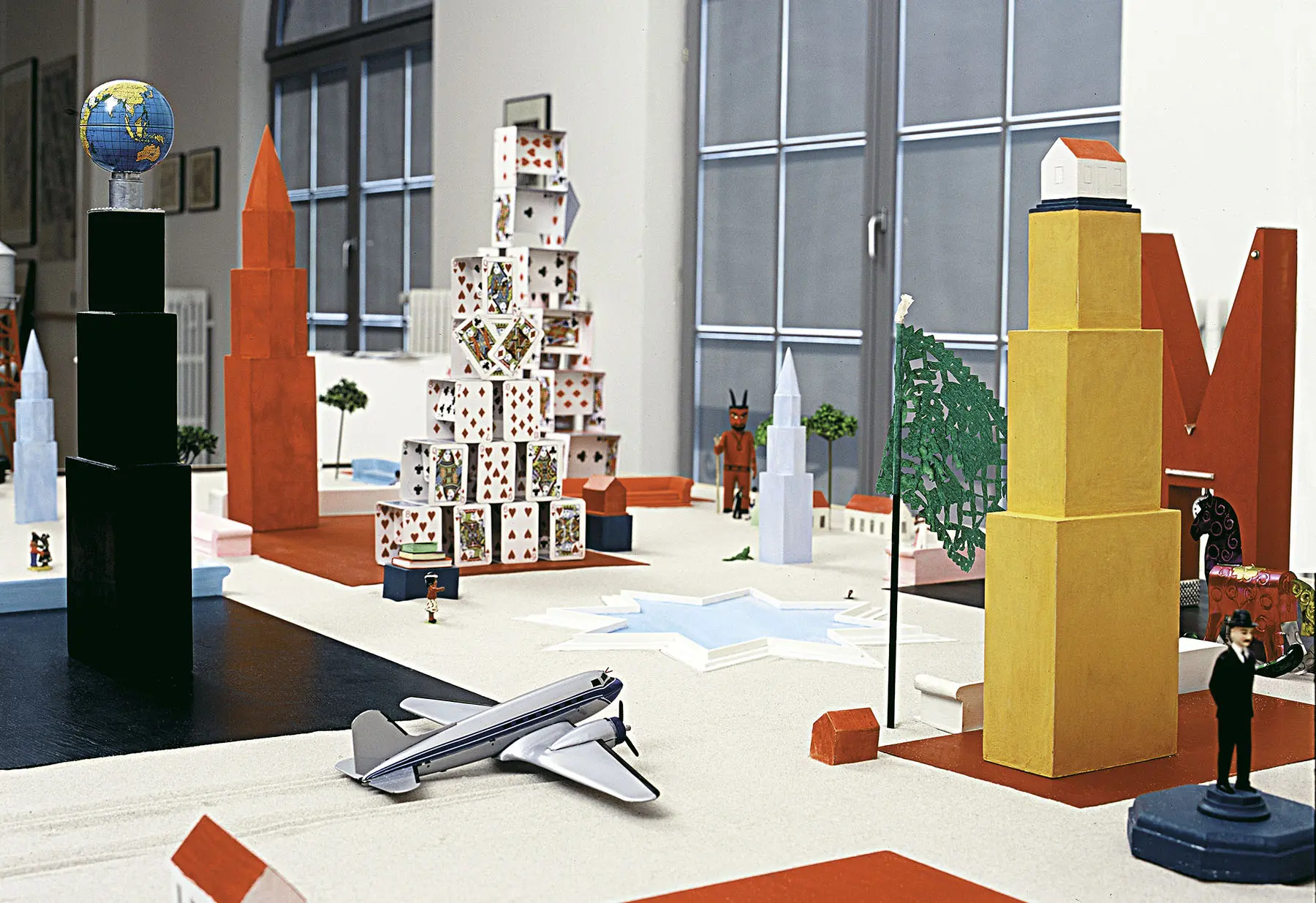
Within Behar and Marquardt’s practice at the limits of architecture, there exists a work constantly in the making, in which past and future interventions in the city are precisely mapped. It is utopian in that it belongs to the realm of representation; it is a model for an “other” city or perhaps a park or the quintessential public space. The Lost Steps is the name of the model from which many of Behar and Marquardt’s inventions are devised and planned. It is the arena where they perform in a way, not unlike that of a city planner who dreams and projects the city from the model and the blueprint. The Lost Steps speaks of the idea of foundation—the name alludes to Alejo Carpentier’s book in which a city dweller travels to the jungle and helps to found a city—and also to the cornerstone of Behar and Marquardt’s work. In this model, one finds the monuments: impossible constructions that belong to the fairground, such as the House of Cards, as well as planes, boats, windmills, and small houses spread upon a sandbank without streets. It is a city in the making but it is also the unmaking of a city, where the sand seems to erase the gridlock and the structures that contain one’s movements inside cities; it also erases one’s steps, making a tabula rasa from this model, where the idea of foundation seems to be constantly at play.
The Monument and the Ruin
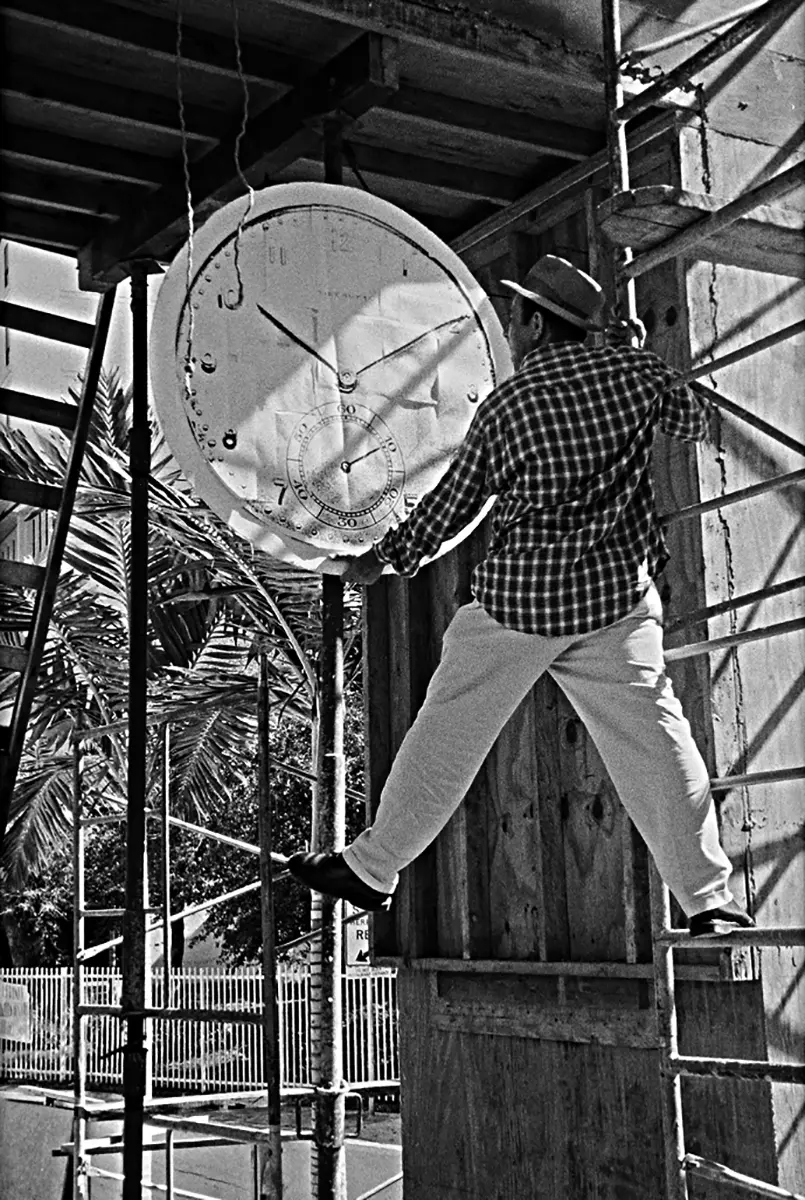
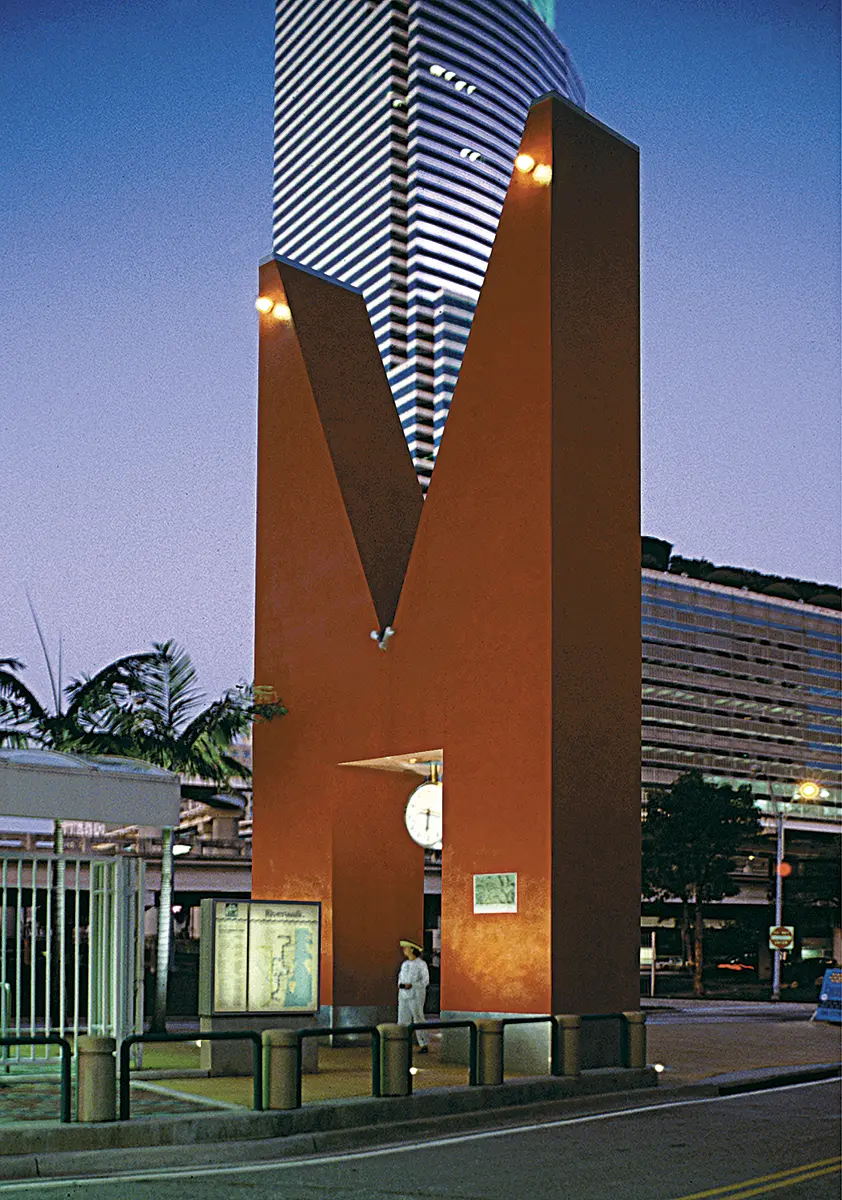
But these constructions do not only exist within the space of the model. They have found their way into the very concrete realm of the city. M is one such work, located on a rather nondescript site, one that paradoxically exemplifies Miami’s particular kind of urban configuration. It is set amidst converging highways and on- and off-ramps, just outside the access to the Metromover, a light-rail system connecting different points in downtown Miami. However, upon exiting the Metromover, one finds oneself lost in a maze of highways, elevated bridges and railroads, and a towering skyscraper that indicates that there is some kind of city if one follows its direction. The “M” is a monument in a sort of urban limbo, in an example of what Marc Augé has aptly described as a non-place, which is constitutive of contemporary urban environments. In that context, it seems to have a specific function, which is to remind the city that it is a city and not just urban sprawl. M is a public sculpture and a monument at the same time: as Behar and Marquardt have defined it, M is a Monument with Multiple Meanings. The “M” could stand for the monument, Miami, metro, megalopolis, metropolis, and so forth. Monuments always have shifting and multiple meanings, attached to the construction of a collective representation of a given society around them.3 Symbolically, they are also linked to the ruin. Behar and Marquardt have reflected on this specific condition of the monument as a ruin in other works, but this idea is very present in M. This work plays with the invention of a fictional history of the city, and the ruin becomes emblematic of a distant or nonexistent past. A terracotta fragment from an Art Deco building in Miami Beach, treated as an artifact from an on-site archaeological dig, is embedded in M, perhaps signifying the history to come and the permanence of the monument. It also suggests the ruins of a city that is developing at such a pace that buildings only fifty or sixty years old are torn down to make way for condominiums and lofts.
The Uncanny in the space of the city
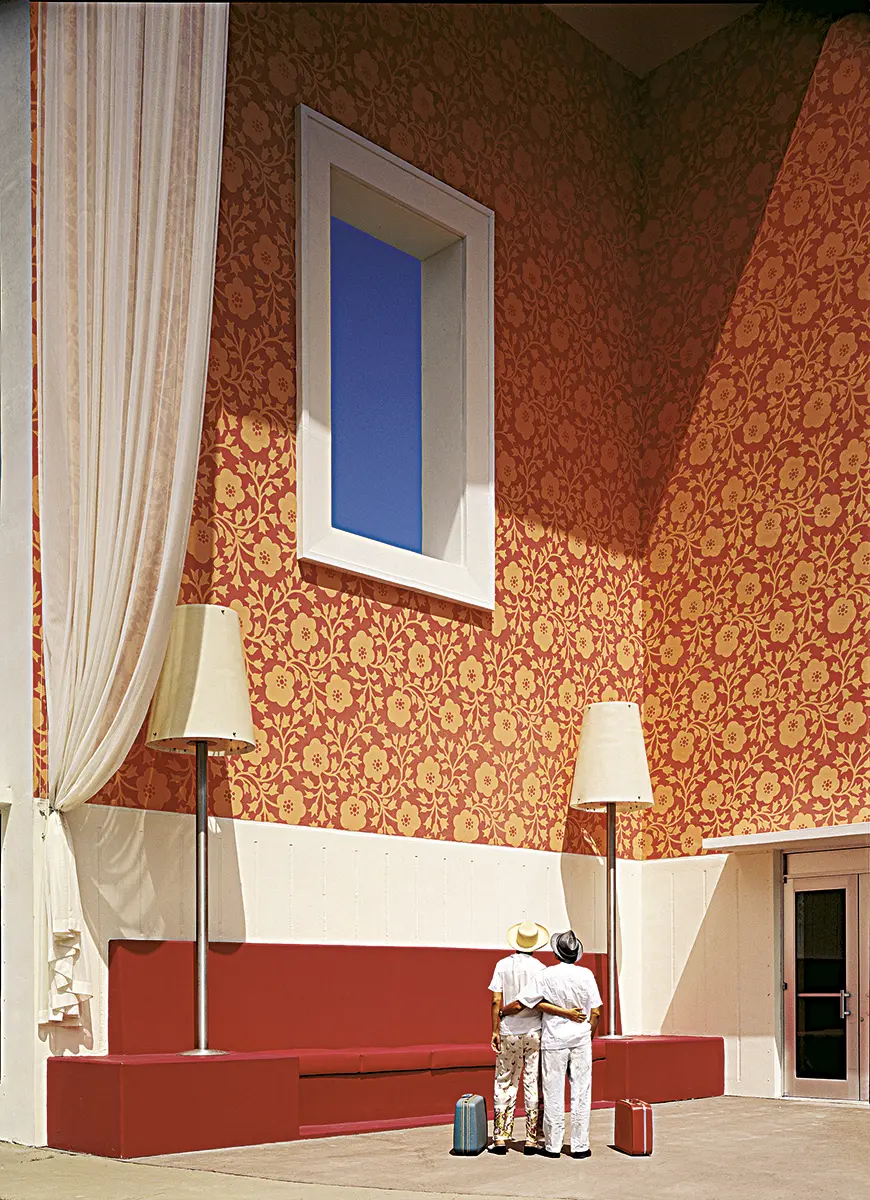
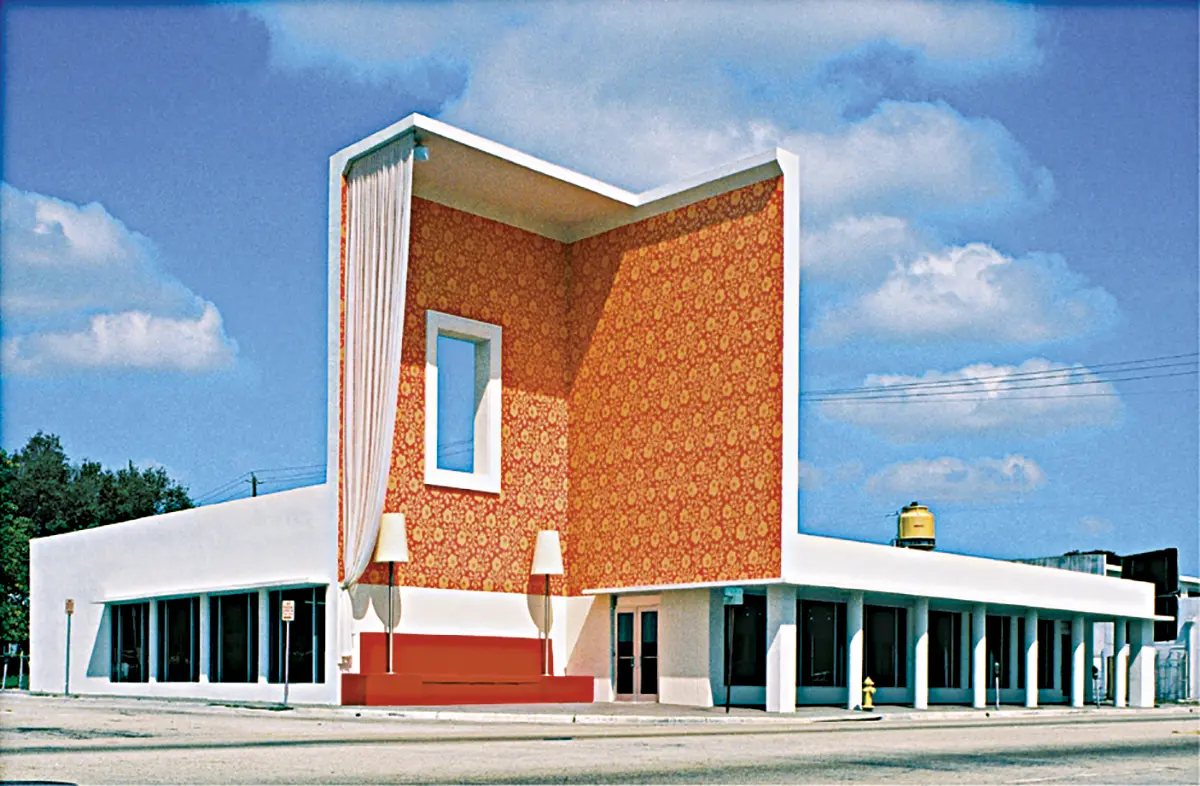
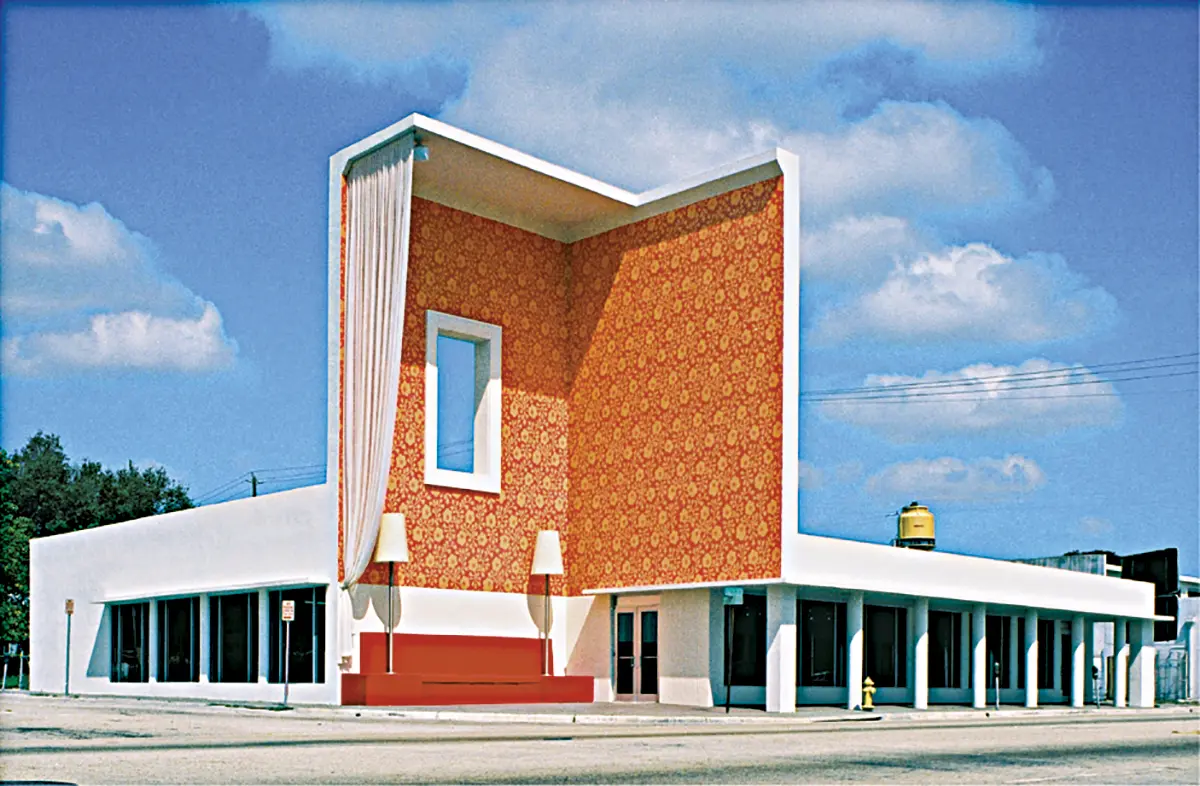
As in any city that experiences a quick expansion, the real estate and development forces have taken over Miami, changing or eliminating entire neighborhoods to pave the way for gentrification or to develop areas for commercial ventures. The Design District is one example. Formerly an area of run-down warehouses, it was recently developed and marketed as a special zone featuring furniture and interior design stores and studios, as well as art galleries. As both architects and artists, Behar and Marquardt were commissioned to renovate a warehouse in this area. As architects, they designed a loft space with abundant windows facing the street, in keeping with the characteristics associated with this type of building and its commercial uses as a gallery and storefront. However, their real intervention into the building and the Design District itself was the resolution of the corner of the building—a square in a city where there are hardly any, a corner, and also the inside of a house—The Living Room. This open “living room,” a fragment of an unfinished house with exaggerated proportions suited to a giant rather than to a normally-sized person, is somewhere between a monument and a ruin. Because of its scale and location, it is a monument, but the emptiness it conveys—surrounded by empty buildings and empty streets with no sense of city or belonging—thrust it into the realm of the ruin. This urban intervention exemplifies the allegorical functions of the ruin and the monument while also being a site- and context-specific work. Elements of design and interior decoration are carefully placed in an outdoor space where the forces of nature will inevitably take their toll. It is the forecast of a ruin, in a city where ruins are created every twenty or thirty years, suggesting the possibility that in the near future, another developer will tear out the “old and weary” former Design District to make way for new condos and shopping malls.
In The Living Room, however, there is also an allusion to the uncanny, which permeates many of Behar and Marquardt’s works.4 As articulated theoretically by Freud, the uncanny or unheimlich is rooted by etymology and usage in the environment of the domestic, or the Heimlich, thereby opening up problems of identity around the self, the other, the body and its absence: thence its force in interpreting the relations between the psyche and the dwelling, the body, and the house, the individual and the metropolis.
The ruin and the monument in their funerary roles are uncanny architectural manifestations. The building loses all programmatic function and becomes an empty signifier, capable of accommodating other meanings through time. Nevertheless, the uncanny extends more specifically toward the realm of the domestic. As Freud has defined it, “This uncanny is in reality nothing new or foreign, but something familiar and old-established in the mind that has been estranged only by the process of repression.” Here, familiarity also indicates the intimate and private space of “home” (heim), a word that is the etymological origin of the German word for “uncanny” (unheimlich). The terrain of childhood is another of the domains of the uncanny, especially stories of living toys and tales that purport the menace of dismemberment and disability, such as E.T.A. Hoffmann’s Sandman. In The Living Room, the play of scale makes visitors seem like puppets inside a dollhouse. The room itself is a displaced member of the house, a fragment of a nonexistent whole, which contributes to the feeling of unease fostered by this seemingly harmless public sculpture when perceived from the street. In many houses, the living room is the place where the hearth or chimney is located; it is the room that most expresses the idea of “home.” On the urban street corner, it looms gigantic over the void of the American, homogeneous, and depersonalized grid; the familiar suddenly becomes unfamiliar and daunting.
Utopia
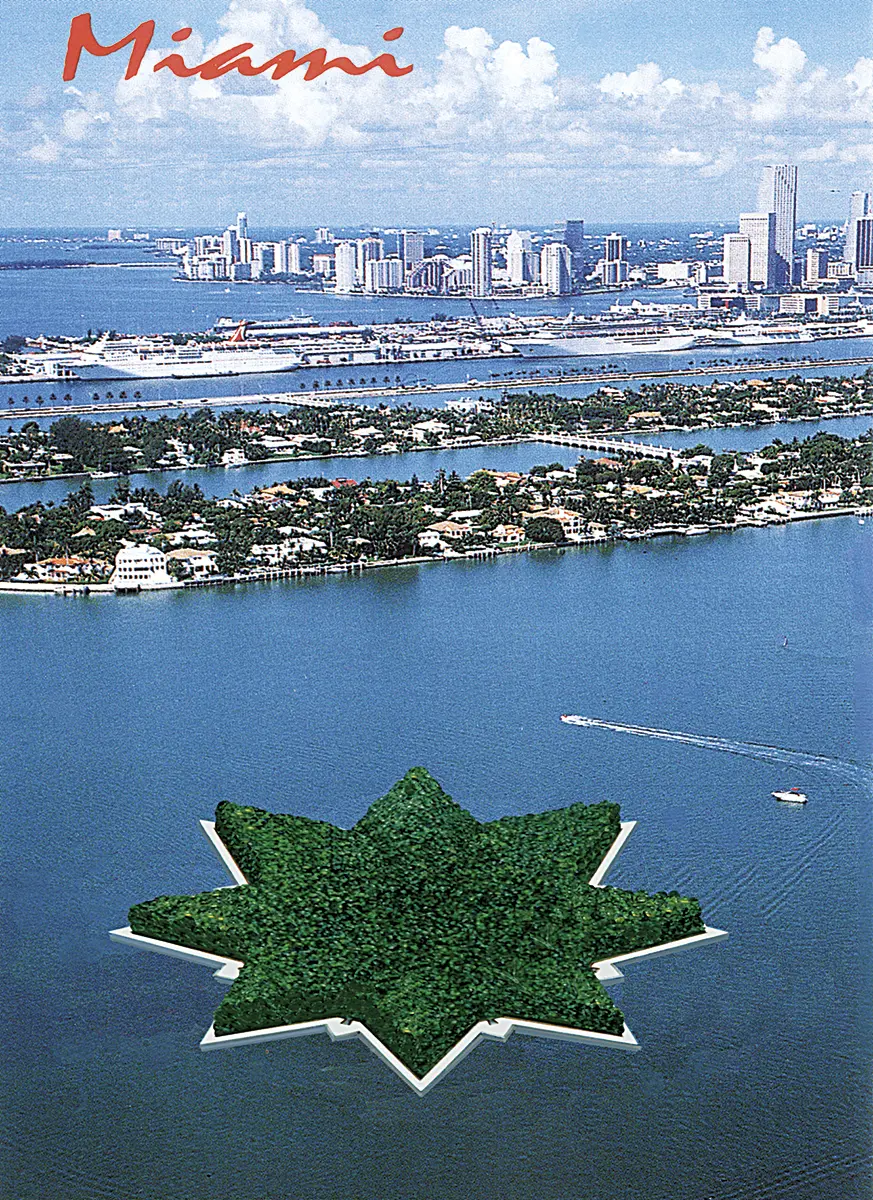
Utopia is not an unfamiliar concept in the work of Behar and Marquardt. Their works reflect a constant grappling with the representational and concrete possibilities of utopia, from The Lost Steps model of the ideal urban public space to older and more architecture-oriented projects such as 500 Years of America. One of their most telling projects in this regard is the yet unrealized (and as such utopian) The Star of Miami, which sums up many of their concerns regarding the idea of utopia. Thomas More knew about the travels to the New World, specifically through the accounts of Amerigo Vespucci. It was at the doors of this New World, on an island off the coast, that he decided to give life to his Utopia. Here, the idea of a foundation again ignites the desire to build a world and a city from scratch: the ideal city, with none of the vices of the old city or the Old World, a city that through its perfect architecture would also be synonymous with perfect forms of governance. The Star of Miami is an island but also a park, a public sculpture meant to be viewed from the sky (it would be situated along the flight path of airplanes landing at the Miami airport). The Star of Miami entails a shift in perspective that allows for a reading of its utopian character. The fact that, in the event of its materialization, it could only be fully appreciated from the sky propels the concrete reality of the built city into the imaginary and representational realm of the blueprint. In other words, the potential city is where it is possible to intervene as an architect, a city planner, or an artist. But it is also a folly in the general layout of the city, much like the follies of the Romantic garden, which constructed an Arcadian representation of the world in the space of nature. It is a garden contained within the space of the folly, and also a garden as an island.
An architecture of folly
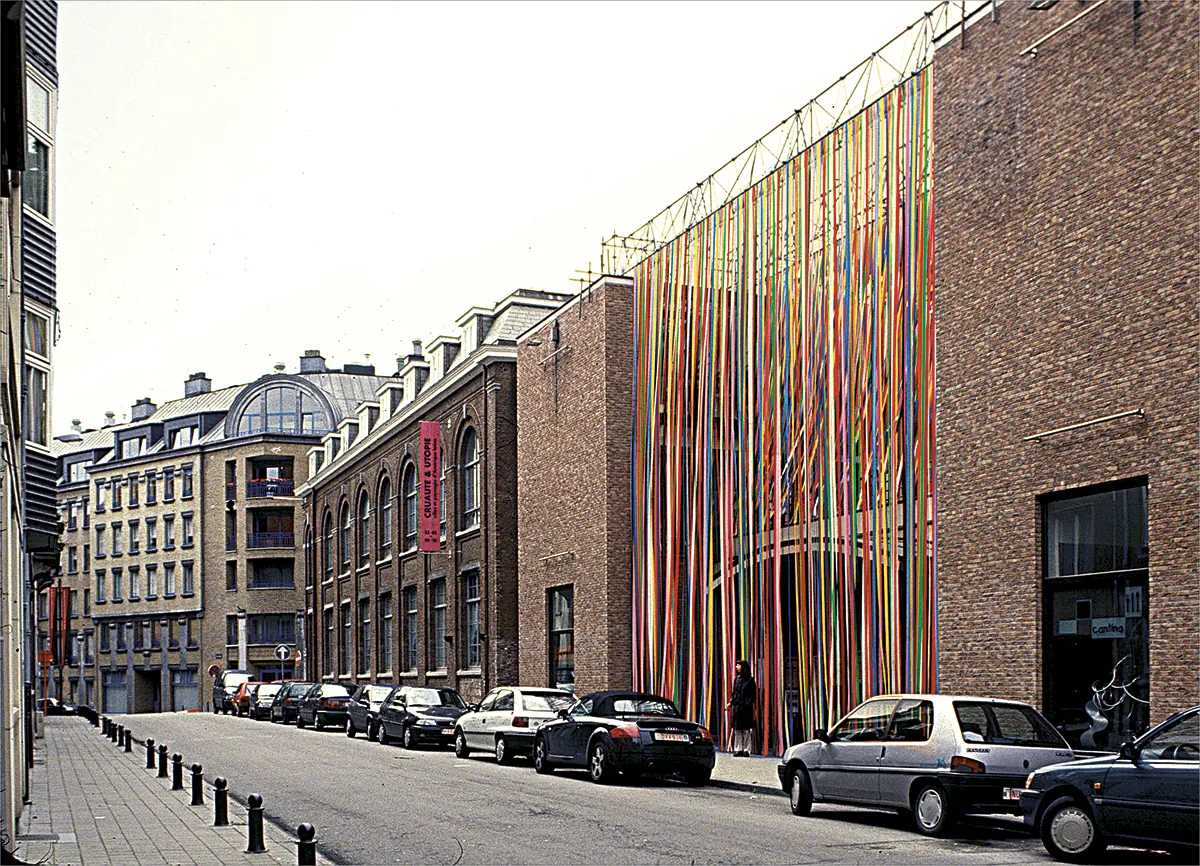
Many of Behar and Marquardt’s works are atypical follies since they are inserted within the space of the city; they act as clues that point to the utopian space that is behind the conception and projection of a city. The folly is a very particular architectural type because it is rooted in the realm of the symbolic instead of the functional—it is in essence a useless architecture. The name “folly” indicates the apparent irrationality of architecture devoid of function. That is why the space of the folly is not the city proper but the park, the fairground, or the theme park. These are spaces of fantasy, where the dynamics of real-life are set aside in order to enact the desires of the city and its dwellers, for progress, for well-being, and for another world where the impossible does not exist. Recently, Behar and Marquardt designed an exhibition on architecture and utopia titled Cruelty and Utopia: Cities and Landscapes of Latin America. As part of the design of this exhibition, they incorporated two works that transformed the architecture of the museum building, converting its entrance foyer into a space reminiscent of the fairground, specifically of small-town fairs and carnivals in Latin America. As its title describes, Mask covers the building, rendering a different architectural quality without being an architectonic intervention. It is a curtain of colored plastic strips that hangs between the two main volumes of the building, closing it visually but allowing for the flow of pedestrians. Plaza Esperanza is a similar intervention in terms of creating architecture from non-tectonic and ephemeral elements; it is also a space that refers to the vernacular and temporary architecture of small rural towns in Latin America, within a building of solid and austere forms. It is essentially a square, where the public life of the city unfolds but more importantly where architecture need not be programmatic but instead becomes discursive. It is perhaps the place from which one can behold—through the experience of architecture into everything but and beyond the building itself—the possibility of the city as a text.
NOTES
1. “La parola ‘città’ si adopera in due sensi, per indicare una communità organizzata e la scena fisica dove questa communità risiede. La distinzione si deve fare perchè la scena fisica è piú durevole del corpo sociale che vi abita, è puó esser veduta, usata, amata, rimpianta anche quando la società che l’hà prodotta è scomparsa da molto tempo”. Leonardo Benevolo—Leonardo Benevolo.
2. “To found a city. I found a city. He has founded a city. It is possible to conjugate such a verb. One can be the founder of a City (…) Y rest my head on Rosario’s lap, thinking of the immense territories, the unexplored mountain ranges, the plateaus with no history, where cities could be founded in this continent where nature has not yet been overcome by man…”—Alejo Carpentier, Los pasos perdidos.
3. “Buildings have functions, forms, and structures, but they do not integrate the formal, functional, and structural “moments” of social practice. Buildings are to monuments as everyday life is to the festival, products to works, lived experience to the merely perceived, concrete to stone, and so on... how could the contradiction between building and monument be overcome and surpassed?”—Henri Lefebvre, The Production of Space.
JULIETA GONZÁLEZ
Independent curator and curator of the Berezdivin Collection /Space 1414 in San Juan, Puerto Rico.