
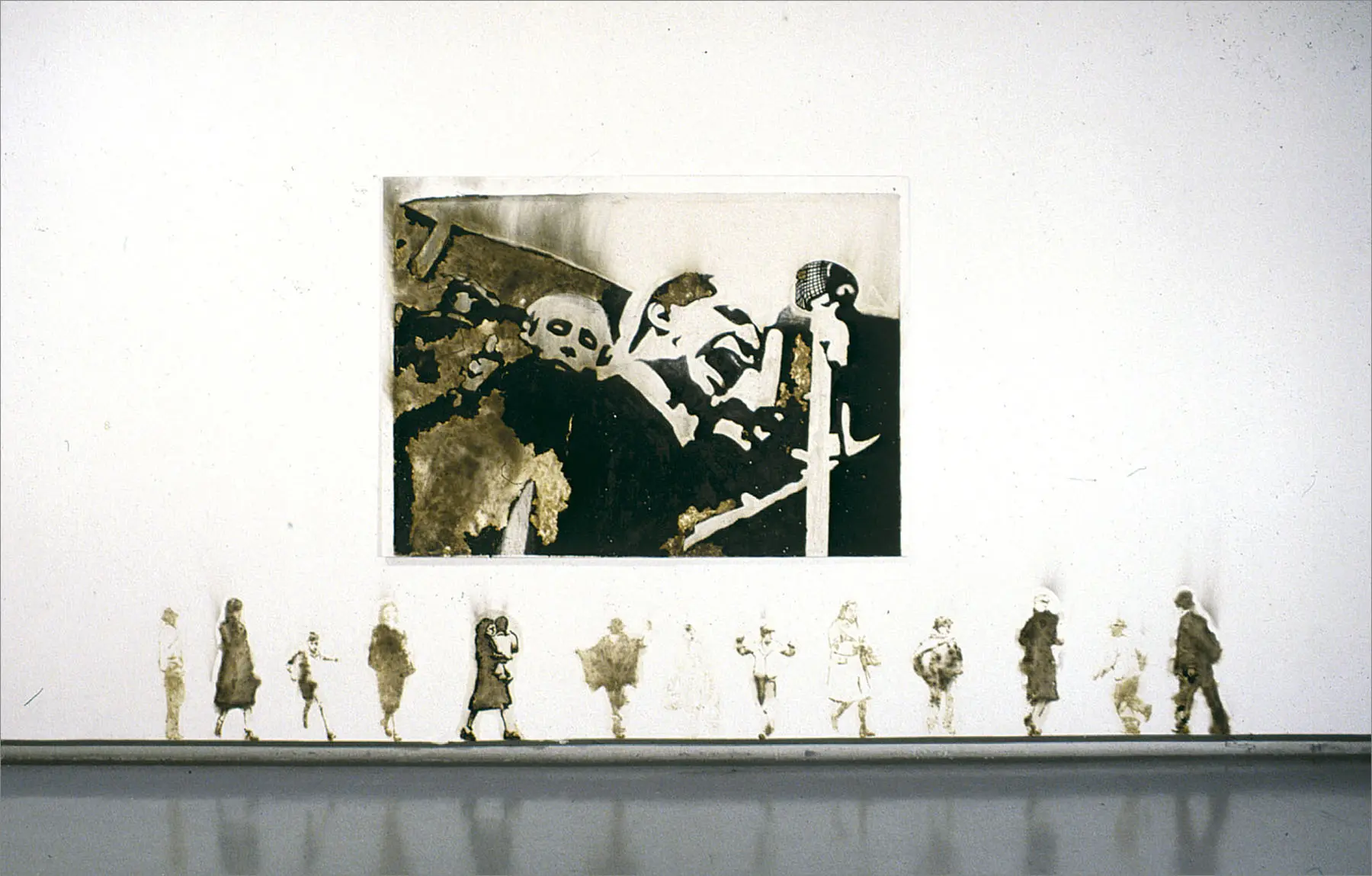
Bogotá Biennial
The expectations driving my visit to the latest Bienal de Arte de Bogotá —the most important exhibition organized by the Museo de Arte Moderno— were, I must say, more intense than those related to other periodic exhibitions held in the city, such as the Salón Nacional de Artistas, the Premio Luis Caballero, or the Salón Nacional de Arte Joven. The main reason for this is simple: this Biennial was two years behind schedule; the immediately previous version (the 8th) had opened in December of 2002 and during the four intervening years, no official explanation was forthcoming about the temporary suspension of the event.
To this, I added a less obvious interest: the 8th Bogotá Biennial, in which I participated as a member of the jury alongside Jaime Cerón, Ana María Lozano, and Fernando Uhía, was the first time that working fellowships were offered to participating artists. The six initial versions were configured on the basis of invitations to artists who in the previous years had gained visibility thanks to their active participation in the nation’s contemporary art circuit. The invitees were in turn evaluated by a pool of jurors —integrated almost always for the same people for a decade—; this evaluation adjudicated a single monetary prize. The Biennial’s seventh edition was organized through an open call where artists with a relevant professional trajectory competed for the same monetary compensation. The current edition maintained the format of a curatorial project.
On this occasion, the curatorship department at MAMBO invited, for Cohabitar, IX Bienal de Arte de Bogotá, a vast and heterogeneous group of agents active in the country’s cultural field from a variety of platforms and with a variety of interests, to form the curatorial committee. Thus, Gustavo Zalamea, Juan Alberto Gaviria, María Belén Sáez de Ibarra, Gustavo Chirolla, Eduardo Serrano, Armando Silva, Bernardo Ortiz and the Museum’s curator, María Elvira Ardila, were charged with constructing the theoretical and conceptual framework for the articulation of the exhibition’s artistic content.
The Biennial subtitle —Cohabitar— is of special interest. As Zalamea points out in his essay for the show’s catalog, this is a “concept/word/trap” that allowed the curators to encompass the most dissimilar and contradictory artistic initiatives, representing in any way each committee member’s separate engagement and translation of the verb to cohabit. The work of twenty-nine artists and collectives was situated within this outsize framework established by the Biennial. To the word “cohabitation,” the curators connected such diverse meanings as collective construction, micropolitics, peaceful coexistence, collaboration, fragility, solidarity, learning to inhabit, and difference, among others, as can be seen in the essays, they wrote for the catalog. Among the works exhibited, only a few were consistent enough as to critically and creatively converse with the institutional, theoretical, historical, and conceptual assumptions defended individually by each one of the curators in their respective essays and public presentations, sections of which were incorporated into the exhibition’s museographic script.
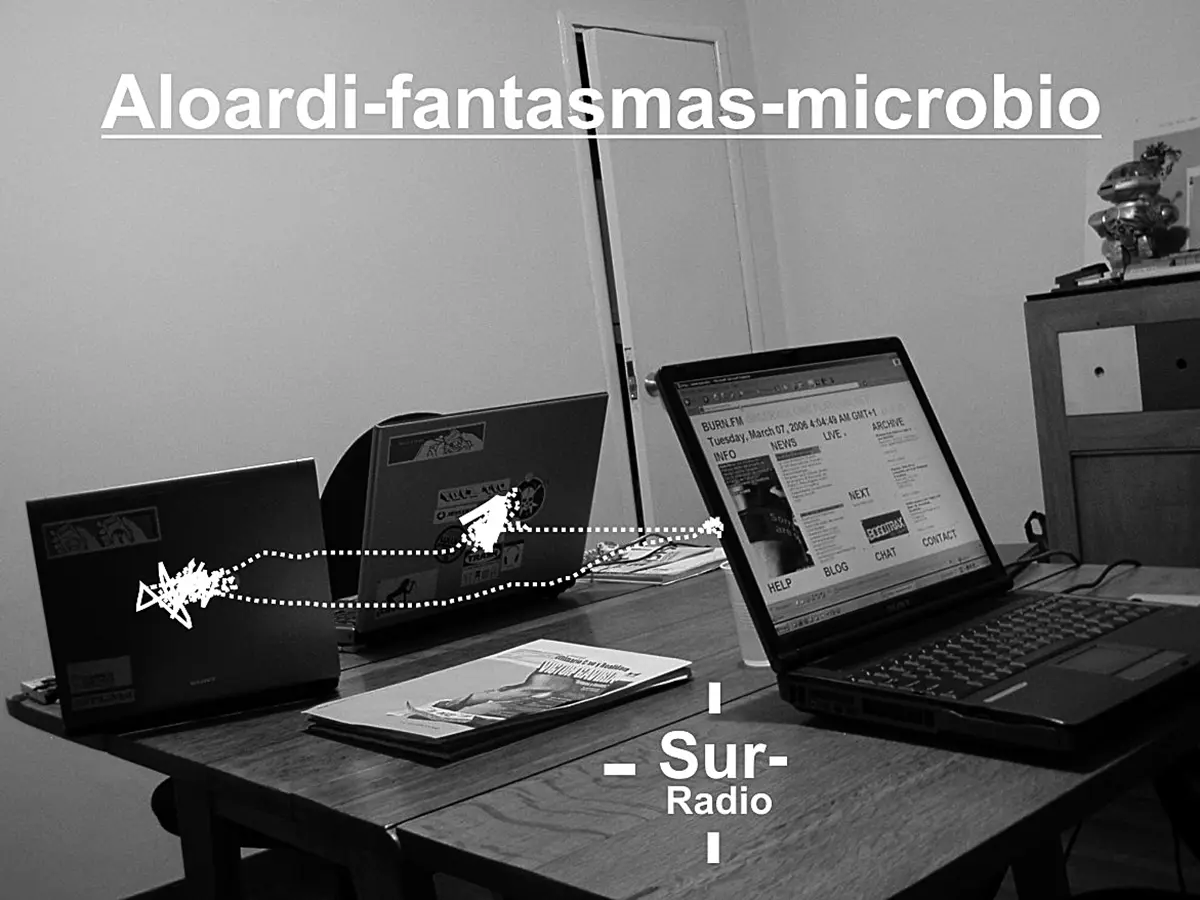
As I said above, few proposals were able to transcend the clichés of “the social” —which is, in general terms, the center towards which the contents put in play by this Biennial were moving— or its illustration through art, or, in the end, to overcome the commonplaces of the language that is commonly deployed to explain the products of certain practices exploring social spaces and non-artistic circuits of cultural flow. The proposals offered by Proyecto Espacio Temporal, Helena Producciones, Lecollectif, Proyecto Sur Radio, and Casa Tomada, as well as the work of Andrés Matute, who participated indirectly, were for me the ones that best exemplified and problematized the Biennial’s curatorial project.
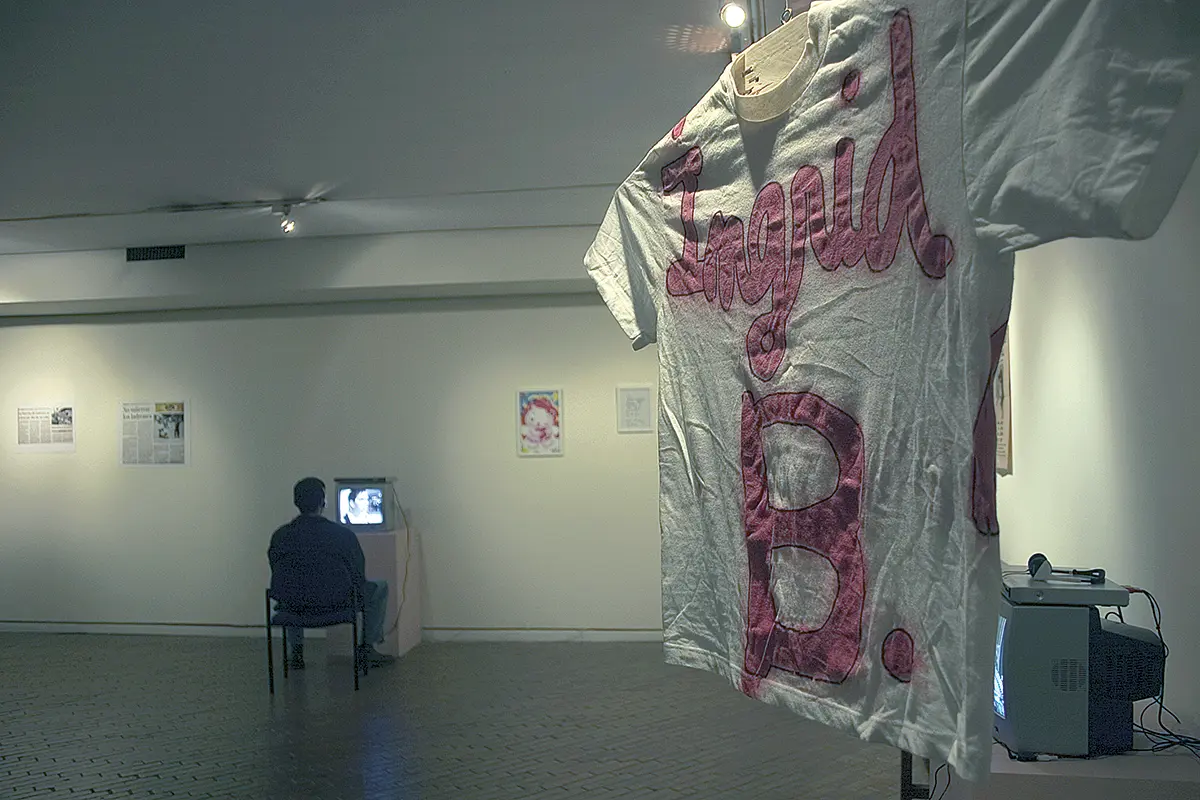
Within these proposals, I want to first highlight the one offered by the Helena Producciones collective, which works in Cali and exhibited several of the documents resulted from various investigations into the cultural field, expanded in turn by the media images generated of it and circulated on TV formats (previous LOOP programs and the performance within the space of the “LOOP in Bogotá” Biennial, based on presentations by certain musical groups like Mugre, Las Malas Amistades and Los Rimembers) and in the print press (the news produced by the first thieves strike promoted by Vladimiro Nieto, for instance.) The intention is for narratives articulated in this way to spaces of cultural consumption and circulation to allow and encourage other forms of appropriation and productivity on the part of a heterogeneous, not necessarily specialized public, as demonstrated by the various registers on exhibit.
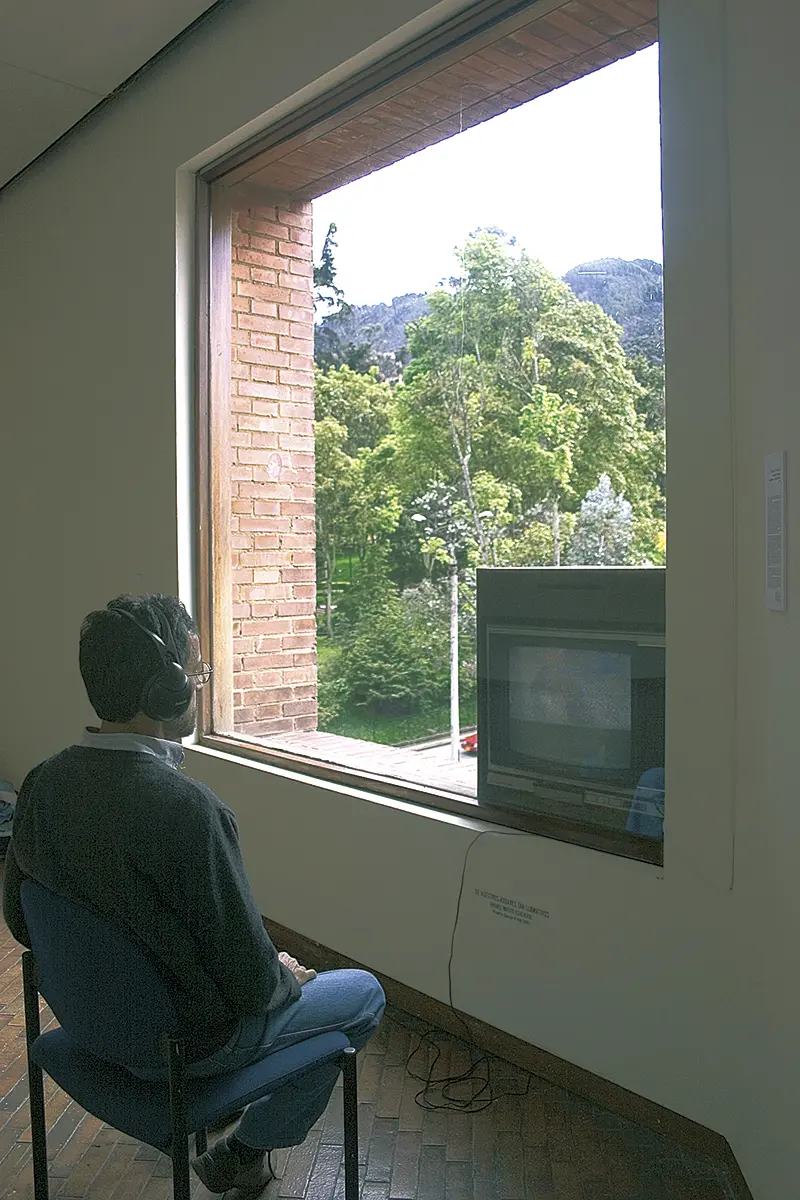
Lastly, I want to note Andrés Matute’s video-installation De nuestros hogares tan llamativos, which was included in this Biennial thanks to having won the Venecia Neighborhood Biennial, a project that was in turn invited to participate in Cohabitar, IX Bienal de Arte de Bogotá, abandoning in a way its specific niche, Bogotá’s Venecia neighborhood, to be installed strangely and conflictive at the MAMBo. In appearance, the Venecia Neighborhood Biennial’s conception, productivity, and strategies for circulation and construction of public response to the assumptions of site-specific art, which has nowadays exploded beyond the mere consideration of the receiving site’s physical characteristics and involves the non-material conditions of possibility present in an artistic act: it's cultural presuppositions, the social conflicts it articulates, the power relations that inhabit it, among others —conditions that were generally rendered invisible by the modern art system.
Andrés Matute’s work is inscribed on the horizon of the meaning of such practices. It points above all towards revealing the ethical contents articulated in any representation of the popular, which “not only breaks out of the Museum’s impermeability” —as the catalog has it— and is not innocuous, but interdicts the Venecia Biennial itself. A TV monitor placed at the very edge of the museum, outside one of its windows, drawing its electric power and its public from inside the building displayed a series of video-clips recorded inside Venecia neighborhood homes, with musical scores selected by their inhabitants. Initially, these videos were broadcast through the neighborhood’s community TV station, but translated to the Museum’s and the Biennial’s institutional space drove the artist to develop a tactic that, aware of the cultural space it involved, promoted new connections —through a series of encounters in the Museum of some of the agents involved in his work— that made evident the conflicts hidden in the exercise of the power of representation of the popular from the standpoint of the institution of art.
The National Young Art Salon
It is in the stage of a conflict between representative high- and low-culture practices, or between products of the cultural establishment and so-called countercultural products, that the curatorial project presented by the Reciclash group —formed by Mónica Eraso, Carolina Jiménez, Santiago Monge, Jorge Pachón y Paola Cardona— for the 8th National Young Artists Salon at Galería Santafé. Titled Ctrl + Alt + Supr, it included works mostly from Bogotá, Cali, Medellín, Barranquilla, the coffee region, and Bucaramanga.
This proposal, winner of the visual arts call for entries promoted by the District Institute for Culture and Tourism the previous year, explored the representations and practices of youth that develop and circulate in alternative, non-official urban media, such as the Internet, fanzines, billboards, and graffiti, so common today in our cities. The dynamics in these circuits encompass social experiences that are close to an expanded the notion of appropriation: visual and musical recycling, “piracy,” construction of multiple virtual identities, copy/paste tactics… Everything points towards the clear and definitive impact of the mass media, the access to new technologies thanks to scientific and technical mass-consumption devices, the permanent presence of the market in the configuration of current and new modes of social relations, of cultural production, of construction of reality, that traverse the totality of, say, private everyday practices such as sexuality, language, visuality, and in general all cultural appropriation and consumption.
We have been able to see most of the works by the fifty artists and collectives invited to exhibit at the Galería Santafé in the District Planetarium in their urban places of origin, which is to say, in the city’s walls and streets, on the bodies of young people, in the art workshop at various universities (especially in Bogotá,) in fashion and design stores, in some bars, in We pages, and a few in the traditional spaces of museums and galleries. The “street” character of the various proposals was, precisely, one of the difficulties posed by the Salon’s museography: to exhibit appropriately productions that, in their nature and goals, escape to just such appropriateness.
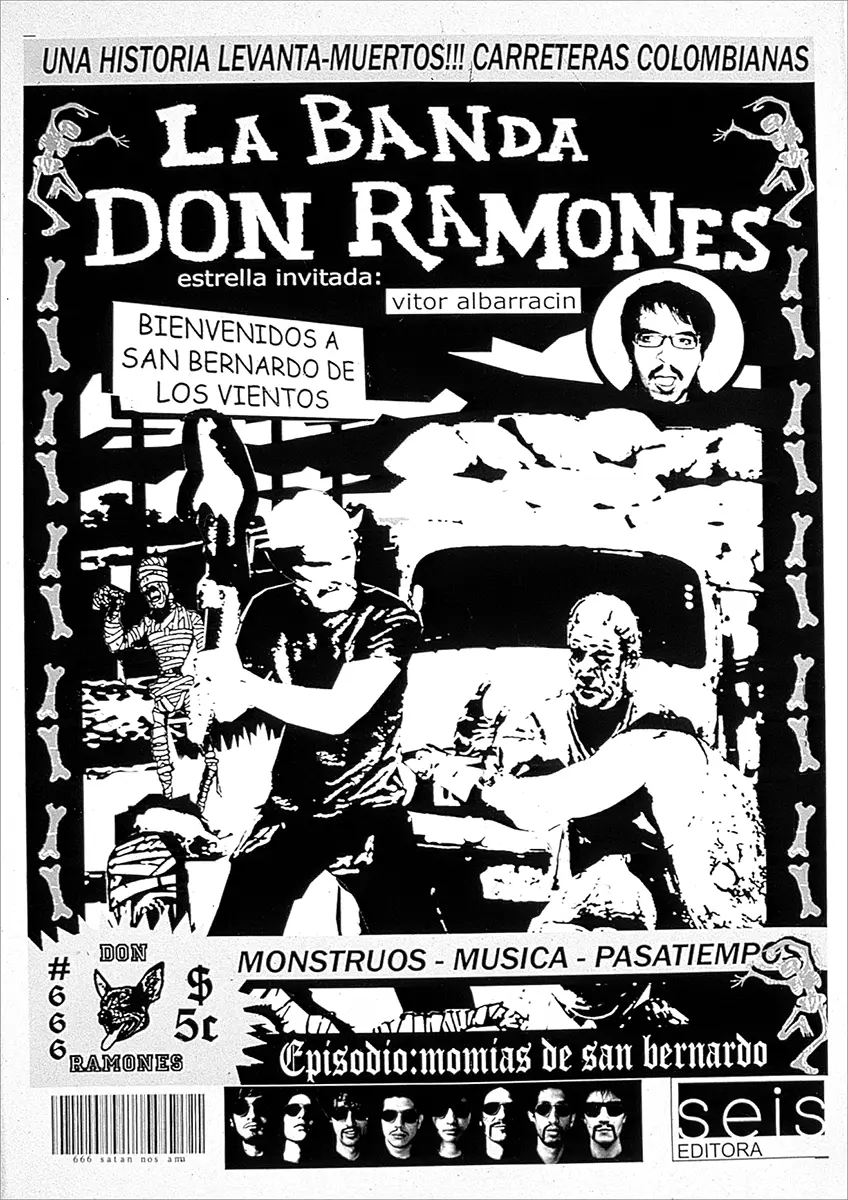
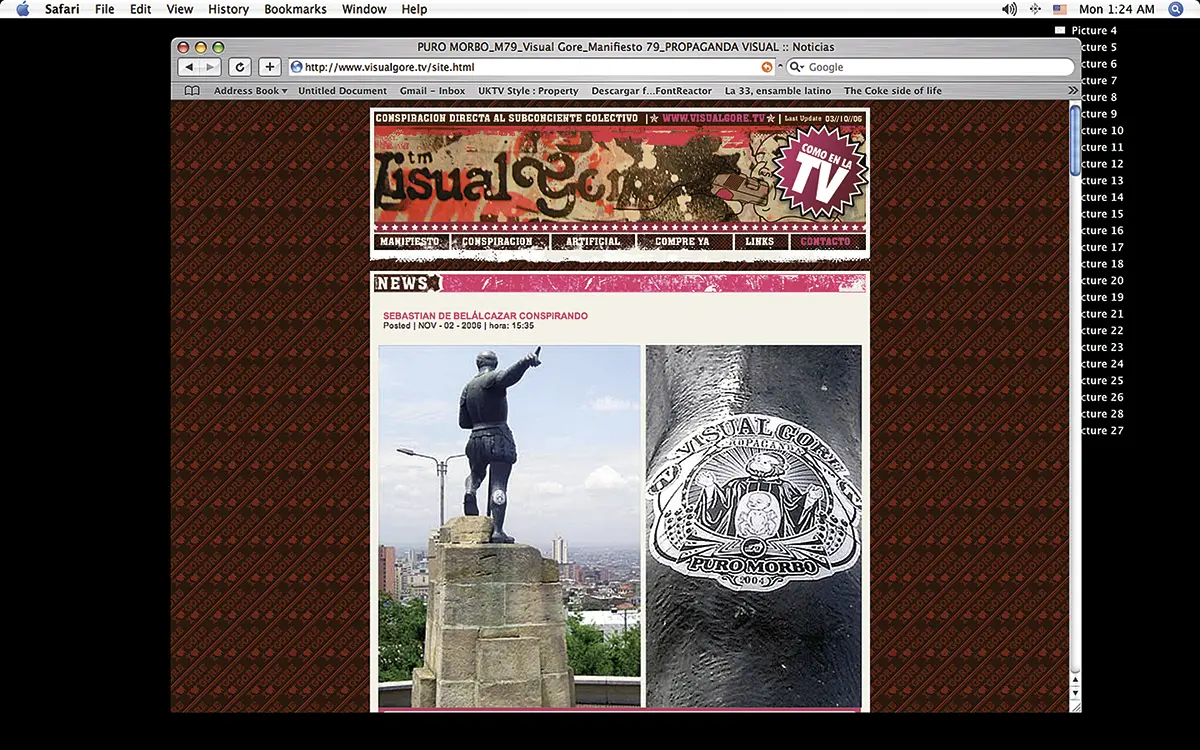
Visiting the show, it was impossible not to notice a certain level of contradiction between the containing object and the objects contained therein —between the gallery’s architecture and the fanzines, billboards, and stencils that comprised the exhibit—, with the exception of the chapters titled “Pulguero Virtual” and “Sala Virtual,” which were able to offer an adequate medium for the proposals presented, such as Julián Cardozo M79 (http://www.visualgore.tv/site.html), Typozon (http://www.typozon.com/), Museo Vintage (http://www.museovintage. comhttp://www.jstk.org), Joystick (http://www.jstk.org/) and the well-known projects Popular de Lujo and Excusa2. Among other supports, it is worth noting Don Ramones collective’s fotonovela titled Las Momias de San Bernardo, Joni Benjumea’s publication Robot Comics and the fanzines Lunática and Fenómena by Constanza Espitia and Colombian Trash Fanzine by Javier Posada.
The difficult relationship between what is exhibited and the location in which the exhibition takes place did not, however, blunted the reach of the curatorial project’s investigation. I think that all the materials tracked and gathered in this way signaled non-stereotypical spaces, tactics, and modes of circulation that are associated with —and give shape to— the so-called youth cultures, which today, thanks to new technologies as I pointed out, have multiplied almost into infinity in their potential for visibility and action in the city, which sometimes makes irrelevant, as in this occasion, their staging in the space of a gallery that ideally responds to a different set of assumptions about the work of art, the artists, and the artistic activity itself.
None of this means that it is impossible or undesirable to articulate and render significant the cultural conflict described here, among other things, because such has been the best-defined condition of possibility of artistic production throughout the Twentieth Century and so far in the Twenty-first: a constant reaction to the establishment on the part of subjects that do not see themselves adequately and legitimately represented in the official spaces and the correctness of hegemonic culture.
FERNANDO ESCOBAR