
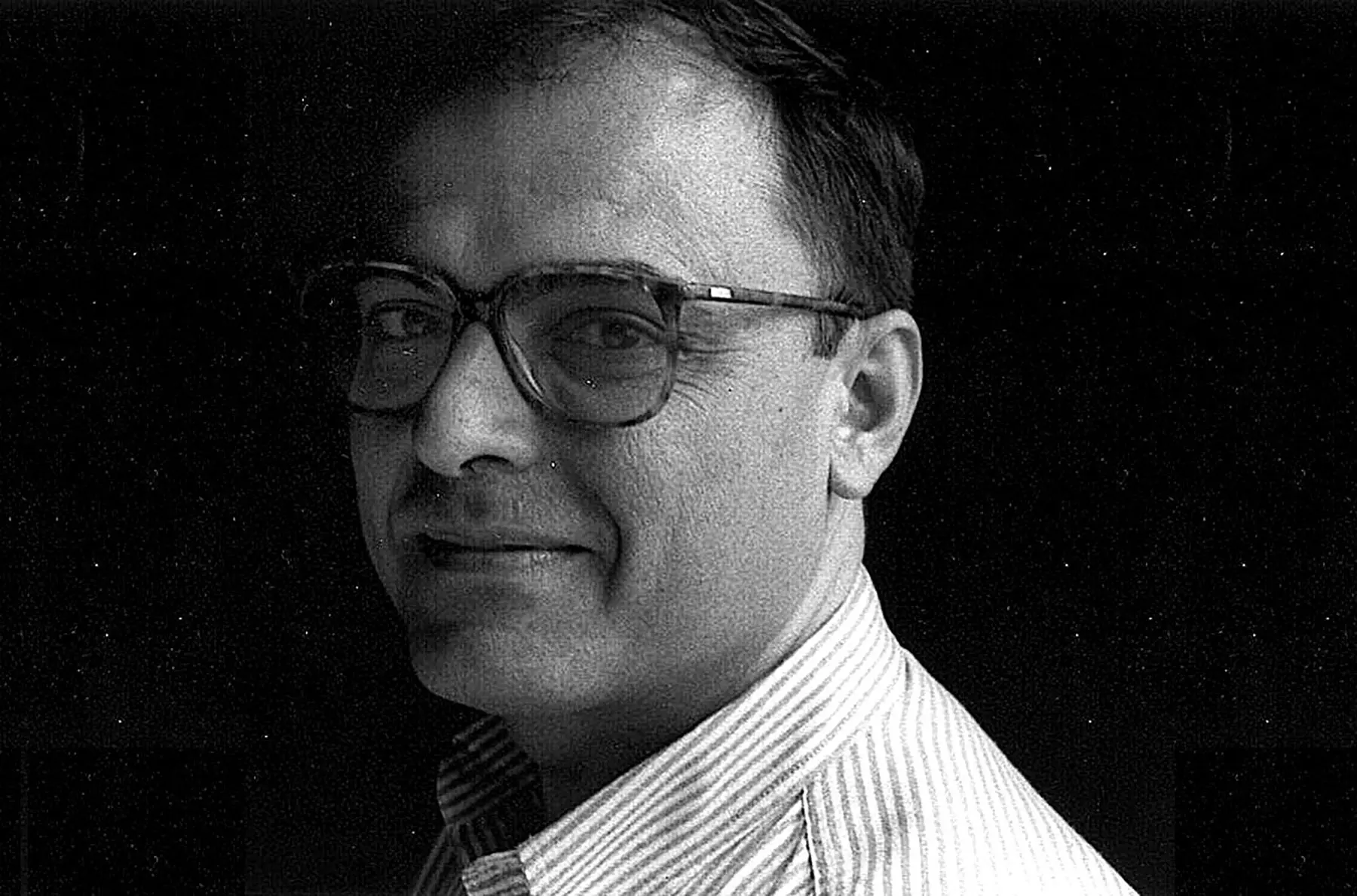
On April 20th, at the age of 52, the Venezuelan historian and art critic Juan Carlos Palenzuela passed away. He was educated as a historian in the Universidad Central de Venezuela and gained a Doctorate in Art History in the Sorbonne, Paris. While he worked as a cultural attaché of his country in France between 1994 and 1996, the essential part of his work was as an independent writer, which he carried out with passion and devotion until the last moment. His last work, Armando Reverón. La mirada lúcida (Armando Reveron. The lucid look), is currently in print, in which, after a profound investigation and revision of documents, he contributes new lights, essential for an updated reading of the Venezuelan master.
His contribution to the study of Venezuelan art includes hundreds of articles for the press, mainly in the daily newspapers El Nacional and El Universal, as well as fifteen books. Among those: Arte en Venezuela 1838-1958, Arte en Venezuela 1959-1979, La fotografía en Venezuela 1960-2000 and Escultura en Venezuela 1960-2002 stand out. Recently he had been working in the third volume of Arte en Venezuela on the years from 1980 to 2006.
As a historian of Venezuelan art, Palenzuela stands out for his great academic rigor, which led him to revise all the details and information on which he based his discourse. His broad vision is also very notable: he took into account not only the production of the artists but also the historical context, the history of the cultural institutions, the galleries, the criticism, and the art market. He re-established complacent hierarchies and knew how to ally the exactitude of the historian to the passion of the critic. He abstained from sponsoring tendencies, and if he was at times virulent, in retrospect the fairness of his judgments is impressive.
FEDERICA PALOMERO
ArtNexus No. 58 / Arte En Colombia No. 104
November 2005:
...“Colón en el Golfo Triste dates from 1898, although it was
installed and unveiled in 1904, when, by the way, it’s author had already
passed away. It was a memorial monument in marble and bronze. On a 20-meter
column stood Admiral Christopher Columbus, his arm outstretched towards the
horizon…
The September 1904 edition of the Caracas newspaper El Corresponsal highlighted the fact that this sculpture by Rafael de la Cova was "the country’s first monument." It was certainly the first monument to be erected in the public space of Caracas...
Cova’s work, in turn, was savagely ruined during the day and in plain view of TV cameras. A small horde of Chavistas decided that Columbus was an agent of the Spanish empire and should be decapitated. So, they brought down his figure. They also pretended to vindicate the rights of indigenous peoples. An indigenous memory that, in today’s Venezuela, has been reduced to beg in the streets and to spend the night at Los Cabos park. No revolutionary authority has done a thing for those poor souls to this day.”...
JUAN CARLOS PALENZUELA