
Celia Sredni de Birbragher: How did you begin collecting art?
Diana Berezdivin: In truth, I was always interested in art. I saw Calder’s mobiles as an adolescent and was fascinated. Without a thought about acquiring or collecting, I was always attracted to everything visual—architecture, art, historical buildings. I left Cuba very early, at a key time, and when we settled here in Puerto Rico and I had the opportunity, I started buying small things. Over time, my husband Manolo joined me because I was able to pass on my interest, and we started collecting together. The next thing we knew, it had become an irrepressible passion. Our walls were covered, but we didn’t stop.
C.S.B.: You have been great supporters of Puerto Rico’s artists and, although the collection is not devoted exclusively to Puerto Rican art, it seems to me that you continue to support them.
D.B.: Yes, we support art in Puerto Rico, which is where we live, where we are in touch with especially contemporary art and emerging artists. With the collection, we always emphasize that it is not exclusively about Puerto Rico. In fact, at a certain point we also supported emerging Cuban artists because, although we live in Puerto Rico, we have our ties with Cuba. Later we acquired and collected from all over, but a few years ago, when the market opened up to art from formerly peripheral locations and started to include Latin artists, we felt they didn’t need all of that support from us and thus widened the reach of the collection by acquiring art from the rest of the world. Yet we remain very aware of Puerto Rican art.
C.S.B.: When did you make the decision to create Espacio 1414?
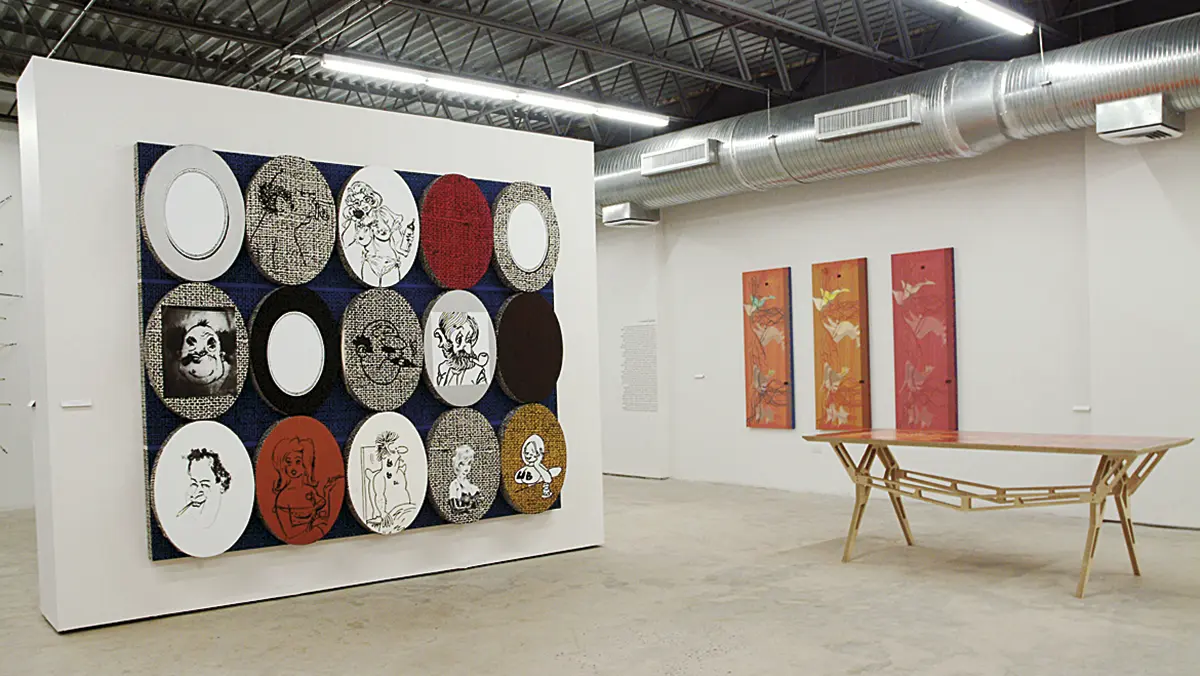
D.B.: It was not a conscious decision to create a space. In reality, we needed a warehouse to hold our works and when this space turned up and it was larger than what we needed for the warehouse, we simply decided, without having thought about it too hard beforehand, that we could share the collection with interested people and promote knowledge of contemporary art.
C.S.B.: Does space serve an educational purpose?
D.B.: Yes, because we are strongly interested in promoting contemporary art and to have people learn what it is about, because many see contemporary art as something that is not as easy to understand as more traditional art, and one hears comments like, “But, anybody can do that—my kid could do it, it looks like something out of kindergarten.” And since we have learned that all this art has a past and that there is a history of art that made it possible, we want to share this information with those who are interested so that they can also have information and clues to the art. Once you have them, you realize that it is possible for you to find the message, to see what the work is about. And we thought that was key because if it were a matter of just displaying what we have collected, that would hold no interest for us.
C.S.B.: Are the shows thematic?
D.B.: Well, just as we are interested in conceptual art, we also believe that an exhibition must have a concept and bring together the strength of many artists to propose a message, which is in the end what we understand an artist does. Like a writer who uses the written medium to say something, to propose a message or to describe a situation, an artist does it in a visual way.
C.S.B.: As you organize exhibitions, do you acquire works that perhaps were needed within the collection?
D.B.: That is definitely something new for us because we didn’t create exhibitions before. To begin with, all the works on display are ours. That could change; we don’t have something like a five-year plan of what we will do. But right now, everything comes from our collection. And yes, when we are thinking about future exhibitions, I keep them in mind, and when I see works, I say, “If I must choose between this one and that one, this one will come in handy for show X, Y, or Z.” This helps me to stay focused. We like to be focused, to have a direction because the market is too wide.
C.S.B.: When did you think you would hire a curator for the collection?
D.B.: That was just something that happened. I had thought—when we purchased the space and were preparing it—that we needed the help of someone because it was too much work. There was one person, Julieta González, who had come to do a residence in Puerto Rico, and I asked her if she was interested, and that’s how she started doing it. It wasn’t premeditated, that’s just how it happened.
C.S.B.: In the process of your collecting, you first acquired Puerto Rican artists, then Latin Americans. At what point did you start acquiring contemporary art from other places?
D.B.: At the same time we began acquiring art from Puerto Rico, in the 1970s, we also started buying contemporary art from Israel. Israel had an infrastructure of museums, acquisitions, and critics that Puerto Rico lacked at the time. We learned a lot from people who helped us to stay focused; to see how a museum works, how acquisitions work; what you look for in an artist, their works, their awards, exhibitions, what museums have their oeuvre. In other words, we learned a bit about how this all works. Of course, because Israel was so far away, it was difficult for us to follow the work of the artists, and also there came a time when it was too small of a market. Then we looked for a different focus, and it was Latin America. Puerto Rico was always a given—it is our home. But a few years ago, I would say in 2000, the international market started to open up to Latin American art; the art started to show up in auctions, galleries both in Europe and the U.S. had Latin American artists, and we decided that we could ease somewhat the loyalty we had maintained for a number of years. We opened up in turn and included other things, and that is what has been happening for the past five years. But the interest is always for the collection to have a high degree of Latin American content. Also, we believe it is interesting to show these artists together because when artists from any region are exhibited alone and not in dialogue with others, one cannot truly appreciate their strength. Once you are able to exhibit someone like Chemi Rosado next to Albert Oehlen and the work holds its own, that means it is good, it is strong, that the work is valid.
C.S.B.: What has been the role of art fairs for the collection?
D.B.: Art fairs have had a great impact because you go to a fair for three or four days and have a chance to see art from galleries from around the world—it would otherwise be hard work to go from gallery to gallery; it wouldn’t be the same. Something else I think has had a large impact is the Internet because, through the ’net, one can keep in touch daily with galleries from all over. I can write to someone in Japan, Mexico, Brazil, New York, Berlin, or Norway. So, yes, I believe that fairs and the Internet have made a great difference.
C.S.B.: Have you ever bought art through the Internet?
D.B.: Yes. I do it all the time. In fact, often when we are at a fair and there is an artist that we like, we have already seen the work and we know what they are doing. We do the rest of the work through the Internet and they send us images. And if we believe we can appreciate it, we buy it through the Internet, and if not, we ask them to set it apart until we have a chance to see it in person. But, definitely, the Internet is an important tool.
C.S.B.: And what has been the role of auctions for your collection?
D.B.: Also a very important role because, again, an auction is almost like a museum exhibition. You go and see all kinds of artists, perhaps someone you were not aware of and who grabs your attention. And an auction is also a good place to acquire older work that you missed earlier. We buy and sell at an auction all the time. So, auctions, like fairs and the Internet, are very important.
C.S.B.: Is there a region of the world where you think it is important to go to acquire or seek works?
D.B.: For sure, New York. It is not at a fair, it is there. New York has the largest concentration of contemporary production and is the most accessible to us.
C.S.B.: Some collectors feel that New York galleries are difficult. How do you feel about that?
D.B.: I believe that’s true; they are somewhat intimidating. There are some galleries where you have to “prove yourself.” It is in this sense that fairs are a good thing because there you find galleries that are smaller, more accessible, and easier to work with. You must also understand that many people go to New York just to see the art, and the gallery employees are very busy and cannot spend the whole day explaining everything to everybody and answering questions. I understand them in part, but it took some time before I felt comfortable enough as a collector to go and say, “I want this.”
C.S.B.: If you were to give some advice to young collectors who are just beginning, what would it be?
D.B.: I would advise them to work with good galleries, with those they feel connected to. I would tell them to read, to look at magazines, the press, and books, to see what is going on and to focus on what they like, because in the end one lives with the work and that’s the fun part, to acquire things that speak to you. You must see curated collections but, since you can’t see them all, you read about what the different curators chose in order to balance what the gallery says.
C.S.B.: Many times you acquired works, received them, and then left them packed.
D.B.: Yes. That was at the beginning when you start buying more than you can hang on the walls. You start getting more into the collecting aspect, in which you like the work of a given artist, and you cannot hang this work in your home, but it will be at a such-and-such museum or in the such-and-such exhibition. I believe that is what makes the difference between buying works for your home and buying them to satisfy the desire to have certain kinds of works even if they are inadequate for the space available. Indeed, we have works that have taken us years to unpack.
C.S.B.: Does Manolo share your passion for art?
D.B.: Yes, we do this together. We have our “differences.” Our interests are diverse because Manolo is somewhat more traditional and is interested in “Painting” painting, or conceptual work that can be read as painting. I have a more contemporary taste; if I am interested in the artist’s message, I am not concerned with what medium it is expressed through, whether it is video, installation, drawing, photographs, photography—I don’t care. What interests me is that the artist’s message is valid for what I see in my collection and my interests.
C.S.B.: What do your children think of your passion for art?
D.B.: Well, they accept it and are pleased that we are interested and keep doing this. But they don’t have the same passion at the moment.
C.S.B.: In Puerto Rico, there is no institution working aggressively with contemporary art. Do you think this is a factor for the space that you have created to be especially important in Puerto Rico?
D.B.: To answer, we would have to talk about definitions. Perhaps you and I define contemporary art in the same way, but there are groups, people, and institutions that have a very different concept of what contemporary art is. I cannot say, then, that contemporary art is not accessible in Puerto Rico, but I can say that Manolo and I have a vision, another way of looking at it. Our collection reflects our interests and we have noticed that there is a large group of art teachers and students who share our vision, who are glad to have a place where they can go and see the work of contemporary international artists. We are also pleased with the fact that young collectors can come and see what is happening in contemporary art. Maybe it gives them some direction in terms of what area they can focus on because I always say that one can collect art in several ways and at different levels. One simply situates oneself wherever one can, wherever one feels comfortable. I also believe that it is important for those who are young to collect artists of the same age because they grow together. If we keep collecting younger and younger artists, it will be our grandchildren who see them become masters.
C.S.B.: When I visited your space, I saw there was educational material—photographs, texts—in support of the exhibition. What happens to that material when the exhibition is over?
D.B.: That material is digitized and will be kept. We would like to create a website to make our exhibitions accessible to interested people outside Puerto Rico. We don’t plan long-term; we do things as opportunities arise. But perhaps one day we will make publications of the different exhibitions, especially those like the current one, which has a theme that will continue to be of interest in the future.
C.S.B.: Tell me about the lights exhibition.
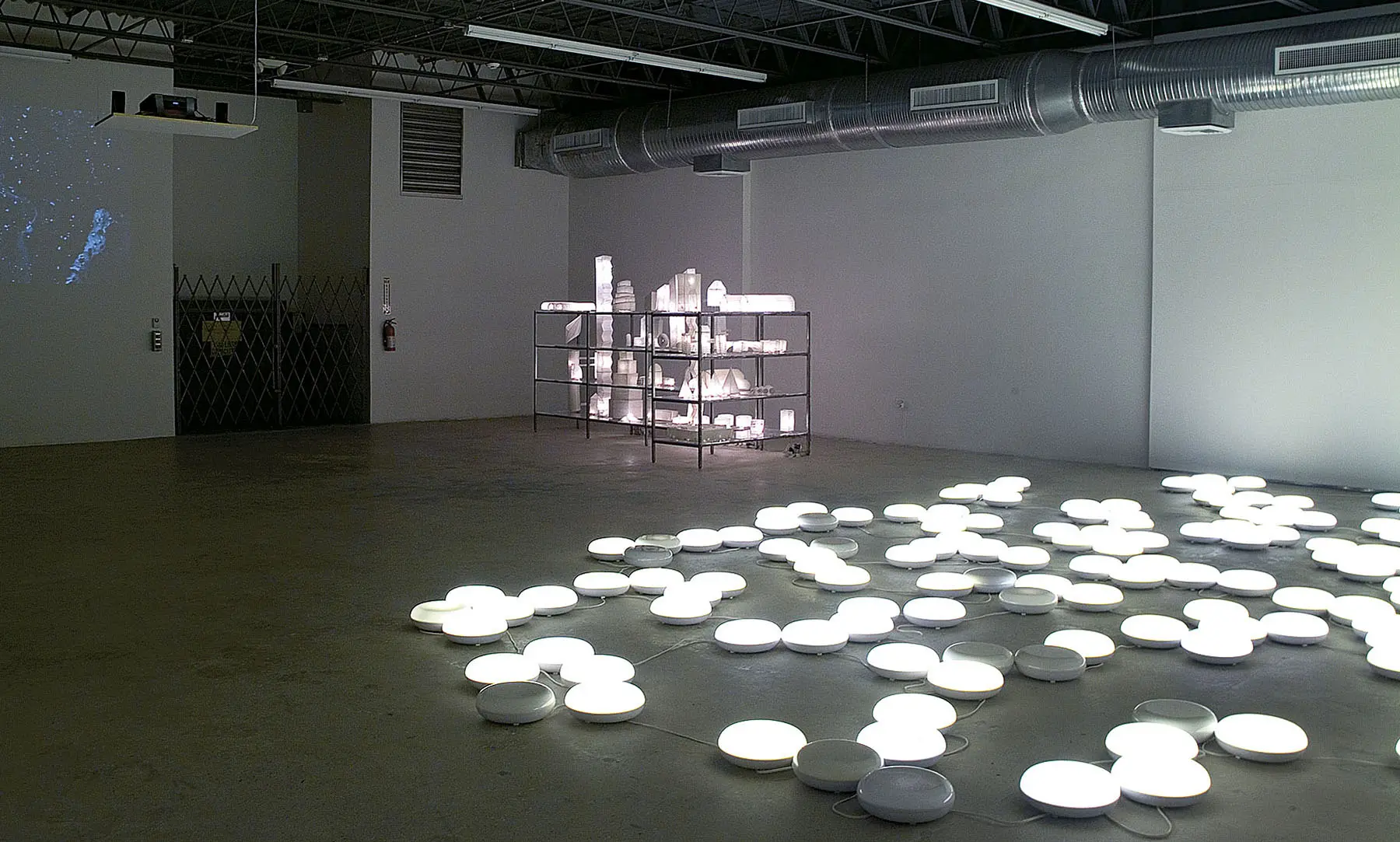
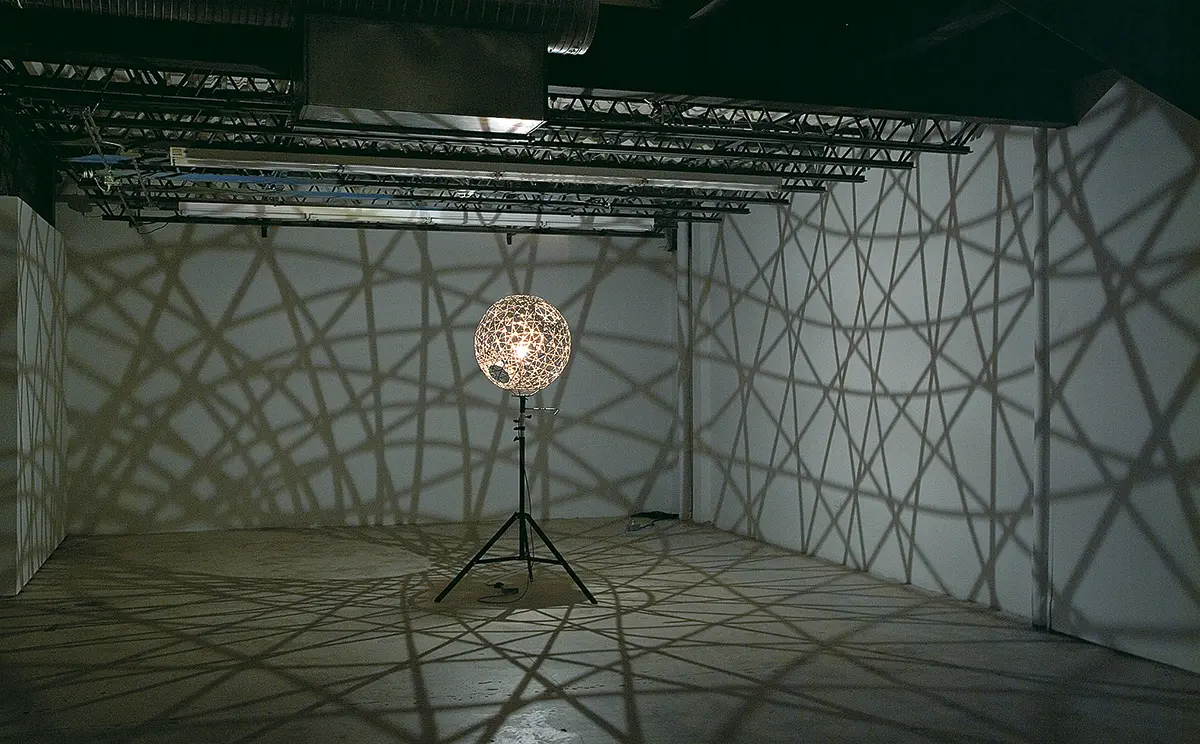
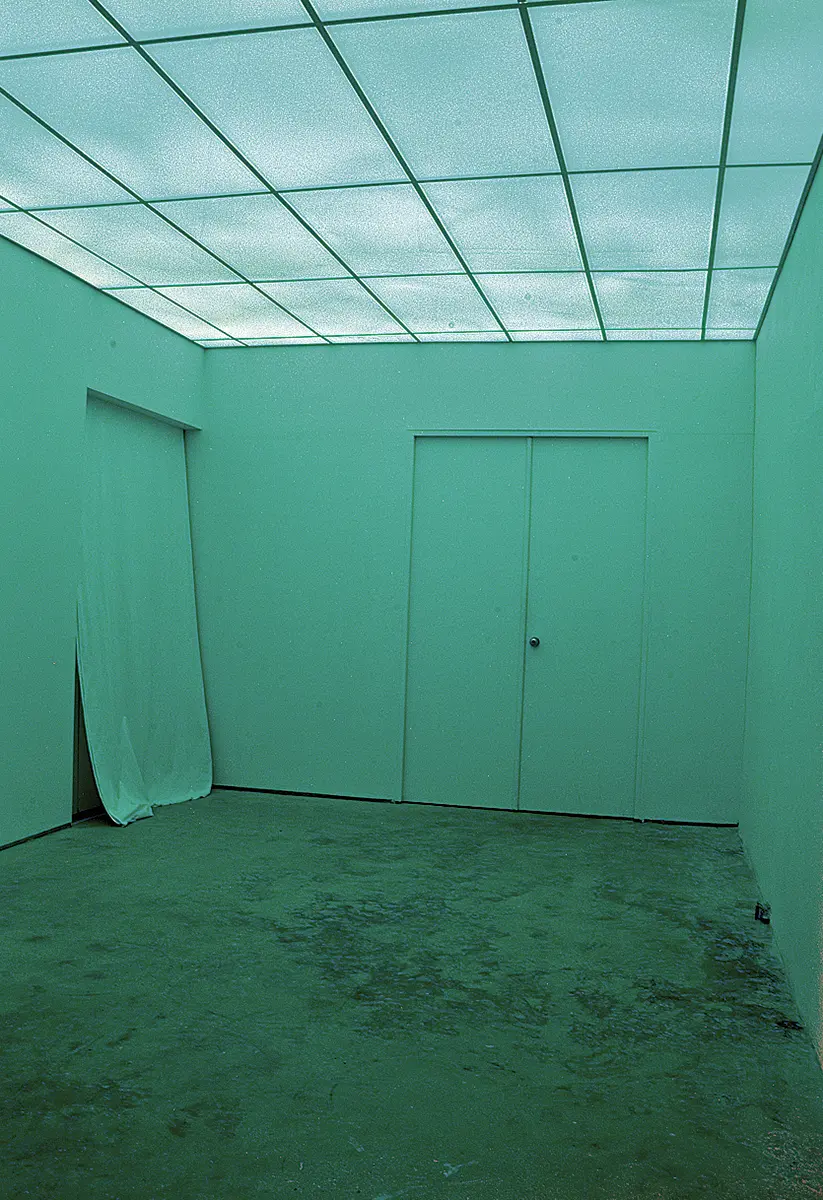
D.B.: A few years ago, we became interested in the work of Olafur Eliasson, a Danish artist; he works often with the theme of light. We bought some lamps from him, and to truly appreciate them, they must be in a darkened area. So, the whole exhibition was done with light installations and the galleries were completely dark. Each lamp projected a different light—in fact, one of them eliminated all perceptible colors and left only white, black, and the range of grays. To demonstrate this effect, some works were presented as supporting devices or platforms for the ideas in the exhibition, and these, placed next to the lamp, were seen in black and white. You must remember that for many years all artistic investigations were about light because color is part of light and light is essential to painting. The contemporary artists in this exhibition handled such ideas in a different way, and we believe this exhibition was visually and educationally interesting.
C.S.B.: Earlier, we were talking about video. When did you move from buying visual objects to buying video works?
D.B.: It was about five years ago. I kept seeing videos and there was always the question of whether they can be seen as works of art, etc. It was a difficult step, and I know exactly what our first video was—one by Luis Gispert, the one with the cheerleader dancing to the car’s siren. Little by little, I was unable to resist buying video works because there were good artists making them and that was the way. I am more and more convinced. And it is the easiest thing to collect: you have a certificate, two videos (one you put away and an exhibition copy), and a projector; in a room with a single video, you project it and you have the whole room.
C.S.B.: Let’s talk about Chemi Rosado’s work in the exhibition about painting.
D.B.: That was one of Chemi’s first works. Chemi went to a place called El Cerro, a mountainside village that can be seen from the highway, and offered to paint the houses in variations of green to integrate them into the landscape. It was a complex process because Chemi had to convince the villagers of the idea. As part of the project, a magazine was published (organized by Pablo León de la Barra) and the members of the community were asked to bring out their most precious objects. These were exhibited, and there was a project for the children: they were asked what they liked best and what they liked least about El Cerro, which they expressed in drawings that were also exhibited at the “museum.” It was a social project that took place as the houses were being painted, and at a given point a panoramic photograph was taken. If I am not mistaken, several photographs were placed together and photographed again. As part of the work, there is the documentation of the whole process and the participation/collaboration of the community of El Cerro. I believe it was an interesting project not only visually but also socially.
C.S.B.: Let’s talk about the Puerto Rico ’00 project, with which you were closely connected.
D.B.: There were three: the one in 2000, the one in ’02, and the one in ’04. For this project, many curators and artists from all over the world were invited to Puerto Rico, and I think it made a great impact on local contemporary art because many young Puerto Rican artists had a chance to meet and interact with international curators and artists.
C.S.B.: And how did these events influence you and the collection?
D.B.: In just the same way, because I had the chance to meet curators and artists and to see the validity of certain works to which I had not been exposed. I followed the careers of several of the artists who came, and eventually, I acquired their work. It was the beginning of the collection’s conceptual focus. In 2000, many artists who now are very important were here. How could I understand Rirkrit Tiravanija’s meal at the beach, or his intervention in an Old San Juan bar, as a work of art? When one sees the event, connections are made and a window is opened. If you don’t have that opportunity, you can’t appreciate it. What happened to me must have also happened to many artists.
CELIA SREDNI DE BIRBRAGHER
Founder and Editor of ArtNexus.