
To analyze the work of Alberto Baraya (born 1968, Bogotá) is to
connect it to the idea of fiction. The connection between art and fiction is
not a surprise but, in the case of Baraya’s oeuvre, the manifold possibilities
with which he questions the content of the word are particularly interesting.
Painting, photography, video, and installation are only some of the resources
he deploys to explore the fetishistic charge in the art world and the peculiar
relationship between art and scientific knowledge.
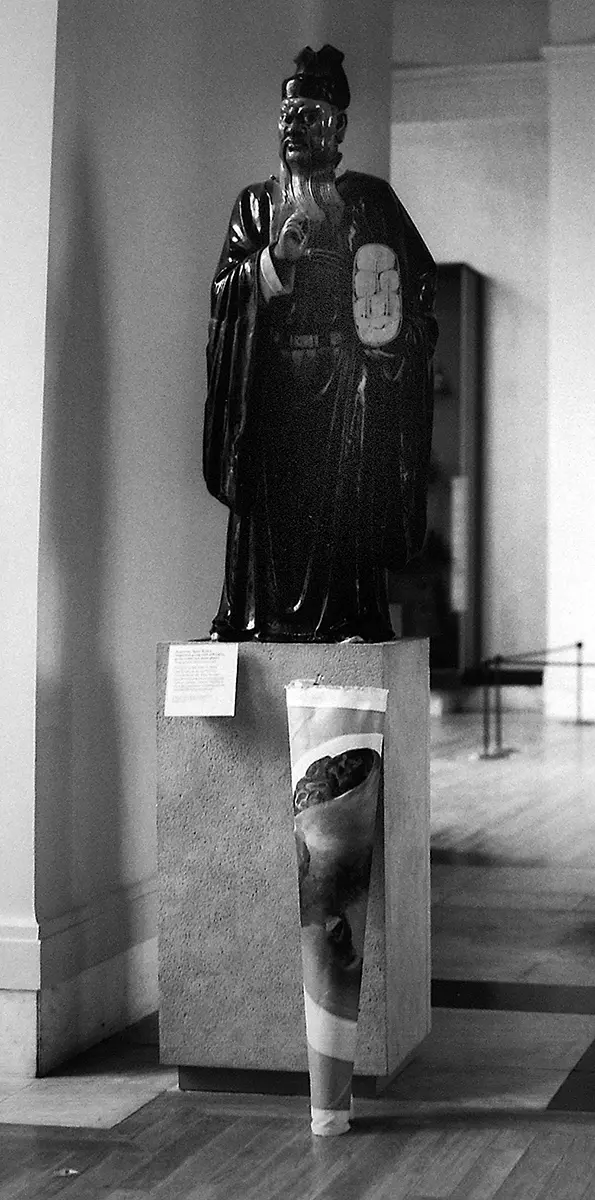
Baraya’s project Artificial Mitification of Painting (You Shall Die, You Shall Not Know When) was begun in 1997. Baraya created an image with a Baroque referent, St. John the Baptist’s severed head, but with a key alteration: he painted his own head and not the saint’s. With this unframed canvas alluding to an often-reproduced image of seventeenth- and eighteenth-century Western art, Baraya set out on a journey that sought to legitimize and mystify his painting, supported by the particularities of the spaces he visited. His journey included photographing himself with the portrait in such diverse places as Rome, Madrid, Paris, New York, BogotáK8and Egypt. Some of these visits included emblematic spaces that preserve the history of art, such as museums. On what the artist called “a kind of pilgrimage,” he photographed himself with his self-portrait alongside artworks noted for their significant auras, in an attitude befitting the project’s title.1 Placing his work next to a Picasso, a Duchamp, or the Temple of Hatshepsut legitimized him. The photographs became the resource through which the relationship between reality and fiction was inscribed.
What remained from this variation on artistic tourism, which Baraya undertook with his severed-head picture rolled up under his arm was the photographic record in which the legendary object—the Victory of Samothrace, the Captive Slave, or the Pyramids—shared space with Baraya and his painting. The self-portrait was destroyed in the year 2000, and, as the artist puts it, “The burning of the painting that I did at a given point obeyed to a mode of ‘mystification.’ In itself, the painting already represented a kind of destruction (a mutilated self-portrait, the severed head). It's burning was the final symbolic step, where after its destructions it was the turn of the narrative and the photographs to speak about the painting, no longer the painting by itself.”2
His 1998 project Venus (from Milo) followed similar lines of exploration. For several days, the artist positioned himself with his severed head painting behind the famously emblematic sculpture of Venus. Using statistical analysis, he was able to determine that more than 41,000 people took their photograph next to the sculpture, meaning that Baraya and his self-portrait were captured in those images, now dispersed throughout the world.
Concurrent with these projects, Baraya continued to explore the idea of legitimization connected to space, to other works, to texts, and to the words of history. He made Torn Pages, consisting of loose sheets connected as if part of a book, on which he included stories, experiences, and personal reflections. Following the model of the severed head, the beginning and end of the text were truncated, as a record of the paradoxical circumstances Baraya lived through while creating the project.
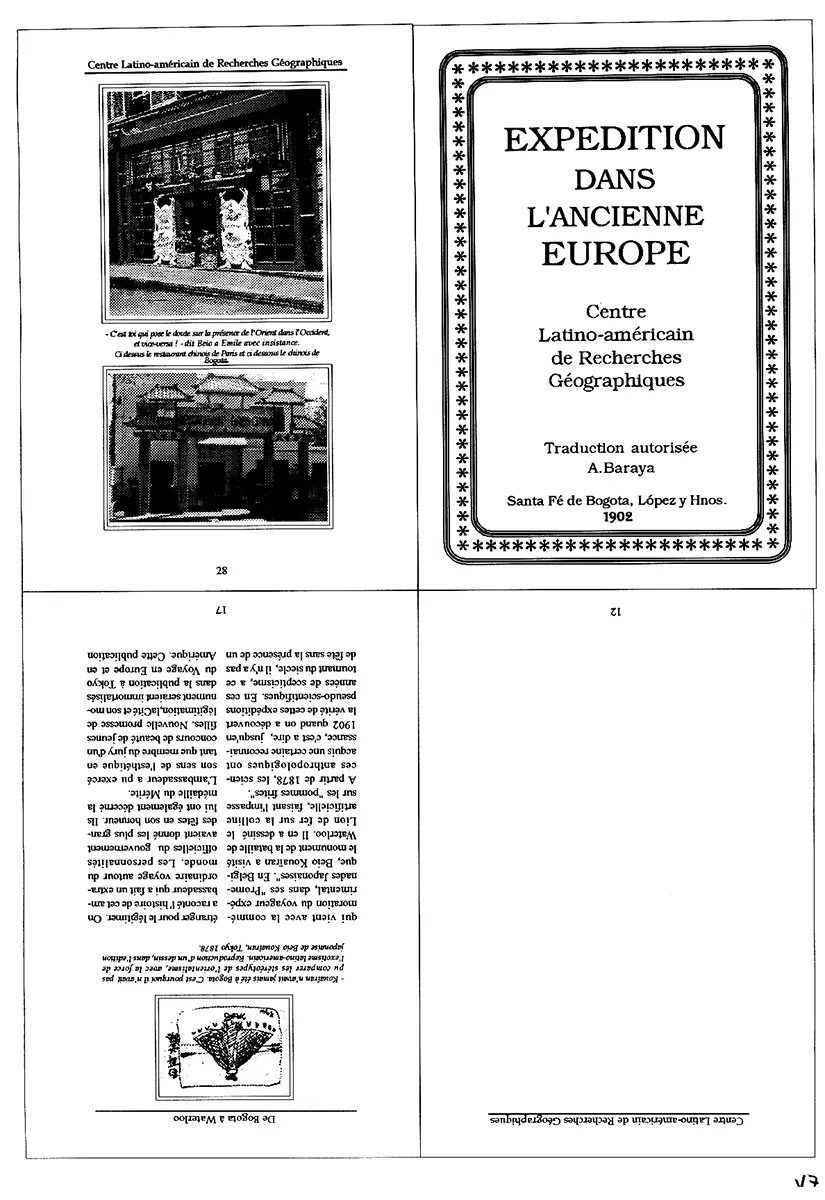
In Paris, at the Tokyo Palace, he presented one of these sheets, and Expedition-Européanne reproduced the work carried out by the Latin American Center for Geographical Studies that analyzed the customs of primitive European peoples. Harking back to both the language and the style of European ethnographic works from the nineteenth-century, Baraya confronted the viewer with the contemporary perseverance of an exoticizing attitude regarding other cultures, a situation promoted by ignorance of the cultural models in reference. The artist says that while his work was on display, a survey showed that over sixty percent of visitors were unable to locate Bogotá.3
This experience led Baraya to consider the elements that surround a journey, the knowledge and relationship of different spaces and cultural models, and how tourism promotes that relationship, with one particular aspect: there must be a record, a proof of presence in the visited locale. The most common techniques for this are photography and video; the prevailing idea is if the record is not made, the action may not have happened.
Baraya’s interest in tourism and its implications regarding the image takes into account the way that tourism becomes a mode of cultural consumption that posits a complex relationship between the local and the global. With the particularity, according to Augé, the journey will be transformed into a verification in which the real must resemble its image; otherwise, it will be a disappointment.4 How does one appropriate that image? By means of photography, which, following Susan Sontag, is not only the most economical means of appropriation but also the way that tourists supposedly acquire knowledge.5
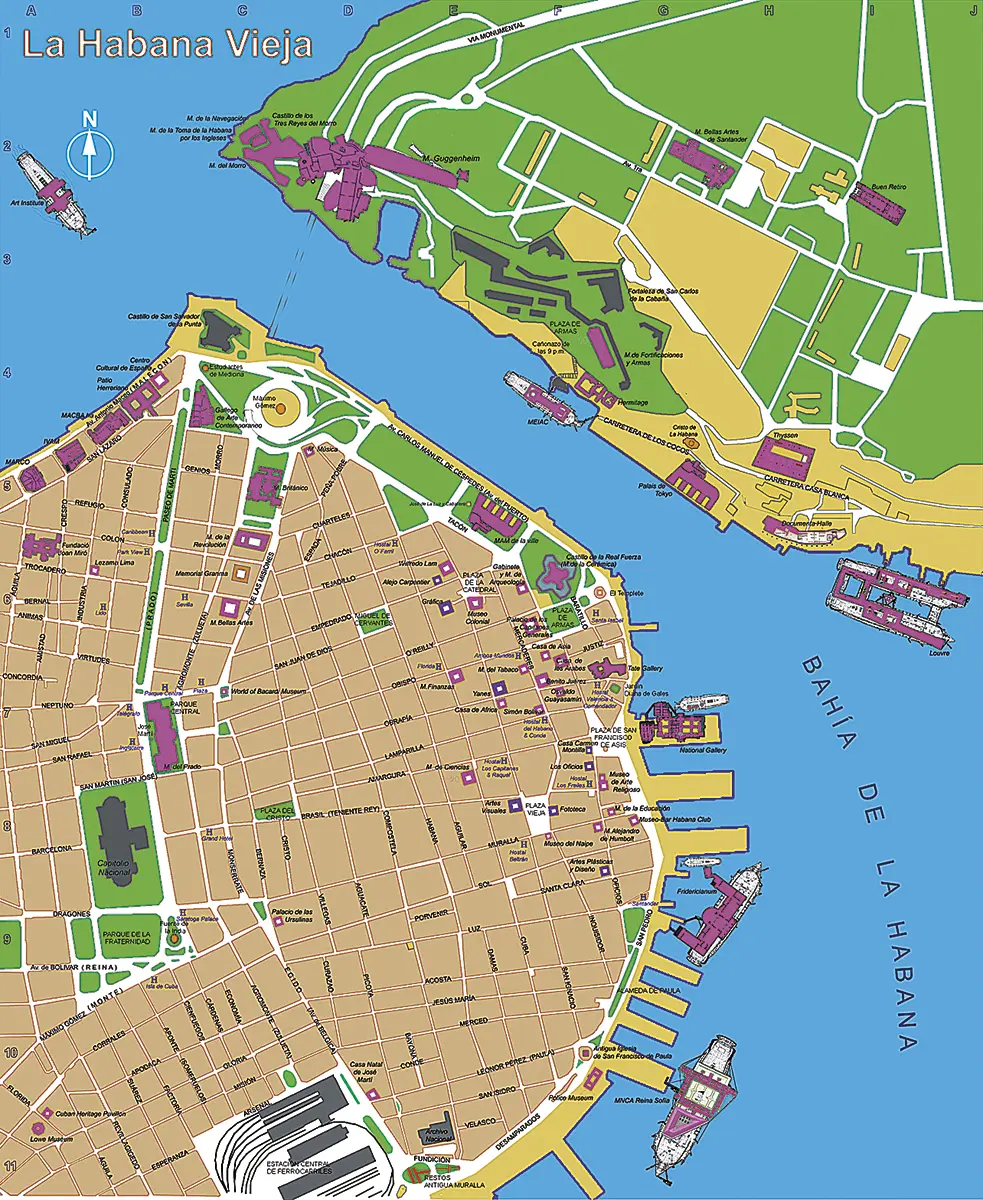
The exhibition Doble seducción, organized by the Injuve and the Cultural Center of Spain in Havana, was held in Spain to coincide with the Eighth Havana Biennial. It sought to reflect upon the weight of the image in the contemporary world. The power of the image that invades one’s awareness and generates fictive worlds drove Baraya to present his Turistic Map of Havana. On this, based on a tourist map of Old Havana and alongside the usual reference points, he located such emblematic museums as the Prado, the Louvre, and the Guggenheim. To the local inventory of sites, a new inventory of architectural signals was added, ones that legitimized art with their “unquestionable” character.
Baraya, who had already made a significant photographic record of tourist behavior at the Prado museum while photographing the statue of Velásquez, joined the Mexican artist Jonathan Hernández for the project titled 1204tr/h.6 The title referred to the number of tourists that walk every day by the statue of Velásquez placed at one of the museum’s entrances. The project was an attempt to subvert the traditional relationship between observer and object; two video cameras on the statue’s pedestal recorded what occurred, i.e., tourists photographing the statue and photographing each other.
The choice of Velásquez’s image was not random. One of the artist’s emblematic works (and a mandatory stop when visiting the Prado), Las Meninas, questioned traditional compositional criteria; the artist proposed an inversion of the gaze: it is the work that looks at the viewer. The presentation of Baraya and Hernández’s video at a higher speed allowed for a clearer perception of the agglomerations and frantic movements of the visitors intent on recording their visit. Again, photography legitimized the site; the experience with the object counts for little, and the true trophy is the photograph that allows those who possess it to prove they were present.
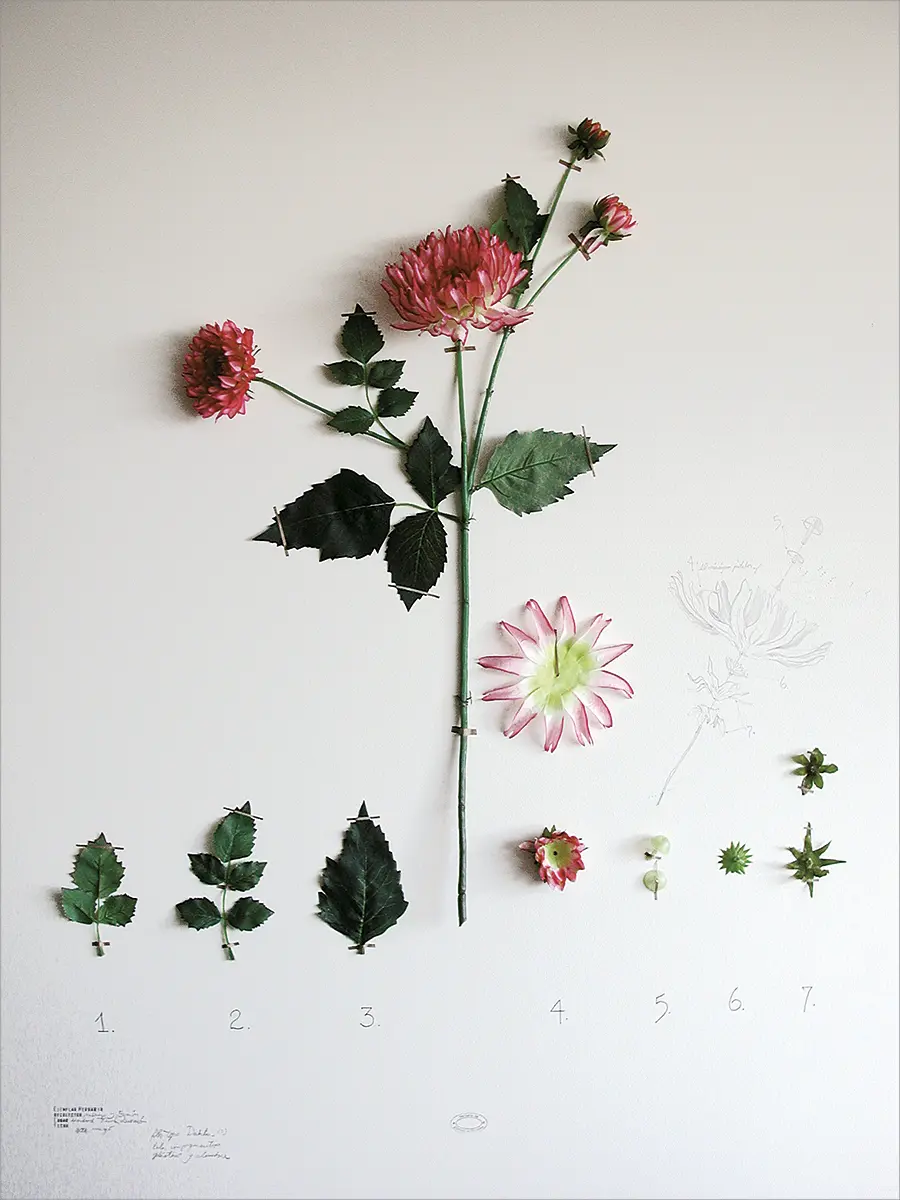
In 2002, Baraya started a project, Artificial Plant Herbarium, which addressed complex notions like “truth” and “fiction.” This project brought together a variety of works and was more than a singular work of art. Based on Baraya’s initial questions, others arose that pushed the Herbarium in many different directions. How did the herbarium get started? Let’s begin with an anecdote. Baraya, walking in Madrid in the fall, found something unseasonable: a green leaf. Picking it up, he realized it was plastic. The act of saving it was related to the memory of school homework when students were required to keep herbaria for biology class. (In school, we are given tools for science as a safe path to knowledge—so safe, in fact, that the reality of any limitations to science is denied, and the titanic possibility of enclosing Nature’s exuberance within rigorous parameters is posited.)
Baraya’s first Herbario was a collection like those created by botanists in the seventeenth and eighteenth centuries, such as those of José Celestino Mutis in New Granada. There was one substantial difference: what he collected were artificial plants made of plastic, which could be found in homes, cafeterias, hotels, restaurants, buildings, airports, and bathrooms. The represented fiction made it possible to construct a taxonomy using the same classification criteria of the natural sciences. Baraya’s artificial-nature collection used the tools of naturalists but applied them to artificial objects and fixed its own taxonomic parameters, which were related more to the use of the plant than to the plant itself. Thus, the “orders” in his particular taxonomy—hotels, table-tops, religious elements, fashion accessories—established guidelines for showing the aesthetic value of plastic plants as decorations in highly diverse spaces and situations. But it was also an active taxonomy: the discovery of new uses implies the incorporation of new organizing criteria.7 And one must not forget that this vegetation came from a single origin: they were all identified as “Made in China.”
Baraya makes his viewers think, from the standpoint of art, about a variety of issues. Mutis’s botanical expedition recorded a significant number of plants and ordered them in a taxonomy; his depictions in his travel journal became art-world objects. Reproductions of Mutis’s drawings have been used not only for scientific knowledge but also as decorative objects. But the scientist who discovers and organizes an alien world has an ordering obsession, one that not only collects natural elements but also dominates them, regardless of where they are or to whom they belong. Baraya places the neutrality of scientific tools under suspicion.
The Herbarium project allowed Baraya to establish a world of cultural relationships, either between men and the collected object or between Nature and its representation. The frequency of cataloging, selection, and segregation generates a particular relationship with the objects, which do not operate as neutral elements and reveal that classification is not always objective and innocent.
And thus we come back to the word “fiction.” When Baraya photographed the Herbarium, the fiction of representing reality was duplicated, while, paradoxically, the representation achieved seemed much closer to the “real.” The artist constructed his images to reflect on the associations among nature, artifice, and representation. Nature, which we admire as something distinct from the artificial, can be ordered by human hands, for instance in a garden. Using natural elements does not guarantee the absence of artifice, and Baraya, with his Herbario project, implied that all cultural constructs are artificial in the end.
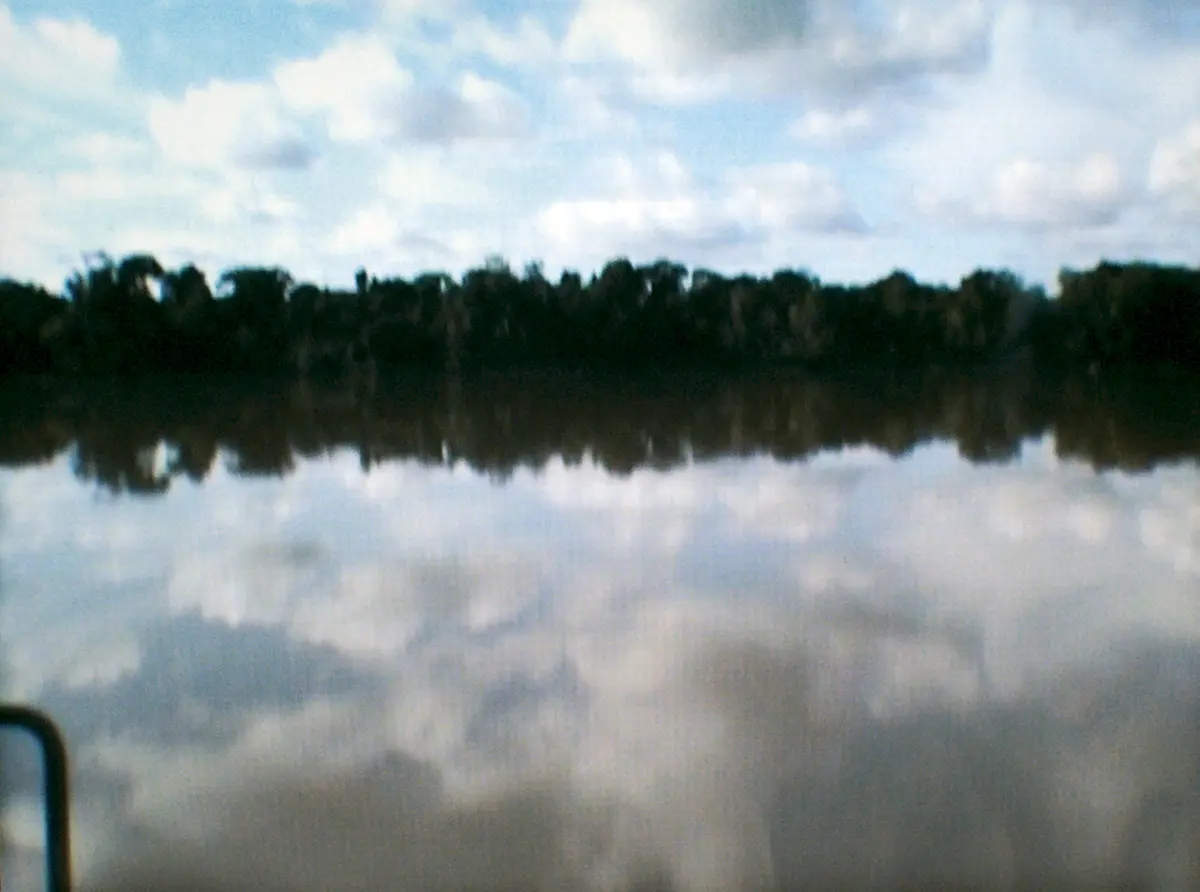
Baraya’s “botanical expedition” followed a different path: collecting more artificial species along the Amazon River to be incorporated into his herbarium. The artist tells some details of his journey: “I brought along the book The River, the best companion, and guide one could possibly find in terms of exploratory routes and fantasies. After innumerable trips in Amazonia in the 1970s, Wade Davis, the author, tells of the tireless expeditions carried out in the 1940s by the New England ethnobotanist Richard Evans Schultes. Schultes, in turn, followed by memory the adventures narrated in the Romantic-era exploration journals written by the British botanist Richard Spruce and the traces of exoticism left by the elegant German traveler Alexander von Humboldt, or the Spaniards Ruiz and Pavón, or that of José Celestino Mutis himself in South American forests. To this long line of explorers and botany scientists, of encounters and misencounters, I connected the parody of my herbarium of plastic plants. I felt like an explorer in terra incognita in the search of exotic types of silk roses and wire ferns for my collection. A strange journey along the Putumayo River, seeking out plastic plants in river port cafes, diners, altars, and house porches, as samples of the infinite expansion of this strange Chinese vegetation in all corners of the world.”8
Traveling on a Colombian Navy vessel (with the mission to wage war rather than to explore), Baraya was a documentarian for the Centro de Integración Fluvial de Sur América, charged with filming the characteristics of the vegetation along the shore, as well as the peoples and animals he encountered. He was to fulfill the role of the traveling chronicler, and he even painted scenes of the landscape, in the best Romantic style. But his most significant discovery was the story of rubber and the cruel consequences of the industry’s early-nineteenth-century boom when a silent genocide of indigenous peoples took place. Also contained in this history were the relationships between Europe and the Americas and the implications of the industrial use of rubber. The experience made Baraya decide to create a rubber plant for his herbarium, which formed the basis for his project for the twenty-seventh São Paulo Biennial (2006).
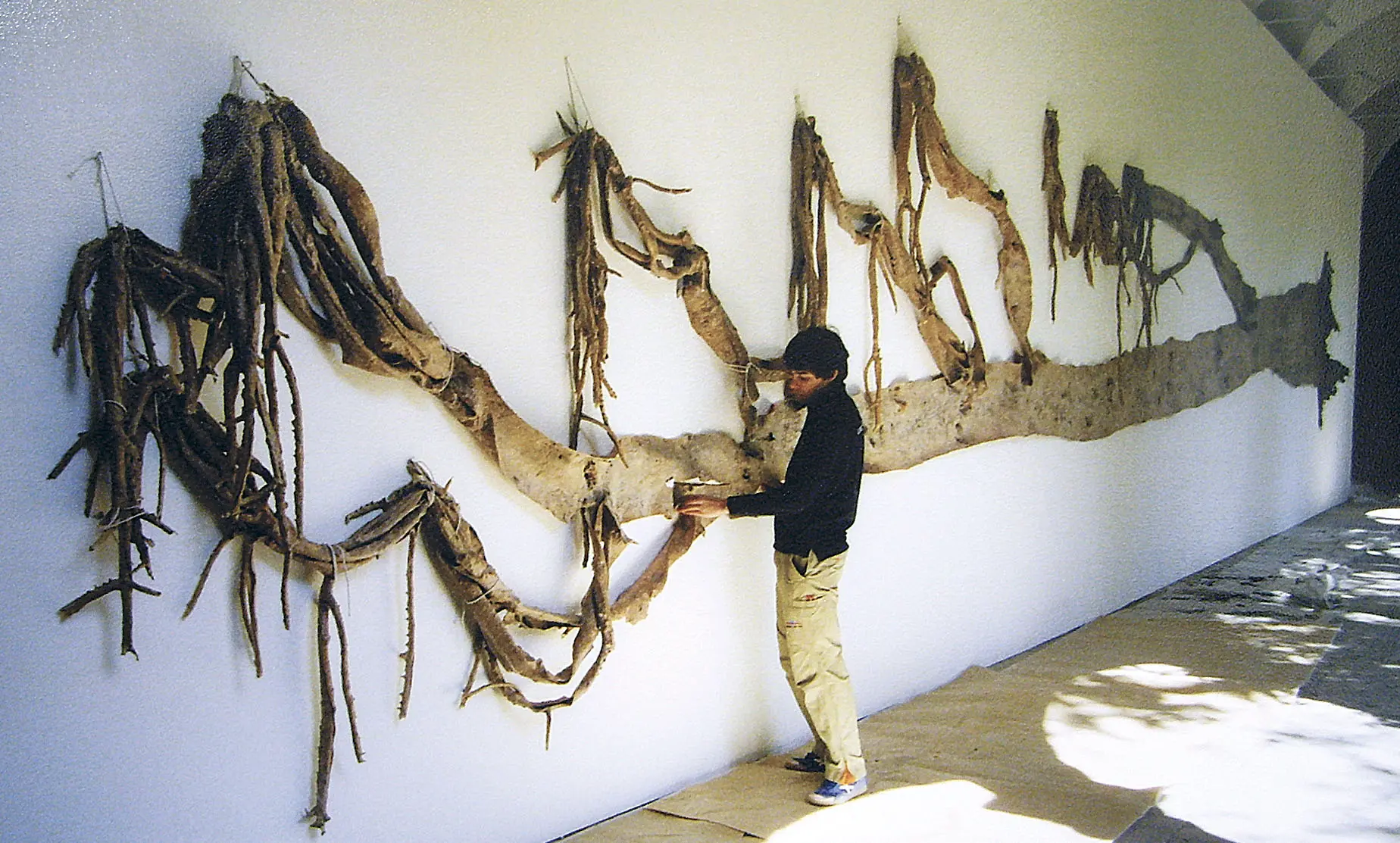
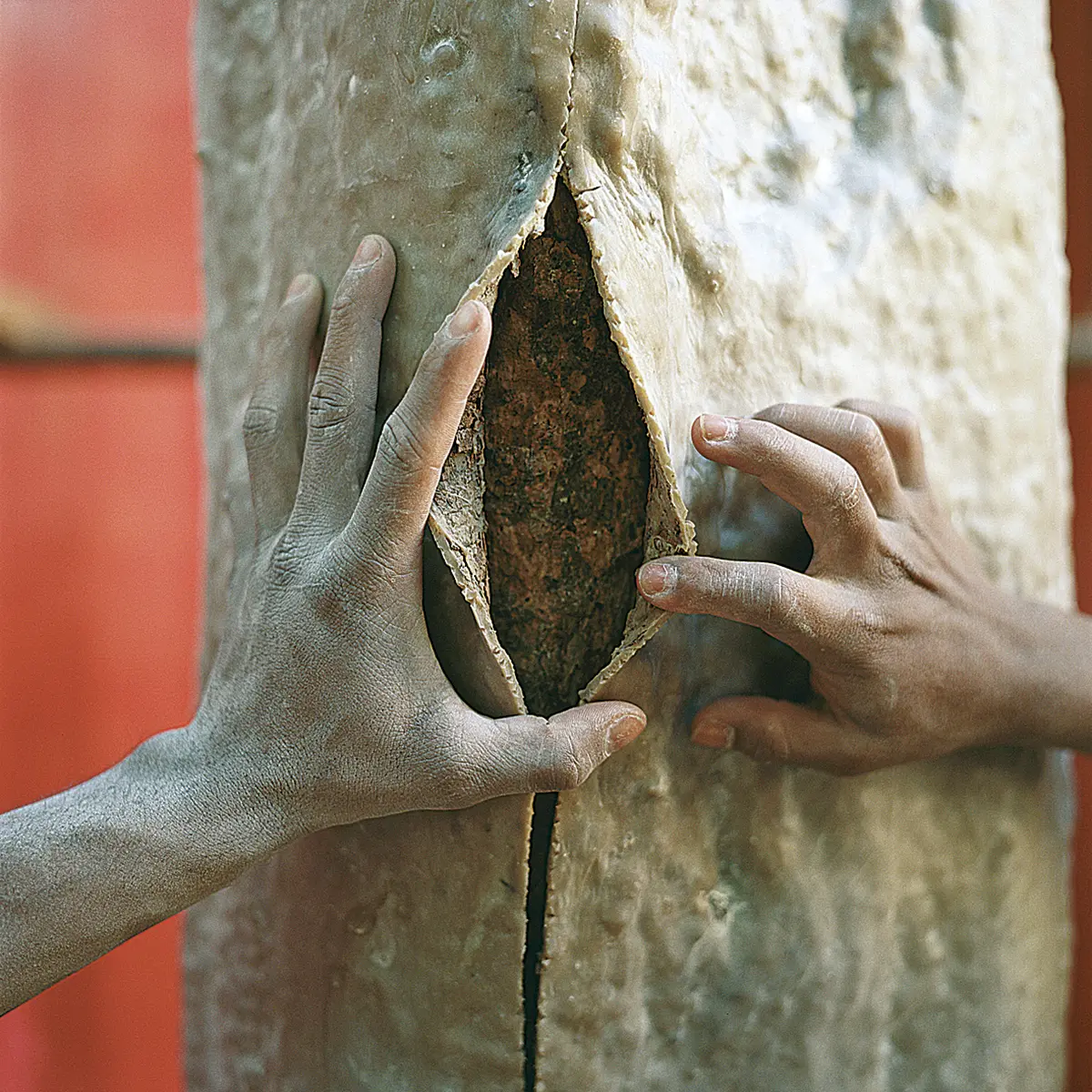
The project was presented as part of the Artificial Plant Herbarium and arose from the experience of his journey along the Amazon River. The aim was to reproduce a plant using natural rubber, the liquid that seeps out of the Hevea brasiliensis tree when its bark is cut. In order to execute his Project of the ‘’Borracha’’ Tree, Baraya was one of ten artists invited by the Biennial for a three-month residency in Rio Branco, the capital of the state of Acre, in the western part of the country. In Acre, Baraya worked with rubber, which in the nineteenth century was the region’s primary raw material and the cause of many conflicts, including the 1988 assassination of Chico Mendes, a Brazilian environmental activist who is now considered a symbol in the struggle to protect the Amazon basin.
With the help of the local population, Baraya built a seringueiro, a rubber plant of almost ten meters in height, using latex and conceived as part of his Herbarium collection. His attitude as an expeditionary traveler that was present in his previous works appeared once again, accepting the challenge of working in unexplored territories. His project was connected to the Biennial’s central theme, How to Live Together (now that we know we can be so different); as an artist, Baraya is part of a cosmopolitan community that shares issues and can bring attention to acts and situations otherwise condemned to oblivion.
But the artistic act underwent a variation. Baraya had been gathering, organizing, and displaying his collection, but now it was his turn to create the object within the collection—did this betray his prior position? No, he continued to be a simulator, recreating the tree using the very matter it produced and transforming it into a mold, a skin, a trace. With this giant, soft, sagging, natural-latex skin, space was opened for reflection regarding social considerations, such as the difficult circumstances of Amazonian communities on both the Colombian and Brazilian sides, the tragic history of rubber, and the dramatic white-gold rush it produced. Baraya’s Arce residency not only strengthened his determination as a traveler, it also gave him a chance to think and to make us think about the history of the place, the issues affecting border communities, and the struggle for territorial possession. Amazonia is not space we often imagine from the standpoint of urbanity; living with that nature means confronting conflicts that take us far from the notion of a lost paradise.
NOTES
1. Author’s interview with Alberto Baraya, February 2007.
2. Silas’s questions for Alberto Baraya, May 16, 2006. The text was made available by the artist.
3. Author’s interview with Alberto Baraya, February 2007.
4. Marc Augé, El tiempo en ruinas (Barcelona: Gedisa, 2003) p. 65.
5. Susan Sontag, Sobre la fotografía (Buenos Aires: Editorial Sudamericana, 1980).
6. Jonathan Hernández also worked with the stereotypes of tourism using postcards. In his project Conozca México (1996–2000), he created postcards that moved his viewers away from the traditional tourist’s gaze and presented them with urban spaces that offered views distant from the normal order of pre-established tourism circuits. This experience drove him to explore the characteristics of global tourism in his No Tourism project.
7. Author’s interview with Alberto Baraya, February 2007.
8. Alberto Baraya Leí, “El río en el río,” Piedepágina, revista de libros 2 (March 2005).
IVONNE PINI
Art historian and critic. Executive Editor for Arte en Colombia/ArtNexus. Professor at the Universidad Nacional and Universidad de Los Andes in Bogotá, Colombia.