
It has been an especially complex and active year for art. The
temporal coincidence of the Venice Biennale, the Documenta in Kassel, the
Münster Sculpture Project, and the Basel fair created for the first time what
has been sold as the art world’s new “Grand Tour” and can be read as the crown
of the large project of socialization of art in the post-capitalist era. This
project has been built over the past ten years with economic growth and the art the market’s expansion and excellent health; it has also benefited from low-cost
air carriers and the insertion of art into more frivolous realms that
nevertheless offer great resonance, such as fashion, interior decoration, and
entertainment. If art-world people complained a few years ago that many
tourists only visited museums when they were part of the “must-see” itinerary
in a large city, what we see today is the consolidation of art tourism as an engine in the promotion and growth of cities and areas in need of economic and
urban renewal. Art has become a privileged political instrument and a sizable
industry, albeit still a small one when compared to that of advertising, for
instance, or to the business of soccer.
Such “pollution” of the art system has had its most negative effects on the events that are seen as eminently cultural (big museums, biennials, and international art shows), forced by circumstances and by their sponsors to guarantee financial results and consequently to present works that appeal to a mass public, to the detriment of the experts and of lifelong insiders who abandon their pedagogic mission and join the lifestyle industries without compunction. In this context, the art fair appears as a paradox, a “transparent” space ruled exclusively by the unadorned laws of the marketplace. I have elaborated this argument with varying degrees of insistence while reviewing other fairs on these pages, but this year the situation crystallized, thanks to the aforementioned confluence of events. Today, the larger art market appears as one of the few places unmediated by private interests and special deals; even in that regard the market is pitiless and forces collectors to fight mightily if they expect to acquire the trophy works.
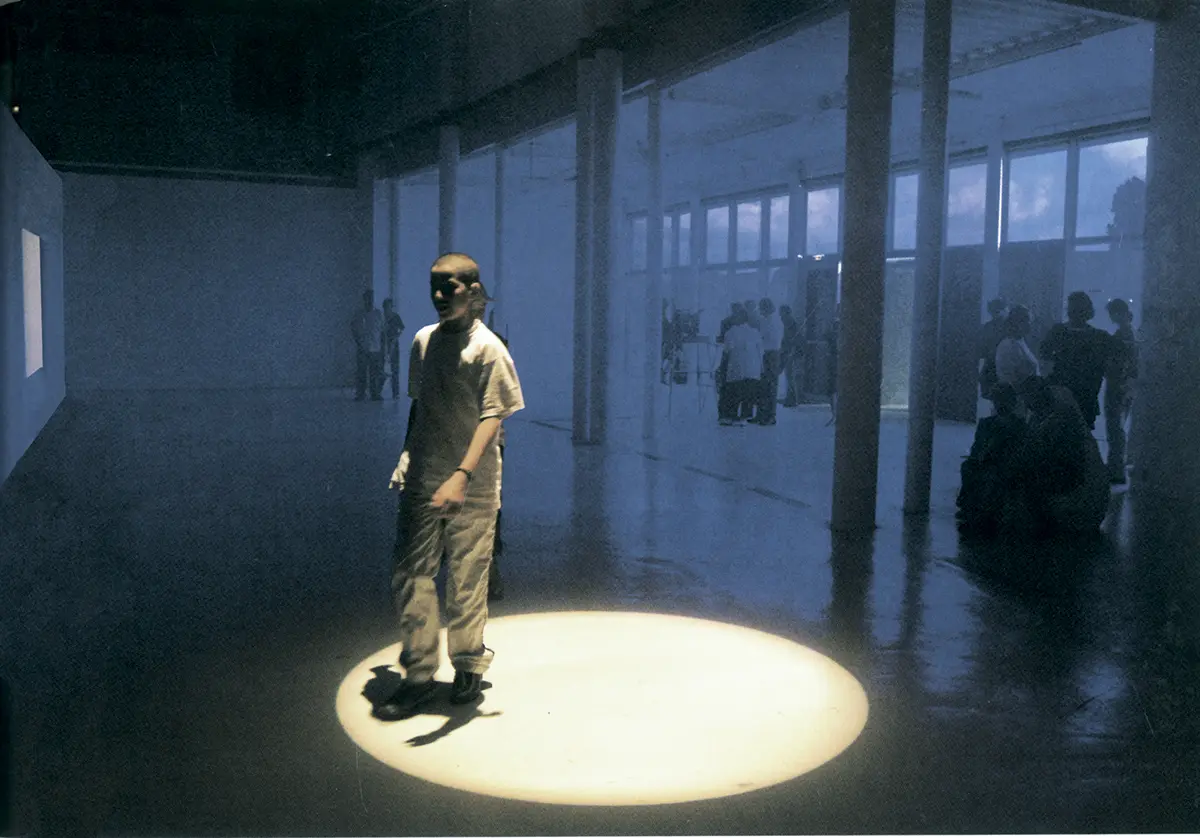
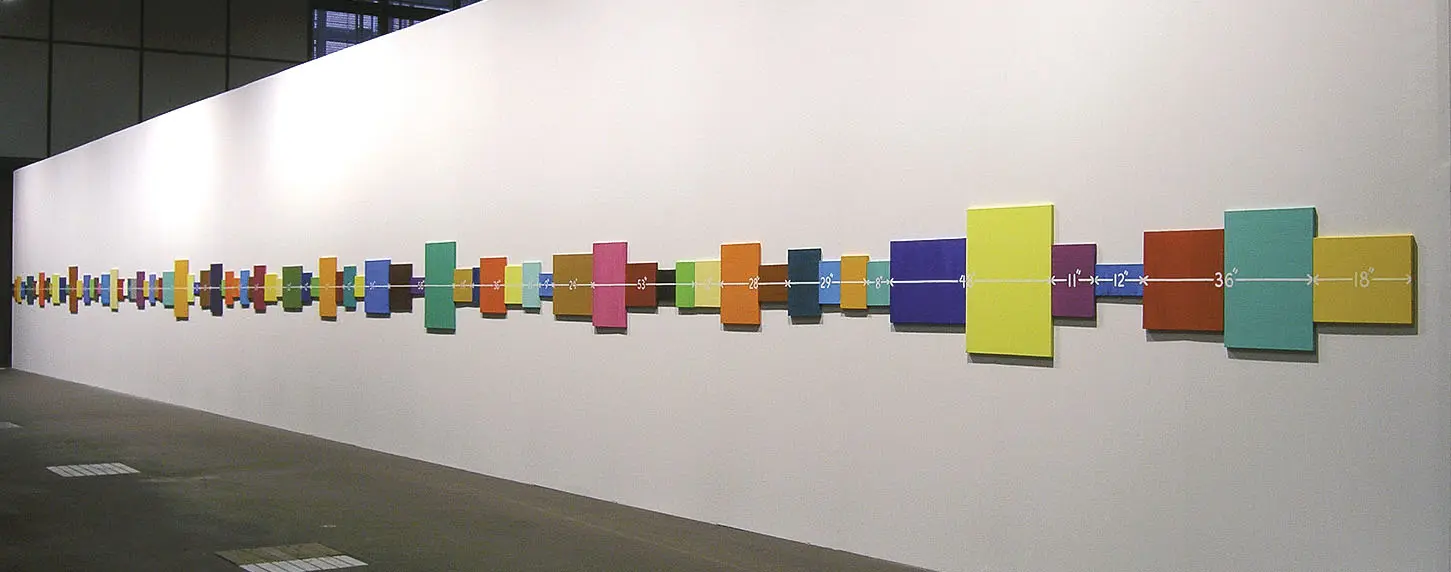
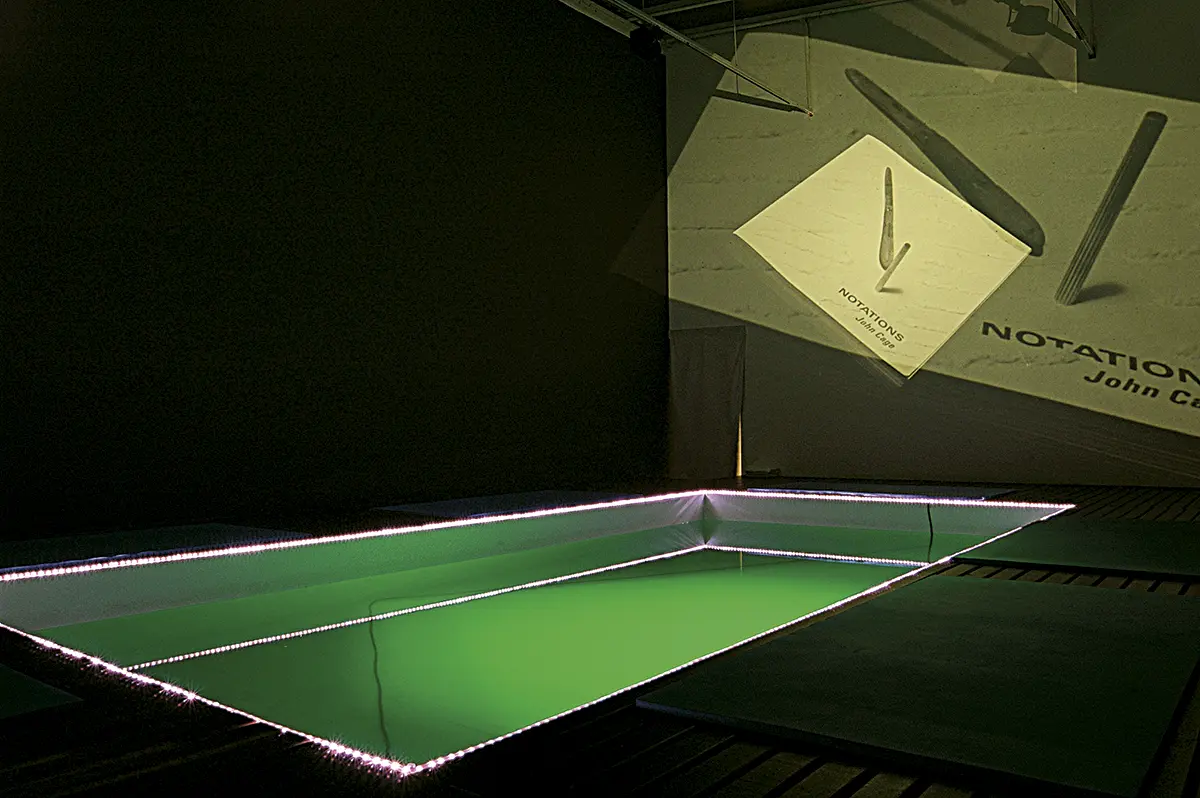
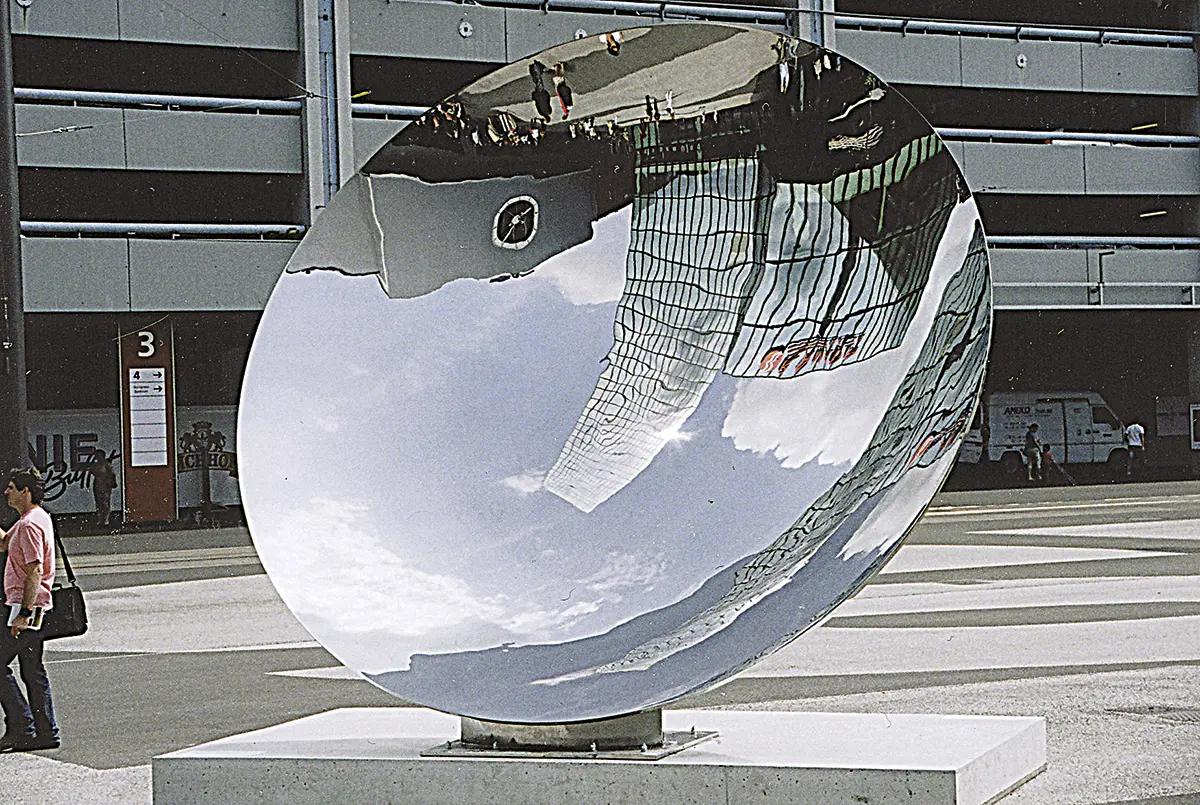
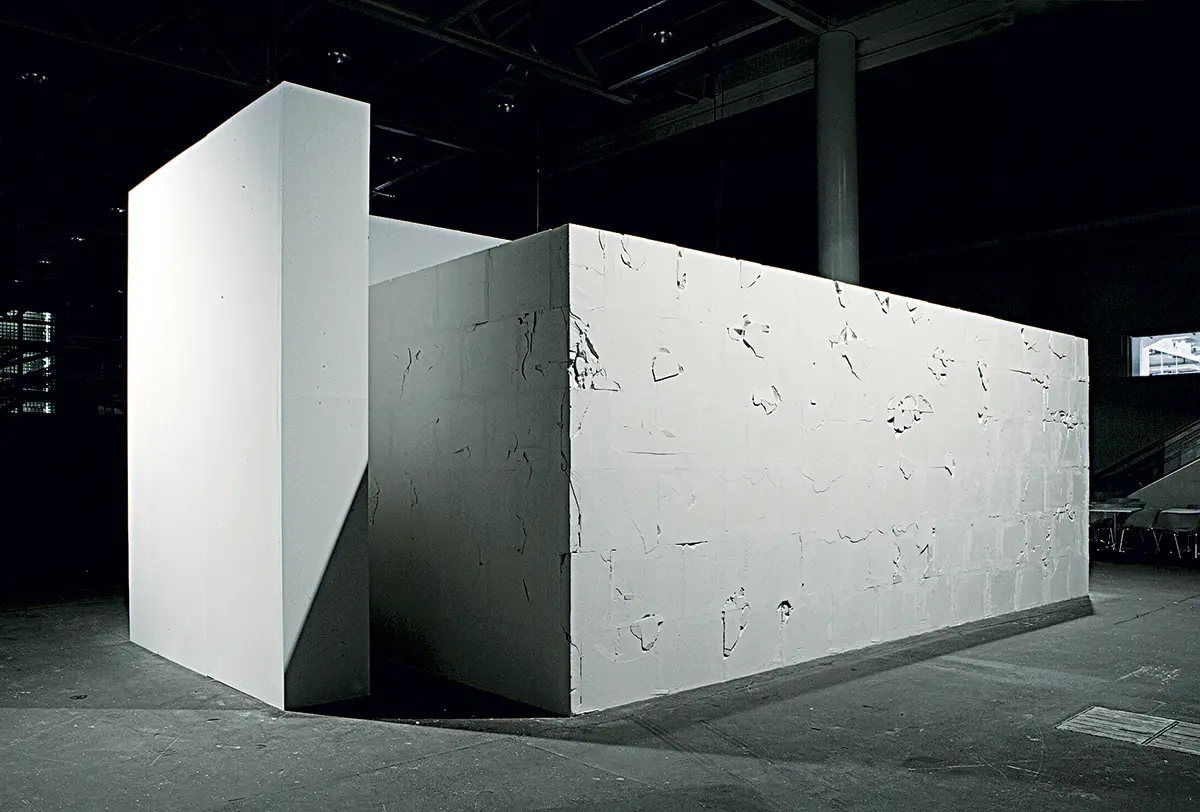
And this year there were many trophies at Basel, from a reduced version of Anish Kapoor’s concave mirror that was installed at Rockefeller Center in New York City to Takashi Murakami’s extravagant plastic sculpture at Emmanuel Perrotin Gallery. Blockbusters aside, there is also growth in the demand for the work of 60s- and 70s-era conceptual artists, a trend that began to take shape some years ago and which offers interesting opportunities for analysis from the standpoint of art history, a kind of rematerialization of art that, at the very least, will generate a revision of the theories that informed the art of those decades. Perhaps one of the most spectacular works of this group at Basel was Mel Bochner’s Event Horizon, a 1998 work comprising eighty-three acrylic-painted canvases covering a length of thirty meters, included in the section Art Unlimited. On the differently colored canvases, Bochner marked a series of measurements, which added to the work’s entire length. This work revisited a classic theme of the period’s conceptual artists—measurements and self-referentiality—and converted it into color and spatial solutions that were almost formalist in character. More difficult to recover was a work like Cosmococoa, by Helio Oiticica and Nevile de Almeida. This work was a complex investigation of the cinema, or quasi-cinema, participatory art, and the possibility of transferring certain constructivist notions to the realm of body experience. The installation was complicated—it included a swimming pool—and decidedly advanced for its time, although under the light of contemporary art it could be unfairly judged as naive. Something similar occurred with David Lamelas’s Limit of a Projection, a 1967 work that consisted simply of a beam of light produced by a potent reflector in a darkened room. This work was great in its simplicity but difficult to appreciate in a context devoid of references to Lamelas’s oeuvre and to the investigation of film and art that were current at the time. Perhaps another superb work, also by Lamelas but at Jan Mot Gallery, served as a reference: a 16mm animated film based on Henri Michaux’s drawings. In the same gallery, visitors found some of the more interesting conceptual-art proposals by younger artists such as Mario García Torres, Joachim Koester, and Pierre Bismuth.
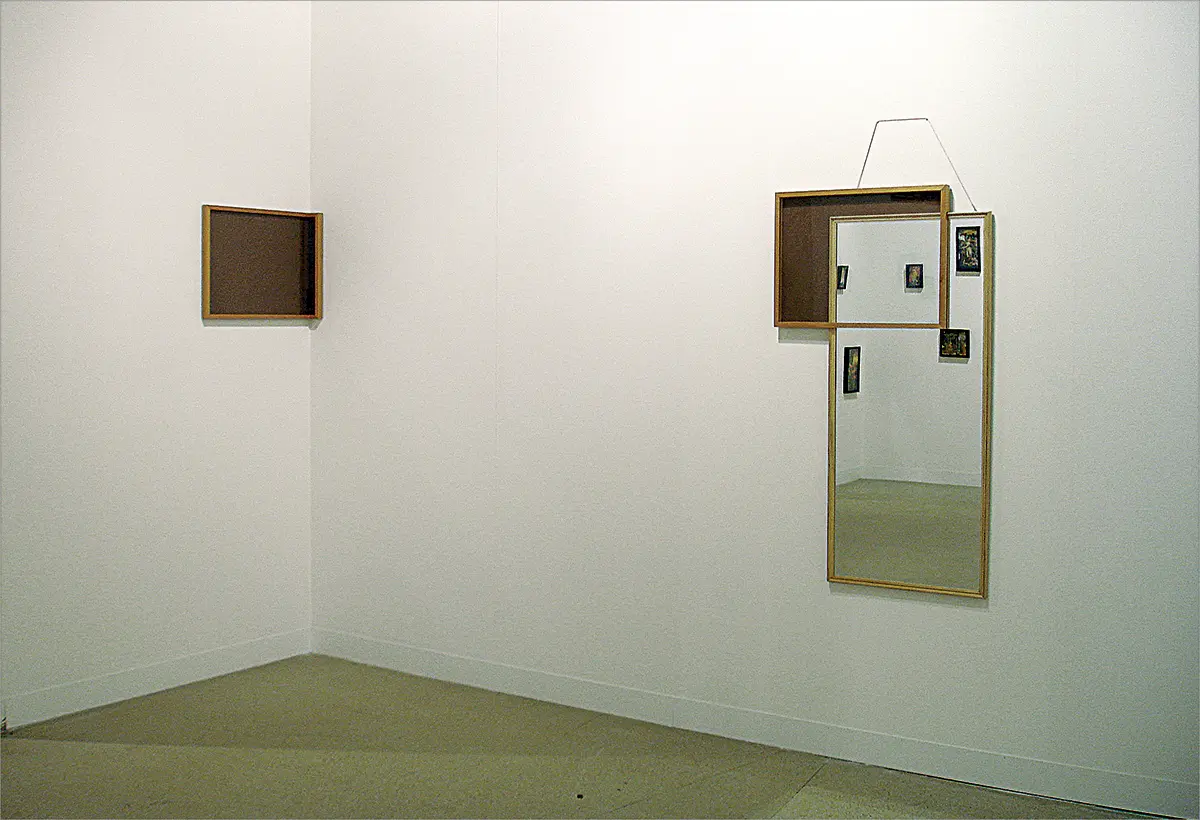
The recovery of older artists concerned not only the better known American conceptualists but also the equally interesting but less familiar presences, such as Julius Köller at GB Agency with a selection of works and documentation of his oeuvre, including the Conceptual Ping-Pong, or Iceland’s Kristijan Gudmundsson, with Blue Transmission in Art Unlimited. Both artists were key to European conceptualism and in a certain way characterized more contemporary approaches to relational aesthetics and to drawing, respectively.
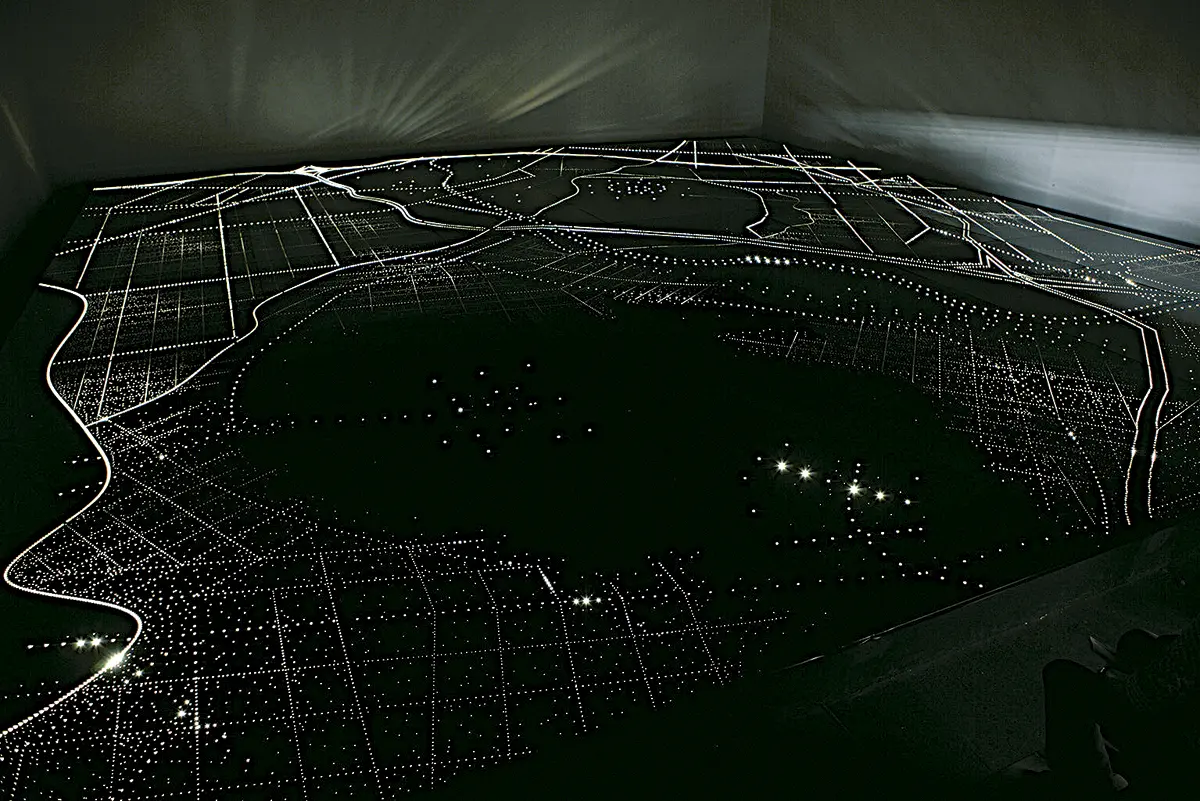
This year, the Art Unlimited section seemed to have lost some of its lusters, with notable absences like that of the already traditional Richard Serra works. Even so, the monumentality of work like Raum, by Guillaume Leblon, was a clear standout. Also among the best was De cómo la tierra se quiere parecer al cielo, by Carlos Garaicoa, a large model of a city at night, in which one could only see the lights that illuminated it like small stars. Another felicitous work was Rafael Lozano-Hemmer’s Homographies Subsculpture 7, in which seventy-two white neon lights followed the viewer’s movement, generating a dance of lights.
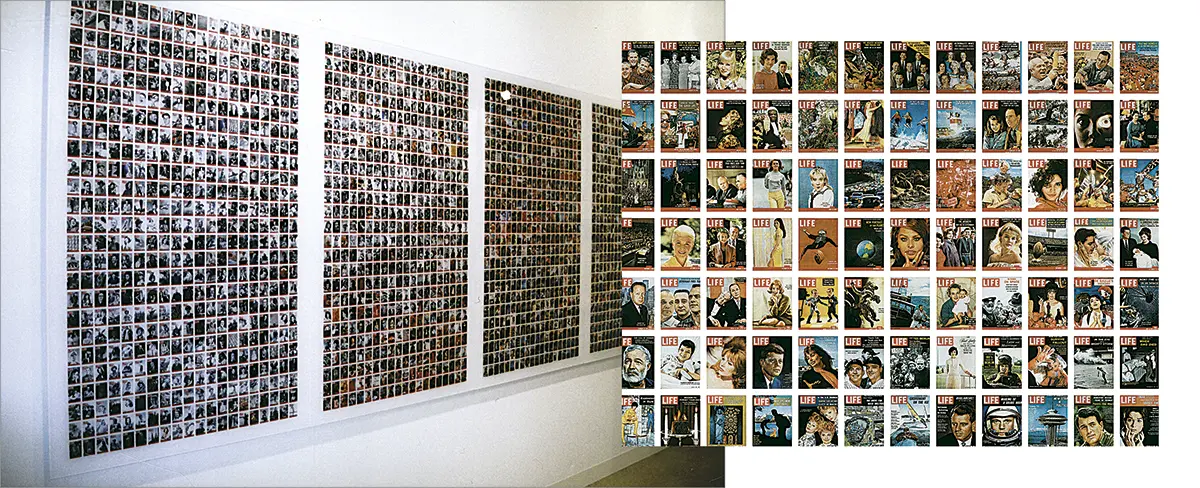
Art Basel, inevitably sensed an echo of the parallel “Grand Tour” events, especially of the Venice Biennale. Some artists who were present at the Biennale were found at the fair, including José Damasceno with outstanding works in both places. Also, deserving notice was Renata Lucas’s work at Luisa Strina Gallery. Despite the fact that art of a more social or political bent was not abundant, some works of this type did stand out, such as Alfredo Jaar’s Searching for Africa in Life, at Schulte Gallery, in which the Chilean artist reproduced hundreds of covers from Life magazine at a miniature scale. The Neugerriemschneider Gallery presented a wide selection of pencil drawings by Rirkrit Tiravanija based on news photographs of rallies, strikes, and protests. The drawings respected the scale of the originals and renewed the power of images toward which we are often numb.
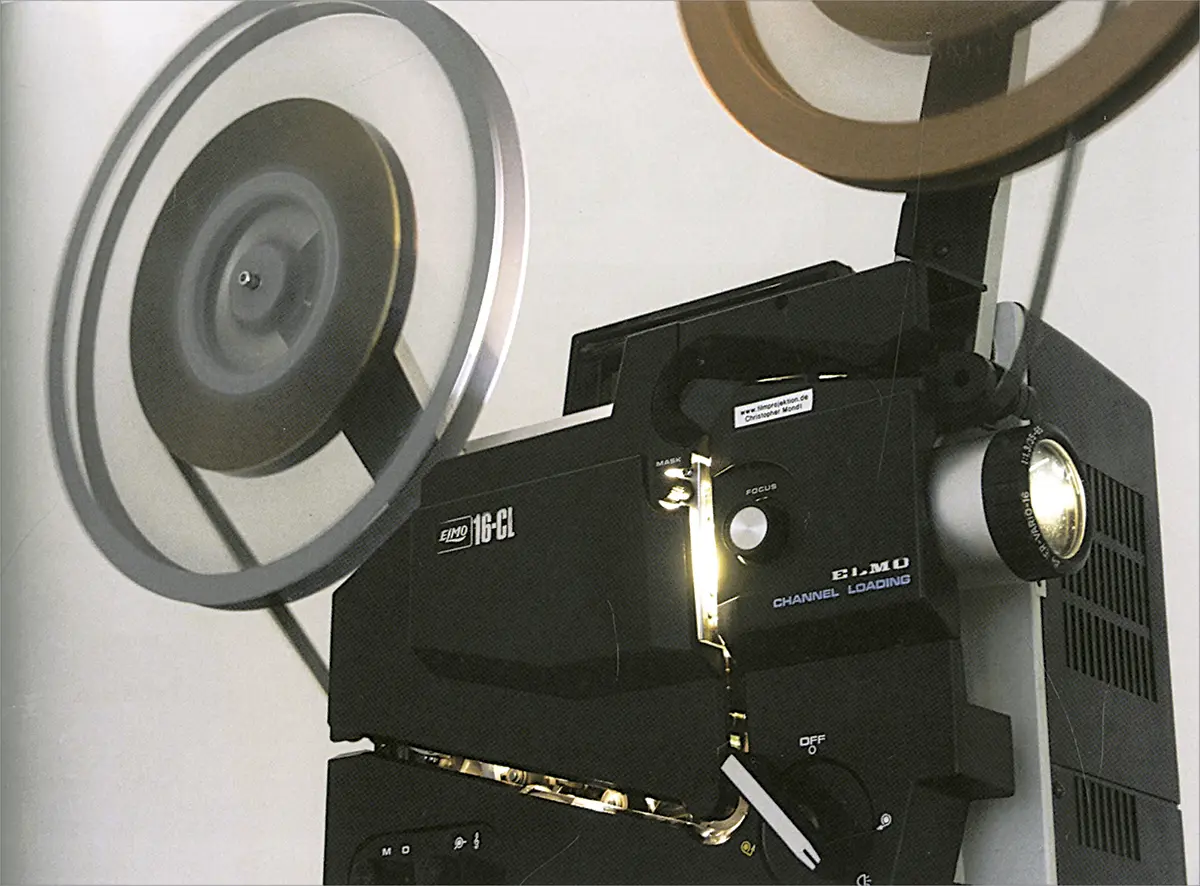
In the Art Statements section, one of the highlights was the Film Festival the project, by the Portuguese artist Ricardo Valentim, presented by Pedro Cera Gallery; it gathered a collection of seventy short- and medium-length educational films produced for American and British public schools between the 1950s and the 1980s. All 16mm, these films were commissioned from travel agencies, universities, advertising companies, or the United Nations, and as a whole they represent the construction of otherness and the transmission of knowledge before the post-modern era. Working along the same lines was Jeffery Vallance’s Cultural Ties, 1979 a project that sent letters with the artist’s neckties to the presidents and ministers of several countries, prompting them to return the gesture with the purpose of establishing closer links between the nations. Besides the project’s joking quality, the various responses it generated reflect the cultural and ideological differences that often permeate social, political, and economic relationships between cultures.
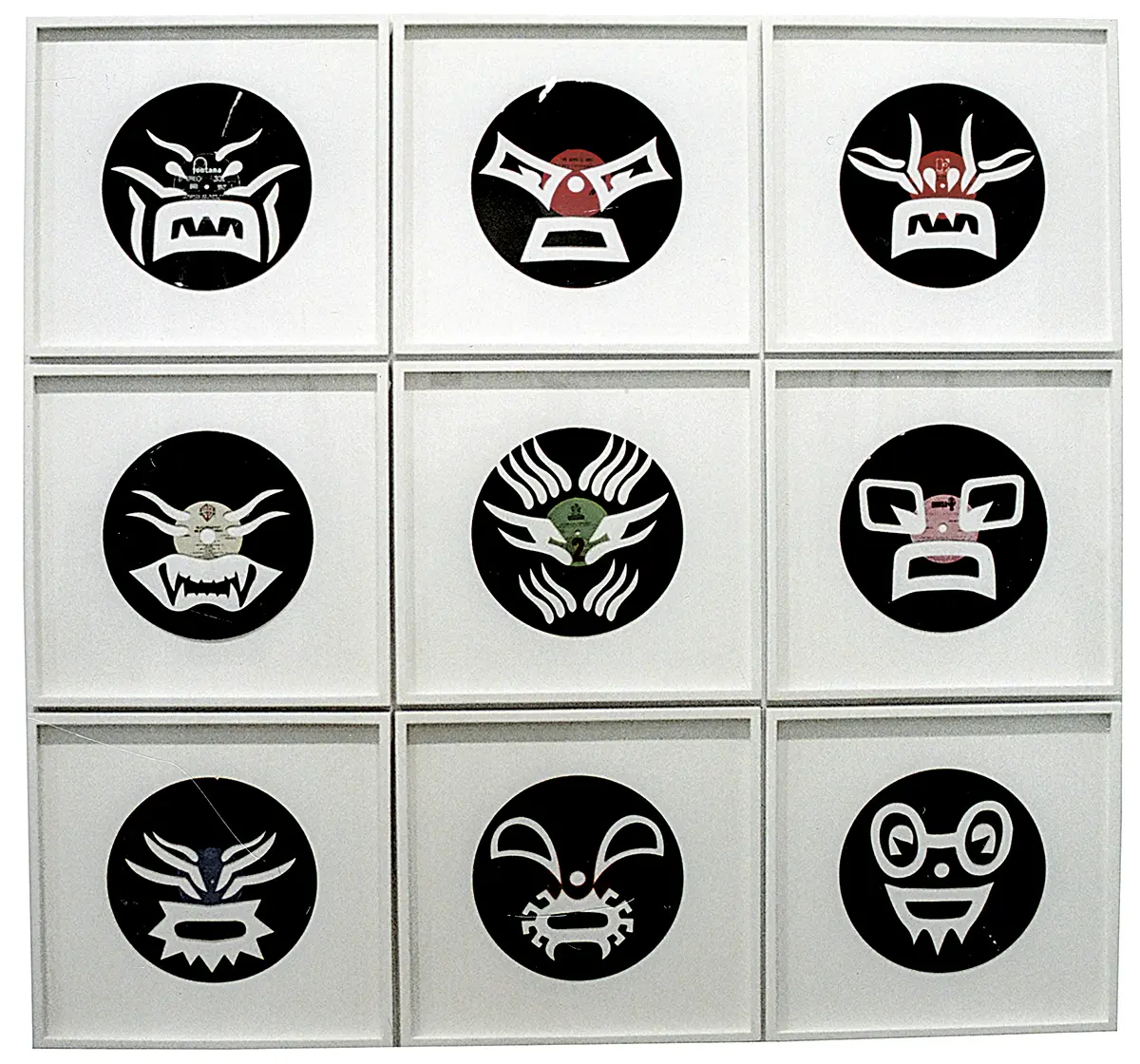
There were also a number of more discreet but no less interesting works: Tracy Moffat’s excellent video Doomed, which edited a large series of catastrophes imagined by the most apocalyptic movies, at Oxley9 Gallery; Dorit Margreiter’s ads for historical Modernist houses, Original Condition (Masters for Sale), at Stampa; documentation at the Juana de Aizpuru Gallery of a performance by Dora García at the museum, which consisted of a tour led by fake guides who offered patently absurd and surreal information about the works and the artists on display; Tobías Rehberger’s series of broken and mended mirrors at Grässlin; a group of masks made from vinyl records by Carlos Amorales at Kurimanzutto; and another broken mirror by Iran do Espiritu Santo at Kelly Gallery.
This year’s coincidence of art events, which only occurs every ten years, making it possible to recover and exploit to the maximum degree an idea of art tourism akin to the Grand Tour that educated and cultivated taste and produced “men of the world” from the seventeenth to the nineteenth century. As I mentioned above, perhaps this year represented a turning point in the way that cultural events and art fairs are conceived and even reformulated the relationships that can be established between them. This was the year of ARCO’s new direction and also the last year with Sam Keller at the helm in Basel. Keller represents better than anyone what seems like the end of an era: possessed of a magnetic personality and an unusual charisma, Keller has taken public relations in the art world to new levels, has contributed to the consolidation and the globalization of the market for contemporary art, and has exerted a determining influence on galleries, artists, and curators. Stepping aside, he leaves the fair in the hands of a triumvirate, following models from the business world, in which art direction (under Cay Sophie Rabinowitz), finance and organization (under Annette Schönholzer), and strategy and development (under Marc Spiegler) will be separate functions. The message is clear—curators, take note: it is the end of the time of individuals who defend their subjective criteria, who work at the pace of their inclinations, sympathies, and aversions—in short, their personalities—and the beginning of the time of the more impersonal and surely more efficient team. The art market, with the gallery as its privileged site for a personal and direct relationship with the artist and the work of art, steps aside and makes room for the artistic enterprise.
This was the assumption made by Elmgreen & Dragset in a work that would seem simply ironic if it didn’t present an entirely viable situation. In this large color photograph, a single construction in the middle of a desert is revealed to be a display window for an upscale clothing and accessories store. The work would not carry great significance if it weren’t a perfect example of artistic nominalism. The title triggered associations, which the artists presented perhaps as aspirations, perhaps as an imminent reality, or as the baseline for the new logic of art—where it is not at all strange to conceive the existence of Prada Marfa.
*Photos: León Birbragher.
ISSA Mª BENÍTEZ DUEÑAS
Art historian specializing in contemporary art and art theory. She is currently a doctoral candidate at the Universidad Carlos III in Madrid.