
At the southernmost tip of the American continent, where the Andes
sink into the clash of two oceans that for centuries has fascinated the boldest
mariners from around the globe, in the remote city of Ushuaia, the First
Biennial of the End of the World opened its doors in late March. It was a
veritable feat, filled with as many expectations as difficulties, and might
very well be included in the region’s canon of bold enterprises over history.
From even its title, the newest of the world’s biennials were as attractive as it was enigmatic in its intention to highlight the notion of the outer boundary. Situated for many reasons in the margins of the margins, the Biennial of the End of the World assumed this position not only because of its emergence in an almost unknown corner of the planet but also because it resulted from an initiative of the Ushuaia municipality. This was carried out by a group of female curators led by the Brazilian Leonor Amarante and including Ibis Hernández Abascal from Cuba, and Corinne Sacca Abadi and Florencia Battiti from Argentina; none are members of the established international art circuit.
Starting with such eccentric conditions, everything was possible and impossible at once. Thus, the challenge was extreme but not an impediment to carving a space based on issues that acquired particular relevance in this region and coincided with the world’s agenda. Ecological and urban urgencies, the question of a different possible world, and the circularity of time and its metaphors were the themes at the convocation that had few international stars but a suggestive number of responses from artists—mostly from Latin America—with years of growth in the margins.
Moderate in size—involving around 200
artists—and in ambition, this first edition of the Biennial of the End of the
World presented itself as a foundational experience, destined to grow in
intensity and singularity. Beyond that, one should note some interesting data.
Since its inception, this biennial has been closely related with the
organization of the International Polar Year (2007–2009), which is very
important in the sense of a particular identity that will perhaps mark its
future. This was evident in the direction of the interdisciplinary dialog
promoted by the scientists and intellectuals who have thought about the region,
its needs and the important issues alluded to in the convocation.
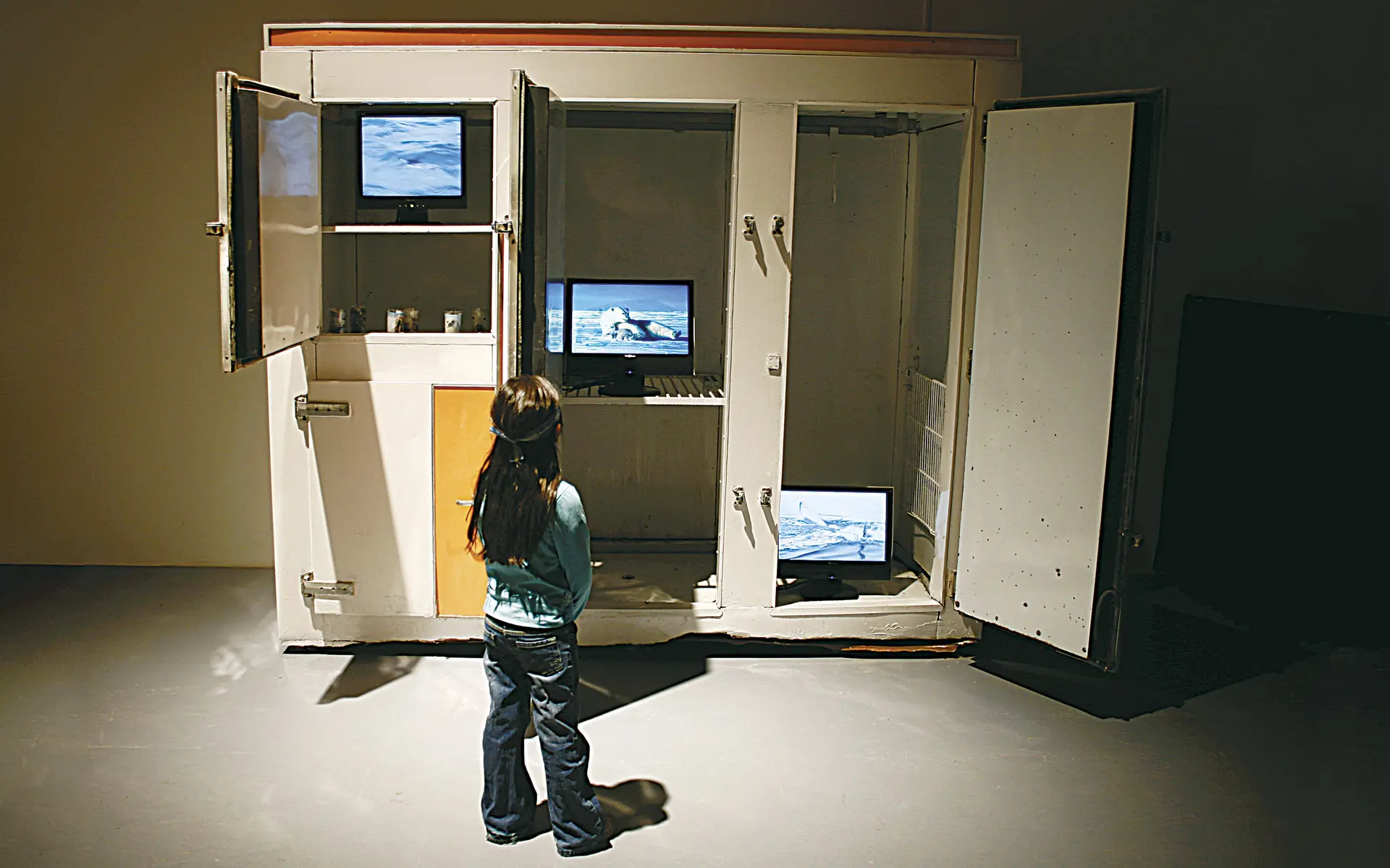
There might be no better place to reflect on these issues; nature can be felt in few locations as forcefully as in Ushuaia. Few of the works on exhibit could avoid that essential data, so strong that it impacted the view of the whole. In this sense, Charly Nijensohn’s five-screen video-installation, part of the 2006 Polar Project, was one of the most intense works were seen at the large warehouse of the Polideportivo, one of the four exhibition spaces on the shore of the dazzling Beagle Channel. This project by the Berlin-based Argentinean artist, who in 2003 represented his country at the Venice Biennale, began with a performance at the Artic Circle, in Greenland’s Disko Bay. Nijensohn’s project refers to a primordial relationship with nature, in which infinitely small Man is placed at an existential limit. Nijensohn, who has worked on these issues since the early 1990s, uses sophisticated technology to develop works that recover the Romantic sublime for the art of the present. Here, he reasserted the abyss-like experience of Un acto de intensidad, executed in the Salinas Grandes in Jujuy, Argentina, and presented on multiple screens in Buenos Aires in 1999.
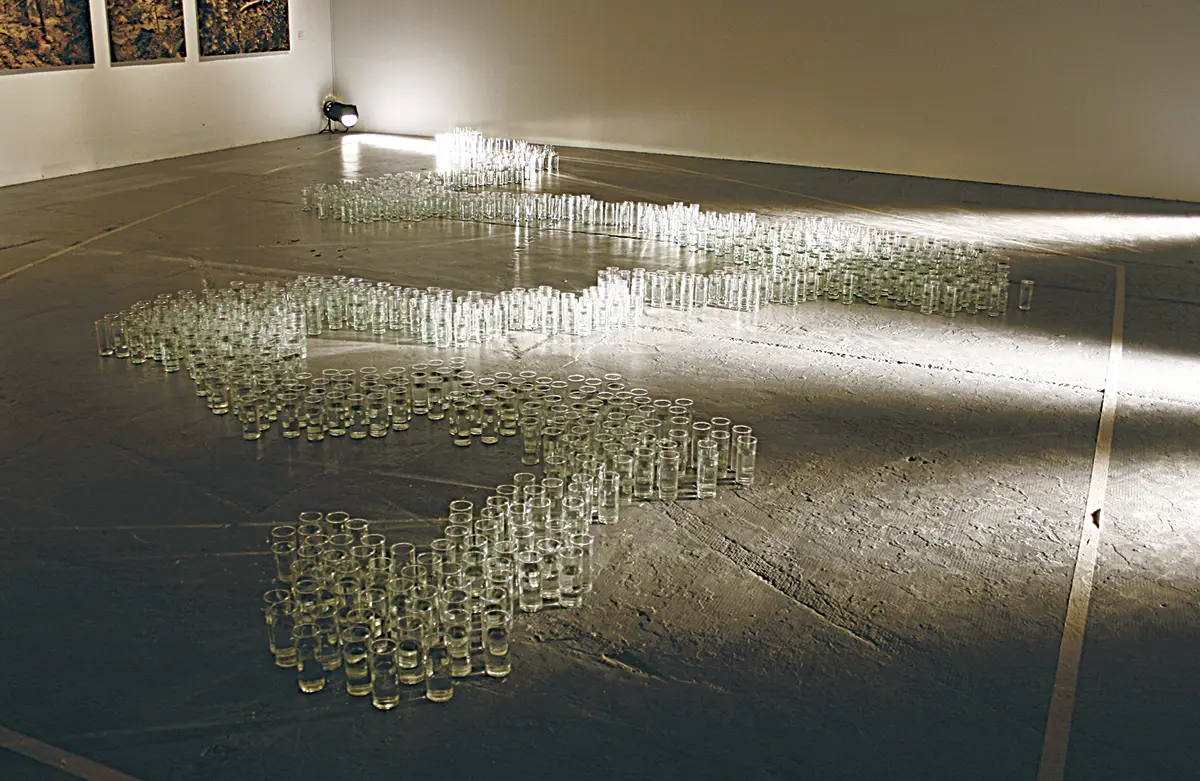
The confrontation between the power of nature and the magnitude of the decay caused by the “civilization of progress” was a constant dramatic presence in most of the works exhibited at the Polideportivo, the event’s main site. From the Argentinean Daniel Trama, whose installation evoked the shrinking of glaciers, to the work of the Argentineans Horacio Zabala and Luis Felipe Noé that portrayed the imminence of a desert-like planet, to the works of Nan González from Venezuela, Mónica González from Paraguay, and Gabriel Guaraci, and Caio Reiseqitz from Brazil, all coincided in their insistence on the real possibility of a frightfully imminent cataclysm.
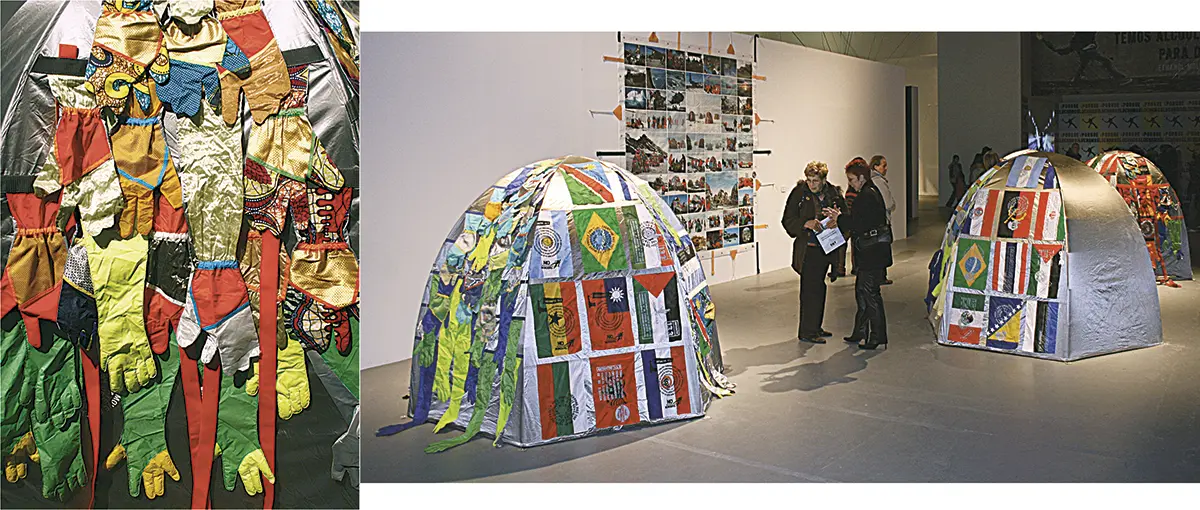
The project presented by AAVRA, the Association of Visual Artists of the Argentine Republic shared this tone of high alert. It deployed hundreds of flags on the Beagle Channel, like the land claims by explorers of the Americas, made over a period of months by artists from Argentina and other parts of the world.
Perhaps due to the urgency in many of the works, performance had a prominent role, like an irruption. Teresa Pereda’s performance at the Yamana forest conveyed a ritual of land exchange, and Dolores Cáceres action El artista señala evoked the original fires that named Tierra del Fuego. This artist had to literally fight against wind and water in order to light up her work, composed of letters and branches on the Ushuaia coast and whipped for days by wind and rain.
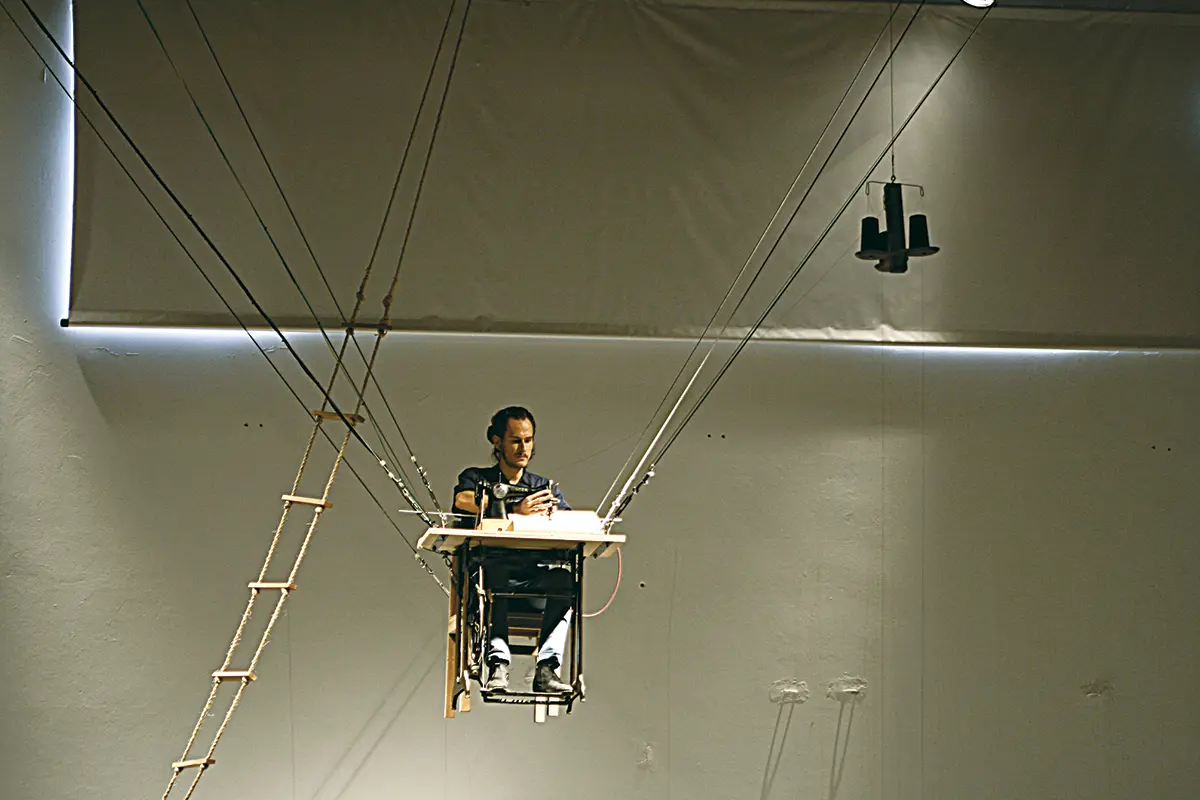
It has been said that only those capable of great craziness and stubbornness were fit to explore this extreme geography. Something of that idea was present in the work of Flaminio Jallageas and Patricia Gerber from Brazil, but it was connected to the demented routine of repetitive labor. Although they were presented at the Polideportivo, any one of these works could have been shown at the Presidio, another one of the Biennial’s four sites.
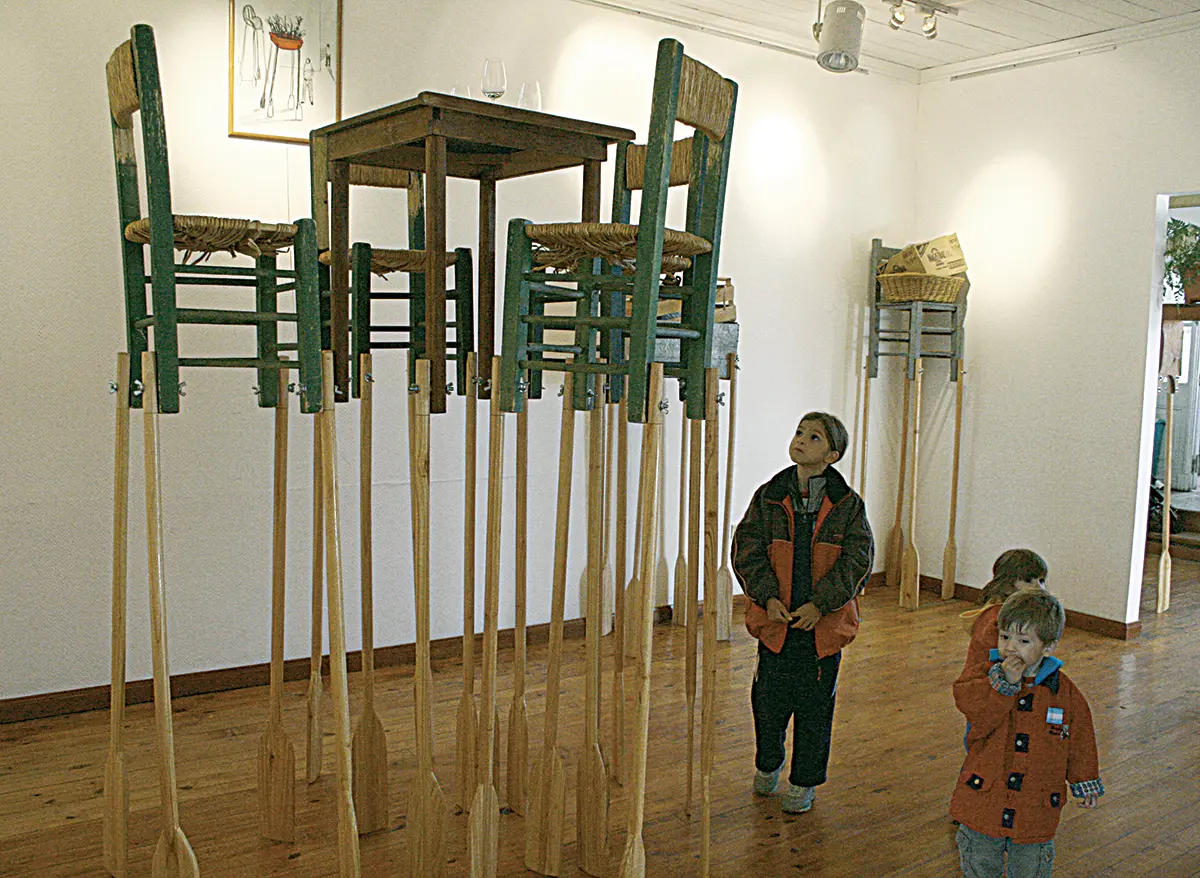
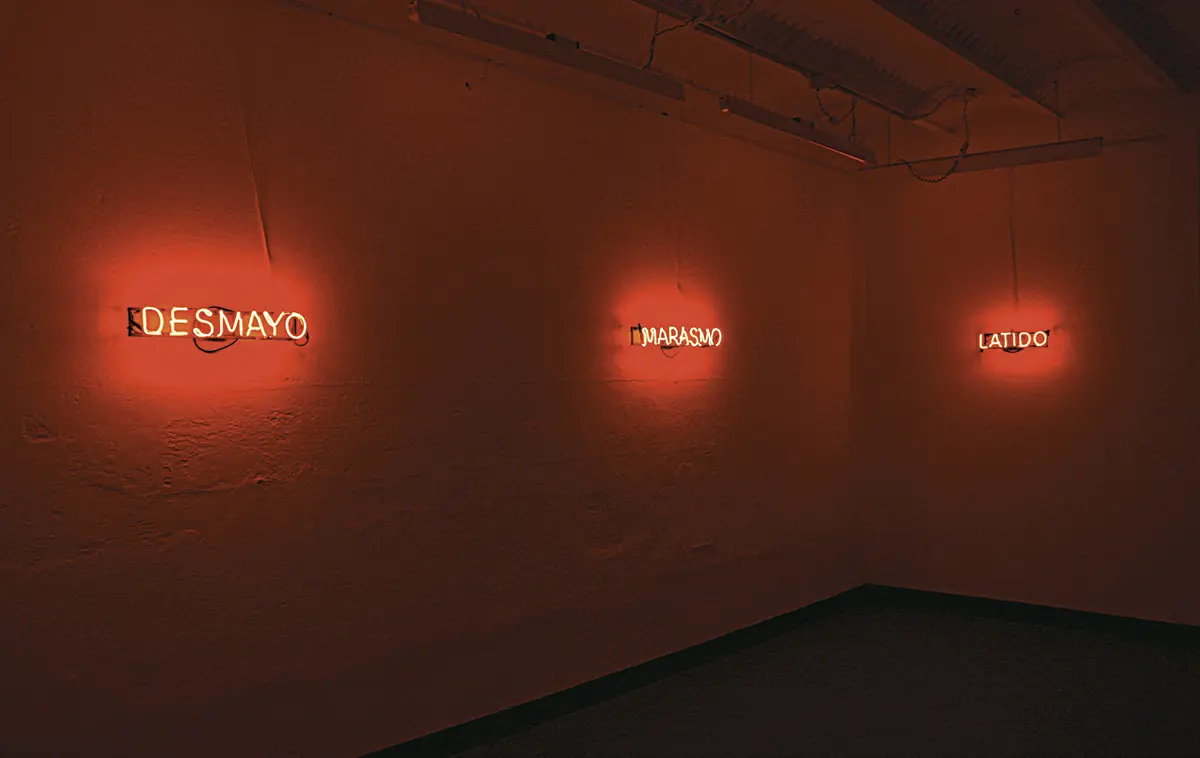
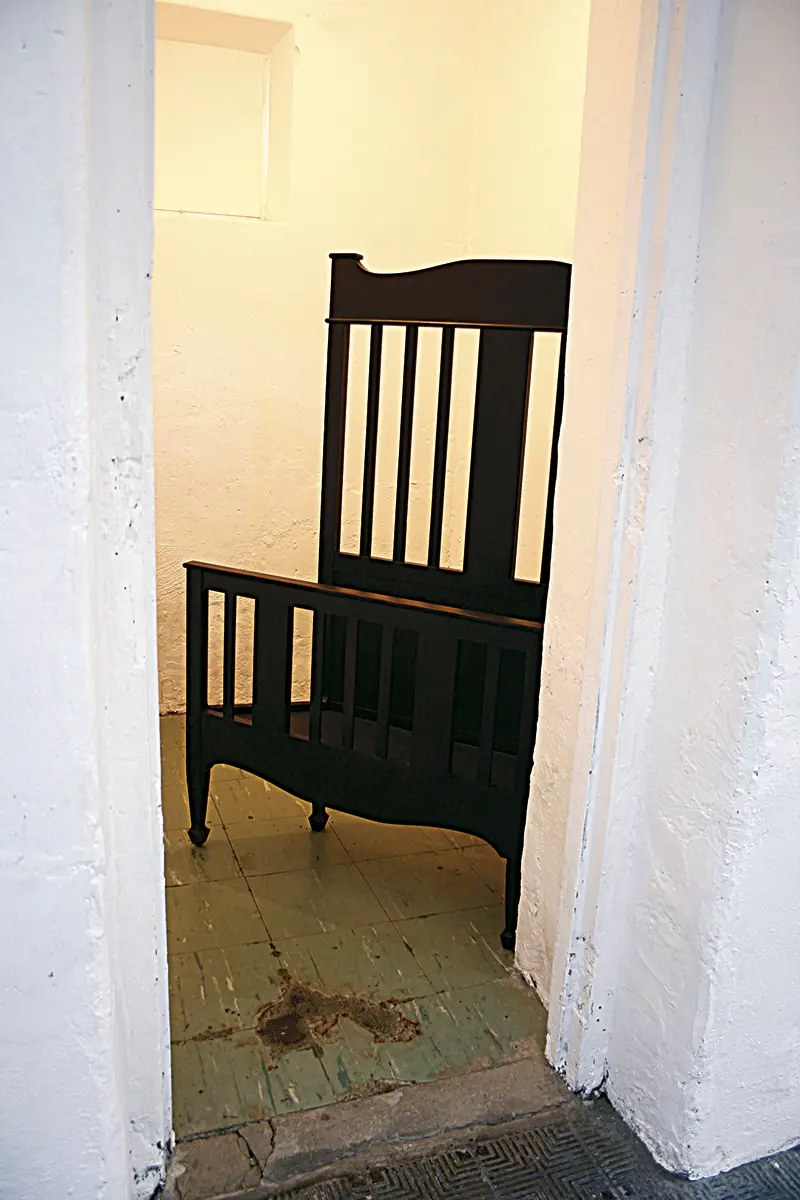
Transformed into a Maritime Museum that conveys its origins in curious theme-park details, this old “end of the world” penitentiary retains the architectural power of its late-nineteenth-century facilities, built to hold maximum-security prisoners. With a plan that reproduces the panoptic format, many of Presidio’s corners were suitable for artists to comment on the connection between geographic extreme and confinement, as in the French artist Fred Forest’s interactive work, or simply to represent desperate experiences and stories. José Rufino, from Brazil, adapted or forced his furniture into the narrow spaces of the cells while Gonzalo Díaz’s neon signs lent a red glow to the walls. León Ferrari’s collages, also in the cells, underscored the relationship between religion and repression, a permanent feature of his work.
In the same cold and dramatic space, Belén Gache planted the recorded whispers of her Diario de la luna caníbal, a work based on fragments of diaries by fictional prisoners—Gache is a writer, poet, and one of the creators of the Fin del Mundo site. Her work was beautiful and intimate like few others, and the title referred to an old belief from Tierra del Fuego, according to which the growth of the moon was from consuming the beings it killed.
More than a few works, projects, and presentations touched on the region’s proximate and remote past. Patagonia and Tierra del Fuego are the sources of fascinating and terrible stories, like that of Jemmy Button, the Yamana Indian who was taken to England by Robert FitzRoy to be “civilized” and then years later returned to his tribe. Some of these stories have for decades fed the work of Luis Fernando Benedit, one of the Argentine artists who have most thoughtfully reconstructed the history of such events, their figures, and their landscapes. In Ushuaia, Benedit presented an installation that featured a series of narratives contained in previous works, like El delfín de FitzRoy from 1987. This earlier work alluded to a now-extinct species seen by Darwin as he sailed through the Magellan Strait, portraits of fueguino types, and an equestrian portrait of Cafulcurá, a brave Araucanian chieftain who died when he was almost 100 years old in Chiloé, after leading the resistance to the occupation of Patagonia through the late-nineteenth century.
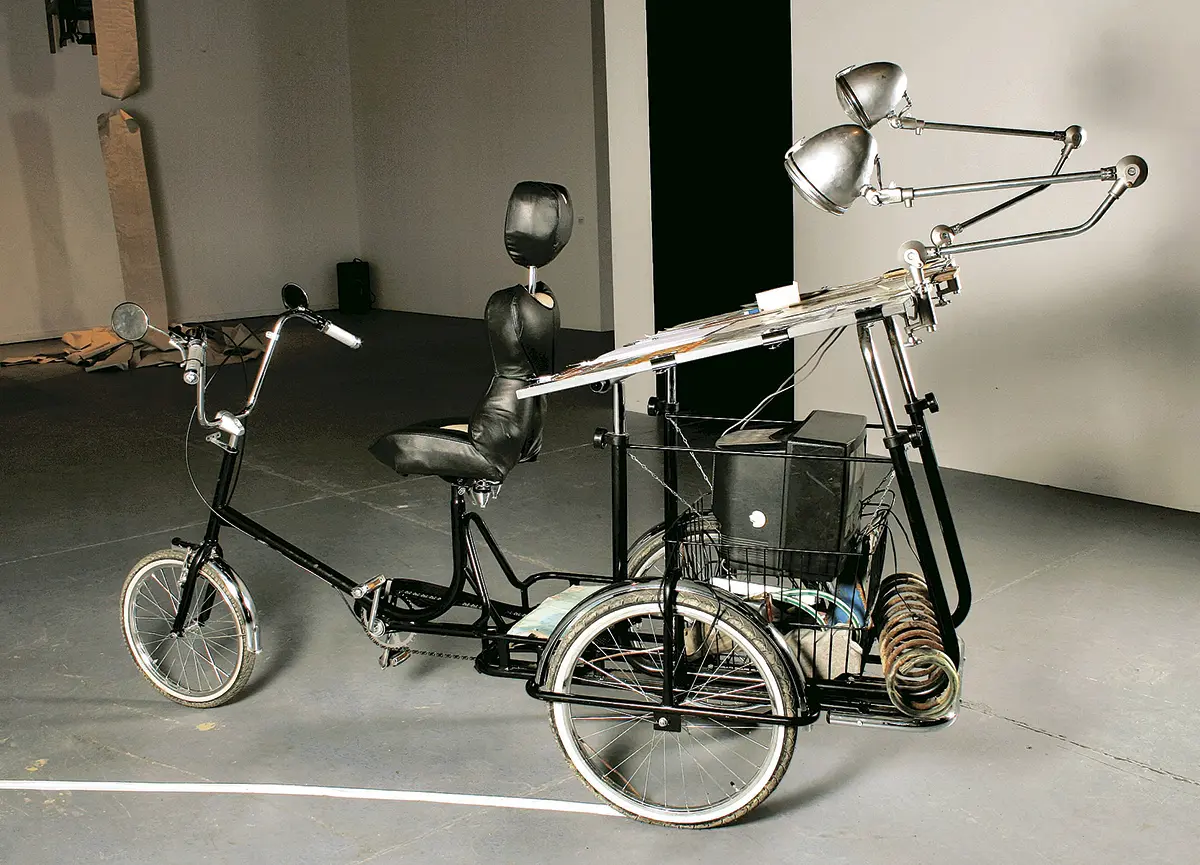
From Buenos Aires’s “civilizing-progressive” standpoint, Patagonia and Tierra del Fuego have always been seen as an immense emptiness, slowly filled by blooming imaginations generated by the arrival of adventurers and scientists. Each one formed an image of the region. Julian D'Angiolillo’s mobile sculpture—a tricycle loaded with a drawing board—evoked an advance party on the skin of a land surveyor forced to measure the immeasurable. The experience of the territory and its condition lent itself to works that conveyed a vast arc of feelings ranging from maximum excess in Flavia Rinn’s surprised faces to the experience of a different time affected by distance in Giselle Motta’s and Leandro Lima’s suggestive video work, which forced the viewer to wait indefinitely for a train; in this region, railroads were an early integrating factor, one suppressed with the privatization wave of the 1990s. The tides of Argentine history, the occupation of Patagonia, the power of the army and the landowners, and the way that this affected the formation of taste in the art field, especially the collection of the Museo Nacional de Bellas Artes, were all addressed by Alicia Herrero’s film Alice & Alice.
Ushuaia is, above all else, a land of immigrants. Few of its inhabitants were born and raised there, and the experience of being uprooted is integral to the place, even as it is now considered common the world over. Cuba’s Kcho dealt with this situation in his intervention of the historic Casa Beban, another exhibition site on Ushuaia Bay. Kcho created an allegory of the provisional conditions that surround contemporary man, and he prepared the house’s furniture for a prompt departure. Casa Nómada by the Patagonia-based group DelBorde and Refugio de Hielo, conceived in a timely fashion by the Argentine artist Paula Senderowicz at Canada’s Banff Center worked much in the same vein and almost as acts of resistance. Fabiana Barreda conceived her architecture of desire in the intimacy of the domestic space, a form of interior projection that resumed the air of Bachelard’s poetry. Inserted on the landscape, Gustavo Romano’s Proyecto IPPoetry took texts from the Internet about the outer limits of what is known and reproduced them in real-time in an old gazebo on the Beagle Channel.
Beyond the channel is Antarctica, a continent that in the imagination exists either as a desolate place of survival or as a promised land. Antarctica was the subject of Andrea Juan’s and Lucy and Jorge Ortega’s performance projects, two major undertakings that required the logistical support of the National Directorate for Antarctica, a key institution for many of the Biennial’s projects.
From its remote location, the Biennial of the End of the World generated a vector of art production and interdisciplinary debate that reflected on the environmental limits we can no longer force. Some of this was present in the debate proposed by the Magazine in Situ project on its rocky, turbulent, and fascinating journey through the Beagle Channel.
ANA MARÍA BATTISTOZZI
Historian, writer, art critic and teacher at Universidad de Palermo, Buenos Aires, Argentina.