
The year 2007 will probably be remembered by New York’s art scene
as “the Latin American year.” The first comprehensive exhibition of Martín
Ramírez’s work was held at the American Folk Art Museum. The Museum of Modern
Art opened a major retrospective of a Latin American artist (only the fourth in
the museum’s long history), allowing work by Armando Reverón to enter through
its big door. The Drawing Center presented the first important exhibition of
work by Gego. And the Museo del Barrio presented The Disappeared, an
exhibition touching on the sinister years of torture in Latin America; the show
was organized by the North Dakota Museum of Art, traveled through Latin
America, and finally reached New York City. Remarkably, all four exhibits
received raving reviews. Yet, aside from their shared high quality, the
motivations that led to the exhibitions were different. Ramírez’s appeal lay in
his being an artistic outsider rather than his being from Mexico. Reverón
seemed to benefit from both qualities, from being Venezuelan and from MoMA’s
belated discovery that post-impressionism beyond the museum’s frontiers could
be interesting. Gego’s show was a consequence of more complex interactions; the
project was in the making for the past ten years at The Drawing Center and
finally merged with a project by the Museum of Fine Arts, Houston. The exhibit
most overtly and clearly Latin American in the theme of the aforementioned was The
Disappeared, since it was dedicated to a cause rather than to individual
expression. I will address here only the Ramírez and Reverón exhibitions.
After two blockbuster shows of outsider artists (Henry Darger and Adolf Wölfli) that proved to be much more interesting than most shows of insiders anywhere else, the American Folk Art Museum presented an equally successful third one.1 Martín Ramírez (1895–1963), a Mexican small-landowner, left his native Jalisco in 1925 to earn money in the U.S. in order to save his property. Shortly after his leaving, Jalisco was engulfed in political and religious upheaval. A devout Catholic who wrongly believed that his wife had joined the secular army, Ramírez gave up any idea of returning to Mexico. He arrived in California to work on railroad construction, and a few years later he was picked up by the police for repeatedly writing graffiti: “Today it is going to rain.” Diagnosed as manic-depressive and with catatonic states, he was placed in a mental hospital. As in the case of Wölfli, Ramírez encountered a friendly and art-loving psychiatrist. From 1948 onward, Tarmo Pastor, who was an artist as well, encouraged Ramírez’s art, organized exhibits for him, and generally promoted his work.
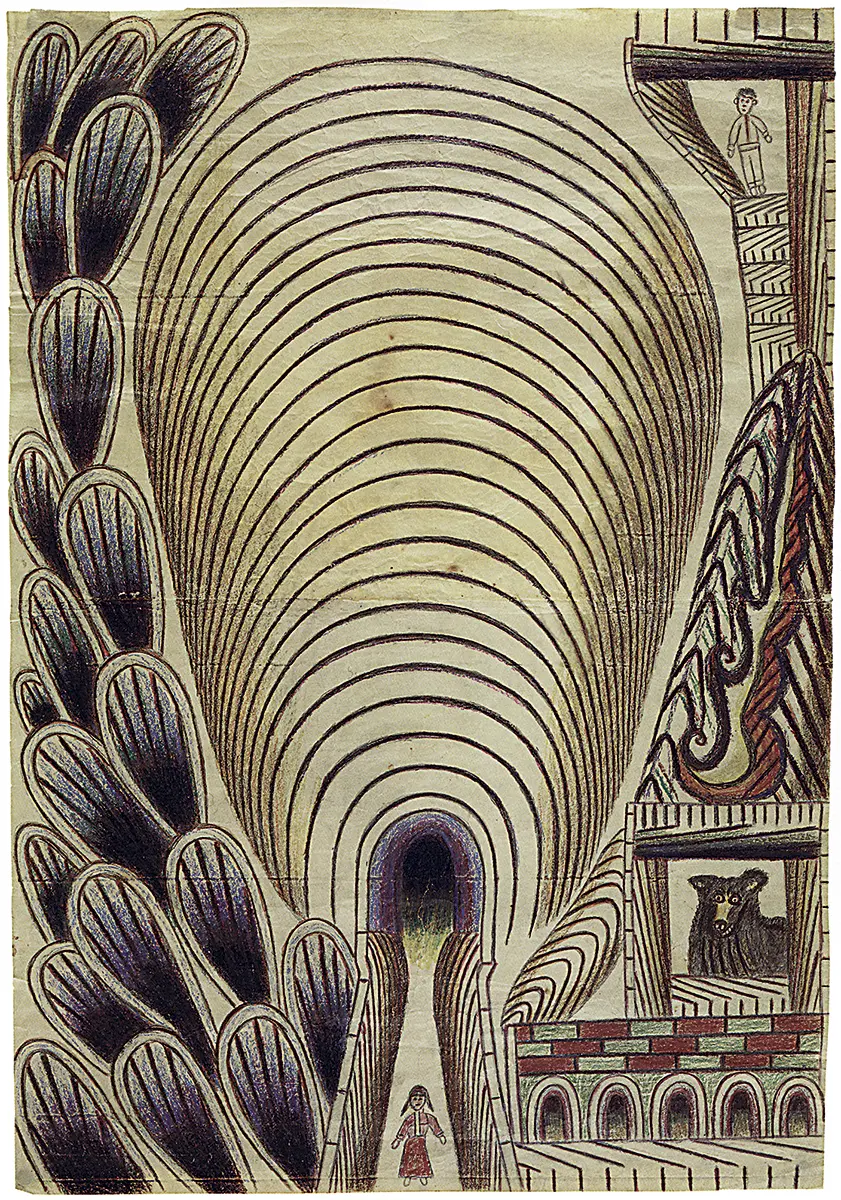
Until recently, except for single examples, Ramírez’s work was not widely known and yet he had a mythical stature; he was kind of a flagship for outsider artists. The exhibition at the American Folk Art Museum brought together for the first time works held by his family and a group of drawings that Pastor had sent to the Guggenheim Museum in the 1950s and that reappeared in the museum’s basement forty years later. Adding these works to many pieces in private collections, the exhibition filled three floors of the museum and provided an excellent overview of Ramírez’s production that spanned fifteen years.
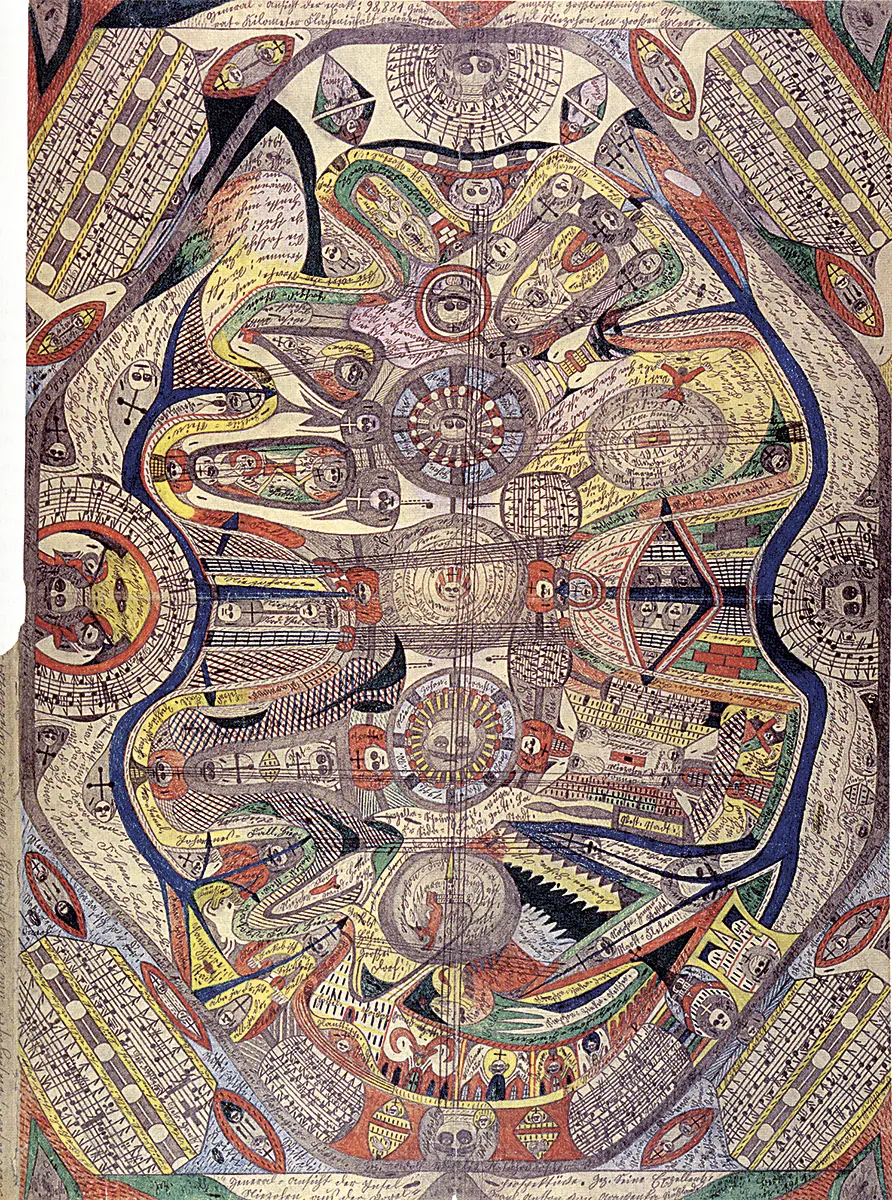
The exhibition was undeniably stunning and elicited hyperbolic reviews in the U.S. press. The New York Times proclaimed Ramírez to be one of the greatest artists of the twentieth century and, with The New Yorker, placed him alongside Klee and Steinberg. However, one is unavoidably compelled to compare Ramírez with Wölfli more than anybody else, a comparison that does not really favor him. While Wölfli constructed an external and extremely complex universe, Ramírez stuck to a few elements within the reach of his memory and experience and repeated them endlessly. Thus, although Ramírez’s works are bigger in size and made with more assertive strokes than those by Wölfli, it is questionable if those formal characteristics are enough to give him such a high rating.
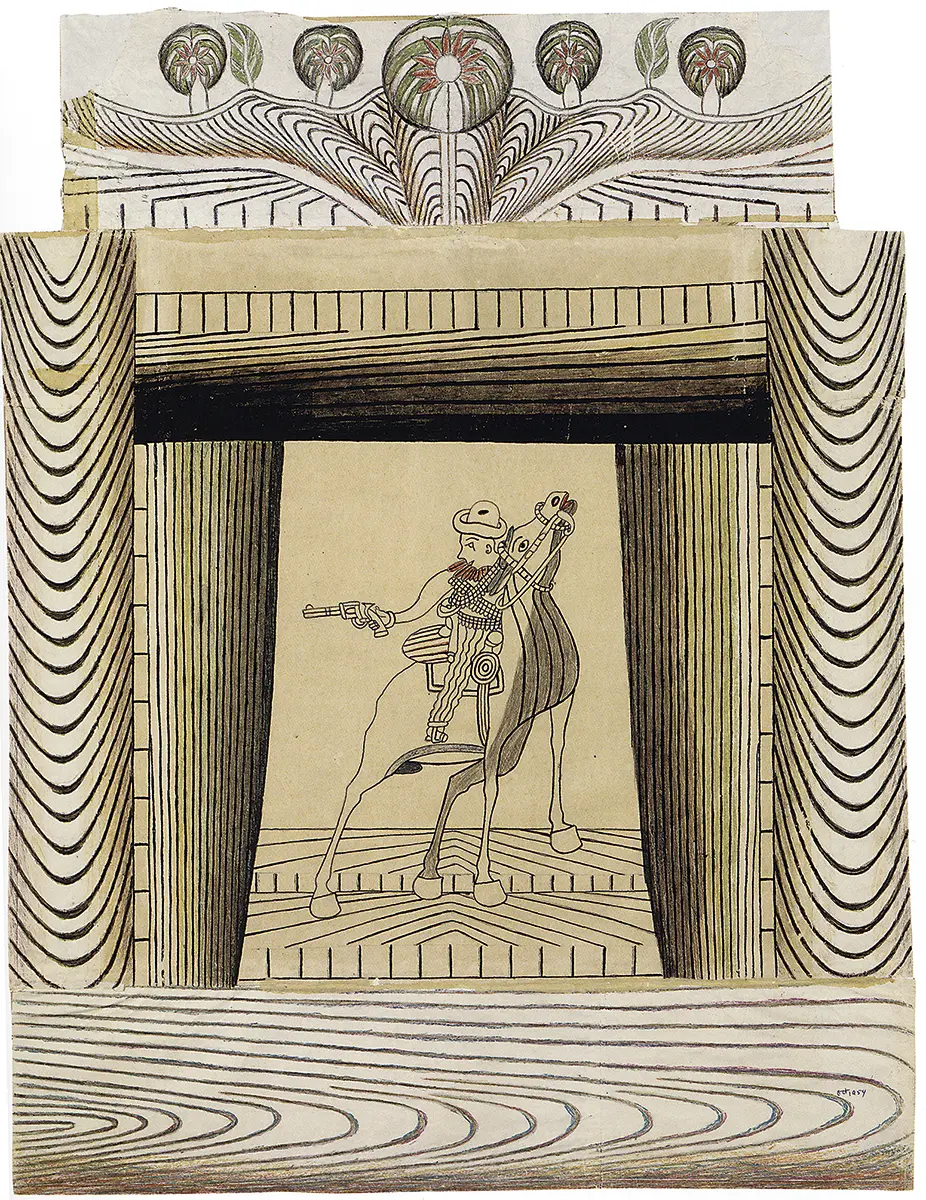
The importance of the Ramírez exhibition goes well beyond the artistic realm. In his catalog essay trying to place Ramírez, Robert Storr lucidly points out the problems of dislocation, an issue that increasingly is part of the global culture and may account for some of the exhibition’s success: “Was Ramírez disturbed? Almost certainly, but the predicates of his dislocation are geographical, historical, and cultural rather than flights into realms that are placeless, timeless, and without reliable referents in a tangible heritage. To the contrary, making his art was a sustained attempt to establish order in an existence threatened not only by psychic disorder but by an objectively hostile or indifferent world.”2
In certain ways, Storr’s statement also points to the differences between Wölfli and Ramírez. Wölfli took flight in his mind and constructed his incredibly intricate and endless universe. It didn’t matter how much or little this universe was connected with everyday reality; he didn’t need everyday reality since he was able to travel boundlessly in an infinite space of his own creation. Ramírez, on the other hand, epitomized an unwanted exile. He needed anchors for sense and to prevent himself from falling into an infinite space of the mind that he couldn’t handle. He used information rooted in his memory, and not very much of it, and obsessively repeated it to create his order. His ritual was much simpler and concise, to the point of routine. The scale and the unexpected organizations of space, where ornament and rhythm intersect with a reinterpretation of perspective, are what ensure the impact of his imagery. Fearless about the scale and able to handle the expression of stroke with careful and tedious construction, Ramírez mixed sophistication with naiveté in the most appealing manner. His often homemade paper—he built his big surfaces by gluing leftover pieces from packaging paper, often put together with mixtures of spit, juices, and oatmeal—has a texture that is already remarkable before he draws on it. Altogether, the works have both an iconic quality difficult to forget and a strong sensory appeal. They are memorable, but after a while, they are only lightly memorable.
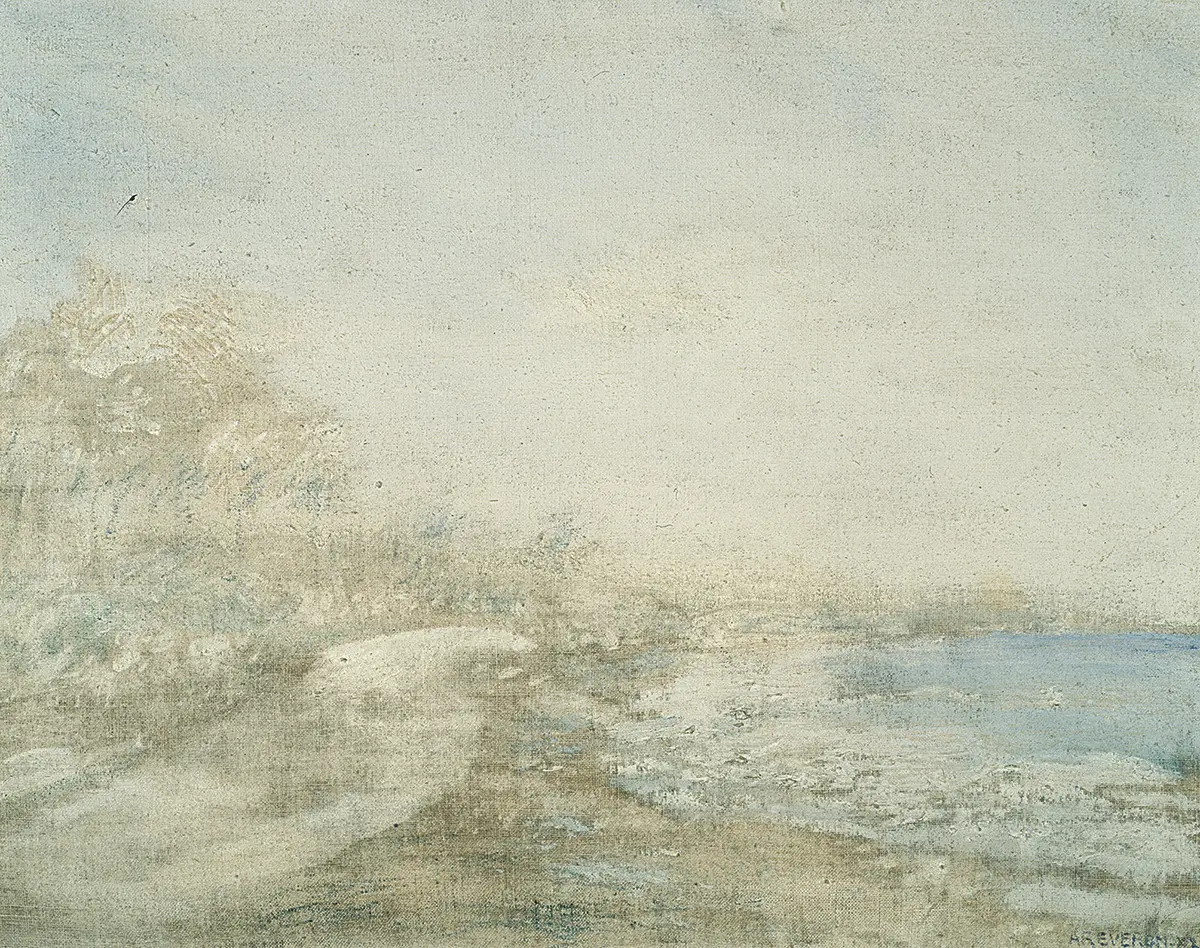
The Reverón exhibition was practically next door, at MoMA. Reverón was of course one of the great Latin American masters of modernism, although there was a catch. As Luis Pérez-Oramás remarked on the occasion of the exhibition that he curated in the Galería de Arte Nacional in Caracas in 2001, modernism in Europe closed history of local traditions while Reverón used modernism to open them. Pérez-Oramás’s exhibition was memorable inasmuch as it revealed a Reverón that escaped both the traditional constraints of art history and the usual presentation of his work that tried to fit him into it.3 At the time Pérez-Oramás had written: “That the reception of our artist insisted on differentiating, in separating the pictorial creation from this place and from the objects that populated it; that we insisted on prioritizing the paintings over his unedited site, reducing the objects and the house to be instrumental accessories of psychopathology and eccentricity... is as if between the idea of the painter Reverón and the Reveronian totality, there was this accumulation of things that define ‘place’ and in us define ‘obstacle.’”
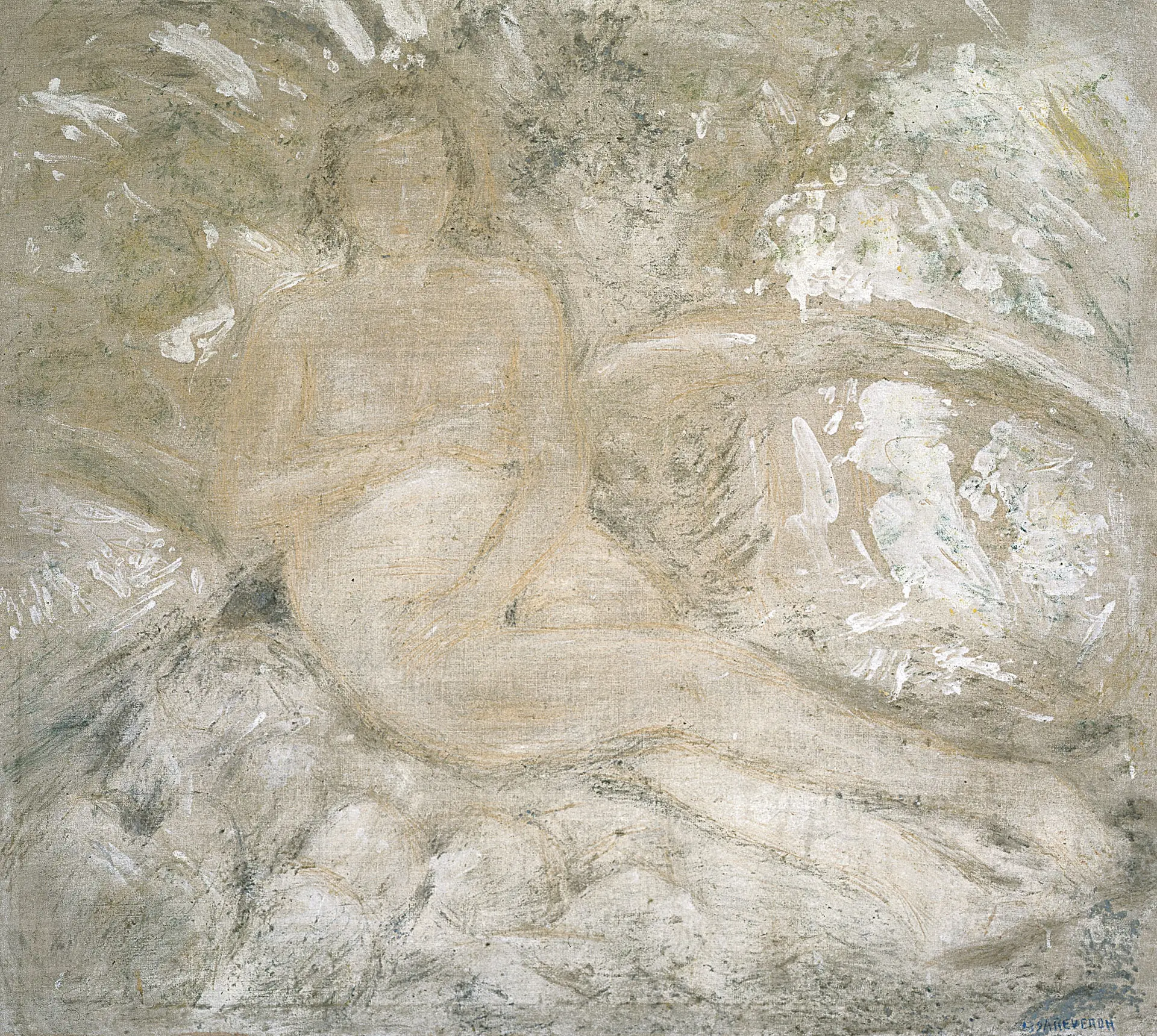
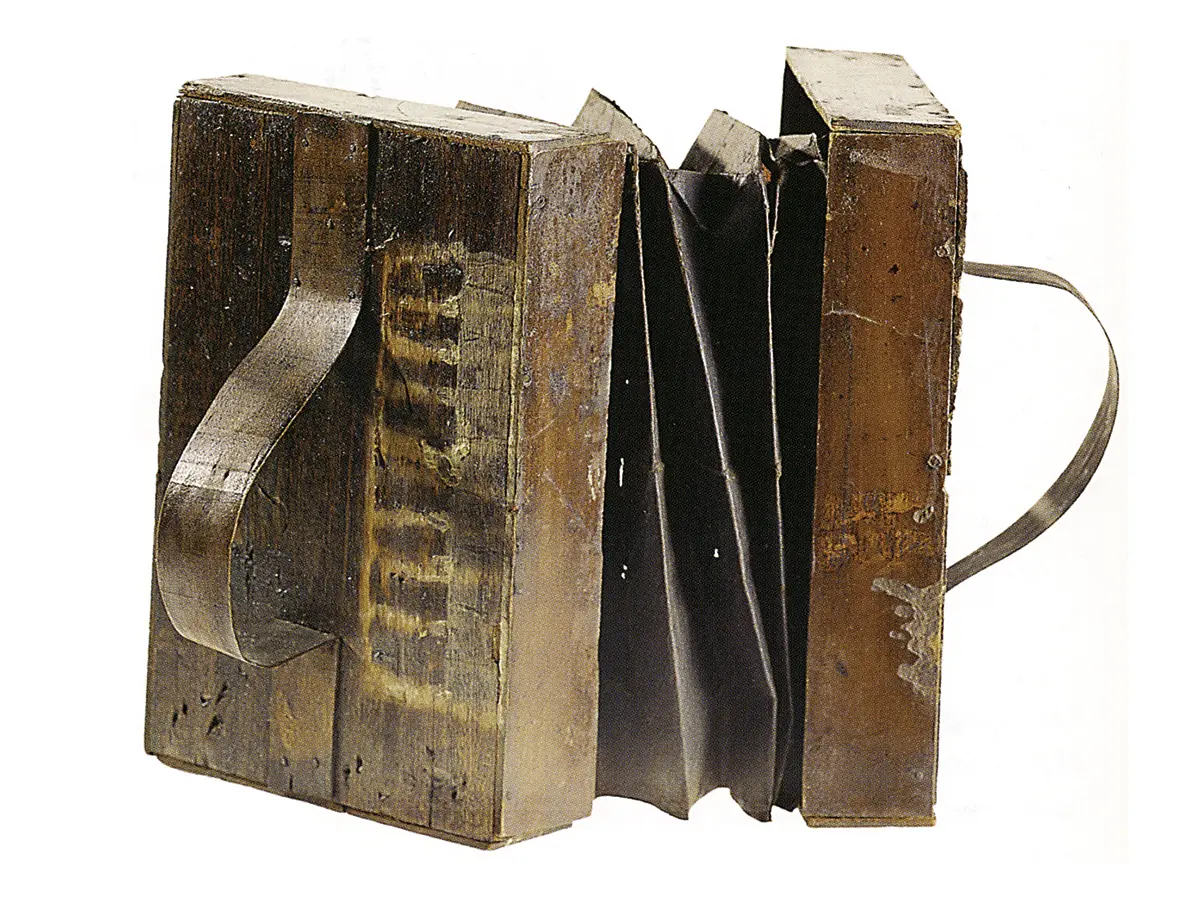
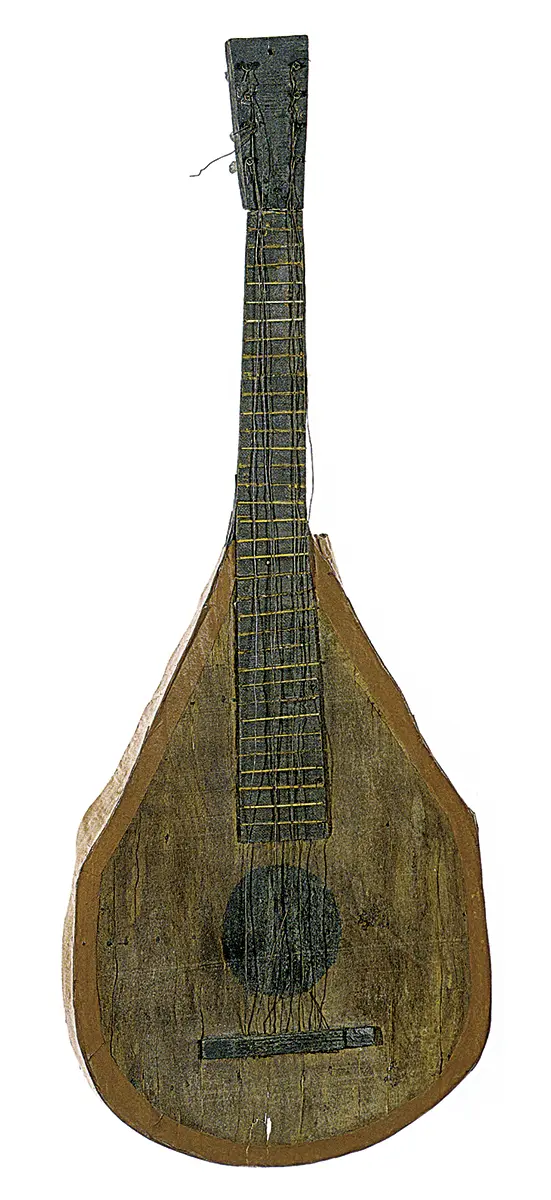
In that sense, MoMA’s exhibition was a serious step backward, although scholarly justifications for it are extensively discussed in the catalog.5 Reverón was once again presented as a painter, and his objects (about half the number shown in Caracas) were mostly confined to small glass cases embedded in the thick walls that separated the different rooms, and some accumulated on the final wall of the show. John Elderfield, the main curator of the exhibition (Pérez-Oramás and Nora Lawrence assisted him), makes the case that Reverón himself never exhibited his dolls and objects and that he neither considered them sculptures or works of art: “It was the artist himself, not his critics, who created the traditional categorical division in his practice when he exhibited and sold his paintings but not his objects.”6 In his essay, Elderfield underlines, correctly, the public aspect of the paintings as opposed to the private quality of the objects. As one of the signs of this privacy, he invokes the relative lack of craftsmanship in the realization of the objects, implying that, in making them, Reverón felt free from any accountability toward an audience. Interestingly, however, Elderfield also speculates about the possible connections these works might have with European surrealism and wonders if there was pertinent documentation in Venezuela at the time.
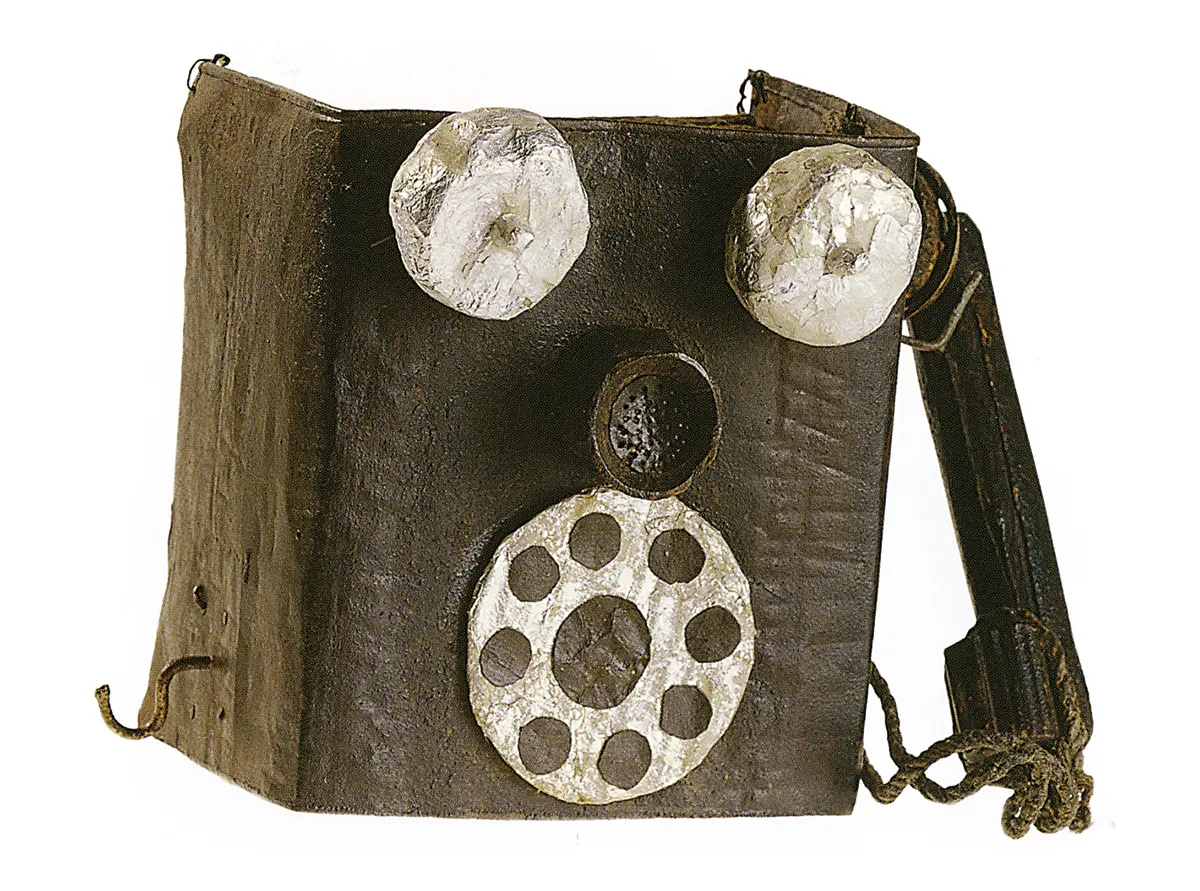
It is difficult to state a clear opinion on the subject of primacy or subordination of Reverón’s objects. It is undeniable that the relationship he had with his objects was very different from that with his paintings. The objects were models for his work; they were to some extent alive (particularly the dolls), imbued with a soul that he did not attribute to his canvases. Today, the crude and direct objects seem to retain that soul and communicate it consistently. This may be as much due to our sensibility as to Reverón’s abilities. The paintings are competent and professional, but along a more irregular trajectory, and mostly survive thanks to their role in history.
The question, then, is what is a curator to do? MoMA decided to follow the wishes of the artist and to basically present his work the way he might have if he were alive today. And if he were alive, it probably would make sense. A living artist has the right to refuse the exhibition of work and to have a pivotal role in the selection of his artistic public face. On the other hand, after the artist is dead, history interferes with both artists’ and curators’ opinions and wishes. Somebody once studied the covers of Artforum and wondered what had happened to most of the artists that had been on the covers over the previous several decades of the magazine’s publication. An artist might consider him- or herself as the historical linchpin of the century without ever transcending his or her own family. An artist may consider one period of a lifelong production as the only relevant work, only to have history dismiss it and proclaim the importance of totally different works.
Reverón does not exactly fit the canon and must have posed a conundrum to MoMA. The perception of his work is different in the U.S. than what it is in Latin America and more precisely in Venezuela. Pérez-Oramás describes three exemplary points in Venezuelan modernism: El Castillete, Reverón’s hand-made dwelling and studio filled with his contraptions; the landmark Ciudad Universitaria; and Gego’s complex wire-web Reticulárea.7 This view, a vernacular definition of modernist space, is inaccessible outside of its locus. As a consequence, MoMA’s curatorial decisions became part of a communication strategy with the mission of making Reverón’s work visible to another public.
Thus, in this context, the scholarly faithfulness and curatorial humility shown by Elderfield seem understandable and laudable. However, given the losses, it was not necessarily on target. From today’s point of view (which may be different tomorrow), the exhibition in Caracas revealed an extremely powerful creator whose personality until then had been imprisoned in (a canonical) cultural prejudice. It didn’t really matter to the public—the true cultural inheritors—if Reverón preferred one kind of work to another. Kafka didn’t want his work published, Chagall may have believed that the second half of his life was as good as or better than his first, and both Hitler and Churchill were proud of their artworks. A painting that Francis Bacon had thrown away but was rescued by an electrician recently sold for $600,000.8 And, ultimately, we don’t really know about Reverón. Within his mental disturbances, he knew the business very well and he also knew what was alive among the things he made. Possibly he didn’t want to share his objects because they were, and perhaps still are, breathing. The more relative question is if they are also breathing for the U.S public, and it would be surprising if they were not.
This brings us back to dislocation, the predicament Storr sees in the life and work of Ramírez, and it makes one also wonder about Reverón. Reverón, unlike Ramírez, was educated within the parameters of sophisticated art. This means not only aesthetics but also refers to values about the finished work and distribution, about the differentiation between expression and marketing.
One could say that Ramírez’s work was much more therapeutic than Reveron’s. Ramírez used his work to root himself in his past in order to survive in his present. In his work, nostalgia became a space that, in danger of becoming intangible, needed the reassurance of endless repetition to generate self-persuasion. Ramírez needed to solidify something he couldn’t physically hold on to and used the limited formal resources that gave him security. He always could revisit his visual “formula” with the vertigo of risk. After defining that world, he could explore it without losing himself.
Reverón did not need nostalgia; he was installed in the present. His therapy happened during the strange flagellation rituals that preceded the making of his paintings. One could say that while Ramírez’s artistic output was the refuge in which he could live, Reverón’s paintings conformed more to the traditional production of art. Reverón’s refuge was the world defined by his objects. As Pérez-Oramás wrote for the Caracas exhibition: “The Reveronian place didn’t respond to any form of lamentation or nostalgia, neither did it give form to any utopia: it was the present site to make the ‘here’ possible, an age-old combat of the manifestations of presence.”9
There seems to be an odd shift of standards in the evaluation of both artists. On one hand, Ramírez, who did not seem to have any serious ambitions to enter the art market with his work and who produced mostly to achieve personal stability, is hailed as a major artist of the twentieth century. On the other hand, when Reverón takes a similar approach to make his objects, he is robbed of the same recognition and confined as a maker of paintings. Maybe it would have been better if Reverón had been a mediocre painter. We could then admire his amazing world without the accompanying noise of the history of art.
NOTES
1. Exhibition tour dates: American Folk Art Museum, New York, January 23–April 2. Robert Storr, “Mindscapes, Landscapes, and Labyrinths,” Martín Ramírez (Marquand Books, NY: 2007) p. 16.
3. See Luis Camnitzer, “Armando Reverón and the Nocturnal Butterflies,” Art Nexus no.43 (2002): 58–62.
4. Luis Pérez-Oramás, “Armando Reverón: La gruta de los objetos y la escena satírica,” Armando Reverón: The Place of the Objects (Caracas, Galería de Arte Nacional: 2001) pp. 18–19.
5. John Elderfield and Luis Pérez-Oramás, Armando Reverón (New York: The Museum of Modern Art: 2007). The exhibition was on view from February 11 to April 16, 2007. On occasion of the exhibition in Caracas, I had received misinformation, which led me to affirm that this show was being brought to New York. The exhibition in New York was researched especially for this event.
6. John Elderfield, “The Natural History of Armando Reverón,” Armando Reverón, p. 50.
7. Luis Pérez-Oramás, from personal communication with author.
8. “Artist’s Garbage Fetches Millions,” The New York Times, 26 April 2007, p. E2.
9. Armando Reverón: The Place of the Objects, p. 25.
LUIS CAMNITZER
Emeritus Professor at the SUNY Colege, Old Westbury.