
In the current era of itinerant artists and post-studio production, much recent contemporary art has been conceived specifically for museum spaces. This is certainly true of the majority of the works selected for a visually arresting exhibition of eight emerging Latin American artists held at the Museum of Contemporary Art in Los Angeles from April 22 to August 13, 2007. Organized by the curator Alma Ruiz, Poetics of the Handmade combines imposing, site-specific installations conceived for the museum’s cavernous white-box setting with a series of more intimate, finely wrought drawings and sculptures. Ruiz conceived the show to be a meditation on the everyday through the labor of art-making: some pieces were constructed out of such everyday objects as tinfoil or lipsticks, whereas others used the mundane experience for inspiration, but all were fashioned with a meticulous, protracted, and handmade process. Although using ordinary, mass-produced objects as art materials are not new, these artists do so in skilled and refreshing ways. The effect is an impressive show full of visual delights and technical prowess.
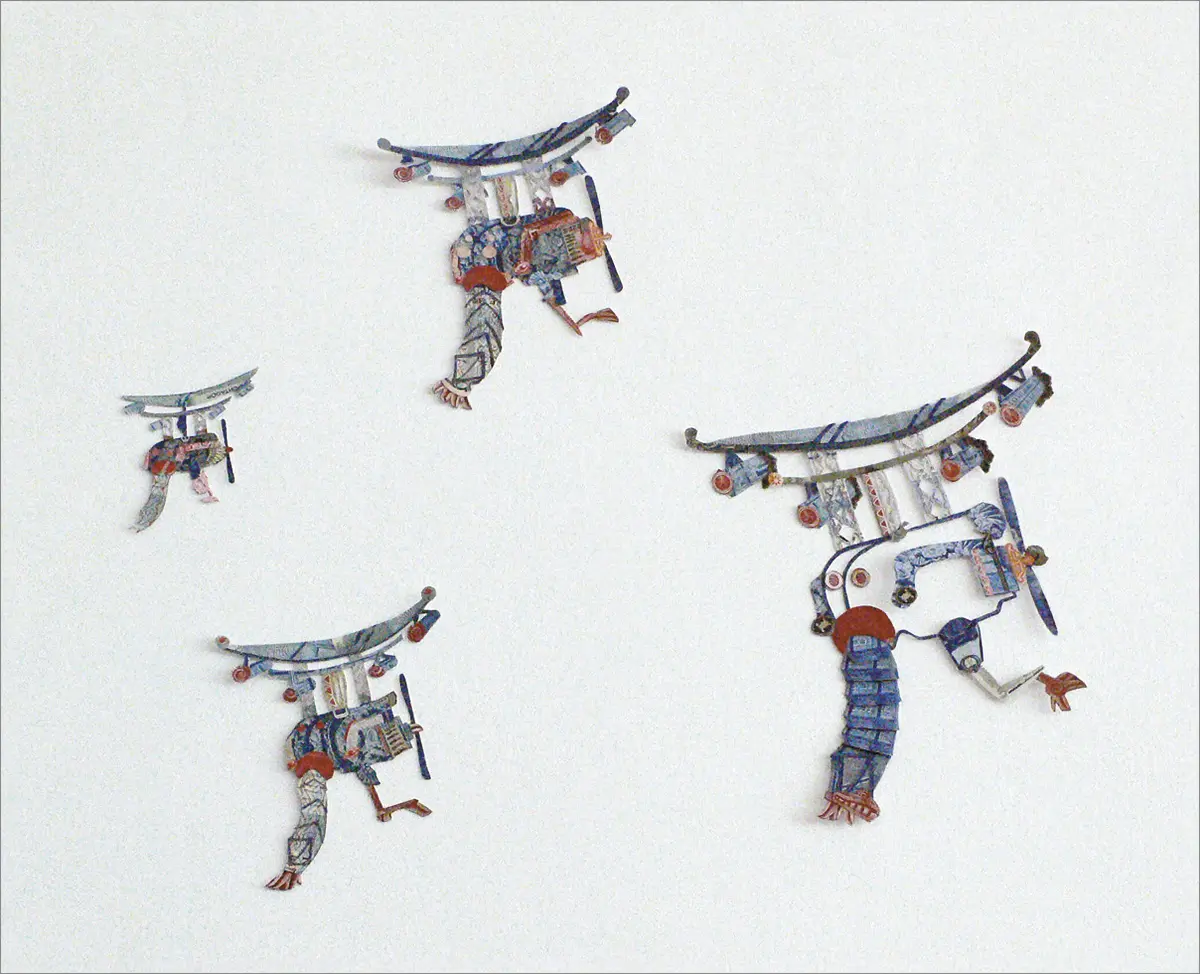
Of the large-scale works, the Argentinean-born artist Máximo González’s ¿Dónde se han ido las flores? (2006–2007) is the most intriguing and complex. Through a painstaking process of cutting, folding, and reassembling devalued paper currency and with careful attention to the printed pattern and colors on the original bills, the artist created nearly five thousand individual figures in the form of butterflies, trees, bird-like elephants, tanks, and long-legged flying creatures. The figures are arrayed in large groups on four walls of the gallery, creating a world unto itself. The whimsy of the toy-like figures is belied by the brooding title that reflects the artist’s criticism of the degradation of contemporary society.
In the striking installation by the Chilean artist Livia Marin, the aesthetic of the handmade is jettisoned in favor of a machine-made appearance. Ficciones de un uso (2004) comprises 2200 variously colored and carved lipsticks placed upright in their tubular cases on two elegantly curved pedestals. Meticulously carved into one of six hundred different conical shapes, each lipstick is shown in full splendor atop its gleaming silver dispenser and calls to mind an architectural model of an urban skyscraper. Transforming these stock beauty products into a miniature battalion of artful sculptures, Marin’s work evokes the seductively orderly arrangements used to display luxury consumer goods. In the same room as Ficciones, an installation by another Chilean artist is likewise dominated by shades of red and pink. Monica Bengoa’s oversized thirty-by-fifteen-foot photo-derived mural depicts a section of the artist’s personal bookshelf. The work is notable for its canvas, made from a patchwork of 2112 hand-colored paper squares made to resemble cocktail napkins, complete with serrated edges, but this is the least satisfying of all the installations.

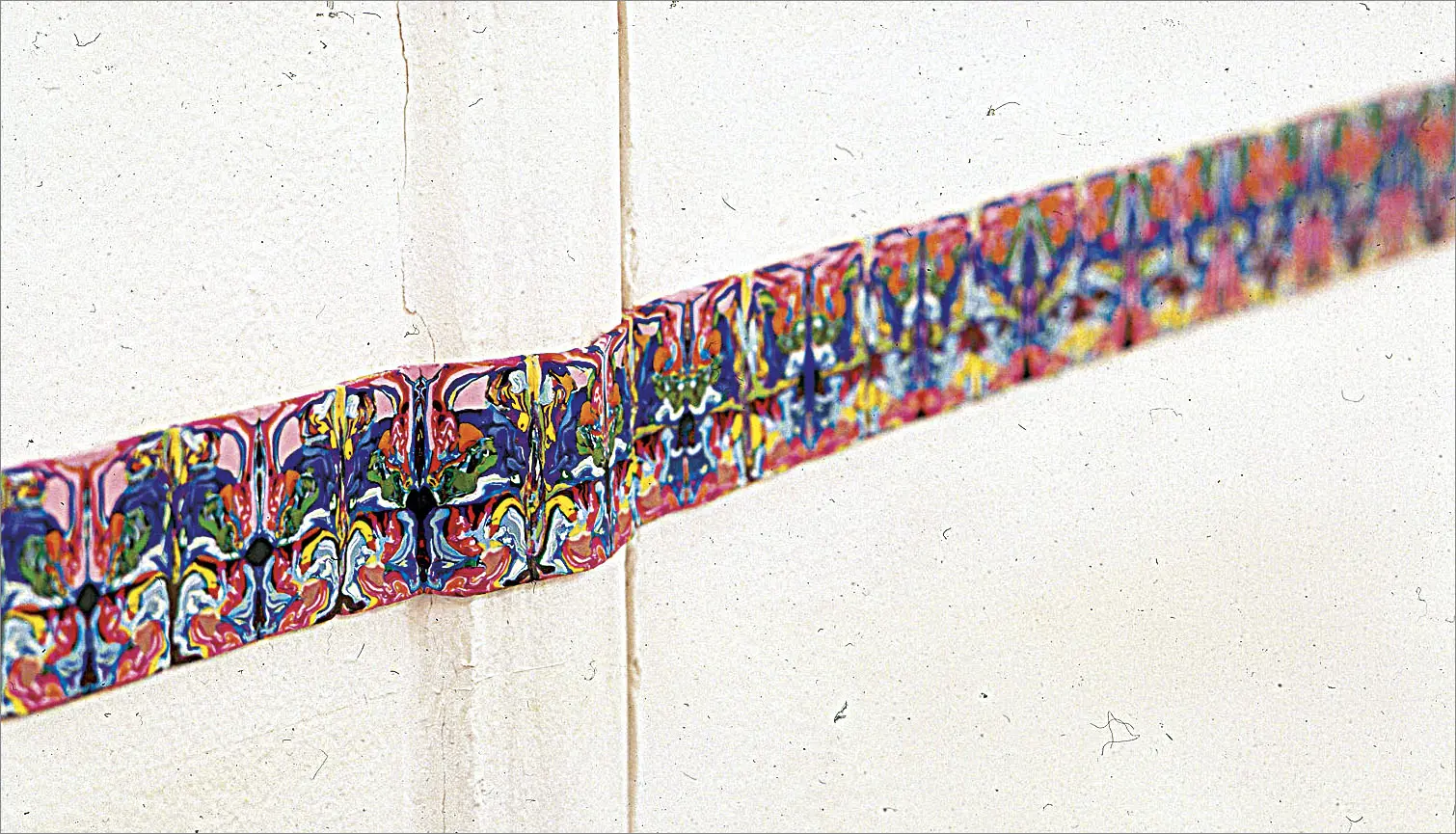
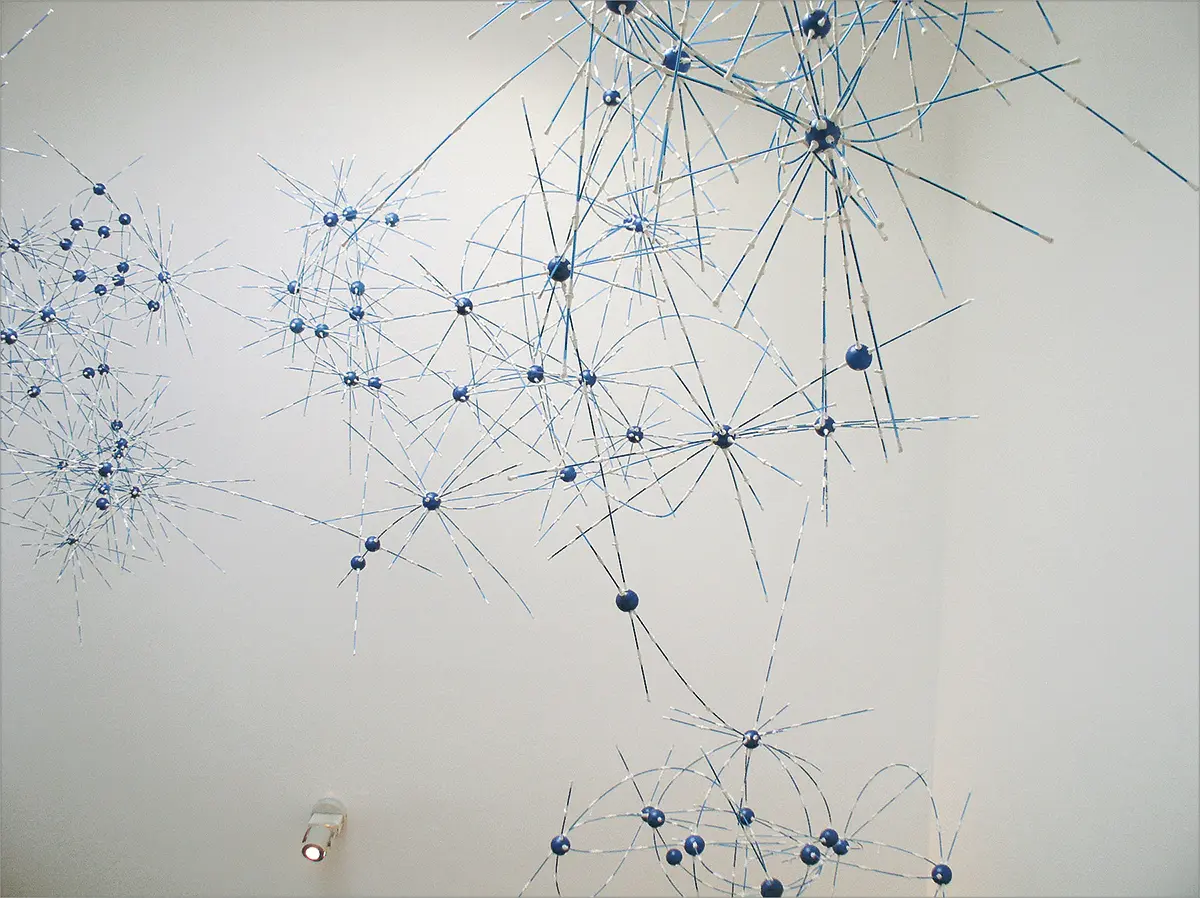
Eduardo Abaroa (born in Mexico City) and Magdalena Atria (born in Santiago) likewise construct their works out of smaller modular components. Abaroa creates an endlessly proliferating nodal network using thousands of cotton swabs and rubber balls held together by hidden wire and glue, resulting in a mammoth version of a schoolboy’s project that maps a molecular structure. Draping from the gallery’s cathedral ceilings and terminating in various spokes and nodes, the installation incorporates large pockets of open space into which the viewer can enter to witness a stimulating interior view. Where Abaroa employs cotton swabs in seemingly endless repetition, Atria uses thousands of wooden toothpicks to fabricate her sculpture Smiling Desperately I (2004). While similar to Abaroa’s network in its mesh-like construction, Atria’s work is a single, densely packed, globular form around five feet tall. Suspended one foot from the floor, the body-sized work confronts the viewer at eye-level and takes on the form of a numinous, alien being. Equally appealing is Atria’s other contribution to the exhibition, an unbroken row of repeating panels of colorful modeling clay along the length of the walls of the room. With its abstract, almost psychedelic patterns that continually change into new designs, the work is unexpectedly mesmerizing.
Shown in groups, the smaller-scale works stand up well against the looming installations. Marco Maggi (born in Uruguay) presents drawings made by carefully inscribing but not penetrating pristine sheets of aluminum foil with a sharp instrument. From afar, the drawings look like reflective silver panels, but from a closer distance, the minute, labyrinthine embellishments—including a tiny, repeating motif that resembles stacked Mayan pyramids—become visible and are gratifying to behold. Fernando Bryce (born in Peru) includes a series of black ink drawings that reproduce selected covers and pages of various magazines. The artist’s selection of text and images reveal the intentions of the magazine publishers and inspire thoughtful contemplation. A page from Américas, the 1950s propagandist publication of the Organization of American States, bears the heading Latin America and the World Bank, and includes a picture of an office building with the caption, “the handsome building in Washington, D.C.”
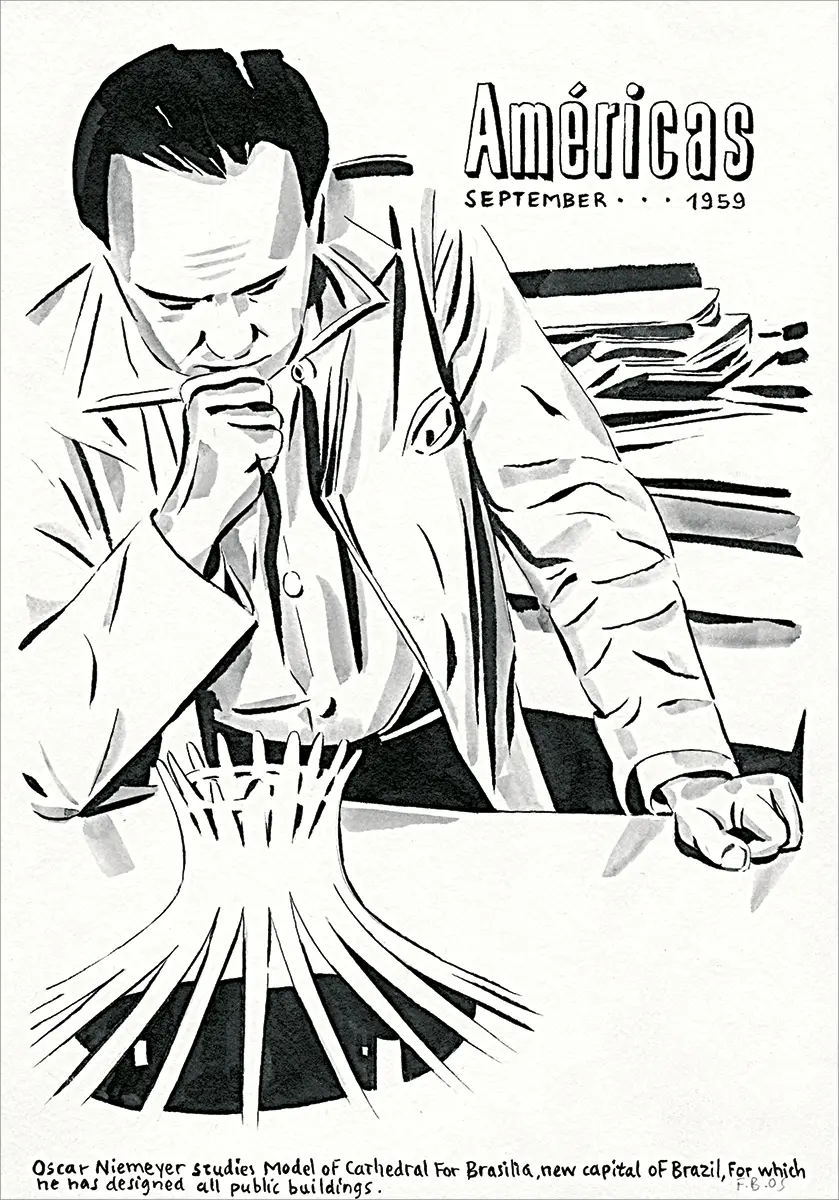
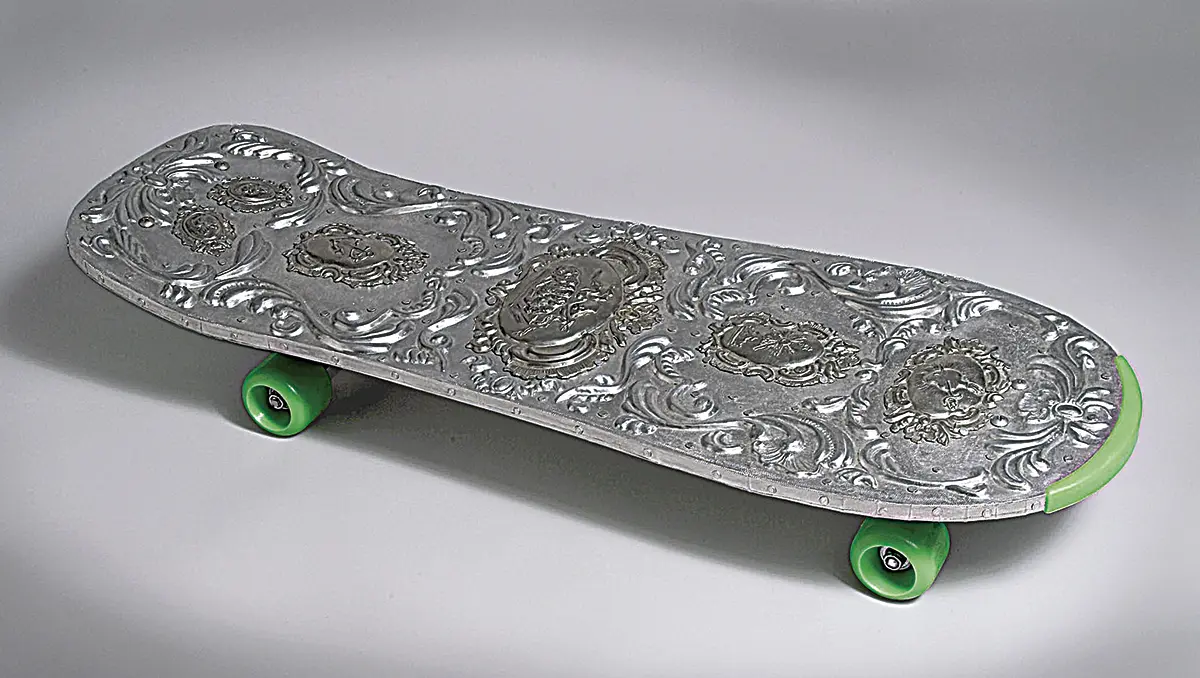
Darío Escobar (born in Guatemala) also references a moment in Latin American history with his silvered sculptures of various types of sporting gear. The artist transforms modern basketball hoops, surfboards, skateboards, and table-tennis paddles into sculptural relics by encasing them in silver that is embossed using a seventeenth-century Spanish colonial technique that was commonly applied to religious objects. The contemporary fetishization of consumer goods is depicted to the maximum degree, transforming commonplace, machine-made objects into luxurious, unique artworks.
Ultimately what this exhibition demonstrates is not only how certain artistic practices within Latin America are interrelated but also how many artists in this part of the world speak an aesthetic and conceptual language used by cosmopolitan artists in both North and South America. While Poetics of the Handmade is an arresting exhibition, we might imagine that future shows will draw the ready connections between these talented artists and those beyond the Latin American borders.
LETA MING