
I began to write this article over ten
years ago, when Ruben Torres Llorca moved to Miami after spending some time in
Mexico. He was one of the Cuban artists of the eighties and one of the group’s
most outstanding intellectuals and we welcomed him when many of us began
working toward strengthening the incipient world of the visual arts in South
Florida. During my first meeting with Torres Llorca, we spoke about his
participation in the development of the first generation of artists that formed
in the context of the Cuban Revolution, and we discussed the different changes
that his work had gone through. We also spoke about the impact that the
decision to move to the United States had on his work and his personal life.1
Torres Llorca’s original interest in the arts was inspired by the need to recover his absent father.2 It was not until he was an adolescent that, taking advantage of his abilities, he decided to enter the Escuela de Artes Plásticas de San Alejandro to avoid serving in the military. There, he met an important group of artists that would later play a fundamental role in the development of Cuban contemporary art, including Carlos Alfonso, Juan Francisco Elso Padilla, Ricardo Rodríguez Brey, José Bedia, Rogelio López Marín (Gory), Arturo Cuenca, and Consuelo Castañeda. Through Elso Padilla, Torres Llorca also met Leandro Soto and Gustavo Pérez Monzón. Of those years, he remembers how working among his friends with their encouraging and positive competitive spirit forced him to try his best.
After finalizing his
studies at San Alejandro in 1976, Torres Llorca pursued his graduate studies at
the Instituto Superior de Arte (ISA) in 1981, and he participated in the
exhibition Volumen I which marked the beginning of Cuban art’s “Renaissance.”3 According to the art critic Gerardo Mosquera,
in Volumen I Torres Llorca “already had a mature personality and his works
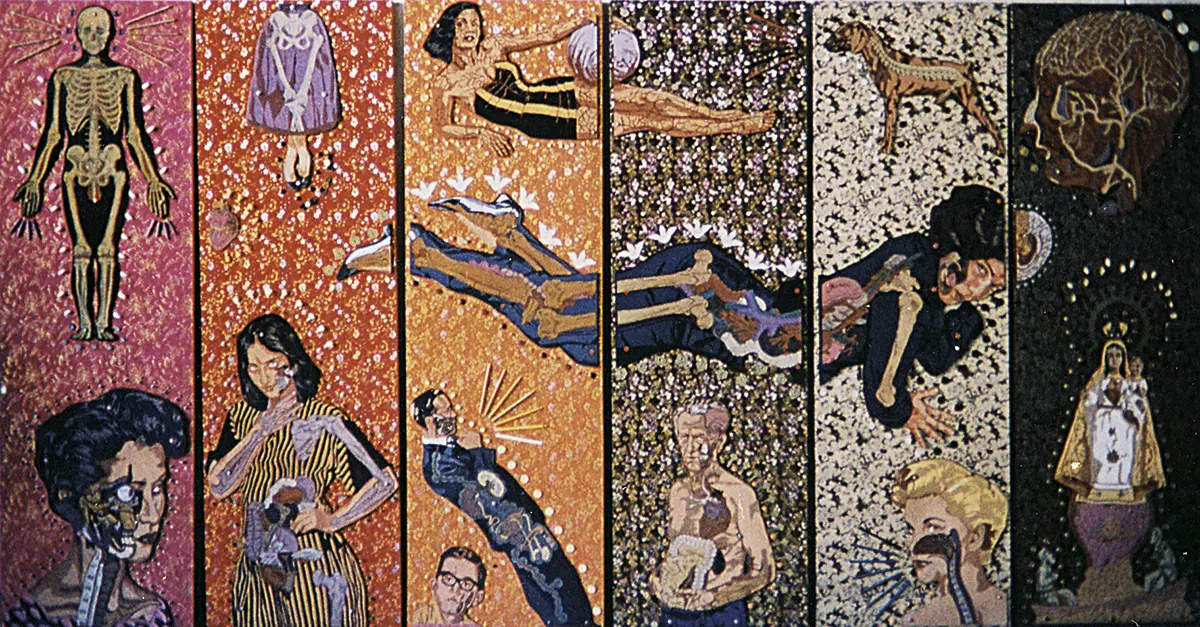
were some of the best of the show.”4 The installation Todos Los días (1981) was an anthropological portrait inspired by
science books and adorned with objects borrowed from his grandmother’s living
room (a standing ashtray and a television set); it was, according to the
artist, “a naïf intent to make a conceptual work inspired by Pop Art.”5 Thematically, it reflected on the role of
women, a theme that has always interested Torres Llorca, and to a certain
extent denounced their exploitation and status as sex objects. The work also
referred to everyday issues, another aspect present throughout his career, as
he showed how objects from the past were still around despite the passing of
time, particularly the culture that had remained since the fifties.
Beginning with Volumen I, young artists publicly rejected the previously established
aesthetic codes and generated an artistic and ideological discourse, triggering
a movement of renewal and expressing the social and political concerns of
common Cubans. Their activities generated massive events that transcended the
aesthetic realm and sparked an essential vanguard. Every month there were two
or three first-class exhibits that attracted multitudes. An important aspect
was the participatory role of the spectator in these events. Such a role is
still an important element in Torres Llorcas’s work; the viewer is expected to
interact with the work and experience it intellectually, physically, and
emotionally.
According to Luis Camnitzer, Torres Llorca’s early work had a sociological aspect since it studied media aesthetics and their effect on Cuban taste. Although his work was nourished by Pop Art and coincided with other international movements such as Conceptual Art, its intimate character gave it a personal and nostalgic touch. The influence of film, television, and cartoons, as well as Torres Llorca’s affection for sewing (his mother was a dressmaker), helped him to synthesize his personal experiences in a therapeutic manner. Perhaps the best example of this is the work shown at the second Havana Biennial, Te llevo bajo mi piel (1986), made out of a series of painted and sewn panels. According to Camnitzer, this work resumed and marked the end of Torres Llorca’s first aesthetic period.6
Thanks to the request
of the artists Adolfo Patiño and Carla Rippey, Torres Llorca traveled to Mexico
in 1985, to exhibit at the Universidad Veracruzana and the Universidad
Iberoamericana. This trip was extremely important for him. He survived the
city’s earthquake—for a while, his family thought he was dead—and the
experience led him to identify with other cultures and feel as if he belonged
to more than one nation.7 The trip to
Mexico also transformed his work, which began to incorporate Mexican crafts,
religious objects, and Afro-Cuban syncretic symbols.
The experience of visiting churches and temples also influenced how Torres Llorca manipulates spaces and the way that spectators visit them. From that moment, his work can be defined as the intervention and organization of spaces using pieces that may be seen individually but are interrelated. The work narrates a story, and each piece should be seen as a page of a book or a scene of a movie that the viewer can read or see in any order. The main goal is that the spectator identifies with the work emotionally so that a catharsis occurs. An example of this is El Laberinto (1989), an installation made for the twentieth Sao Paulo Biennial, to which Torres Llorca was invited by Joao Candido Galvao, the general curator. It was the first time Torres Llorca was able to work without having to worry about political pressure from the Socialist Cuban government. He recalls, “In São Paulo [I] finally was able to do what [I] wanted, both conceptually and economically, since the Biennial covered all of the expenses.”8 El Laberinto was an actual labyrinth in which the visitor could easily become lost. The path out was determined by the visitor’s personality: if he was an optimist, he could find the exit; if he was a pessimist, he would not be able to find the exit, and he would go back to the entrance after encountering many dead ends. For Torres Llorca, efficient work must trigger emotional reactions; this work, without a doubt, was very successful in this regard. He recalls that somebody left him a message that said: “Who are you? You know me so well!”
After spending six
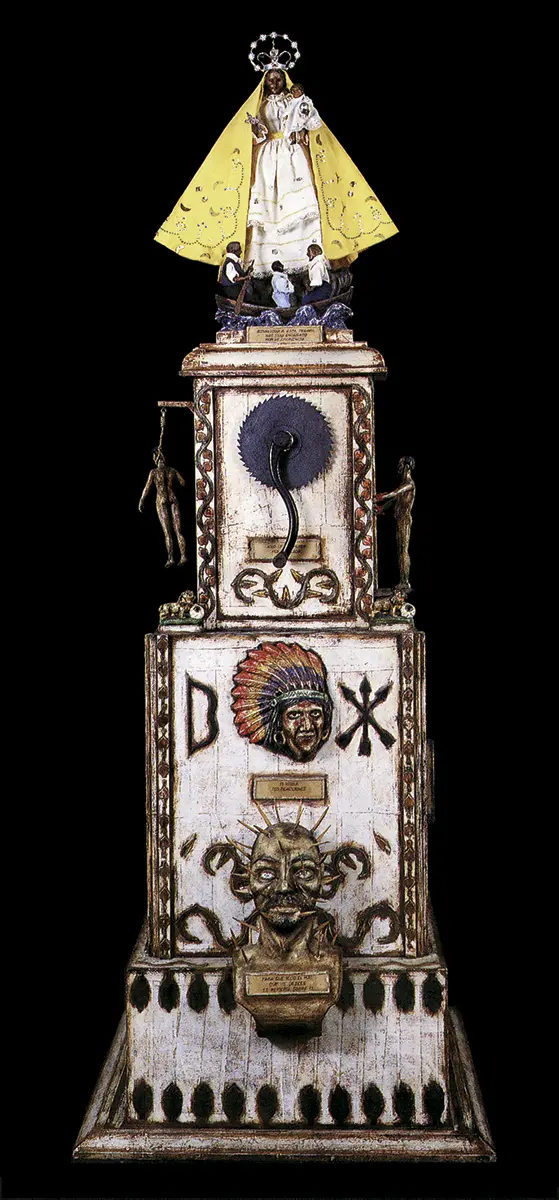
months in Brazil, Torres Llorca traveled to Argentina where he exhibited an
installation called La Trampa
(Havana, 1985–Buenos Aires, 1990), in which he included an altar dedicated to
the Virgen de la Caridad del Cobre, a renowned figure in Cuba and a syncretic
symbol of the Orisha Oshun, the patron of the waters and goddess of femininity,
sensuality, and love. The altar was adorned with different elements related to
Afro-Cuban religions and had a sign with small letters, forcing the viewer to
move closer to the work: “Welcome to the trap. You have been trapped by my
appearance.” Like all works from this “transition” period, the installation was
meant to facilitate a curative process. By combining magic, mysticism, and
psychology in his work, Torres Llorca tried to reach the viewer’s subconscious
while addressing his own issues. Like a shaman, he used his own healing process
as the starting point for a conceptual work: “If I have a problem, the solution
may be found in any of the religions, anthropology, or sociology. These
determine how to make the work.”9
During a stay in
Mexico at the beginning of the nineties, Torres Llorca’s work became his
“personal psychoanalyst.” Looking for better living conditions for his young
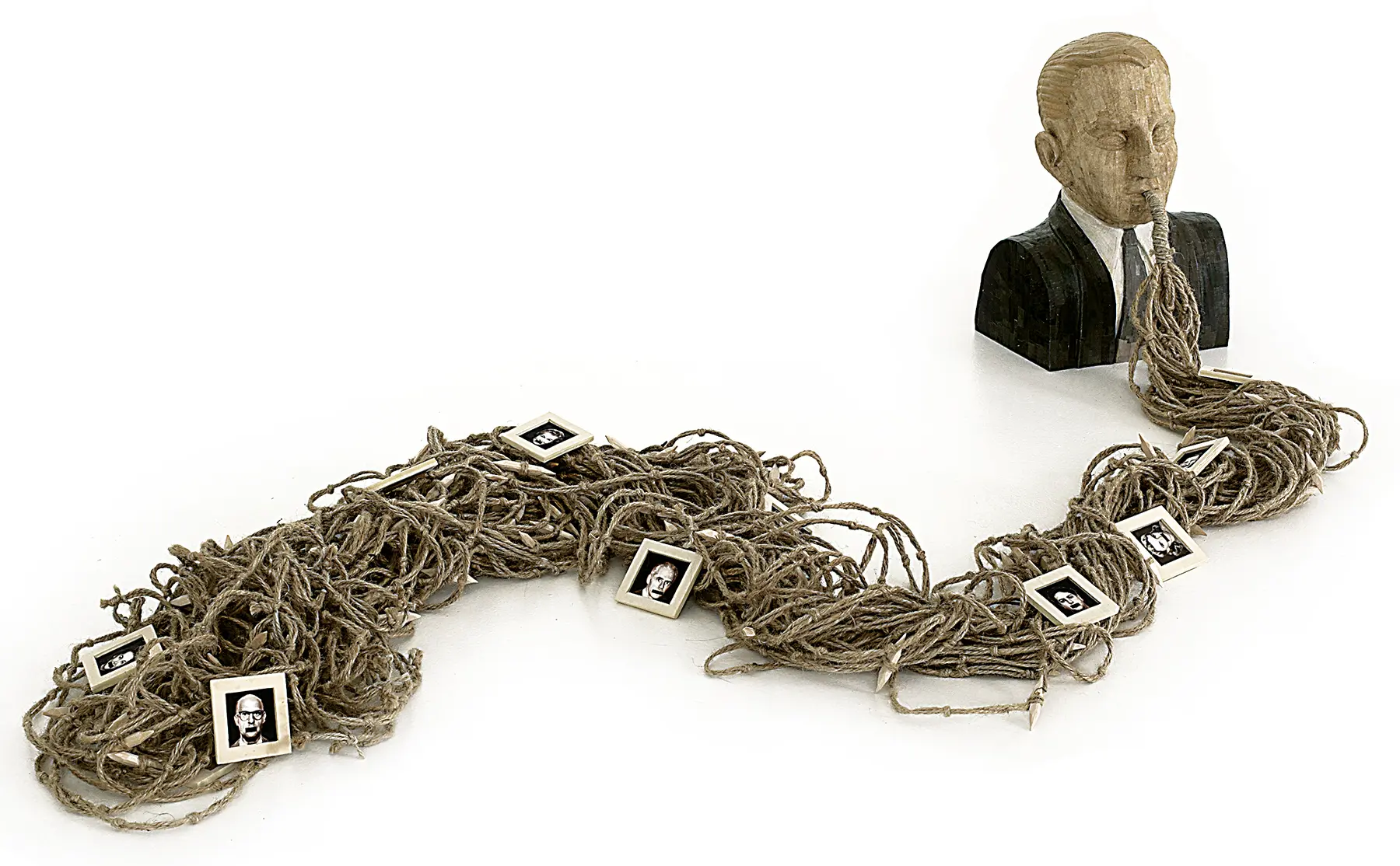
son Dimas, he moved to Miami in June 1993. Upon his arrival, he made Remedio para el mal de ojo (1993), a
wall installation in the form of a spider web, which was inspired by an earlier
idea and was materialized with the use of jute “made in Mexico and bought in
Home Depot.” Once Torres Llorca felt liberated from the previously rigid format
of his work via the flexible structures of the “spider webs,” he introduced
himself to the local art scene.
Torres Llorca’s artistic production can be divided into two stages, the first including the work made in Cuba and its exhibition abroad, and the second covering the work made in Miami, which has been promoted mainly in the United States and Latin America. Torres Llorca believes that immigrating to the United States has been the most significant change of his career. The move provoked radical changes in his art. He changed the way he makes art, he changed the language he uses, and he even ventured to make “bilingual” pieces in Spanish and English.
When he arrived in
the United States, his new experience as an artist in a capitalist environment
had the most impact. Unlike socialism, which places little pressure on the
artist to make a living from his work, capitalism expects the artist to
participate in the dynamics of the art market. According to Torres Llorca, the
market manipulates and even destroys the artist. As a creator, he sees himself
as the weakest link of the chain; to survive, he has developed his own personal
strategy. His position is very simple: he does not solicit anything. He works
only on projects commissioned by museums, alternative spaces, galleries, or
private collectors. Time has shown that his attitude works and has allowed him
to make art without making concessions to the market.
Torres Llorca’s arrival in Miami, together with that of many artists of his generation, coincided with the development of several projects that launched South Florida as an upcoming art center. He participated in several events that marked major changes in the local scene, including The Warehouse (1996), one of the first alternative-space exhibitions;10 Defining the Nineties (1996), the inaugural exhibition of the Museum of Contemporary Art of North Miami (MOCA);11 and the series New Work at the Miami Art Museum, where he presented Eight Visits to the Artist’s Studio (1996).12 Besides having a strong presence in Miami, he participated in individual and group exhibits in the United States and Latin America.
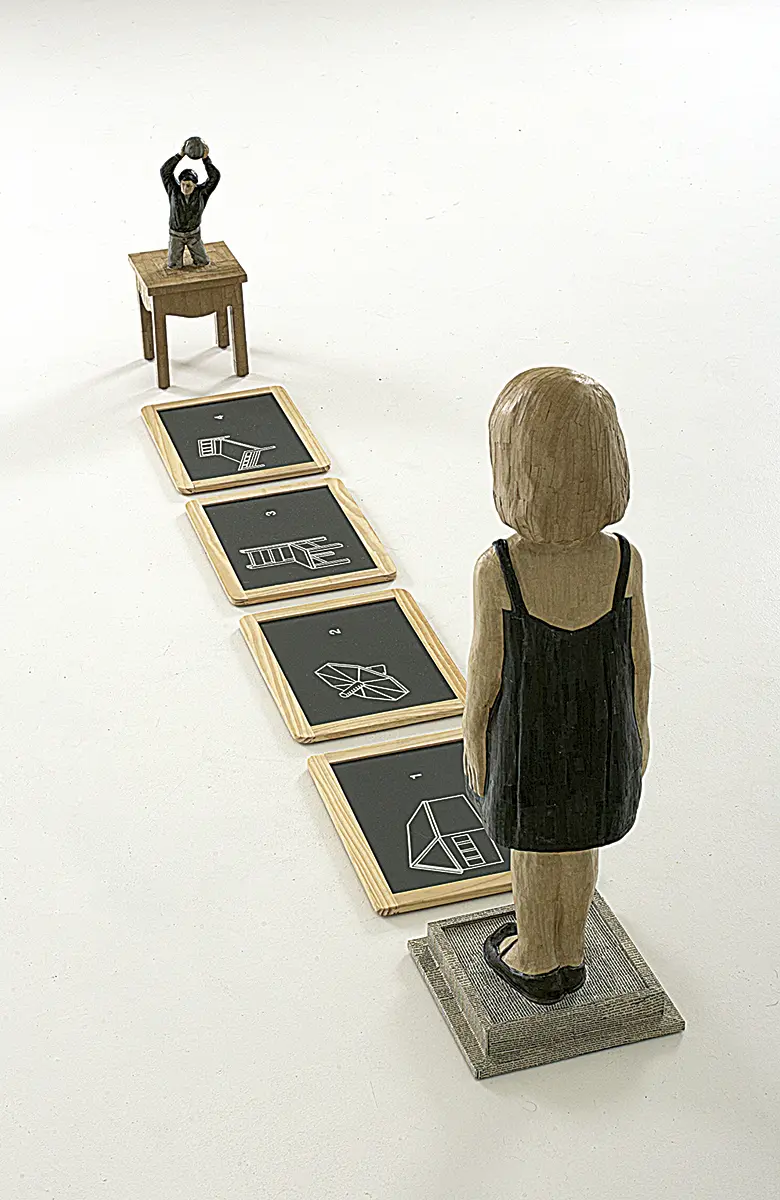
Without a doubt, the most important project of this second stage of Torres Llorca’s career was the exhibition Easy to Build/Modelo para armar presented at The Patricia and Phillip Frost Museum at Florida International University (FIU) in 2006.13 Instead of a retrospective, Torres Llorca conceived a complex installation in which he combined new work with existing pieces that were re-contextualized to be part of the new narrative. Easy to Build/Modelo para armar had two entrances and comprised two exhibits meant as one fragmented piece. It presented a scary fairy tale for adults, inspired by children’s stories such as Hansel and Gretel, Sleeping Beauty, or Alice in Wonderland (a rabbit magically appeared along the path of the work).
The installation was a non-illustrative narrative artwork in which the literary aspect was as important as the visual one. As in real life, the story did not have a beginning or an end. According to the artist, it was to be experienced as if one were looking at the world through a window. To truly understand the work, it was necessary to be bilingual. Otherwise, the viewer would not know there were two different stories, one in English and one in Spanish. The images had multiple references and there were numerous messages with double meanings. Themes of personal relationships, power relations, and the art market seemed to simply describe daily life. But, as the viewer established a personal dialogue with the work—reaching conclusions, experiencing emotions, and arriving at interpretations—“reality” acquired a strongly subjective meaning, which transformed the experience into a therapeutic session.
In this work, each combination of image and text required time to reflect on the different interpretations. In You are a Project and a Possibility (2002), for example, a man bending with his hands on his back and his eyes fixed on the floor presented three alternatives: the first one, illustrated with a spinning top, suggested “You are a project and a possibility”; the second one, illustrated with a chair, indicated “You have a tendency to become a mere presence”; and the third one, illustrated with a staircase, stated, “You are already involved in the world.”14 One could choose any of the three statements and identify with it, but the last statement was a false perception. If a person looks down, not up, he may not be as active or as involved in the world as he may believe.
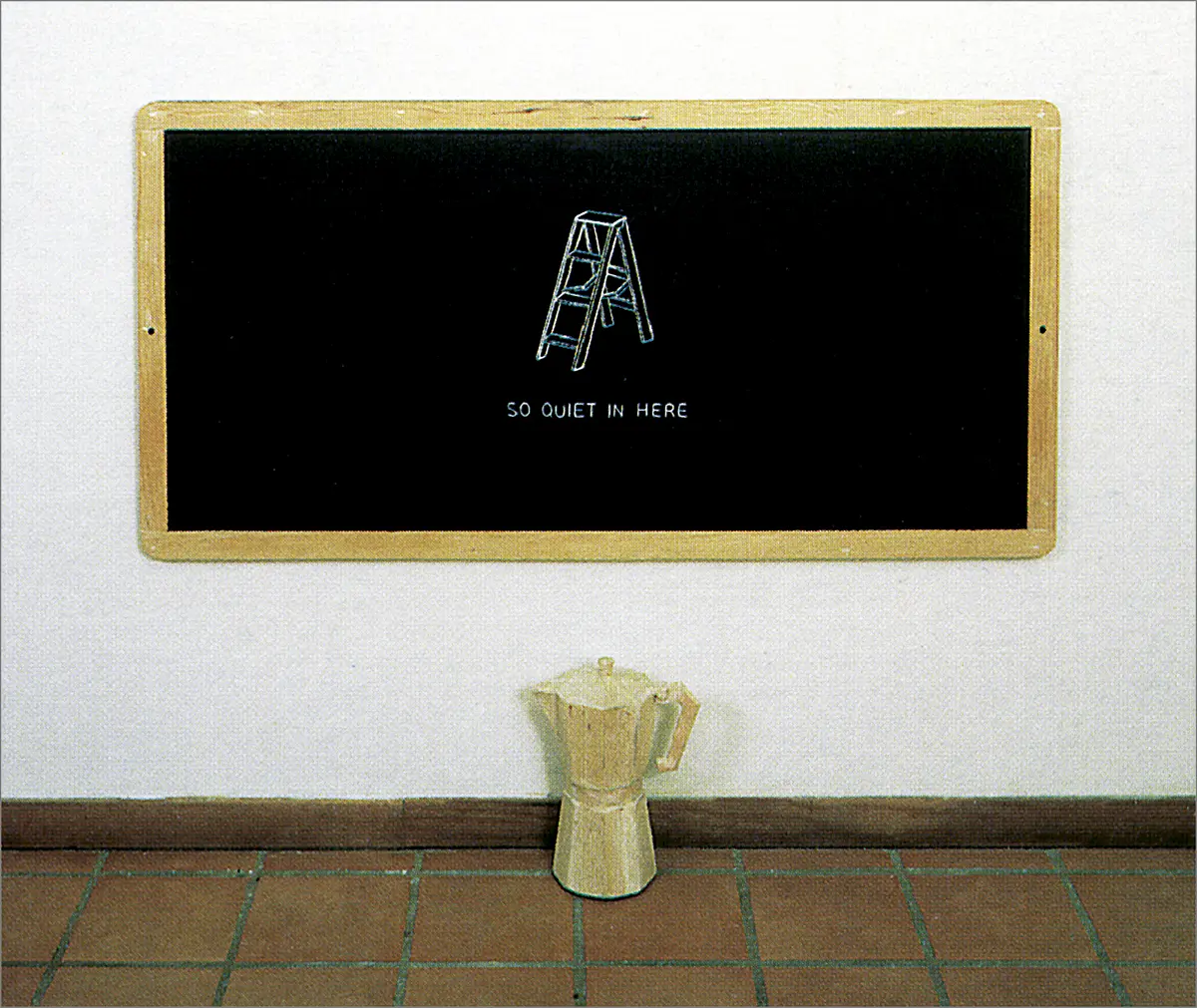
The literary references to Jorge Luis Borges, Julio Cortez, Juan José de Arriola, and Chico Buarque de Hollanda helped to craft the inspiring story of this masterpiece. The tales, even the one that was only text (“As the hooker says”/“Si te pagan por ello no es amor”), were successful only if the reader empathized. They were more intense when combined with the visual elements that not only complemented but also generated new layers of meaning that enriched the work. For example, the phrase Take this waltz (from the identically-titled work from 2003), surrounded by toy soldiers wrapped in the newspaper would have a different connotation if it had been written under the couple represented in The Reality, the Memory, the Imagination (2002).
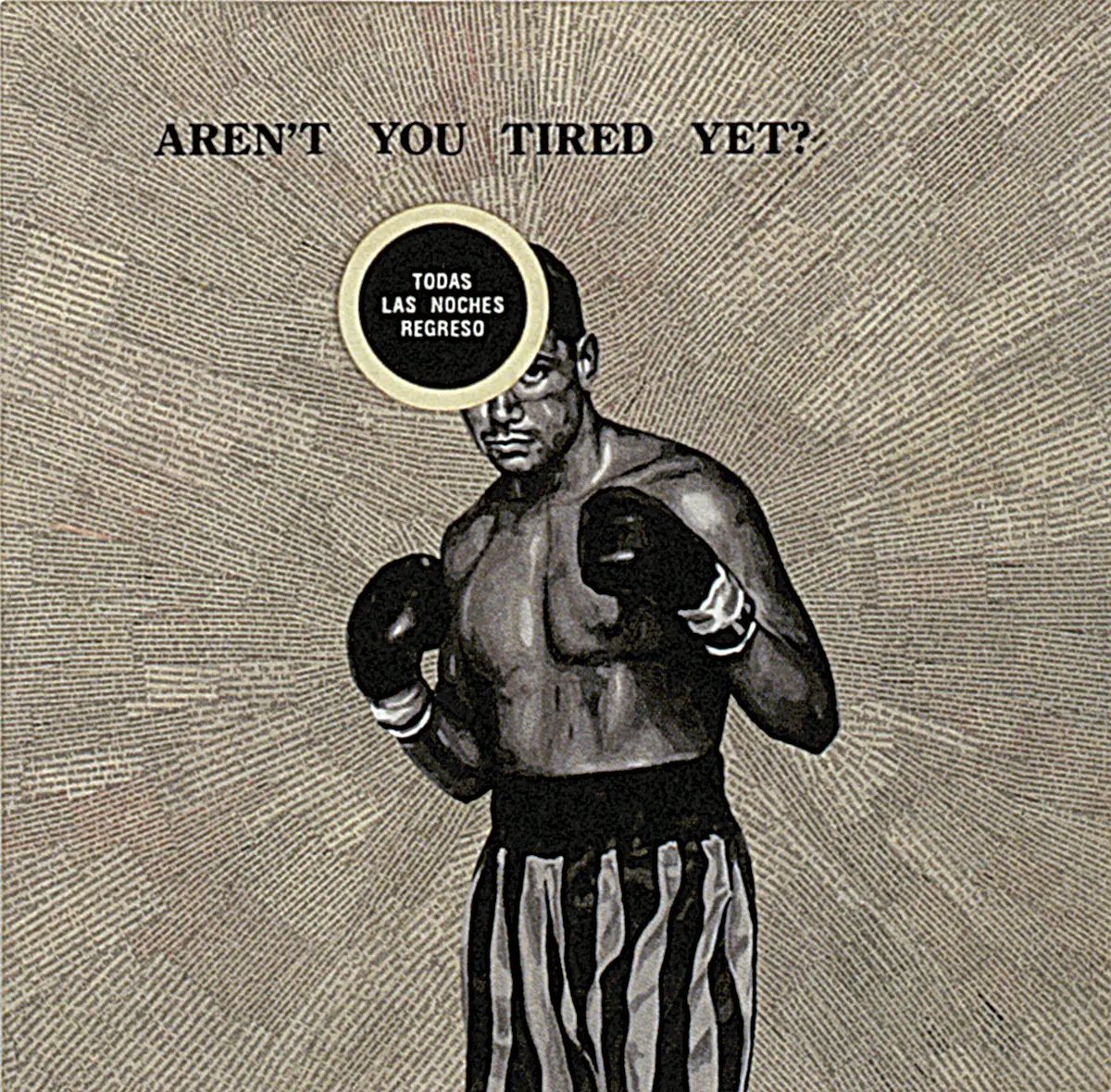
In Torres Llorca’s work, sculpted torsos clearly refer to traditional portraits of heroes and politicians that decorate the plazas of Havana, Latin America, and Europe; photographs and paintings of women and men remind one of Humphrey Bogart and Ingrid Bergman as well as pin-ups from the forties; symbolic objects like a house, a table, a bed, a plane, are carefully chosen to enrich the message and must be interpreted within the symbolic and narrative context of the piece. Even the subtlest detail is chosen for a reason. In Aren’t You Tired Yet (2005), a boxer is placed against a background lined with newspaper cut into rays, suggesting the figure is a supernatural being or a celebrity. It is possible that the boxer represents the artist who, despite being an excellent professional, must accept that he must return home every night and live the monotony of everyday life.
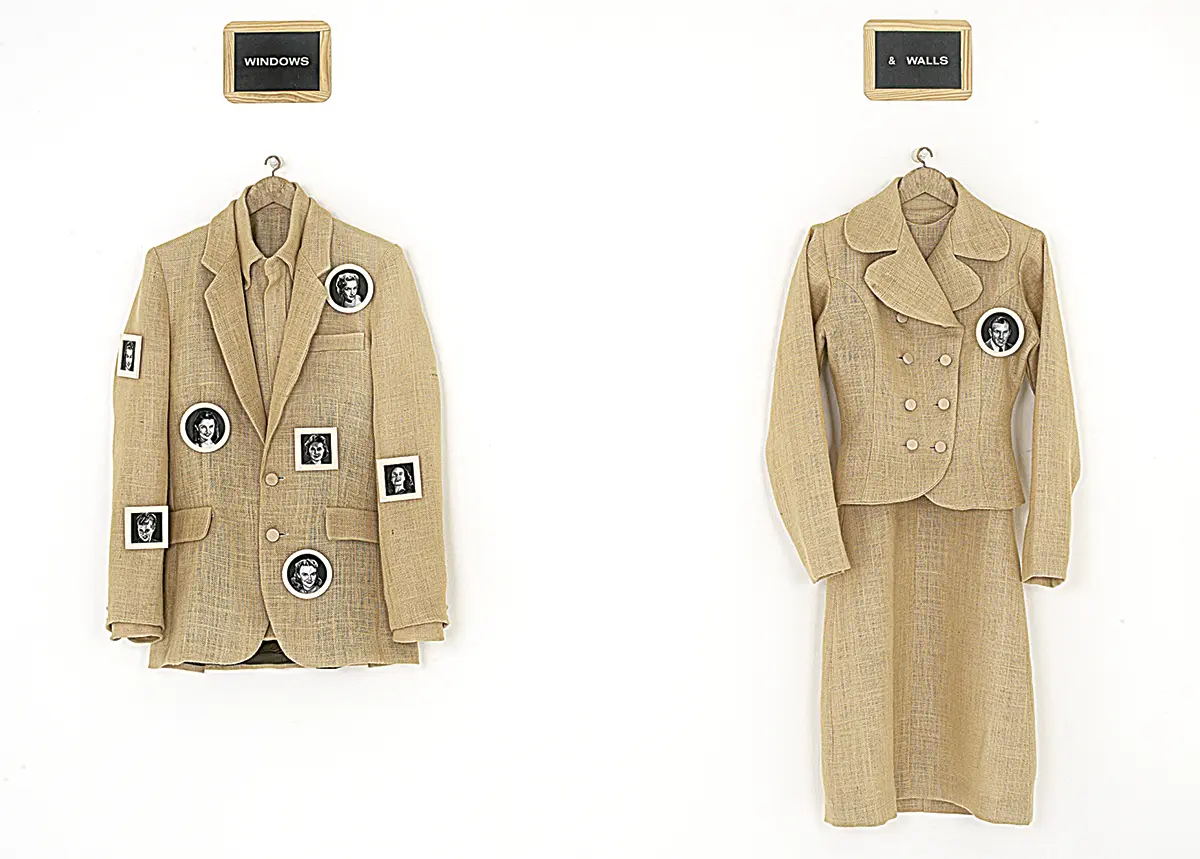
Regarding technique, it is important to mention Torres Llorca’s reconciliation with painting and with the two-dimensional nature of this work, which summarizes his artistic career. Painting flows in the narrative context of the exhibit, which is also enriched by photography, installation, and sculpture. Woodcarvings (a craft that Torres Llorca has practiced since his first trip to Mexico) and elegantly woven outfits of jute (a rustic material reminiscent of his mother’s occupation) are prominent throughout the installations. But without a doubt, it is the layered use of photography, drawing, and painting that truly enriches the work’s conceptual angle.
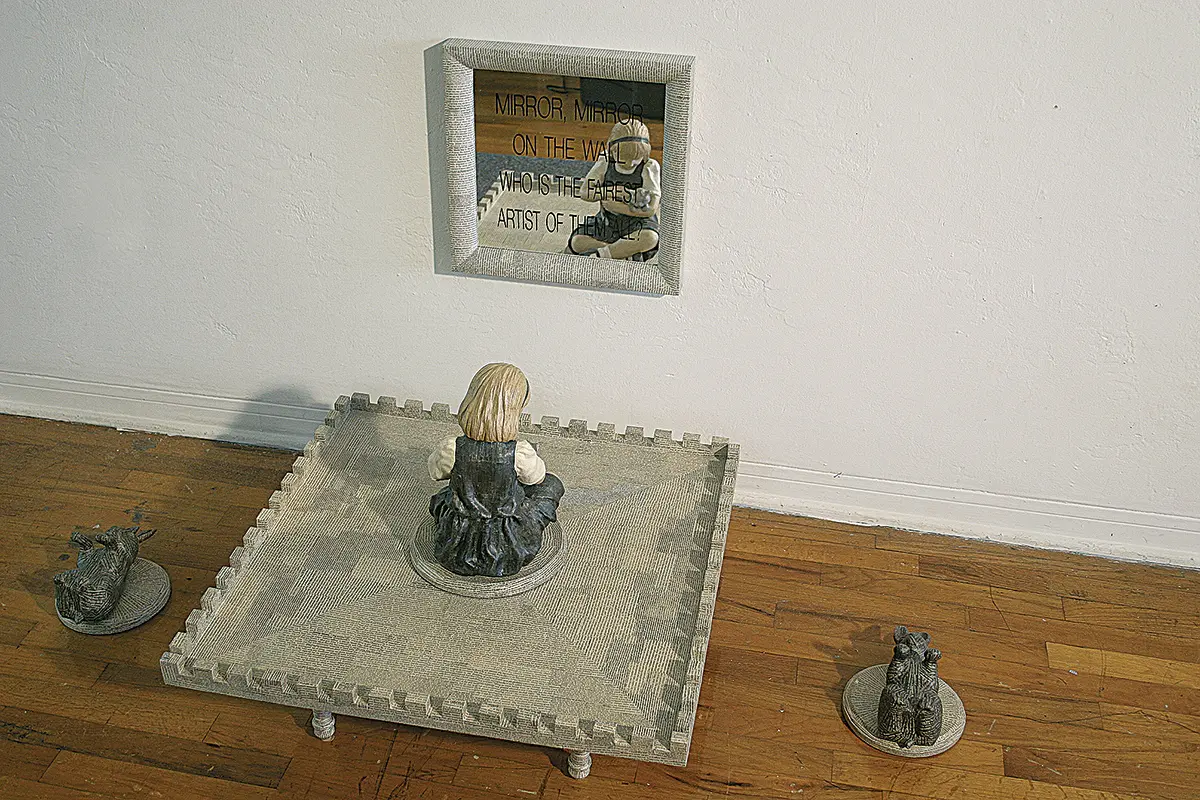
The monochromatic quality of the work is important and in tune with the somber tone of the narrative. The tones provided by the natural, crafty materials derive in part from the passion Torres Llorca developed for nobler materials such as wood, ceramic, and rope during his stay in Mexico. He also added the grey tones of recycled papers and newspapers from earlier works. The ease with which he uses multiple resources enriches the making of each idea in both the work and the story, which should be seen as one. According to Torres Llorca, “Each idea tells you how you should make it and which is the adequate medium.”
But at the end, he says, “The medium is not important. What is important is to communicate the idea.”15 Ruben Torres Llorca is after all a conceptual artist, and for him, the work of art is just an instrument—intellectually conceived and carefully made—that can only exist through the personal experience of each individual who accepts to interpret it, live it, and, in some instances, suffer it.
*Update: In July 2007, Torres Llorca presented his most recent project, “A Story for Children Based in a Real Crame,” with the photographer Liliam Domínguez, at the Centro Cultural Español, in Coral Gables, Florida. Since Domínguez is his former partner and the work summarizes their relationship, Torres Llorca again used his work to analyze his personal life. In November 2007, he will present the exhibition «Names Have Been Changed to Protect Those Who Are Guilty» at the Museo de Arte de Puerto Rico (MAPR).
NOTES
1. The title has been translated by the author.
2. From an interview with the artist, 1996.
3. He was an artist, but he died in combat before Torres Llorca met him.
4. Luis Camnitzer used the term “Renaissance” to describe this group of artists. Luis Camnitzer, New Art of Cuba (Austin: University of Texas, 1994), xxi.
5. Gerardo Mosquera, “Volumen I Cambio en la plástica cubana,” Arte en Colombia Internacional, no. 40 (May 1989), 50.
6. Interview with the artist, Miami, 1996.
7. Camnitzer, 24.
8. Interview with the artist, Coral Gables, FL, 2005.
9. Interview with the artist, Miami, 1996.
10. Interview with the artist, Coral Gables, FL, 2005.
11. Francine Birbragher, “The Warehouse,” ArtNexus, no. 22 (1996).
12. Bonnie Clearwater, ed., Defining the Nineties, Consensus-making in New York, Miami, and Los Angeles (Miami: Museum of Contemporary Art), 1996.
13. Armando Alvarez Bravo, “Rubén Torres-Llorca se ‘instala’ en el CFA,” El Nuevo Herald, October 1996, 1C and 3C.
14. Elizabeth Cerejido curated the exhibition Rubén Torres Llorca: Easy to Build/Modelo para armar at The Patricia and Phillip Frost Museum, at Florida International University in Miami.
15. Interview with the artist, Coral Gables, FL, 2005.
FRANCINE BIRBRAGHER
Historian and art critic. Independent curator.