
The Patricia Phelps de Cisneros collection of geometric abstraction may already be familiar to devotees of Latin American art because much of it has been shown in different museum exhibitions, and it is the subject of a fine catalog published by the Harvard University Art Museums (2001). The recent exhibition at the Blanton Museum of Art, The Geometry of Hope: Latin American Abstract Art from the Patricia Phelps de Cisneros Collection, broke new ground by recontextualizing the works of art according to the cities in which they were produced and interpreting the collection within a rigorous scholarly framework.
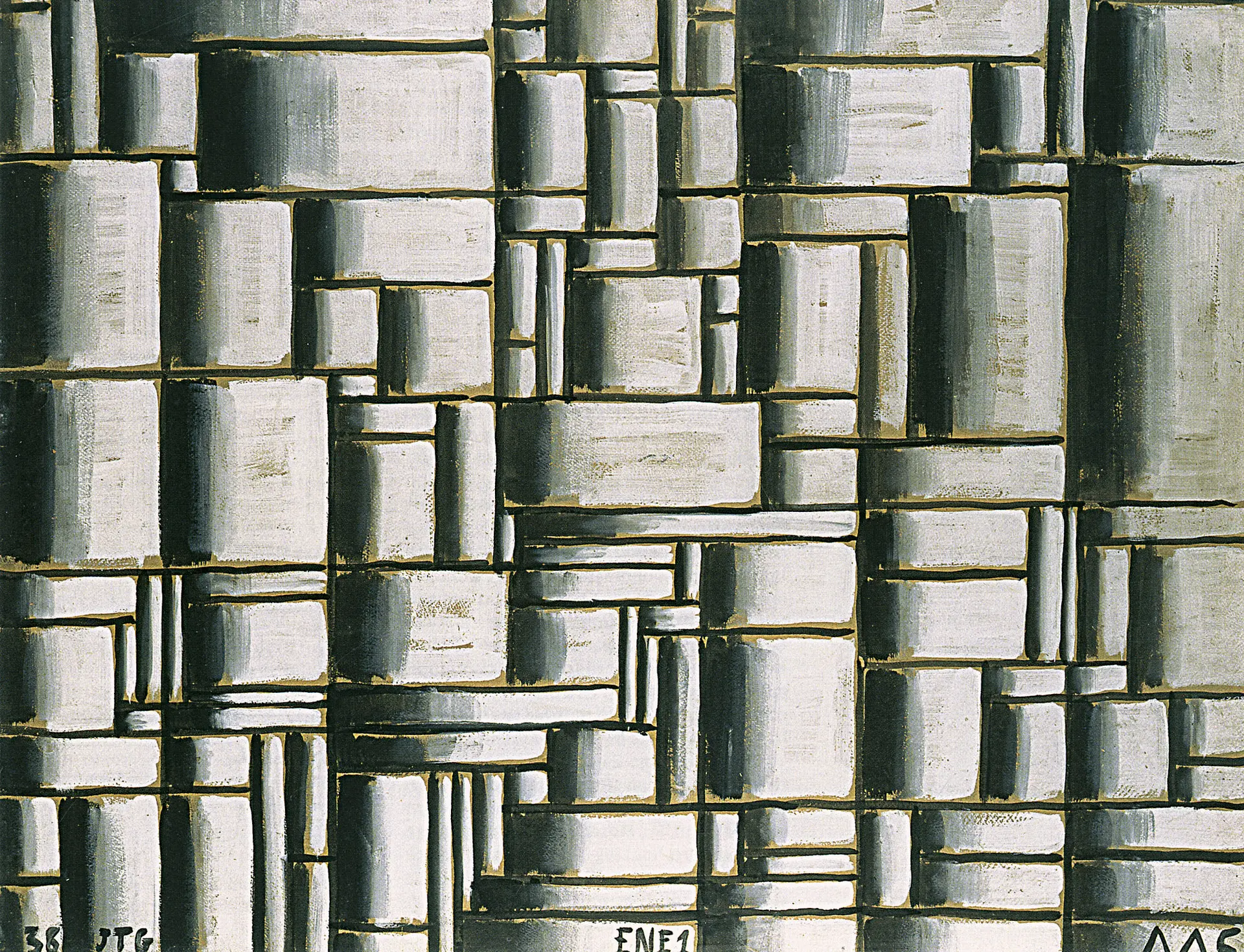
In the aftermath of World War II, South America’s rapid economic development fueled a great optimism for the future and a utopic desire for deep-rooted social change, ideals reflected in the geometric abstract movements from the region and which give the exhibition its title. Curator Gabriel Pérez-Barreiro chose the cities of Montevideo, Buenos Aires, São Paulo, Rio de Janeiro, Paris, and Caracas as the loci around which to structure the presentation of the collection. Rather than emphasizing formal affinities for their own sake, the curatorial program sought to highlight the differences between varying abstract impulses in South America beginning chronologically with the work of Joaquín Torres-García in Montevideo. Not enough accolades could be heaped on this artistic visionary, who truly succeeded in reconciling the lessons of European modernism to autochthonous pan-American self-expression. His Construction in White and Black (1938) creates a dynamic optical interplay between flatness and volume and surface and depth while recalling the extraordinary building blocks of Inca architecture. Constructive Composition 16 (1943) presents an amalgam of symbolic languages from non-objectivity in its grid-like structure to simple pictographs to linguistic representation through the word “Montevideo” inscribed on the painting’s surface. These competing verbal and visual languages demonstrate the complexities of even defining the term “abstraction,” a dilemma that could have been further emphasized in the exhibition.
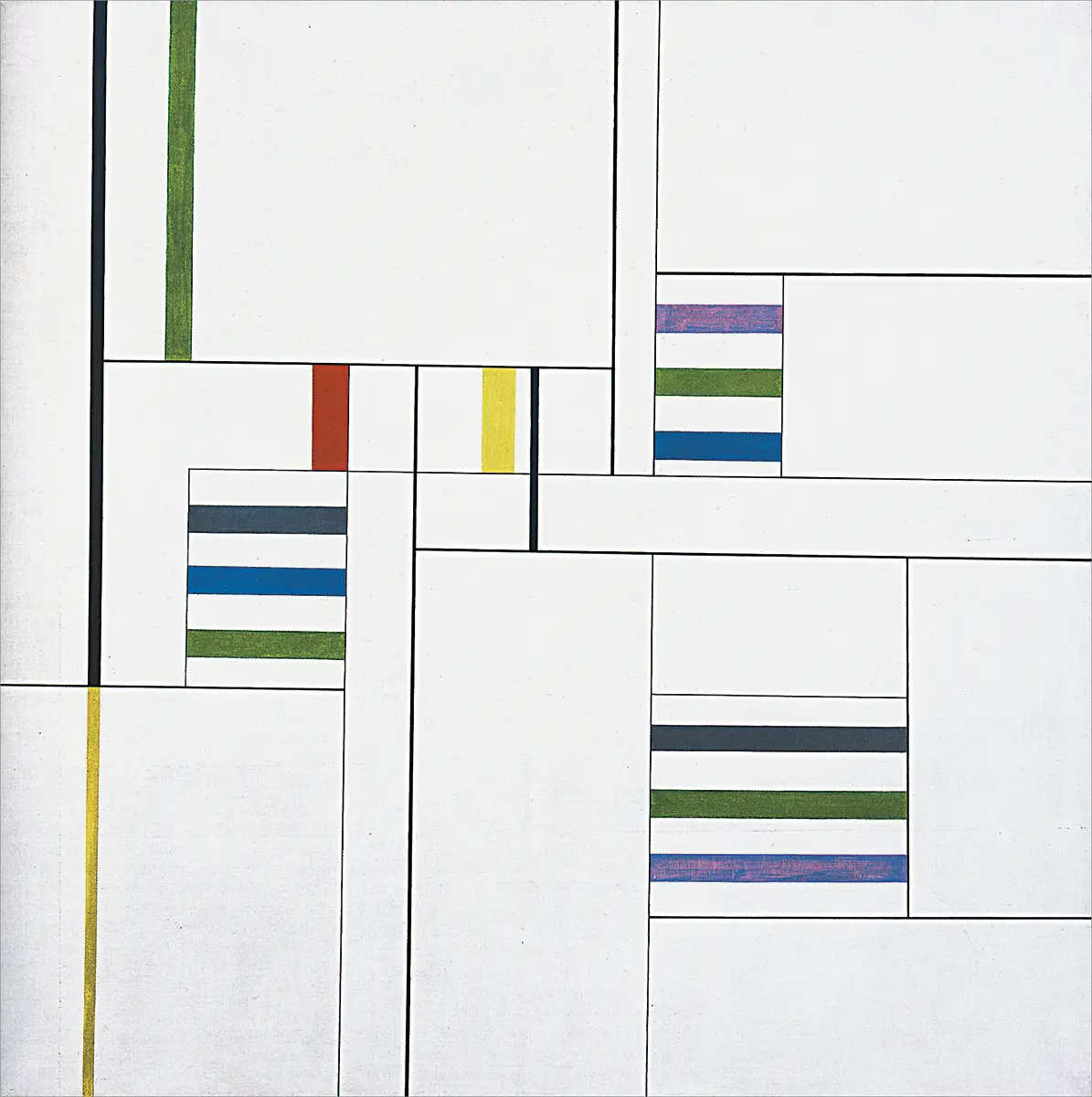
The “Buenos Aires” section juxtaposed the 1940s rival movements Arte Madí and Arte Concreto-Invención through paintings, sculptures, and documents. Whereas Madí embodied the avant-garde desire to reconceptualize the art object by blurring the boundaries between art and life and also sought to politicize artistic production, Arte Concreto-Invención engaged in a more rigorous formal exploration of the picture plane through geometry that was less ideologically motivated. Alfredo Hlito’s painting Chromatic Rhythms III (1949), associated with Arte Concreto-Invención, plays up the tensions between vertical and horizontal, colors versus black and white, and empty as opposed to filled space, in a work that seems wholly unrelated to Gyula Kosice’s contemporaneous Mobile Articulated Sculpture (1948), associated with Arte Madí. Here, Kosice (who is sorely deserving of an international retrospective to cohere and disseminate his extraordinary output) creates a hinged sculpture out of thin bands of brass that is often exhibited in such a way as to resemble an inverted map of South America but which actually was intended to be manipulated by the viewer and to refuse traditional distinctions of top and bottom, recto and verso, and figure and ground.
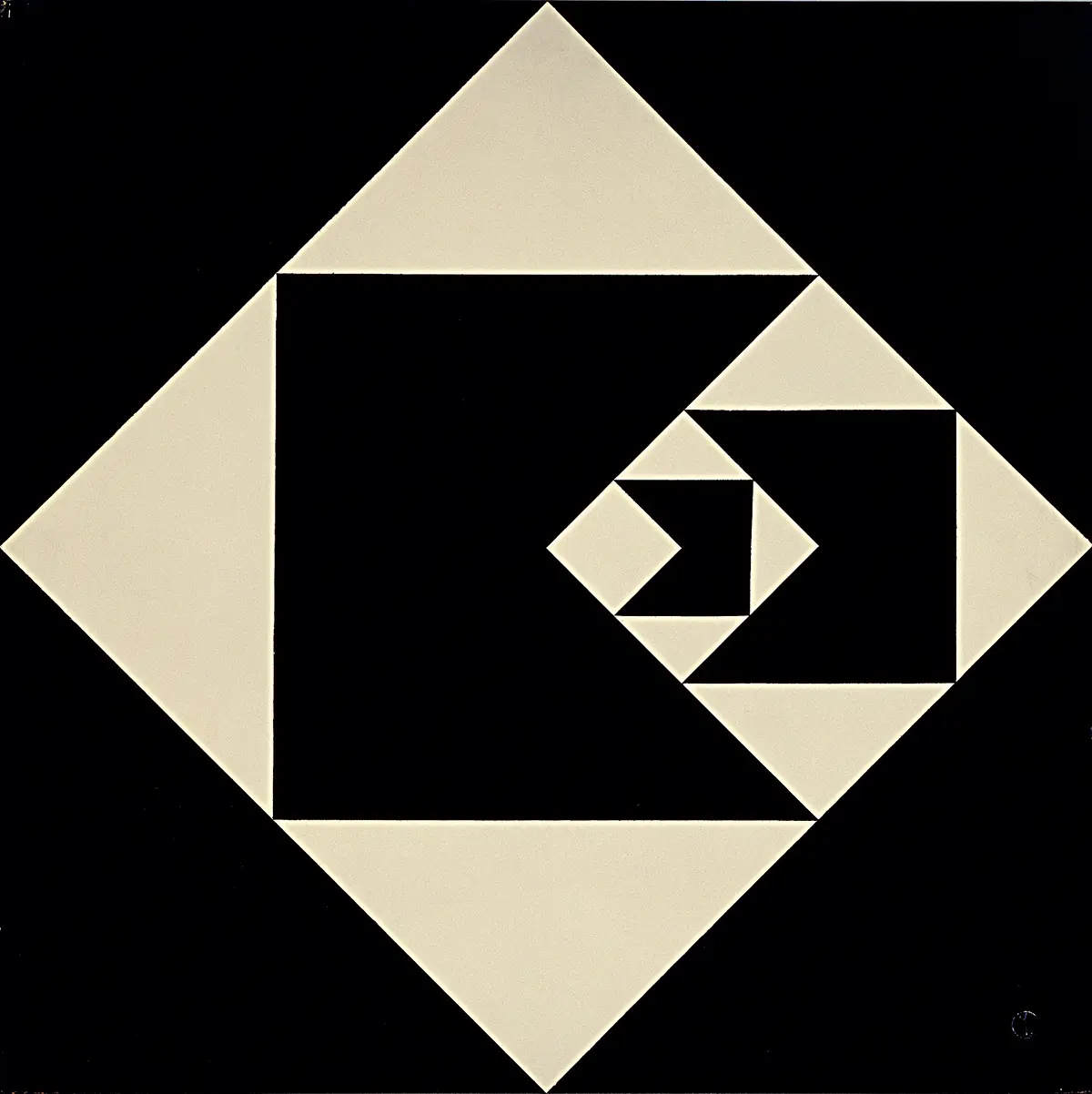
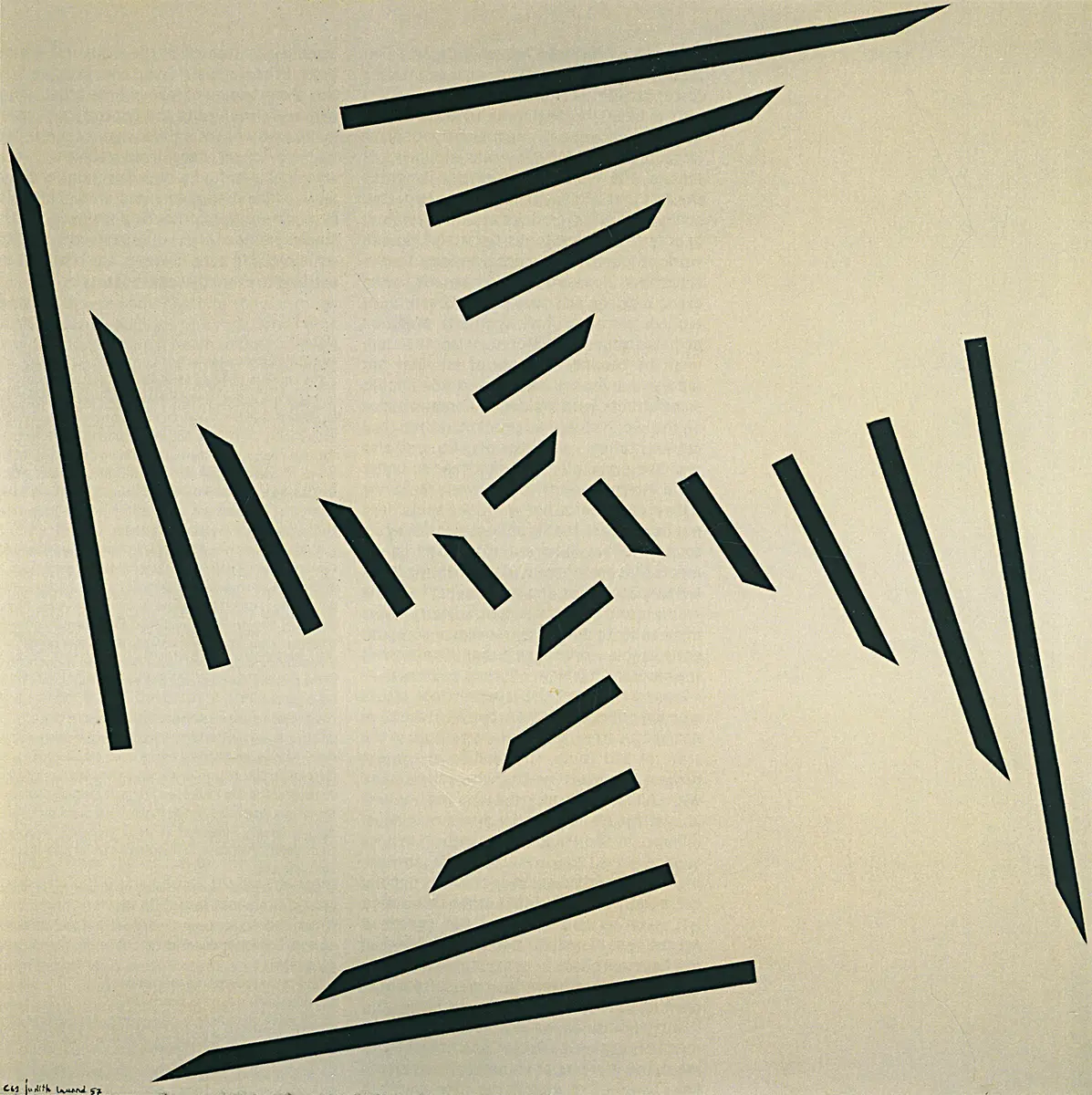
Besides formal and ideological differences, tensions between universalist and local concerns also run through many of the works in the show. It is particularly evident in the differences between the works of art in the São Paulo and Rio de Janeiro, homes to the Concrete and Neo-Concrete movements respectively. Paulista mathematical precision; its limited palette of black, white, and occasionally red; and emphasis on the optical effects produced through figure-ground relationships – as in Geraldo de Barros’ Diagonal Function (1952) or Judith Lauand’s Concreto 61 (1957) – are countered by the exuberant color and phenomenological nature of such Carioca works as Lygia Pape’s Book of Creation (1959), Willy de Castro’s Active Objects (1959-60, 1961), and Hélio Oiticica’s Box bolide 12, “archeologic” (1964-65). Though these may be a textbook examples of the differences between Concretismo and Neo-Concretismo, the exhibition and especially its catalog does a fine job of revalorizing the geometric abstract production of São Paulo as humanistically driven objects that departed from the European ideals of Concrete art to offer new possibilities for perception and for the role of art in society.
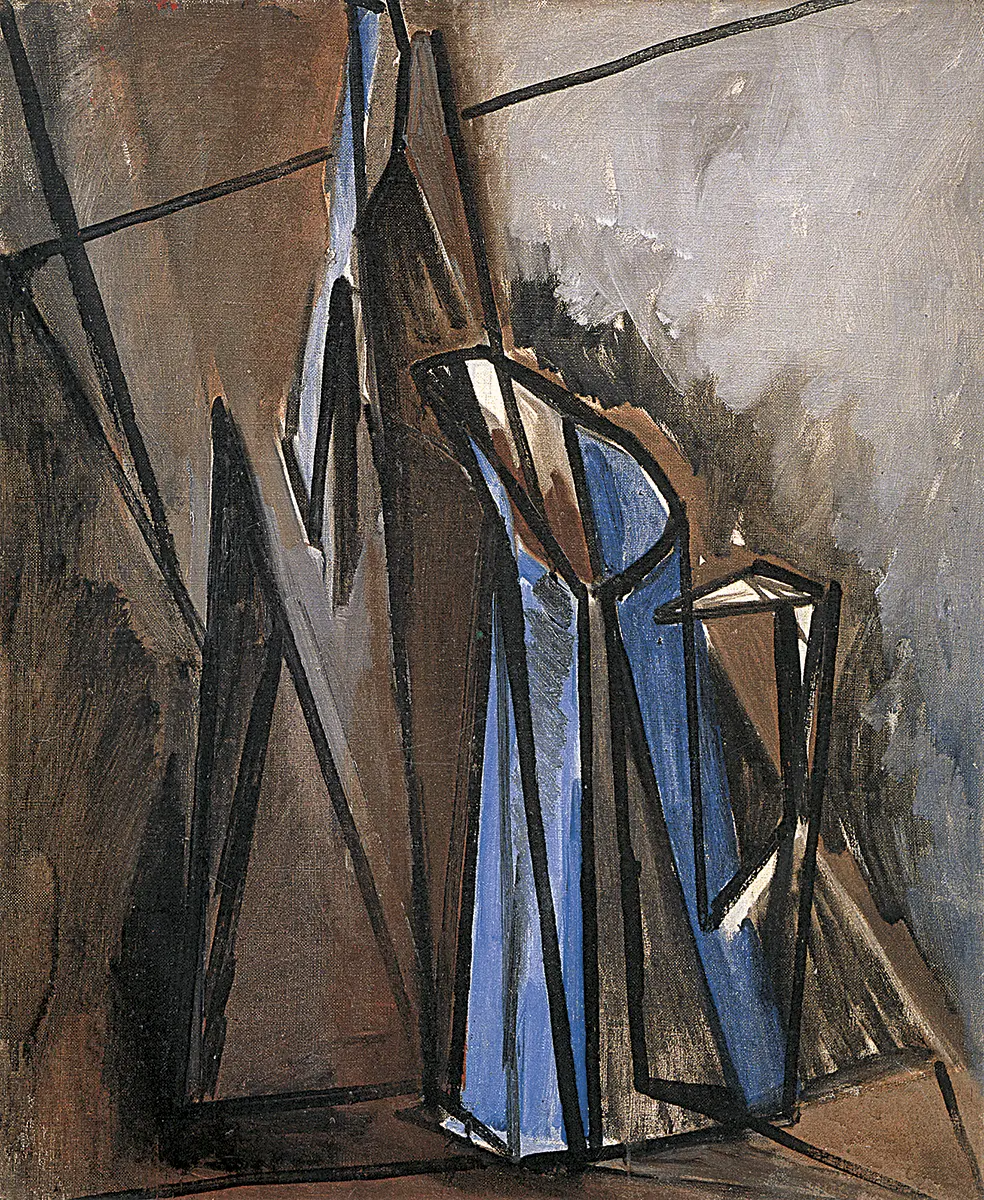
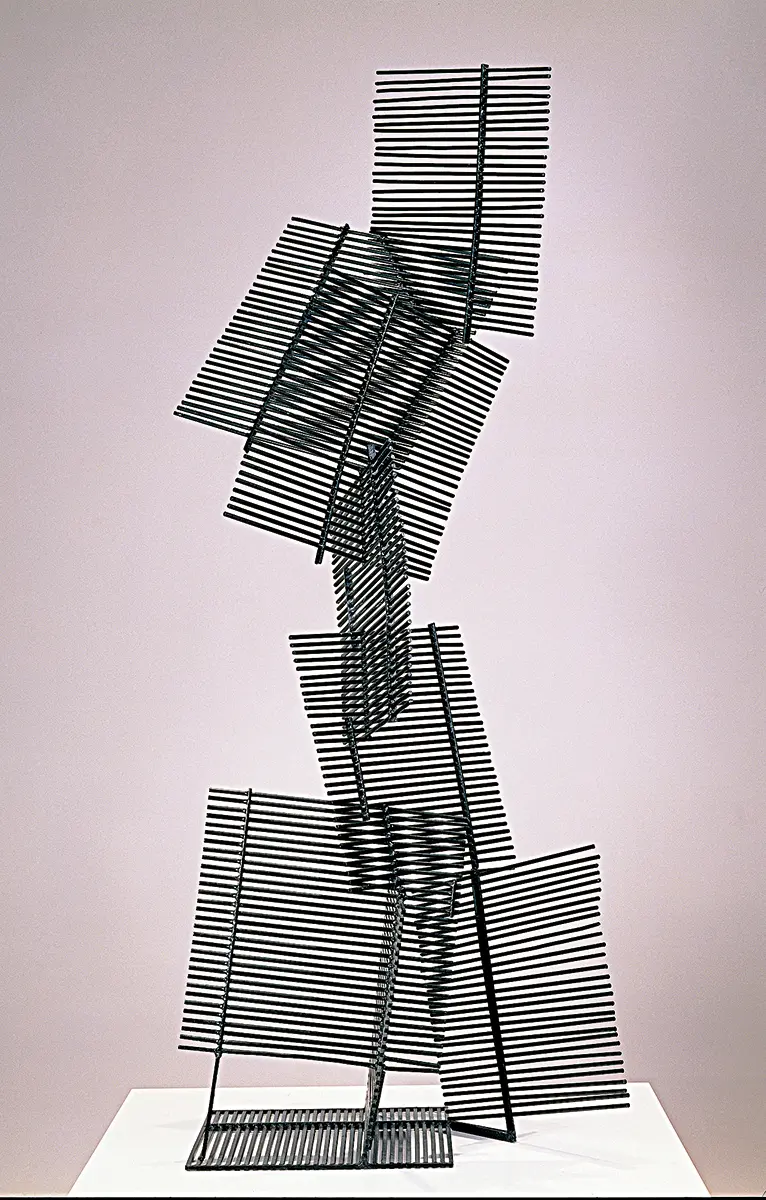
The sections on Paris and Caracas were interrelated, showing the international projection of geometric abstraction through the early and later art of Alejandro Otero, Carlos Cruz-Diez, and Jesús Rafael Soto. While the mature work of these artists might already be familiar to viewers, such Parisian works as Otero’s Blue Coffeepot (1947), Cruz-Diez’s Project for a Mural (1954), and Soto’s Pre-Penetrable (1957) are fascinating forays into the formal processes that would culminate in their kinetic work. Gego’s contributions to the Caracas section, particularly her Square Reticularea 71/11 (1971) and Drawing without Paper 76/4 (1976) present thought-provoking critiques of the utopian aspirations of geometric abstraction through their breakdown of the grid and use of precarious materials.
The exhibition’s focus on particular cities was very effective in marking the differences between contexts but also somewhat problematic. Given that presentations such as this one are establishing the canon of geometric abstraction in Latin American art for an international audience, other metropolitan areas where this mode of art flourished, such as Bogotá –through the sculptures of Eduardo Ramírez Villamizar and Edgar Negret– and Mexico City –through the work of Mathias Goeritz and Luis Barragán–, should have been included. Acknowledging the presence of Carmen Herrera in Paris contemporaneous to the Venezuela masters might also have been an unexpected counterpoint to a more familiar narrative.
As a whole, however, The Geometry of Hope was an uplifting exhibition. Sparsely and elegantly presented, it encouraged close looking and profound reflection. Perhaps more importantly, its comprehensive catalog is an invaluable contribution to the scholarship on postwar South American art. In addition to this publication, a website featuring University of Texas art history graduate students discussing the works of art allowed for other voices to add to the many possible levels of understanding. A version of the exhibition will be shown at New York University’s Grey Art Gallery this fall.
TATIANA FLORES