
Some aspects of the twenty-sixth edition of the Feria Iberoamericana
de Arte (FIA), held June 26th through
July 2nd at the Tamanaco Intercontinental Hotel,
deserve special note: the enthusiastic participation of the public, the
exhibition of works by artists regularly featured in the best-known European
and American fairs, and, perhaps most interesting, the great presence of young
artists.
For many years, the Caracas fair has presented a characteristic profile of this kind of event, as a window on international art for the Venezuelan public. And while recent editions were diminished and lacked the shine of other times, it attempts to remain as a great celebration of art as a communication form, as well as a social event.
International trade fairs are festive, multitudinous events in which novelty overtakes perception and favors the valuing of significant components. They have been instituted as public events to which participants come, as Foucault would put it, to see and to be seen—a propitious circumstance to encounter the other (experts, celebrities) and collectively enjoy a privileged festivity that is filled with symbolic content.
In this sense, fairs devoted to the promotion of the visual arts have an added importance: besides fulfilling the fair ritual, they integrate the special component of a cultural dynamic and its projection into the space of social representation. In these events, viewers encounter a vast array of proposals, languages, and trends that may conflict with one another yet coexist for a brief time despite their differences and their opposition. Beyond their commercial elements, art fairs have become a kind of ephemeral version of art salons.
From this perspective, an initial reading of FIA 2007 reveals the elements that compose it: the institutional vision, the dominant languages, the novelty. Regarding the first element, one must mention the tribute to the master artist Armando Reverón presented at the fair by the Armando Reverón Project (PAR) and the special invitation extended to the Chilean artist Patrick Hamilton. These two artists are from different generations, with differing oeuvres and visions of art, but both are equally renowned at this point in their careers. Reverón, whose outstanding work was recently exhibited at MoMA, is one of the most important Venezuelan artists of the twentieth century. Hamilton is a faithful representative of the younger generation and uses new resources for artistic expression and communication.
Two cultural organizations were present at the fair besides PAR; they were created to promote artistic expression and educational activities and actions in favor of the visual arts, as well as to publicize the artists in their collections. The Mercantil Foundation presented a significant selection of works from the 1950s by the Venezuelan artist Omar Carreño, and the Cisneros Foundation emphasized the arts educational project that it has developed over many years.
Of the second defining element of the fair, the dominant languages, there were three large sets of works, representative of diverse directions and expressions. As is traditional at FIA, the first set comprised figurative works and included painting, sculpture, and photography; the second was an abstraction, with its characteristic lyrical, informal, constructive, and kinetic variants. Adding to these sets were assemblages and other two- and three-dimensional works that, given the range of forms and materials, could be described as using “various media.”
The figurative set of works started with that of Armando Reverón, represented by images of female figures from the 1930s. Although separated from the rest of the fair, Reverón’s paintings signaled the event’s interest in the human figure and its formal possibilities. Reverón’s vision, immersed in a specific time and context, pushed him toward the development of a language close to abstraction and based on few visual and material resources. His work is in some way an antecedent to the 1960s trend against color, impasto, and expressionist intent. In this sense, Reverón is an unrecognized precursor to Latin American modernism.
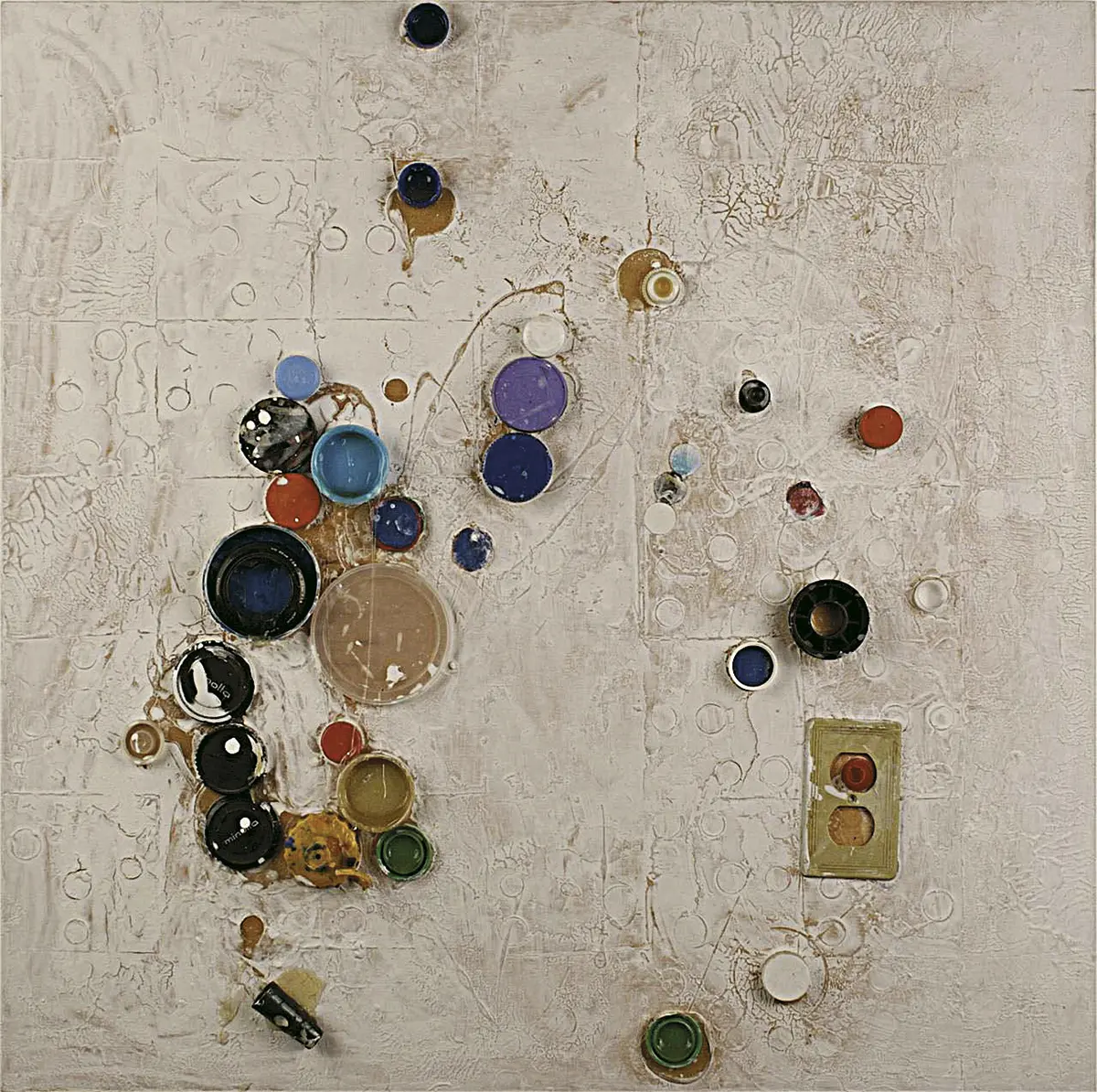
Beyond a connection through figuration, Reverón’s aesthetic does not have many links to the current revisionist approaches interested in academic languages, neorealism, and an exaltation of the emotional. This group included a large portion of all the works presented at FIA, such as Darío Ortiz’s work at Galería Mundo and Aurora Carreño’s at El Museo. Other works presented human beings as small entities, diminished and disarmed objects at the disposal of forces they cannot control. This perception was confronted with a hedonistic, sensual, and suggestive vision, and artists demonstrating these tendencies were presented by the galleries Alfredo Ginocchio, Arte Internacional, Claudio Gallina, Roberto Cortazar, Roger Montegoni, Carlos Ríos, and Bruno Widmann. The work of Bae Hyung-Kyung—which shares this vision but with a more intense, rawer, more expressionistic, and perhaps more brutal treatment of figures—was presented by Galería Adriana Schmidt.
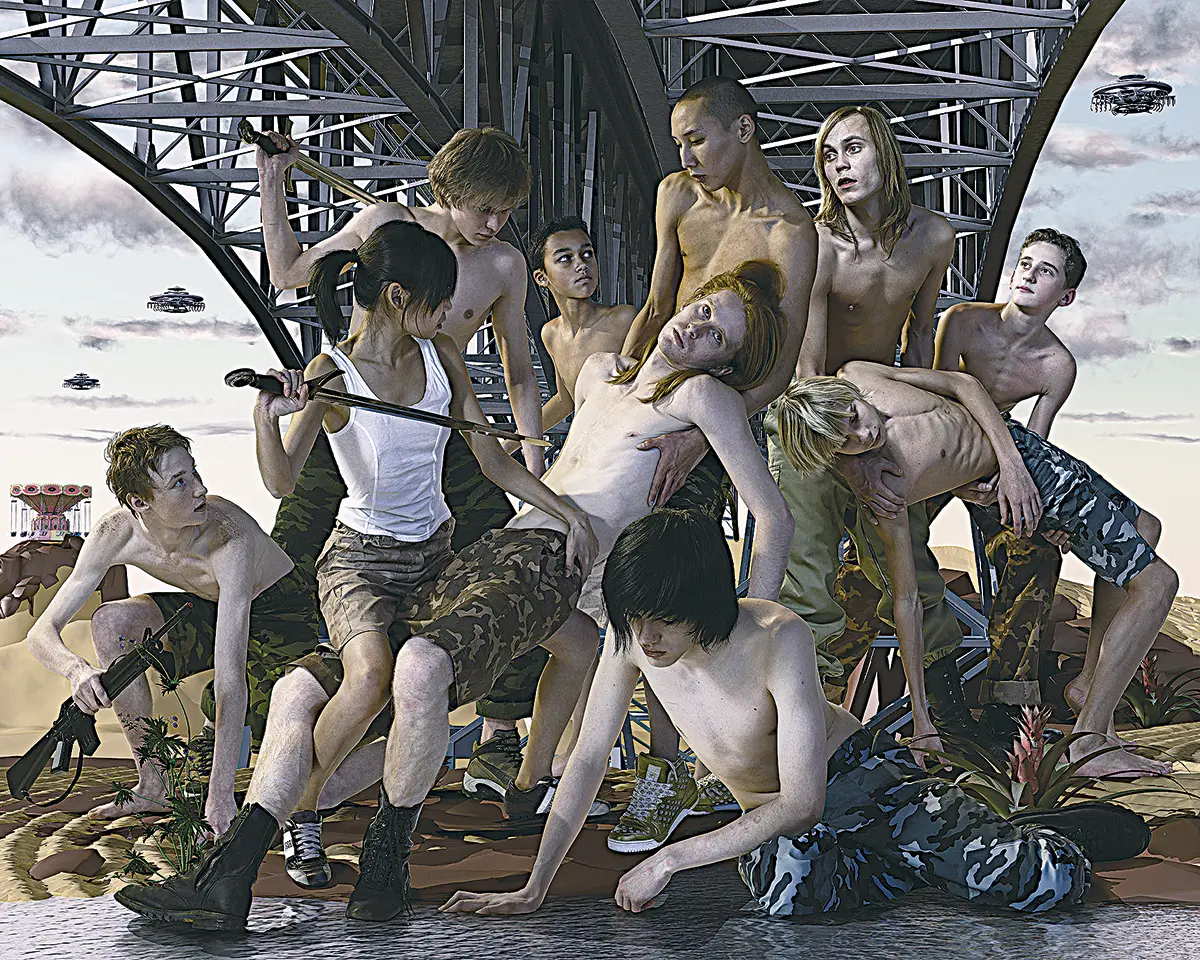
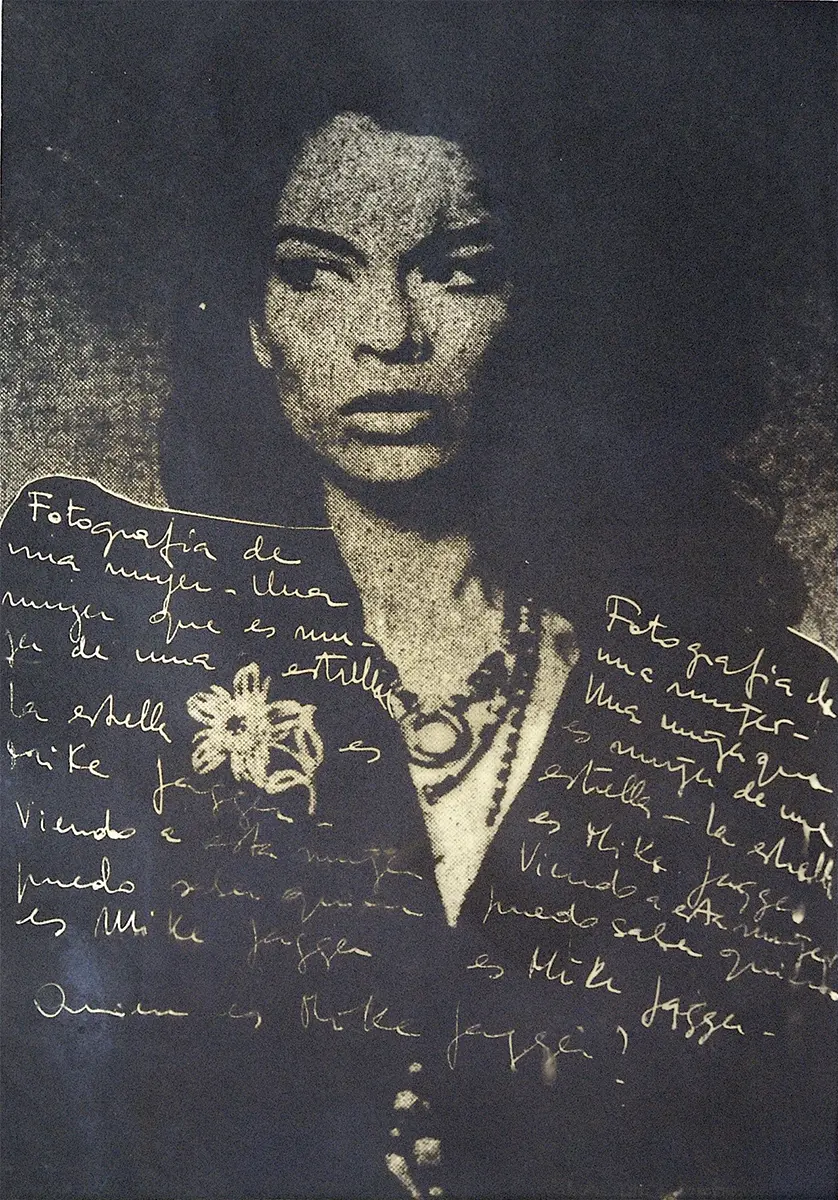
The female figure reappeared in Claudio Perna’s interventions of photographs by Bianca Jagger, at Arte Clave, while the expressions of humanity under the effects of violence by the renowned international group AES+F dominated Juan Ruíz Galería. Arte Ascaso presented the works of three masters, Francisco Narváez, Cornelis Zitman, and Alirio Palacios. At Spativm Arte Latinoamericano, the highlight was the work of Carlos Quintana. Other forms of the figurative were shown at Dimaca, in the form of Edgar Álvarez Estrada’s characters, Roger Sanguino’s horses, and Samuel Baroni’s poetic references.
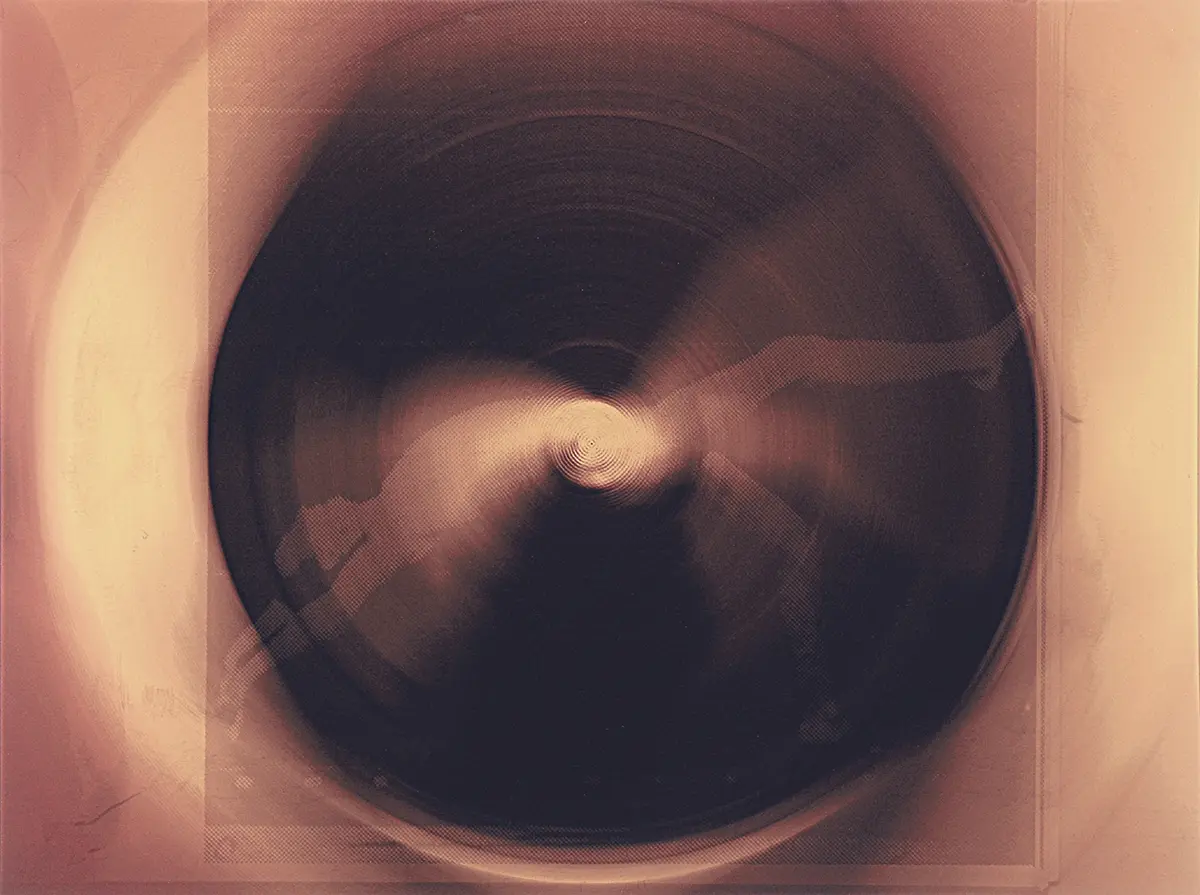
Abstraction was represented in its diversity, which sustains it as one of the twentieth century’s most important artistic trends. Kinetic-constructive abstraction by the great master Jesús Soto was present at Graphicart, an emblematic space at FIA, alongside works by Carlos Cruz-Diez, Enrique Sardá, Luis Millé, Saverio Cecere, Héctor Ramírez, and Nanín García. Casas Riegner featured Eduardo Ramírez Villamizar, Carlos Rojas, and Luis Roldán, and León Tovar Gallery also showed works by Soto and Gego. Informal or lyrical abstraction in works by Asdrúbal Colmenarez and Manuel Quintana Castillo were at Galería Médici, along with Oswaldo Vigas’s creatures and Luis Alberto Hernández’s works filled with religious symbolism.
The novelty of the fair was the animated presence of young artists, who have gained considerable space in the event, which is a significant development. This fresh, agile art spoke more of a renewed view of the artist than of a generational process, a new aesthetic founded, on the one hand, on the problematization of traditional languages, and, on the other, on a critical perception of the social context. Important works by Audino Díaz, Ernesto León, Vicente Antonorsi, and Mariángeles Soto-Díaz were at Alternativa Elvira Neri; some were conceptual resolutions and others were neo-minimalist and object-oriented. Artepuy presented figuration in the work of José Vivenes, Astolfo Funes Starsky Brines, and Keyser Siso, and in the work of Jonidel Mendoza in a subtler way. Díaz Manzini also presented figuration with the work of Carlos Sánchez Vegas and the organic-abstract in Martín Malaver’s sculptures. Alexander Gerdel, Alessandro Balteo, and Ramsés Larzábalare were shown at Faría-Fabrega with new proposals.
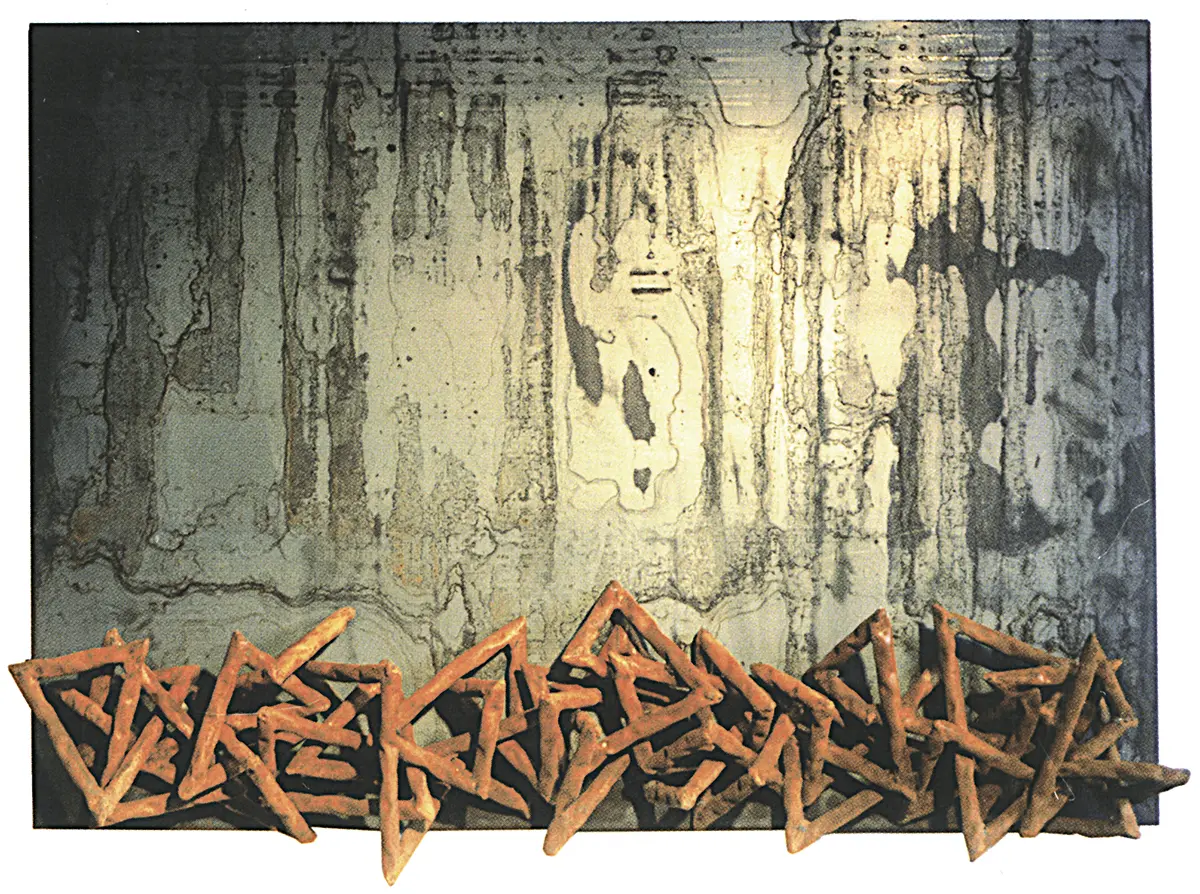
Works by Reymond Moreno, Aureliano Parra, Angel Marcano, and Antonio Briceño, with monumental photographs of aboriginal cultures, were seen at D’ Museo, which also bets on young art. Galería 39 showed Pepe López and José Antonio Fernández. Dulce Gómez’s metaphorical vision of informalism and Enrique Moreno’s fragile and humorous artifacts were presented by the emerging gallery La Carnicería Arte Actual. At Okyo, Rafael Rangel presented an interesting proposal in sculpture, and next to him was Eleonora Tugues, also with three-dimensional works, and Alexandra von Fedak. Hardcore Arte Contemporary showed work by Dr. Muu. Carola Bravo, Jeffrey Heyne, and Gisela Romero were represented at Studio Soto. At KBK Arte Contemporáneo, Patrick Hamilton, Darío Escobar, Fernando Carbajal, and Moris all presented works. Lucía Pizzani and Carolina Siefken were also at Arte Clave. Sala Mendoza, among the younger galleries, presented Claudia Bueno and Daniel Medina, and El Museo was present with Mariana Monteagudo and César Delgado.
As in previous editions, FIA organized a series of parallel events related to various forms of art. On this occasion, the Salón de Humor Gráfico Pero León Zapata, inaugurated with the fair’s sixteenth edition, showed the First Graphic Humor Salon as a tribute to Zapata, the undisputed icon of Venezuelan humor. Included in this inaugural show were Rayma Suprani, Juan Rodríguez, Roberto Weil, Abilio Padrón, Nerio Borges, Carlos Fonseca, Pablo Iranzo, Daniel Rojas, Eduardo Sanabria, Luis Velásquez, Irene Pérez, Uncas Montilla, Darwin Gómez, Gabriel Bozzone, and Néstor Juares. The show, which had great potential thanks to the artists represented, was nonetheless reduced to a rather opaque, unattractive exhibition.
Another event associated with the fair was the Fifth Ibero-American Photography Meeting, Caracas, the Genius of Place, at the Fundación Cultural Provincial; it was an encounter with the city’s space and its immediate environs during two periods. A distant, idyllic period presented places, fundamentally landscape vistas, dated from the late-nineteenth-century through the first half of the twentieth; the second, the contemporary period was represented by sharp and critical work by Nelson Garrido showed the same locales as they have been changed by time and by human activity. The Tenth Young Artists Salon in the spaces of Centro Cultural Corp Banca congregated twenty artists from various generations under the common notion of diversity. This proposal conjugated concepts, themes, and diverse languages, as well as techniques, supports, and materials.
In general terms, FIA’s sixteenth edition appeared devoid of great innovative proposals, and in that sense, it could be described as modest. Perhaps it was given to win over the opinions of casual and circumstantial collectors, rather than to mold the views of those who might be truly interested in art. Although this was not the sole element of its character, the fair was dominated by a vision interested in reviewing what is already known. Pleased with the conventional and not keen on revealing art’s new forms, this fair runs the risk of losing its effectiveness.
A re-launch of FIA seems necessary, then, with the intent of turning this yearly encounter into an active and dynamic space of the artistic and the visual. Leaving behind the bazaar-like spirit that seems to accompany it, and opening itself to a new concept of an art exhibition, FIA can catch up with the language of the contemporary and its irrepressible vitality and diversity.
FREDDY CARREÑO
Architect and Master in Fine Arts, Professor at the UCV Art School.