
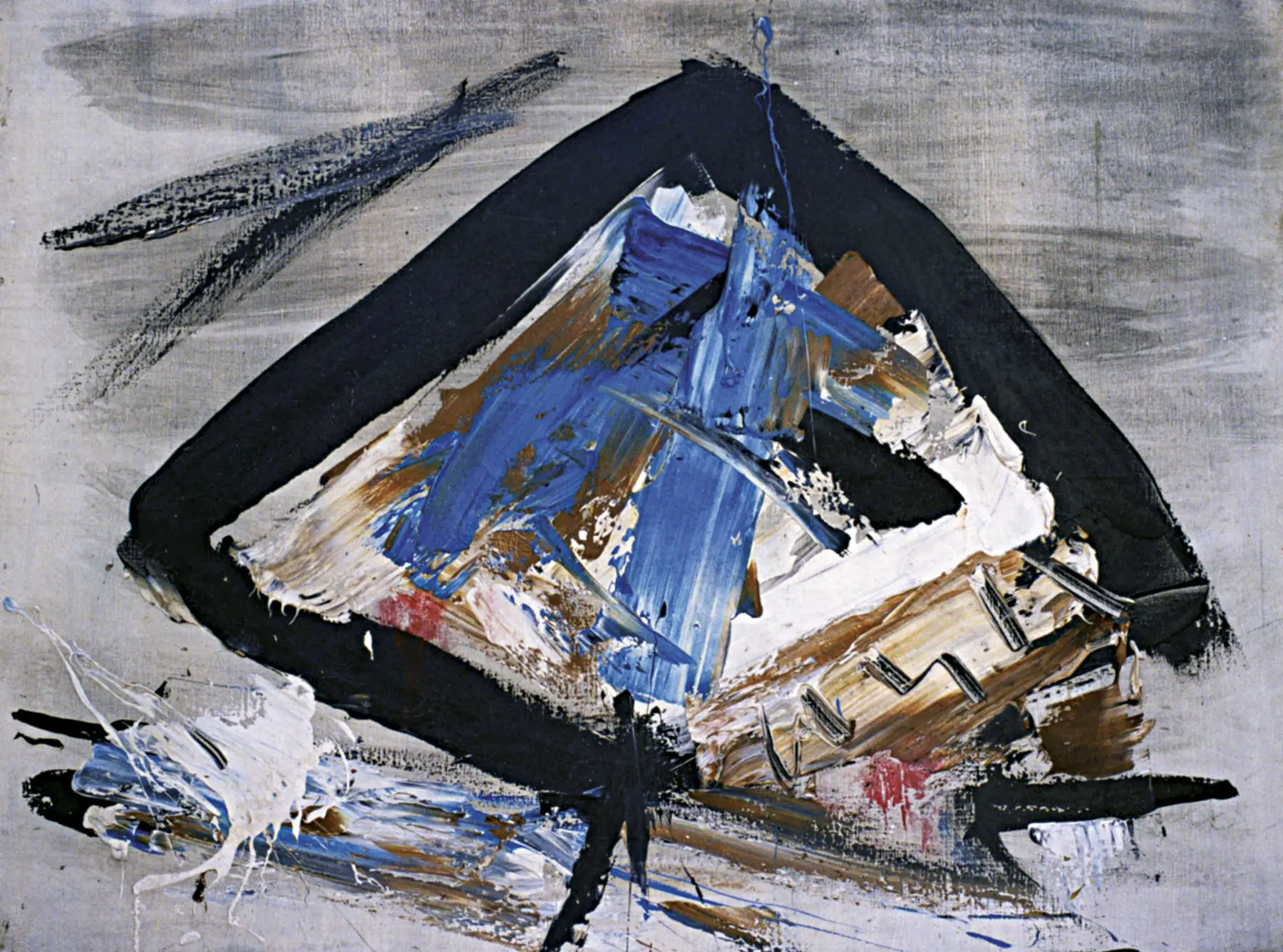
An exhibition of the work of La Plata artists from the 1960s and 70s was recently on view at the Recoleta Cultural Center in Buenos Aires. The exhibition was supported by exhaustive research, evidenced by the accompanying texts and the characteristics of the show itself, with documentary material behind the works of the many artists who asserted their presence in various ways and turned La Plata, the capital of Buenos Aires province, into an important center of Argentinean art during that period.
An interesting article was written by Edgardo Vigo—one of the strongest protagonists of La Plata art—highlighted the significance of earlier exhibitions: a show of works by Pettoruti at the Museo de Bellas Artes de la Plata; the Asociación Arte Concreto Invención show (with Maldonado, Hlito, Prati, and Iommi) at the Centro de Ingeniería of Buenos Aires Province; Miguel Ocampo’s show at the French Alliance; and the Asociación Arte Nuevo show. Also notable were educational efforts on the part of the critics Jorge Romero Brest, Héctor Cartier, and Alfredo Kleinert at the Architecture school. These are some of the precedents for the La Plata artists’ singular presence in the 1960s and 70s, not only in terms of the quality of their work but also the creation of new exhibition spaces, interdisciplinary relationships, an openness toward practices of an ephemeral or repulsive character, and the transformation of the artistic field into a continued exercise in freedom.
The Recoleta exhibition was arranged in three galleries, which were insufficient for the quantity and variety of artists and issues presented. The first gallery included both works by artists with Informalist practices and those more decidedly geometric.
The first group included the members of the Grupo Informalista SI, which first appeared in November 1960 at the Centro de Periodistas in La Plata under the auspices of the Museo de Arte Moderno de Buenos Aires. This nucleus of young artists wanted to break with traditional art and found that Informalism provoked new ways to communicate with the public. On exhibit were works by some of the participants in the group, whose numbers grew over time: C. Pacheco, A. Puente, D. Sirabo, M. Stafforini, C. Paternosto, H. Soubielle, A. Trotta, and N. Blanco. The group’s action was complemented with a larger show at La Plata’s Provincial Cultural Affairs Directorate, another one in the city of Lima in 1962, and one at the Museo de Arte Moderno de Buenos Aires.
By the latter occasion, a shift was noted in the works of the group, distancing them from Informalism. In their work, Sirabo, Sitro, Ambrosini, and Trotta began to move in the direction of geometric shapes in space. A number of displacements, crossings, and variations were presented by the Recoleta show as testimony to the quests undertaken by these artists, including sketches and models for spatial structures by Sirabo, a painted metal sculpture by Sitro (1970–71), and Antonio Trotta’s painted wood model for El ángulo caído (1967).
These artists were strong contenders for the Braque award during the first half of the 1960s. According to Cristina Rossi (the author of one of the painstaking pieces of research that accompanied the show), for successive years in competition, Sirabo presented mobile constructions that turned on their own axes to generate virtual spheres inside, mirror-like structures, and a spatial construction in aluminum with three movements that repeated a mirror effect. Hugo Soubielle won the Braque fellowship in 1968.
From this group, Alejandro Puente and César Paternostro distinguished themselves by the degree of international relevance reached by their work. Puente and Paternostro were invited to compete for the prize established by the Di Tella Institute; Paternostro also received the Kaiser Industries Prize and Puente received the Guggenheim Fellowship. In 1964, these two artists—who were represented in the Recoleta show by oils currently in the Museo de Arte Moderno de Buenos Aires collection—presented a show titled Nueva Geometría at the Lirolay Gallery, introduced by the critic Aldo Pellegrini, highlighted its the character of lyrical or sensible geometry.
Also in the recent exhibit were César López Osornio’s famous Cubos from 1962. Since that time and to the present, López Osornio has situated himself within constructivist currents for which rigor and precision coexist with a display of fantasy. He possesses a deep understanding of color, which he enriched during a Japanese sojourn under a fellowship.
The show included a Pintura concreta from 1955 and a Pintura cinética by Luis Tomasello, another internationally renowned La Plata artist, relocated many years ago to Paris. Both enamel-on-wood paintings are now in the collection of the Museo de Arte Contemporáneo de La Plata (MACLA).
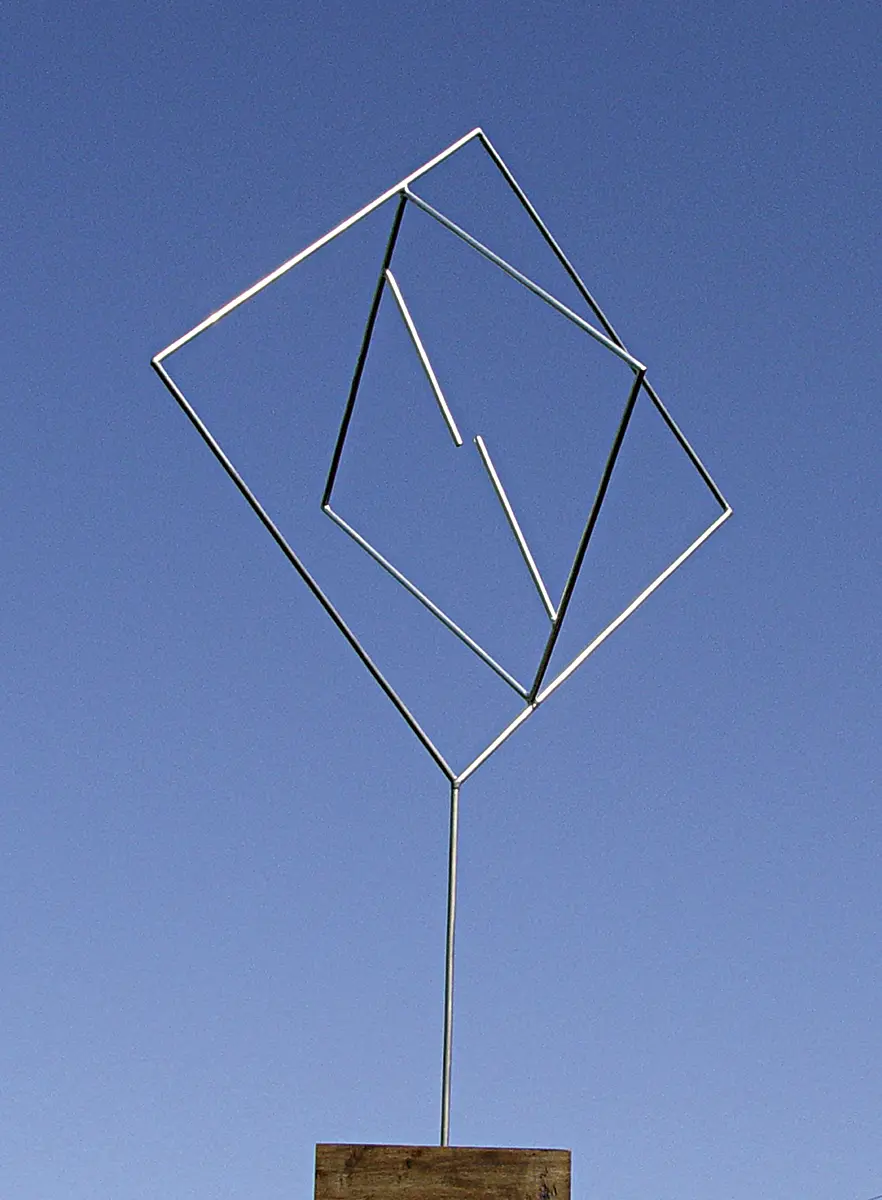
Raúl Mazzoni has always distinguished himself as an artist for his investigations on the spatiality of a plane, involving the interplay with real space via torsions, trimmings, and encasings. In the recent show, he exhibited a wire sculpture from 1961–62, acrylic on canvas painting titled Rombo óptico, and other works.
The show’s geometric component also featured works by Pacheco and Jorge Pereira.
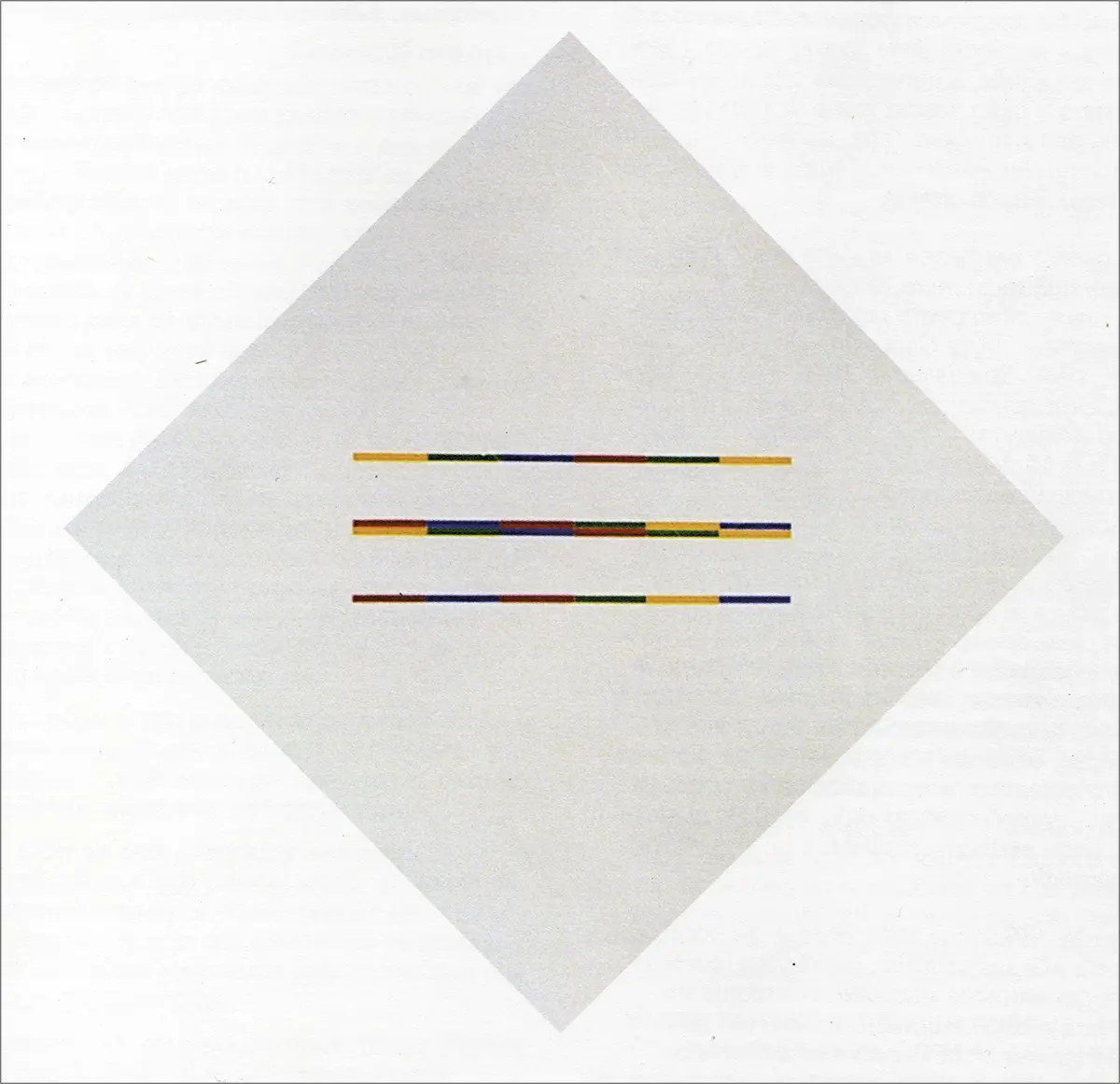
Also exhibited were works by Hugo de Marziani: two 1958 prints, a 1962 painting on metal, and two interesting sketches on paper of spatial situations and optical-kinetic experiences that revealed some of the keys of his later work, such as his rigorous thinking and research on perception and its dynamic. De Marziani’s alignment with a certain realism beginning from the 1970s did not suppress his early interest in abstraction and the constructivist line exemplified by these works.
This exhibition underscored the importance of the use of photography in the investigations of the period. The show presented photograms by Puppo and Pereira and photographs by Romero; the latter two were members of the Centro de Experimentación Visual (CEV) group, where they joined a wider movement that found expression in the Lirolay Gallery and the Centro de Arte y Comunicación de Buenos Aires.
The Centro de Experimentación Visual was open not only to photography but also to the research of new techniques and the possibilities of image transformation. In 1970, the CEV presented a show titled Sistemas. The show’s catalog described a system generating self-selected rules to ensure the interaction between the parts, of incorporating the contributions of other disciplines, and of integrating their production into society.
In the Recoleta show, other galleries exhibited works and documents by Edgardo Vigo, a greatly original La Plata artist, corroborated what Carlos Basualdo wrote for the 22nd São Paulo Biennial in 1994:
There isn’t only one Vigo, but many: the xylographer, the objectualist, the conceptual artist, the performance artist, the concretist poet, the filmmaker, the editor, the exhibition organizer, the poetic artist; all of them superimposed on one another, alternating with one another.
Fernando Davis, the scholar who analyzed Vigo’s work, pointed out Vigo’s intention to create discomfort for the established order and to bring disarray to the quotidian accommodation of consecrated practices and norms.
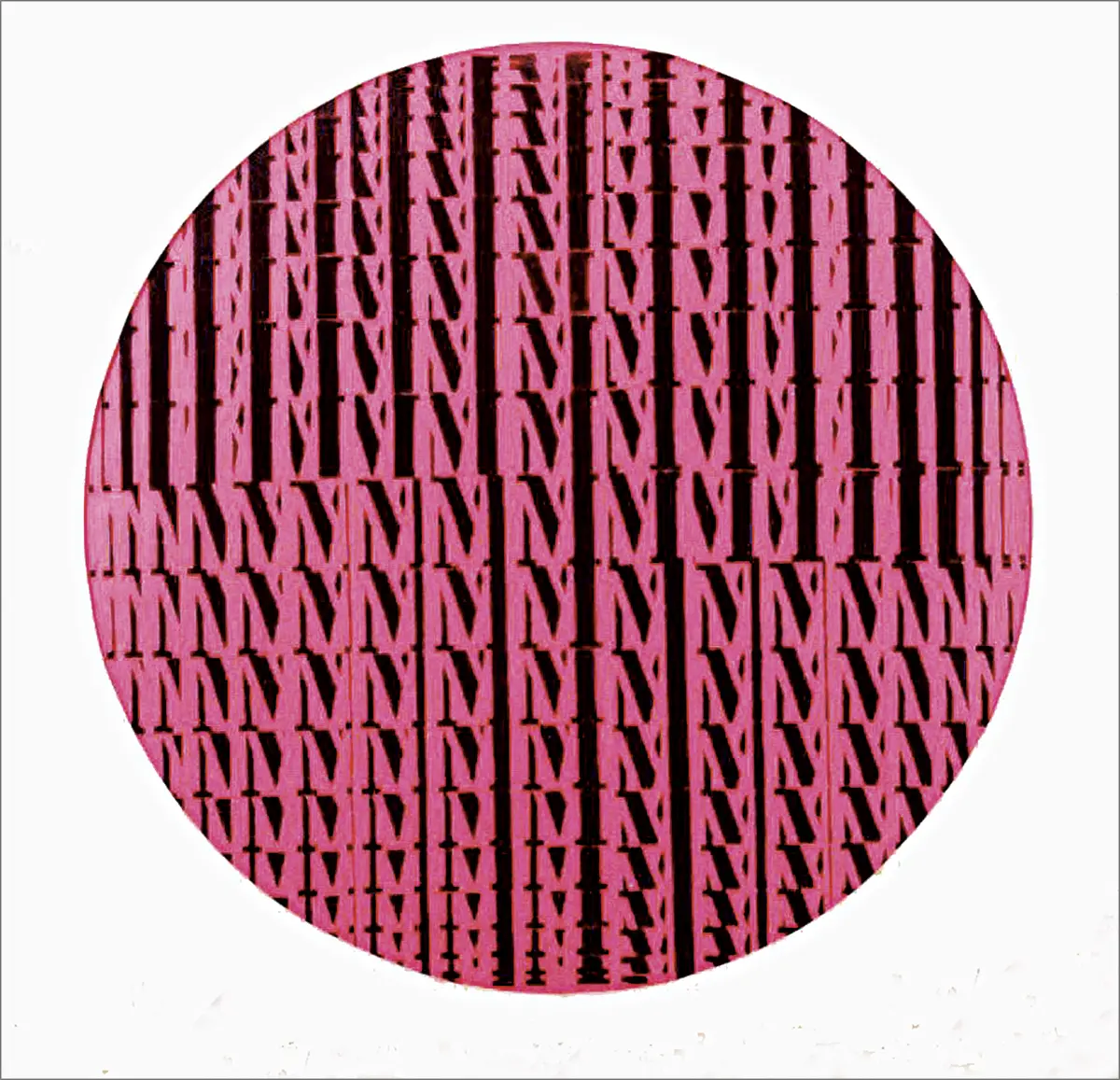
Vigo edited the Diagonal 0 journal, published in La Plata between 1962 and 1968; exhibited here were highly illustrative examples of its xylographic work, its innovative role, and its proposal of promoting the newest experimental poetry being produced in La Plata. The journal’s welcoming spirit and the driving force was expressed in the founding of a publishing press and the grouping of poets in the Diagonal Cero movement. The group’s activities were not limited to the city of La Plata. They exhibited in Paris and in Buenos Aires, at the Instituto Di Tella, for the International New Poetry Exhibition of 1969, which gathered visual and sound poets from fifteen countries.
Also on exhibit in the Recoleta show were printed and silhouetted pieces of construction paper, sometimes incorporating twine and stamps that configured the journal as a receptacle of loose sheets with no premeditated order, a mobile three-dimensional structure, a journal-object that sought the active collaboration of the viewer. Vigo always intended viewers to participate actively, interacting with his work in order to free possible meanings. He created disconcerting objects to react against “an art full of bourgeois beauty.” As Davis says, “In their descriptive gamble, ‘the projects to be realized’ fracture the stability of the roles traditionally assigned to artist and public in the aesthetic experience.”
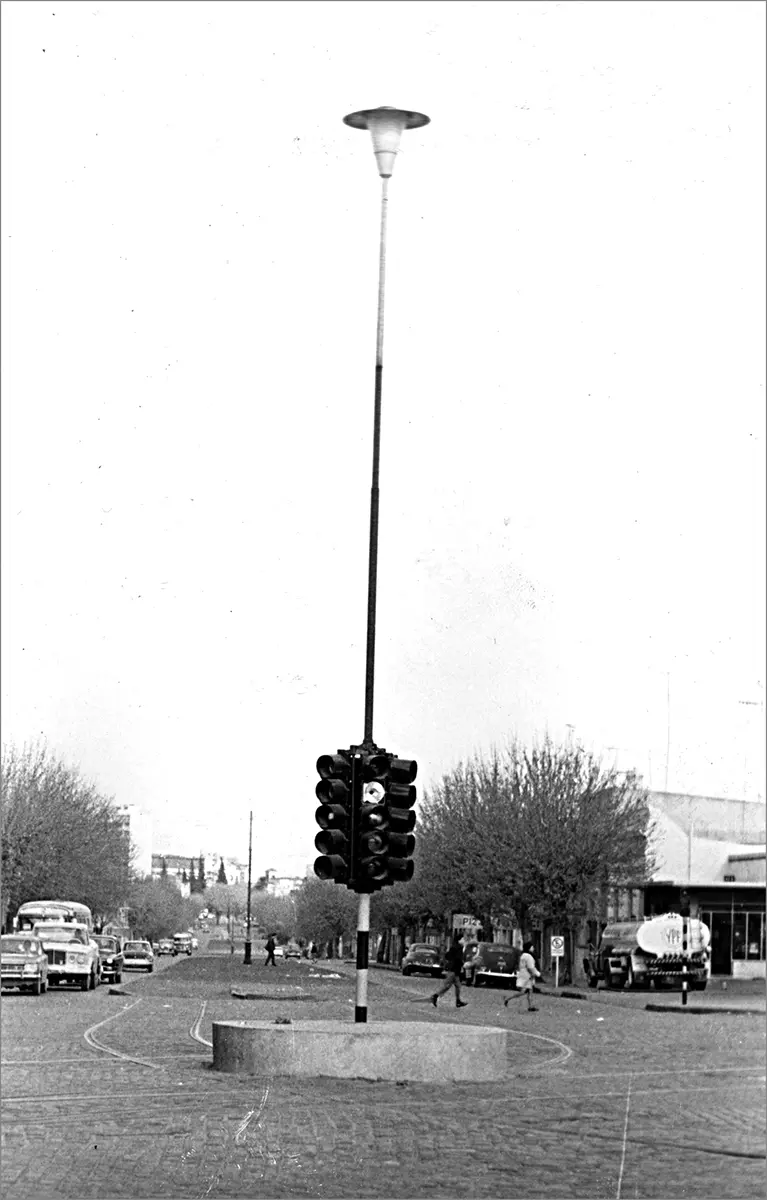
Two of these famous, outrageous objects on display were El ciclista oprimido (1975) and El tapón del Río de la Plata (1973). The show included photographs of Urna con cabezales intercambiables: cabezal erótico, cabezal místico-religioso, cabezal electoral y cabezal in-urna. Documentation of Manojo de semáforos, an action carried out at the intersection of Avenue 1 and Avenue 60 in La Plata in 1968, was also on view. The latter began the series of Señalamientos devoted to blur the perception of everyday objects and move viewers to reflect and extract unexpected and poetic content from daily life. The markedly playful nature of Vigo’s early works was replaced with a political commitment that affected the artist at a personal level with great brutality. That period, 1971–75, marked the publication of the journal Hexágono, represented here by loose sheets in a variety of formats.
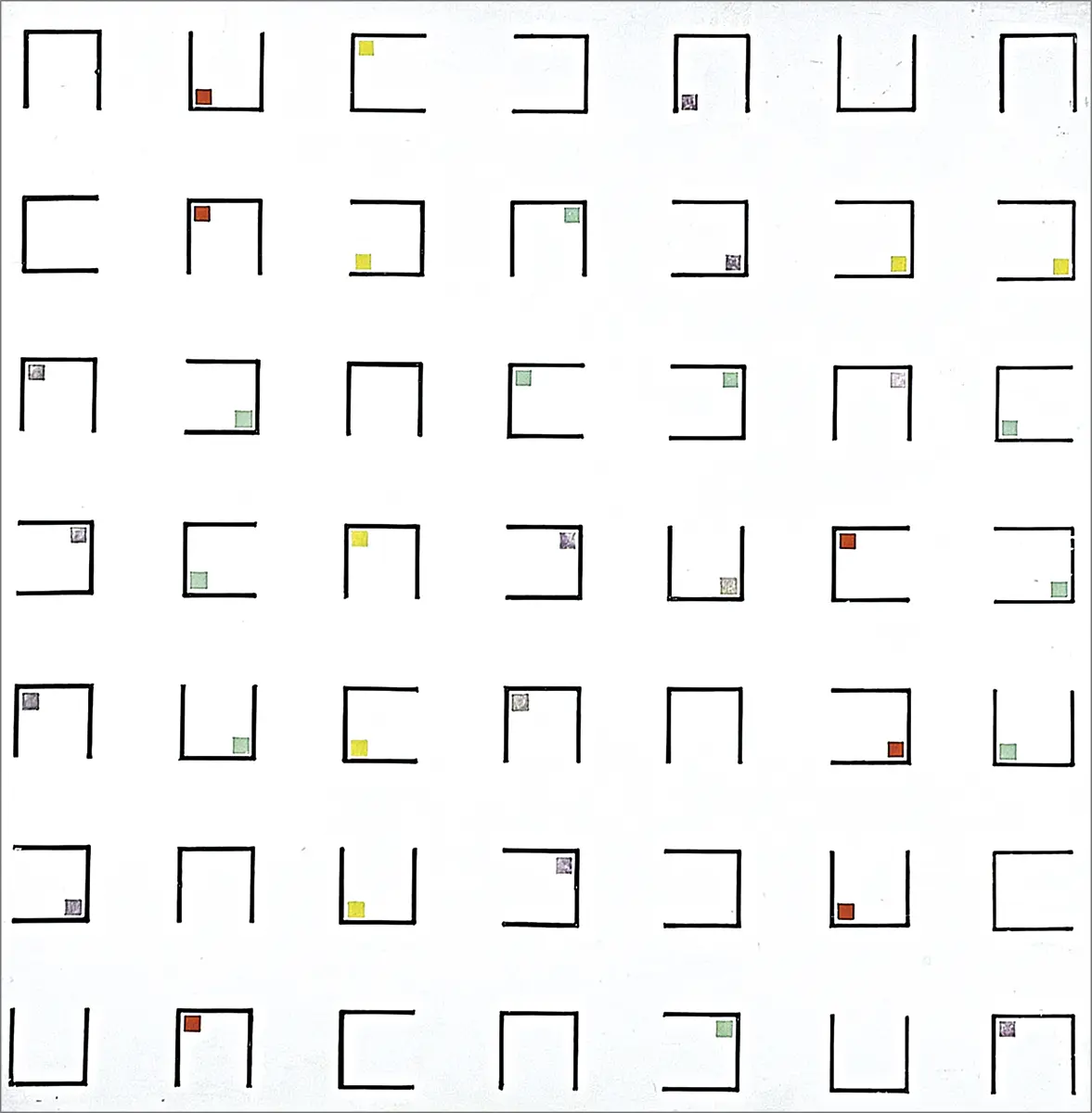
Two more testimonies of Vigo’s political commitment were included, like Paseo visual a la Plaza Rubén Darío, an action by the Centro de Arte y Comunicación, which also presented Arte en cambio, where Latinoamericano culto, versión europea, 1974, was first exhibited. Vigo was also a proponent of mail art as a way of communicating through the distance that represented a circulation space renewed and not commercialized.
An important place in the show was reserved for the work of Juan Carlos Romero, from Espacios virtuales (1960) and the early-1960s xylographs questioning the limitations of traditional supports and pushing optical-kinetic investigations, to Violencia or De la realidad nacional (al compañero Mújica asesinado el 11-5-74), a tribute to the Third-Worldist priest assassinated by the Triple-A during the Isabel Perón government.
The third gallery of the Recoleta show presented testimonials about the Third Tandil Festival of the Arts and the Art Critics Colloquium of September 1970. The material on exhibit referred specifically to Excursión, Compañía de excursiones S.R.L., atendida por sus propios dueños, a performance by Luis Pazos, Héctor Puppo, and Jorge de Luján Gutierrez. The documentation referred to an excursion during which the participating critics were given a round-trip ticket and driven around in a bus that played Beat music and was accompanied by a clown, while a photographer recorded the event. The critics received flyers about consumer art and art and life, as well as paper bags with apples inside—also given out at the Recoleta show—and banners reading, “To live is to accept all temptations.” After the excursion reached a barren field, several actions took place, which were to be completed by the critics. Shortly before setting off for their return trip, they received a newspaper with headlines that read: “Art is not a theory; it is an act of freedom.”
It was fun for these La Plata artists, who sought new connections between art and everyday life, to close their show with a banner-like mural representing a soccer team with the heads of the critics attending the colloquium, critics who were right in awarding First Prize in Visual Experience to the then-emerging artist Víctor Grippo. These playful events took place as the culmination of previous actions by Pazos, Puppo, and Luján Gutiérrez, who would later form the Escombros group. This multiple-operation approach enacted the period’s theoretical and aesthetic debates, according to Lic. María de los Ángeles de Rueda, who wrote another essay accompanying the exhibition.
In closing, it was only regrettable that a larger space would have allowed for an exhibition design better suited to the importance of that period’s art from La Plata.
NELLY PERAZZO