
The artists belonging to the “generation
of openings” (whose works explored their identity as colonized individuals, as
sexual beings, as racial entities, etc.) were followed by the current cohort of
Puerto Rican artists (whom I call the Global-Islandized, for their desire to
break from the constraints of institutionalized insularity and sit down to the great feast of globalized art). This generation is more secure in its
contradictory reality: more open to the various transgressions that began with
Duchamp but are increasingly celebrated with Warhol, feminist and gay
movements, and, since the late 1990s, the “anything goes” attitude. For this
group, Puerto Rico’s colonial status (a reality that has defined the island
from when it was a Spanish colony to its present status as a U.S. colony) is
not a determining or unifying factor in their work but merely a starting point,
one important but accidental.
This generation includes artists like Melvin Martínez, Michael Linares, Cacheila Soto, Fabián Detres, Tristán Reyes, Jason Mena, Edgardo Larregui, Omar Obdulio Pena Forty, Radames Figueroa, MERO, Martín Albarran, Filipo Tres, Jaime Rodríguez, Sofia Maldonado, ISMO, Fernando Pintado, Braulio Espinosa Castillo, and Sebastián Vallejo. The best known of them all, Jesús “Bubu” Negrón, has created original works of great consequence in some of the most important international fairs and biennials, thus proving that the torch has been passed to a new generation that, besides presenting its aesthetic and ethical concerns, is ready to participate in intelligent dialogue with the four other generations of Puerto Rican artists still producing and their international peers.
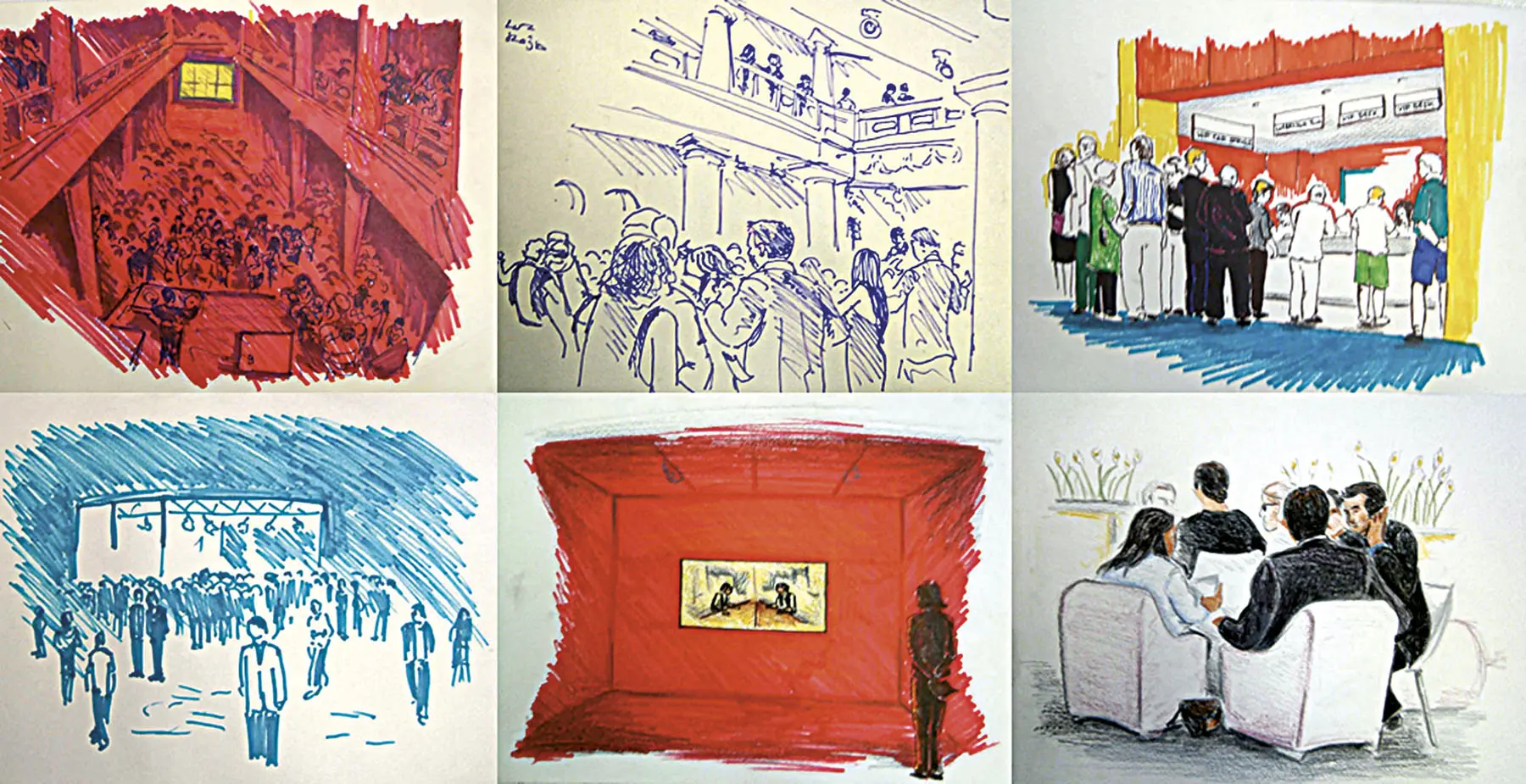
And, what makes “Bubu” Negrón—a shy and quiet young artist who is nonetheless intensely concerned with social justice and with the dignity of men and women—so special? The answer is that Negrón’s works “narrate” in a highly original and dramatic way important events that often go unnoticed; he is able to transform the events that are part of our daily lives into art. Conveying his private experiences, he becomes a protagonist, witness, and chronicler of our time. Negrón (who studied at the Escuela de Artes Plásticas de Puerto Rico) employs in his works everything from sophisticated lyricism to the most brutal anti-poetry, with the purpose to bring us closer to what surrounds us but we ignore (or want to ignore): social injustice, different lifestyles, alcoholism, drug addiction, unbridled consumerism, the world of art collectors (as seen in his incisive and biting VIP Sketches of 2006), the world of artisans and handcraft peddlers, ecology as a way of life, the destruction of our planet as we know it, and suicide.
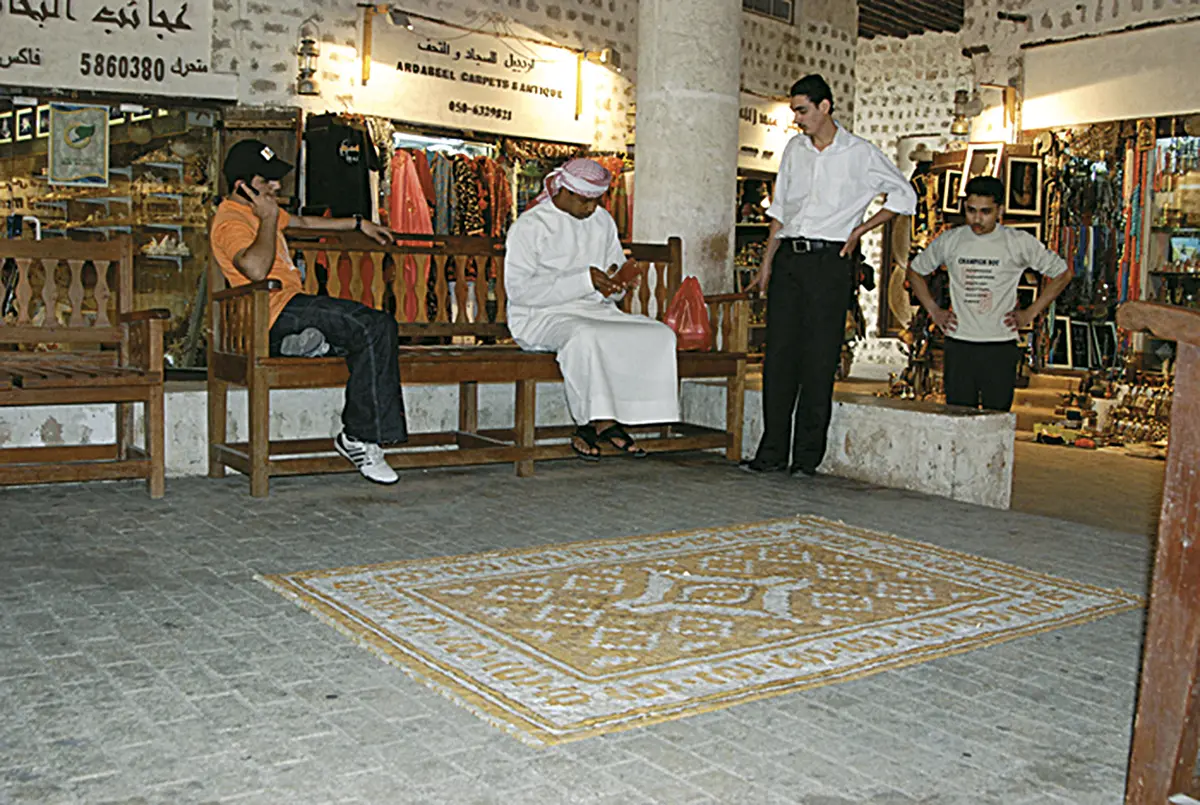
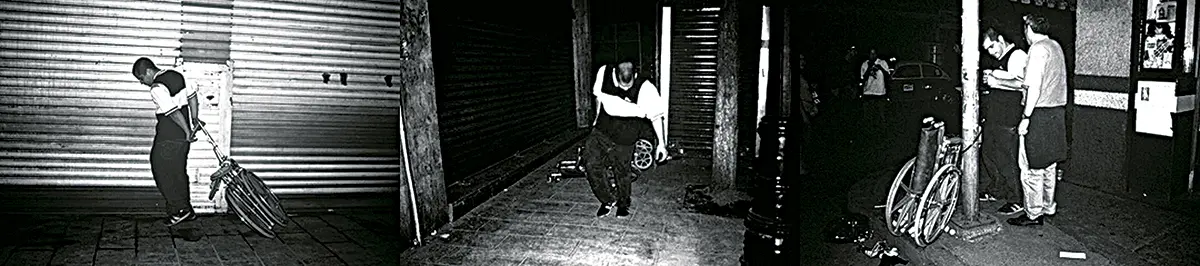
A clear example is Negrón’s recent intervention in the Eighth Sharjah Biennial, in the United Arab Emirates in 2007. Upon arriving in the Emirates without a defined project, Negrón was impressed by the number of smokers among Muslims (who are forbidden from drinking alcohol) and the number of cigarette butts in the streets; in reaction/dialogue with this phenomenon, he built an extraordinary and refined carpet with thousands of butts, a work that became the object of intense bidding by collectors and museums. But the work that opened doors for Negrón (born 1975, Arecibo-Barceloneta, Puerto Rico) and defined him as a significant artist was The Promise (2003): the artist documented—with photographs, drawings, writings, videos, recordings, and even the wheelchair he used after his last alcoholic adventure—the promise he made to his mother to stop drinking because he was losing control of his own life. This journey (to Dante’s Divine Comedy), this via dolorosa, this exorcism, which started in Puerto Rico and ended in Mexico and is now exhibited at the Museo de Arte de Puerto Rico (after being seen in several cities throughout the world), is an extraordinary narrative of a very difficult moment in the artist’s life, one he nonetheless transformed into a moment of catharsis and epiphany.
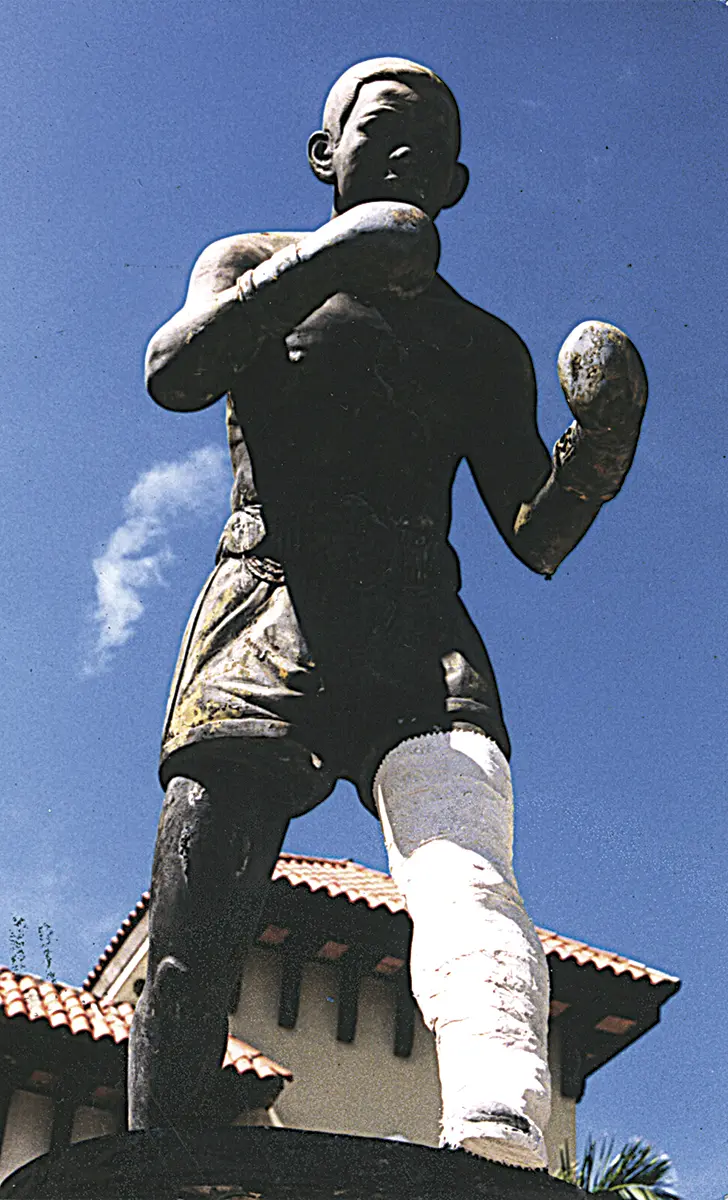
In 2001, Negrón—a born musician who plays guitar and sings salsa and reggae—played with the eroded statue of Sixto Escobar, Puerto Rico’s first World Champion boxer. This statue, formerly located in a public area in San Juan, had reached such a state of decay that it was removed from its pedestal; Negrón put its broken legs into a cast and returned it to its place, under the title First aid. Then came his cigarrette butts, made of thousands of regular butts he picked up in the streets. These sculptures (which recalled the work of Claes Oldenburg) and some wall compositions of a giant cigarette butt (also made with found butts) were very successful among local collectors, who helped Negrón gain attention outside Puerto Rico.
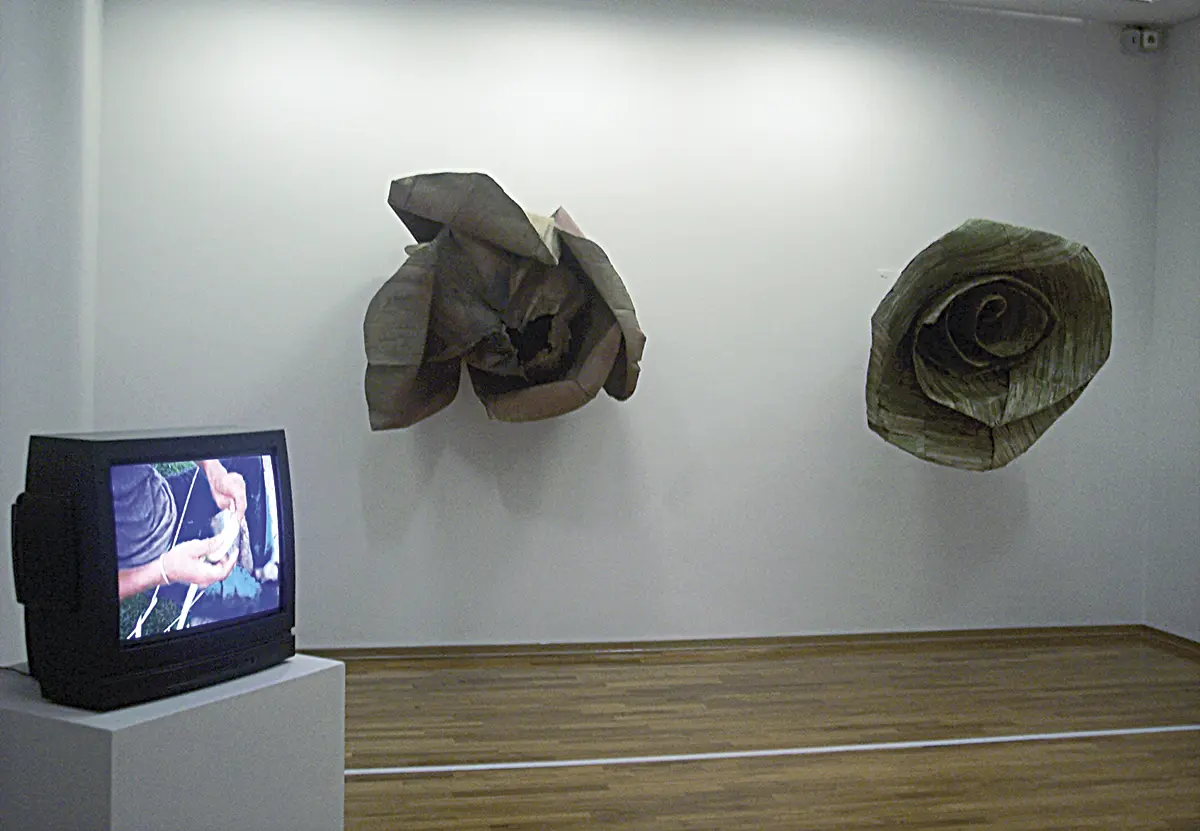
From there on, the young artist’s vertiginous career featured a sequence of successes. For Negrón, who has stated that being an artist is better than working at McDonald’s, the future held extremely provocative projects at Art Basel-Miami (2003), his VELA Parking Service at the San Juan Polygraphic Triennial (2004), his famous Tecata Rose (a giant flower made of banana leaves, like the ones of palm leaves made by addicts in San Juan to sell to tourists and finance their drug habits) that was presented next to Pistoletto’s rose at the first Torino Triennale Tremusei in Italy (2005), and other projects in his Puerto Rico.
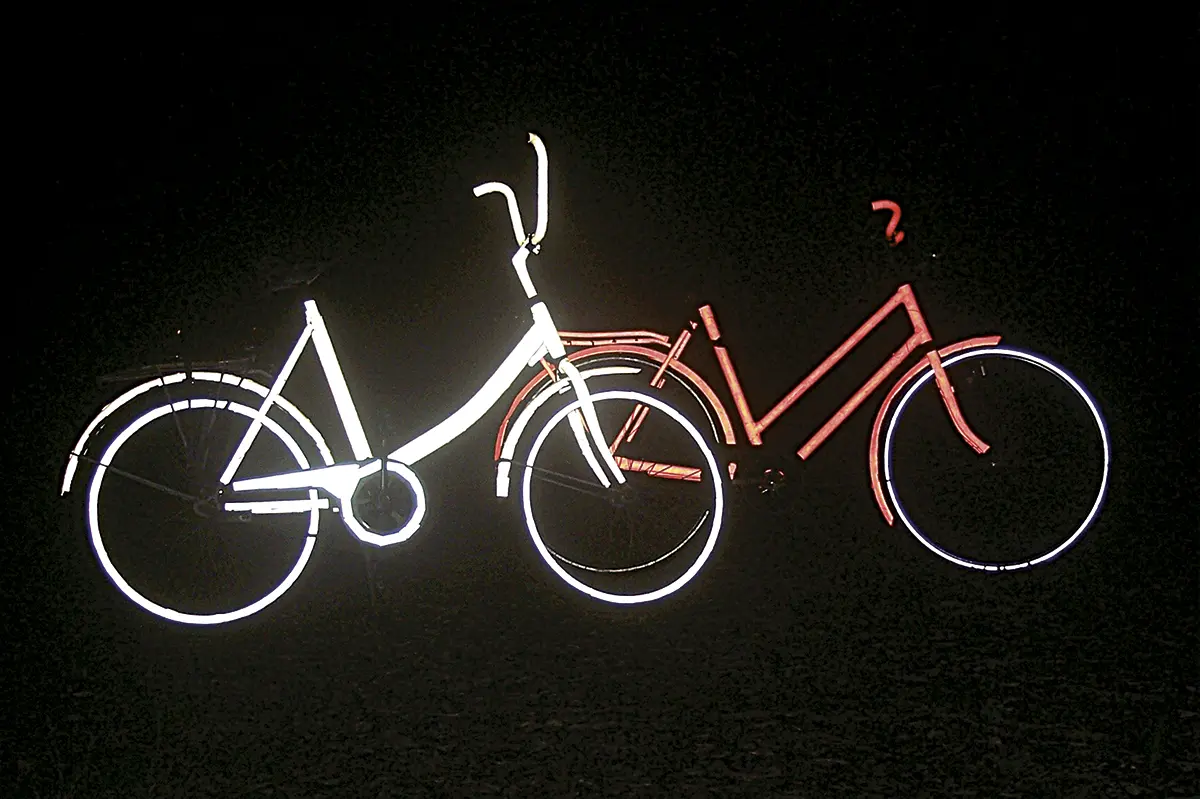
In late 2005, as the final project of his residence in Utrecht, The Netherlands, Negrón transformed hundreds of bicycles, wrapping them in fluorescent tape and having people ride them around the city at night. In 2006, Negrón bought a Puerto Rican pica (a machine that makes little horses race as at a racetrack) and exhibited it at Galería Comercial (which represented him for several years) under the title Picas, Museos y Ferias, a work that has traveled to several cities and was eventually shown in Art Basel (2006). It reaffirmed his proposal: “to take every day out of its context, that which reveals the life of the common man and the world of injustices he inhabits, to present it in the elite spaces of the art fairs and important biennials.” Negrón illustrated this goal when he was invited to the Whitney Biennial, where the artist borrowed a table from an African handicraft peddler located outside the museum along with a hot dog cart from the street, placing them inside the museum with the title Honoris Causa as “a tribute to the true artists, the artists of daily survival.”
What did Negrón do after returning home in triumph from the United Arab Emirates? Negrón works as a gardener and immerses himself in real life until the time comes to present his latest provocation.
MANUEL ÁLVAREZ LEZAMA
Teacher at Universidad de Puerto Rico, art critic and AICA member.