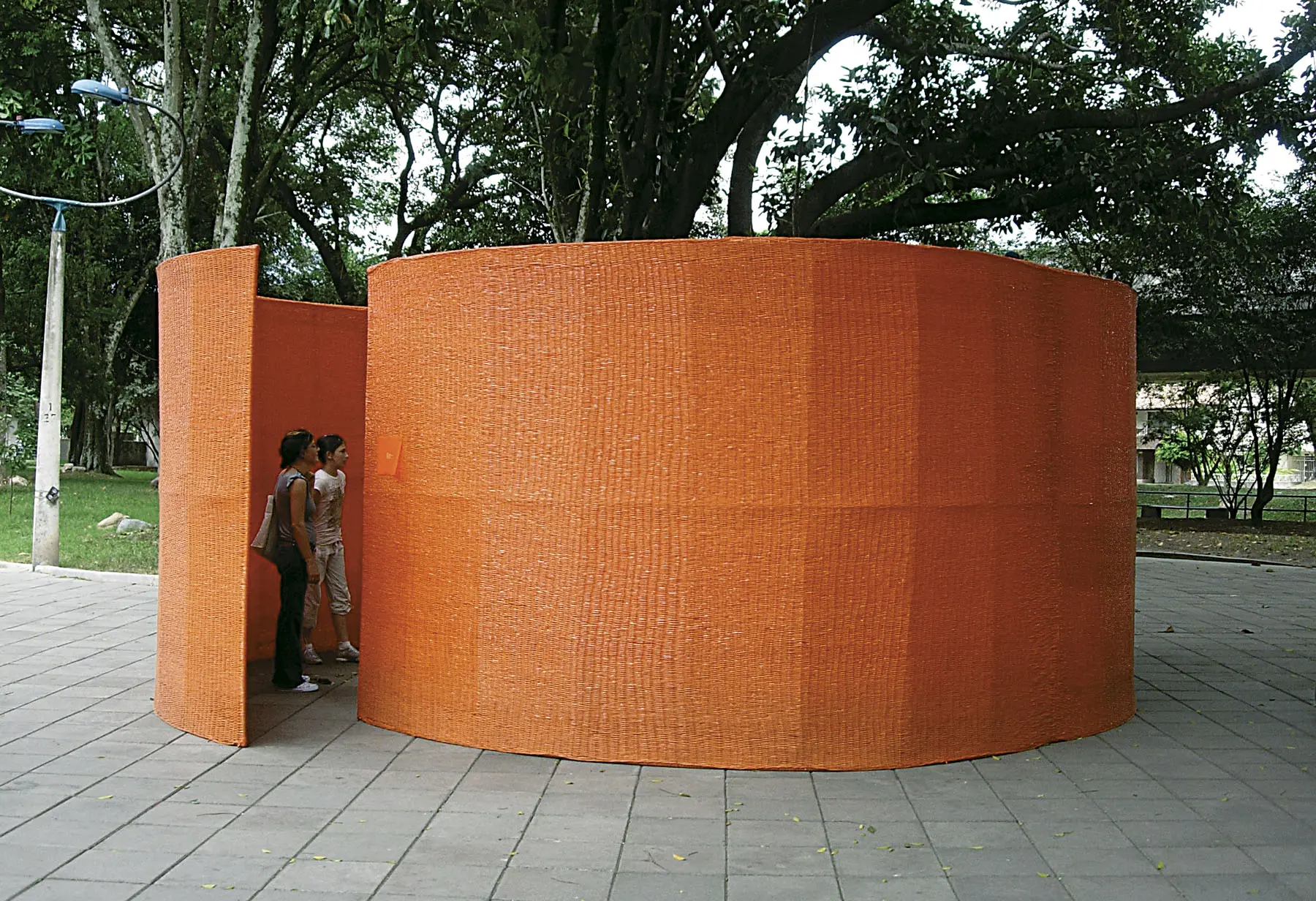
Medellín, Colombia’s second most populous city was a Latin American pioneer in the field of international art biennials with its Coltejer Art Biennial. The second such event to appear in the region after São Paulo, it had an intermittent history and held four editions between 1968 and 1981. The Biennial brought Medellín in sync with international art developments, especially with art produced in Latin America and had a need salutary effect on the education of the conservative local public in bringing a more current and cosmopolitan view, which was reflected in a generation of local artists interested in the new urban realities. These artists were able to consolidate a position for themselves both at the local and international levels.
As has happened in other instances, the support of the sponsoring industrial groups dried up and the city, which entered a period of institutional paralysis in the 1980s due to the emergence of drug trafficking did not embrace the Biennial as a project of its own, which would have given it continuity and supported the promotion of Medellín’s best artists. Only one event, the International Art Festival funded by the city government in 1997, contributed to asserting Medellín’s intermittent presence on the international art scene.
By 2006, taking advantage of the city’s excellent social and political climate, as well as an economy and an infrastructure comparable to those of any Latin American capital, the Museo de Antioquia—the country’s second most important museum, with an notable collection of international and regional art—gathered a group of Colombian and Brazilian curators to design an event that would once again carve for Medellín a place in the international art circuit. It would also foster important reflections about the contradictory urban realities facing its citizens at the local and global levels, in terms of their ways of cohabiting and their acceptance of the Other.
An interdisciplinary team composed of José Roca, Oscar Muñoz, María Inés Rodríguez, Ana Paula Cohen, Jaime Cerón and Alberto Sierra dismissed all hierarchies and assumed the roles of co-curators on equal footing. This group was in charge of giving meaning to a curatorial exercise that developed, through their contributions, over several months and resulted in an expansive event that ran from February to July 2007 in various institutions and many public and private spaces in all socio-economic sectors of the metropolitan area. This space for experimentation, which they named Encuentro Internacional Medellín 2007: Prácticas Artísticas Contemporáneas, Espacios de Hospitalidad and was known by all as MDEO7, was configured as an articulation of different notions of space, intended to foster the circulation of people, artistic projects, discourses, and diverse cultural concepts. Besides the large exhibition spaces with works by eighty-five international artists, it included activation zones that grouped exhibitions with historical resonance, four theory seminars with local and international guests, fifty round-table discussions with invited artists and curators, seventeen art-education workshops centered around a variety of practices, five guest publications, three video-art cycles, a film festival titled Sin Fronteras, and close to thirty audio experiences.
The artistic residences were one of the innovations introduced at this event, and they established more solid ties between the artists and the city and its inhabitants. Twenty-five national and international artists-in-residence were invited to MDE07 to develop specific projects, as well as five designers and six curators to support these practices. Twelve independent spaces—four spaces of local artists who served as hosts, four from Latin American cities (Rio de Janeiro, Buenos Aires, Lima, and Caracas) and four from Bogotá and Cali—made up a component especially curated by the artist and promoter Oscar Muñoz, titled Espacios Anfitriones. This program, which provided several local spaces with the necessary means to invite their peers from other cities and offer them a temporary “satellite site” to carry out the same programming they usually present in their cities of origin, was particularly successful. The presence of El Capacete, El Basilisco, La Culpable, Oficina # 1, El Bodegón, El Vicio, Helena Producciones, and Casa Tomada, alongside Casa Tres Patios, Taller 7, La Jikara and Bellas Artes, multiplied the impact of MDE07 in the city through relational channels. Thus Medellín hosted multiple artistic experiences and practices about the contemporary, and many citizens usually removed from cultural activity were involved in art.
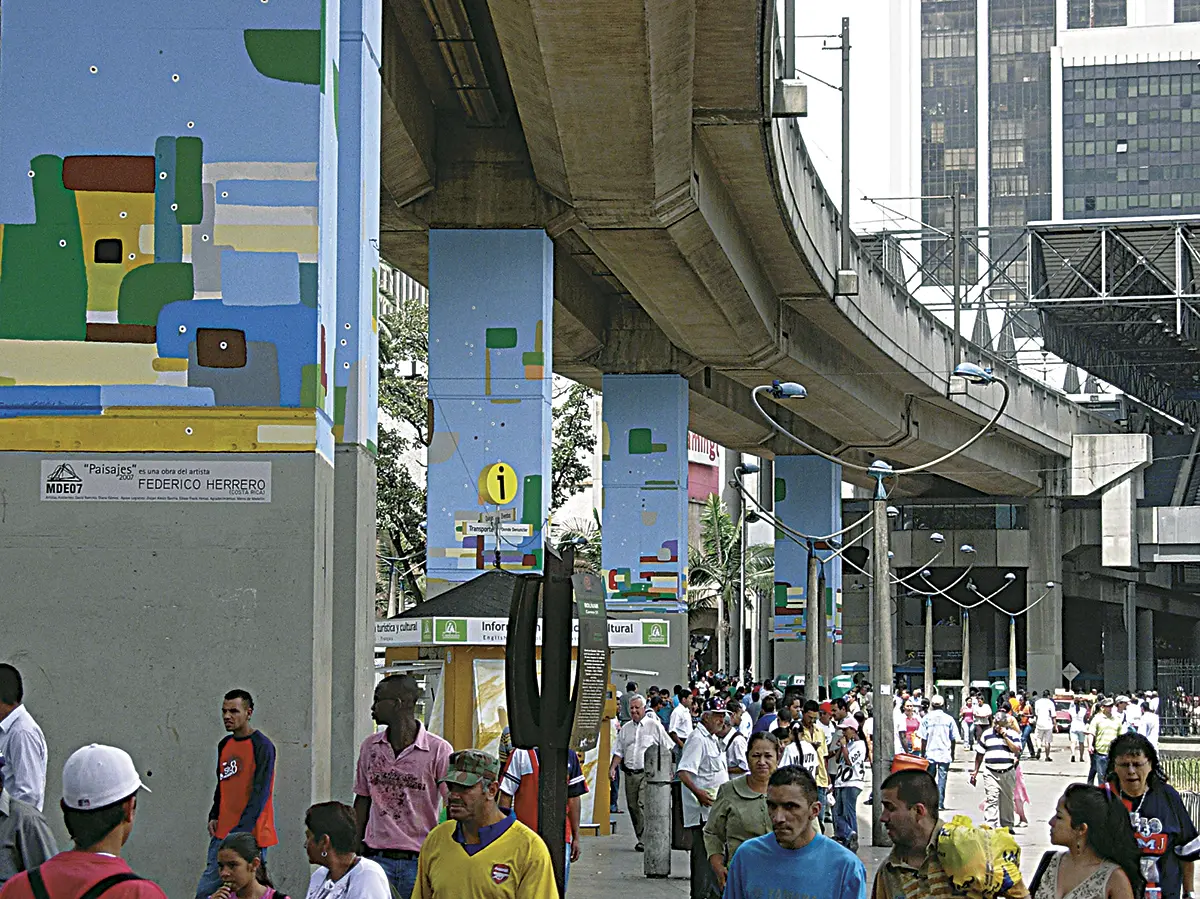
The notion of hospitality belabored both by contemporary philosophers—especially Derrida, who triggered the initial question in his book Hospitality (1997)—and by many postmodern thinkers, was the concept behind the general meaning of the Espacios de Hospitalidad that the curatorial team assigned to the Medellín event as a way of questioning the hosts, guests, or visitors who crossed paths in the city during the event’s six-month period. Hospitality was conceived as a political strategy, posited as a relational structure to activate and reformulate the communication channels between the city and artistic practices; these had been fractured and disconnected due to events since the 1980s that made Medellín a forbidden city for foreigners and its own denizens. As pointed out by José Roca in a text prior to the event, this kind of ostracism had spread to the country’s art as a whole, to the point that significant Colombian artists—such as Doris Salcedo, Óscar Muñoz, José Alejandro Restrepo, Miguel Ángel Rojas, María Fernanda Cardoso, or Juan Manuel Echavarría, to cite but a few—have never shown their work in a solo show in an important Medellín museum or institution. Medellín, Roca says, “which prides itself in being a hospitable city apparently wasn’t so hospitable to the country’s most celebrated ambassadors. This is why, among other things, the tension between hospitality and hostility became the leitmotif of the Encuentro Internacional Medellín 2007: Prácticas Artísticas Contemporáneas. In general, we can say that MDE07 attempted to tame the biennial model, to turn the great artistic event into a domestic, familial, everyday situation.”1
Without a doubt, the art world’s current concern to redefine the international biennial model prodded the curatorial team in Medellín to conceive an event structure that was adequate to the local scene and aware of its needs and expectations, while at the same time being an experiential gamble capable of making pertinent contributions to the international debate. Indeed, the phenomenon is known as “biennialism” has produced many events that resemble large art fairs in their structure and image. In turn, the experience and artistic offerings at the large art fairs are similar to those in a typical biennial, a globalized model that pursues the attention-grabbing benefits of the spectacular to the detriment of a deeper, more formative process. Each time a new international event arises, the question also emerges of whether it is truly possible to reconfigure the model.
At least in part, the Encuentro in Medellín attempted to do so. Following are some of the event’s most representative and controversial works and projects. The curatorial themes—hospitality/hostility; xenophilia/xenophobia; parasitism and symbiosis; inhabiting the museum; and urban residents—that emerged from the general concept of hospitality and that framed the works and projects were posited as holistic readings, without classifications or thematic breaks in the exhibition spaces.
The main exhibition module was composed of the exhibitions by international artists present by direct invitation. Among them were Cildo Meireles and Antoni Muntadas—represented by his impressive On Translation: Fear/Miedo project—who, alongside Colombia’s Antonio Caro, Adolfo Bernal, and María Angélica Medina, functioned as anchor artists for each of the themes mentioned. Significant space was devoted to these artists, who displayed several stages of their oeuvres and some new works.
The works that encompassed a panorama of media by the more than eighty artists were staged non-simultaneously according to three different timelines. With an initial opening on February 10th and two exhibition periods beginning on April 13th and May 26th, the works were distributed among ten sites and various public spaces throughout the Aburrá valley. The city of Medellín is the center of the valley’s metropolitan area, with the most important museums and permanent-exhibit cultural galleries. The Casa del Encuentro was the nucleus of the participating spaces, which included the Museo de Antioquia, the Museo de Arte Moderno, the University of Antioquia Museo Universitario, the Centro Colombo Americano, the Suramericana de Seguros Sala de Arte, the EAFIT University Centro de Artes, the French Alliance, the Palacio de la Cultura, and other host spaces and associated institutions.
In the Casa del Encuentro, the opening show presented an old annex to the Museo de Antioquia main building. There were works by the Brazilian artists Ángela Dethanico & Rafael Lain (such as Ruido Blanco, seen at the recent Venice Biennale), as well as Javier Peñafiel from Spain, and Jaime Iregui, Bernardo Ortiz, Víctor Muñoz, and Gabriel Sierra from Colombia. Sierra was also in charge of designing the furniture and exhibition design to give meaning to the adaptation of this new space, which he accomplished successfully.
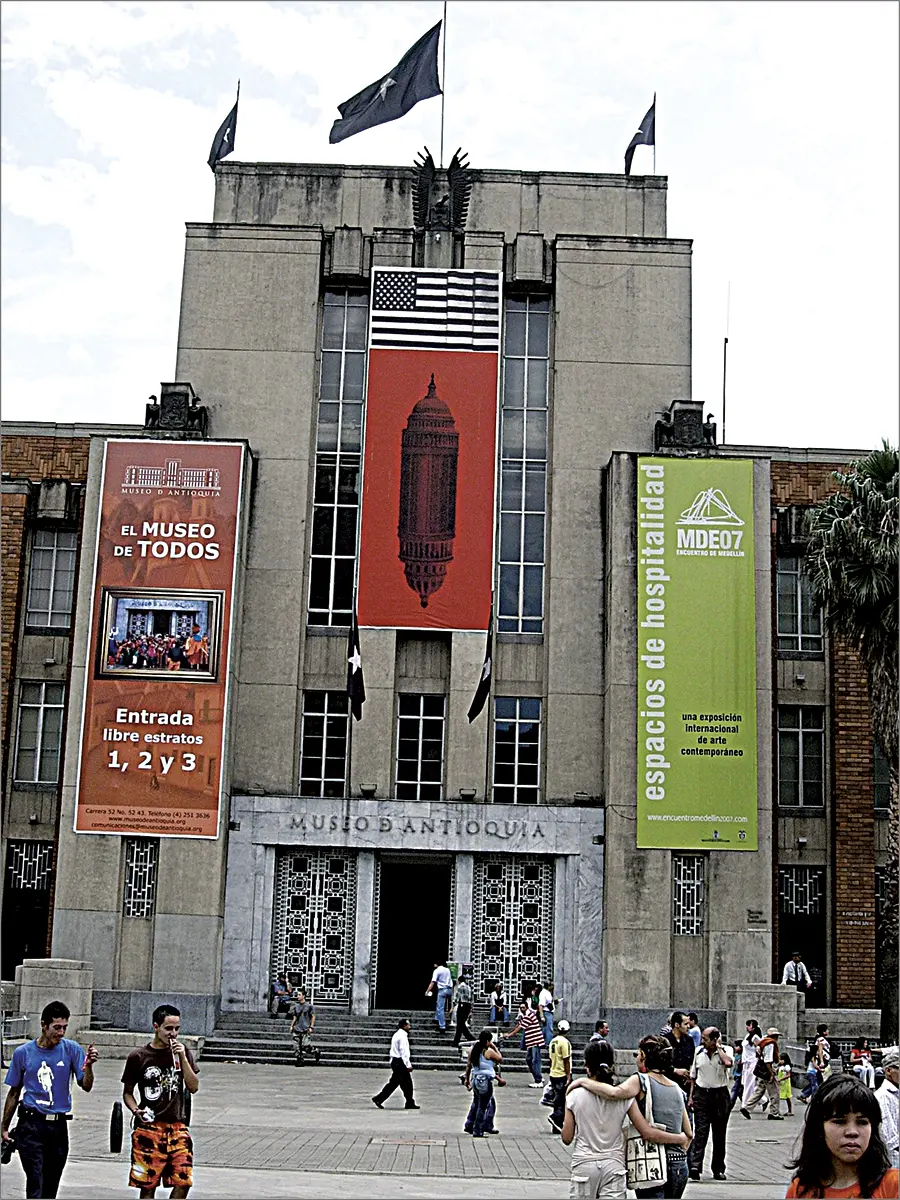
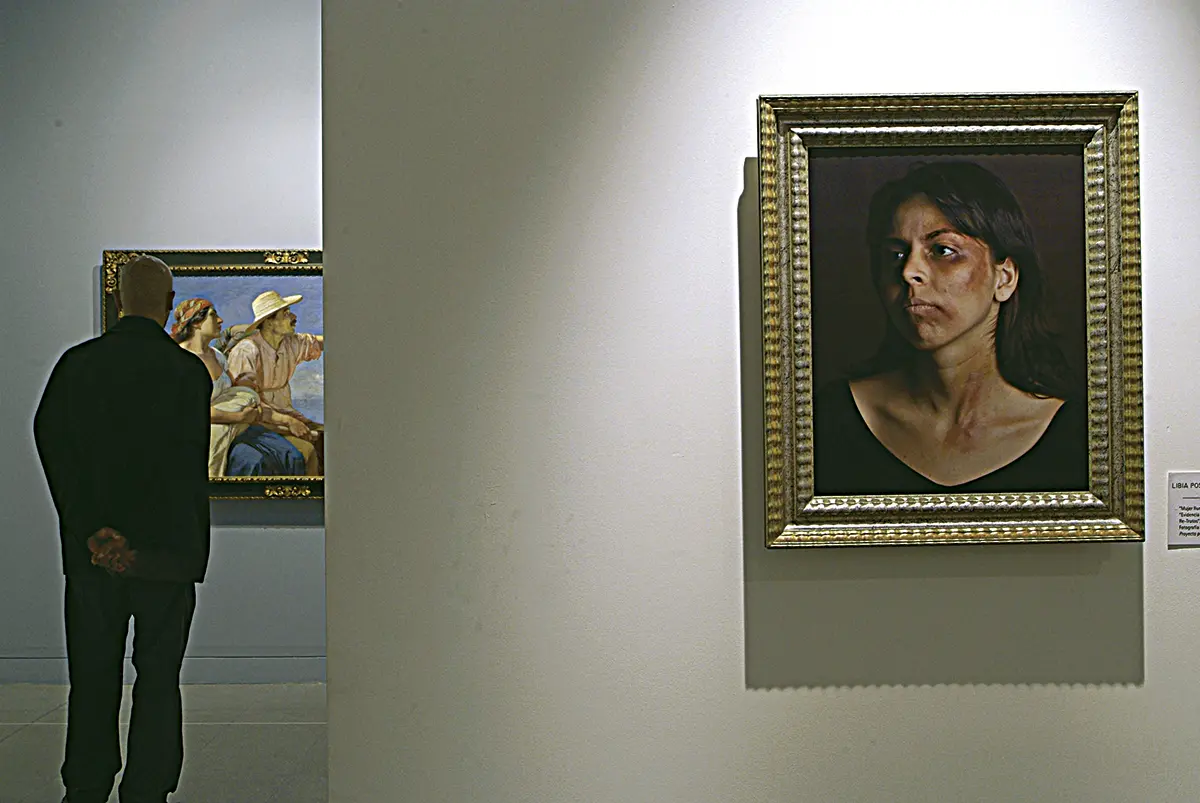
For the first exhibition in April, the city’s museums became the main stage, removing part of their permanent collections and making their temporary galleries available for site-specific projects presented by the biennial artists. The Museo de Antioquia was populated with proposals that dialogued with its nineteenth- and twentieth-century art and history collection, like the local artist Libia Posada’s intelligent and ironic Evidencias clínicas. Posada subtly placed within the existing gallery design portraits of women who had been victimized with different kinds of violence, a forceful presentation of the situation of women in society; this estrangement was achieved from rigorous field research and refined photographic work. Jaime Ayala appropriated the museum’s main façade to deploy his sinister-looking black flags in an ironic allusion to the U.S. flag, accompanied by a large banner with the image of a two-headed nuclear device: one head was the Capitol building in Washington D.C. and the other was the dome of its equivalent building in Havana.
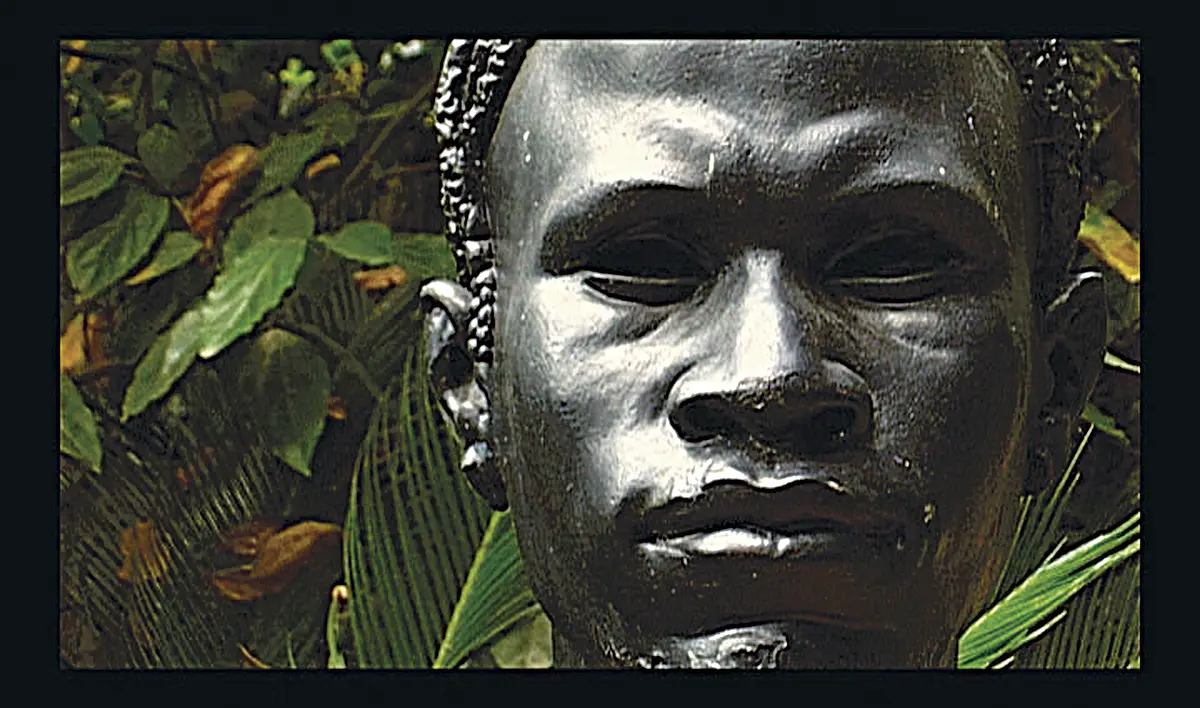
In the first floor galleries, one found Juan Manuel Echavarría’s moving video Bocas de ceniza, which raises awareness about absurd situations of hostility and cruelty that arise in Colombia as a consequence of its armed conflict. This was well articulated in relation to the two survey shows on the work of Cildo Meireles and Adolfo Bernal. Between these was an installation with the Mexican artist’s Erick Beltrán’s conceptual map titled ¿Qué es el discurso?
A historically resonant exhibition about the origins and processes of conceptual art in Colombia was presented on the second floor, curated by the renowned artist Álvaro Barrios. This was echoed in a show by Bernardo Ortiz titled Following Piece, with adapted, works by artists from his personal pantheon such as Daniel Buren, On Kawara, Piero Manzoni, Sigmar Polke, Hans Haacke, among others. Following the show’s trajectory, one also found works by Cuba’s David Palacios, as well as Miguel Ángel Rojas and Nicolás Consuegra from Colombia.
Presiding over the space at the Museo de Arte Moderno was the projection of videos by Antoni Muntadas, to whom the entire fourth-floor gallery was devoted. The young Bogotá artist Mateo López’s workshop was installed on the intermediate level, minutely reproducing López’s workspace with objects in pencil and perfectly put together in a poetic interplay with the interstices of simulacra. On the first floor, there was a remembrance of the First Iberian-American Colloquium on Non-Objectual and Urban Art of 1981, held at this same museum, which had great ideological importance for the city in the debate over Situationism, ephemeral proposals, and conceptual art and its variants in Latin America. This colloquium, besides being a landmark in Latin American art debates of the 1970s and 1980s, with the presence of important artists and theoreticians such as Ana Mendieta, Carl Andre, Cildo Meireles, Pedro Therán, Felipe Ehrenberg, and Juan Acha was taken by the co-curators as one of their symbolic referents and catalysts for contemporary art in Colombia. Many of the dynamics and processes developed by the artists of that generation and later ones, including the current one, are owed to this colloquium.
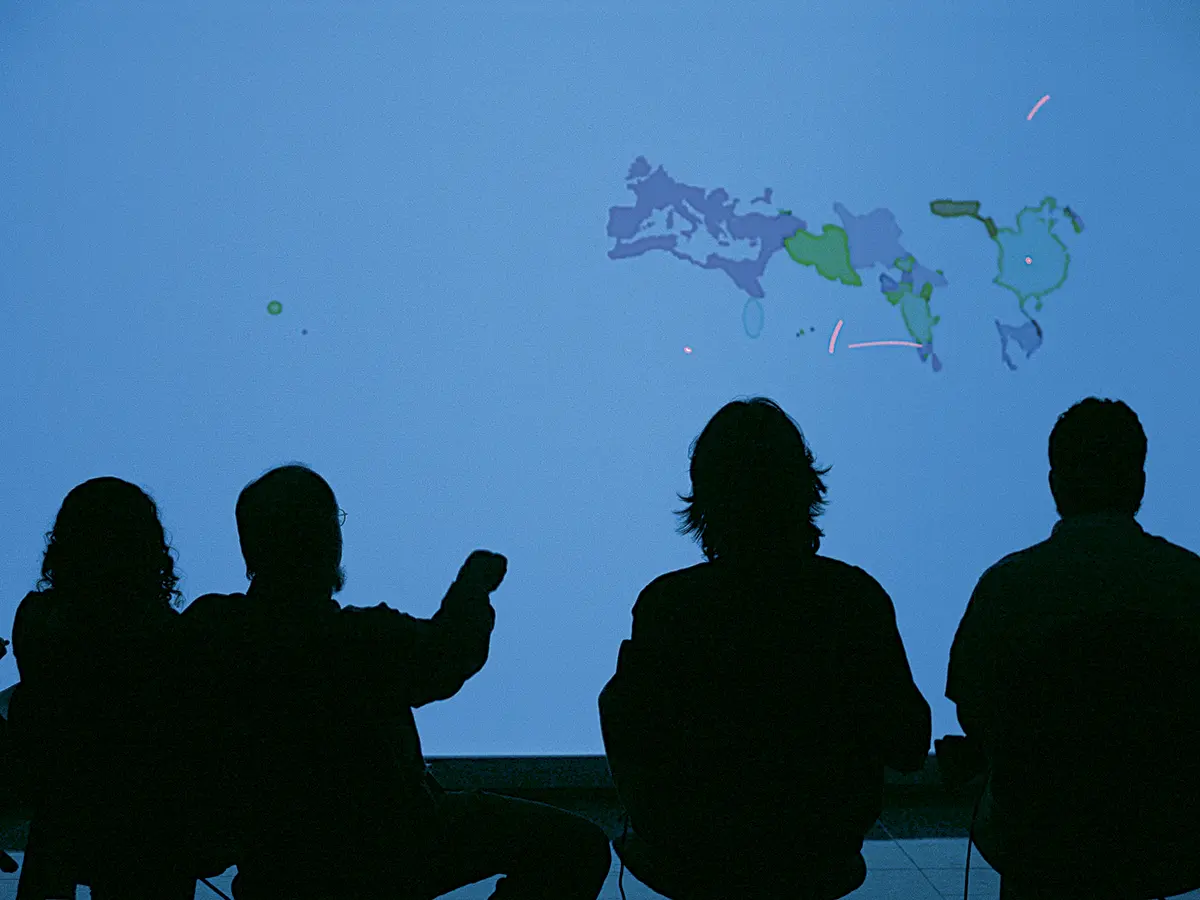
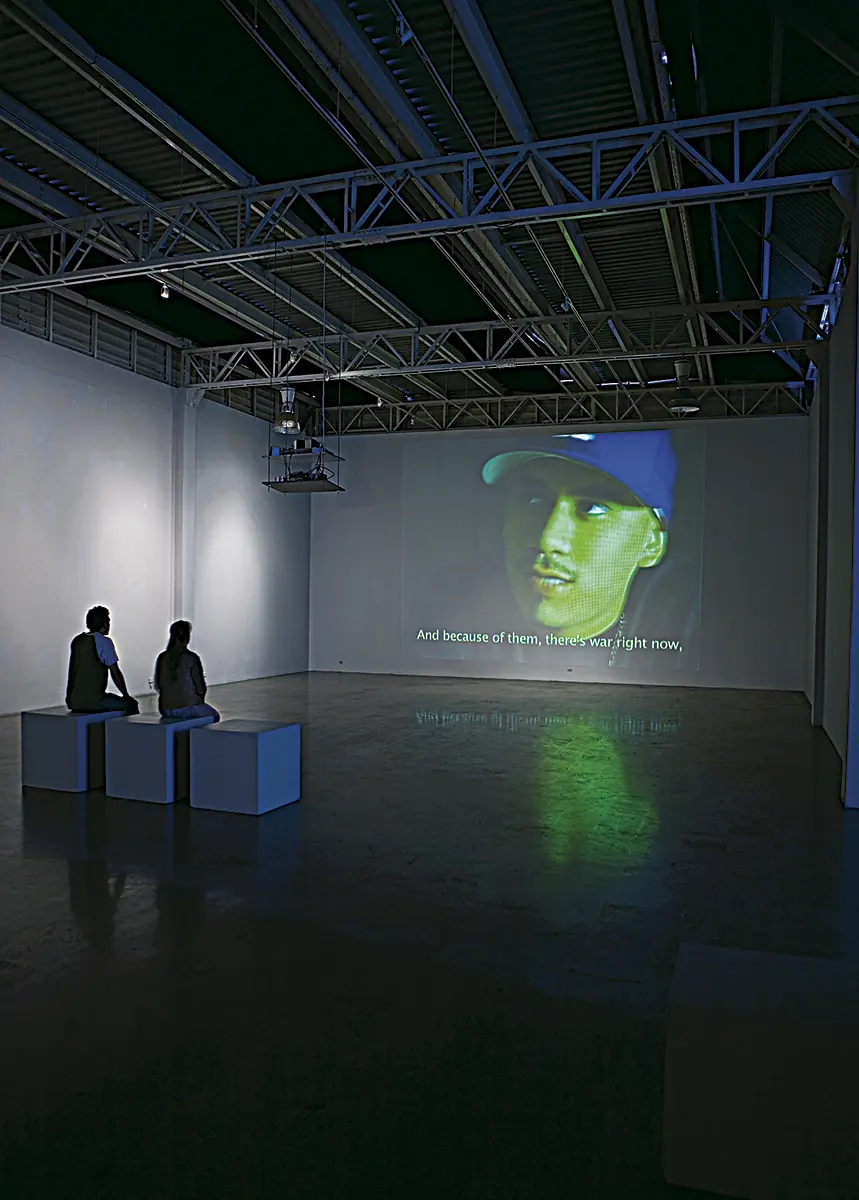
Other artists displayed their works in galleries around the city. Carla Zacagnini from Argentina, Federico Guzmán from Spain, and Alberto Baraya, Milena Bonilla, and Liliana Angulo from Colombia were featured at the Museo Universitario, a traditional space for these events as it was the site for the first Biennials in the 1960s. Meanwhile, the Centro de Artes of the EAFIT University, on the city’s south side, presented two video works by Cristina Lucas and Vasco Araujo that was truly moving and intelligently reflected the theme of xenophilia/xenophobia. Lucas, who is from Spain, directed the performance event she recently presented at the Istanbul Biennial, titled Pantone; her work become one of the most remarked upon among the public, who encountered a culminating babble of overlapping historians’ voices that increased in volume while they described the territorial and political transformations from the earliest civilizations to the current time. Vasco Araujo’s video O’ Jardim was projected in an adjacent gallery; it was an immensely poetic work personified by the dialogue between the bronze statues in the Lisbon Art Museum’s garden, based on texts by Homer that reveal, between the lines, the historical remnants of colonialism.
At the Centro Colombo Americano, the Slovene artist Marjetica Potrc showed a gallery installation titled The Great City of Medellín, which quasi-scientifically interpreted the processes undergone by the city in the recent past to publicize ecologically philosophical ideas about the future the potential of the place and its inhabitants.
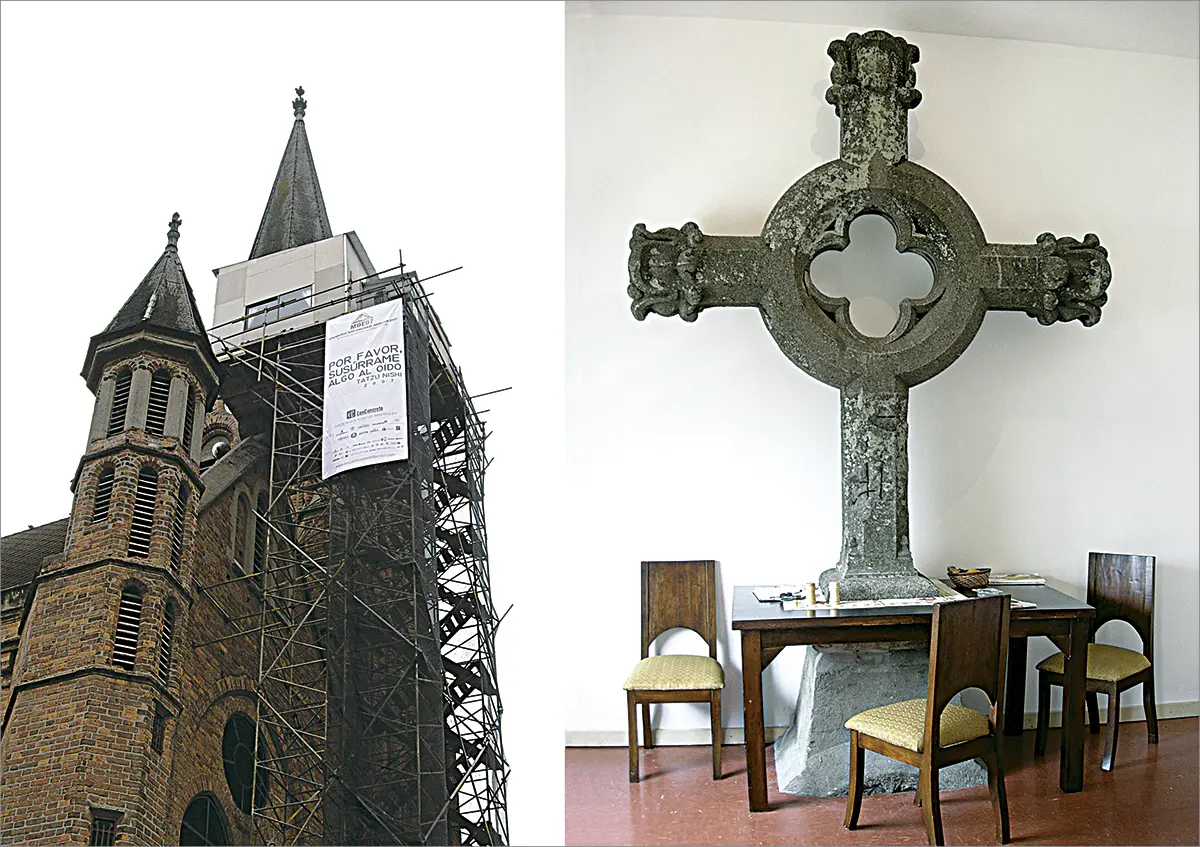
A second exhibition itinerary was programmed for late May, with new shows and the activation of different galleries and public spaces in the city. This segment also featured the important presence of the Cologne-based Japanese artist Tatzu Nishi, who installed two intervention projects in different part of the city; these projects were warmly received by the public and became “pilgrimage sites.” Por favor, susúrrame algo al oído was a site-specific project that appropriated one of the towers of the Sacred Heart church in the downtown sector of Barrio Triste; a scaffolding over thirty-meters-high invited viewers to ascend and inhabit an interior space that reproduced the scale and furnishings of a typical Colombian home, with the church’s ornamental cross as a “decoration” for the dinner table. Candelabro was a monumental lamp built of street lamps placed upside down and suspended in the middle of two broad avenues. Nishi’s works were unforgettable for those who experienced them. Two other significant works in this urban circuit were the interventions Entre.Paréntesis, especially designed for Medellín by Cildo Meireles, and Todos somos indeseables (We are all undesirable), by Fernando Sánchez Castillo (from Spain), a neon sign installed in the upper part of a prestigious coffeehouse in the city’s red-light district, which caused all manner of comments and debates and had to be uninstalled and reinstalled several times.
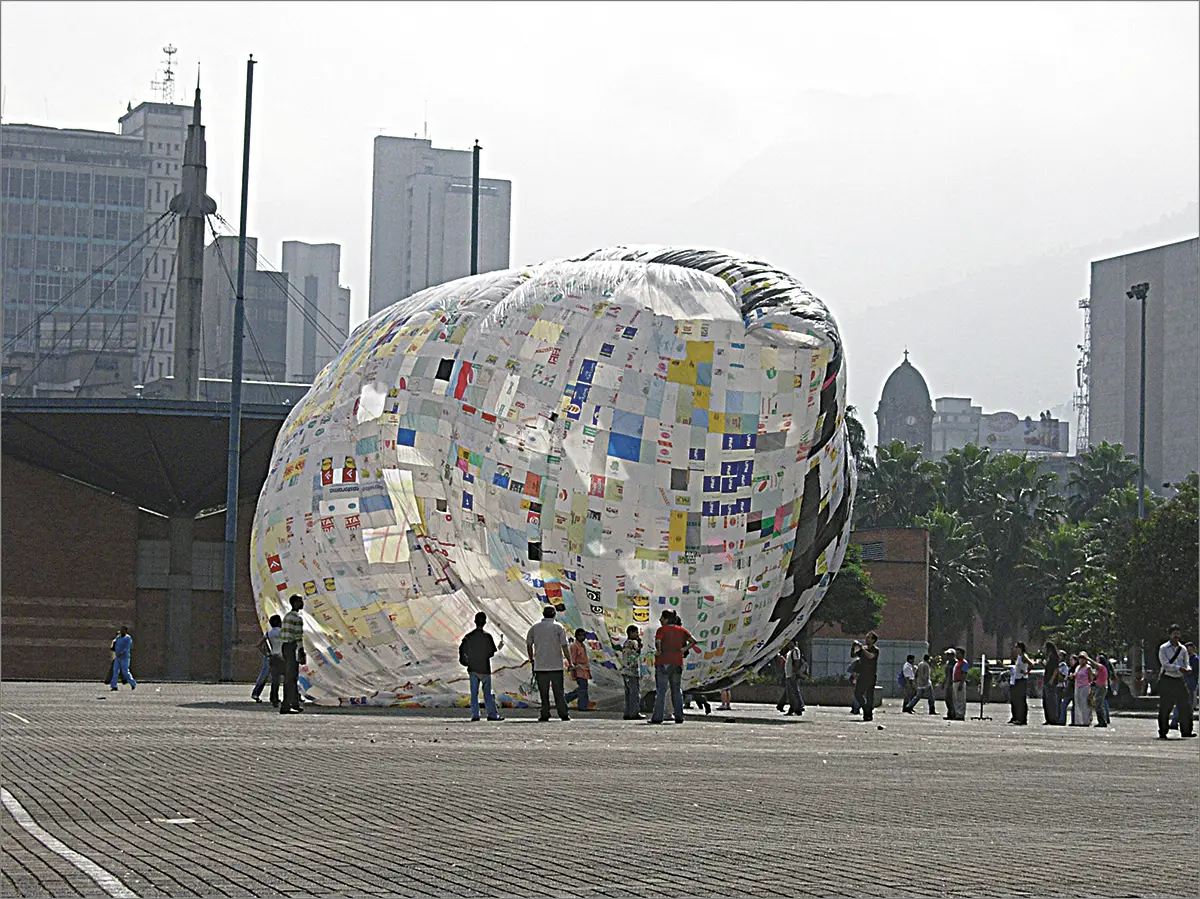
Argentina’s Tomás Sarraceno developed an interesting workshop process with young artists and aerostatic specialists, with whom he built a giant balloon with recycled plastic bags from various countries where he has developed the same process, like the United Arab Emirates, Italy, and Germany. These, with the bags gathered locally, flew playfully over Medellín’s San Antonio Park. Another public-space experience that will be warmly remembered was the Irish artist Dennis McNulty’s audio event Concierto al atardecer (Concert for the late one) in one of the new library parks, which effected a contemplative mood, making it possible for people to encounter themselves and especially the city.
One must highlight the projects conceived specifically for this event by artists like Ana Claudia Múnera and Gloria Posadas, the amiable and generous space of the Casa del Encuentro by Canada’s Instant Coffee Collective, the guest publications Point d’ironie, Pulgar, Asterisco, Valdez, and Robot, the presence of essential and controversial artists like Rodrigo Bueno and Santiago Cirugeda, and, lastly, an unforgettable intervention by the Mexican artist Héctor Zamora. Known for his parasitic structures on the architecture of museums, Zamora transformed a decayed area of the city’s downtown that neighbors the Museo de Antioquia and is populated by beggars, prostitutes, and thieves. In the Proyecto Bar las Divas: Sustracción-adición, Zamora “stole” from the museum the office for the coordination of the event in order to open a temporary bar managed by a social-services foundation serving that area’s population. The tension created by Zamora and the estrangement both of the visiting public in Casa del Encuentro and the area’s inhabitants created an art-based zone of necessary distension and interrogation. As Nicolás Bourriaud points out in his aesthetic of the relational, every work of art produces a model of society, which it transfers to the realm of the real or could be translated into it.2 So, when faced with aesthetic production, the question arises: does this work empower me for dialogue? Could I exist, and how, in the space this work defines?
In terms of curatorial content and design, the exhibitions represented different stages in the production of each of the invited artists. Generous displays allowed viewers to enjoy the works and enabled an appreciation of new contemporary languages in their multi-media or post-media pluralism.3 The exhibits approached the expanded concept of hospitality through such diverse media as painting, drawing, graphic arts, photography, sculpture, installation, video, performances, interventions with site-specific projects, and community-participation works.
The professional, high-quality staging proposed by the curatorial team with the support of the other work teams at the Encuentro and the other host institutions were equal in caliber to similar events at the international level. Everything was ready, without hiccups or errors on the programmed days. The event’s dynamics and the massive presence of the public—over 220,000 visitors—to the different sites and exhibition spaces confirmed the interest in the art scene among large portions of the population.
Once content and form were digested, the remaining feeling was that the goal of transforming the local scene and conditioning a platform for debate and a permanent connection to the world was successfully achieved in Medellín. Casa del Encuentro is without a doubt the most tangible contribution of MDE07 to the city. This space was a meeting point and a platform for contemporary artistic languages based on a welcoming, amiable, and domestic site for the art world and for the general public. Casa del Encuentro will remain as an autonomous entity with a program of curators-in-residence, and it will become an instrument in the revitalization of the local scene and the maintenance of what has been achieved in the six months of activity of the Encuentro.
José Roca’s text summarizes the intention of making up for wasted time not only in Medellín but also in international art events in Colombia: “In 1981, the conceptual artist Adolfo Bernal launched through the radio waves a Morse-code call on the occasion of the First Non-Objectual Art Colloquium: MDE S.O.S, using the international code for the city and a cry for help. The answer arrives a quarter of a century later, only that help comes from within. From the evidence, Medellín has found itself, and we with it.”
NOTES
1. José Roca, from concept texts prior to the event.
2. Nicolás Bourriaud, Estética Relacional, 2004.
3. The concept of post-media, or post-media art, refers to a contemporary situation in which artists feel sufficient freedom to move within the vast array of technical media at their disposal. In today’s art, the figure of the artist, like that of the individual in general, is mobile and nomadic.
CARLOS URIBE
Artist and historian. He worked on the MDE07 team as its General Coordinator and is an independent curator.