
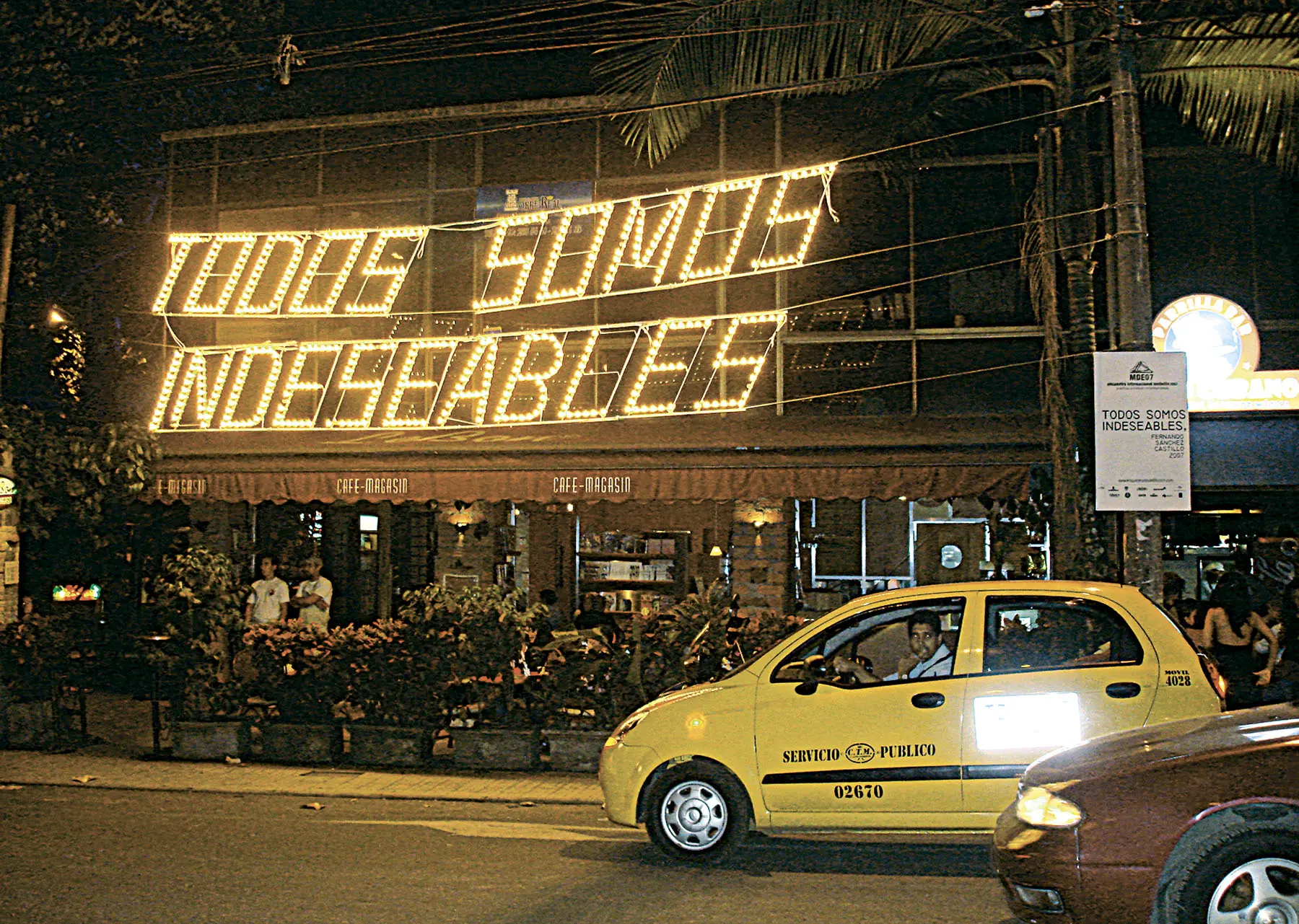
The MDE07 event was organized to return the city to the international art reputation it had achieved through the so-called Medellín Biennials, which assembled a large number of artists and critics from the names and trends in vogue and subjected them to necessary critical assessment. The repercussions extend to this day: in many cases, the positions articulated then retain their validity, have developed in interesting ways, or have led toward new proposals.
Logically, the event was postulated under the point of view of current aesthetic experiences and an open debate of the museum’s function, the spatiality based on the works’ new formal proposals, and concepts about urban space, history and memory, and the archive and sentimentality. Where and in what direction has local, young art moved? Taking the event out of the museum and articulating it in the spaces of a city that is emerging from decades of dark and terrible violence was important because it demanded a revision of so-called urban cartographies where speculation and political power determined the violence.
It was assumed that the unnamed spaces, where thousands of innocent young people, children, and mothers had died, opened a range of questions: was there to be a monument or funerary memorial? How to reformulate these painful histories from the street? As a new chronicle or simple, sentimental testimony? Hasn’t this been the challenge faced by Jeff Wall, Lee Friedlander, and Gregory Crewdson?
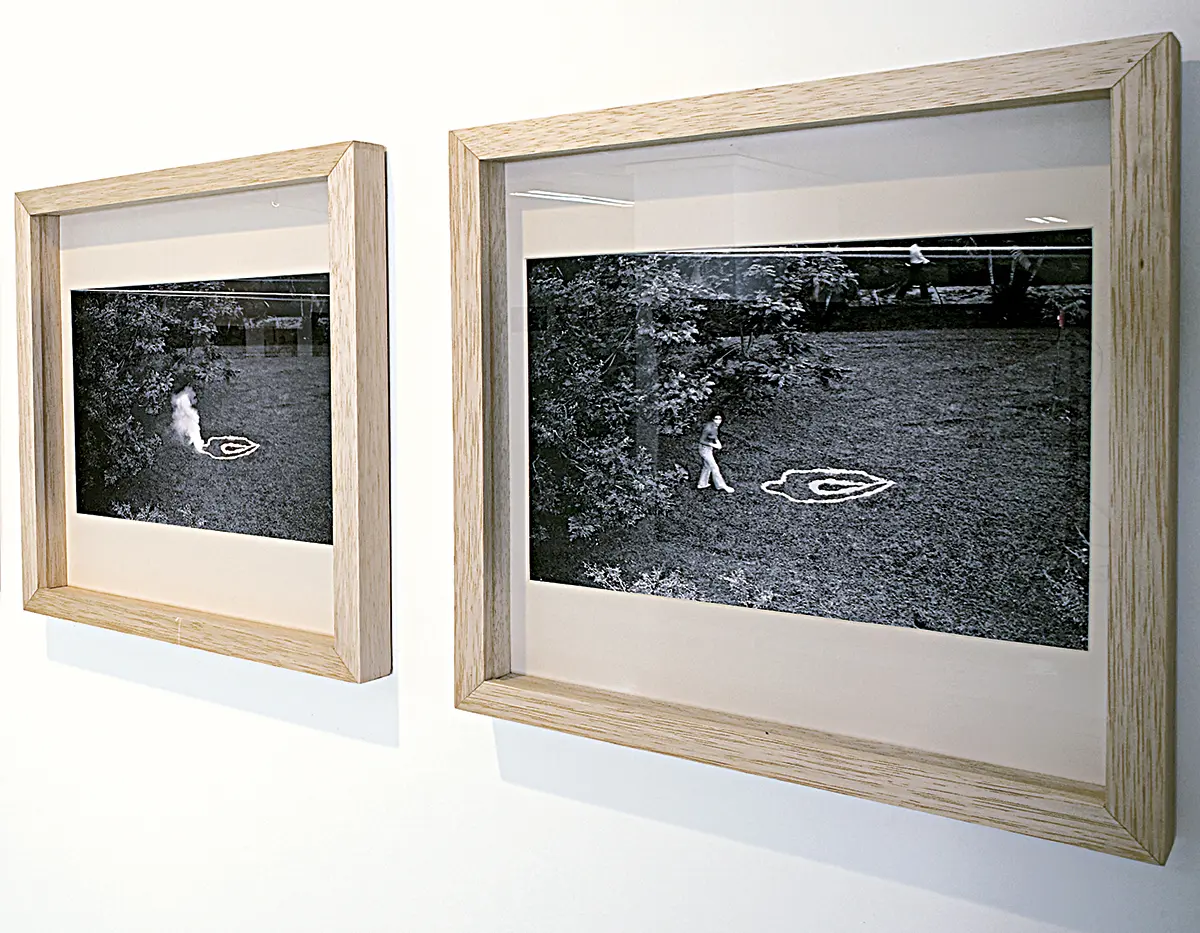
Official history archives names and data, reducing an individual death to a mere number, but memory links an event with what makes it human: the shakiness of a gaze or a pair of hands, the eyes searching for the open sky. Memory connects theories, which have become fossilized in certain institutions and need an infusion of necessary moral passion, to land on a specific reality.
The goal of the Medellín event sites was not to transfer concepts from other situations, ones that have become formulaic from intellectual laziness. It was assumed that this experience required the presence of a kind of artist capable of understanding that the artistic seen as an abstract aesthetic is a trap; what is important is the ability to create visual statements through new languages, the realities that have remained outside the official aesthetic map.
Which codes and icons of what reality should be portrayed? The event was not reduced to simply the present the habitual names from every biennial, and it demanded that artists were capable of accepting this challenge, where a direct immersion in the process necessarily modifies one’s points of view about the material composing that reality.
When experience is lacking, there is a danger in falling into naiveté, into enthusiasm devoid of rigorous support, into spontaneity for the sake of spontaneity. Above all, there is the danger of confusing supposed aesthetic freedom with believing that anything is art.
Positing the difference between art and craft using some popular collectives and a construction worker asked to deal with typical and topical images can result in nothing but serious mistakes; they cause in the artisan a confusion that, rather than beneficial, can be perverse in its outcome. The interventions of Daniel Buren take place with complete humility; his colorist gesture starts with the recognition of the colors already present at the site, of the color codes that identify a given urban conglomeration without the need for anthropological explanations. In Medellín, the absence of humility and of respect for the sites, for the value of the colors present there, and for the visual practices of urban groups, deprived most of the proposals of valid arguments to resignify a space.
The work of Adolfo Bernal and Antonio Caro lives under the hegemony of the conceptual art of twenty years ago. The question about walls and localizations turned on them under Kevin Lynch’s wise inquiry: to what time does this place belong? If yesterday we were at war, how will the construction of the meanings of peace take place? Peace is construction, not deconstruction. Besides, throughout the current decade, it has been demonstrated that conceptualism has become a product for the new academies.
Cildo Meireles, who had been asked to help clarify many of these questions did not come to Medellín. Marjetica Potrc and Tomás Saraceno, frequent denizens of most biennials, presented interesting but antiseptic proposals, as did Alberto Baraya, Tatzu Nishi, and Maria Angélica Medina.
Discounting the general public, the event was formulated as a series of discussions and seminars for designers, artists, and some architects and scientists, with art students and general university students as their interlocutors. One exhibition presented a graphic reminiscence of the first Non-Objectual Art Encounter, and a selection of works acquired by the firms that were sponsors at the time were also exhibited. The small number of local artists selected by the curators José Ignacio Roca, María Inés Rodríguez, Paula Cohen, Jaime Cerón, and Oscar Muñoz provoked a reaction; it was thought that the curators were ignorant of the process of art in the city.
Expecting a traditional biennial with exhibitions of more traditional works of art, the public reacted negatively to a provocative and playful event that lacked a pedagogical approach to the public space. The promised economic contributions of many companies did not come through in the end, which unfortunately trimmed the announced program.
DARÍO RUIZ GÓMEZ
Essayist, university professor, and art critic.