
Upon entering Past Prosperities, a show presented August 16th through September 9th at the Fototeca de Cuba, one experienced a dense silence. The oppressive atmosphere emanated from two groups of photographs by the Cuban artist Ricardo G. Elías and the Canadian Richard (Dick) Groot. The groups encouraged an intense dialogue between the works, and the two artists had clearly delineated the arguments for such conjunction.
Elías’s interest in history focused a few years ago on an investigation of the impact of the sugar industry on the development of the Cuban nation. The island’s wealth and weakness—what could be seen as its strength in more than one sense and also as its frailty—is present in this photographer’s sensibility. Already in 2005, Elías had made series El exceso de azúcar produce amargura I, an unhurried look at a landscape that revealed the end of several sugar processing plants, shown in panoramic vistas after their dismantling. The 2002 government decision to restructure Cuba’s sugar industry left a political, economic, and social mark that was traumatic for the life of communities where agro-industry was the main source of employment and the axis around which life was organized. These earlier works by Elías, which analyzed a Third World economy as if to seek the best reflection or diagnosis for his times was echoed by Groot’s works in the exhibition that investigated the effects of globalization on the transformations of the industrialized world, the so-called First World.
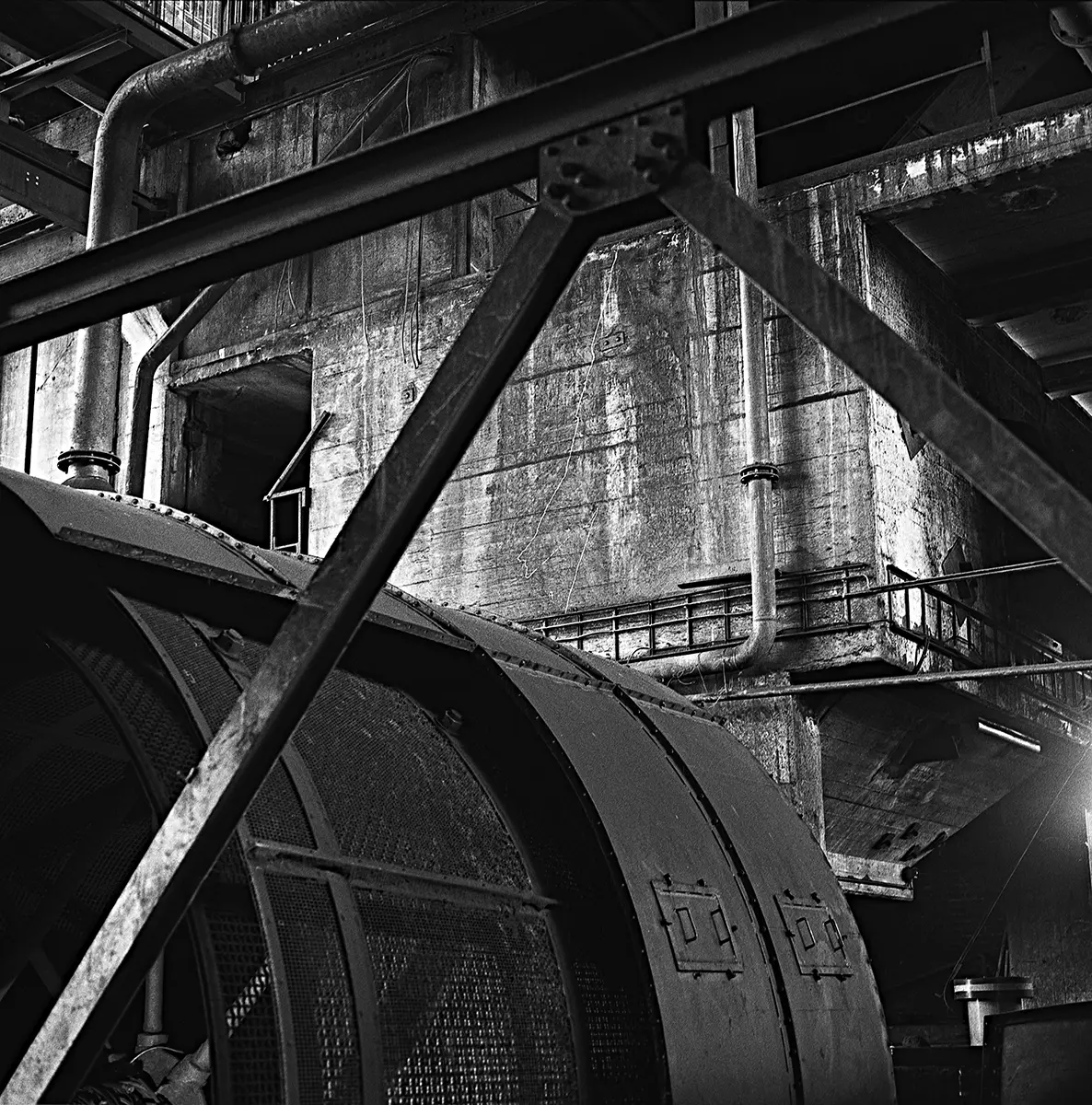
Groot’s eighteen black-and-white images referred to the death of two factories: the German coal processing plant named in Zollverein Schaht #12 and the Canadian textile plant named in Nova Scotia Textiles Limited. The former had begun production in the mid-nineteenth century, an example of human ingenuity and a sign of the industrial revolution. Groot’s vision traversed the plant’s architecture, the phantasm-like context, and the abandoned interiors severed from their original purposes as dusty hallways, coal grinders, conveyor belts, and tracks of what had been the world’s most efficient coal mine. The works depicting the Nova Scotian textile plant explored each space with a similar intensity and an incisive awareness of the fact that every family in the city where the factory was located suffered the effect of the plant’s gradual withering until its closing in 2005.
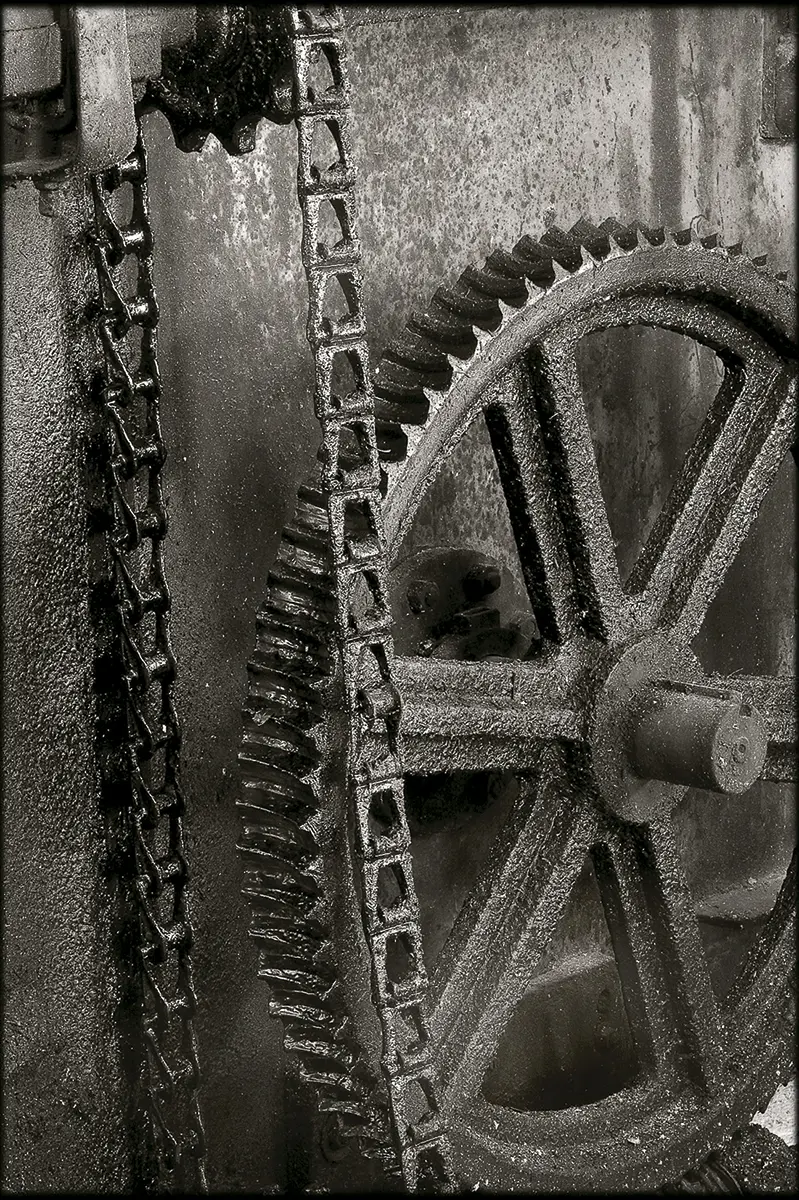
In this exhibition, Elías presented a sequence of fifteen sepia-tinged photographs. The sepia hue established a connection with a process that implies the significance of time, and it also alluded to the brown color that results from the processing of molasses, part of the cane’s transformation into refined sugar. His photos, from the series El exceso de azúcar produce amargura II, centered on details that reached into a sugar plant’s heart and soul. An image of a ruined locomotive referred to the prosperity of the past, followed by photographs that referred to decisive moments in the production process; the artist depicted the splendor of the machines, their engineering beauty, at a moment when the future of such an important industry is uncertain. Elías’s photographs captured sites that today are productive even as they coexist with spaces of inactivity. The traces of an earlier fortune are inscribed in a national history that cannot be comprehended without attention to the impact of the sugar industry. Implicit in Elías’s images was a strange sensuality that emerged from between the structures of iron, in the contrasts of light and shadow, in each view of the cane’s transformation. One could not remain indifferent to the warmth of those who are looking at something that they feel like their own.
Past Prosperities was a balance between two different realities that have points of equivalence. Present in this show was the desire to reveal the victims of the processes that were documented and witnessed by both artists in their photographs. Their voices were incorporated into the perspective represented by the photographic event, weighted by the overwhelming and dramatic absence of those who are the everyday viewers of these landscapes. This desire has sustained the two artists as a cardinal relationship, essence, and reason for these exercises in industrial archaeology.
CARIDAD BLANCO DE LA CRUZ