
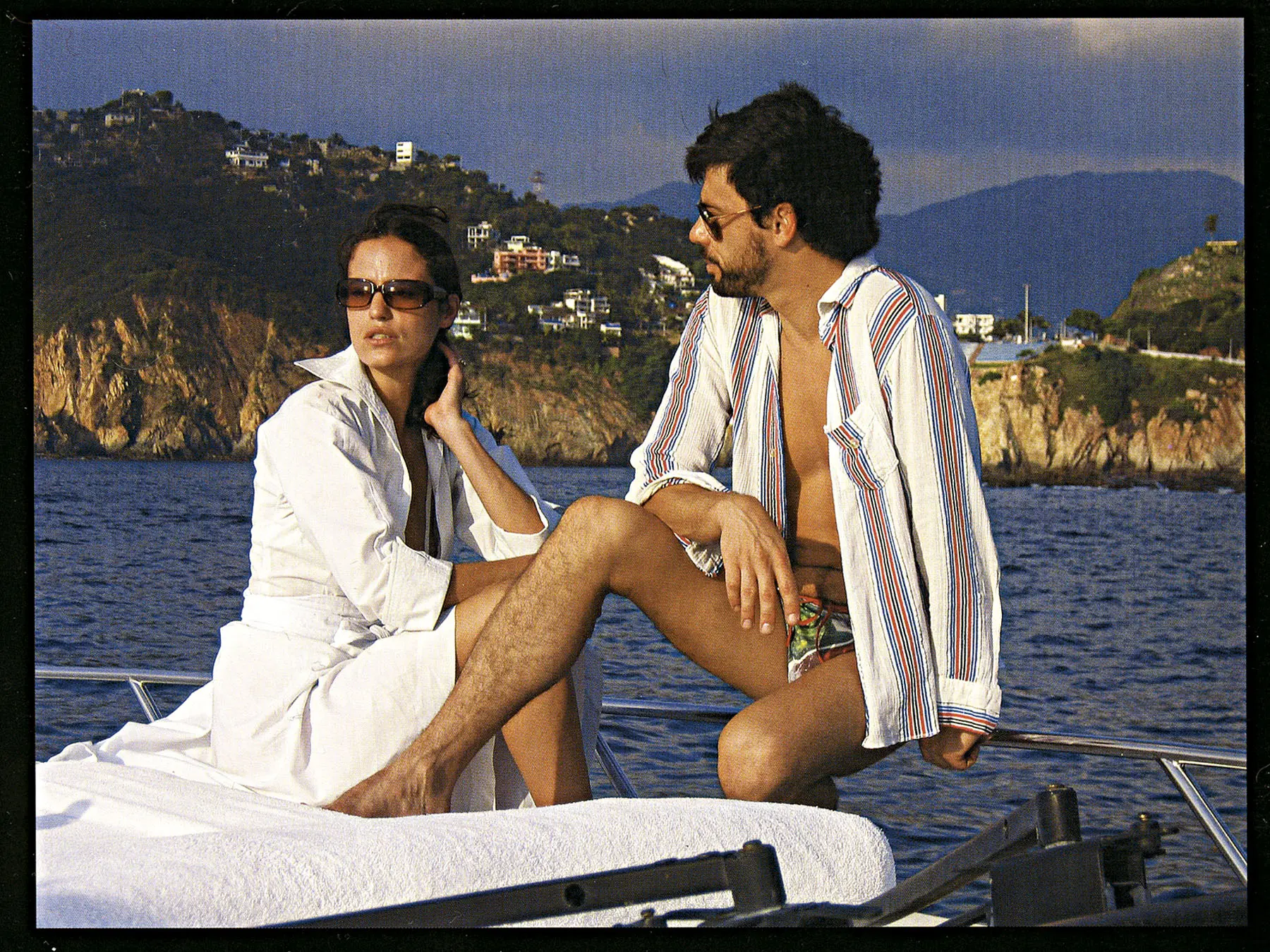
The Museum of Contemporary Art, Chicago, presented Escultura
Social (Social Sculpture): A New Generation of Art from Mexico City, an
exhibition of contemporary works by artists whose careers came to fruition in
the years from 1995 to 2005. Rather than focusing on a comprehensive survey of
contemporary art from Mexico City or attempting to carve out a definitive art
movement, the curator Julie Rodrigues Widholm brought together new works of
internationally recognized contemporary Mexican artists who have exhibited
abroad and have had an impact on the global contemporary art scene.
Unlike some other shows featuring the work of Mexican artists, this exhibit prided itself on showcasing work that is not easily categorized as Mexican. While Escultura Social was the museum’s first group exhibition of Mexican art, it did not attempt to articulate a singular Mexican identity or subject matter. Instead, the works on display shared the quality of being informed by events and art movements specific to the twentieth century. Widholm illustrated this idea with the aid of Joseph Beuys’s concept of “social sculpture,” which aimed to rediscover ways to answer the question “What is art?” All of the artists featured in Escultura Social demonstrated conceptual approaches to artmaking that went beyond the preciousness of a singular object and tackled larger issues related to social awareness and spectator engagement.

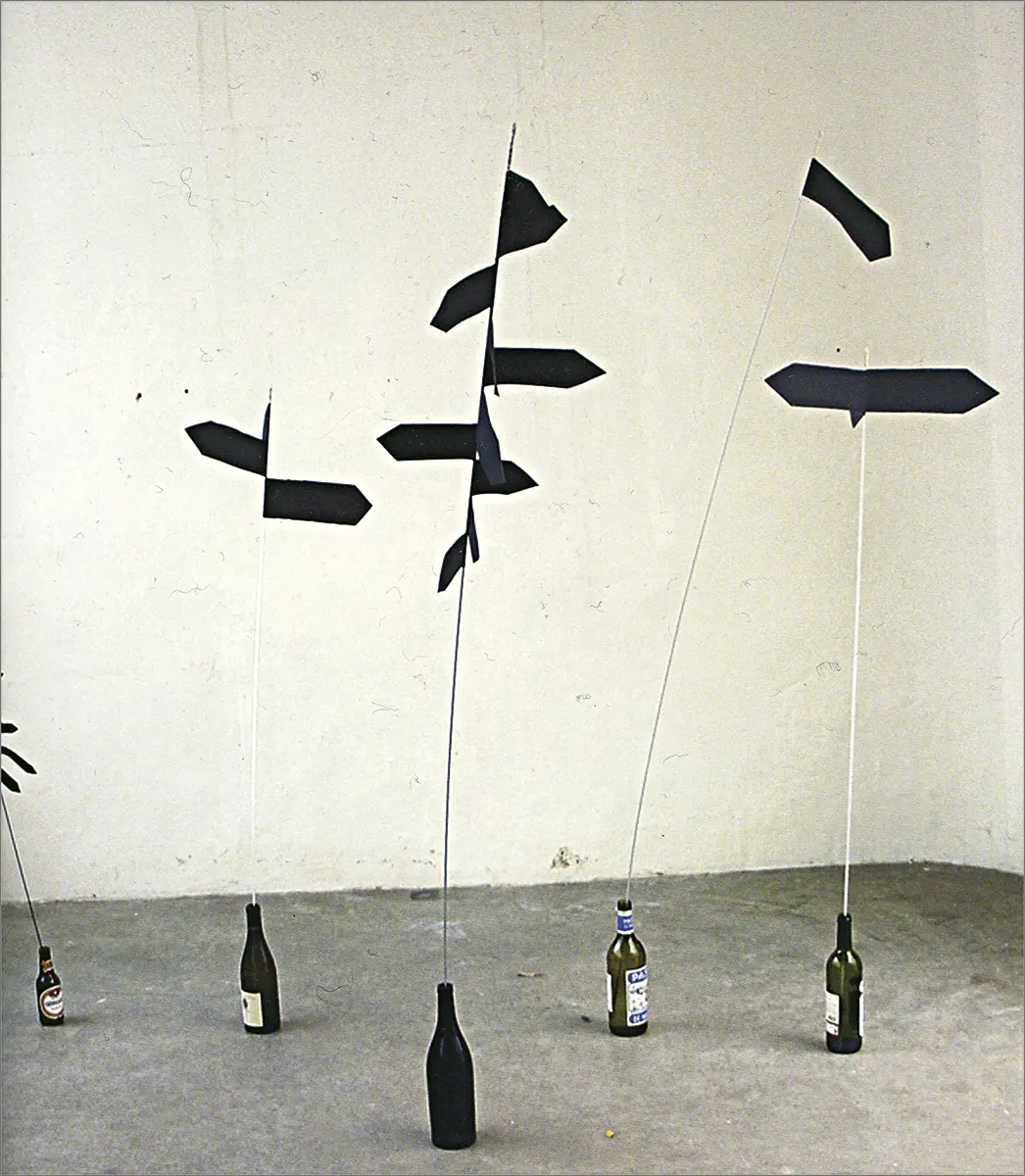
By grouping the art into four separately themed galleries, this exhibition sought to categorize the works into subjects that have an affinity with the work and practice of Beuys. The first gallery, Language as Text, featured works focused on the notion of word used as an image. The most literal representation of this idea was illustrated by Julieta Aranda’s Untitled (Coloring Book) from 2007. The text “fill in the squares with the indicated color” appeared above a ten-by-fourteen-foot vinyl grid of blank boxes; each box was flanked by terms such as Splish Splash, Nostalgia, or Bon Voyage, names of commercially available paint colors that the artist collected. Taking a cue from the 1970s Conceptualism and continuing along a similar theme as Aranda, Stefan Brüggemann’s forty-feet piece constructed from vinyl lettering (Explanations, 2002, courtesy of the Jumex Collection) used text to provoke imagery; the piece read “ALL MY IDEAS ARE IMPORTED / ALL MY PRODUCTS ARE EXPORTED / (ALL MY EXPLANATIONS ARE RUBBISH).” Conversely, Abraham Cruzvillegas provided the viewer with a wordless image: Rond Point (2006) was a mixed-media construction of bottles holding poles with pointed signs that bore no text, offering the projection of the viewer’s own directions onto the signs.
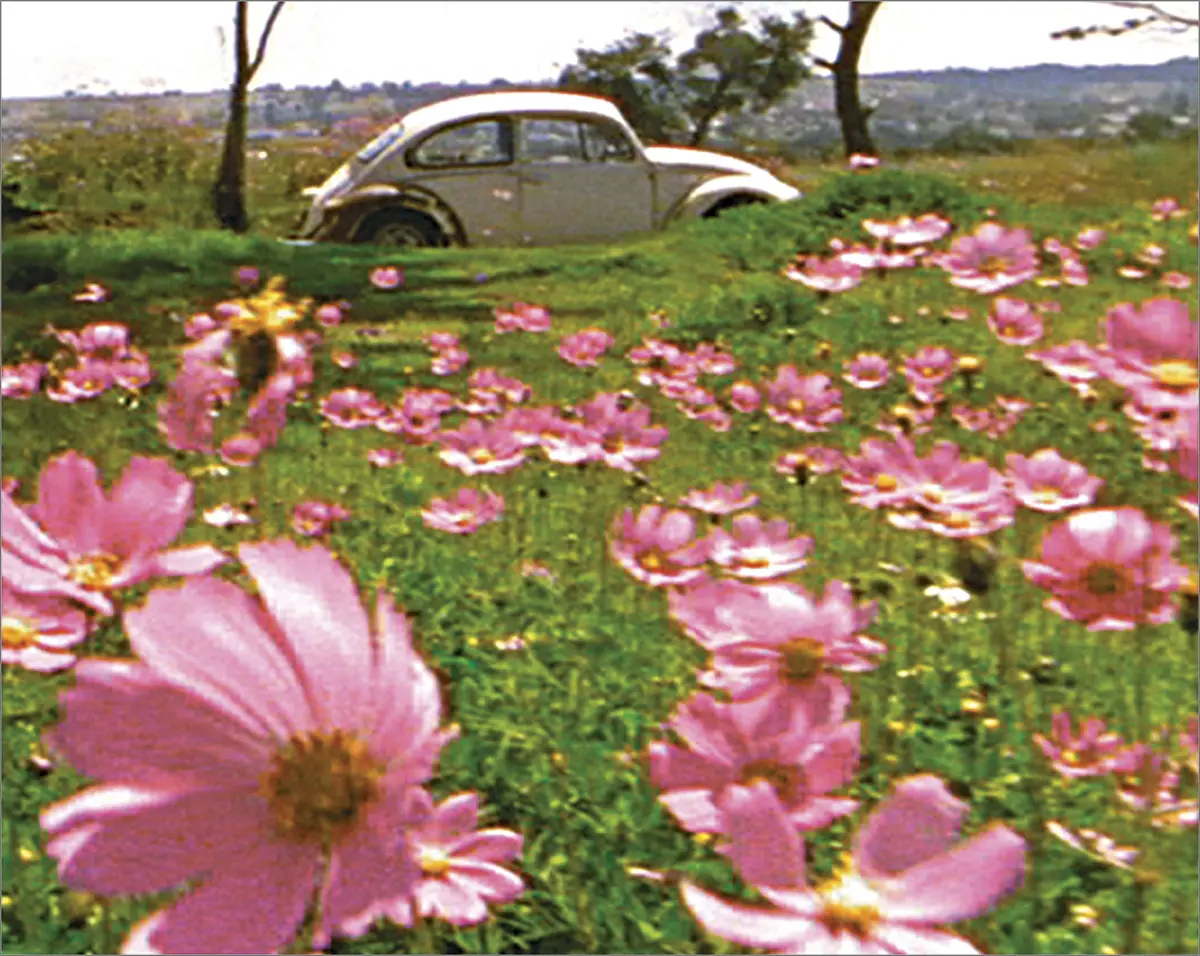
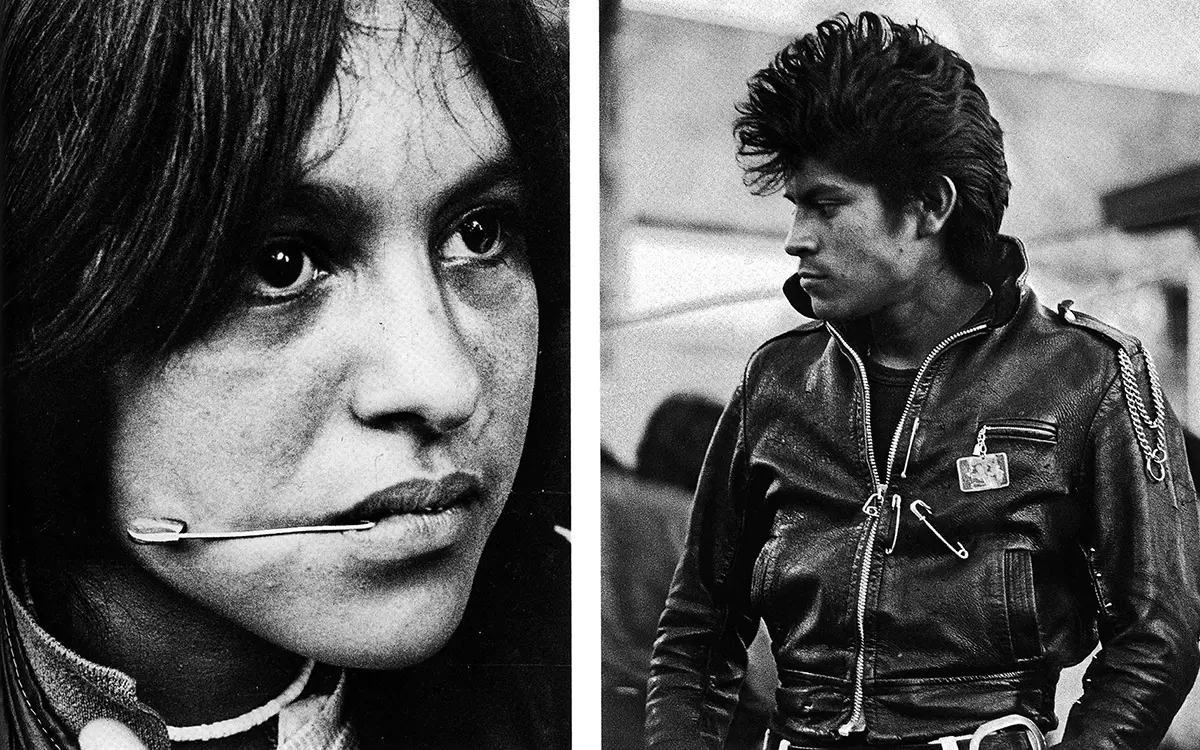
The notion of popular culture as a catalyst for art-making was explored in the section Popular Media and Performance with works that blurred the boundaries of art and popular media. The piece Sixteen (2004) by the artist-duo Los Super Elegantes did this in a music video directed by Miguel Calderón, which featured the two artists acting in a telenovela-inspired love story accompanied by their original pop song. To counter any candy-coated notions of pop culture, Escultura Social also featured works that asked the viewer to consider the similarity between reality and fantasy. Los guerreros (2007), by the artist collaborative Nuevos Ricos (of which Carlos Amorales is one of the three members), blatantly posed this juxtaposition, showing digital prints of film stills from the 1979 movie The Warriors along with archived newspaper photos of gangs in Mexico during the 1980s. Using an old, 16mm projection format, Damián Ortega’s Escarabajo (2005) featured one of the most common automobiles in Mexico—the Volkswagen Beetle, which is manufactured in Puebla—as a symbol of Mexico’s production and consumption. In the third installment of a video series, Escarabajo showed the car winding through the terrain until it met its demise and was buried in a hole in the ground.
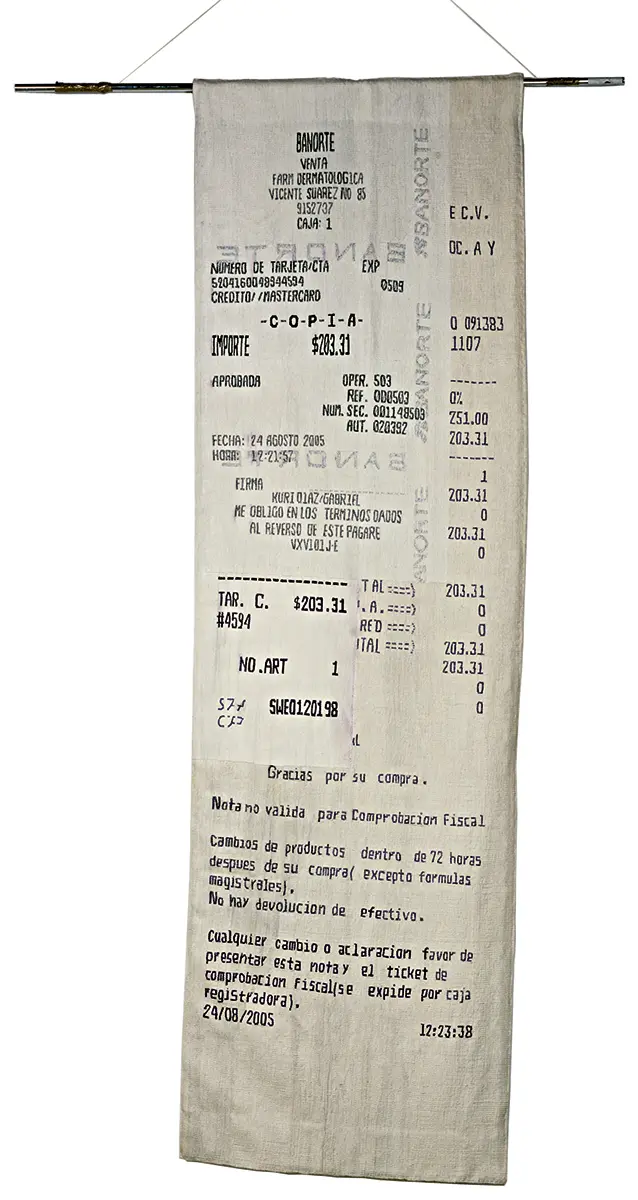
The section Transformation and Everyday Objects featured works that challenged an object’s value and reinterpreted an item’s function and meaning. Gabriel Kuri’s Untitled (Gobelino empalmado) (2006) took a store receipt and transformed it into a twelve-foot-long traditional Gobelin tapestry. The process of Gobelin hand weaving dates back to seventeenth-century France, and this technique for weaving tapestry continues in a single studio in Guadalajara. Kuri’s work meditated on the ideas of consumption and commodity without social commentary or factory pictorials; instead, the artist took an example of everyday ephemera and reinterpreted it as an object of historical significance.
The fourth gallery, Social Engagement, also considered the role of art as a mediator between people and between people and places, but in a looser manner. Pedro Reyes’s Leverage (2006) and Klein Bottle Capula (2007) required spectator participation and engagement, as both works functioned like objects installed at community playgrounds. Fernando Romero’s Model of Soumaya Museum (2007) demonstrated the architect’s formal experimentation with space in a structure designed to house the art of a private foundation.
Escultura Social: A New Generation of Art from Mexico City succeeded in bringing together the new work of contemporary Mexican artists who maintain their international status without falling back on Neo-Mexicanist imagery. The curator’s intention to gather artists who participate in a dialogue centered on twentieth-century art was clearly visible. A relationship between a single work to the legacy of Joseph Beuys, however, was not as easily gleaned.
BETH MARRIER