
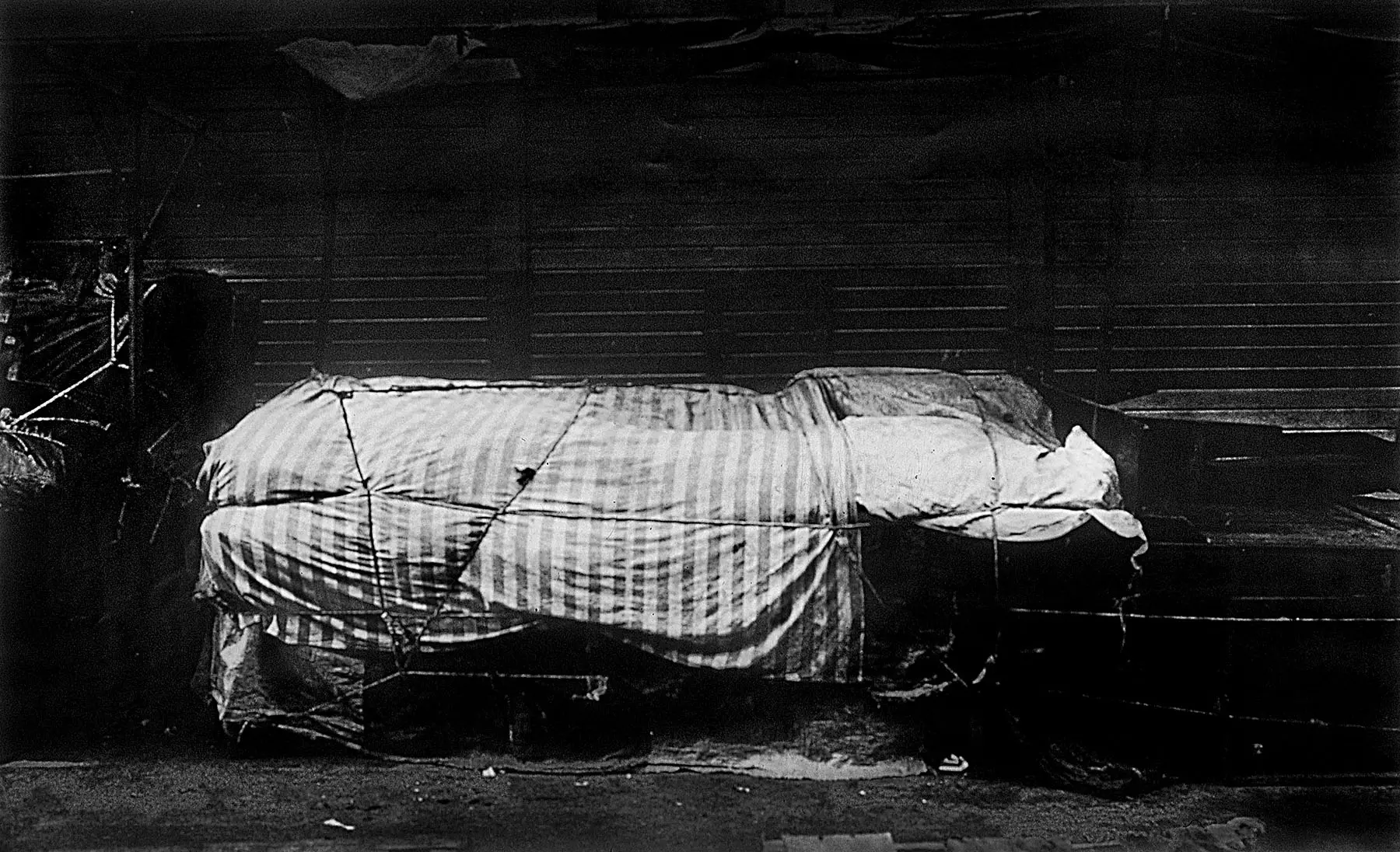
In 2008, several tributes —among them one
at Boston’s Rockefeller Center, in collaboration with Harvard University— will
force a reconsideration, from different perspectives, of Fernell Franco’s
(1942-2006) proposal in photography.
Although Fernell Franco was well known as one of Colombia’s best photographers and a master of camera- and laboratory-related technical matters, the first significant show of the work he quietly carried out in parallel to his commercial activities (Fernell Franco, Otro documento, 2004) took many by surprise with the fact that such an important oeuvre had remained locked inside the artist’s study almost until his death. Franco’s shyness and extreme modesty was contributing factors, but so was the dearth of philosophical and analytical depth in Colombia when it comes to judging photography’s artistic value, and even its technical aspects.
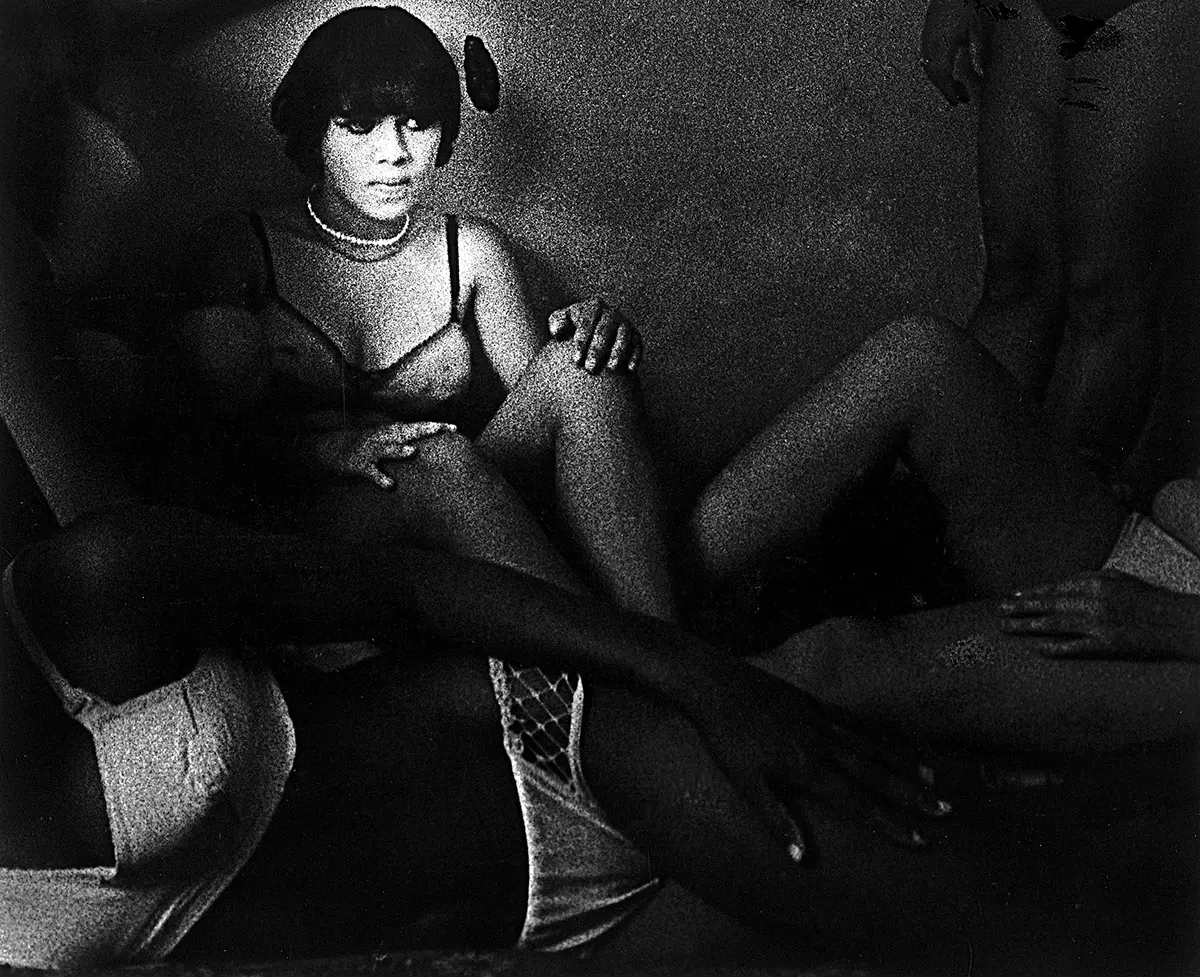
Fernell Franco understood photographic images well beyond their concrete possibilities, in the most complex and abstract agent generating them, which is light, and for this reason, his proposal demands attentive and penetrating study in order to be comprehended. From that standpoint, Fernell Franco built the spectral feeling that traverses his work.
Many reasons lie behind this level of understanding reached by Fernell Franco, which positioned him as the first to deepen the use of photography beyond the formal and the matteric in Colombia, and perhaps as one of Latin America’s most lucid photographers.
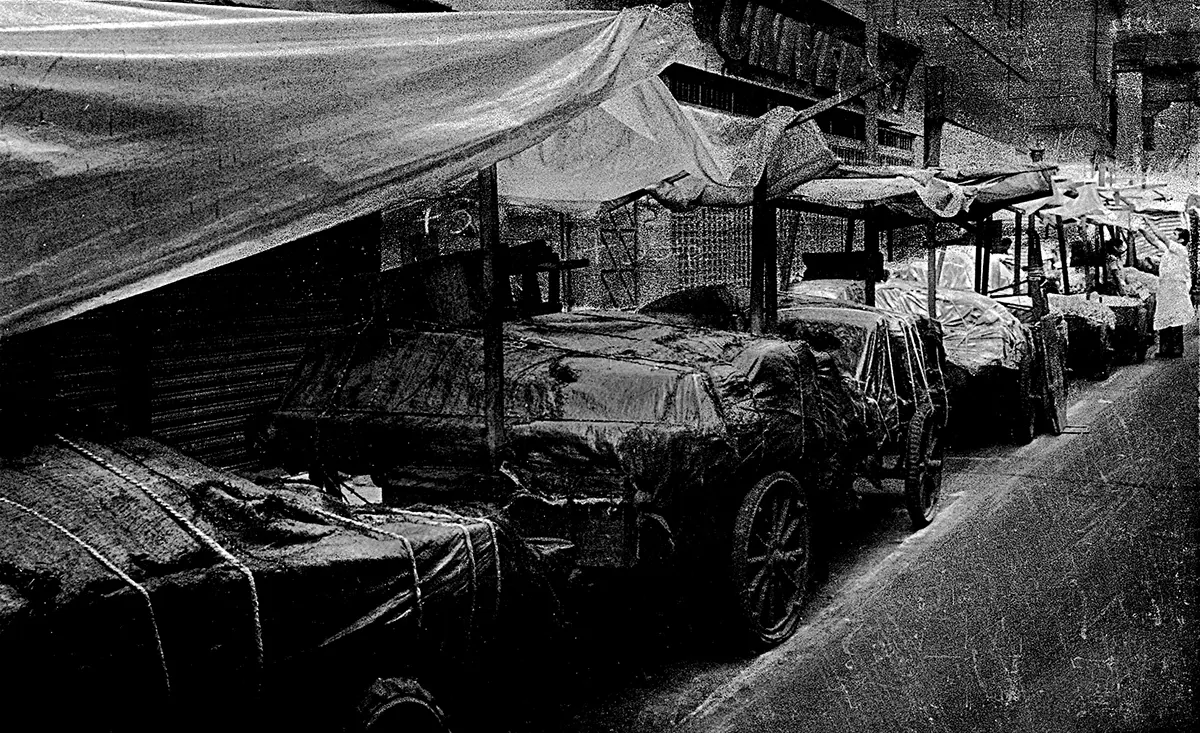
An important reason why Fernell Franco was able to go beyond the superficiality of the photographic maybe the fact that his personal proposal developed during afternoons or early mornings, after completing his workday as a reporter or in advertising; another one is the circumstance of his having been an autodidact who never found formative support for the passion he felt since childhood for the cinema. Such wide-spectrum approach to the magic of cinema gave Fernell Franco the ability to analyze, with surprising critical depth, an image’s compositional and expressive structure, and to understand that the great narrative and expressive the effort of the cinema in particular and the image, in general, was entirely founded on the nature of what light —a mobile, mutant, and eminently inapprehensible element— can say at any given moment.
But the observation of light in the movies, in photography itself, and in the shadows, always referred the artist to other territories, where his explorations gained order and personality. Fernell Franco was born in the countryside, in the town of Versalles, near Cali; he moved with his family to one of the latter city’s impoverished neighborhoods, fleeing the violence that has cursed rural life in Colombia ever since the assassination of the popular leader Jorge Eliécer Gaitán in 1948.
The significance of his event is best expressed in Fernell Franco’s own words: “In visual terms, the city meant for me the beginning of the loss of surrounding nature, the loss of the horizon I had been used to since childhood, a sudden change to the man-made, to the built. In my childhood, everything was green, and I had a great landscape that could be breathed in its entirety. For me, the light was very different, the sun was full and nature was ever-present.
The topography of Versailles, where I was born, is very striking. The town is in the mountains, erected between the undulations of the western cordillera, so that you are always seeing the gentle rhythms of narrow, steep streets whose final the destination you can’t determine because when you reach the top, it seems they end in the sky.
Light and shadows play extensively in a landscape one knows to be vast, even if it is only seen framed by the mountains.
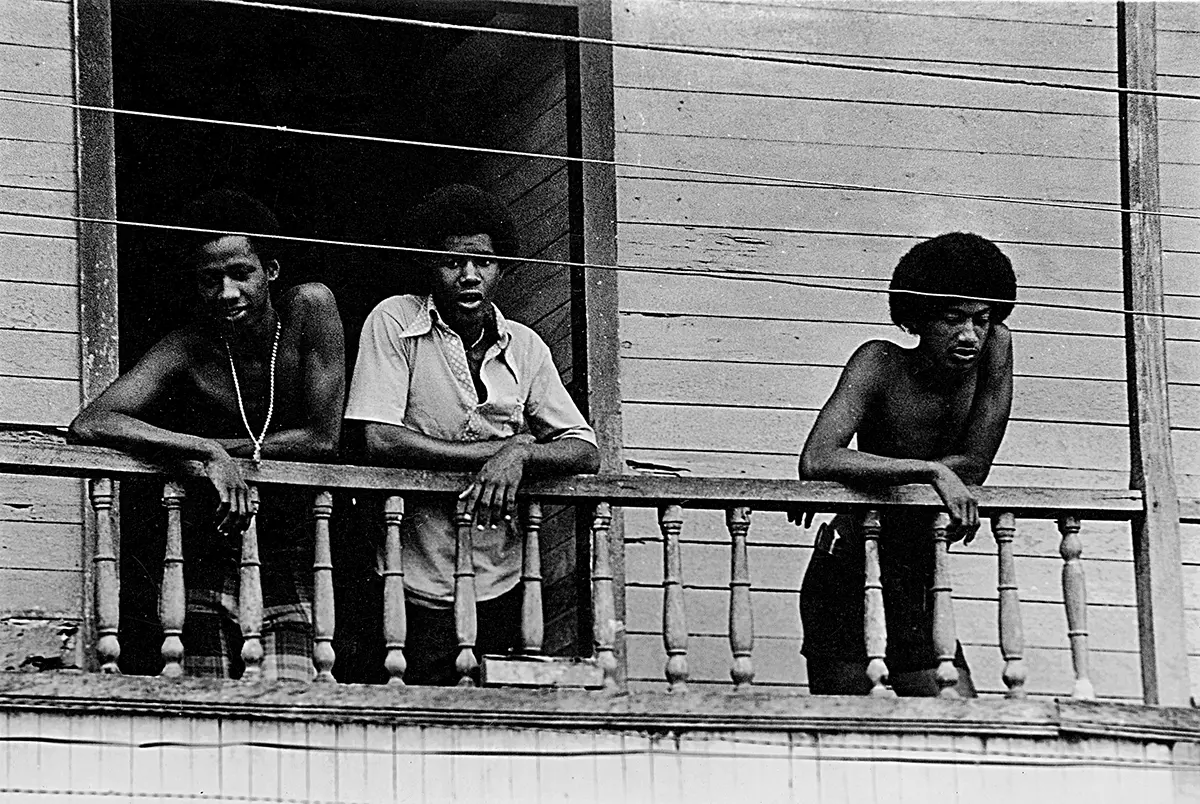
The city, on the contrary, can be rather flat, there always is an obstacle, space closes because normally there is something in front that drives the limpid gaze towards emptiness and, for that very reason, interrupts our relationship with nature, which is essential to our being. In the city, there is an enormous complexity of things that prevent us from having a quiet everyday life. There is always a barrier where undecipherable problems are generated.
The move from the countryside to the city produces a tremendous clash, yet it also has some marvelous aspects. One of the great differences in the city, one that attracted me from the beginning was the accumulation of artificial lights. At night in the countryside, one always had the spectacle of the stars in the sky, and, in contrast, what I saw when I arrived in Cali was that the stars were on the ground.
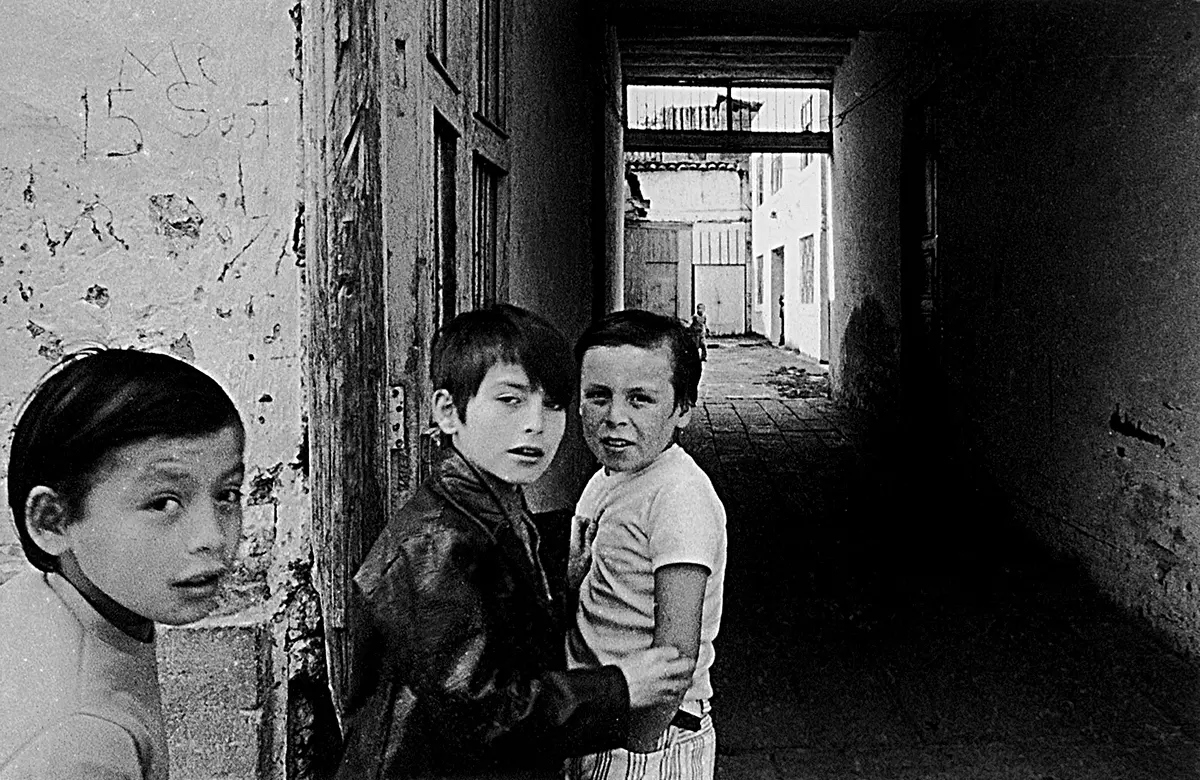
I remember clearly my surprise at the number of lights in the city when I saw it for the first time. When we arrived, the truck we moved in passed by downtown Cali before reaching our neighborhood, which was far from the most ornate or the prettier part of town. So that was like a marvelous vision that passed and got left behind, but my feeling was that we had arrived in a magical place. Next to the Ermita was an iron city with strong bursts of the light that rose to the sky… perhaps the encounter between light and deep the darkness I have sought with the camera was born there.” 1
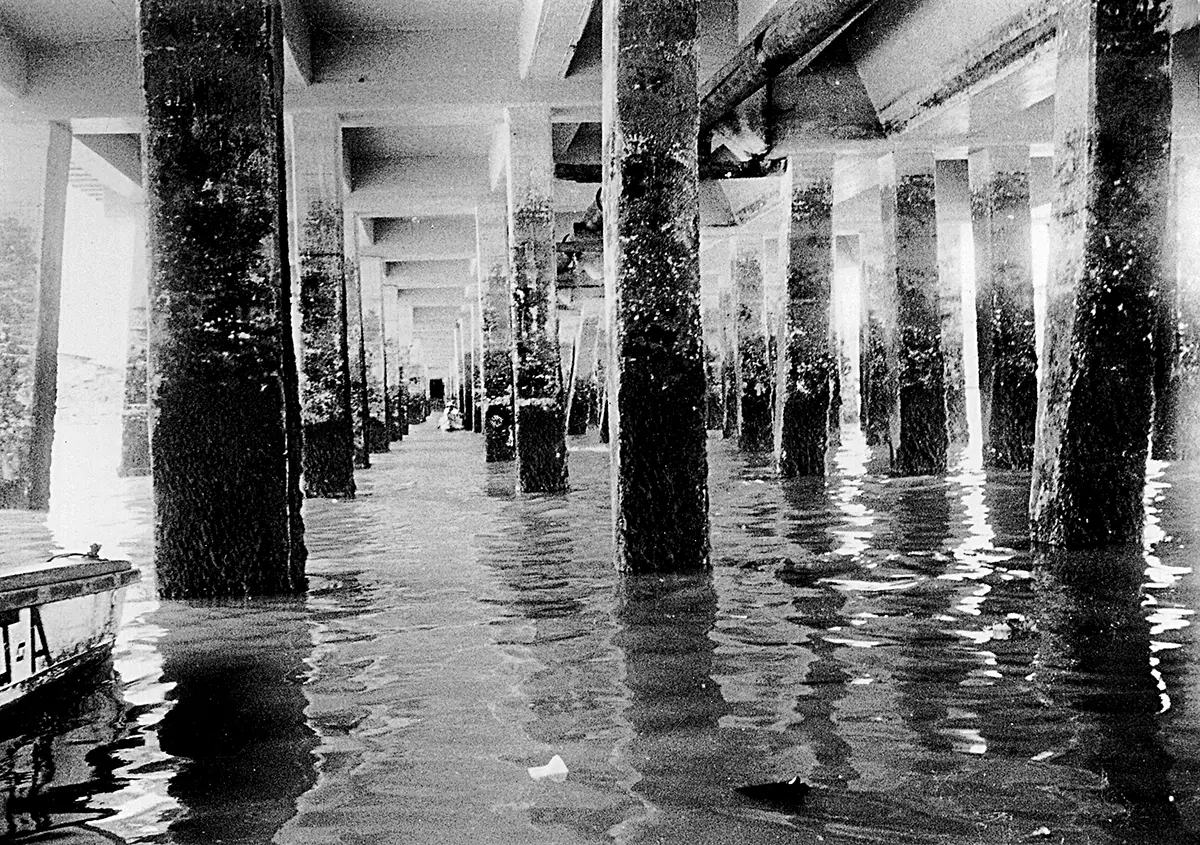
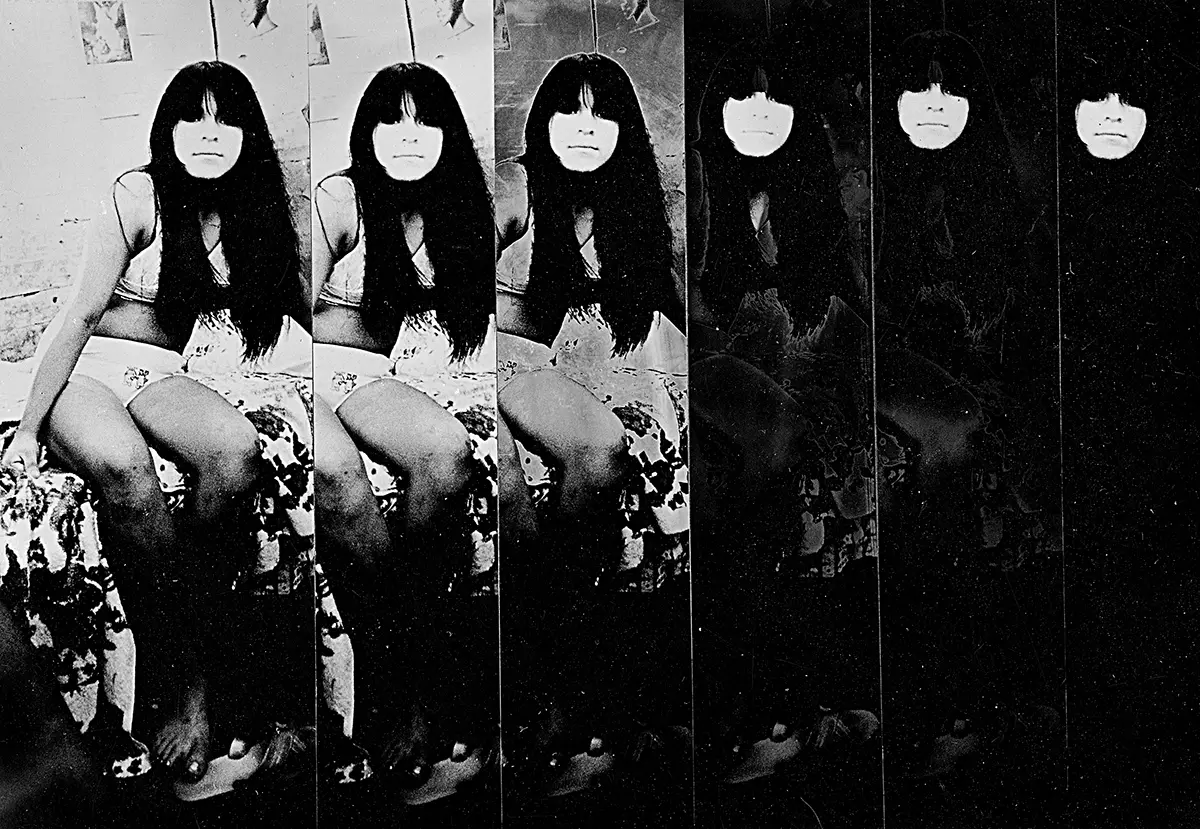
Allied to the contradiction between light and shadow in which the visual world is drawn, Fernell Franco disentangled others that express, in a new and unique way, his feeling for the natural and the artificial, for the meaning of the emergence of a city in the middle of modernity’s colonization processes in the Third World, for the ways in which we belong to a place, and also for the human drama fanned by extreme social differences. His oeuvre’s moving presence is rooted on the fact that it is his own intense and difficult experience that gets transcribed through meaning- and memory-filled bodies. His are images that can only have been discovered for the world by an artistic sensibility capable of confronting the rawest violence with a poetic conviction.
Fernell Franco’s career as a photographer began at a very early age, in war reporting, to which he arrived without any background prodded by economic necessity. Immediately, there appeared a practical passion for the medium and the need to give a face to observations about the conflict and the essence of being, observations that demanded to be ordered, as Franco himself expressed, without offending the viewer with the drama he faced every day, the drama that marked his life since childhood.
He did this with goodness and with a conviction in the continuity of life as the only permanent law, opening up alternate universes in which contemplation once again gained a place of dignity.
NOTE
1. María Iovino, Fernell Franco, Otro documento, pp. 22-24, Cali, Colombia 2004.
MARÍA IOVINO