From early September to the end of October, the art audience in São Paulo was privileged to see a significant ensemble of works produced by Brazilian artists during the 1970s. Curated by Gloria Ferreira, a professor of the Federal University of Rio de Janeiro, the exhibition Anos 70: Arte Como Questão (1970s: Art as an Issue) provided a unique opportunity to confront one of the most experimental periods of Brazilian art and made one rethink one’s place and contribution to a redefinition of art in an international context.
Departing from Hélio Oiticica’s definition of art as “an experimental exercise of freedom,” the exhibition gathered around 100 artists and their works, from a period that began with the launch of the Nova Objetividade (New Objectivity) in 1967 and ended in 1981, the year of the XVI Bienal de São Paulo. The show was also part of a series of exhibitions that have been organized in recent years by the Instituto Tomie Ohtake and approach Brazilian art history from the 1950s to the present.
In addition to the selected works, Ferreira also dedicated a section of the exhibition to the documentation of artists’ activities during that period and presented a series of contemporary publications and magazines, all to serve as a platform for artistic debate. The show occupied three upper-floor galleries inside the institute’s building and used the open mezzanine to present a selection of works as well as display stations. Here, the visitor could listen to long plays recorded by artists (such as Sal sem carne by Cildo Meireles) and also leaf through photocopies of some of the magazines, like Malasartes. This section helped the visitor to sense the atmosphere of the time and provided context for the selected works.
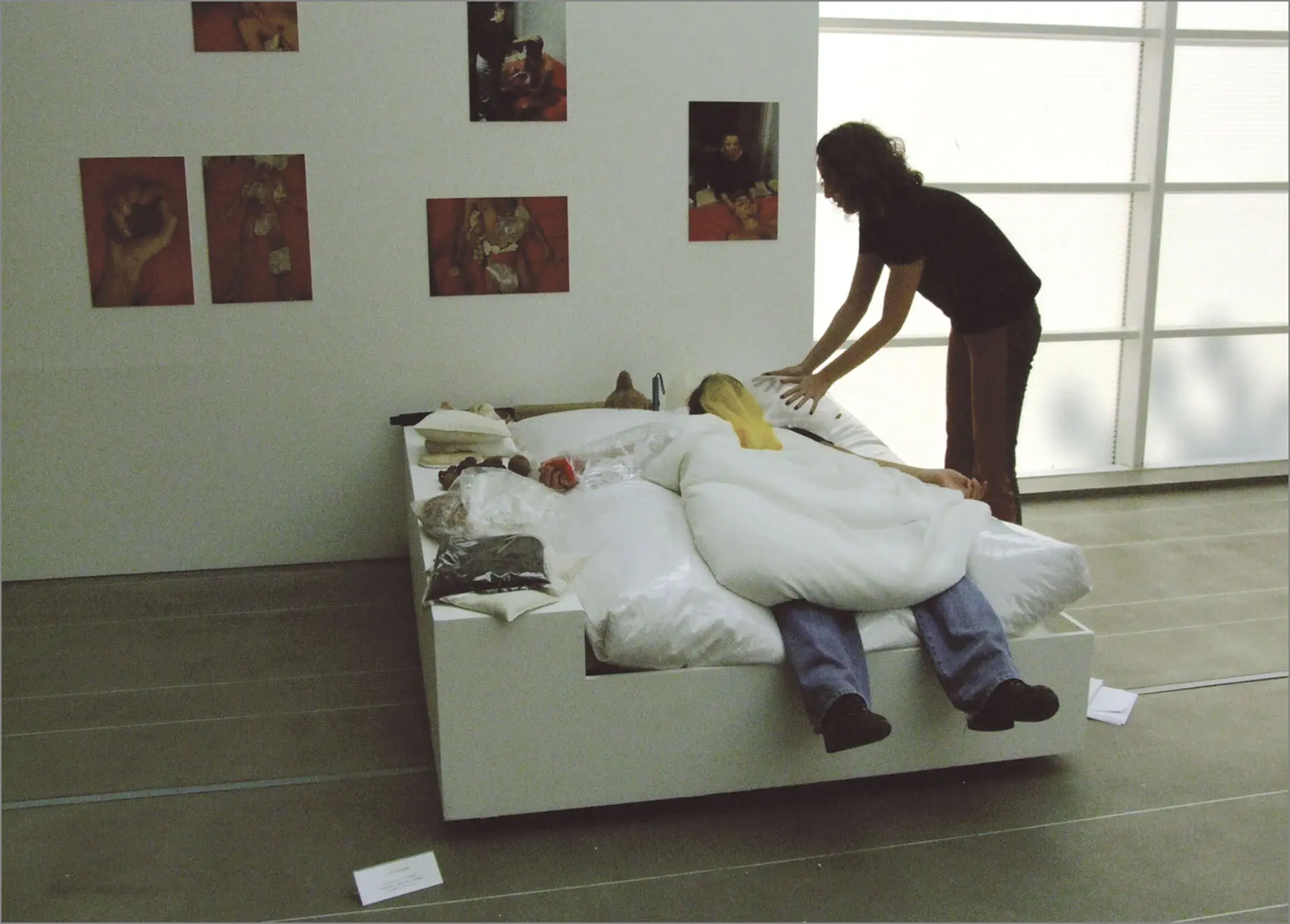
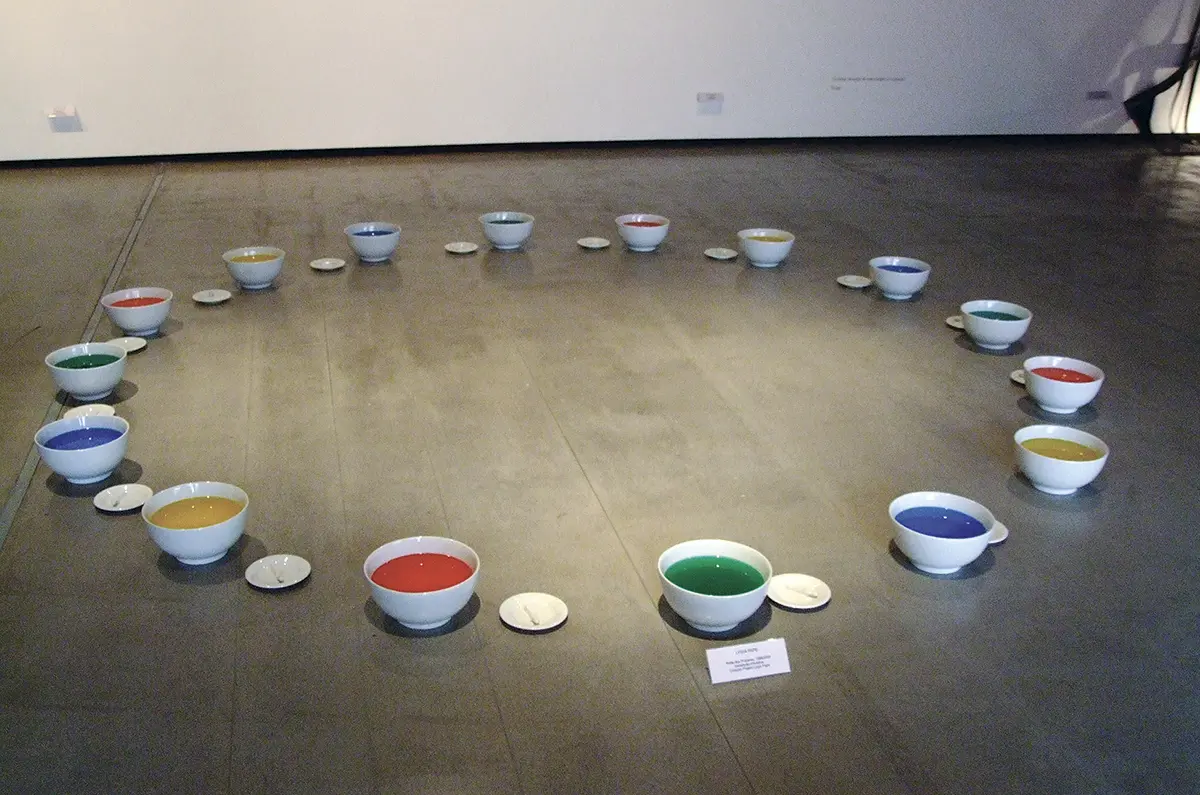
However, the presentation of the documentary elements and the display of certain artworks tended toward the traditional, and one felt that some of the pieces had been “museum-ized.” Such was the case in the display of Lygia Clark’s therapeutic objects, placed on a reconstructed bed built to the same measurements as the original one that she had in her practice office, according to the object label. In the third room of the exhibition, a little boy was tempted by Lygia Pape’s Roda dos prazeres (literally “The circle of pleasures”), with its series of commercial white bowls containing different colored liquids that one should have been able to take out of the bowls with an eyedropper and spread on adjacent saucers. The boy was very eager to take the initiative, but his mother forbade him to do so. Though the label stated that this was an “interactive work,” the museological aspect of the exhibition played its role in the constraint of the works and the audience participation with them.
In any case, the curatorial effort faced a challenge to present such works and remain as faithful to them as possible. If the result was a “museum-ized” display of the most radical experimental art of the 1970s, one may suppose the aim was to be as neutral as possible. It certainly raised the question that museums and institutions dealing with contemporary art collections have faced regarding the display of such experimental works inside a museum space. For instance, should one treat the everyday objects composing an installation that is built following an artist’s instructions in the same way that one treats a fifteenth-century painting? If one relates to these works as the artist originally intended, would one have to necessarily depreciate such installations, even if this meant jeopardizing the conservation of the objects that constitute them? These questions have yet to be answered and they reveal our attitude toward art, through which we end by defining art—an issue that was much debated and questioned by the artists during the 1970s and that makes a “museum-ized” attitude toward their art even more contradictory.
But the greatest merits of the exhibition were to display works belonging to private collections and are thus very rarely seen and also to state that Brazilian art in those years went beyond the well-known names Hélio Oiticica and Lygia Clark and Cildo Meireles. In the past decade, these names have been the beacon of Brazilian contemporary art, and though one shouldn’t doubt their huge influence, one finally realizes that their work was not isolated and that art was produced outside of São Paulo and Rio de Janeiro. The exhibition revealed the presence of many artists spread all over the country, connected by a net of exchange that involved not only Brazilian artists but also international ones. It was also enlightening to see the exploration of new media in the production of their artworks, such as reproducible media (photocopy machine, photography, mimeograph, etc.) and video and film. Another important aspect was that, though the political agenda was very strong in works of this period (the country was experiencing the darkest years of military dictatorship), this issue was essentially related to a deeper investigation of the nature of art and its role in life.
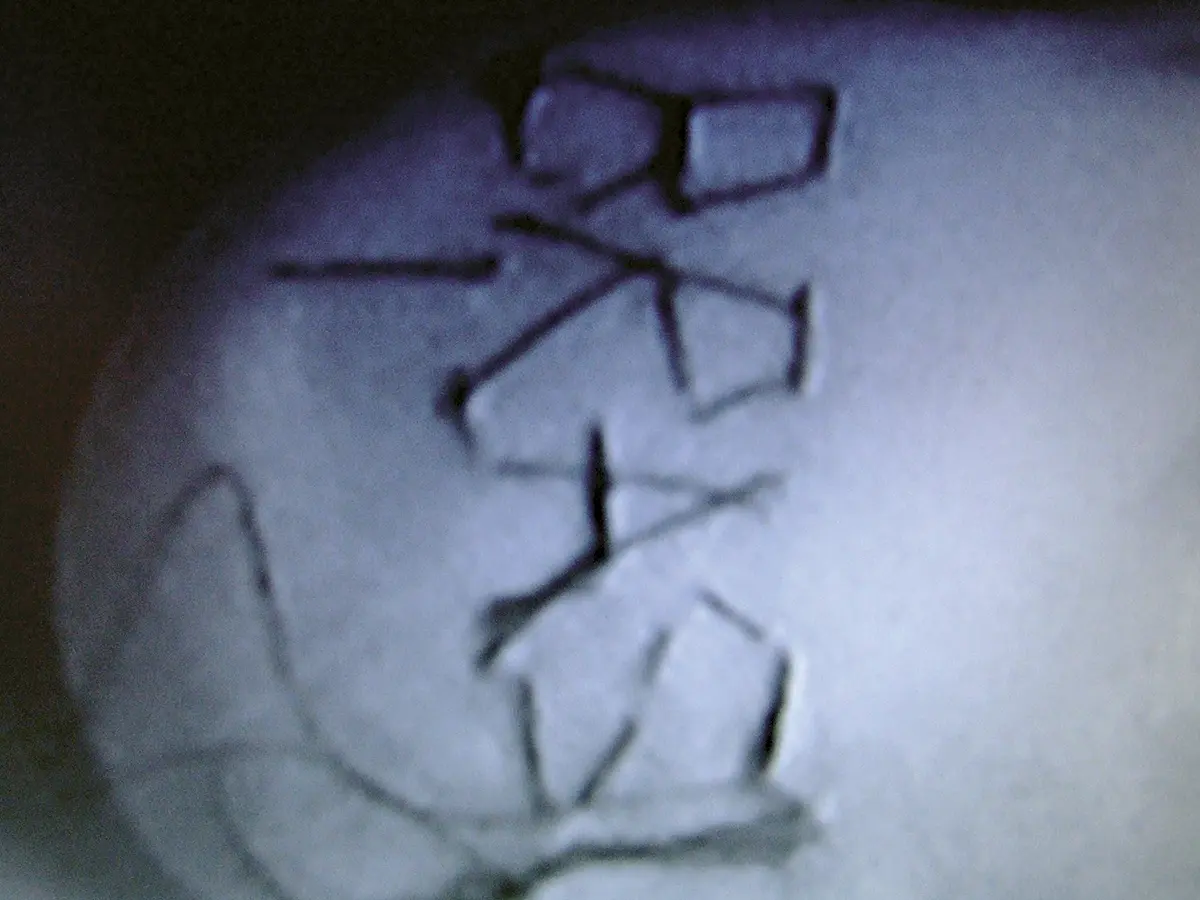
The greatest pleasure of the show was the opportunity to come across some lesser-known artists and some practically unknown ones. In the first room was the video Marca registrada by Leticia Parente (1930–1991), in which the camera framed the artist from the waist down as she sat on a chair, held her left foot with her hands, and sewed the words “Made in Brazil” on its surface with a needle and string. Parente began her artistic career later in life; she worked for many years as a chemistry teacher and as a university professor she become one of the first woman scientists to have a seat in the Brazilian Science Academy.
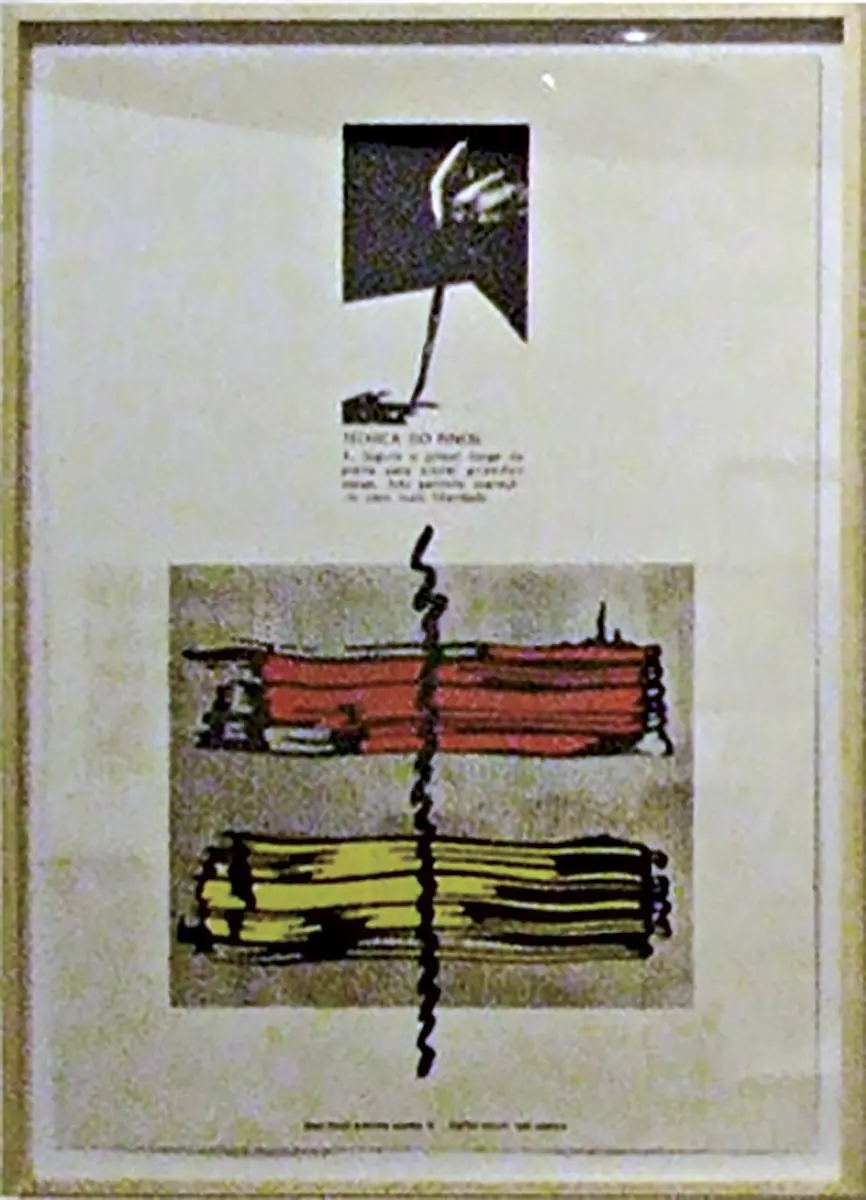
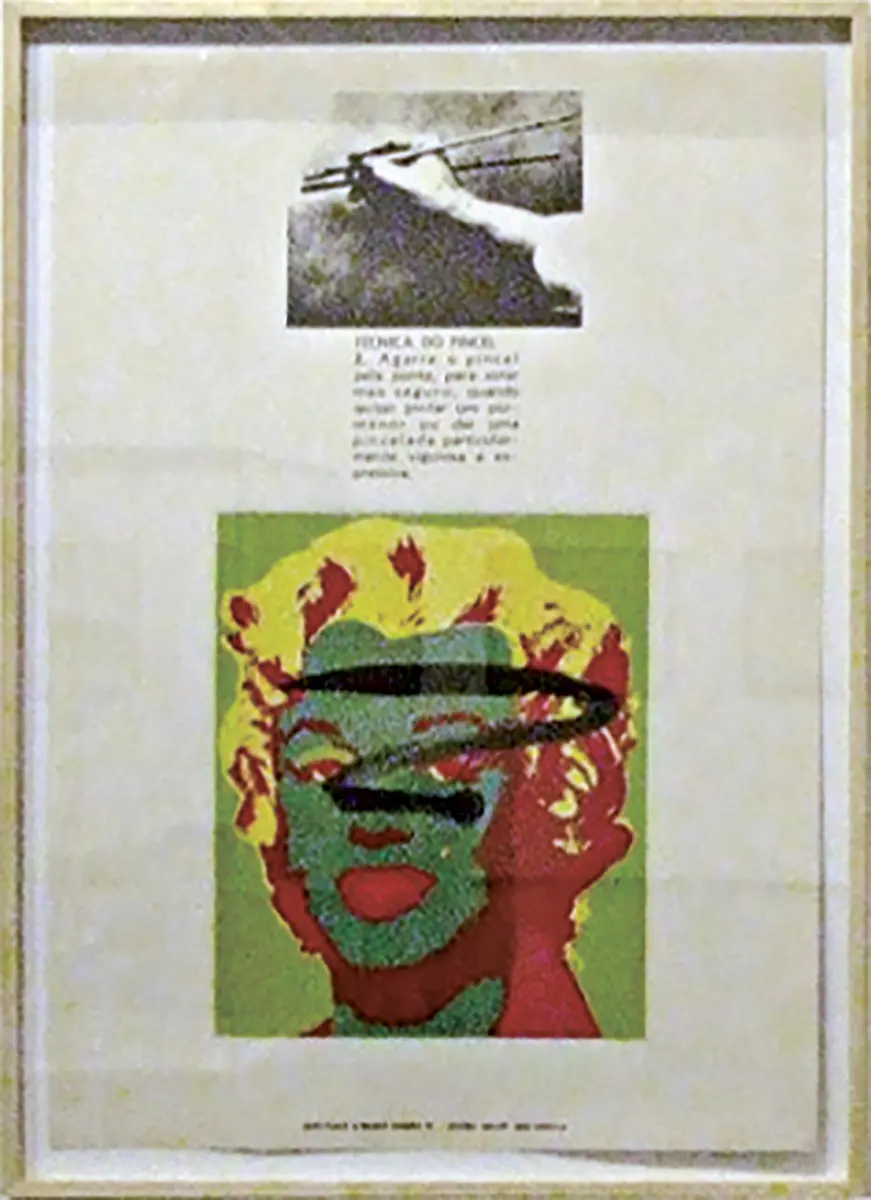
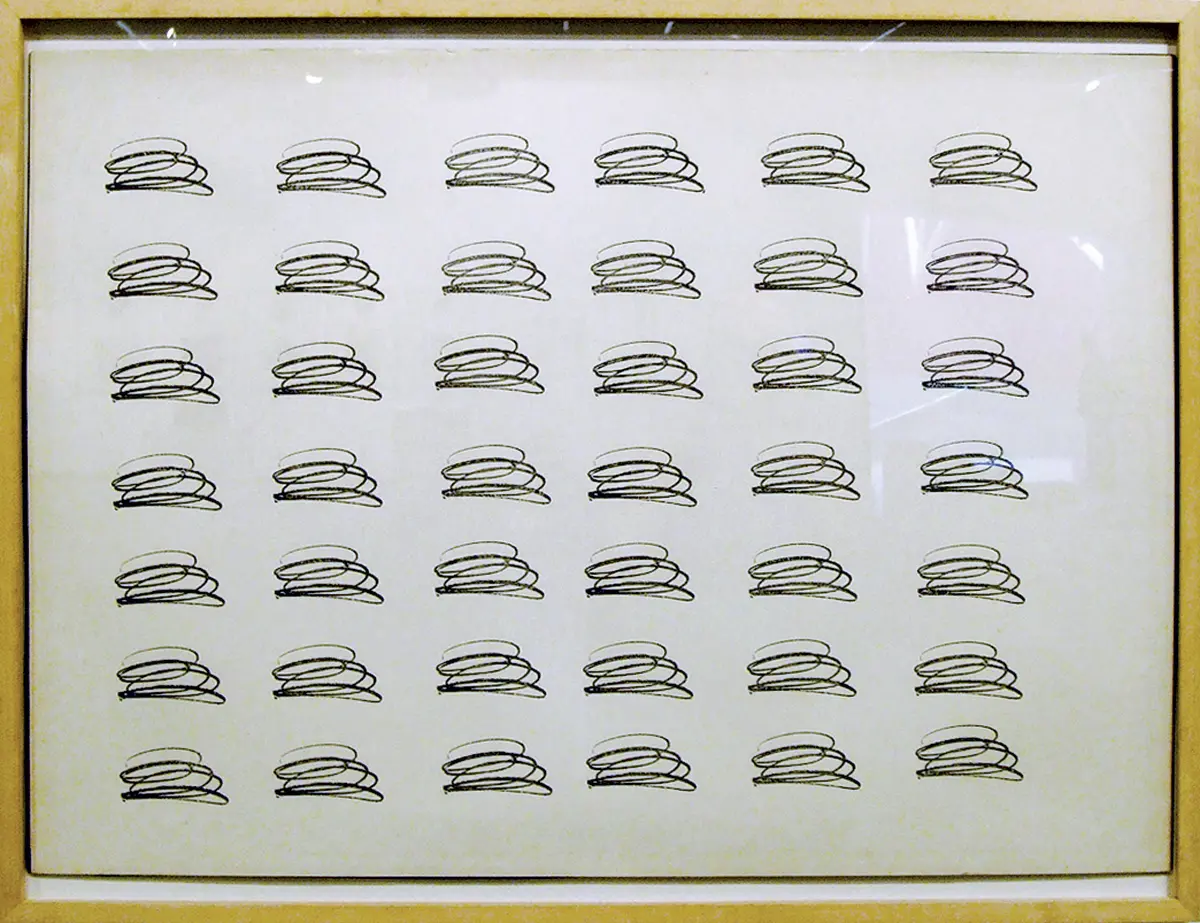
In the same room, there were two series of prints that tackled painting and its traditional role in the art canon. In Técnica do pincel (Paintbrush Technique), by Julio Plaza (1938–2003) and Regina Silveira (born 1939), the artists made paint-stroke interventions on reproductions of some of the most emblematic works of the 1960s, such as one of Warhol’s Marilyn Monroe portraits, in order to question the procedure of painting. In a similar vein, the work Carimbo (Stamp) by Carmela Gross (born 1946) featured six different gestures of brush strokes stamped on the surface of various sheets of paper.
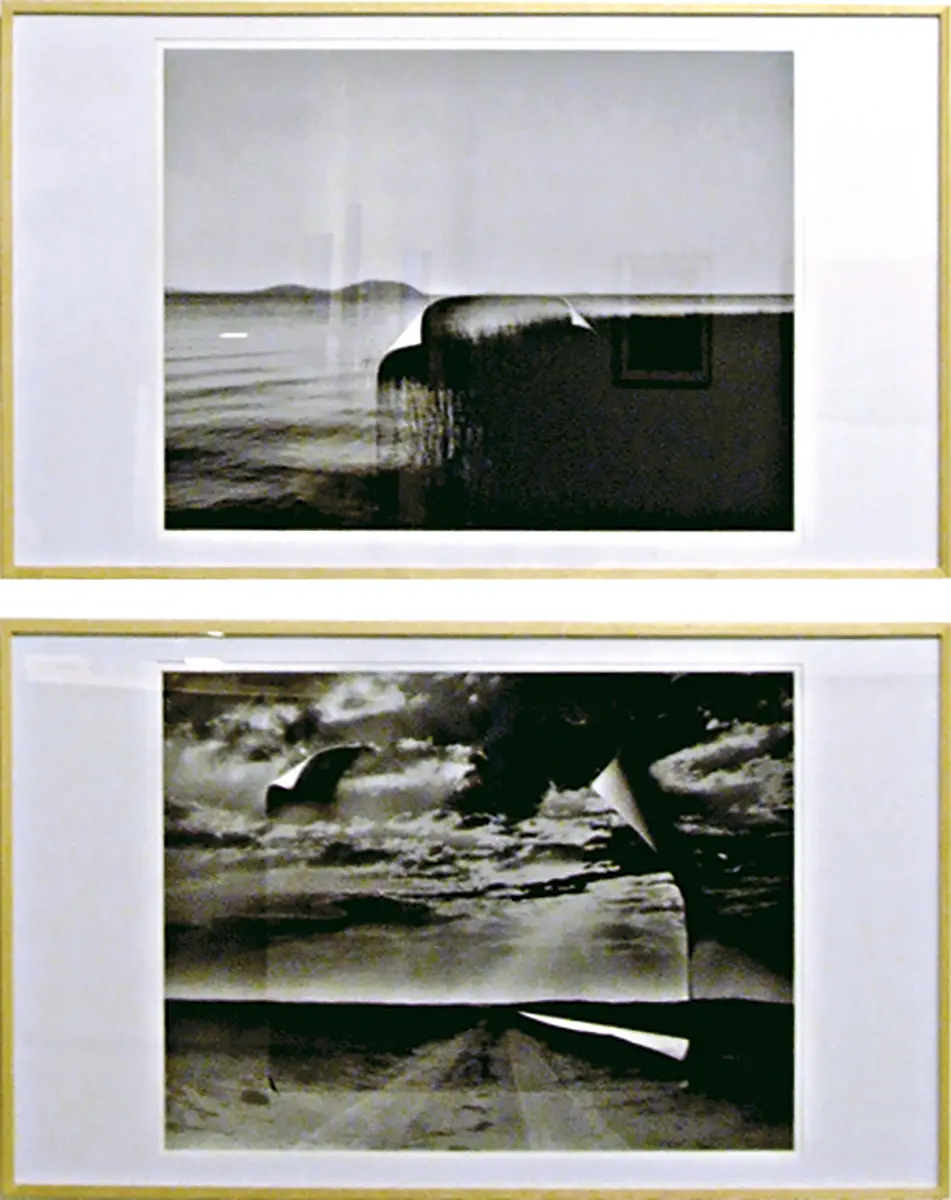
The use of photography in those years was also notable. In Paisagens sobre paisagem (Landscape over Landscape) by Clovis Dariano (born 1950), the viewer encountered five landscape photomontages. The artist juxtaposed one photograph over the other, as in a collage, but at the same time he peeled the upper one away; this process was photographed, and the final work was the photographic documentation of the process. One might compare this work with that of Sergio Porto, titled Reflexions, in which the artist placed mirrors in different positions by the seashore and photographed the landscape and its reflections on the mirror. Both works dealt with the illusion of realist/documentary photography and also the photographic crop while approaching the issue of the two-dimensionality of painting.
The last room also presented a rarely seen work by Hélio Oiticica: Helena inventa Ângela Maria (Helena invents Ângela Maria). Here, a series of photographs on Eucatex was installed along with a loudspeaker, from which a love song by the Brazilian singer Ângela Maria was heard. There was also a reproduction of Oiticica’s notes on the work and his letter to his beloved friend Helena; in the photographs, she laid in bed, performing as a mistress. Again, one could read this work as a comment on the nature of painting.
In short, Anos 70: Arte Como Questão was a summary of how Brazilian artists during the 1970s dealt with the issue of “art as an idea” to use an expression of Joseph Kosuth. It also revealed how much is still to be done by Brazilian researchers in order to understand this period, as many works and artists on display had never been studied. Some of the artists were only shown in the 1970s and never seen again. It is a pity there was no exhibition catalog published as a first attempt to record their deeds.
ANA MAGALHÃES