

The 6th Mercosur Biennial was inaugurated on September 1st in Porto Alegre, Brazil. The show, under the general curatorship of Gabriel Pérez-Barreiro, remained open through November 18th, and after that date, it began a tour through other Brazilian cities. Some of its segments are also slated to be shown in the capitals of the remaining Mercosur countries: Montevideo, Buenos Aires, and Asunción. The 2007 edition had government support, as well as the support of several institutions and 22 companies, which made it possible to raise 12 million Reals to fund the event.
A pedagogical project addressed to the teaching network, made it possible to recruit 7,500 teachers in 37 cities throughout the state of Rio Grande do Sul, the Brazilian state where the Biennial is held, and also expanded into the southern part of neighboring Santa Catarina. This also contributed to the training of monitors for the 6th Biennial by means of special courses, and also created the project Diálogos, which promotes encounters between artists and curators participating in 2007 edition with local artists, with the purpose of facilitating the exchange of experiences and an assessment of the event and its projections. The 6th Biennial’s pedagogical project was curated by Luis Camnitzer.
The 6th Biennial brought together 67 artists from 23 countries, with 350 works exhibited in six shows: three monographic exhibitions and three collectives titled, respectively, Zona Franca, Conversaciones, and Tres Fronteras. The spaces reserved for the exhibitions were the Cais do Porto1, the Museo de Arte do Rio Grande do Sul (Francisco Matto and Öyvind Fahlström,) and the Santander Cultural, site chose for a monographic exhibition of works by Argentinean artist Jorge Macchi.
The 2007 event’s curatorial project broke with the organizational model adopted in previous years, jettisoning the strategy of building national representations. A new dynamic was established in the 6th Biennial: the presentation of specific projects for the various segments of the exhibition, developed by co-curators from different countries, under the general coordination of curator Gabriel Pérez-Barreiro. With this proposal, the general curator sought to apprehend “the show’s internationality, with the valuation of a cultural geography that extrapolates the limitations of geopolitical borders.” The 6th Biennial’s curatorial project was inspired by the metaphor The river’s third shore, an image taken by Brazilian author Guimarães Rosa’s short story of the same title. For the curator, the third shore symbolizes the possibility of “a shift in perspective,” which implies an opportunity to create a third way to perceive reality, breaking with the dualities that define and constrain it, such as nationalism and globalization, right and left, good and evil, figuration and abstraction, among others. The third shore is also, for the curator, a “metaphor for the region’s geography, with riverine borders,” and alludes “to the antagonism between a closed-up regionalism and indistinct globalization. Also, according to Pérez-Barreiro, the third shore metaphor makes reference to the methodological principle adopted in the curatorship: “the dialog between two subjects whose experiences are different, which generates a third reality.” The curator highlights, on the other hand, that by having not a defined topic but a metaphor, this edition of the Biennial “is a look from Mercosur to the world, a gaze that starts in the local and projects into the global. This Biennial is held from Mercosur, but it does not close on itself.” A team of curators –no longer national curators— articulates this vision “from Mercosur to the world and from the world to Mercosur.” They all have a direct relationship with Mercosur countries and some international activity or experience. “They represent different voices,” Pérez-Barreiro argues, “and this Biennial accepts and promotes diversity and freedom of expression.”
As part of the 6th Biennial, the Zona Franca section posited itself as “a zone of no constraints for the curator,” both from the geographic and from the cultural standpoint. The basic idea was to present works of art that are deemed significant among recent productions. Zona Franca is organized with the profile of a collective exhibition where the guiding paradigm is the criterion of excellence, in the view of each participating curator. No other axis but this one organizes the section —the artist and the work on display are an important landmark in current production.
The participating curators in Zona Franca were Gabriel Pérez-Barreiro, Inés Katzenstein, Luis Enrique Pérez Oramas and Moacir dos Anjos.2 Among the works they selected, I want to highlight here the contributions of Nelson Leirner, Cildo Meirelles (both Brazilian, proposed by Moacir dos Anjos), Harrell Fletcher (American, proposed by Pérez-Barreiro), Francis Alÿs (Belgium) in collaboration with Cuauhtemoc Medina and Rafael Ortega (both from Mexico, proposed by Moacir dos Anjos.)
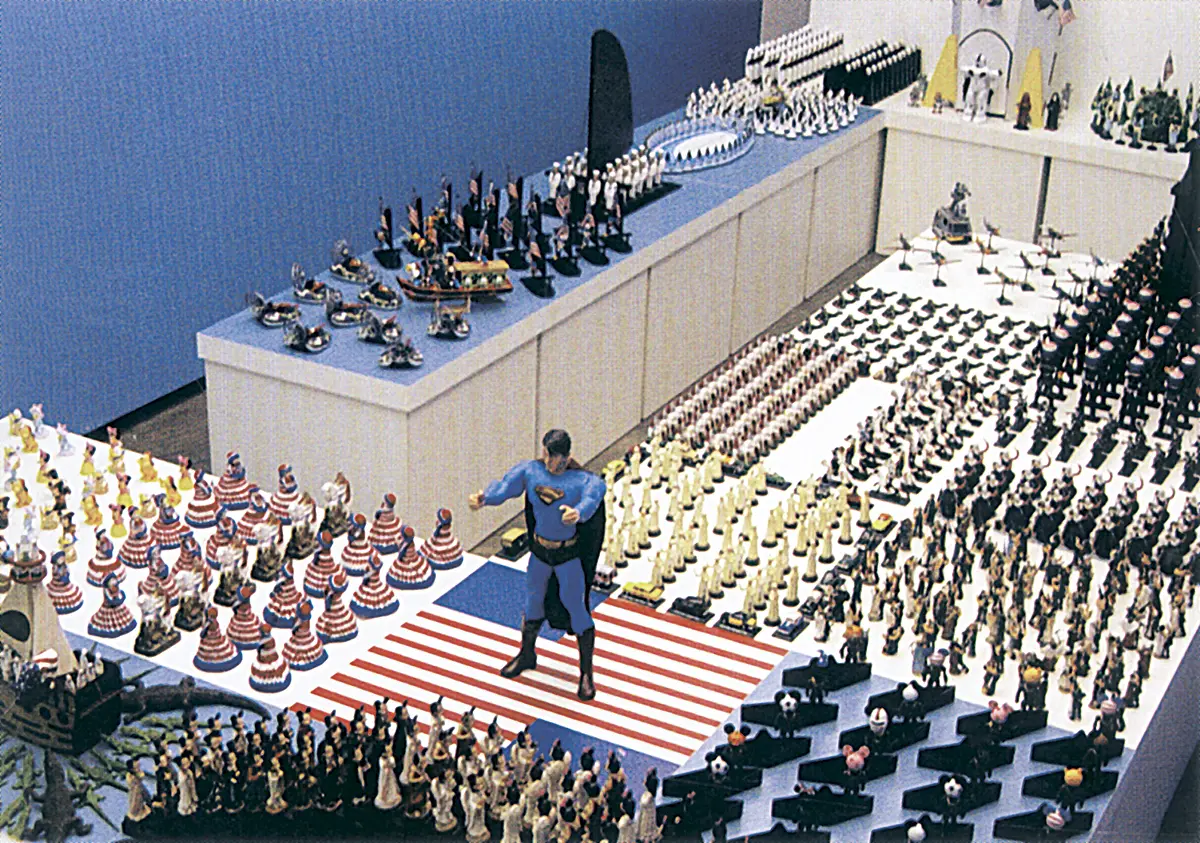
In his installation A Lot(e), Nelson Leirner works with a symbolic repertoire present in the popular imagination; he uses objects that populate mass culture —plaster saints, plastic toys allusive to comic books, popular pottery of the kind we see in markets and handcrafts fairs, little airplanes and cars, toy military tanks, and, on an American flag, the figure of Superman, larger than the others, in a combat pose. The installation fragments such multitude of objects into sectorized groups, arranging them in clearly marked surfaces, compartmentalization into blocos (lots.)3 Some of the supports in which they are displayed are painted white, other blue. With a degree of irony, the artist presents the receiver of his work with a critical gaze directed now to aesthetics, now to social reality. In this way, he resignifies the meaning of these objects. The title of the work proposes, in turn, a critical prospection in its ambiguity: read in English, it conveys the idea of a large amount of something (a lot,) referring to the many elements it comprises; read in Portuguese (lote) the meaning is that of a group or sector.
Cildo Meireles’ Marulho continues along the line of the reflection developed by the artist around the notions of globalization/artistic and cultural production. This installation discusses the existence of hybrid physical and political spaces. It constructs an installation with a structure similar to a pier: walking on it, we see books covering the floor, with photographs of the ocean as their covers. To convey the idea of water, there is a soundtrack allusive to the liquid element’s movement, formed by the repeated superposition of the word “water” articulated in different languages and by different people. As if that which belongs to each culture were dissolved into a sound that does not belong to any. Seas and oceans are like spaces for symbolic exchange, where the notions of territory and identity are nullified.
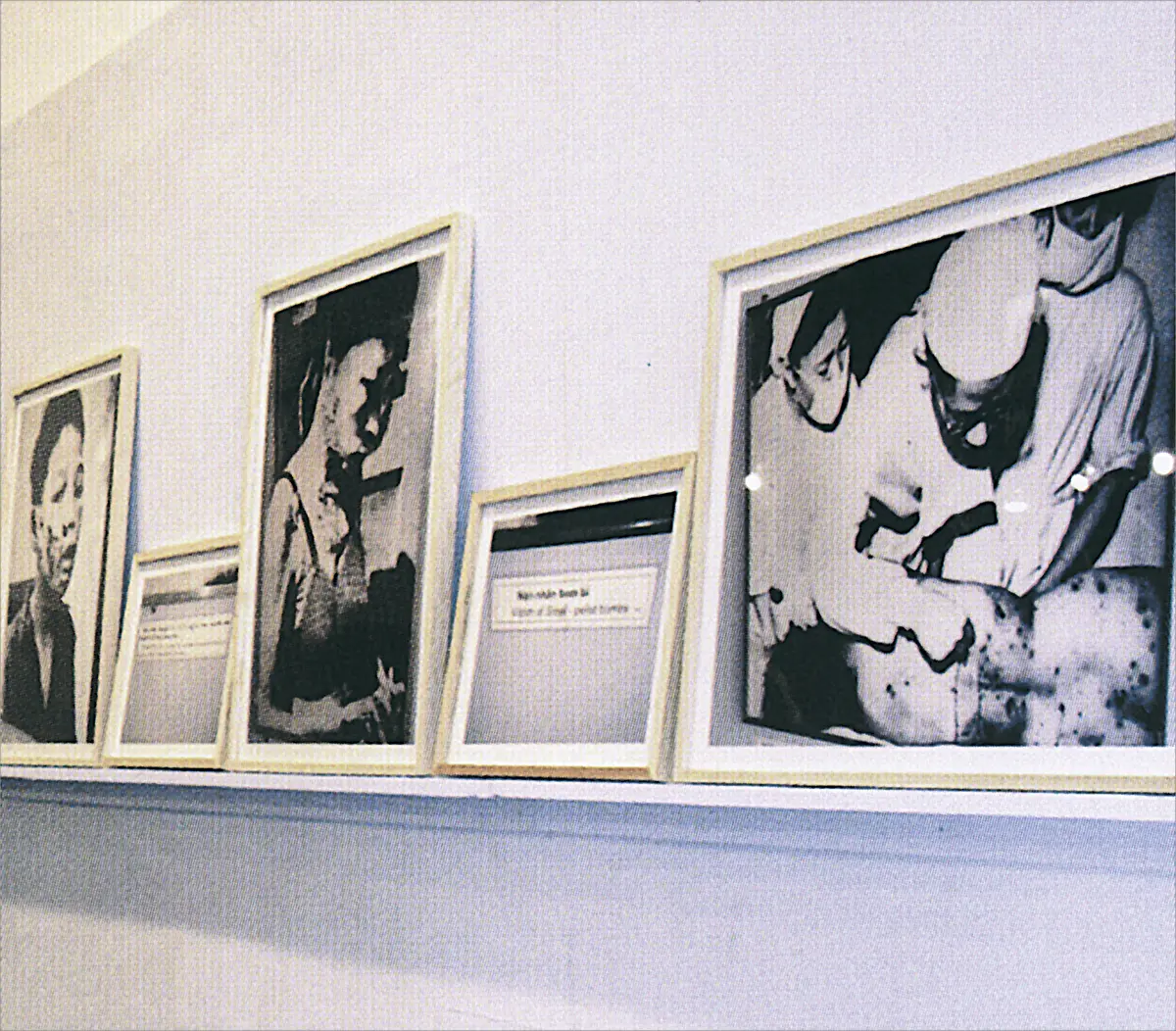
With his installation The American War, Harrell Fletcher brings to the fore a dense reflection about the Vietnam War. The work originated when the artist and three colleagues traveled to Vietnam in June of 2005 and visited Ho Chi Minh City. There he toured the war museums memorializing “the American war, as it is known locally. The artist documented the museum using a digital camera and conceived the idea for his installation as a way of projecting, for each visitor coming in, a vision of the war from the perspective of the Other, of those who suffered through that tragic and violent event in their country. The work we see at the Biennial was presented in several US cities. According to curator Pérez-Barreiro, Fletcher seems to also be proposing the idea that the contemporary art circuit can promote significant debate on important issues, and this might be the most radical aspect of his project.
Francis Alÿs, in collaboration with Cuauhtémoc Medina and Rafael Ortega, approaches another issue of great social tension n his work. Cuando la fe mueve montañas was conceived in 2002, for the Lima Biennial in Peru, at a time when that country was living through a tense social and political crisis. It is a video presenting the action of 500 volunteers who, over an area with a 500-meter diameter, near Lima, shovel sand from one point to the next. The result is a minimal alteration of the dunes, a transfer of centimeters of sand after prolonged and intense effort.
The curatorial idea for the Conversaciones section was to bring together a group of artists and establish contextual relationships between their works. A different artist was invited to present his work and select works by two colleagues in each one of the section’s nodes, establishing formal, historical, ideological, and affective readings. Curators Alejandro Cesarco and Gabriel Pérez-Barreiro, responsible for this section, developed a fourth proposal, responding to the context created for the artists. Inherent to this curatorial proposal is the presupposition that “the production and reading of art happen on the basis of art itself,” taking its own field and history as a starting point.
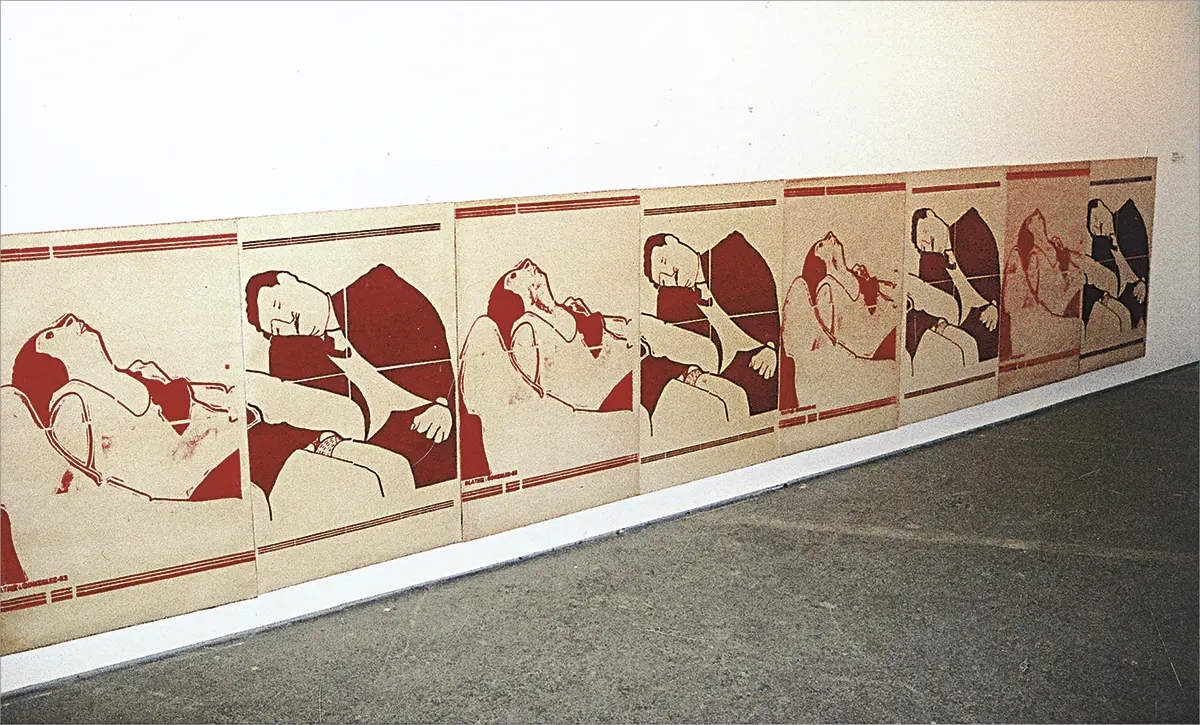
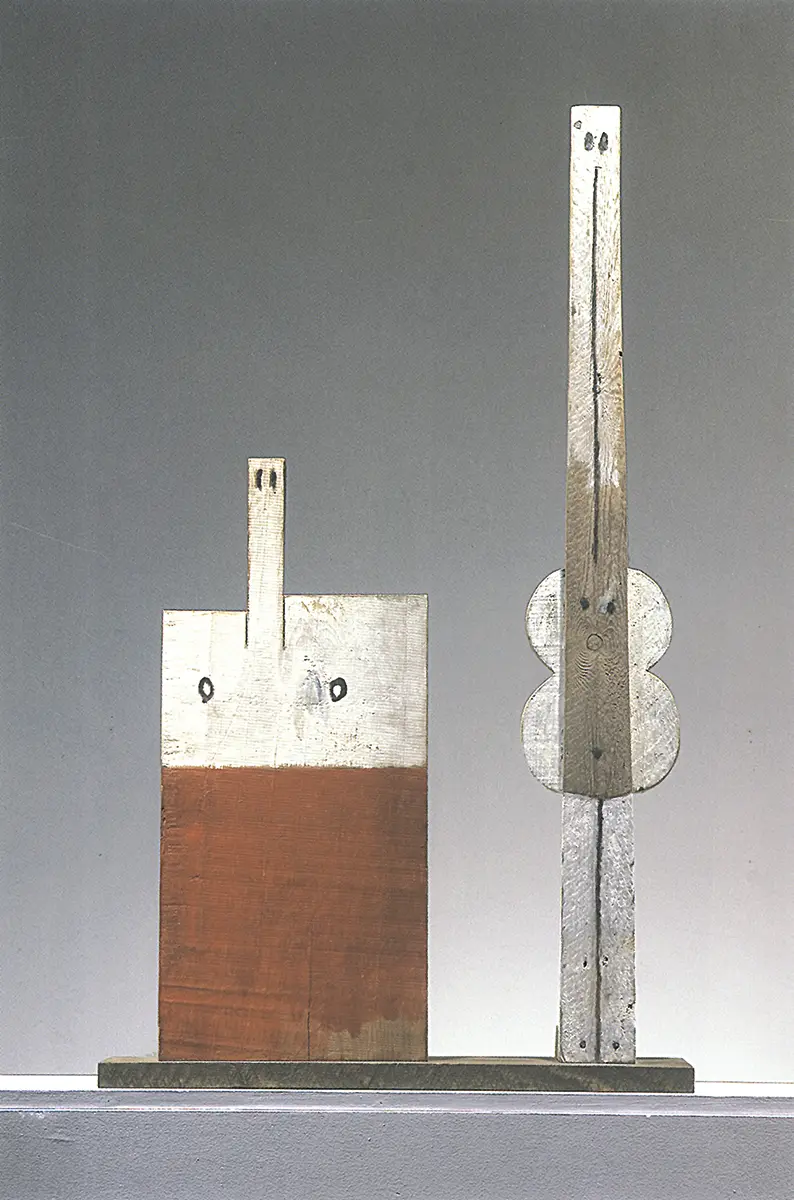
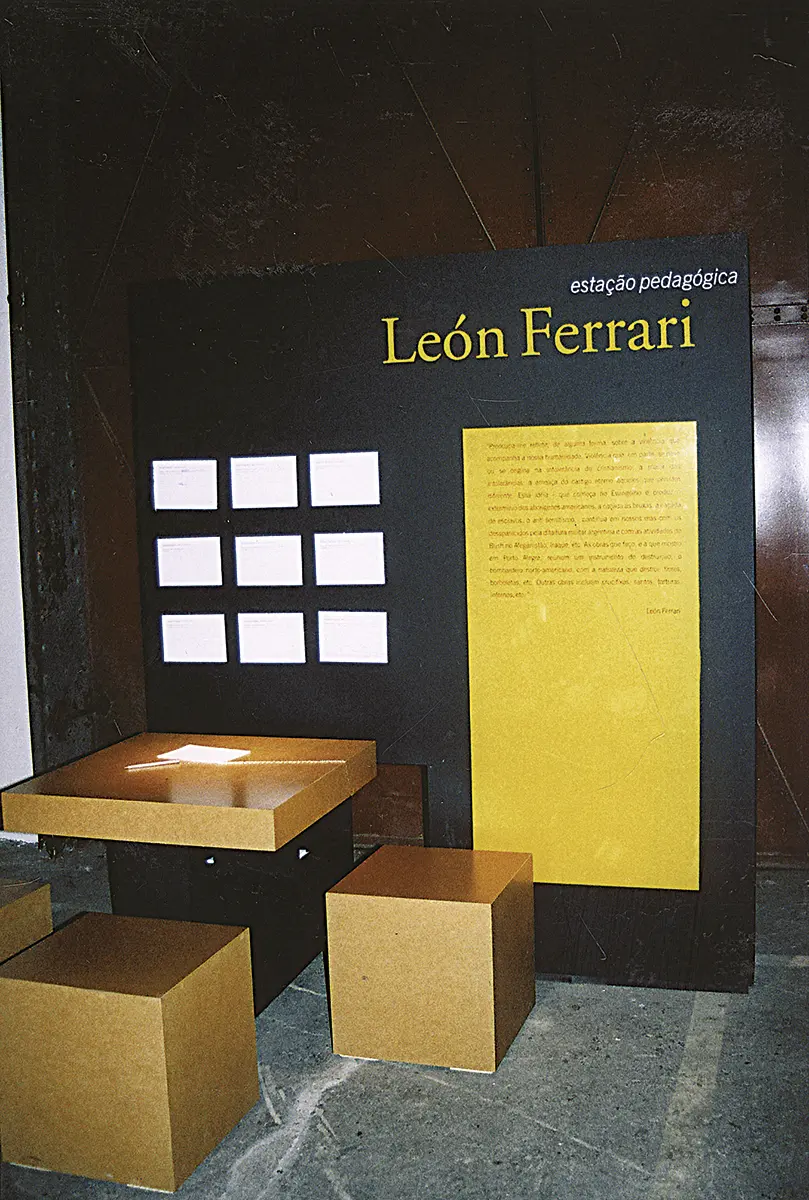
I want to highlight here three nodes in this section. The first generated by Osvaldo Salerno, who chose, to dialog with his Twin Towers (2004-05,) León Ferrari’s Butterfly and Airplanes (2002) and Beatriz González’s Wallpaper of Tragedy (1983); to these works, the curators added Alejandro Paz’s Body Guard (2002.) The group of works not only forces viewers to think about the aesthetic articulations of language, but proposes an ethical issue present in contemporary social reality: violence, disrespect for life.
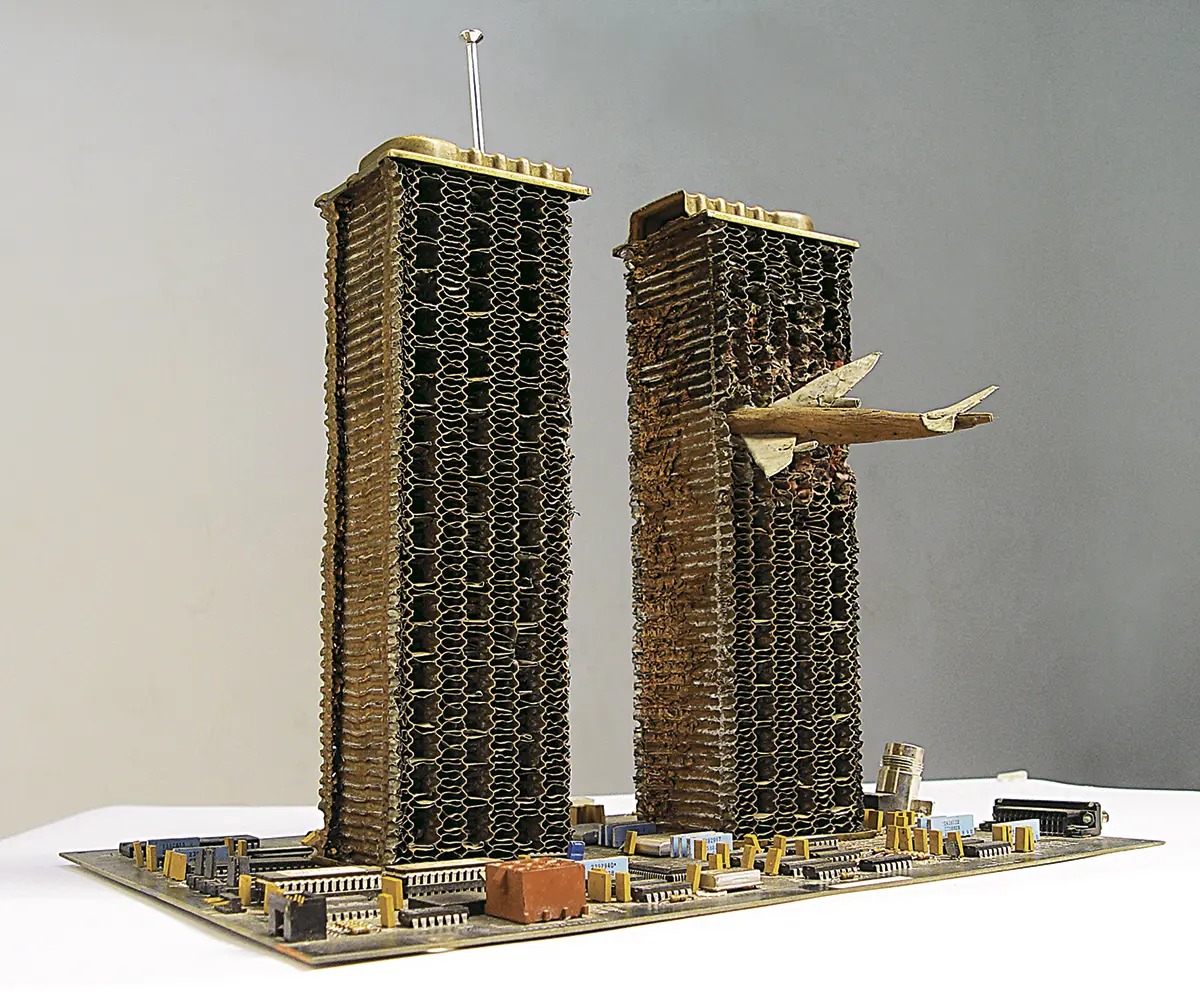
Salerno’s The Twin Towers stages, with great clarity, the attack on New York’s Twin Towers. This work is a bricolage put together using discarded artifacts, such as the radiator of a 1951 Ford Mercury, the memory drive of a 1987 computer, a small wooden airplane, and a metal sheet. It was set by artisan Pablo Luces Contreras, and in appropriating it the artist opens for discussion the issue of creation. León Ferrari’s Butterflies and Airplanes is a tree (the tree of life?) with butterflies and airplanes for its fruit. In Beatriz González’s images, violence is evident in the dead bodies, printed in typography on newsprint sheets. The artist selected by the curator, Alejandro Paz, intervenes with a 14’3” video and a series of photographs centered around the issue of security. A bodyguard follows a common individual around the urban space.
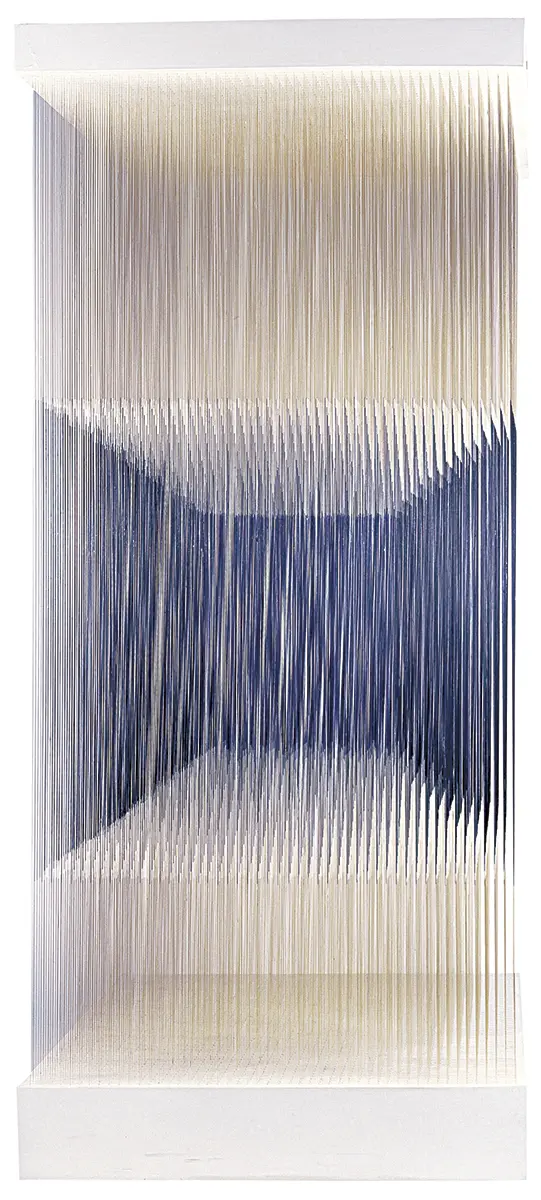
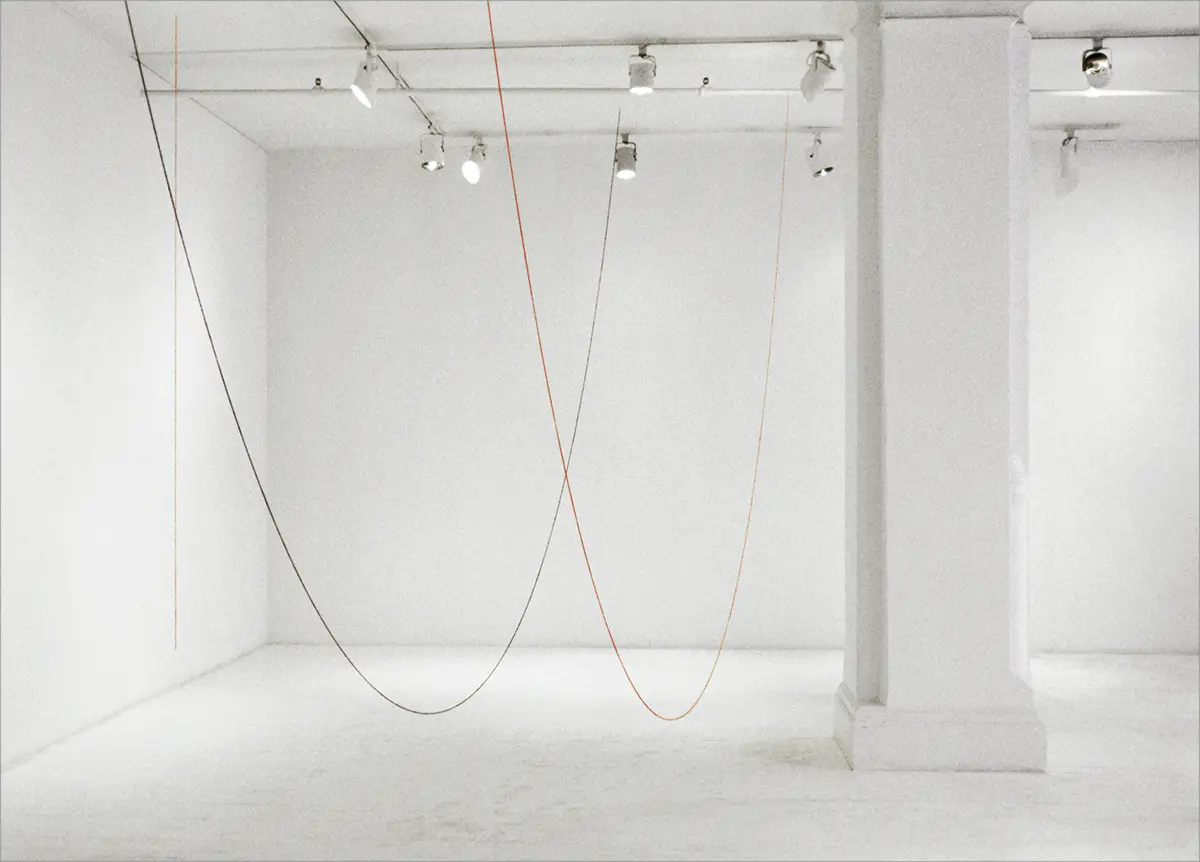
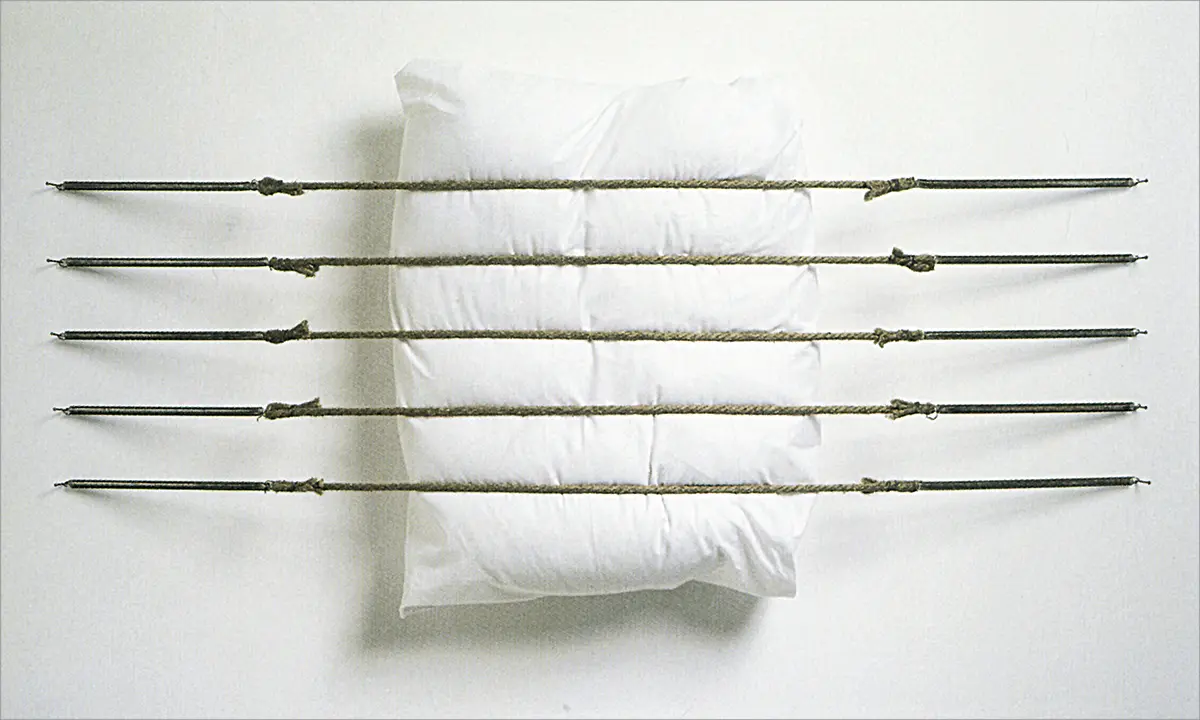
The second node I want to highlight has as its anchor Waltercio Caldas’ The Closest Air (1991.) To interact with his own work, Caldas selected Milton Dacosta’s Untitled (1957) and Steve Reich’s Six marines (1956,) while the curators chose Jesús Rafael Soto’s Nylon Cube (1990.) Important to note in this node are the formal dimension of rhythm, vibration, and musicality of the line; there is a perfect dynamic to the relationships between the works. In The Closest Air, Wlatercio Caldas arranges threads from side to side in the space, literally as a drawing in space, an intervention using minimal resources. In dialog with Caldas’ work are three canvases from Dacosta’s Concrete period and music by minimalist composer Steve Reich. In Soto, selected by the curators, optical vibration offers an interesting counterpoint to the other works. An exciting aesthetic essay is thus constructed.

The third node I want to focus on is anchored in Laura Belém’s Ainda Outono.4 She chose works by Jennifer Allora & Guillermo Calzadilla (Another View–Guajataca–, 2005) and Sara Ramo (Between the Rain and the Snowman, 2005. The curators proposed I just wanted to be able to cry (2000,) by the Atlas Group.
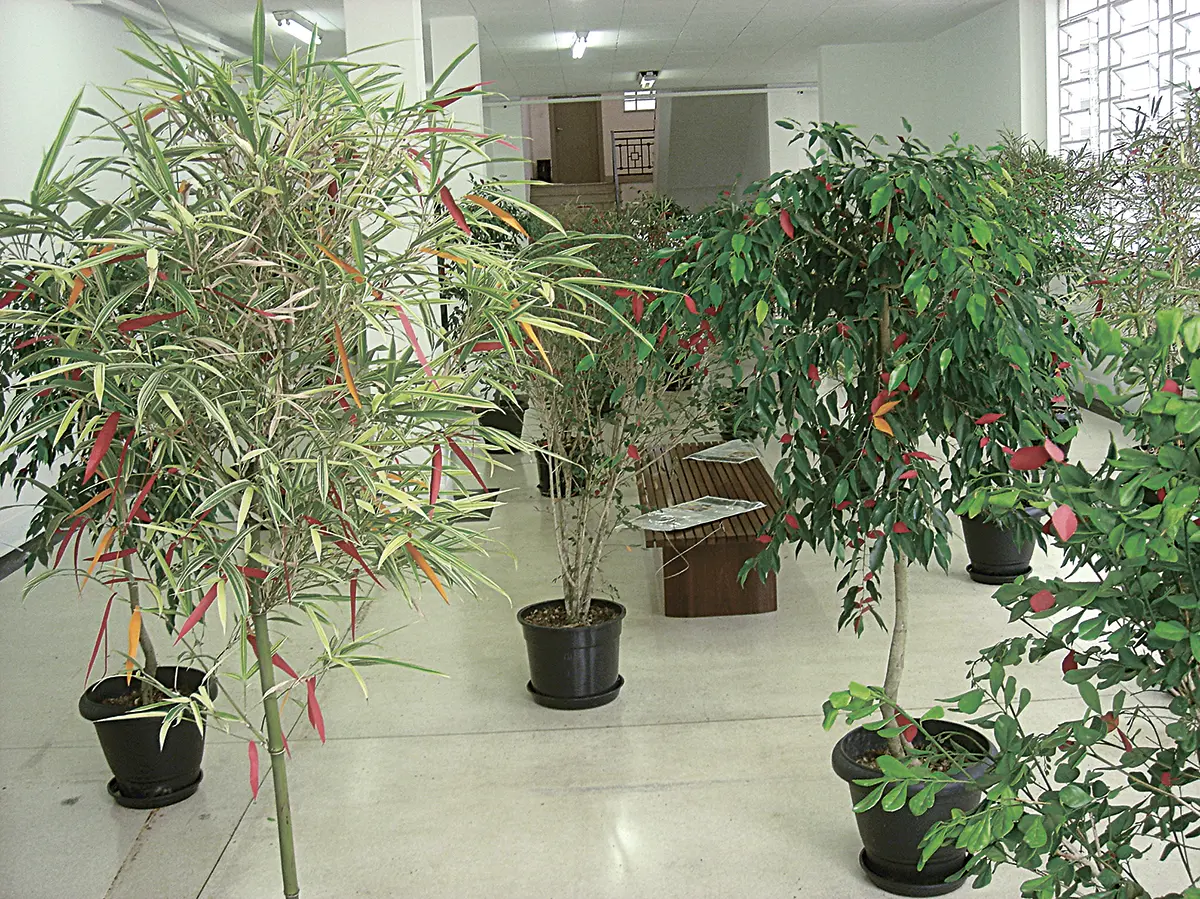
In this module, the gaze is directed towards the environment. Laura Belém’s work, Ainda Outono, interrogates the attention we pay to nature. To tropical plants that do not shed leaves, the artist adds paper leaves in reddish autumn colors, like the ones in trees from regions where the season is well defined. The artist says:
Ainda Outono seeks out the relationship between nature, men, and cultures. With a simple gesture, the insertion of reddish paper leaves into natural plants, I have created a tropical “autumn” that serves as a metaphor to reflect the concepts quoted before. How does Man look at nature, and what is the influence of culture on the construction of that gaze? How does Man modify nature through those interferences (sometimes conscious, sometimes not so much)? How does Man create (or recreate) his environment? How far is it possible to manipulate reality? 5
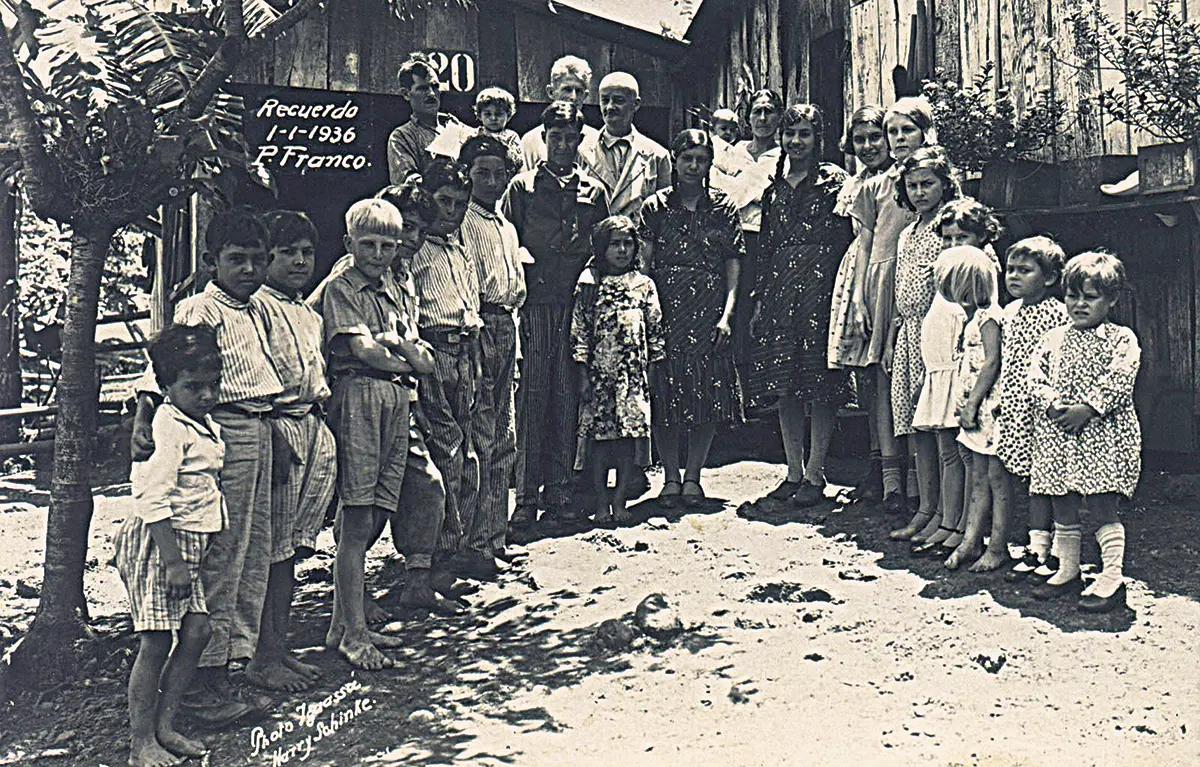
The Tres fronteras exhibition is another segment of the 6th Mercosur Biennial. It was the result of a residence program in Mercosur’s Triple Border —between Paraguay, Argentina and Brazil. This is a river region and a zone of economic activity as well as cultural, political, and linguistic exchanges. It refers to the metaphor of a river’s third shore. Ticio Escobar, the co-curator alongside Pérez Barreiro, proposes an interrogation of the geographical and cultural borders between the three countries. The artists in residence in this section started with the premise of cultural diversity in the creation of their works. Aníbal López, who uses the number in his national ID card, A1-53167 as his signature, follows the route of contraband from the triple border to Porto Alegre. He recreates the map and parodies the attitudes of the smugglers, documented in videos and photographs. He throws empty boxes into the river and reconstructs in performance the trajectory of contraband along the river and on land, through paths in the mountains.
Daniel Bozhkov studied the production and consumption of handcrafts. He decided to learn to carve small animal sculptures like those created by the Guaraní Indians. The Indians carve their sculptures as a means of atoning for the death of the animals they hunt. The artist situates himself in the position of someone who gains forgiveness for the use given to the objects bought from the Indians —not with the original cultural intent, but as a consumer of manufactured objects.
Jaime Gil organizes and codifies letters taken from graffiti and developed into a collective logo for moto-taxis, the triple border’s most popular mode of transportation. He calls the resulting typography Triple fuente (because it uses signs from three sides of the border.) Also, the artist makes a photographic record of the adaptation and use made by the moto-taxi drivers of the material distributed, building a large panel with the typography he created and photographs of the moto-taxis.
Minerva Cuevas participates in the Tres Fronteras segment with a video about ecological issues in the Triple Border, paying tribute to the figure of scientist and writer Moisés Bertoni (the Wise Man,) an emblematic figure who lived in the region and left an important legacy of research in the area’s meteorology, agronomy, biology, and cartography.
Among the monographic shows at the 6th Mercosur Biennial, it is important to highlight the one devoted to the work of Argentinean artist Jorge Macchi. This exhibition was held in the Santander Cultural building and presented a profile of his career and interests over close to twenty years. Seventy works were exhibited, among DVDs, installations, photographs, drawings, prints, gouaches, cut-ups, and mixed techniques. Macchi’s work is conceptual, projecting reflections about the poetic potential of everyday life. For example, one highlight is 32 water pieces (1994,) in which the artist cuts out of several maps the sections representing rivers and attaches them to the wall. Guide of Immobility (2003) takes some neighborhoods out of a map of the city of Buenos Aires, creating an interesting grid with the superimposed empty spaces. There is in Macchi’s artistic investigation another impulse towards directing a critical gaze to urban violence. In A Puddle of Blood (2001,) for example, phrases cut out from a newspaper narrate an episode of violent death, and in the installation Interrupted Song (2005,) the light point created by a mirrored disco ball become perforations on the wall, the ceiling, and the floor, markings caused by bullets or by grenades. Music is also a source of inspiration and motivates another branch of Macchi’s aesthetic investigation, dealing with the work’s constitutive structure. We can cite works like Marginal Song (2004,) digital impression on a musical score; Incidental Music (1997,) three large musical score pages adhered to the wall, their lines formed by randomly selected repeated phrases from British tabloids. The phrases speak of violence and of accidents. In contrast with what we read, we hear, through headphones hanging from the ceiling, a calming, meditative composition.
The 6th Mercosur Biennial also included two shows with a historical character. One devoted to Öyvind Fahlström (1928-1976) and another one to Uruguayan artist Francisco Matto (1911-1995,) both at the Rio Grande do Sul Art Museum.
Fahlström was born in São Paulo, Brazil, in 1928; he left the country at the age of 11 and never returned to his native land. Yet, as pointed out in the exhibition, the artist maintained an indirect contact with his country of origin, on two levels: one, thanks to his sustained exchange with artists, poets, and intellectuals connected to the Concrete Poetry movement; and two, according to the curators, thanks to his feelings of political solidarity with the Third World. The exhibition, titled Öyvind Fahlström: Maps, makes evident that maps, “although apparently neutral in their scientific description of the place, are also tools for control and domination,” as Pérez-Barreiro puts it in his critical text.6 The aerial perspective adopted in the representation, for example, creates a vision of power and vigilance. It is that apparently neutral role that the artist deconstructs. Fahlström adopts the language of Pop Art, using comics in a critical way, as was common in Latin America but not in the US and Europe. It is interesting to note that in the 1960s Öyvind Fahlström lived in New York.
Francisco Matto’s exhibition is retrospective in nature. It gathers 94 works between paintings on canvas and on wood, and wood sculptures. The Uruguayan artist was a disciple of Joaquín Torres García. From his time in the Torres García Workshop he inherited not only the concept of Constructive Universalism promoted by the master, but also the technique for the elaboration of works of art. Like his teacher, he underscored the importance of the pre-Columbian roots of Modern art, observing with great interest the production from that period in ceramics and textiles. His palette approaches Torres García’s, as do his works on wood. Their proximity is great in terms of compositional concepts. Taking this into account, it would have been interesting for the exhibition to provide information on Torres García, creating a module about his essential presence in the River Plate region, not only for his theoretical and artistic legacy but also for his effort in the diffusion of modern art in the region and the artistic motivation he was able to infuse in others through his teaching.
The 6th Mercosur Biennial distinguished itself for its careful curatorship and museography, evident in the different sections. It was an important event for the public, an entirely positive achievement for the organizing Foundation.
NOTES
1. The piers at the port.
2. Gabriel Pérez-Barreiro is a Spanish art historian, general curator of the 6th Biennial, and works as Latin American art curator at the Blanton Museum of the University of Texas in Austin, Inés Katzenstein is from Argentina, an art historian and curator at the Museo de Arte Latino-Americano in Buenos Aires. Lis Enrique Pérez Oramas is a Venezuelan art historian and a curator at the Museum of Modern Art in New York, where he lives. Moacir dos Anjos is an independent Brazilian curator and researcher; he lives in Brazil.
3. Here there is a reference to the groups of Carnival dancers in the Samba Schools, the blocos wearing the same costume.
4. The word Ainda can be translated as either "still" or "also".
5. Artist declaration, September 4th, 2007.
6. Catalog, 6th Mercosur Biennial, p. 28.
LISBETH REBOLLO GONÇALVES
Professor at the University of São Paulo and Vice-President of AICA.