
What the recent Americas Society the exhibition tried to do was admirable: it was smart—informed by a sophisticated
and a new sense of art history that negotiated the global, national, and
local—and was successful if you combined the catalog essays with the visual
presentations. If not, the show could be a bit muddled and confusing. The
failure was not so much in what was accomplished, even though certain arguments
and assumptions within the show could be disputed, but rather in the
exhibition’s presentation to the general public.
Central to the exhibition was the argument that the confrontational art from the “golden period” of Argentine art—roughly from the 1960s to the mid-70s, when the military coup shut down the more progressive post-Perón liberation—is linked to the more intimate art forms of the early twenty-first century that developed after 1976 as a private, internalized resistance to repression. Both were reactions to external circumstances, but the former thought it could change the world while the latter concentrates on quieter interior strategies. In one way, the show was a commentary on the exuberances, successes, and the failures of the more radical elements of the 60s generation, an analysis that is widely held these days, raising questions about how art functions relative to society.
But where is the repression now? The answer offered by the exhibition reached back to the brutal repressions from 1976 to 1983, with the thousands of “disappeared.” However, radical street theatre, performances, and projects were active again by the mid-80s and throughout the economic hyperinflation of the early 1990s. Did these artists set the tone for the empowerment of today’s artists? If so, then confrontation and public exuberance continue to work and there is more to this history than an emerging “intimacy.” Indeed, the show’s definition of “intimacy” was confusing because it was so vague and tended to function in the same way as “confrontation.” That’s okay when one tries to articulate emerging issues, but this exhibition was purposefully designed to argue degrees of difference and likeness, and the subtleties in such threads seemed lost. A viewer left the show thinking there were either two different and unconnected worlds, “bang” and “intimacy” or, in some fuzzy way, all might be the same.
The exhibition design logically separated “bang” and “intimacy” and the two time periods by using two different rooms and strategies. The historical section had a nicely designed timeline using wall text, parts of documents and reports, manifestos (several were reprinted and available to take away), photos, and illustrative material from the period—but no art—to present the development of a European-inspired avant-garde began in the post-Perónist period and growing throughout the 1960s and 70s. This was an art of confrontation that used recognizable strategies such as dematerialization and destruction, the “bang” in the title of the show.
The history is amazing, and much of the material seemed to be culled from recent local archival research in an attempt to offset earlier and more tendentious accounts, at least to judge by the claims in the catalog essays. Pivotal were the aesthetics of the poet-turned-visual-artist Alberto Greco and his movements between Paris and Argentina, which created an internationalist style mixed with local flavors of dematerialization and conceptualism. Greco’s ideas were as or more radical than any European; he signed walls and streets and even people as works of art in the 1950s. Also stunning was Marta Minujín’s 1963 La destruccíon in Paris, a performance in which she set fire to her works at the end of the exhibit. Certainly the funniest and most-remarked-upon work was Peralto Ramos’s 1971 report on how he spent his 1968 Guggenheim award: he held a dinner party, bought new clothes, paid debts, and bought art. The Guggenheim Foundation completed the piece when it found his report “unsatisfactory.” It was perfect!
Victoria Noorthroon, the exhibition’s curator, detailed the development of the “porteña” art scene, a first step in writing the future global histories through the perspective of the local. Only an outline was available at the show but the catalog provided detailed chronologies, essays, and translations of important historical manifestos. The undercurrent throughout this line of history was the strength of the artists and their ability to self-organize. Artists submerged themselves into more socialized group actions while artist-led spaces and institutions emerged in the 1990s.
The second part of the exhibition stepped into the twenty-first century, using selected artworks from eleven artists to construct an argument for a new, more acquiescent, and internalized zeitgeist, the “intimacy” in the show’s title. What was intimate? Well, little could be more touching than the video (My Father, from 2007) by Ana Gallardo, someone who believes that significance is found in small and quite often accidental things. In this work, Gallardo’s eighty-three-year-old father reads from a fragment of a newspaper the artist accidentally found among her mother’s papers, an account by a journalist who happened to ride the same train that her poet father and her painter mother rode in 1957, en route from Spain to Rosario, carrying Spanish seeds to plant in Argentina, including Gallardo in her mother’s uterus. (Among her accomplishments, Gallardo also founded several art spaces and oversaw the first artist-run art fair in 2005.)
I laughed warmly when I read the one-page handwritten account by the conceptualist Judi Werthein of a performance piece, which was told to her by someone she does not remember, at some dinner party (Recounting the Work, 2007). In this performance, the artist (or thief?) went to a bookstore and sat on the floor for hours reading poetry. When he dashed for the exit with the book in hand, he was dragged by security guards to the store’s office, and he recited the poetry he had just stolen. (I still think of the image and concept of this performance, and wonder if I might dare the same act someday.)
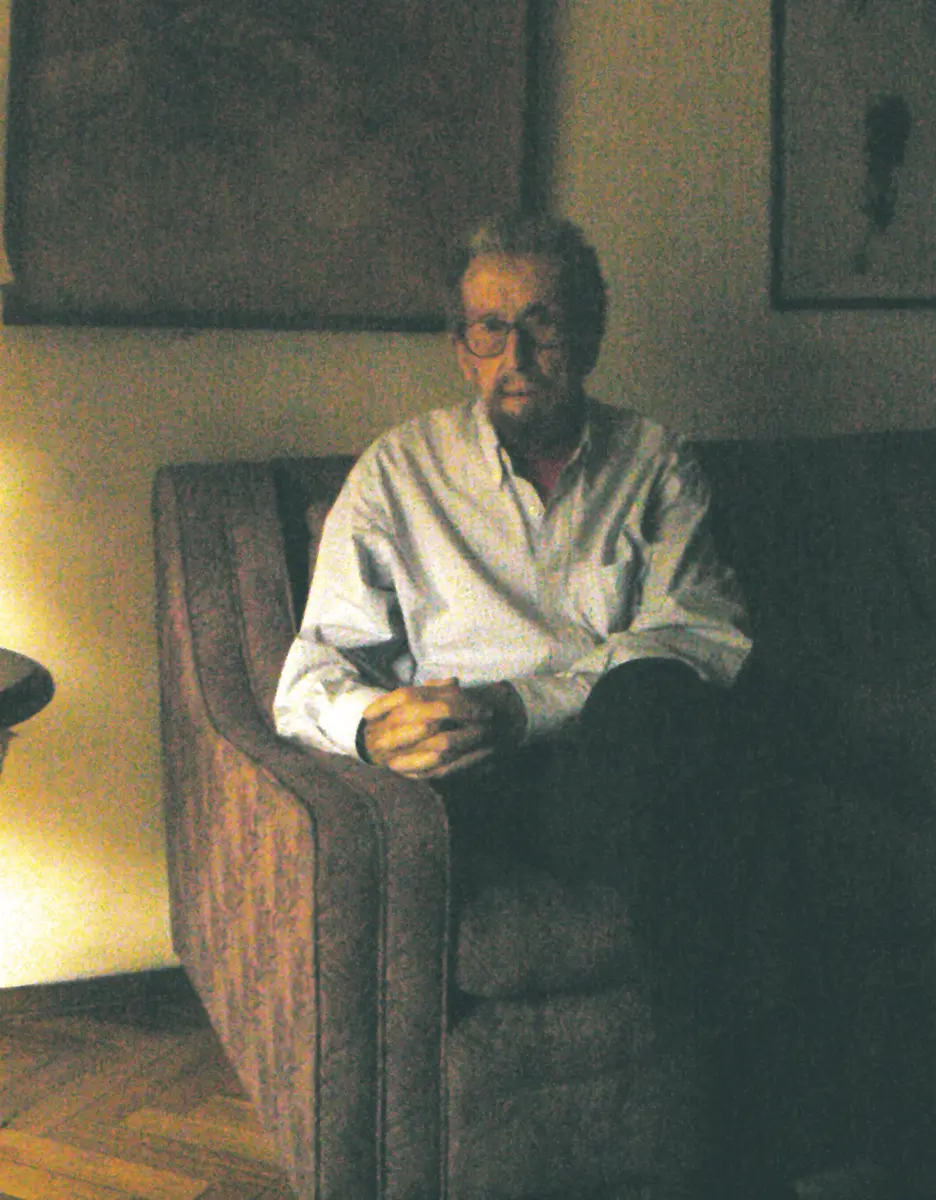
And little could be more intimate than the living arrangement (and its poetically constructed documentation) between the elder Roberto Jacoby (born 1944, and whose name appeared consistently within the timeline in the first part of the show) and the much younger Syd Krochmalny (born 1981). What could have been merely being the tale of an old gay lecher became bitingly poignant as the viewer learned that the two men have agreed to live together chastely for one year but allow themselves to “penetrate” one another with words. As they speak of ideas, lust builds behind the discourse of “seven magical orifices” as part of Jacoby’s life-long dedication to intimate social forms. The public, confrontational poet of the 60s effectively bridges the generation gap and neatly carried the point of the exhibition in his decisions about the personal nature and function of art.
But much of the art either did not make a specific case for intimacy or made the point so generally that one could have applied a long list of other explanatory concepts. “Intimacy” seemed the wrong word because it downplayed and limited the curator’s central thesis, the one that spoke loudest on behalf of the artists: the great diversity within a worldwide shift that occurred in the 1970s. In this move from exteriority to interiority, poets often led the significant emergence from self-centered, infantile destruction to public accountability. This thesis might better account for the concurrent emergence of artists taking charge in the art world. Reducing these movements to the concept of intimacy smothers the pluralism of then and now.
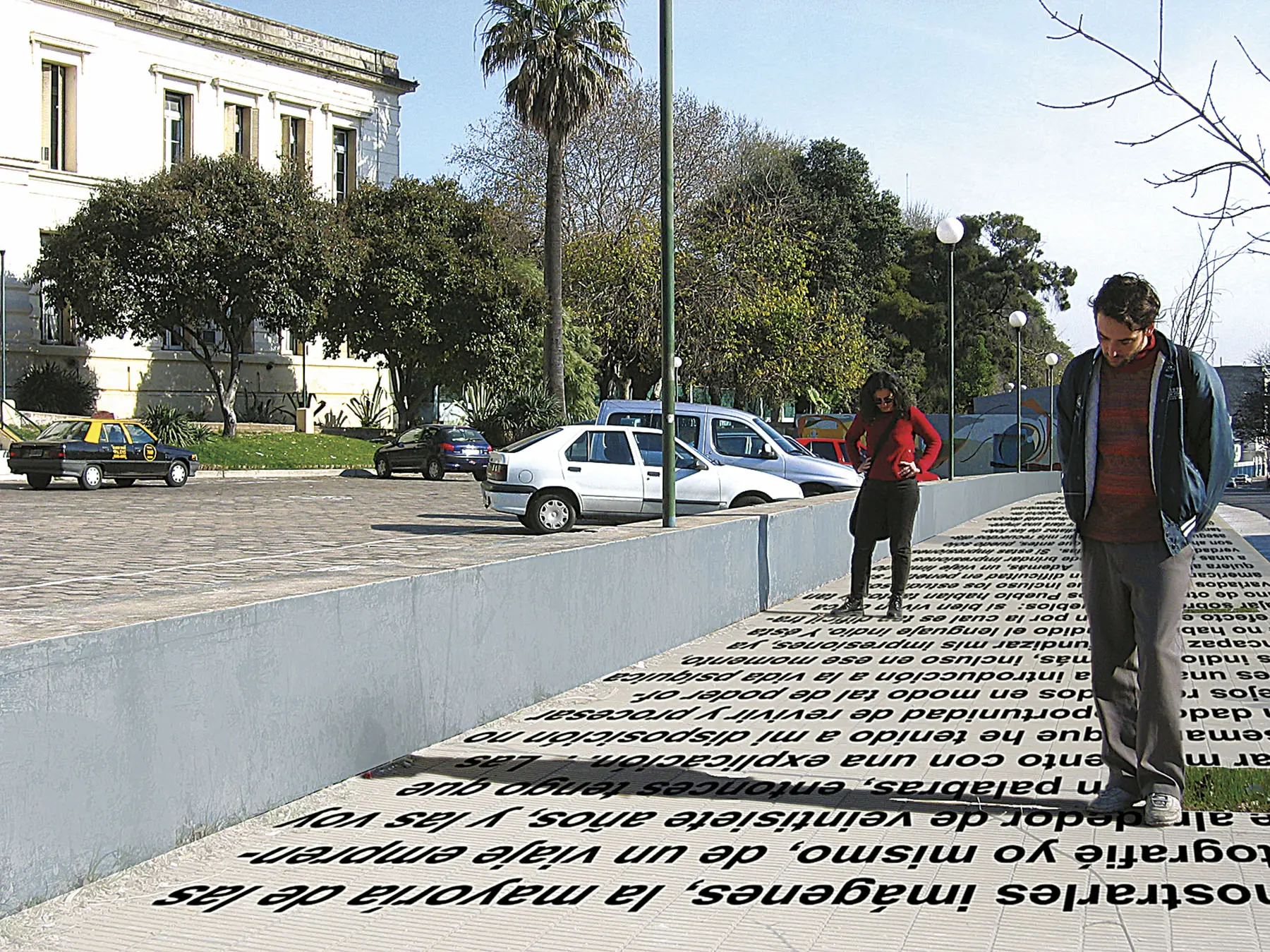
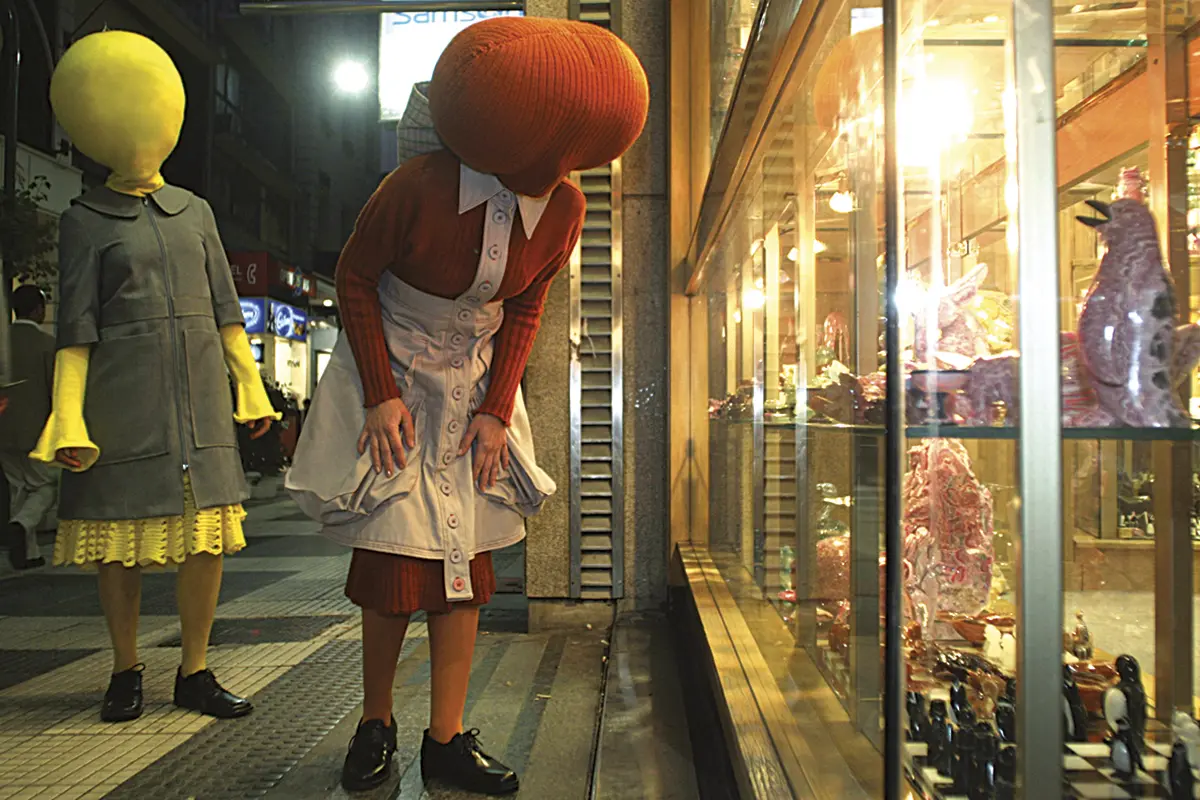
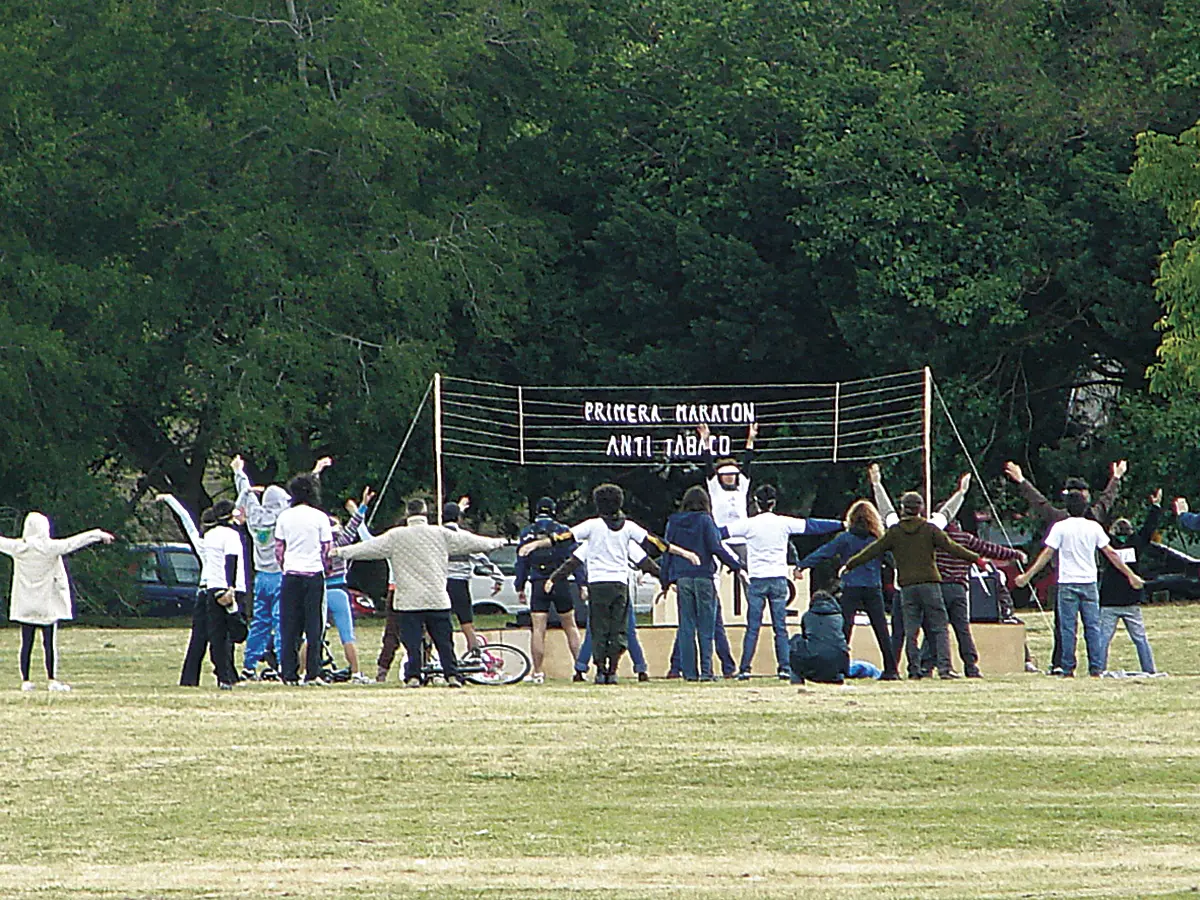
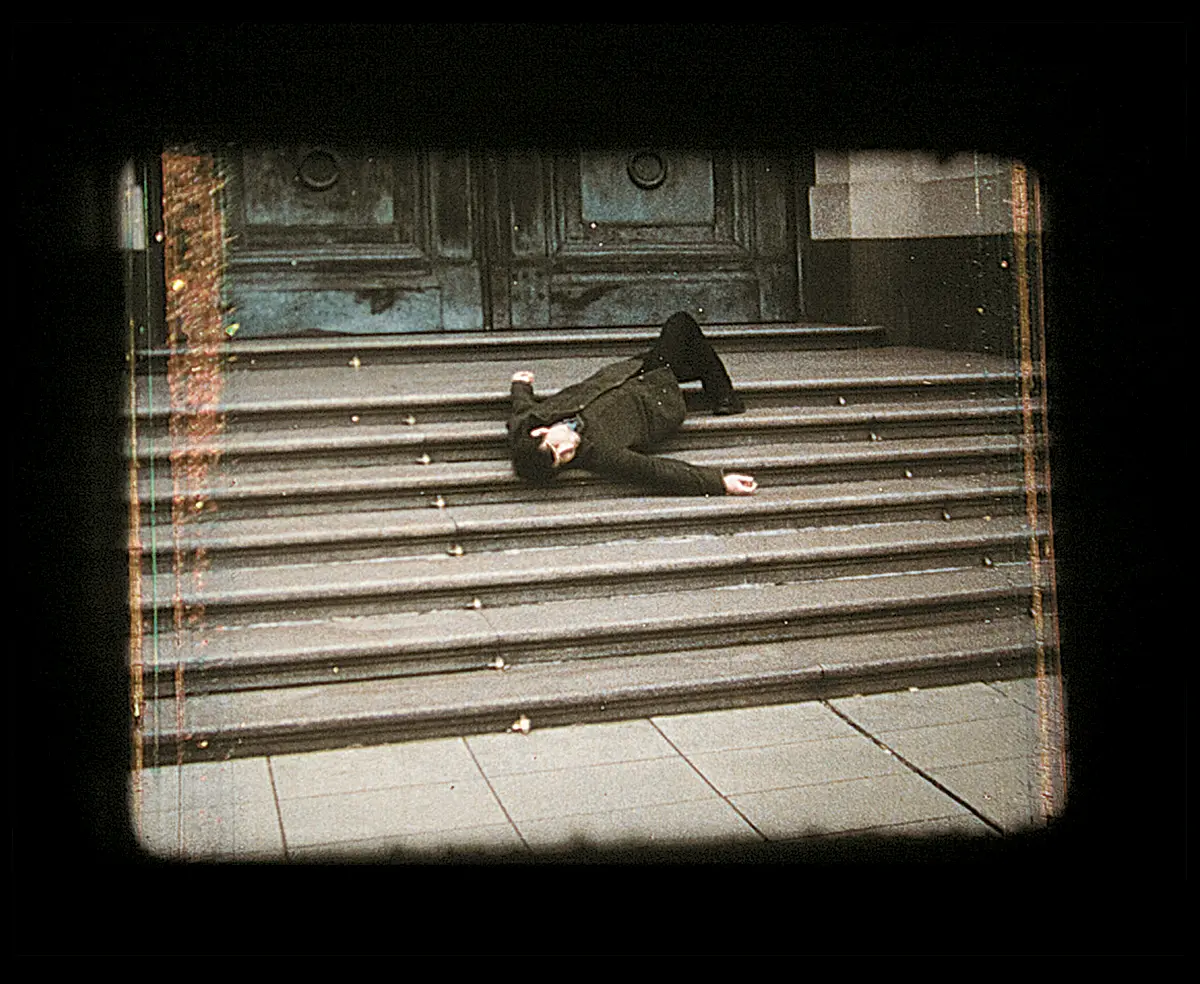
One can argue that the street interventions performed comically and beautifully by the costumed Marina De Caro—or those performed by quirky and marginalized groups documented in the videos of Eduardo Navarro—are intimate, but they can also be seen as parts of larger issues that align them with international and public performance, in which the growing power and desire of artists is used to consciously reclaim a public rather than an intimate space. The same can be argued on behalf of Fablo Kacero’s 16mm film of staging his deaths in front of major institutions and art openings. And what of the texts by Graciela Hasper, frequently taken from historical writings and sources and presented in open, public forums? Intimacy seems obvious only in the general sense as a source for all art. What would happen if one swapped the term “personal” for “intimate”?
None of this disparages the art or the importance of the exhibition. Noorthroon did a service by pointing to new material, staging arguments that force one to confront the plurality of histories, and broadening the discourse by concentrating on “action-based gestures and performance projects” that are “local” and “affirmative intervention(s) into reality.” She knows that one generation’s gesture cannot affirm in the same sense for another generation. Little could better attest to the ongoing power of artists, and Noorthoorn has dedicated much of her life to exactly this: stepping back to allow the artists to speak.
RICHARD LESLIE