
The exhibition Arte, deshonra y violencia en el contexto iberoamericano1 (Art, Dishonor, and Violence in the Latin American Context) gathered twenty Latin American artists from several generations and various career levels in curatorial arrangements that appropriately suited the gallery at the Cultural Center of Spain, in Montevideo (CEE). When I asked the curators Patricia Betancur2 and Luis Camnitzer3 if they were satisfied with the exhibition, she responded with a guarded “yes” and he a protracted answer, but there was an awareness of the good work done after two years of searches, exchanges, and adjustments—the result justified the curators’ circuitous path.
The exhibition was part of the fifth edition of Bentancur’s Laboratorio project (Lab.07), which indicates her fondness for collaborations, and the difficult theme was announced in the title. Bentancur was pleased with the negotiation process with Camnitzer; at first, his idea of “dishonor” was a complexity that she couldn’t fully assimilate. The term “dishonor,” with its outdated connotation, reformulates the theme of the intersection of art and violence, a classic of contemporary art. It is ascribed to the field of ethics and of human dignity as a right to living in community; respecting this principle “honors” one while violating it “dishonors” one. Camnitzer wrote,4 “‘To dishonor’ is perhaps a more accurate term than ‘to violate.’ I use ‘dishonor’ because I lack a fresher, better word.” This term influenced the mobility of focus and the scale of artistic practice demonstrated in the exhibition.5 Also, it opened possibilities for answering the show’s ultimate question: what is the critical and political potential of art? Betancur abstained from conclusive judgments, but Camnitzer said, “Art has a greater probability of functioning as a restraint to violence and dishonor when it helps us to visualize biography.” Following the triad of concepts in the title, historical, ethical, and biographical factors converged in the exhibition. Distinctive elaborations and artistic approaches connected ways of living with violence or the experience of violence.
Bentancur underscored the efforts of Mijael Bahr, Daniel Rial, Pablo Améndola, and Paola Gallo, the exhibition team. She pointed out that Cildo Meireles’s performance Tiradentes: Totem—Monumento ao Preso Politico (1970) could not be presented in the exhibition, so the documentary photographs of the event were shown instead. She said aspects of the curatorial process involved creative tensions that entailed strength and delicacy. For example, she said that Carmen Aroztegui’s work “started as a visual investigation.” In this site-specific work, the viewer listened through headphones to overlapping sounds of undetermined sources while in an empty white cube; the result was not to know where one was or what was going to happen.
Fragments in Pairs
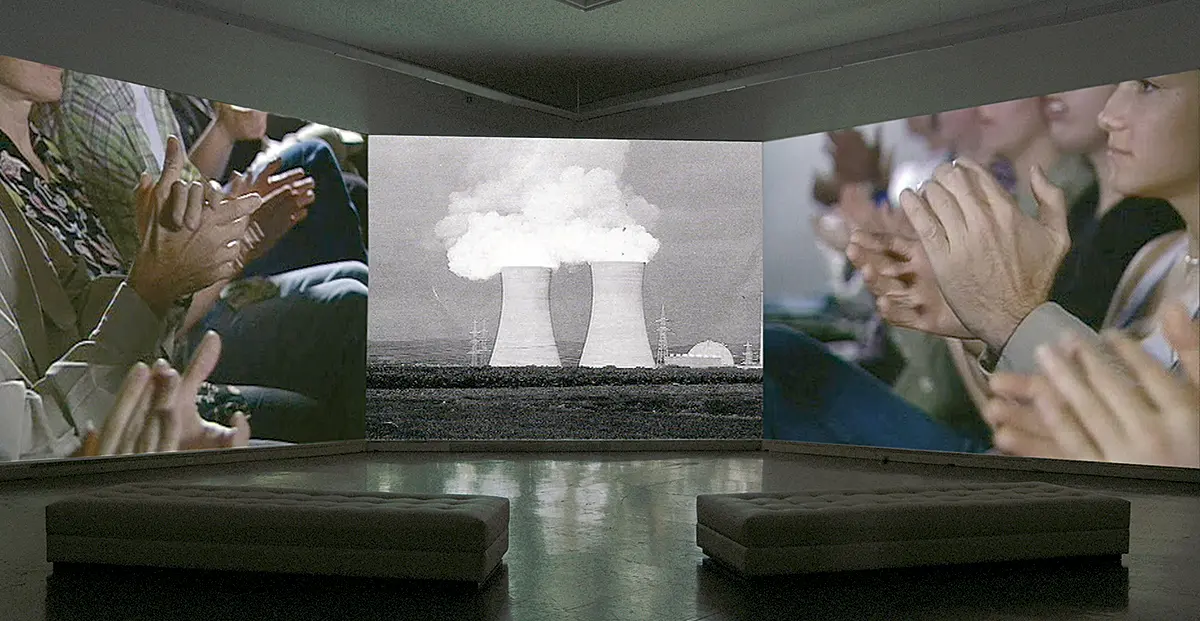
At the entrance of the show was On translation: El Aplauso, a video triptych by Antoni Muntadas.6 The side screens showed mirror images of many hands clapping while the screen in the center displayed all kinds of images, unrelated to the apathetic clapping of the “blind or complacent” audiences on the side screens. Visitors were welcomed to the exhibition by this massive and passive example of the docility effect of the society of the spectacle. The work’s moral sordidness and it's masked violence-filled one’s eyes and ears.
The show covered several themes, encompassing a historical vision (as seen in the works of Cildo Meireles and Ana Mendieta), the violence of everyday life (in the work of Lenora de Barros), and the inescapable issue of Latin America’s recent period of dictatorship (in the works of Clemente Padín, Ernesto Vila, Jorge Tiscornia, Carmen Aroztegui, and León Ferrari, and through a more distanced and spectacular revision in Muntadas’s work). The works’ arrangement was not rigidly thematic but rather open to other variables. Certain works featured small encrypted spaces, like Tiscornia’s cells (a kind of display case with many connotations, such as a funeral chapel), or spaces that were autonomous even if annexed, like Aroztegui’s El calabozo, or the black cube (Bocas de ceniza) by the Colombian artist Juan Manuel Echavarría, which presented the faces and litanies of surviving peasants. The thematic trajectory expanded as one moved from one section of the exhibition to the next: space developed sinuously, recalling the architecture of an ancient underground shelter, and there were noticeable atmospheric shifts.
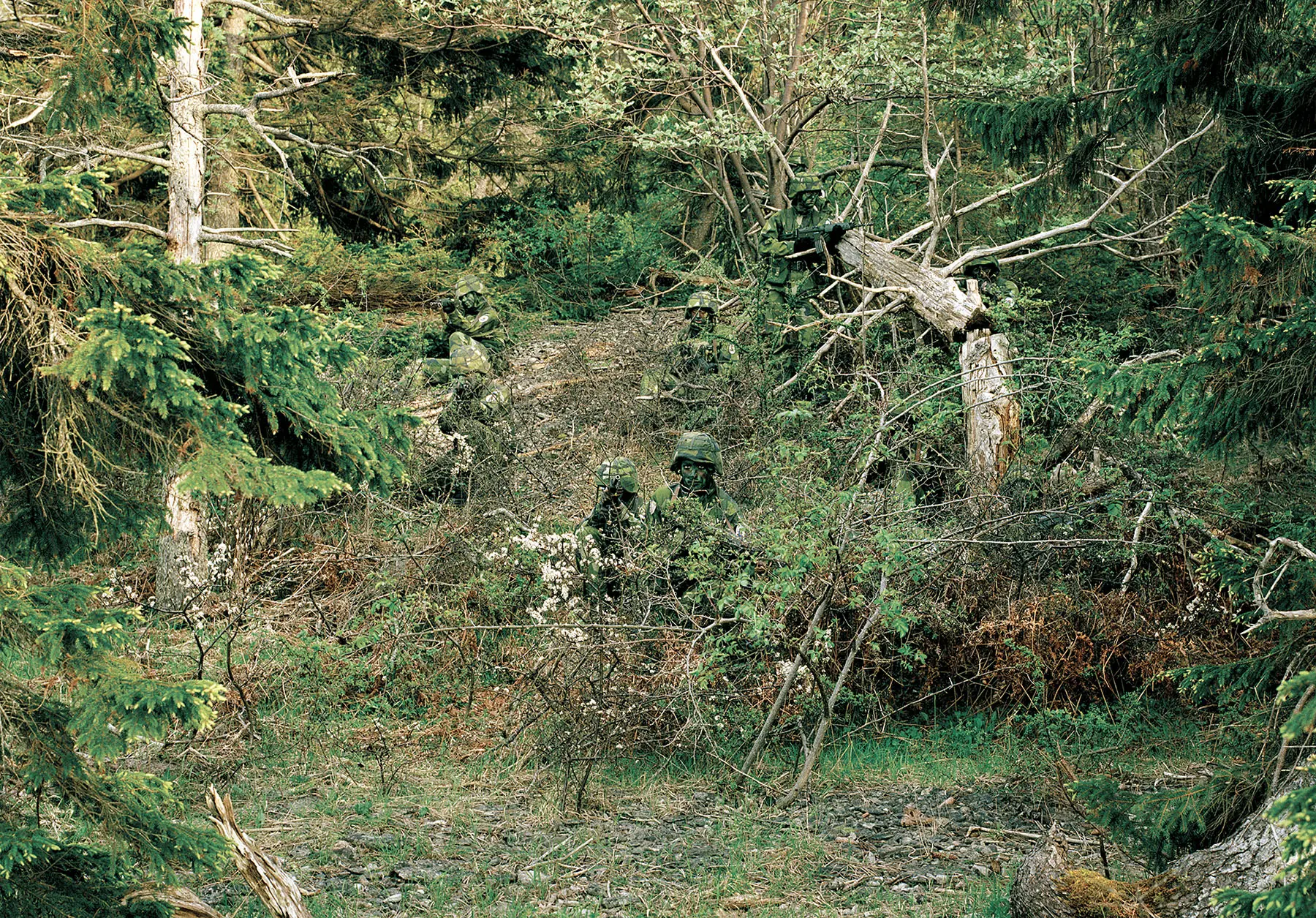
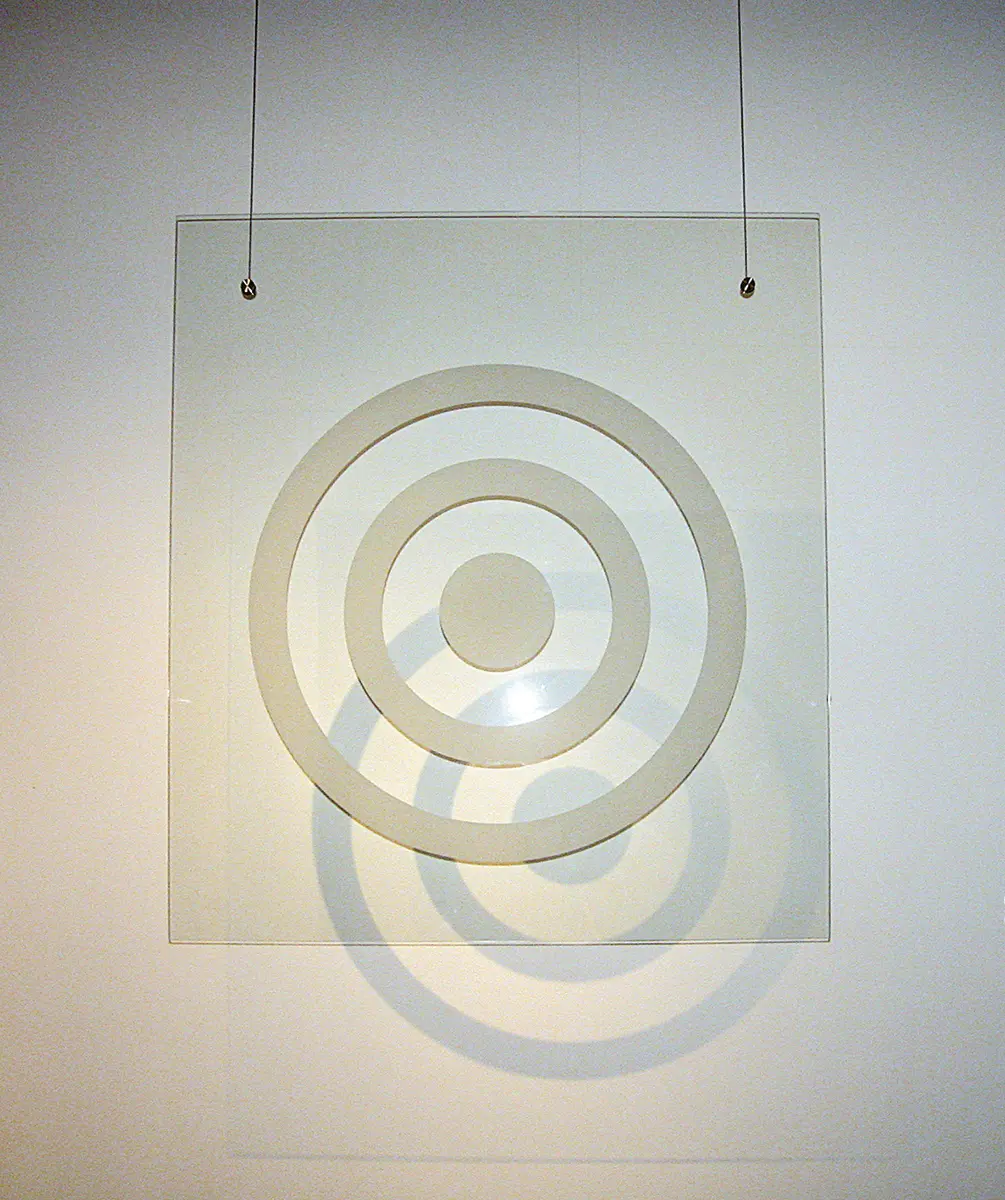
The first group of works demonstrated intimate approaches to the subject. Light and subtle, Ana Tiscornia’s monochromatic pick-up sticks were all printed with the same phrase: No tiene remedio (“It can’t be fixed”). This work, called Diatropismo (“Tuning,” which describes the tendency of certain plants to orient themselves transversally to the action of a stimulus), superposed the texts and generated a meaning contrary to the original phrase, “It is probable that hope can’t be fixed.” The thick, hanging glass target of Ronald Morán’s Tiro al blanco (Shooting at White) suggested the domestic arena of violence and contradictions that remain unresolved. The scene of a Nordic paradise in Juan Pedro Fabra’s photographic diptych presented disturbing polarities: the beauty of the landscape and camouflaged military uniforms and soldier’s helmets.
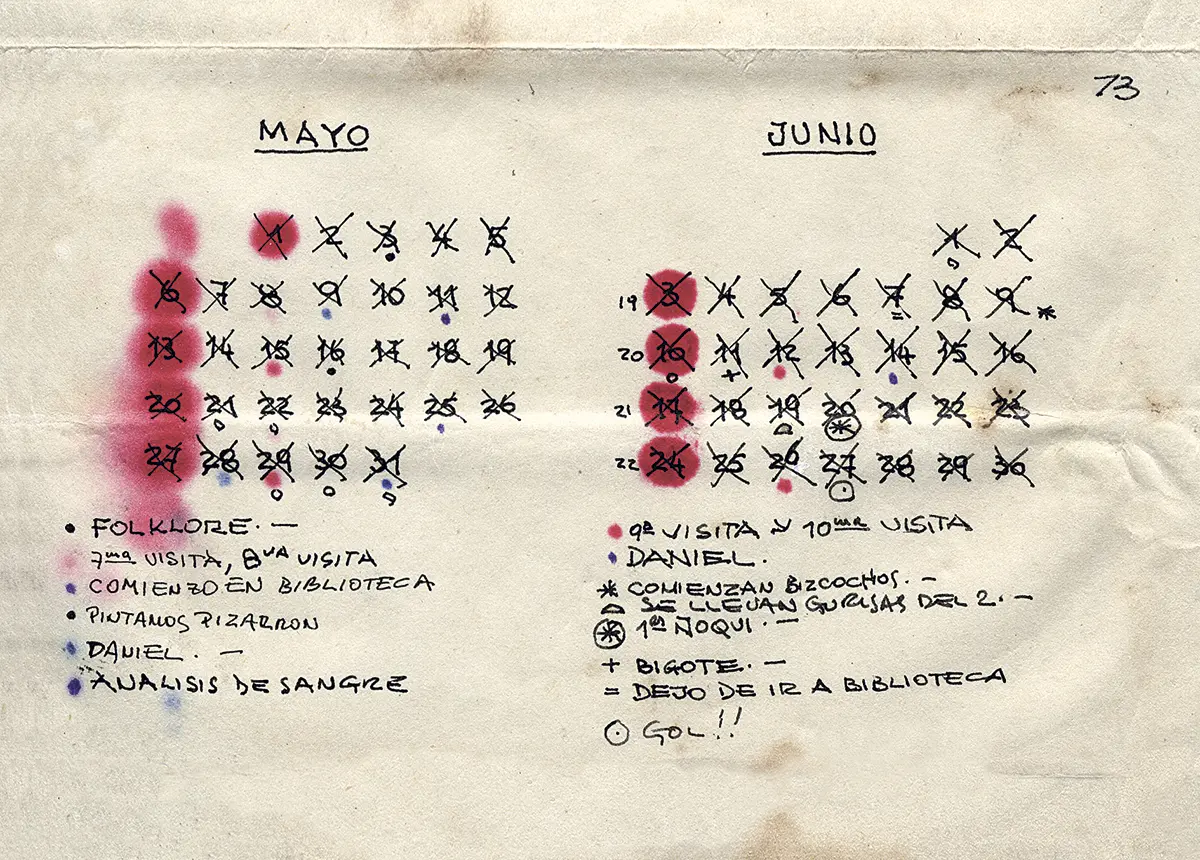
Jorge Tiscornia’s Almanaques (Almanacs), written on small pieces of silk to record the 4,646 days the artist was imprisoned, formed part of an installation that was set into the wall and separated from the viewer by the glass, like a window to the abyss. The wall reproduced a photograph of his cell and the small window in it. Tiscornia possesses the only photographs taken inside Libertad Prison, Latin America’s largest internment camp for political prisoners.7 His work was a paper arsenal: dignity was constructed like time, day after day, sign after sign. Irony and humor built delicate walls on diaphanous support. At first glance, the viewer saw a beacon in the installation: pigmented light in the photograph’s pinks and grays.
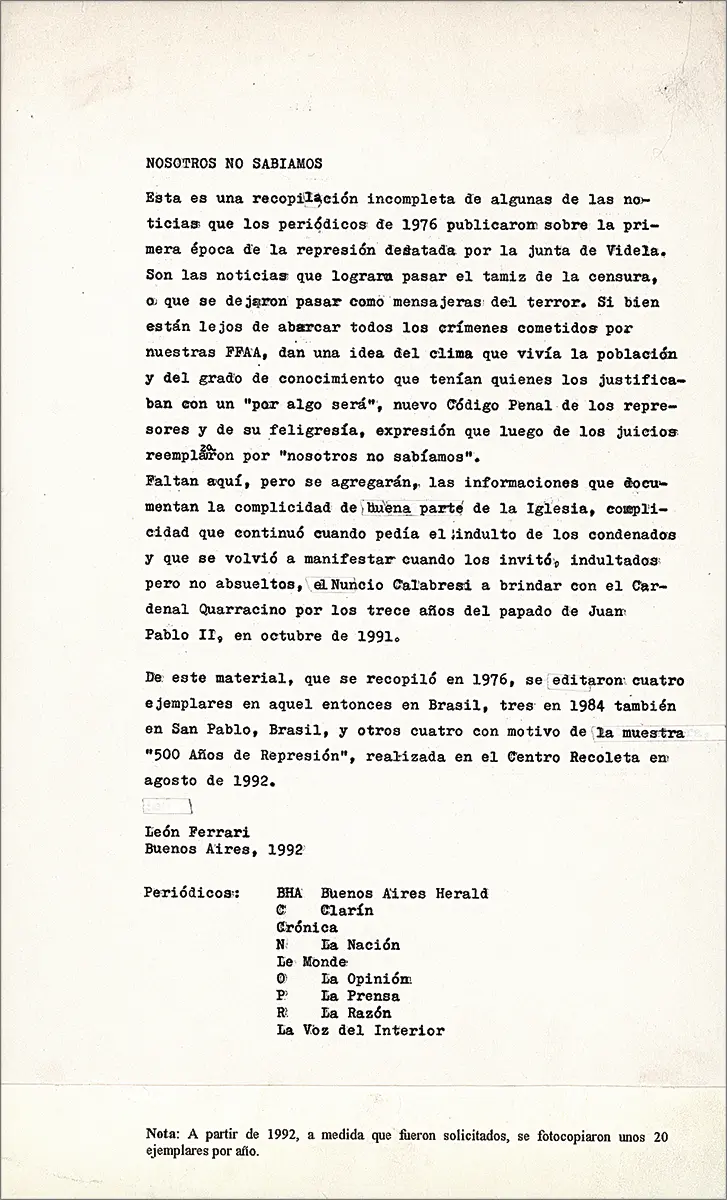
León Ferrari’s Nosotros no sabíamos reproduced facsimiles of newspaper articles dating from 1976. The work revealed that the news published to report on the political terror indicated the degree of knowledge possessed by those who justified the crimes with a shrug and say, “They must have their reasons,” an expression that later, after the trials, was replaced by “We didn’t know.” The nuclei of Ferrari’s series were findings of dynamited, burned bodies, dragged to the Uruguayan coast, and the murders of Michelini and Gutiérrez Ruiz.8 This austere work functioned in dialogue with Muntadas’s proposal: both accused those who are complicit in harm, and the silence that is complicit in the infliction of violence, which obliterates another’s being. If Dante Alighieri visited the show, he would have recognized in Muntadas’s audiences and in Ferrari’s memory-lapsed subjects “those unfortunate souls who were never alive,” two contemporary versions of his indifferent persons. If Charles Baudelaire saw this exhibition, he—who appreciated art as much as he despised hypocrisy—would have recalled some of his own verses.
In a work by Jennifer Allora and Guillermo Calzadilla, a monitor showed a suckling pig being roasted on a stick. At a pace as monotonous as that of the turning stick, the video Sweatglands, sweatlands played a Puerto Rican reggaetón song. The image of the flames reflected on the pork’s lubricated skin was evocative.
Betancur underscores the effort of the team in charge9. She points out: ‘’Cildo Meireles’ work10 was supposed to be another one, but it was impossible for the available space, so we went with the photographs’’. She abounds on aspects of her curatorship “in which there were strong and delicate creative tensions’’ As Aroztegui’s process, whose ambientation of an empty white cube subjected to over-exposure where through a couple of headphones we hear overlapping sounds that make it very difficult to know the distance from which they are coming, ‘’started as a visual investigation’’. The result is not to know where one is or what is going to happen.
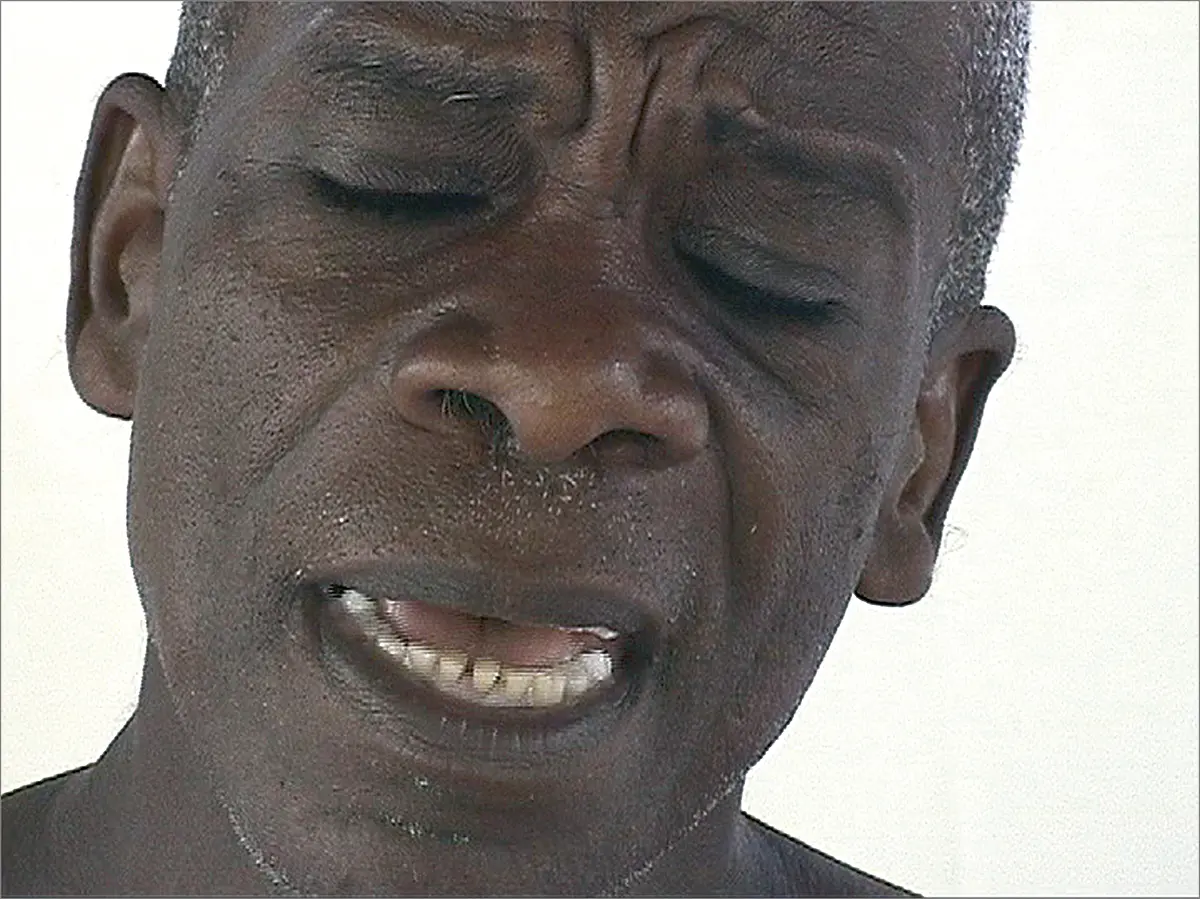
“A rifle was heard / A-K was heard / A bomb was heard / The para responded,” sang Noel Gutiérrez, who possesses a famed capacity for lyrical composition and was a witness of the Bojayá, Chocó, Colombia massacre. Before him, Domingo Mena, also an Afro-Colombian, had recreated the same episode: “I remember that on May 2...” A video image, with fixed close-ups of faces from the lower classes, was accompanied by sober voices of Colombia’s poor. “Listen Mister President / Jeez! / How will you govern? / Because if you keep on like this / Man! / The peasants you are going to kill,” argued the weathered, old face of Rafael Moreno, a spokesperson for the displaced peasants, for the Ash Mouths.

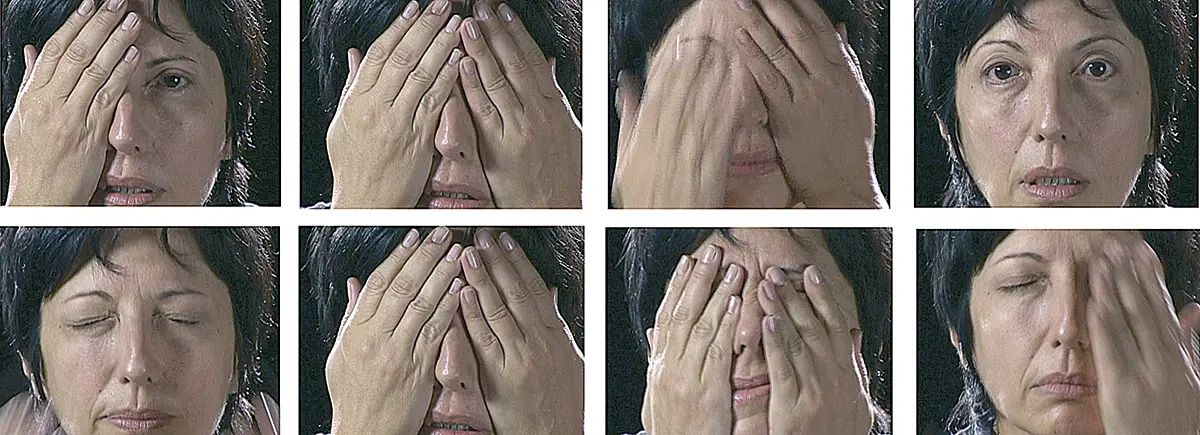
Lenora de Barros’s video (Nao quero nem ver) conveyed the theme of building identity; she portrayed herself to the camera, which closely framed her face. At times the viewer saw de Barros’s face and hands and at others a head wrapped in a persistent knitted weaving that, unlike Penelope’s, seemed it could not be undone. When a hand succeeded in uncovering the eyes and nose, photograms reorganized the action backward. Changing and fluid rhythms established simultaneous images in which temporality was tangled with the fingers pulling on threads to undo the knots of the suffocating weaving. This self-portrait didn’t show autonomy but dependence and punishment, or self-punishment. In the work, time was non-linear, and moans and cries recorded an invisible struggle that has taken place for many years. An inheritance of contradictions has inscribed the “second sex,” which has been violently pushed into not seeing, not wanting to see, and not liking itself.
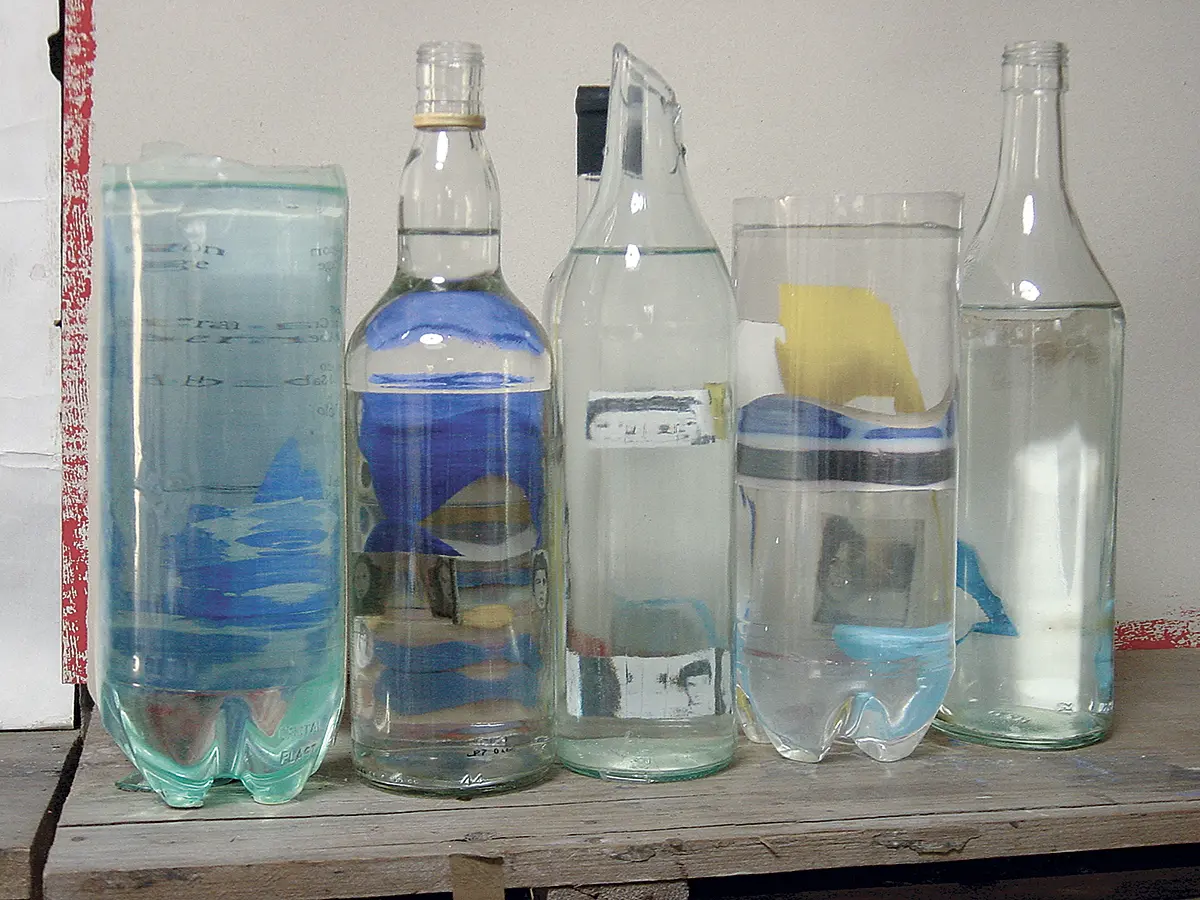
Ernesto Vila’s work, with faces at play and in flight, elaborated on the disappearances and the memory of State crimes. Identification photographs behind distorted lenses of water-filled bottles referred to the murders of people thrown alive into the River Plate. This sinister crime, a “disfamiliar” one in Freudian terms, was especially ominous for the people with beaches and ports on those waters. The images in the work would not standstill. When the viewer sought to bring them into focus, they evaded the effort, remaining visible yet ungraspable. This failure of focus was a symbol in itself, referring to unfinished grief.
Camnitzer’s formulation of “dishonor” evoked Primo Levi’s analysis of the concept of “inflicted or suffered violations,” the “indecency of a fact that has been carried out irrevocably.” Levi, whose Auschwitz-influenced texts honored the craft of writing and of living to tell the tale, transcribed the words of the philosopher Jean Améry and made them his own: “The curse of impotence never dies out.” Ernesto Vila’s work of persuasive delicacy—with a silhouette poured on paper and suspended by a nylon thread that moved with the viewer’s breath—suggested the fleeting possibility of abolishing that curse. The work’s title was Indicios de..., a truncated phrase. How should one complete it? Should one assume that the ellipsis suggested an unpronounceable word? Was the phrase “indicios de vida” (“signs of life”) awaiting its place in a dialogue? This was just one of the challenges posed by this thought-provoking show.
NOTES
1. On view October 19–December 29, 2007.
2. Patricia Bentancur is a curator and artist, as well as Director of Exhibitions and Audio-Visual Media at the Cultural Center of Spain, Montevideo.
3. Luis Camnitzer is a curator, artist, and emeritus professor at the State University of New York.
4. “Arte y deshonra,” Lab.07: Arte, deshonra y violencia en el contexto iberoamericano (Montevideo: CCE, 2007) 23–27.
5. “In the field of art, what matters is the mobile scale that goes from the large actions to the small acts of dishonor in human life, because the awareness of that mobility makes it possible to define the artist’s field of action.” Ibid., 24.
6. This project was part of the exhibition Intersecciones, Bogotá, 1999.
7. The formal name is Military Detention Facility Number 1, San José, Uruguay.
8. Zelmar Michelini and Héctor Gutiérrez Ruiz were two Uruguayan ex-legislators persecuted by the Civic-Military Dictatorship installed on June 27, 1973. They were killed in Buenos Aires on May 20, 1976, in a coordinated operation under the Condor Plan, a powerful state-terror operation whose actions were documented after the discovery of the “terror archives” in Asunción, Paraguay.
9. Mijael Bahr, Daniel Rial, Pablo Améndola and Paola Gallo.
10. Tiradentes: Totem – Monument to a Political Prisoner, 1970.
TATIANA OROÑO
Uruguayan writer and art critic.