
A ship filled with boxers departs from one of the old trade union ports in London
and sails through the Thames to the rhythm of African drums. Other boxers
headed by a piper advance in a procession through the Millennium Bridge. Both
groups greet each other at the entrance to the Tate Modern Gallery downtown in
the capital of Great Britain. Inside the gallery, there is a boxing ring, where
girls and boys between the ages of 10 and 12 train. Dancers from the Flawless
Dance Company and rapper MC Mic Assassin, welcome the newcomers to begin a
night of boxing. The Fight is a
project by Panamanian artist Humberto Vélez, whose work centers around
communities and groups that are sometimes marginal.
Vélez told BBC that “The idea for the project came from my experiences in Panama and also from my life in Manchester, England, where I lived for more than ten years. When Tate asked me to come forward with an idea, I told them that working with boxers was the closest thing to me that I could work with. First, because I was able to communicate immediately with boxing communities, which are numerous and have a powerful and historic presence in south London and are near the Tate. And second, because metaphorically and from an action perspective, boxing represents much of what I believe life in this city to be. Poet, filmmaker, and boxing manager, Jean Cocteau used to say that Panama Al Brown—the first Latin-American world champion boxer in 1929 and who also was Cocteau’s lover—was a presence and that this presence could be transformed in art”.
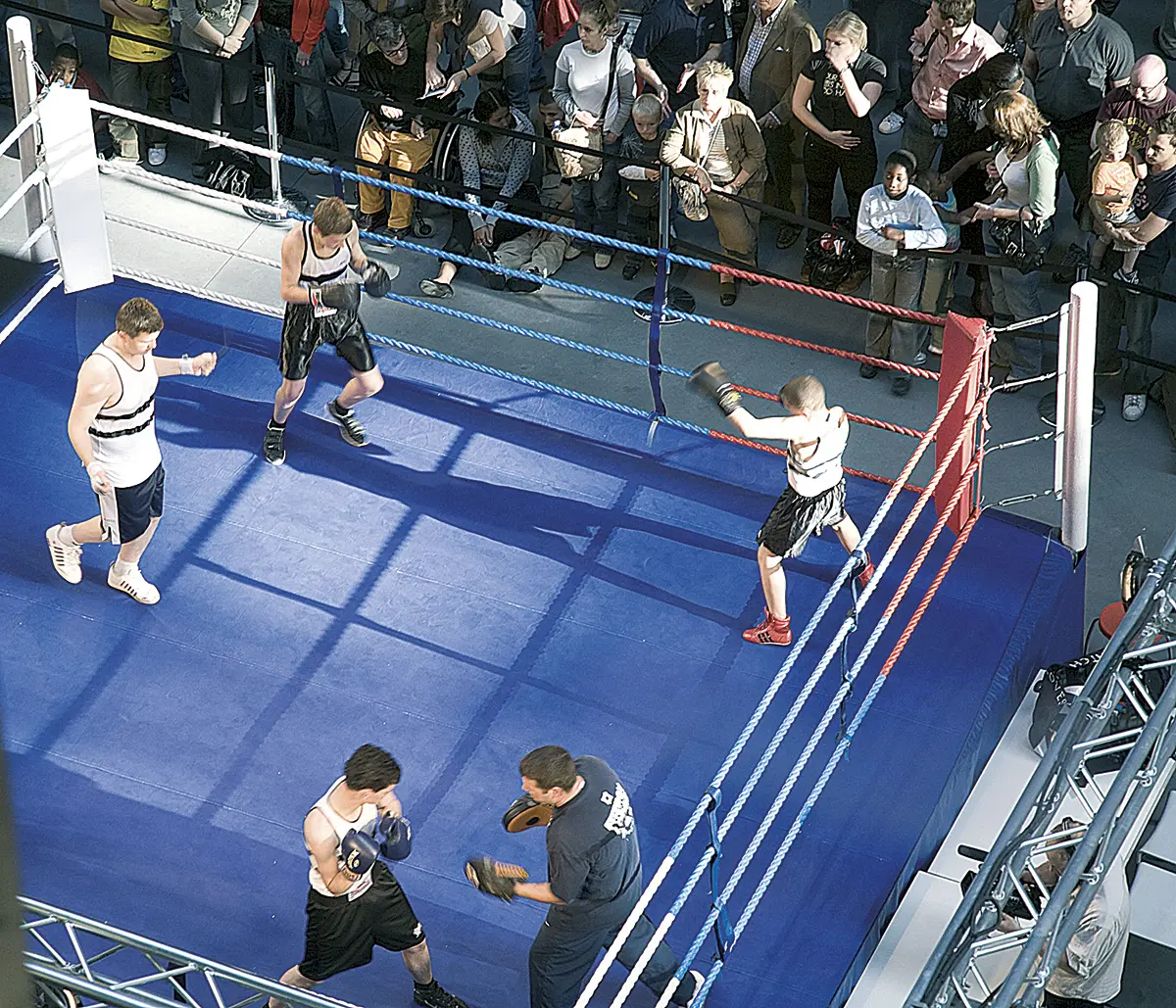
Vélez worked for many months with three boxing clubs from the Southwark district of London. “As an artist, I like to work with groups that are generally regarded with a negative bias”, he affirms. “In the past, I have worked with immigrants, women, and other different groups that possess no visual or political spaces for asserting their identities in society. Boxers are sometimes underappreciated or are labeled working-class, aggressive, delinquents, vulgar, savages, inhuman… it is a huge misrepresentation. I am interested in how non-artist making art is perceived by both the art world and the general public. One cannot completely observe it only from the perspective of the boxer in the ring. A series of very complex communities are involved as well, and their historic natures are associated with labor unions, social struggles, migrations, and specific jobs. It is because of all this complexity that I invited young local artists—dancers and a rapper—to collaborate with me. They have researched this theme, spoken to every boxing club director and to boxers from different generations; everything they have learned has been used in the project”.
Vélez wants institutions like the Tate to offer a forum for these communities. “My interest is artistic, but I am totally convinced that one can develop strategies to help people and give something back to the community, that the artist can stop being selfish. I have often asked this institution to take a new stance toward non-artistic groups, to incorporate and listen to these groups, to allow their voices to be heard concerning what it should be exhibited here”.
Joshua Ejakpovi, a young boxer who participates in The Fight, affirms that his experience has been very positive: “There is a little bit of me in everything we have done, like boxing, training, music, coordination associated with dancing, and all those other things that are complementary and are easy to merge into the project. Enjoying to the maximum anything one does help to achieve the best results possible and I believe we have done that here by working as a team”. His trainer Mick Gregory affirmed that “… this project has transformed the lives of many of our youngsters. To have been invited to collaborate with one of the world’s most important galleries have made them very proud, as they now have realized they are respected as human beings, beyond the sporting circles”.
The curator of this project at the Tate Modern, Gabriela Salgado, said that one of the most significant aspects of Vélez’s work is that it always involves an extensive participative process. “I am not interested in an event that requires one member of a group to replicate an artist’s idea. What attracts me precisely in Humberto’s work is that he interacts with people, he incorporates in them the idea, consults with them, gathers their experiences, and does not impose ideas on them. Otherwise, the process would become very utilitarian: the artist would just end up using the community for his own personal benefit”.
MANUEL TOLEDO, BBC WORLD SERVICE