
There
are exhibitions that have a marked impact in the course of the visual arts of a
country. That was the case when Les Demoiselles d’Avignon and other cubists
paintings by Picasso were exhibited in New York in the ’30s, and that is the
case with Botero’s recent exhibition in Washington, D.C. condemning the
atrocities that have occurred in the United States run prisons in Irak, and
that was the case with the landmark exhibition that three of the most important
Puerto Rican surrealist painters – Marta Perez Morales, Jorge Zeno, and Rafael
Trelles — presented at Casa del Libro in Old San Juan in the late 80’s.
That remarkable show made it very clear that there was a new surrealistic vision/current in Puerto Rico at that time, very different from the one art lovers were accustomed to the island until that moment – from internationalized/commercialized Salvador Dali, Remedios Varo, Leonora Carrington and Frida Kahlo, to Puerto Rico’s Carlos Raquel Rivera (a member of Generación del 50, who painted astonishing surrealistic compositions which combined socio-political elements and his complex and enigmatic inner selves).
Figuraciones sobre plástico: María Antonia Ordóñez and Rafael Trelles, exhibited at Galeria 356 in San Juan at the end of 2007, was not only one of the best exhibitions in Puerto Rico during the last two years but definitely a landmark exhibition for that small but fully surrealistic empowered island in the Caribbean.
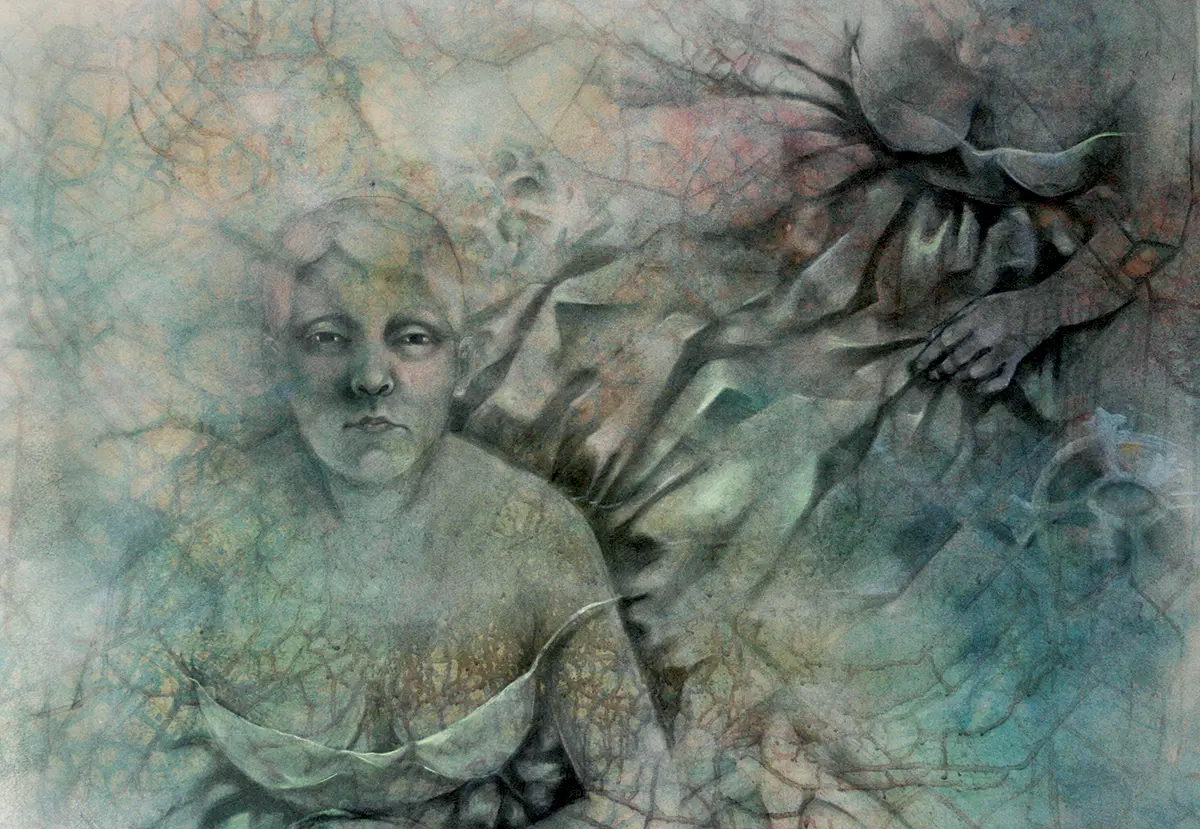
Figuraciones sobre plástico successfully combines the recent work of two extraordinary artists in the field of postmodern surrealistic figuration: Maria Antonia “Toña” Ordoñez (Cuba-Puerto Rico) and Rafi Trelles (Puerto Rico), both in their 50’s, both mature and quite rich because of what the ports they have visited throughout their plentiful journeys and what life had given them, both ready to share with their people and art connoisseurs all over the world that Puerto Rico has true “heavyweight” artist in the field of contemporary surrealism.
Although Ordoñez's artistic production during the last 20 years has been constantly surprising and quite spectacular in the themes she has dealt with, it has been relatively small and sporadic – presenting mostly small but breathtaking compositions with women as the protagonists of the great Comedia we are living every day. From the beginning, she established herself as one of our best artists in the field of drawing, and without any questions, one of the truly sophisticated and poetic chroniclers of a growing worldwide intelligent post-feminist art movement. Taking freely from the Renaissance and from her own personal experiences (is her work openly autobiographical?), her women embodied a different and provoking kind of beauty, a different and challenging new presence/responsibility. In the eyes of her personages, viewers could see they understood both Plato’s philosophy about the real beauty and that they had been in Cuba’s wars of Independence; that they knew the meaning of Janis Joplin's painfully beautiful song A Woman Left Lonely and the presence of domestic violence in contemporary Puerto Rico; they were Alice in Wonderland and the future leaders of Latin America. And the public could understand that their lips had kissed other lips during the ’60s, during the organization of the Feminist and Gay Movements in the ’70s, and during the general emptiness of the ’80s and ’90s. And that their hands and minds are ready to do whatever is needed to achieve total equality in the first decades of the 2lst Century.
Her narrative moments did not tell you a full story but invited the viewers to enter the worlds of women. The beauty/power of her work lied in her own kind of openness, in her desire for men and women to see more than what they were taught/accustomed to seeing. And she did every one of her drawings with intense passion because she understood that her inspirations were one of the main elements that made Life worth living.
And now she presents herself – fully empowered as a woman and as a creator – again with her superb natural style, drawing/painting on Plexiglass, and giving a new type of life to her new personages. In her enormously lyric present compositions –Tres mujeres y una mosca, Dos figuras y un drapeado, Desnudo masculino: Ramón and Rostros rotos, just to name three masterpieces —, the human figure (face and body), successfully combine the essence of the sculptures made during Classical Greece, her love for the canons of the Renaissance and present-day minimalism. These three elements are combined/embrace/dialogue in most of her pieces with unique elegance, lyricism and, yes, pleasure.
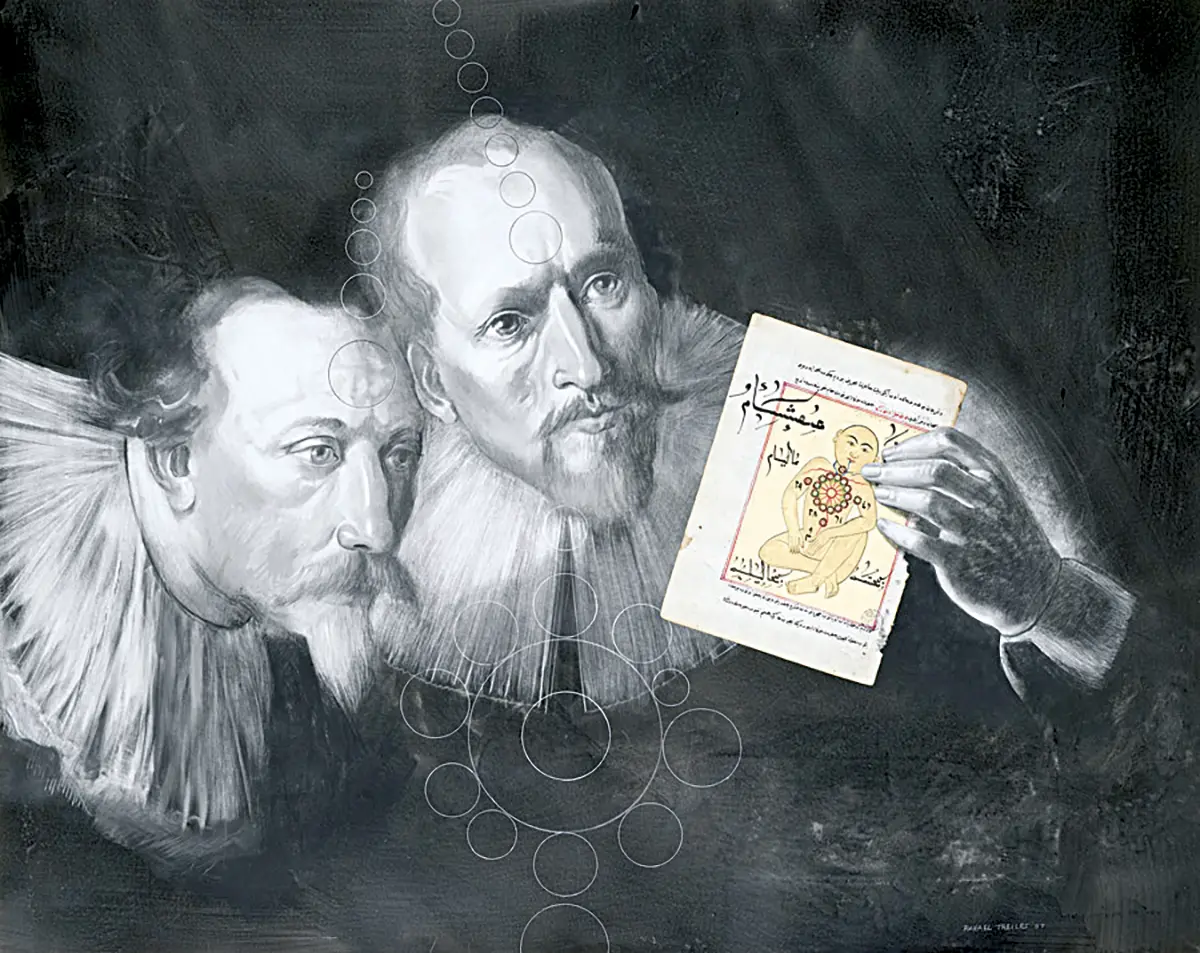
On the other hand, Trelles a well established and extremely successful surrealist painter, and recently our “urban graphic troubadour” — who in October of 2007 arrived triumphantly from Buenos Aires where he presented one of the most interesting public art projects are ever done by a Puerto Rican artist abroad (which consisted of “cleaning”, with pressure water machines, dirty walls, sidewalks and streets, but leaving signs, drawings, and literature obtained by means of a technique somewhat similar to the one used for serigraphs which left the dirt, now with well-defined forms, “teaching” many porteños how to “read” their new walls, sidewalks, streets… ), exhibited a group of magnificent surrealist portraits, very different from the paintings he had accustomed us to.
For these extraordinary compositions the artist literally uses anything he can to obtain his final result on PVC-plastic, establishing a convincing dialogue with masters such as Vermeer, Velazquez, Titian and Rembrandt, and more contemporary artists in the field of hyper-realistic figuration and, of course, his own previous work. Breathtaking compositions such as La leccion de anatomia, El poeta, Sofia II or Hipnos prove that he has created his own/unique style of tropical surrealism where History of Art, contemporary existentialism, present ecological concerns and Puerto Rican history intertwine effectively and convincingly.
Using plastic as their support, these two artists who like and respect each other greatly, have accepted the challenge to turn the human figure into visual poetry by using everything – pencils, ink, paint, graphic techniques, adventurous use of light and colors – lo let us see ourselves on plastic, everyday reality for millions of us in this technology-oriented/slave society of ours.
Figuraciones sobre plástico: María Antonia Ordóñez and Rafael Trelles was a total success not only for the original supports both artists used in which to give life to their surrealistic imagery but mainly for the quality and originality of the microcosms they successfully translated in each work of art.
MANUEL ÁLVAREZ LEZAMA