
In recent years, video art has reached an extraordinary level of development in Argentina. Its precedents were in the 1960s, its historical beginning was in the mid-1980s, with artists such as Carlos Trilnick, Jorge Laferla, Fabián Hoffman, Andrés Di Tella, Luz Zorroaquin, and Diego Lascano, and its consolidation in the 1990s structured its own domain for production and circulation. Undoubtedly, video art is now present in the art world’s most important events, in great fairs and important museums. New players have come to the scene and become well-established protagonists in the paths opened by new technologies.
In Argentina, Graciela Taquini has an essential, pioneering place in these activities as a curator, historian, and promoter of video art and as the creator of works of great distinction. I have a pupil/teacher relationship with Taquini from our interaction at university, and we have conversed at length about the reach of video in the contemporary world. In one of her articles, she has written that video art might be the last artistic/technological utopia before the rise of the Internet, one that posits a personal response to the technological and communicational phenomena imposed by the new media. She asserts that society appropriates video in the domestic realm to record its memories and everyday celebrations, while the cultural industries also use it in various ways. Artists use video to reinvent it, manipulate it, give it new functions, and open new conceptual, poetic, and imaginative meanings.
An important Argentinean precedent was Time Situation, by the U.S.-based Argentinean artist David Lamelas. In 1967, Lamelas presented a work comprising a semi-circle of seventeen TV monitors that could be altered by various elements such as magnets or synthesizers and even human voices. This was at the Di Tella Institute, a venue synonymous at the time with the local avant-garde. Also at the Di Tella Institute, Marta Minujín deployed closed-circuit tapeless videos as part of her happenings. Another artist at the Di Tella in the 1960s, Jaime Davidovich was among the video art pioneers. He created the first cultural cable station in New York, anticipating the YouTube phenomenon.
Taquini has told me that Buenos Aires will soon see the expansion of the General San Martín Cultural Center, with six underground galleries that will be devoted to the development of multimedia. Significantly, she started the first video art exhibitions at the same General San Martín Center in 1986, sponsored by professor Elena Oliveras. Immediately afterward, the Spanish Cultural Center and the Rojas Cultural Center became alternative epicenters of video art.

The great expansion of video took place in the late 1990s. The easy access to this technology made it possible for people coming from the music, architecture, and visual arts fields, among others, to approach the form. Although the form was initially conceived for small auditoriums, little by little it expanded its audience in this way.
In Buenos Aires, the Museo de Arte Latinoamericano (MALBA), the Museo de Arte Moderno (MAM), and the Telefónica Foundation acquired the proper equipment and presented video installations, video objects, and interactive video. Managed by Carmen Grillo, the Telefónica Foundation in particular has devoted itself entirely to these new art forms.
As Taquini has accurately pointed out, research into the history of video in Argentina is still highly incomplete.1 Yet the country was never isolated from the international movement. Both Jorge La Ferla’s festivals at the Ricardo Rojas Cultural Center and the two festivals coordinated by Carlos Trilnick for the Buenos Aires City Government was an important landmark of this activity. Important theorists were invited to Argentina, including Eugeni Bonet and Laura Baigorri from Spain, Pierre Bongiovanni from France, Sigfried Zielinski from Germany, and Hervé Fischer from Canada. In an interview with the local daily La Nación, Fischer said: “I believe in progress. We must fight back against the obscurantism that can emerge from the digital, which is more closely linked to the sensorial and less to abstract thought. At any rate, I believe in three values: freedom, creativity, and responsibility, planetary ethics. We must go from a society of competing isolates to a society of shared responsibilities and solidarities. We must create what a call a ‘hyper-humanism,’ a new social model based, like digital hyper-text, on linkages.”2
In 2000, the New York-based Argentinean artist Liliana Porter presented Drum Solo (2000) and For you (1999) in Buenos Aires. An important work by Gastón Duprat and Mariano Cohn also appeared around that time, Encysclopedia, and they were called later on to direct the first cultural TV station in Buenos Aires, creating a kind of auteur television that was close to the spirit of experimental video. Also in 2000, Taquini was invited to bring a show to the “Interferences” biennial organized by the CICV in Belfort, France. It included video installations by Gustavo Romano, Charly Nijensohn, Marcello Mercado, and Fabián Wagmister. This show was a landmark for the exchange of Latin American video.
Argentina’s National Salon first included video as a category in 2001. Video also made an appearance in 2002 at the most important art fair in Buenos Aires, Arte Ba, which since 2006 has organized the Caja Negra Cubo Blanco project, curated by Taquini and Rodrigo Alonso, as yet another way to establish video creations in the marketplace, with works selected by Argentinean and Latin American galleries. Previously, the video appeared in this fair in 2002 with works by Silvia Rivas, a visual artist who produced a spectacular show at the Recoleta Cultural Center in 2001. Along with Rivas’s works, the 2002 fair also included works by such pioneers as Trilnick and Nijensohn.
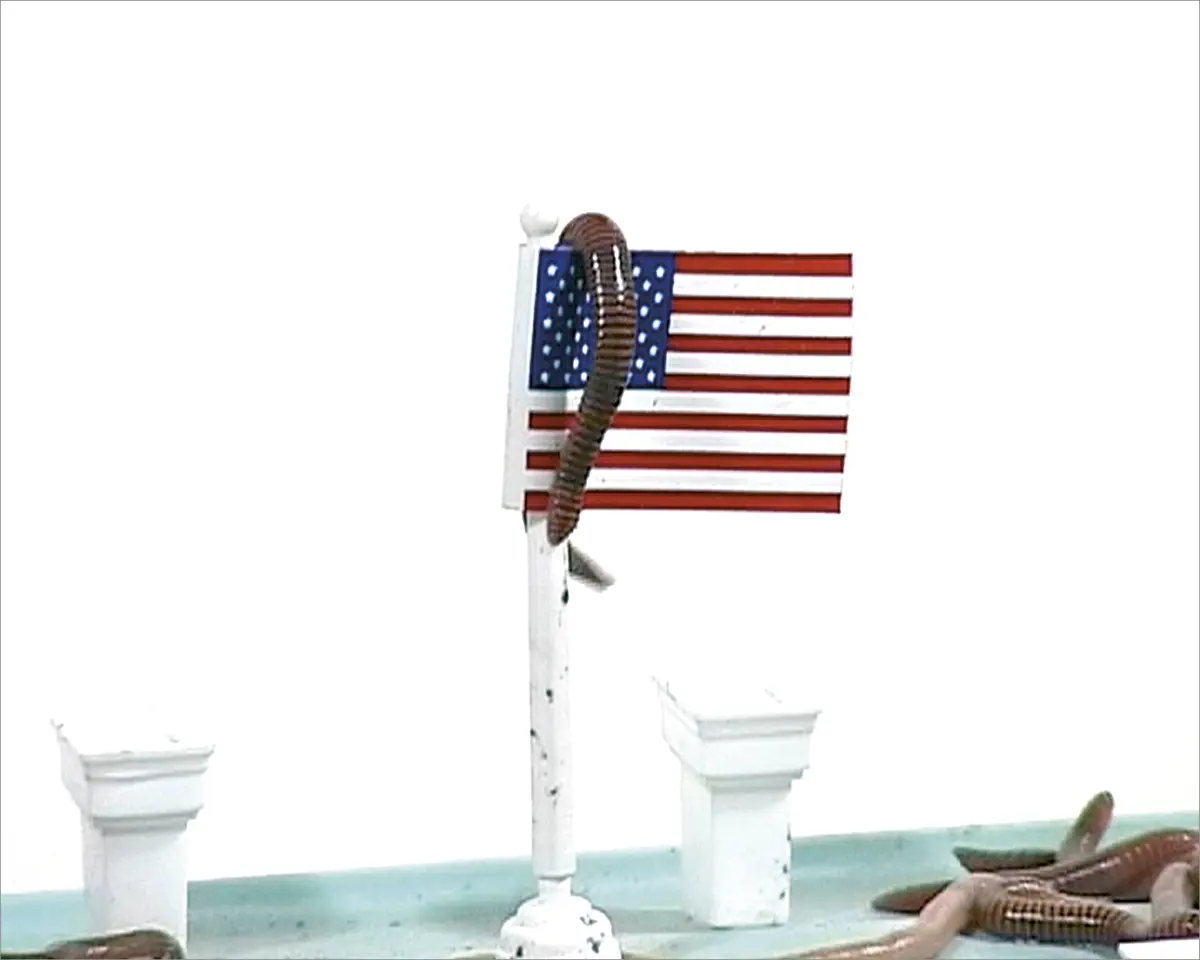
Some experimental video artists from Argentina have achieved international recognition. Such is the case of Nijensohn, who represented Argentina at the 2003 Venice Biennale, or Gabriela Golder, who won a very important video prize at the Center for Art and Media in Karlsruhe (ZKM) with Cows.
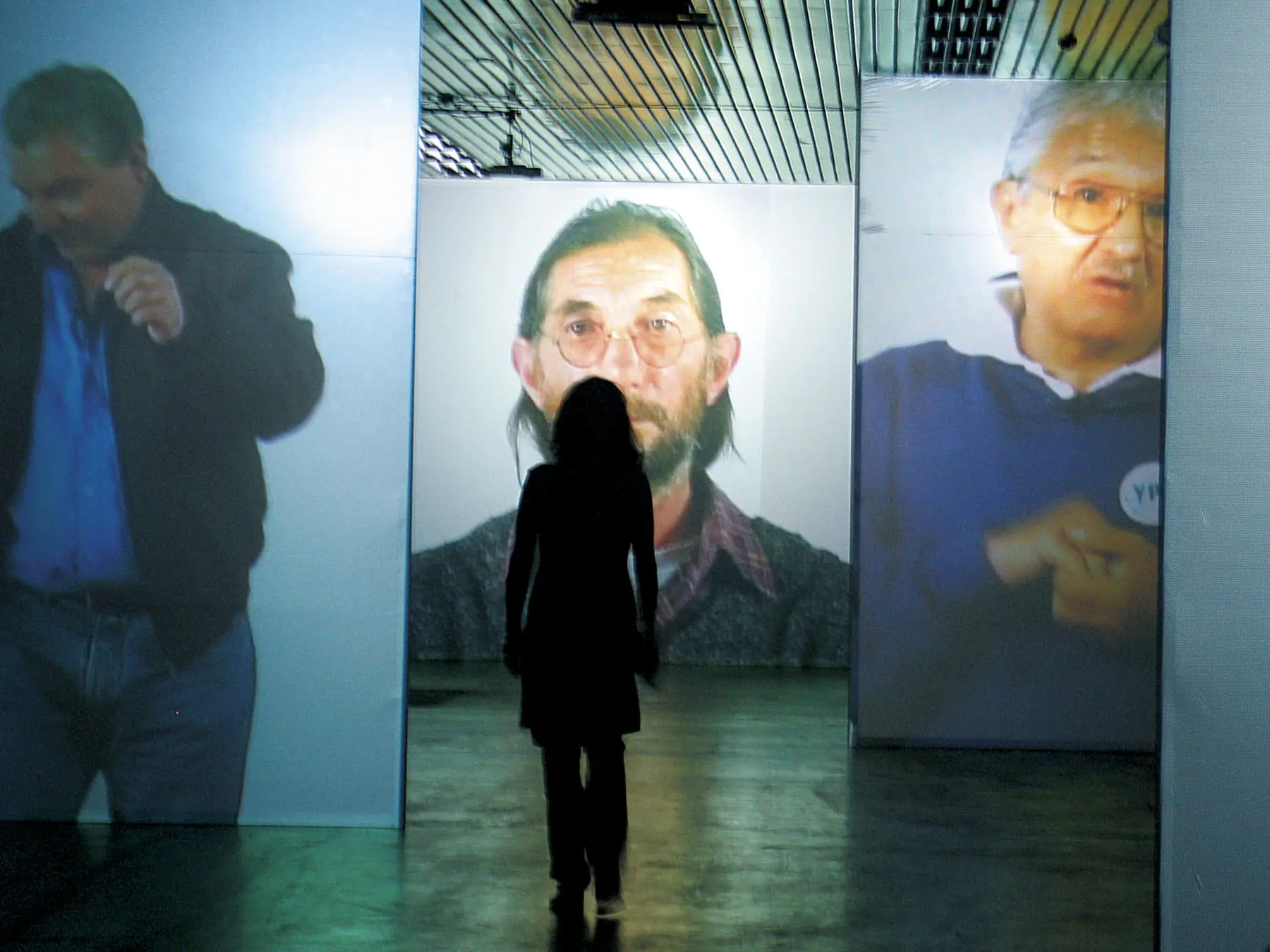
The 2006 Estudio Abierto event, organized yearly by the Buenos Aires government along with the critic Ana María Battistozzi, presented a conceptually coherent curatorial project by the critic Rodrigo Alonso. The works included a modern vision of the world of electricity on eight screens by Gustavo Caprin, a depiction of the global crisis by Charly Nijensohn, and a view of the post-industrial era by Gabriela Golder. Caprin’s expanded, de-humanized series, Nijensohn’s triptych, and Golder’s hanging panels multiplied the foci of attention. Nijensohn’s work told of the destructive aspect of industrial civilization in three images that reiterated catastrophic images with extraordinary subtlety, in a process that did not reach conclusions so that the viewer was forced to reconstruct the critical message. On several screens, Golder recorded the testimony of unemployed factory workers without large-scale effects or manipulations but with monumental images. The large scale and the narration by the unemployed had the effect of involving the viewer in the drama, prompting one to reflection.
Taquini finds that in general Argentinean videos are intelligent and strong and that some opt for poetry and some to irony or humor in their construction.
She highlights the seriousness of Ricardo Pons’s work and his interest in history, Andrés De Negri’s poeticism, Barcelona-based Iván Marino’s conceptual and aesthetic quality, and lately the emergence of Eugenia Calvo, who in 2006 won an award from the Federico Klemm Foundation.
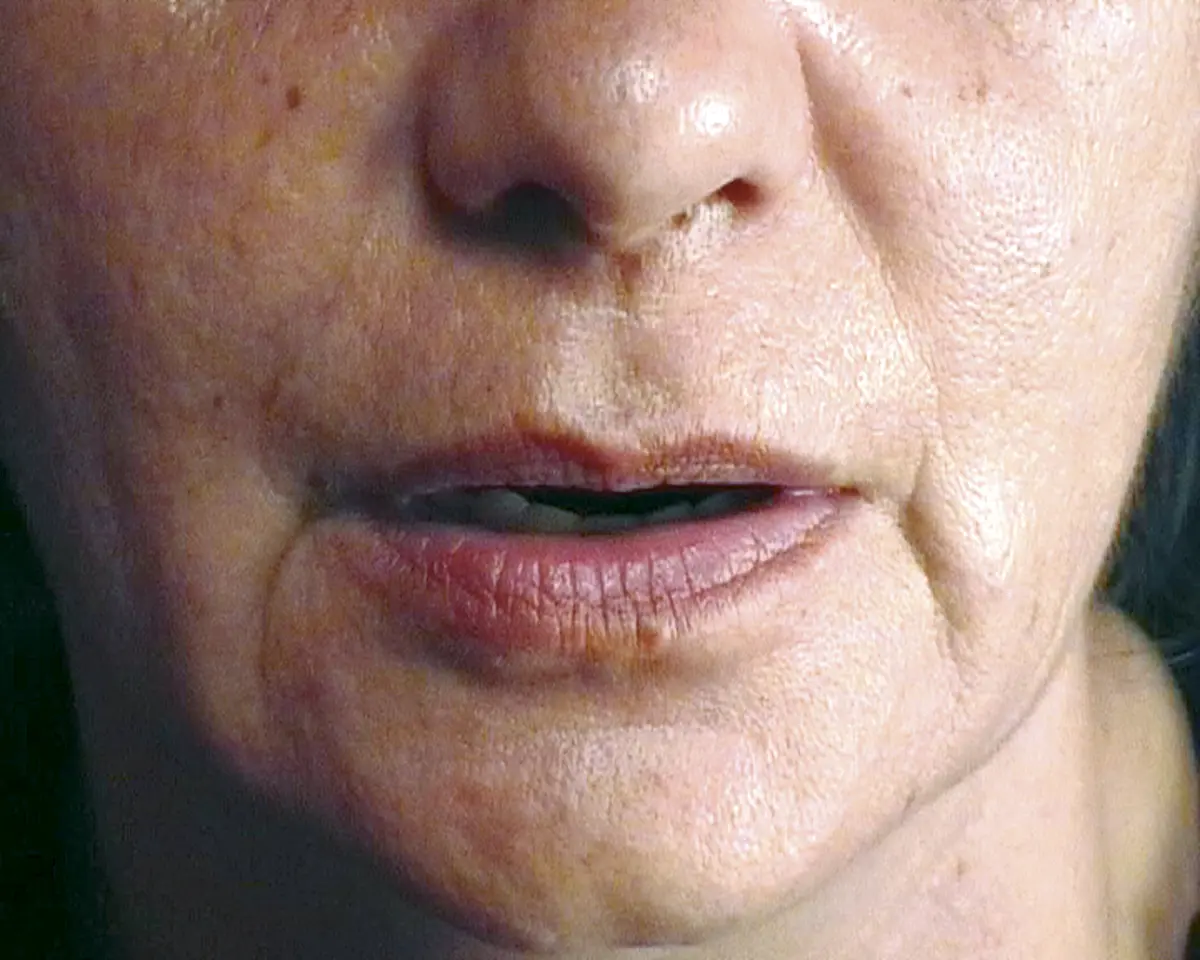
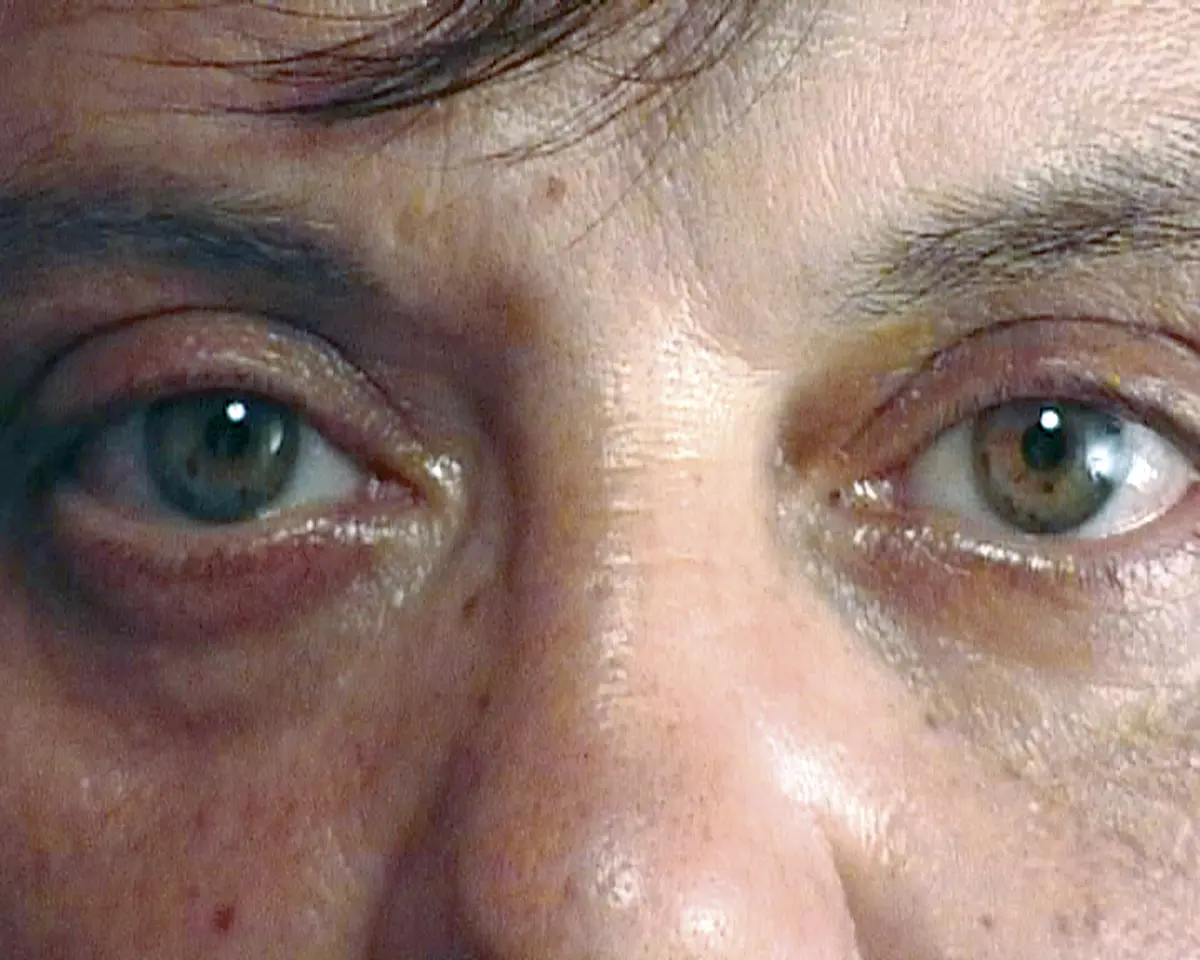
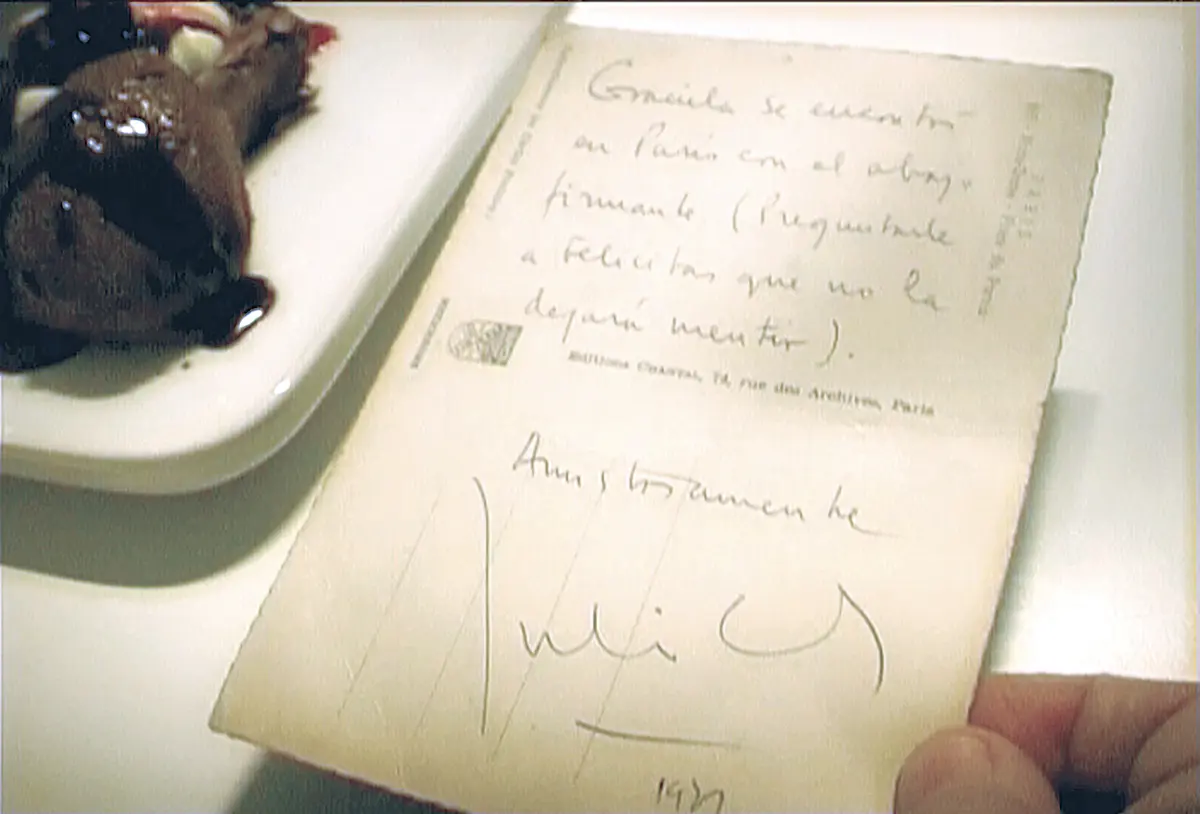
Commenting on Taquini’s creative work, Gonzalo Aguilar analyzes the video Granada, which presents the testimony of a victim of State terror, pointing out that it appears as the backdrop for Resonancias, an earlier work, but more exactly as the backdrop of a backdrop, the staging of the staging of the testimony: a veritable mise-en-abîme through video. There is no linear reconstruction of history or a mere product of memory but an investigation around the linguistic construction of a person’s testimony; the viewer only sees the face. The unsettling work recovers the deep message beyond evasiveness, verbal clutches, or retrospective disillusionment. With Ricardo Pons’s sensible camera work, Taquini’s video is able, in its sparseness, to go beyond the habitual distortions found in political documentaries.
Taquini is moved by contemporary art’s ability to address issues and transform them through a conceptual or critical perspective. In the beginning, practitioners of experimental video had a critical view of film and television in their search for video’s potential. Unlike film, with its codes, structures, and conventions, video appeared as a field of infinite freedom. Taquini observes that artists used video as a contemporary way of referring to the body, of rethinking space and time. It was also used as a vehicle against the system, as an expression for the minority, while working toward new narrative forms. She underscores the anthropological spirit of this language that is a hybrid and can be constructed with a variety of intermediaries: art history, film history, and quotations of many types.
Video art allows the appropriation of many aesthetics, languages, and materials. It is defined by what artists make with the video medium, and if any specificity is needed, Taquini believes it is related “not so much to the editing sequence as to the mixture of images through different resources.” She continues:
The composition on the screen often avoids horizontal sequential linearity and focuses on a vertical montage, a thick construction. Its elements share a single plane and superimpose on each other forwards and backward through resources such as multi-exposures, cut-ups, and insertions, which renders the border between figure and background ambiguous. Peter Greenaway took this the furthest in his version of the Nine Cantos of The Inferno for British TV in 1988, A TV Dante. Digital editing resources make it possible for analog linearity to be replaced by non-sequential aesthetics. Current editing programs break with the limitations of having to attach one image to the next and the impossibility of correcting, and this determines the work’s global conception.3 Graciela Taquini, Ver de video: Algunas acotaciones, unpublished manuscript.
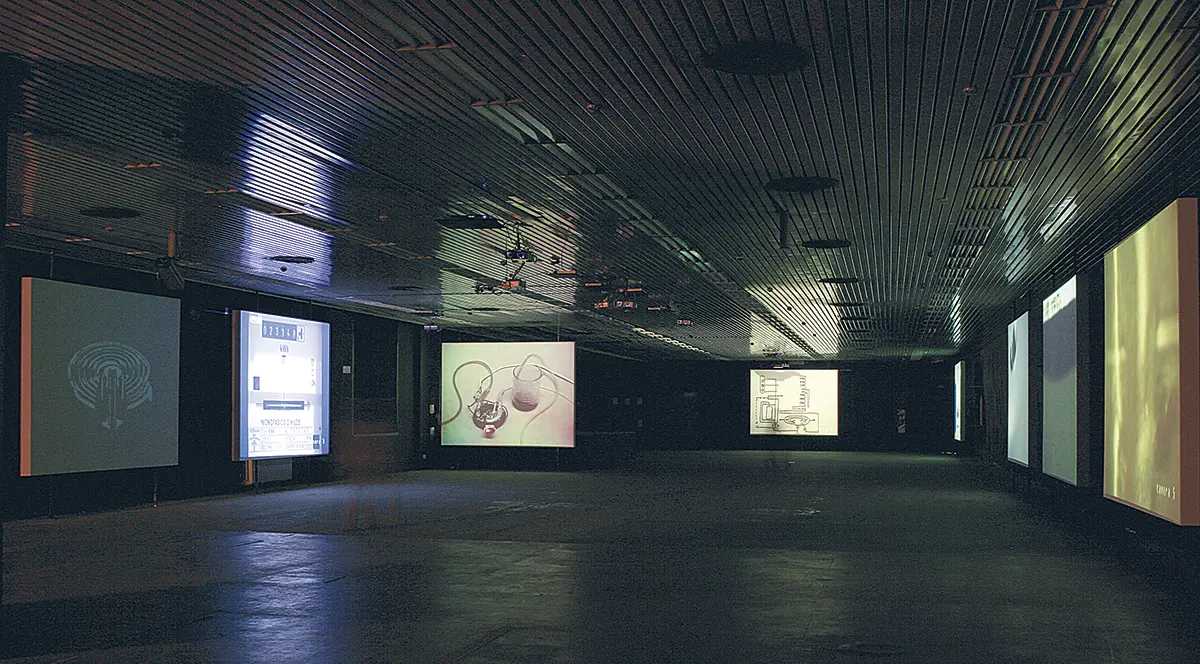
She thinks it important to point out that a feature of the current moment is that investigations tend to invade architectural spaces, freeing video works from the screen and that ever deeper-reaching, stronger topics are being approached. Slowly, video art has left the auditorium and has taken over a variety of interior and exterior spaces.
Having read in one of her articles about video’s apocalyptic ghosts, I asked about it. She explained that one ghost is the fact that video is only possible in the fragility of a civilization supported by the on/off switch. Its continuity in history depends on the conditions of this culture, of the electric civilization. Taquini recalled Nam June Paik’s ironic Candle TV, which presents a TV carcass with a candle inside.
What is most interesting is to record the passion with which Graciela Taquini speaks about video and its potential for immediate capture and results, which surpasses all other media. It possesses the mobility that painting and especially sculpture lack, which allows for ease of circulation. Video is part of the diffuse category “the contemporary,” which is open and allows a chance to be one of its constitutive elements, and contains all the problematic nature of today’s world.
NOTES
1. Graciela Taquini. To Watch Video. Some Quotes. (Unpublished)
2. The first history of video in Argentina was published by the Spanish Cultural Center in Buenos Aires in two catalogs, one written by Graciela Taquini and Carlos Trilnick in 1994 and the other by Rodrigo Alonso in 1999.
3. Diana Fernández Irusta, “Interview with Herve Fischer,” La Nación, October 1, 2006.
NELLY PERAZZO
Art critic and curator, Argentina.