
With critic Juan Ramón Barbancho
as its commissar, the collective show Signos
de Ciudad possesses a dual condition: on the one hand, the conceptual
solvency of a project able to orchestrate in a coherent way the map of some
greatly complex subjective relationships; and, on the other, the virtue of
being a beautiful art show where poetry is not at odds with the dramatic
aspects of contemporary life.
The city is a multifaceted cultural space where the history, life, and culture of men, women, and diverse social groups cross paths. Thus the acknowledgment of its identity as the legitimate stage for the hybridization of the heterogeneous. Sharing the space of the city are the most variegated expressions of culture and life, from the glamour of so-called high-culture through the vernacular, the latter often confused with the “popular.” There are many inhabited, habitable spaces in today’s cities. Urban zones, oftentimes, give specific shape to their denizens’ way of being, just as they define both the domestic and the collective space. Within each site, practices that to a large extent determine individual and social being unfold. In his attempt to document these processes of mediation and dialog from the standpoint o the paradigm of heterogeneity, the commissar has produced an extensive selection of videos that display the will to trace a path through various aspects of the city, mediated by the subjective gaze of this group of artists.
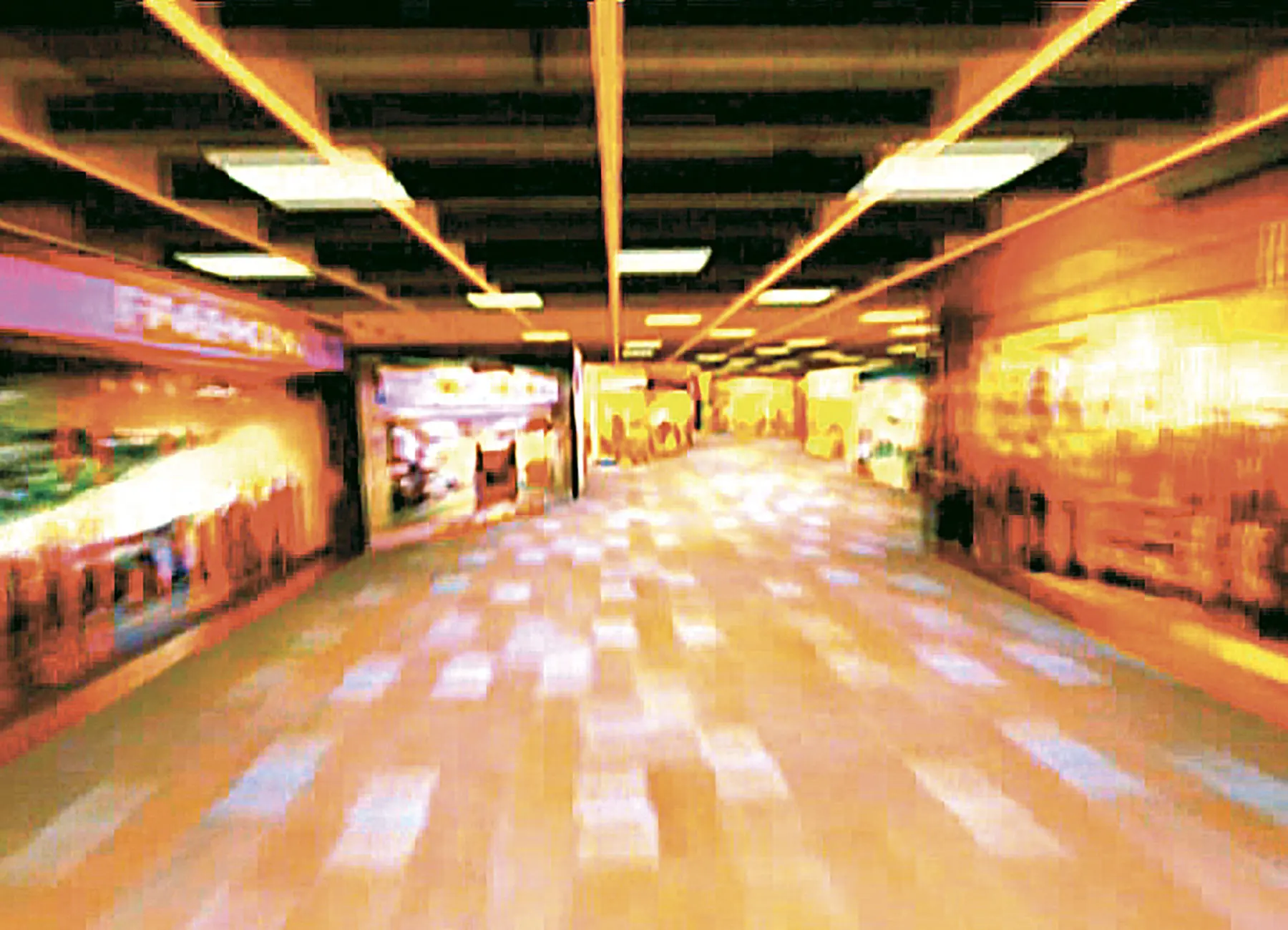
Dionisio González’s proposal, for instance, develops a narrative about the life of subjects living outside the boundaries of the city, be it in physical or psychological terms. He works on Brazilian favelas, deploying a discourse marked by peripheral signs, inasmuch as the objective of his narratives is indeed the periphery. In his trilogy Crash Course, Sven Pählsson examines car-and-highway culture through the experiences of a trip in vertiginous, labyrinthine roads. He offers a vision of contemporary society based on its main obsessions: suburbs, highways, and shopping centers. Images all of “progress” and of hysterical, disproportionate consumerism. On its part, Juan Carlos Robles’ Second hand market explores the logic of commercial spaces, in this case however not the large and more sumptuous malls, but flea markets. It is an everyday scene in most cities: space abandoned after the flea market, an almost inescapable part of the city. Christoph Rütimann’s Handlauf Zürich deals with the relationship between man and city. Camera in hand, Rütimann follows the city as a whole in real-time. Any and all material can be a support for his work. The camera records everything it encounters, facing spaces, skirting obstacles, overcoming all notions of what is habitually considered an object of artistic justification and aesthetic content.
El Zapillo is a neighborhood in Almería where supposed progress destroyed symbols of identity. Marisa González shows the demolition of an industrial plant’s chimneys and records the opinions of the neighbors. This is a reflection of a city’s loss of identity. With the disappearance of those peculiar buildings, each city loses an icon, an identity mark from its history, something that differentiates it from today’s homogeneous, depersonalized urban plans. In Amphibious (login-logout,) Jennifer Allora and Guillermo Calzadilla present a tour of the city’s outermost port areas, areas located outside the well-ordered, sanitized urban centers, the other side of a city, the worst side of industry and development. Juan Carlos Robles also works on concrete Andalusian neighborhoods, a discourse that while being specific can be easily extrapolated to any other city. He has been increasingly concerned with an anthropology of the here and now as an analytical method for understanding the social development of our communities while realizing how difficult the effort is. This the photography and video project Videoclub, produced in Las 3,000 Viviendas, a Seville neighborhood.
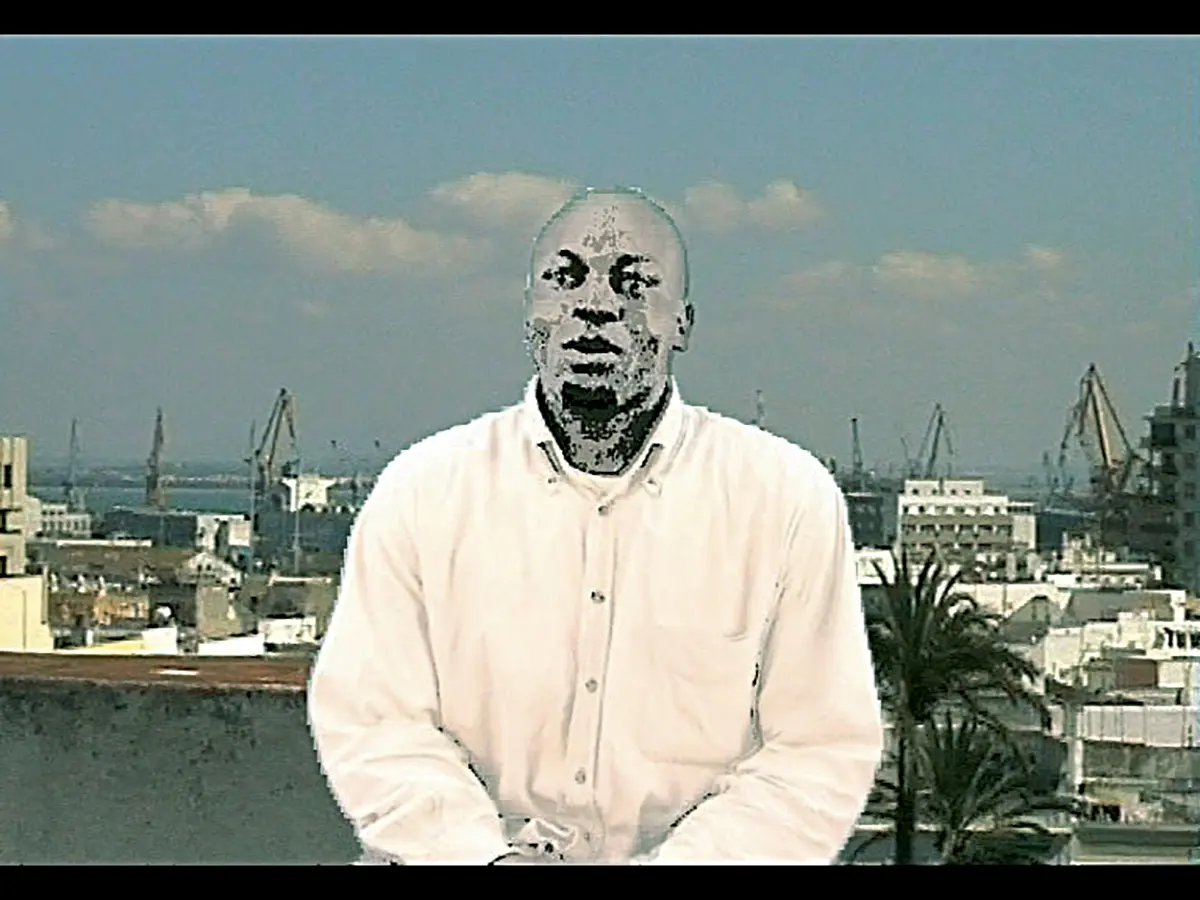
The members of the Arte 90 collective, aware of their own geographic reality as inhabitants of a “border space” such as the Strait region, and as citizens immersed in a social situation marked by mixtures and changes, a social situation of forced acculturation and cultural resistance, present a project that tells of this situation and its cost. Displayed in this work are images of “illegal” immigrants in an informal commercial establishment, which calls attention to the illegitimacy of the label and its rentabilization as part of processes of exclusion and control. Along the same lines, Boomerang, by Alex Campoy, ponders the issue of the “top manta,” bringing to memory the often-seen scenes of their precipitous flight from the police. Francis Naranjo explores his own, personal encounter with the city from a perspective that is both highly sociological and literary. He teases out a simile between the city’s streets and rivers, the traditional comparison with those “rivers that run into the sea…” He harks back to Heraclitus’ teachings and compares streets, windows, cars with those rivers on whose waters one will never swim twice, streets that will never be seen twice as the same. In Andando por Roma, by Tomás Muñoz, a man walks around the city, its streets, its well-known monuments, as if attempting to appropriate its essence and its history. Becoming one with the walkways and the houses. Something similar is seen in the work of Bulgarian artist Eva Davidova, although in the latter case we are presented with a return to the city of her birth, which she attempts to tour on the basis of remembrance and feeling.
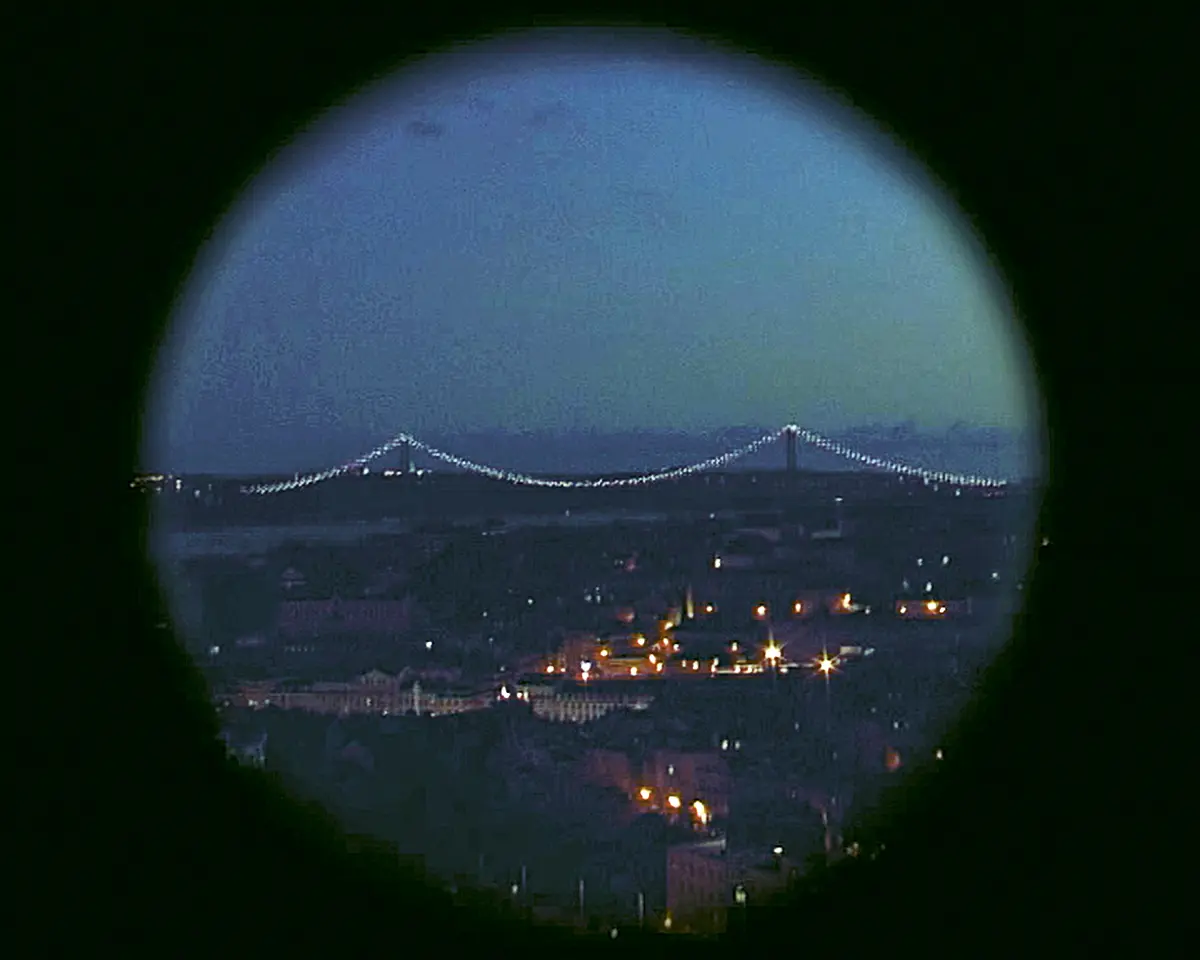
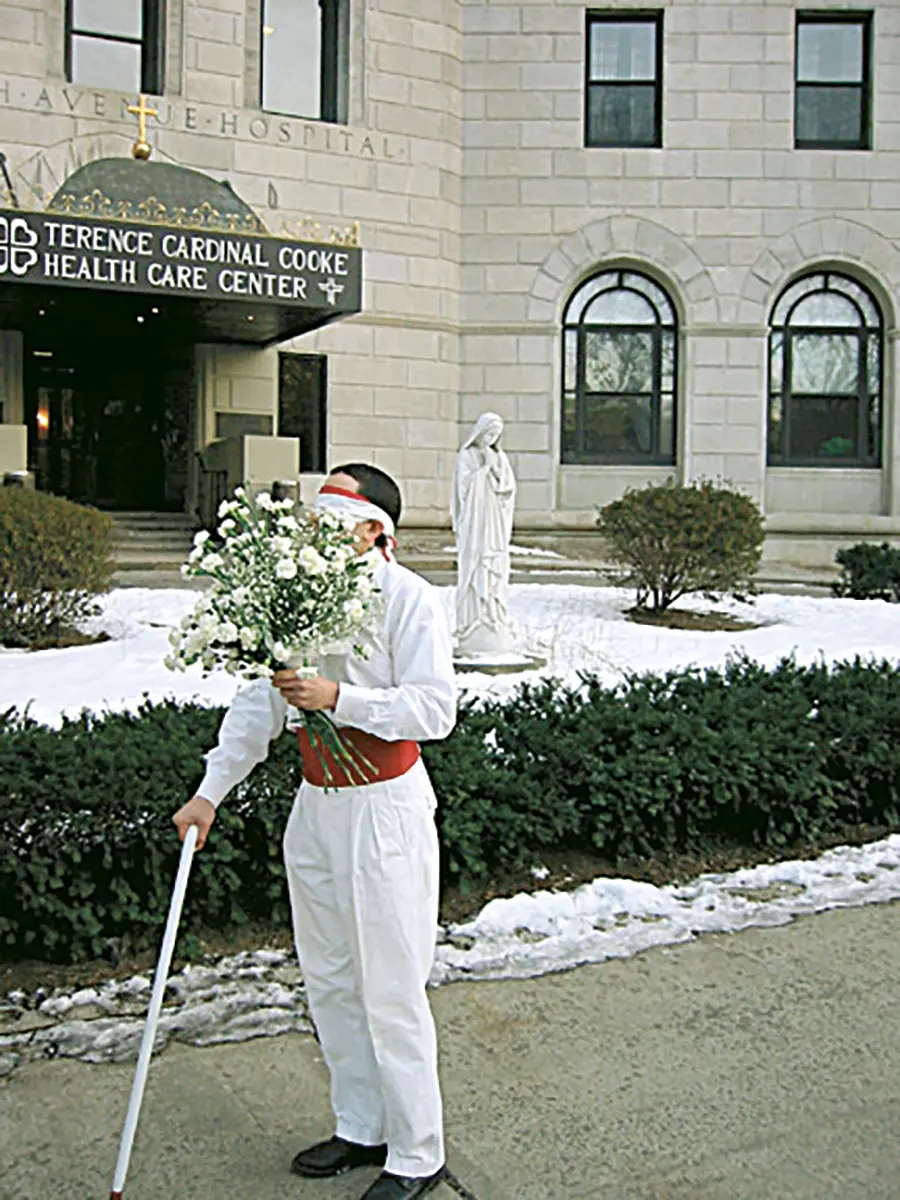
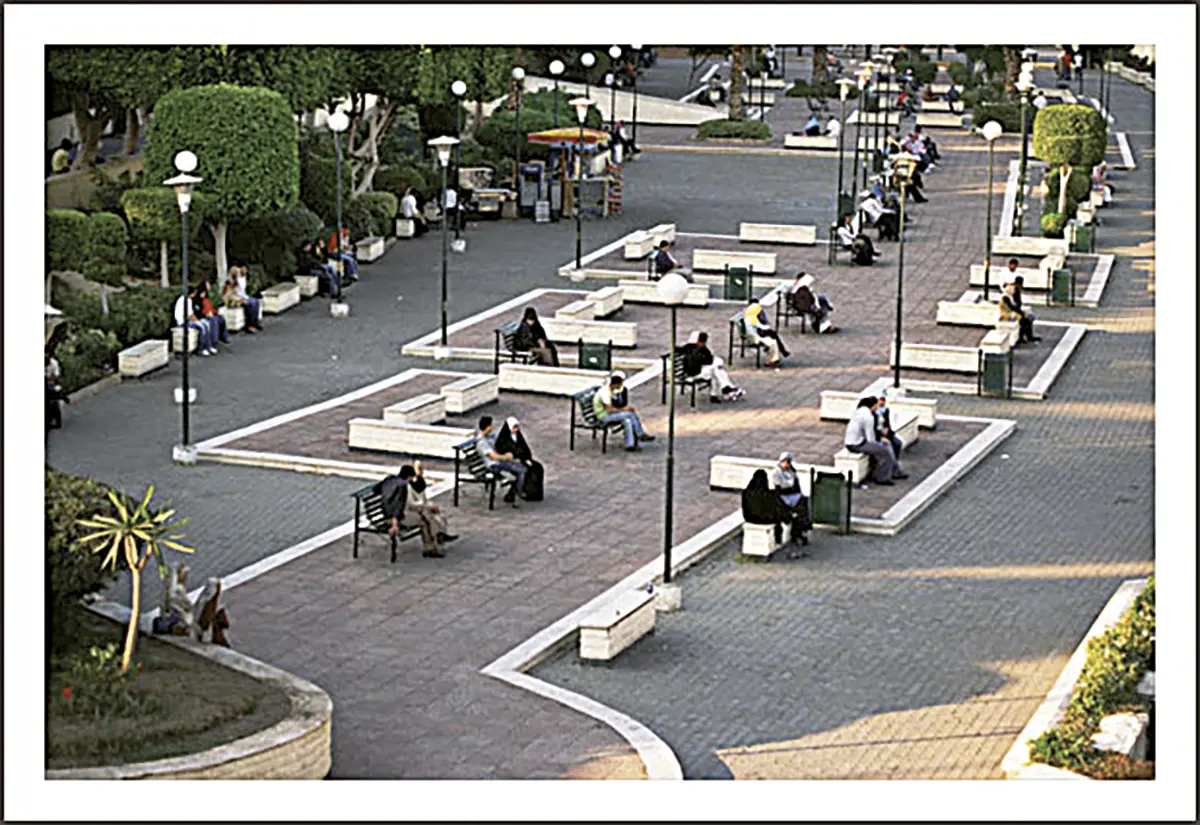
Samuel Sánchez seeks an encounter of the city with itself. A reading from inside, from the point of view of those city dwellers who live, by their own volition or due to circumstances beyond their control, enclosed in their own world. His Burn was recorded in Seville from the window of the residence of a group of seniors who watch people —life— go by. Love is Blind is the result of Nicolás Dumit Estévez’s pilgrimage to the streets of New York City. It is an appropriation/appropriation of the city as a place, but also a test of the solidarity and involvement of anonymous citizens who offer or deny help to the temporarily blind traveler. Dumit made his walk on February 14, St. Valentine’s Day, starting at the Museo del Barrio and continuing until the NYPD arrested him (here we hear the voices of officers explaining that he was being arrested under suspicion of terrorism.) Avelino Sala explores another aspect of the contemporary city’s cultural landscape, music, and more concretely music that is born in the city, in the streets, and for the streets. Arthur Kleinjan’s Moments Considered Time is a dual projection (video and slides) with the format of an installation, where we see a series of found photographs of couples courting and flirting in the bridges of Cairo. Kleinjan uses these photographs to produce his discourse and creates a video in the same location, where the bustle and noise of traffic overlap with the lover’s whispers. It is for sure one of the show’s most beautiful works. Jorge Santos’ O navio posit a much more poetic view of the city. A city that seems to move through the waters, almost as a large ship would.
All, in the end, are visions of a vital space where contemporary life takes place, both from a state of repose and from the more radical, hysterical positions.
ANDRÉS ISAAC SANTANA