
The life of humans is like a constantly changing thread, a cord made of experiences that are transformed in events, incidents that extend in time to build legends and myths. Mythical thinking and artistic resolve share a common origin. As Cassirer says, language, myth, art, and science constitute the universe of the symbolic. These are spaces of creation in the largest possible sense, realms that humans model in their never-ending creative endeavors. Prompted by the need to understand reality’s multiple manifestations and dimensions, humans demarcate these in their quest to unmask mirages and to differentiate among their possible interpretations. A vast number of artworks have been inspired by myths. They are lyrical and charged with metaphors, with stories reworked in newly invented scenarios that provide image, presence, and corporality to the mythical protagonists. This perspective was the groundwork for El Hilo de Ariadna (Ariadne’s Thread), an exhibit at the Alejandro Otero Museum in Caracas. Presented at an uncertain time for Venezuela’s art scene, the exhibit was a vigorous demonstration of the professionalism of national art researchers and a reaffirmation of the Alejandro Otero Museum, which has been dedicated for over fifteen years to the study and display of contemporary art.
Curated by Costanza De Rogatis, this show employed the ancient Hellenic myth of Ariadne as its point of departure. This remarkable exhibition did not attempt to reinterpret this myth but presented it from a contemporary view of the fragmented, yet reconstructive, recuperation of matter as an essential resource not only for the creation of notions and experiences but also of values and affections. Twenty works by national artists constituted the exhibit, framed by weaving as a process, practice, and occupation. The conceptual thread of weaving resulted in a visually enriching, suggestive, poignant, and expressly creative presentation.
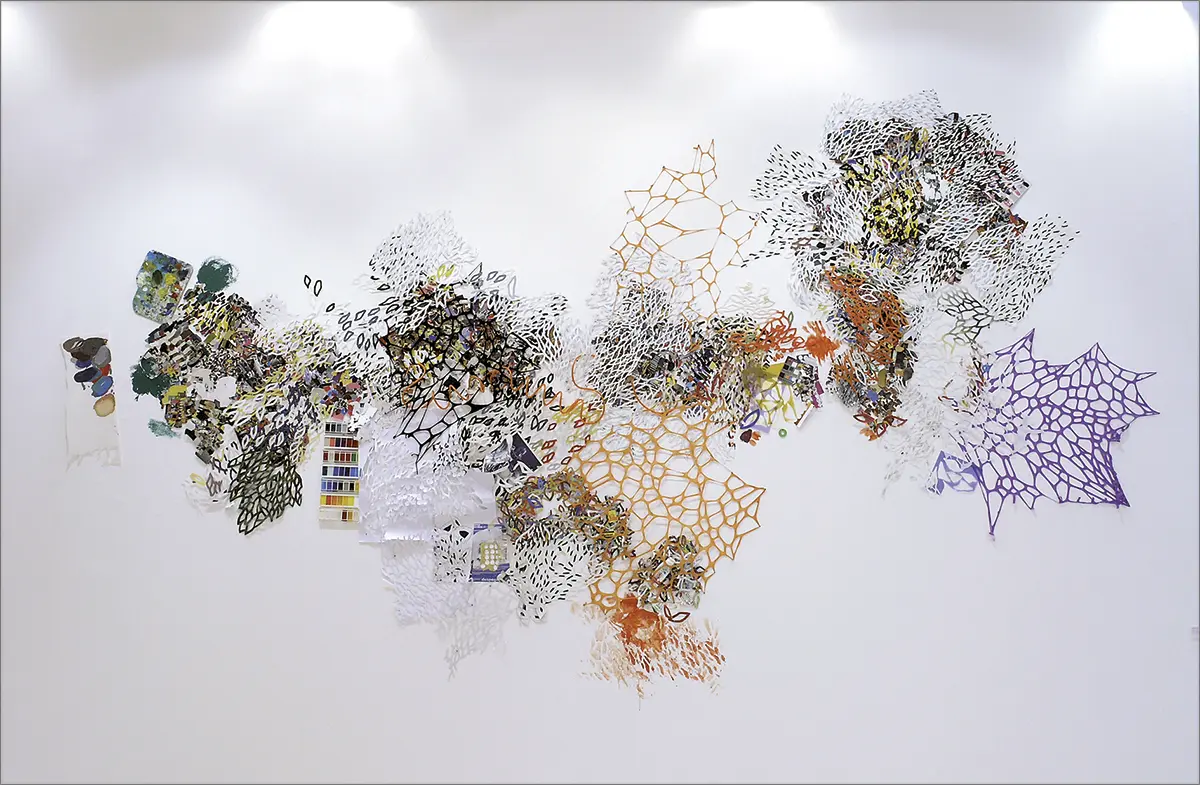
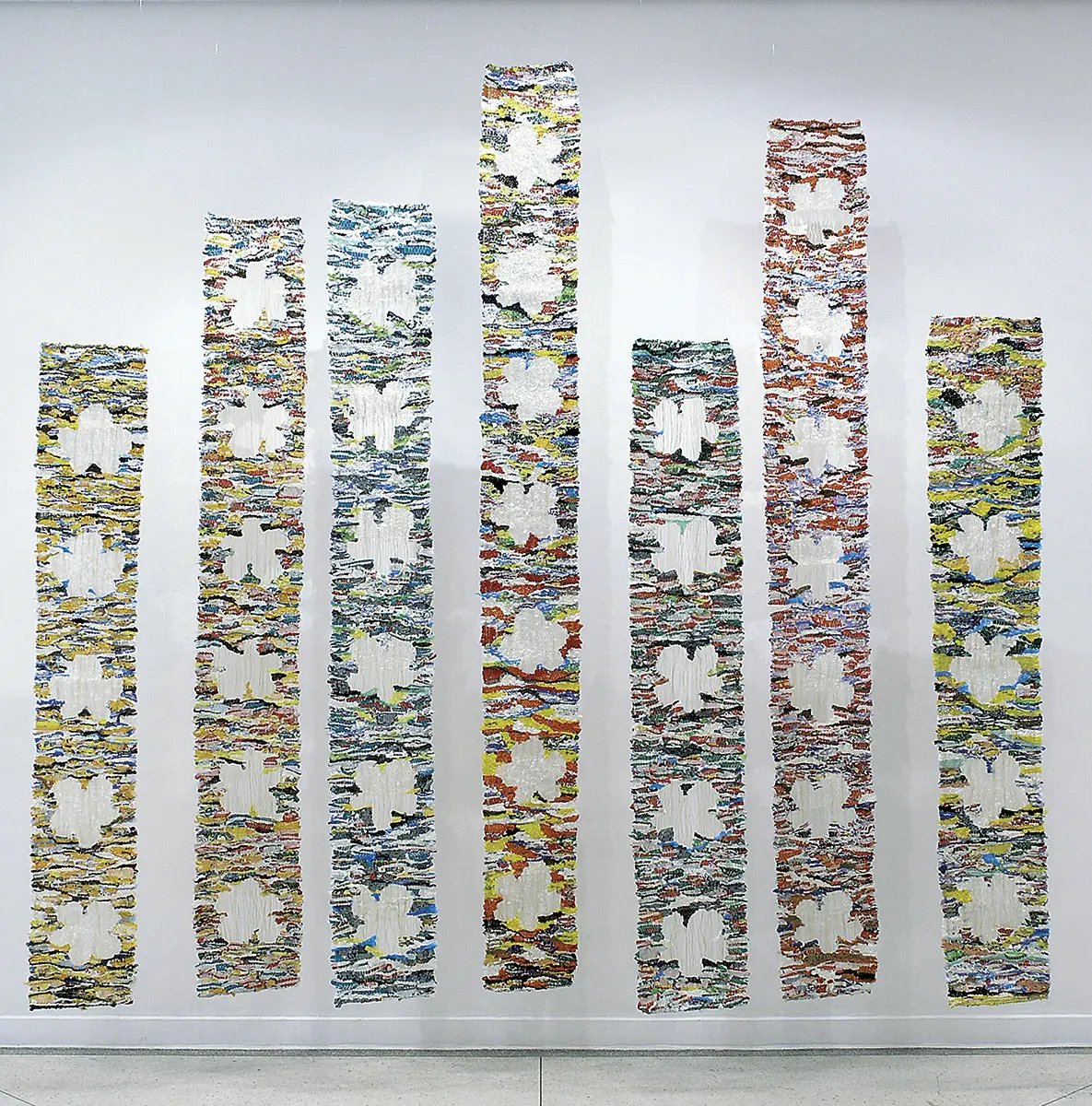
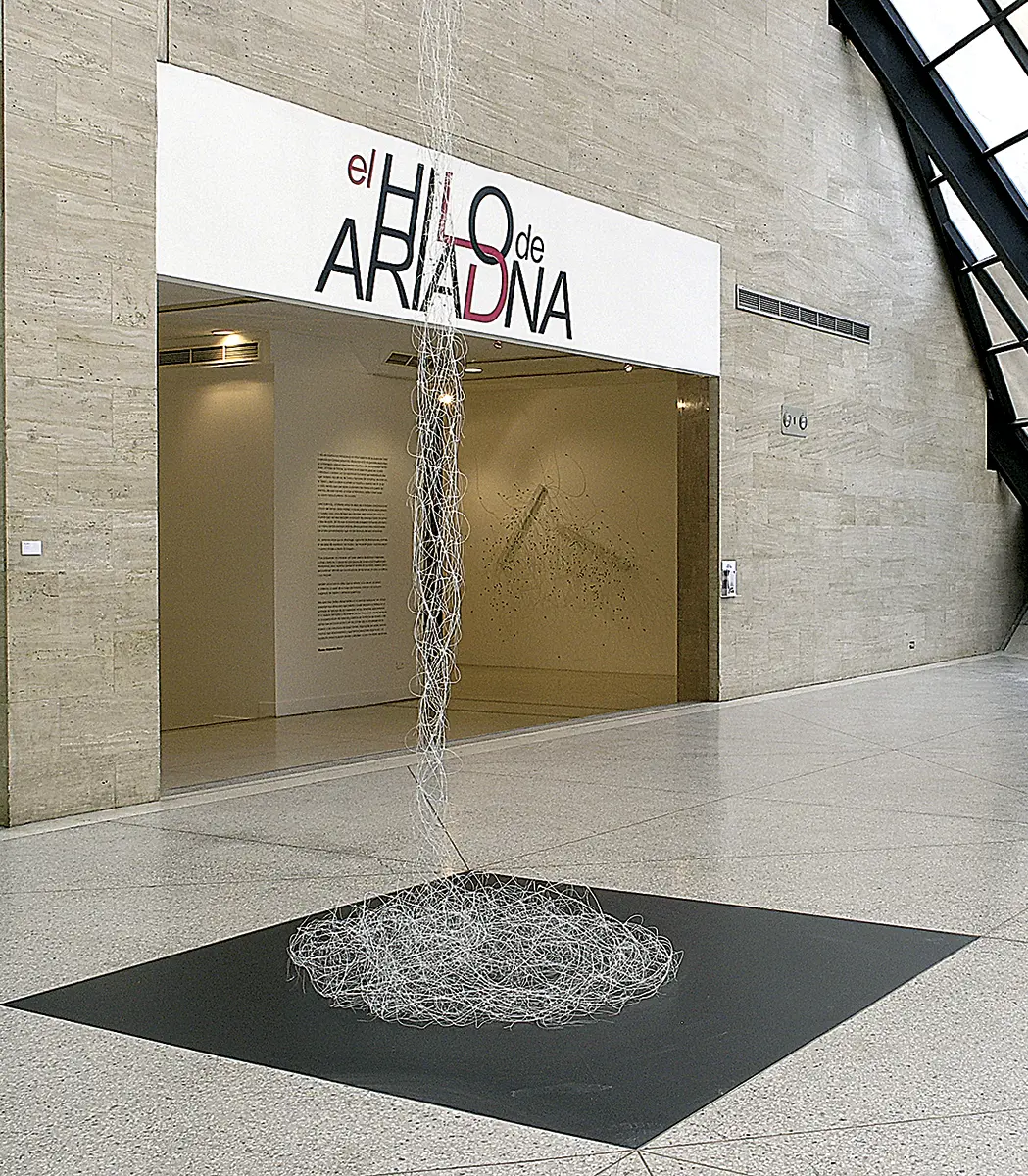
The exhibit began with Fuente (Fountain), a work by Ramsés Larzábal, in which an amalgam of industrial mesh and threads descended from the ceiling and scattered over the museum’s floor. From this space, the viewer then accessed the exhibit rooms. The first room was dominated by a work by María Margarita Richter entitled Salto Dimensional (Dimensional Jump), a multicolored tapestry that stood in contrast to María Antonieta Arnal’s Oda al Consumismo (Ode to Consumerism) and Aureliano Parra’s net of capes entitled Algo que Cubre (Something That Conceals). These works were three instances of chromatic intensity that centered on the exhibit’s discourse but stood apart with dissimilar natures. They were balanced by Marylee Coll’s powerful image Coloritmo en Blanco y Negro, a successful visual metaphor of works by Alejandro Otero created fifty years earlier.
Completing the group was five pieces that contributed a subdued quality to the harmonic equilibrium of the room. Oscar Mahado’s Amarre de Estrellas (Mooring of Stars) was a shining miniature galaxy: vibrant, luminous, and prominent amid the room’s large areas of color. María Carmen Carrillo’s El Manto de Dolores (Dolores’s Cloak) was a dramatic account of murders that have occurred in the country during the past twenty years; it brutally reminded the viewer of the chaos of everyday life and its cruel outcomes. Encierro en Blanco (Enclosure in White) by Solange Arvelo was a kind of materialization of a weightless and subtle internal world; it was also the representation of an environment of purity, a vestal virgin’s cell of reclusion. Edison Parras’s Paisaje Vertical (Vertical Landscape) was one of the few three-dimensional works in this exhibit. Along with his other piece, Un Tempo Allegro Ma Non Troppo, Parras reintroduced a moderate and serene color palette, while referencing a territory he contemplates daily.
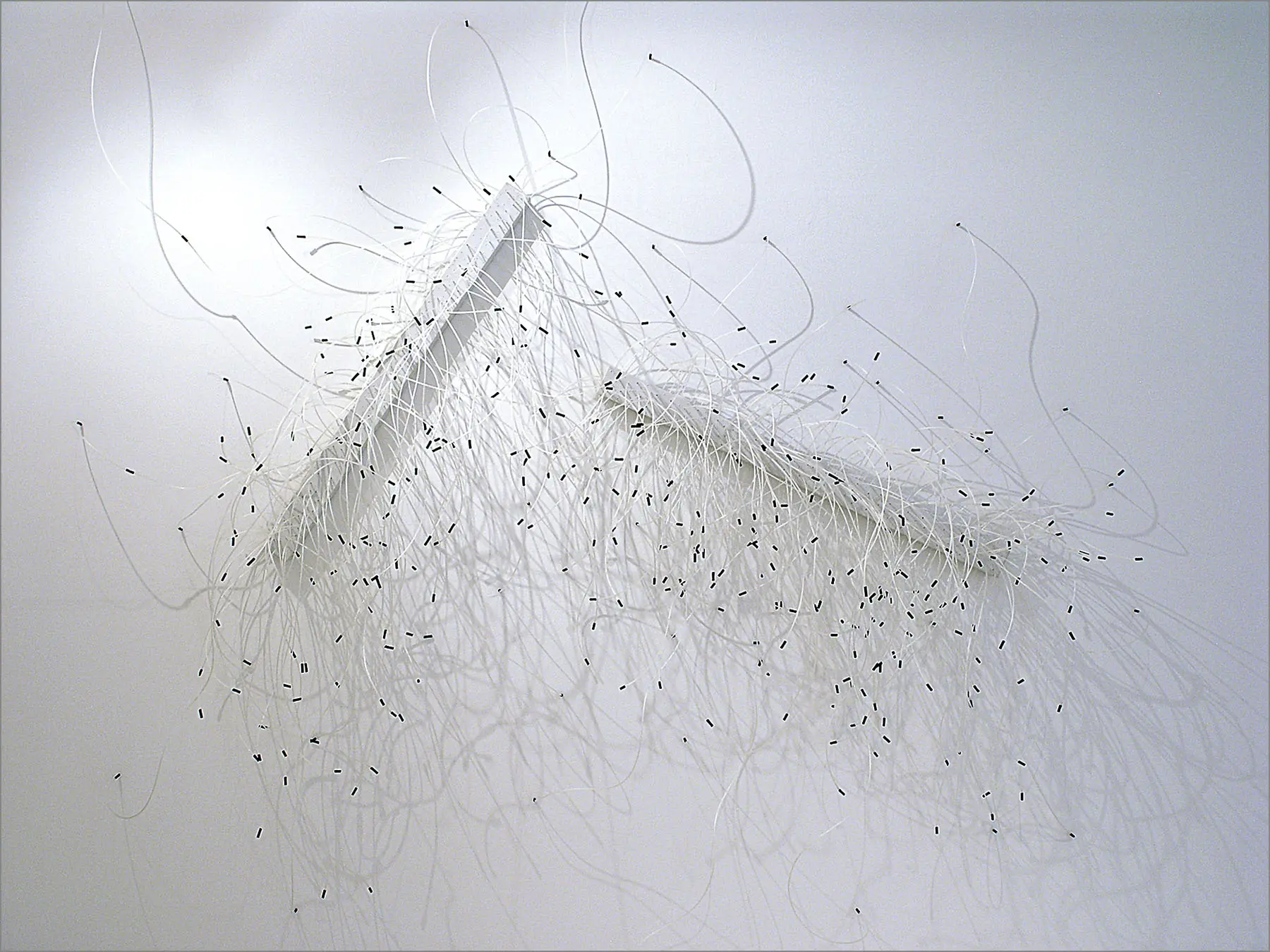
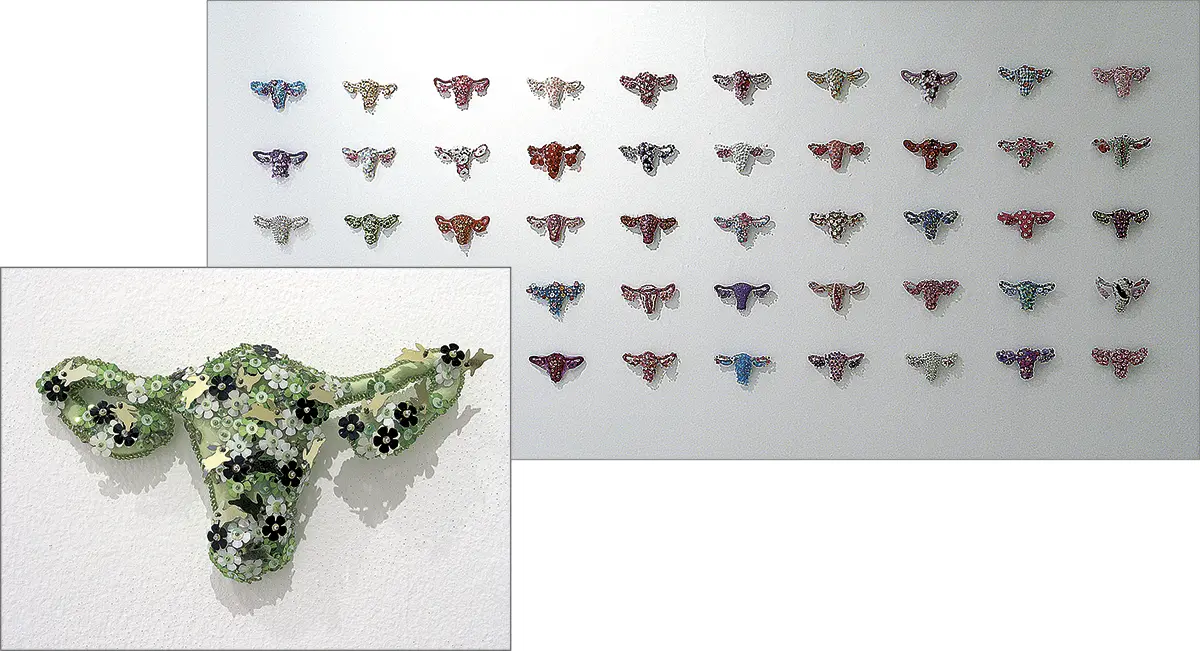
In the next room, Nadia Benatar’s Tejemaneje I y II (Scheming I and II) was a cluster of entangled filaments, in which a swarm of lines traversed a chaotic, labyrinth-like space of flawless white. María Eugenia Zambrano’s attractive Alfileteros: Serie Valores de lo Femenino (Pincushions, from the Values of the Feminine series) featured repeated forms, embroidery, and decorative components in bright colors. In his work entitled Serie: Techos N˚ 5 (Series: Roof Number Five), Ángel Marcano presented a lace-like weaving of galvanized wire that evoked flowers and suggested feminine aesthetics. Doménica Aglialoro also touched on this theme in her work Mácula (Stain); as in the artist’s previous works, this piece referred to women’s sexuality and to its symbolic imagery. Miriángel García’s work My Big Chest Querido also shared this theme, although with a more ironic and humorous tone.
Another group of works reaffirmed the long history of the craft: Raíces (Roots) by María Teresa Torras, Ornamental Nº 3 by Reymond Romero, and Faldón Abierto (Open Skirt) by Franco Contreras. In Torras’s work, textures generated by several forms of the sisal weave highlighted its stylized presence. In his work, Romero transfigured the thread of Theseus: the golden line that guided the hero through the dark maze became a voluptuous and undulating cord, a sort of enormous serpent crawling with sinuous and spasmodic movement. This furiously colorful work contrasted with Contreras’s monochromatic piece, a monumental sisal weave that commanded the room from above. Yvis Amaya’s Complexus was a more organic version of Fabilola’s twice-constructed wooden Laberinto (Labyrinth). And construction was also associated with the Serie Museofrenias Azul (Blue Museum-phrenia Series) by Alí González.
Aside from the use of warping, threading, and weaving materials, and other forms applied by the artists to “tie” their works to Ariadne’s golden ball of yarn, there were no other obvious connections established between the myth and the works in the exhibit. Nevertheless, the stories lived by supernatural beings within myths are resources for metaphor—symbolic spaces from which art can express the events, experiences, and actions that belong to the lives of mere mortals.
*Photos: Daniel Trujillo
FREDDY CARREÑO