
Consistent
with its policy of researching and promoting works by great contemporary
Argentine artists, the MALBA-Constantini Collection recently presented the exhibit entitled Oscar Bony: The Magician. Works 1965–2001. It consisted of a
selection of sixty pieces that convincingly covered the aesthetic trajectory of
the artist, who was born in Argentina’s Misiones province in 1941 and died in
Buenos Aires in 2002. Bony’s short and vibrant artistic career began in the
midst of the 1970s avant-garde was nourished by a stimulating exile in Italy,
and later flourished in the 1990s once he returned to Argentina.
The exhibit—along with prior research, analysis, and editing produced by the ever-improving staff at MALBA—had several surprises. In the exhibit’s physical layout, the surprise was a gathering of works that included pieces never or rarely seen, accompanied by texts that were part of several projects that Bony had revisited. At the same time, there were new elements that appeared in the exhaustive catalog, in which Marcelo Pacheco (the MALBA Chief Curator who was in charge of this exhibit) presented a complete body of information and opinion on Bony.
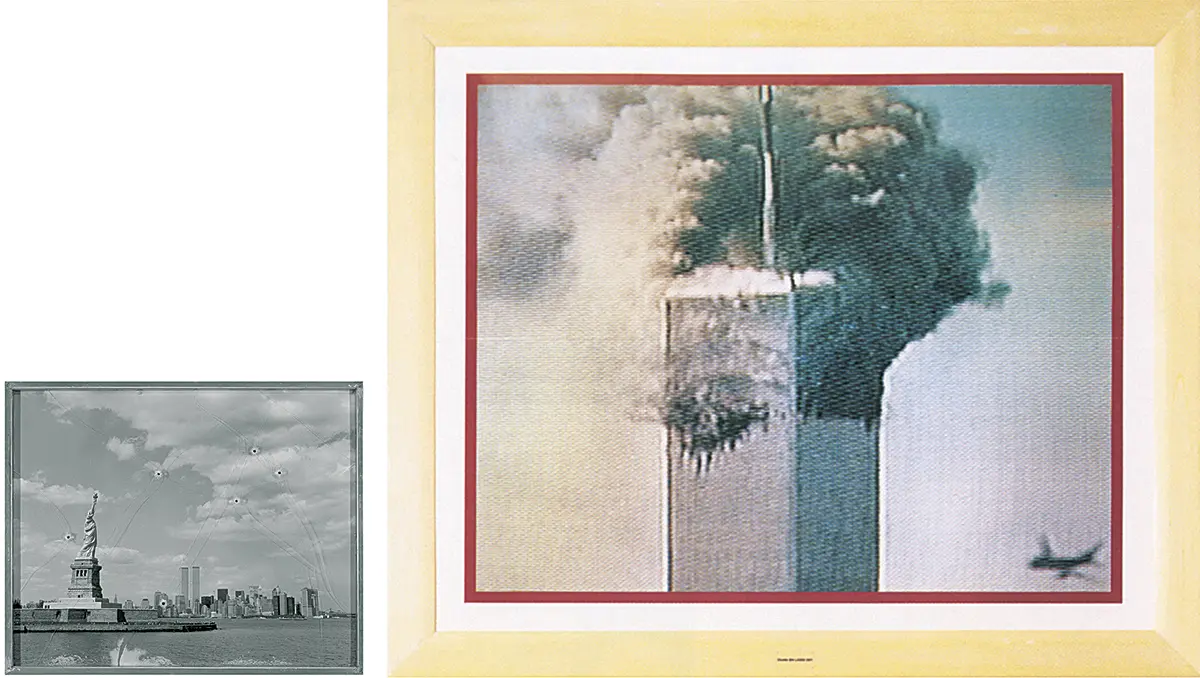
Pacheco’s text was one of the most noteworthy contributions to the exhibit. In it, the curator set forth ideas and perceptions that transcended Bony’s persona and expressed oblique and subjective thoughts that filled in the gaps and revealed the process of creating an exhibit. Written in a self-referential, self-explanatory, and straightforward manner, and atypical of the language in large museum and institutional exhibits that still employ ideas such as “objectivity,” the article could be read as a milestone in the path toward a necessary opening and relaxation of old, essentially stylistic parameters still firmly rooted at the local level. Observing that “Bony himself had confronted art history, art criticism, and aesthetic endeavors in their respective battlefields,” Pacheco encountered hostile and elusive material in Bony’s photographs, films, paintings, and installations: assertions and provocative titles, moments of high lyricism, and dramatized scenes that took the subject of violence and transformed it, ripping a hole in the world of representation. From Bony’s first conceptual experiments to his last piece after the fall of the twin towers (in which he contrasted one photograph with another depicting one plane crashing into a tower and assigned authorship of the work to Osama Bin Laden), through his hyper-realistic paintings of the 1970s and his informalistic works of the 1980s, Bony’s explorations on the two-dimensional plane were combined with others in sculpture, photography, and performance. There undoubtedly are many ways of entering into his world.
The chronological arrangement of the works, to which Andrea Giunta’s essay most certainly contributed, revealed an eclectic artist with persistent interests bound to great philosophical themes: death, beauty, time, and identity. Accordingly, Bony’s self-portraits of recent years (at which he shot with a pistol) could be read like summaries of meaning, of the search for urgent answers to questions, the artist had throughout his life.
Another part that stood out in this thorough effort to rediscover Oscar Bony shed light on the artist’s pioneering role as a photographer of the Argentine rock scene. Hired to create the cover jackets for now-famous records from the late 1960s and the early 1970s, Bony photographed bands and solo artists from the incipient Argentine rock music circuit, applying a sensitivity that was playfully connected to the artist’s well-known “official” artistic production. The inclusion of these portraits, clearly contextualized in the catalog with a text by the music critic Fernando García, contributed another facet of Bony’s persona: that of a young artist during the rebellious 1960s who remained true to his principles throughout his later years.
EVA GRINSTEIN