
Recently there has been much banter about the biennial’s possible eclipse by the art fair. As art becomes increasingly mainstream and more sought after, especially as a financial investment, it seems that the art fair’s burgeoning importance would be inevitable in a market-driven world. Some art fairs, however, have extended their mission by offering a broader artistic context in their programming and now include symposia, roundtable discussions, and off-site projects that engender discursive explorations. Although now seemingly becoming the standard, these heuristic endeavors that were initially absent from the art fair have historically been the domain of other institutions such as the museum and, of course, the biennial. But the biennial has generally proceeded along two thematic trajectories in its tête à tête with the art fair. One has been to frame art along with complex parameters and consequently cultivate the biennial as a site where ideas dominate; the other, less ambitious, and the safer route is to present the biennial as a pulse-taking survey that offers the most current work being made today. The problem with the latter is that it could just as well be an art fair without the price tags since the absence of any ostensible discourse in a biennial runs the danger of being too similar to its commercial other. So where does this leave the Whitney Biennial, that quintessential New York cultural bastion and barometer of American contemporary art whose track record includes the infamous, politicized 1993 version, as well as the occasionally lukewarm renditions of the recent past?
As the premier exhibition that highlights every two years the best art currently made in the U.S.A., it is no small curatorial feat for the Whitney Museum to cull as many interesting works together as possible. The most demanding approach is with an ambitious framework that highlights the curator as auteur, as Chrissie Iles and Philippe Vergne successfully did in 2006. That is the curator as the sole creator of a particular vision of art, seen through a lens on and extrapolated from numerous loci which, in turn, are assembled together into a thematic arc. Usually, the auteur approach is personal, iconoclastic, literary, and poetic; when the social and political landscape comes into focus in the exhibition the artworks are, ideally, set into formal, conceptual, and narrative relations with each other. The 2008 Whitney Biennial, however, dispensed with any allusion to this methodology and instead returned to the form of previous editions, in which there was little context besides presenting the most up-to-date work, notwithstanding the ideas articulated in the biennial’s catalog. There was one rather portentous signal as to whether this biennial would be critically successful or relegated to the dustbin of the generally unmemorable. The ominous sign came from the Whitney Museum director Adam Weinberg, who announced at the press preview that critics should consider that the biennial artists spent a lot of time making their work before they apply their professional acumen. While this apologetic preface, with all respect, sounded more like what a studio professor might say about a B.F.A. student’s graduating show than a museum director about his exhibition, this warning indirectly shifted the onus of the Whitney Biennial’s critical reception to the artists rather than the curators. As such, this qualifier or disqualifier was a rather odd introduction, but that was the least consequential thing that set the 2008 Whitney Biennial apart from its predecessors.
Unlike previous biennials that have been labeled unwieldy because of the numerous artists exhibited, this time the curators made the astute choice of paring down the show to eighty-one artists. This allowed more breathing room for the art displayed in the Marcel Breuer-designed building, but there were also off-site projects down the street at the Park Avenue Armory. Another obvious difference between the 2008 biennial and previous ones was the limited inclusion of painting and photography. Most of the work consisted of sculpture, installation, video, and a mixture of these as well as performance-based works offered at the Armory location.
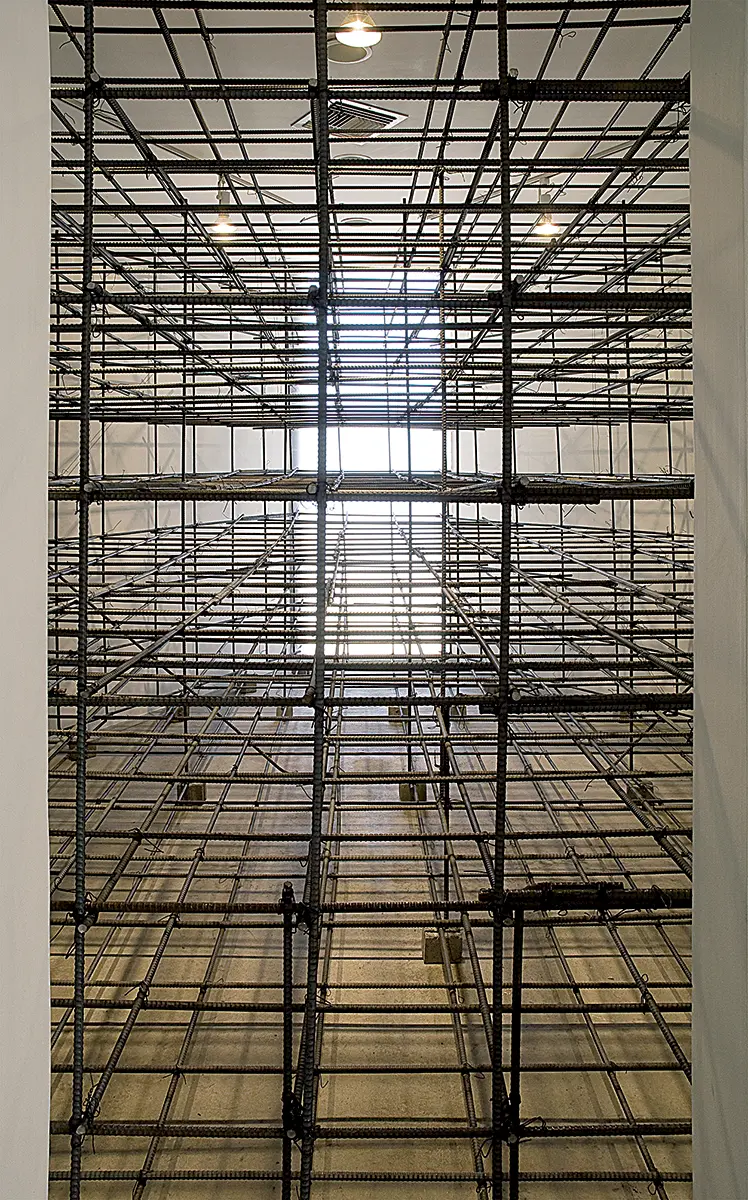
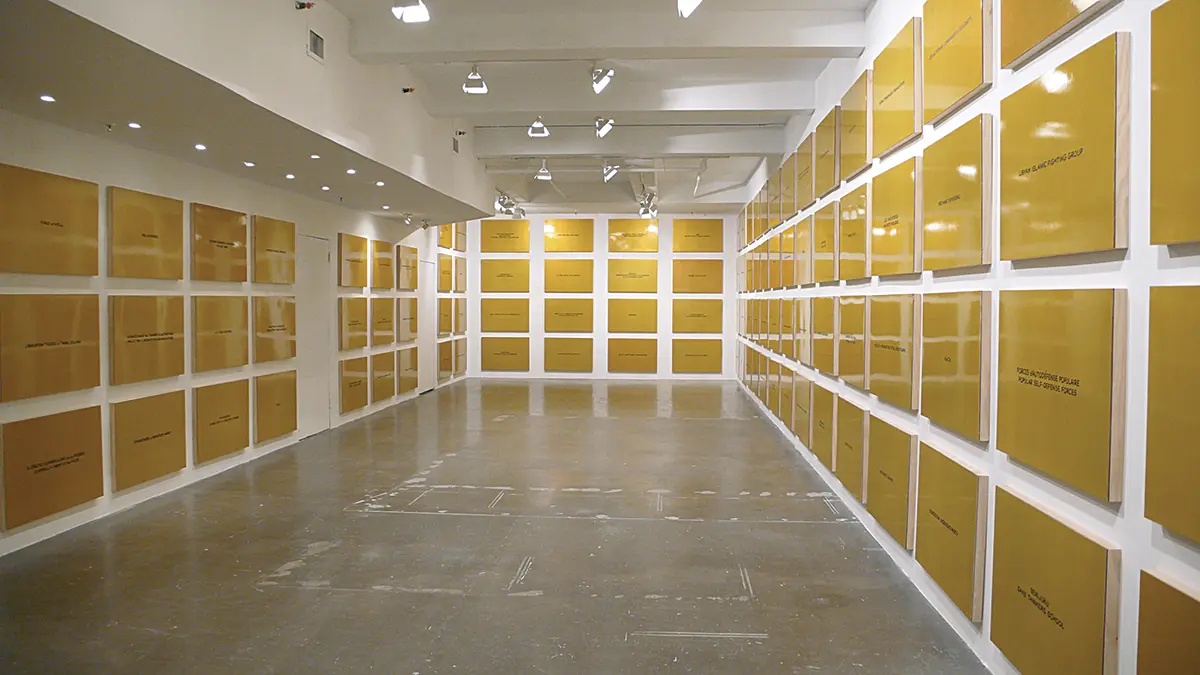
Installations were generally a mixed bag, although some stood out, such as Daniel J. Martinez’s Divine Violence (2007), which consisted of 125 panels painted with automotive gold flake and texts that listed religious organizations that use violence as a means to an end. The ostensibly matter-of-fact reality of religious fanaticism conflated with terrorism was exquisitely complicated by the surface sheen of the gloss that simultaneously recalled Big Daddy Roth and California low-rider car culture. Also very strong and slightly more architectonic than Martinez’s, two other installations were masterminded by Ruben Ochoa and William Cordova. Ochoa presented If I had a rebar for every time someone tried to mold me (2007); this work was part Arte-Povera-meets-Sol-Lewitt by way of Michael Asher, ciphered through a Los Angelenos sensibility. The installation had a poetic formalism yet conveyed something slightly sinister via its psycho-spatiality: it simultaneously evoked claustrophobia and agoraphobia. Cordova, on the other hand opted for a more narrative trope in his room-size piece that also consisted of a strong dialectic between open/closed-form and positive/negative space. Titled The House that Frank Lloyd Wright built 4 Fred Hampton and Mark Clark (2006), Cordova’s architectural installation was a displacing and disorienting labyrinth of wooden beams based on the house where the Black Panthers Fred Hampton and Mark Clark were killed in 1969.
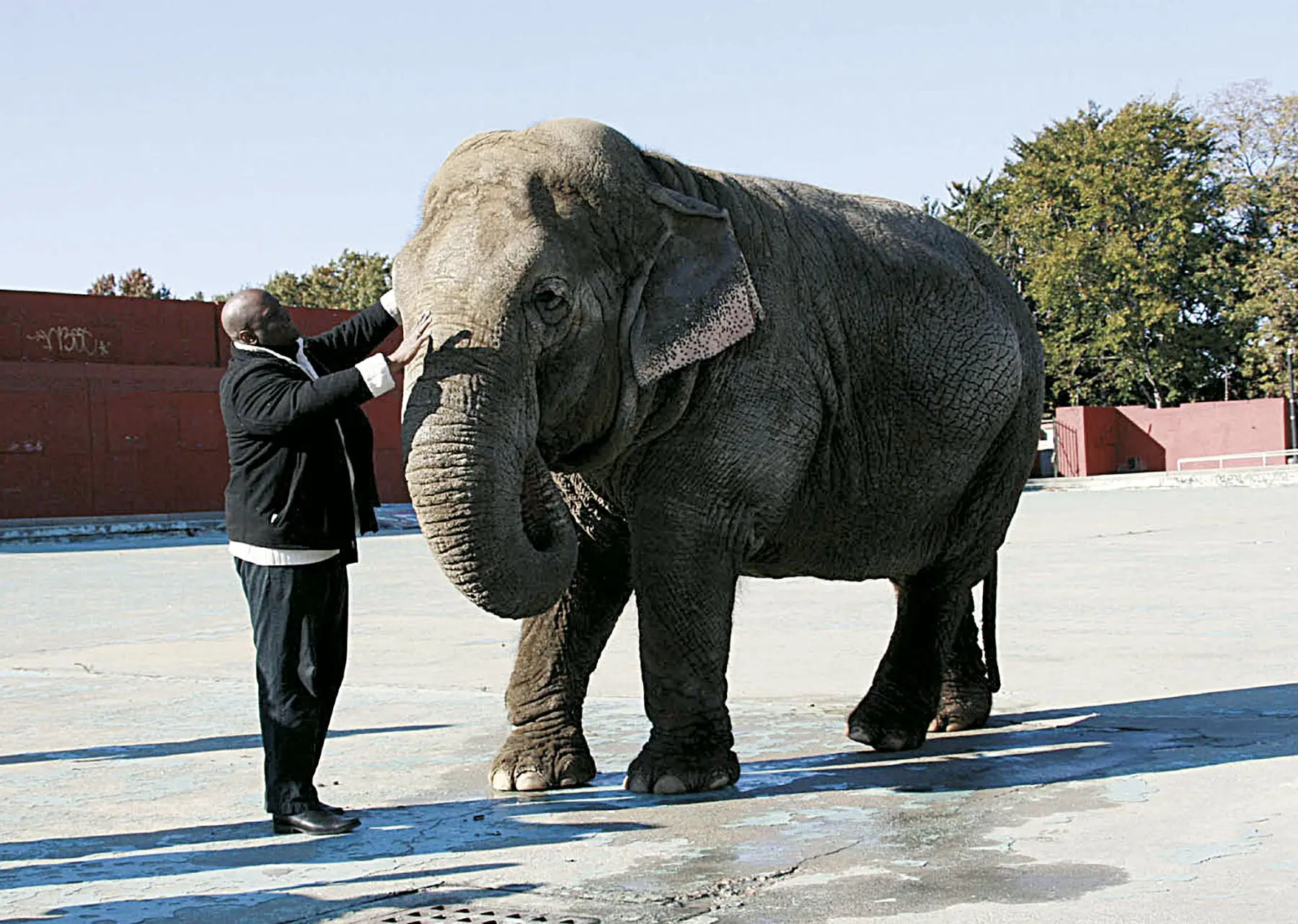
While there were excellent film and video screenings from Coco Fusco, Leslie Thornton, Elizabeth Montgomery, and Spike Lee on the second-floor film-and-video gallery, the most memorable video installation was by Javier Téllez, titled Letter to the Blind for the Use of Those Who See (2007). Its lush, panoramic cinema verité—which was accomplished using Blu-Ray technology—was a convergence of complex ideas beautifully and seamlessly articulated; one was the title, taken verbatim from the Enlightenment philosopher Denis Diderot’s text published from 1749 to 1751. Another source was the more familiar Buddhist fable of six men touching an elephant and verbalizing what they feel. As such, Téllez’s very melancholic yet redemptive work operated on numerous levels, referring to the fallibility of epistemological systems, modernism’s privileging of what Marcel Duchamp called retinal art, as well as the contemporary philosopher Emmanuel Lévinas’s notion of the other and its condition of difference.
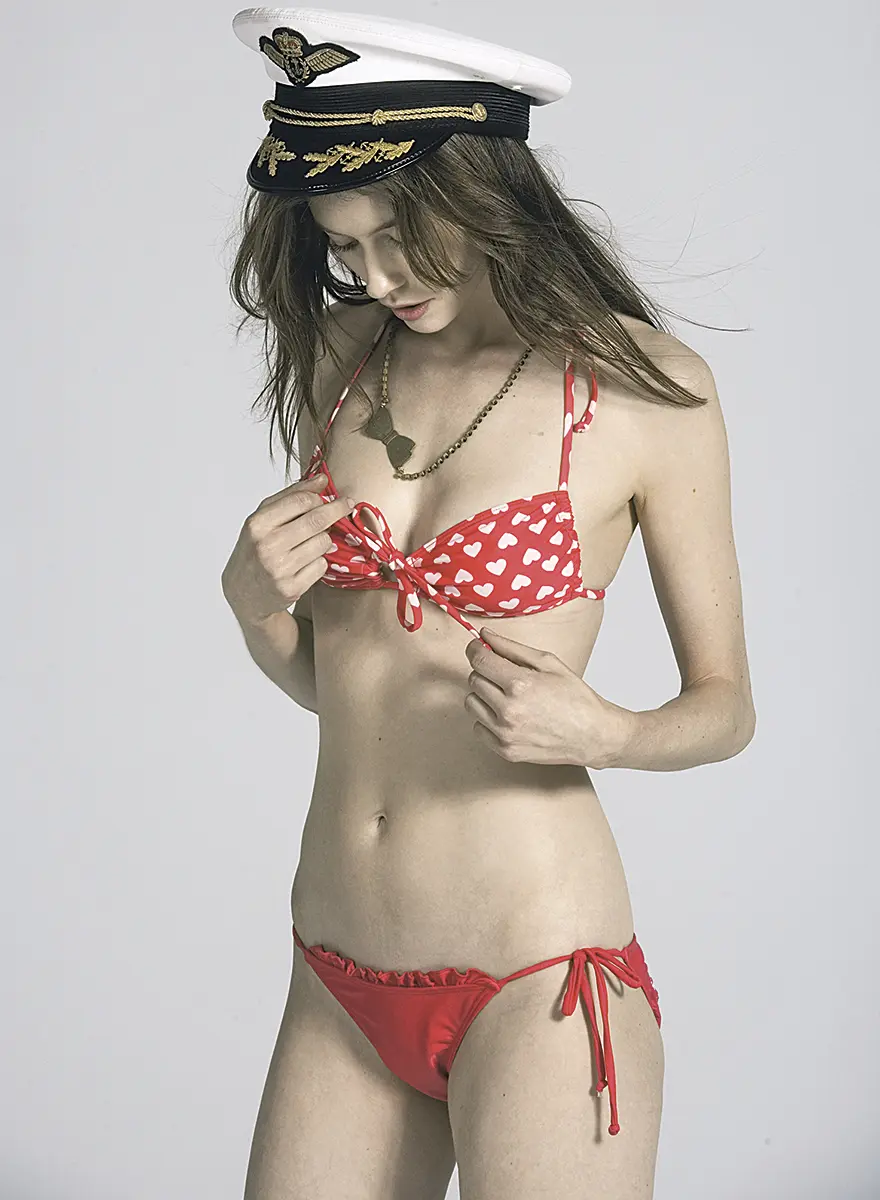
When painting and photography were presented, they were often elements of installations, though there were instances where these artistic genres were seen autonomously, such as the paintings of Karen Kilimnik, Olivier Mosset, and Mary Heilmann, or the cool, slick photographs of Roe Ethridge. Ethridge’s conceptual and deadpan aesthetic is uniquely his own but possesses elements that are faintly reminiscent of other types of visual culture, including advertisements, fashion, publicity shots, and photojournalism. His pictures have both the objective detachment of, say, Stephen Shore as well as an anthropologist’s eye when he records the same quotidian world as that mentioned above. In contrast to these photographs were Karen Kilimnik’s Rococo-like paintings that were shown the previous month at her New York gallery. Her works, intimate in size and executed in water-soluble oil paint and thematically focusing on 19th-century literature and poetic fantasies were displayed within an installation replete with a central chandelier. Kilimnik (who predates both Hernan Bas and Elizabeth Peyton, whose works often seem derivative) is known for the contexts in which her paintings are displayed, including opulent environments of multicolored rooms, shattered mirrors, glitter, artificial snow, and so forth. Working in wholly less ironic registers as well as in the realm of geometric, pure abstraction was the post-minimalist paintings by Olivier Mosset. Mosset is certainly one of the most overlooked painters today. And this lack of attention could be attributed to the intellectual demands of his métier. The same could be said of Mary Heilmann’s paintings. The works she exhibited at the Whitney Biennial had a reduced palette and employed Minimalist forms, but they were also detached in their steely presence. Whereas Mosset’s post-Minimalist configurations felt organic, Heilmann’s were less penetrable and their stark color combinations evoked more Ellsworth Kelley and post-Pop art than anything else. This is not meant to imply that Heilmann’s work was absent of visual power by virtue of their formal austerity, for aesthetic delicacy via reduction is an aspect that makes her art all the more interesting.
In other instances where the painting was included, it was more often an element of another medium, as underscored by the excessive, mixed-media objects of Rita Ackermann. Ackermann’s work in the past has been exemplary of an intense fusion of drawing, collage, painting, and a private iconography bordering on animation; in the Whitney Biennial, however, her work felt unresolved. The abundance of materials in her painted objects almost felt like overkill. Or, possibly more to the point, it reflected what seemed to be the curatorial thread of the exhibition, if there was one, which may have been of a formalist orientation.
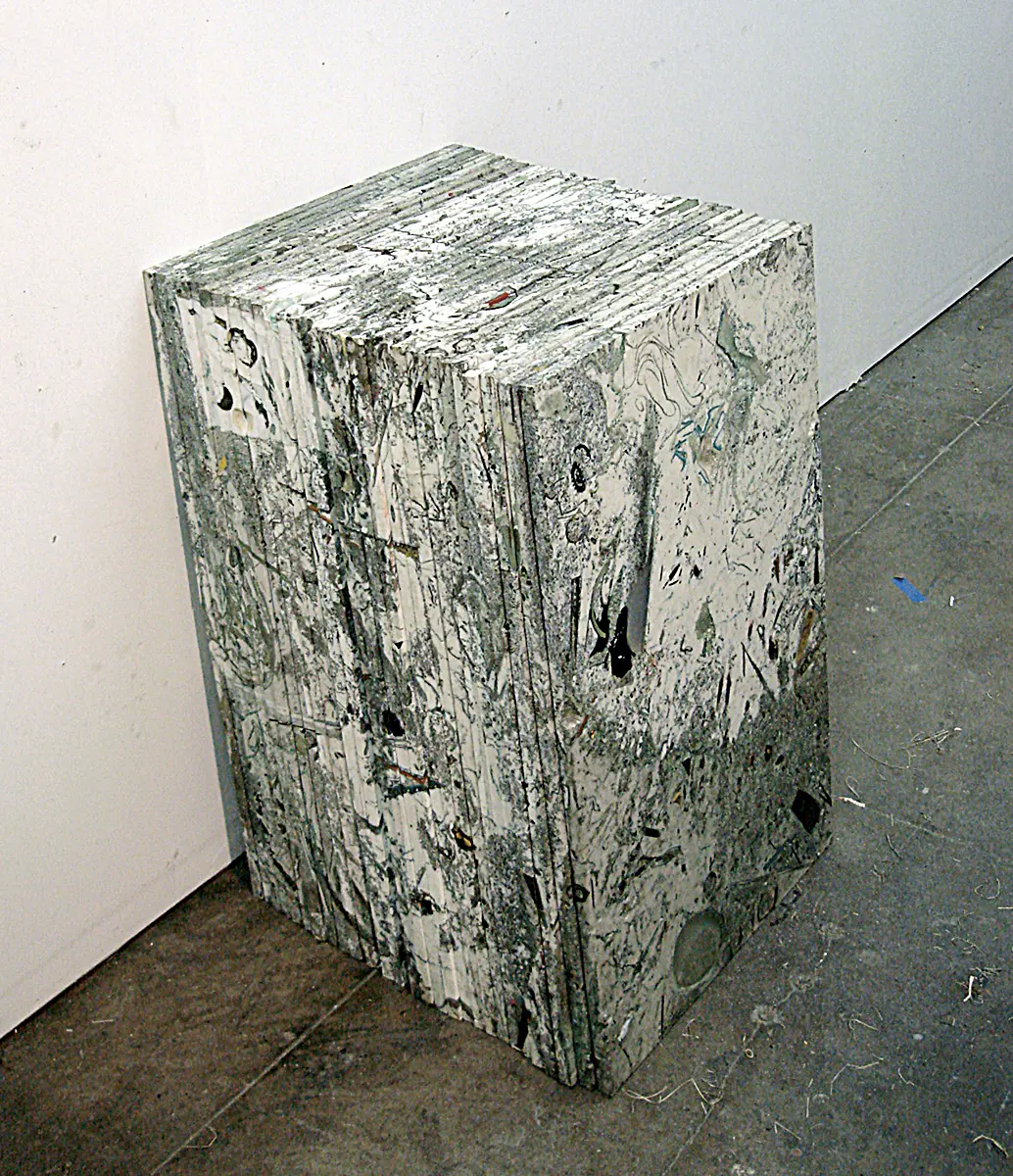
In other words, what seemed to connect some works were their formal aspects and materials. Many sculptures were constructed from plywood, plexiglas, mirrors, and found materials. The appearance of formal unity in some of the works was probably unintended but, because there was a prevalence of these elements, it gave the biennial a garage-like feeling, although some of the works were technically well made and clean to the point of sterility. Yet, at the same time, the content was not clearly conveyed and slipped away to the degree that materiality seemed to overshadow it. Furthermore, some works demonstrated an absence of internal coherence, which made the biennial feel slightly awkward and unsure or self-doubting. Not helping to dispel this air was the ostensibly deliberate cultivation by artists of a deskilled aesthetic; some works looked as if they were ninety percent finished.
Here one must differentiate this lack from a critical formalism that is associated with Thomas Hirschhorn, for example, and that the art historian Benjamin Buchloh has positively observed as aesthetically decrepit and dilapidated. Hirschhorn’s work has high-art grunge that he exploits with finesse and elegance, and this modus operandi reveals his acute artistic intelligence. There were works in the biennial that seemed to give textbook attention to Hirschhorn as well as to the refined messiness of Paul McCarthy, the elegant flotsam and jetsam that permeates John Bock’s sculptures, the exquisite detritus that is integral to Jessica Stockholder’s assemblages, or even the scattered precision and gesamtkunstwerk accumulations of the late, great Jason Rhoades, whose work was presented in the biennial. The recently deceased artist’s work looked very fresh compared to his historically amnesiac artistic progeny.
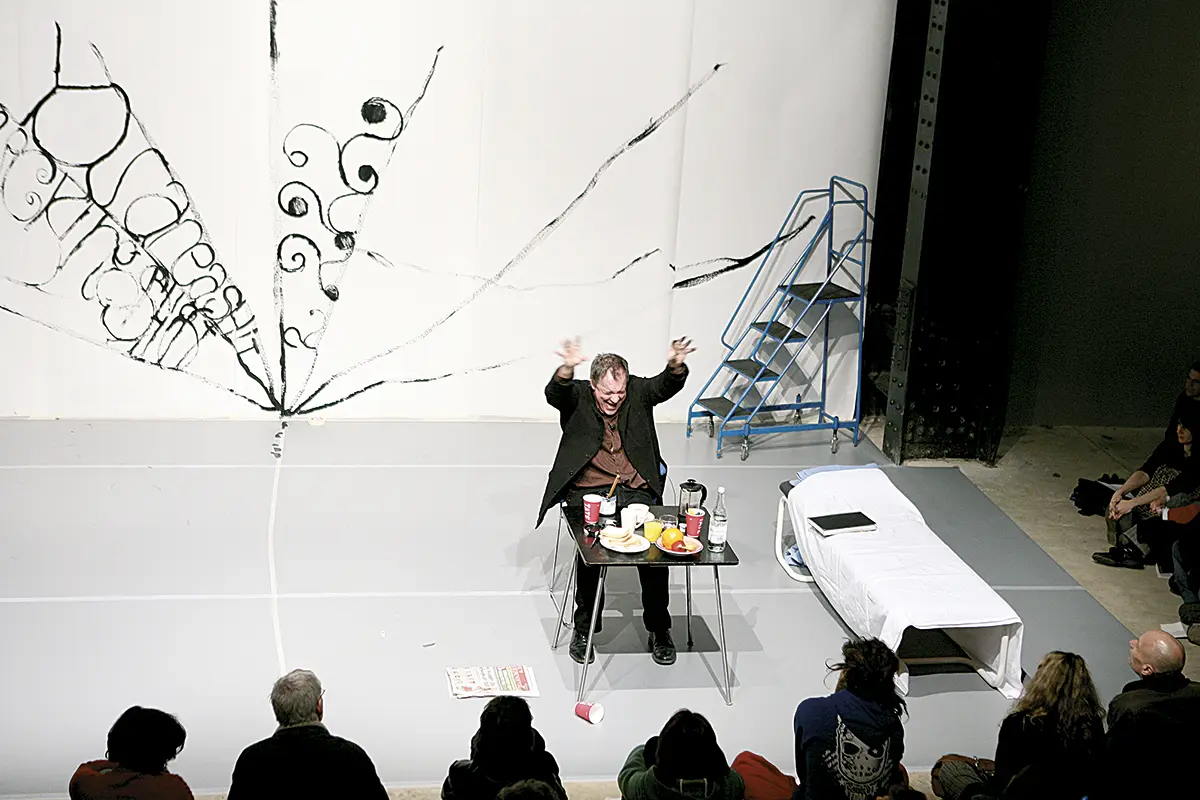
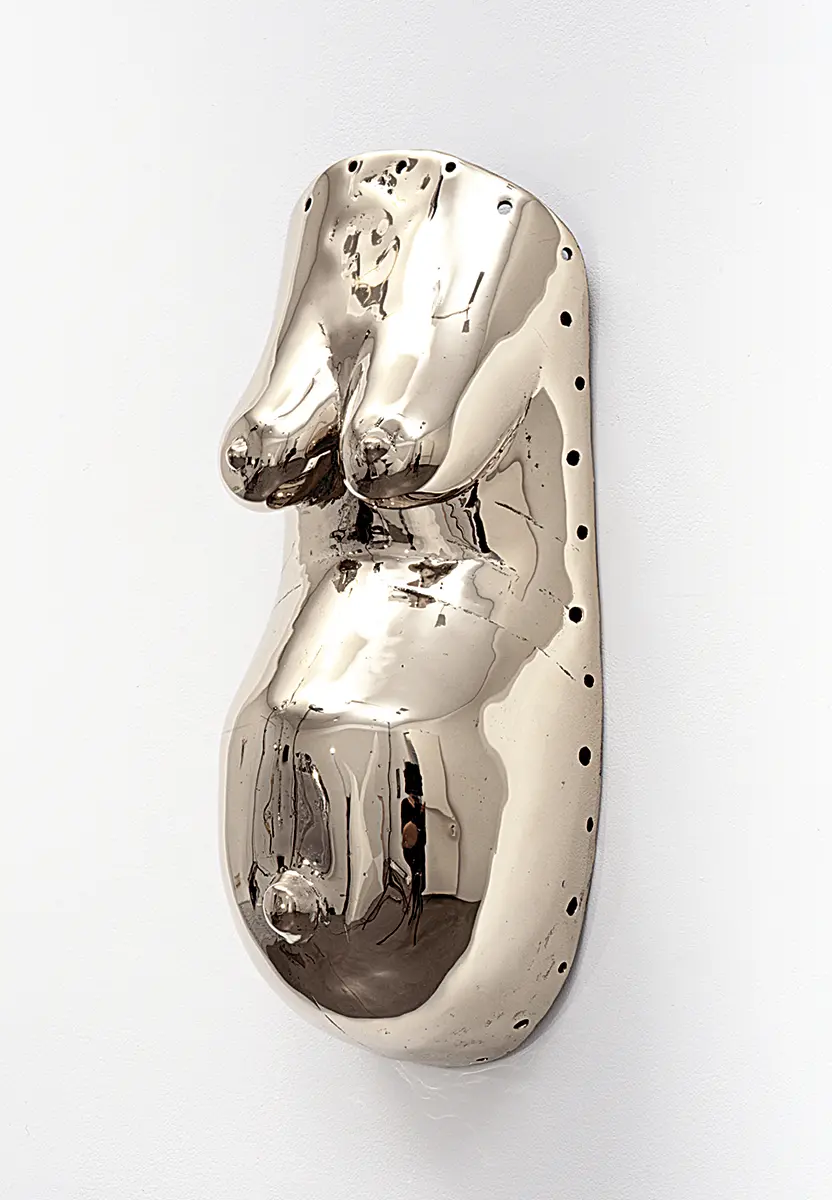
Other artists of an older generation participated in the biennial as well, including John Baldessari, Sherrie Levine, Matt Mullican, and Louise Lawler. Of these seasoned artists, Levine and Lawler made the strongest works, although Mullican revived a chilling performance piece, in which the artist is hypnotized and directed to make art, pour coffee, do other inconsequential activities, and ruminate in front of a live audience. The piece has been performed numerous times, and this rendition occurred at the Park Avenue Armory. Not as dramatic as Mullican’s work but no less interesting were Levine’s contributions, including a serial sculptural work titled Makonde Body Masks (2007) and a series of Iris prints titled After Steiglitz (2007). While both works were related to Levine’s now historically important project of appropriation, the former raised more interesting questions. After Steiglitz was about phenomenology and perception under the cloak of critique of authorship and patriarchy; the Body Masks elaborated this discourse along more post-colonial lines. The sculptures seem to be based on African Ife masks that commemorate deceased Onis or rulers. What Levine did was to ingeniously morph the masks into a series of female torsos while retaining the holes on the sides, which in Ife aesthetics were used for inserting decorative elements such as beads that would hang over the eyes and mouths as veils. In Levine’s Body Masks, there were holes on the sides and while they functioned as ornamental motifs, a subtext of violence distinguished these works from others in her oeuvre and also stood out in the biennial.
Another artist whose work mined a similar cross-cultural and trans-historical vein was Eduardo Sarabia with his ceramic vases and their painted cardboard pedestals. Sarabia’s work is located somewhere between fine art, the artisan, and Andy Warhol’s Brillo Boxes, seen in cardboard stands with silk-screened exteriors of fictitious commercial enterprises. Sarabia also installed his signature ceramic bar and served his own brand of tequila at the Armory at one of the many nights of performances.
The Park Avenue Armory was host to installations as well as performative works that ran the gamut, from sleepovers to an all-night dance party to a kind of street art displayed within a museum context. These off-site projects were only viewable during March, but some of them excited more than artistic appreciation in the audience. Agathe Snow presented a performance in which she offered daily dance classes to visitors for one week. This art-as-tutelage (and vice versa) culminated in a 24-hour dance marathon with DJs and the visual accouterments that come with such a social event. At around 3:00 a.m. and some fifteen hours into the dance marathon, a small riot broke out including fisticuffs that lasted some fifteen minutes until arrests were made by New York’s Finest. The 2008 Whitney Biennial may be remembered for the hooliganism of this event. However, this rather contrite frat-boy fracas was nothing compared to the discursive violence that the “political” 1993 biennial galvanized from right-wing and neo-liberal New Yorkers that, ultimately, led to the Whitney Museum’s changing of its curatorial guard. Such heated debate and culture clash, fortunately, or not, you’ll never find at an art fair.
RAÚL ZAMUDIO
Is a New York City-based independent curator, critic, and the co-curator of the 2008 Media City Seoul International Media Art Biennial.