
The behavior of similar materials as active
signs in a two- or three-dimensional space constitutes the conceptual framework
that Ana María Mazzei (born 1946) sustains in essential visions of her creative
experience. In the artist’s work, these visions are the visual and cultural
connections of Mazzei as an artist and as a human being. From the beginning of
the 1960s, she has turned to elements that are associated with spontaneity and
the visually attractive, and she has explored these premises in her body of
work to date. For the artist, the formal and conceptual investigation of the
cultural and artistic complex of her own history has been important. In 1978,
when she exhibited the series Maderas (Wood), Mazzei had already traveled the
road of graphic work, and she explored and exploited the symbolic qualities of the wood grain. These works seemed to reach toward the viewer, in some cases by the
transparent nylon or wire threads that ran through them, like sinuous tissues
within and outside the surfaces.
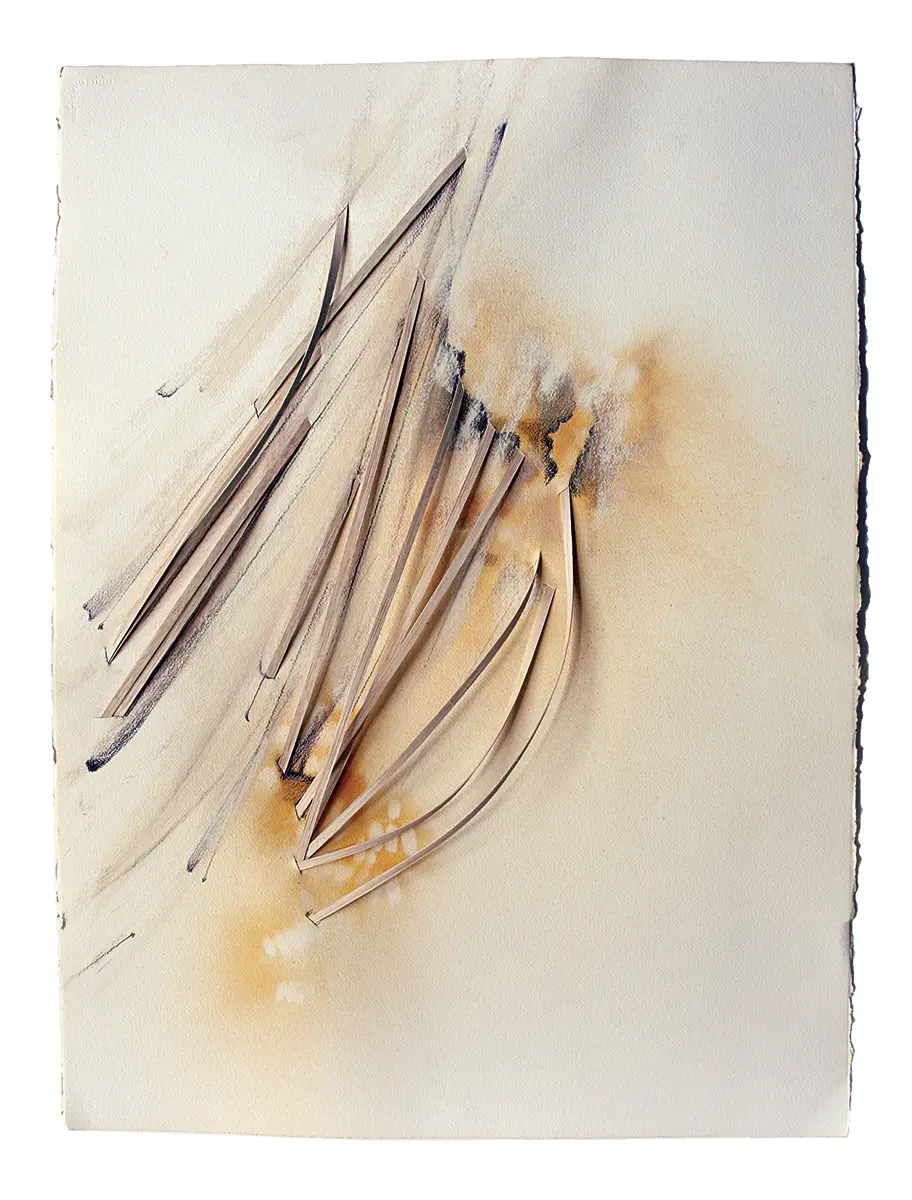
Mazzei expresses her artistic concerns with complex structural composites; an encounter with diverse materials forms part of the visual and plastic reality of her themes. None of these materials are imposed upon another; there are frames of reference for affinities and rejections on the dynamic surface of the support. This complexity was notorious in the series titled Grafías (Graphics), comprising more than forty-five works on paper exhibited in 1982. These visually rich collages were created with the participation of artists and writers invited to integrate their manuscripts or other materials into the format selected by Mazzei. From her accumulated research and experiences, Mazzei produced an extraordinary exhibit when she represented Venezuela in the 1994 São Paulo Biennial. Titled In memoriam: Ewaipanoma-Yanomami, the installation continued her vision of an alternate reality. In this case, the two realities of Latin America were placed together: ancestral culture and modernity, represented by an ensemble of pivoting cylindrical volumes that moved as a mass across the floor. The vinyl surface of each of these cylinders was impressed the indigenous figure of Latin America as seen by the Europeans.
Due to the success of this work, Mazzei was invited to the Miami Art Museum in Dade County, Florida, an experience that the artist considered seminal for her future investigations, including Links, the recent exhibit at the Galería Alternativa. In her new work, Mazzei gathered ideas of art and history; she connected these with the actions of sewing or spinning cedarwood arches onto paper supports. As in her prior works, she was interested in the ambiguity and confusion caused by the rapid calligraphy of the drawing, the accumulated material, the sensation of crinkled paper; the whole depended on the desire to communicate, to transmit. The textures multiplied the meanings in the threads/rushes that entered and exited or hung from the paper. The textile rush behaved as a line that delimited spaces, modifying the visual appearance of the materials; the rush moved or fell in perfect freedom. Mazzei connected the elements, both visible and invisible, such as “sewing” the support with silk thread, and at times adding scraps of paper that were like windows that hid a secret.
The works in the Links series commanded an emotional response and the identification with what was observed, situated in the field of the visually mysterious and significantly hidden in its interior. The artist presented an aesthetic challenge derived from the formal logic sustained by the symbiosis between form and content. Mazzei’s work proposed an explanation only in terms of emotion and reason; this proposal shouted like the deaf, seen but not heard. The intimacy of the work whispered to the viewer, inviting one to share interwoven thoughts that formed a new wave of feelings.
BÉLGICA RODRÍGUEZ