

Opening in March of 2008 and occupying a single
conceptual and temporal space, Face to Face is an epoch-making exhibition
from the post-Fordist phase of late capitalism. It displays works (all from the
Daros Collections) by a number of European, U.S., and Latin American artists
who are linked by important concerns for cultural critique at a crucial
transition period in the late twentieth century, coinciding with a series of
transformations in our present societies. The artists gathered are also united
by a way of doing art, a way of articulating and positing their reflections.
The impeccable unity of the proposals as a whole is rather surprising. If the object labels accompanying the works were taken away, it would be impossible to identify the artists and their origins, or when the works were made.
A sense of atemporality pervades the exhibition, in that time, is perceived as non-linear, non-teleological, and non-sequential; it is like a tangle of propositions and events connected by processes that are not the consequence of one another but rather contingent relationships in a given epoch.

The artistic proposals seen here appear to have been forged in an exchange of cultural flows that are ever more immediate and simultaneous. Elaborating questions about the new society, the works essentially match one another in formal solution and horizon of critique and use as a contrasting backdrop the cultural transformations in the pulse of capitalism in the twentieth century.
Given these characteristics, the curatorial proposal is unusual for an art public accustomed to localization, to nationalistic borders, and to the highlighting of difference above compatibility. The exhibition is also unusual for a European public accustomed to exoticism and the supposed “proper” languages of what used to be called the “periphery,” Latin America in this case.
What we encounter in this show is a group of artists engaged in a complex exchange of languages, ideas, and concerns, each of the local and global at the same time; this translates into a proposal that no longer situates identity as a territorial description but as a result of the exchange of culture. This is the risk assumed by the show, and this is its gamble, one that demands we slow down and think.
We can think about the whole show by dividing its two parts into five sections of critique about substantial cultural issues for the period. Our path through the works accompanies a possible path proposed by the curators.
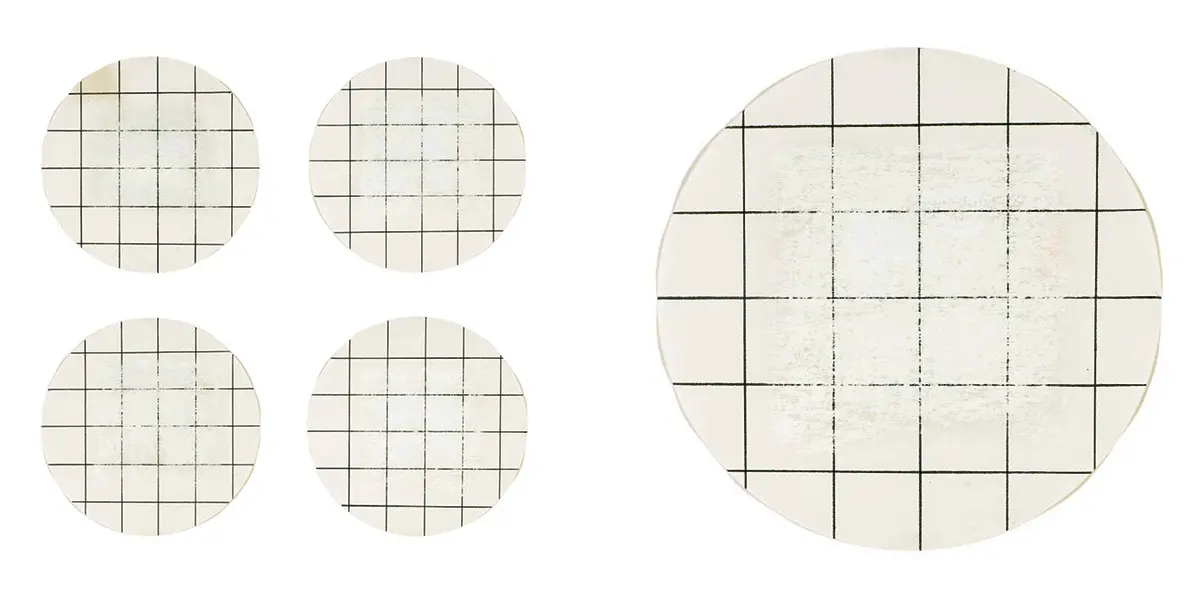
The first section concerns the idea of interrogating authorship and originality: the staging of ideas and actions as produced by a given set of protagonists, in order to understand them rather as manifestations of a system of thought and of collectively forged socio-economic structures. In this first group, we have Nelson Lerner’s Sotheby’s, Charles Juhász-Alvarado’s Duchamp en jaque, Robert Gober’s/Sherrie Levine’s Checkerboard on table, and Jackson Pollock’s Number II connected to A polok by Chemi Rosado Seijo. As originally proposed by the artists, all of these works broke the rules of art at the time. They incorporated banal everyday objects into the art institution, thus transforming them into art objects (with the concomitant added commercial value), thanks to the art-institutional machinery of which they are now part. In different ways, they all used appropriation, an essential strategy in modern artistic practice that has been reused in the contemporary period. Like a game of Russian boxes, this appropriation charts the translation of the works’ meanings and uses into an inexhaustible possibility of redefinition.
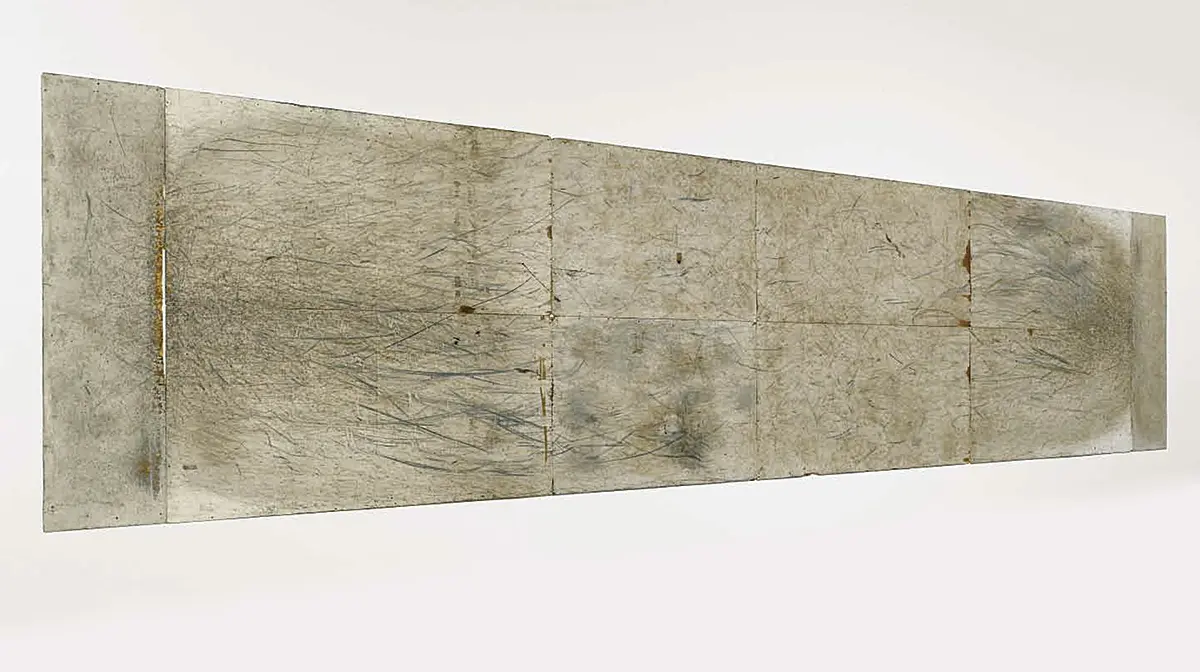
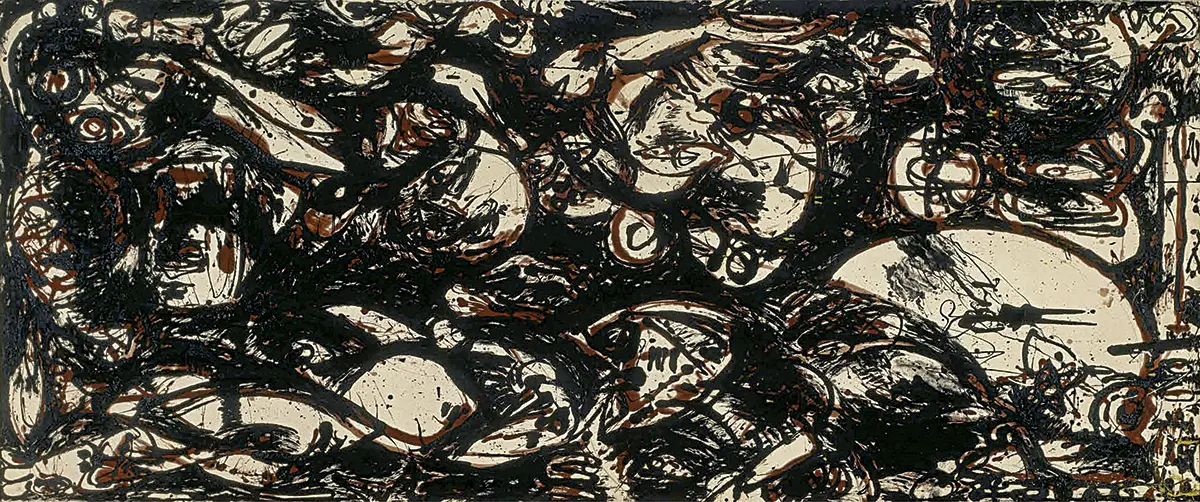
The pairing of Chemi Rosado and Pollock is particularly interesting. Rosado’s work does not exist except in its relationship with Pollock. Rosado’s work is a skateboarding ramp of the kind seen in public spaces in Puerto Rico, which have been taken over by youth who join this subculture in search of a sense of belonging and meaning within a community. The ramp retains the traces of the energetic movement of wheels: these are expressive forms, loaded with dynamism and vitality. Pollock attempted to capture his own expressive traces on his canvases. By offering us that ramp as a work of art, Rosado subverts our notions of authorship and originality by salvaging an everyday object and appropriating it through his use of “polok.” The popular is inscribed and subsumed in a value scale of the social production that no longer differentiates it.
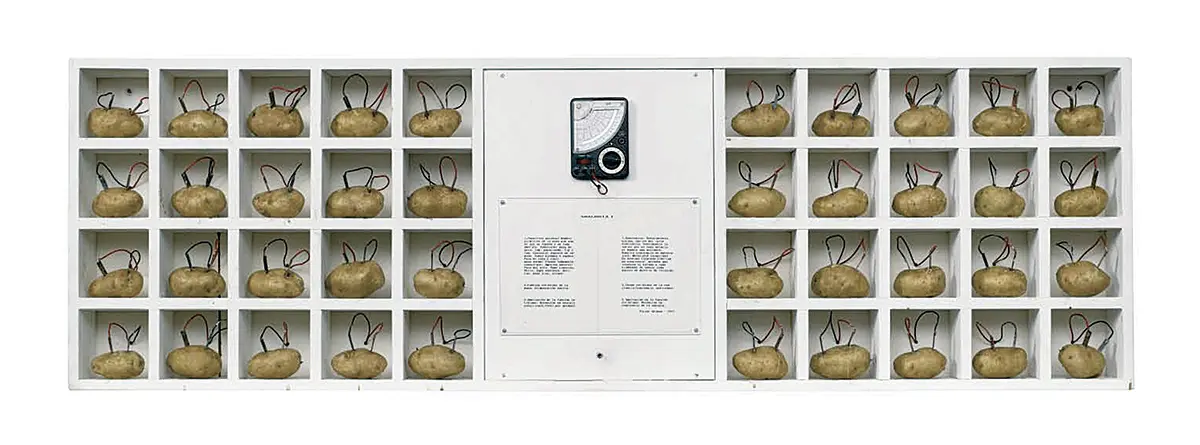
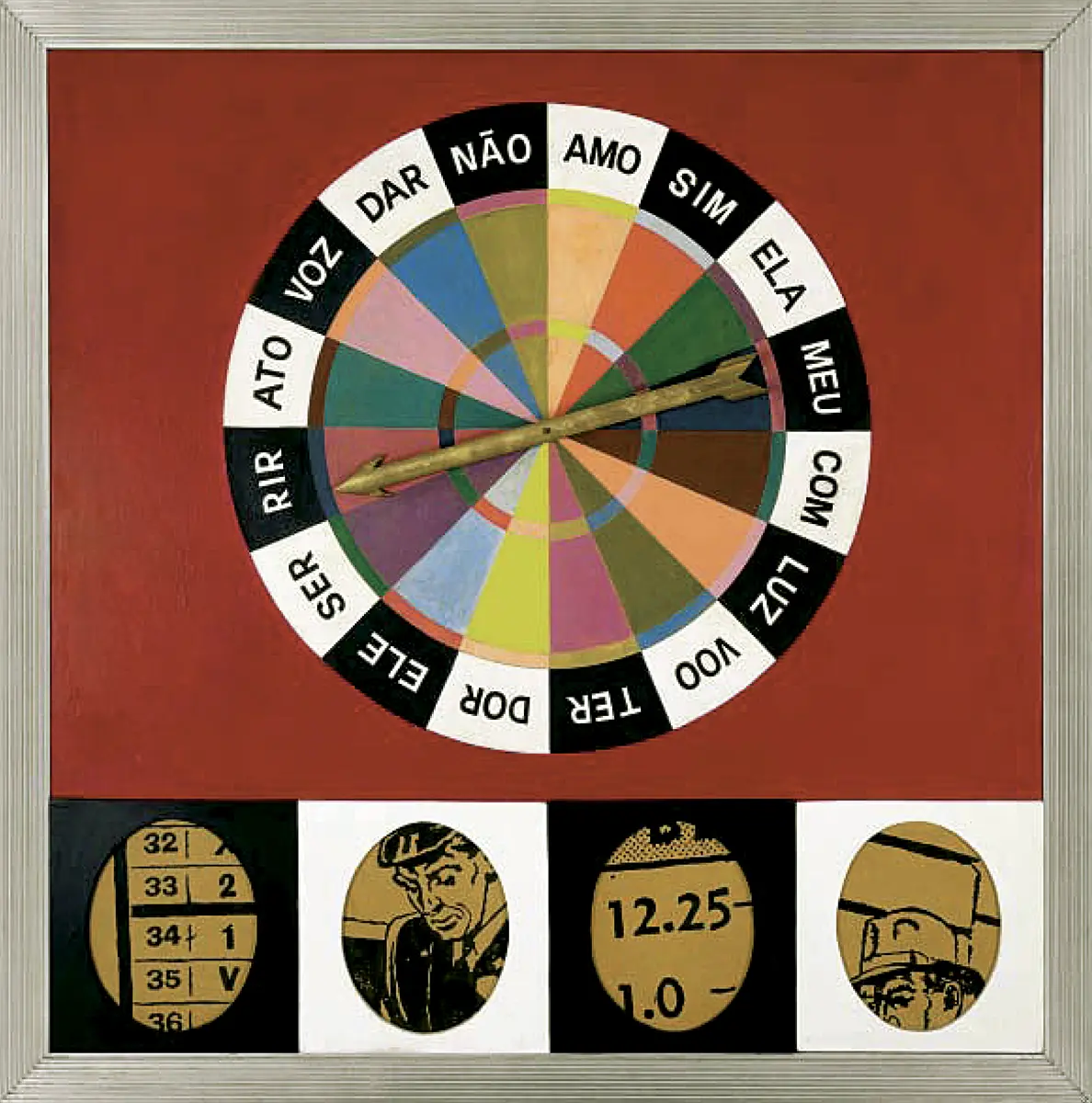
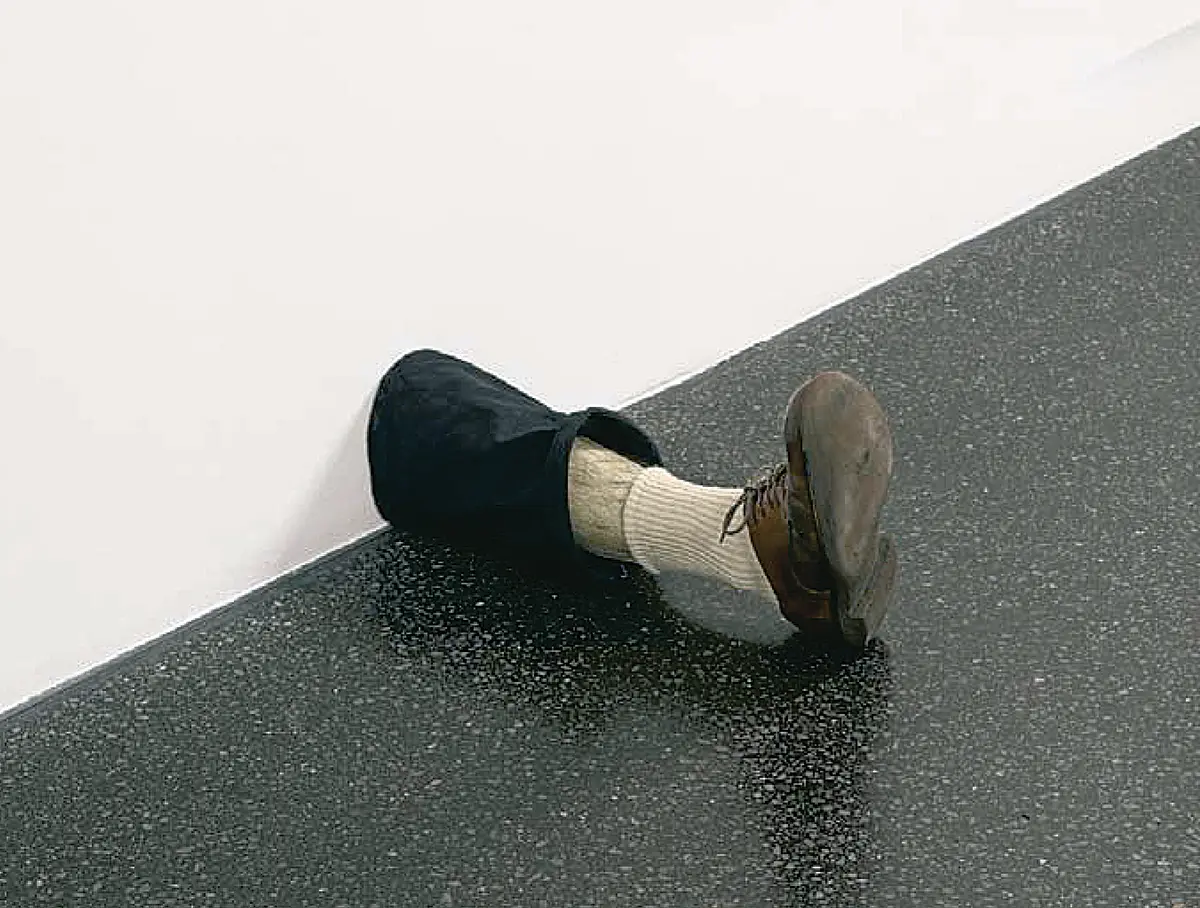
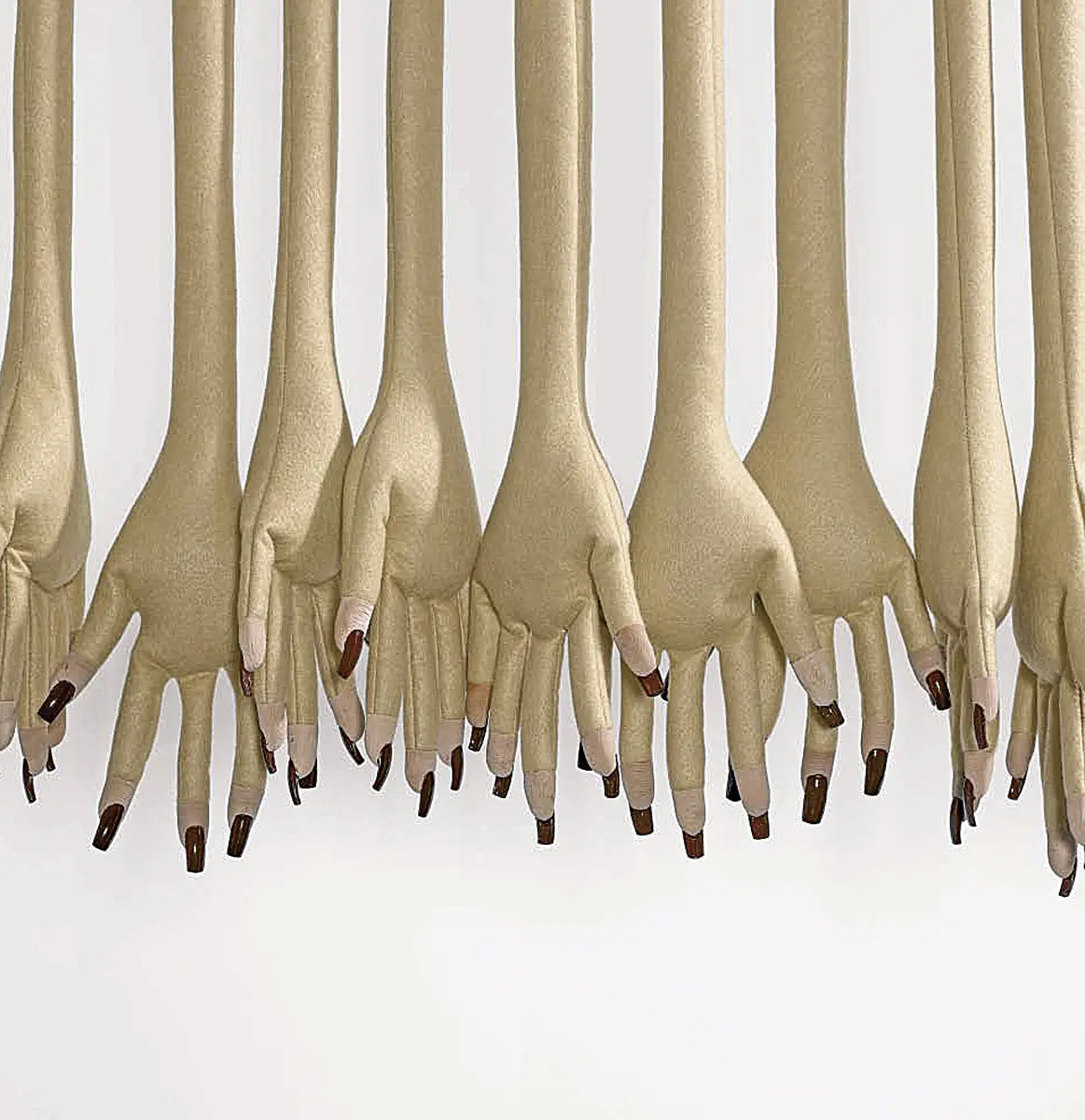
The second section is focused on bio-capitalism, or bio-politics, which today occupies the center of debate in the social and natural sciences. It concerns the production of life, the “how” of life. In this second group, we have Joseph Beuys’s Tisch mit aggregat; Victor Grippo’s Analogy I; Helio Oiticica’s Bolides Gemini; Luis Fernando Benedit’s Prototype-Habitat-Labyrinth for Cockroaches, Habitat for Snails, 2 Minibiothrons for Spiders and Snails, Labyrinth for Tropical Fish, Laboratory-Fishtank for Tropical Fish, and Egg Project; Cildo Meireles’s Reason/Madness; Robert Gober’s Play Pen plus two untitled works that are generally known as the artificial breast and the mutilated leg; Raquel Paiewonsky’s Manos; Bruce Nauman’s Pair of Reversed Heads; Nicolas Constantino’s Soccer Ball; Antonio Dias’s Todas as cores dos homens; Eva Hesse’s Ingeminate; Priscilla Monge’s Ballerina; Rebecca Horn’s American Waltz; and Rafael Lozano-Hemmer’s Superficial Tension.
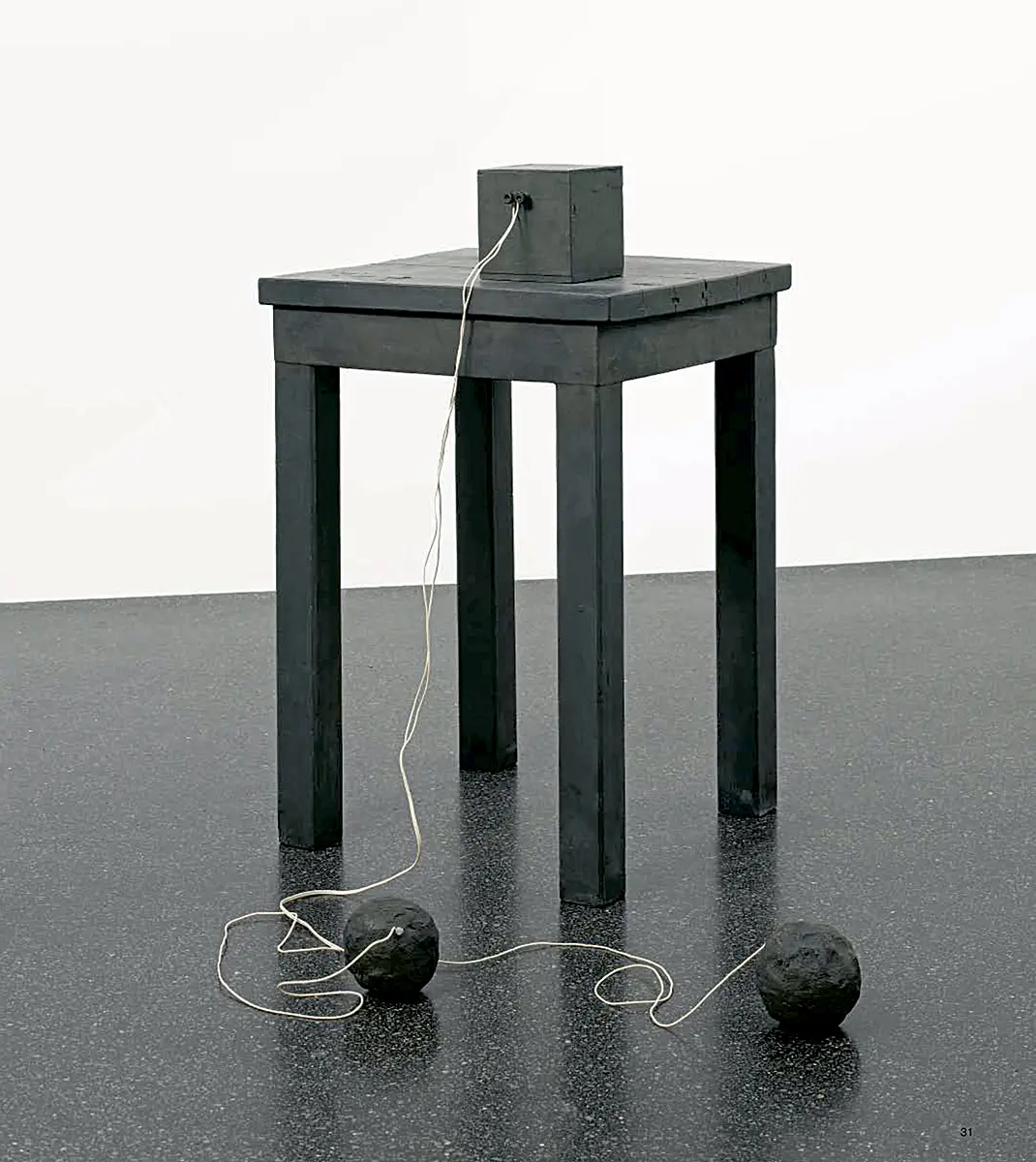

As suggested by these works, the production of life is strongly connected to the machine and its social uses in everyday life, as well as the dissection and codification of the body. In its most recent developments, technology has redefined the human, whose materialization would be the cyborg: a physical and virtual being attached to prostheses and extensions of its own body. Life is produced in laboratories and industries. How life is made is through the disciplining of bodies, the everyday normalization of the social space and its populations.
Benedit’s work, for example, deals with a series of machines that regulate the social life of formerly “wild” animals, inscribed in other rules of “nature.” It is an allegory of social machines for the normalization of populations (apparatuses such as architecture, schools, clinics, and science). Huevos project also deals with projects that manipulate and reproduce life’s natural cycles. Capitalism has transformed life into a commercial proposition—of great interest for the apparatuses of social production—as it self-validates and continues through them.
The works by Horn and Monge call one’s attention to the normalization of women. Horn’s high-heel machines activate into a kind of tap-dancing as the viewer approaches them, and Monge’s ballerina is mounted to spin on a drill, a typically male tool.
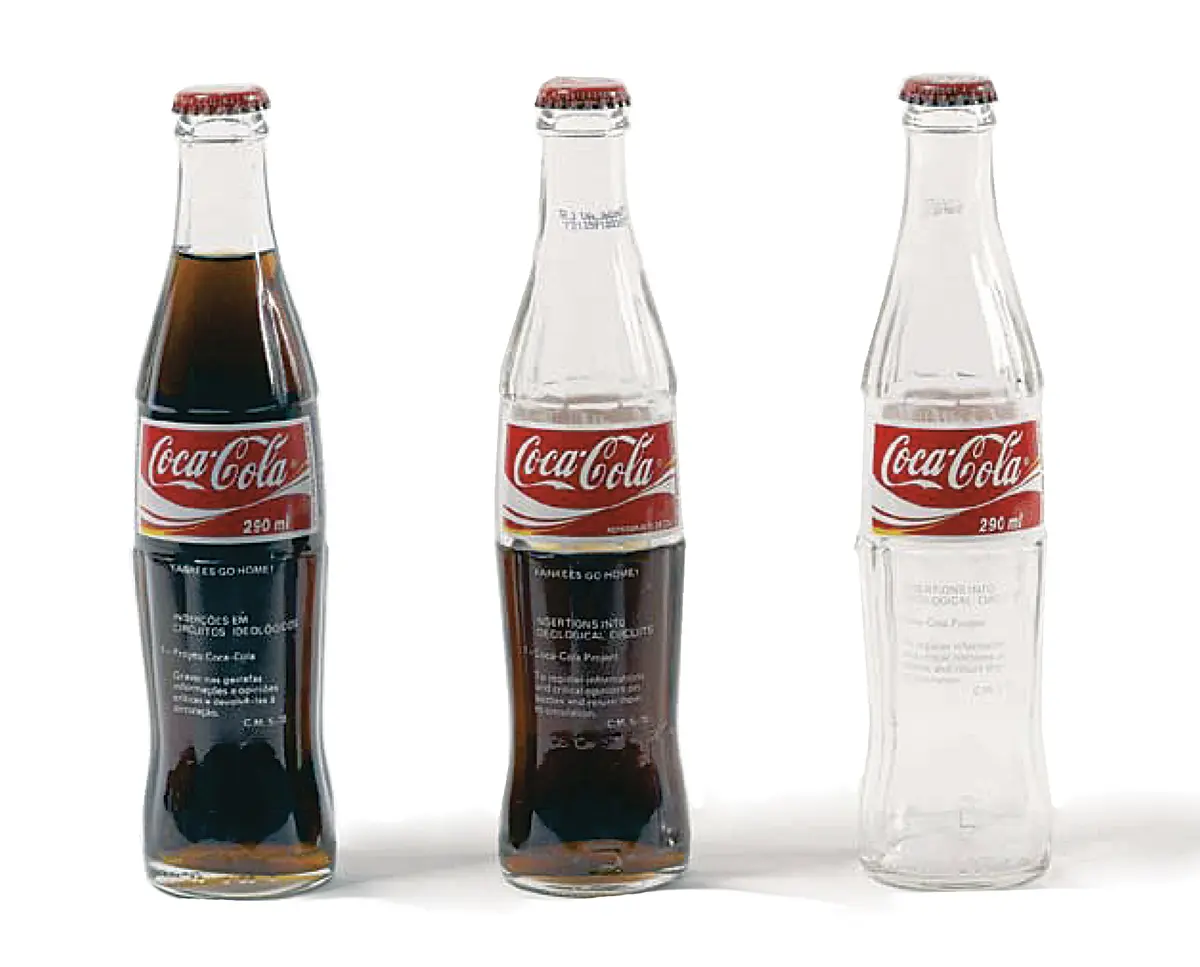
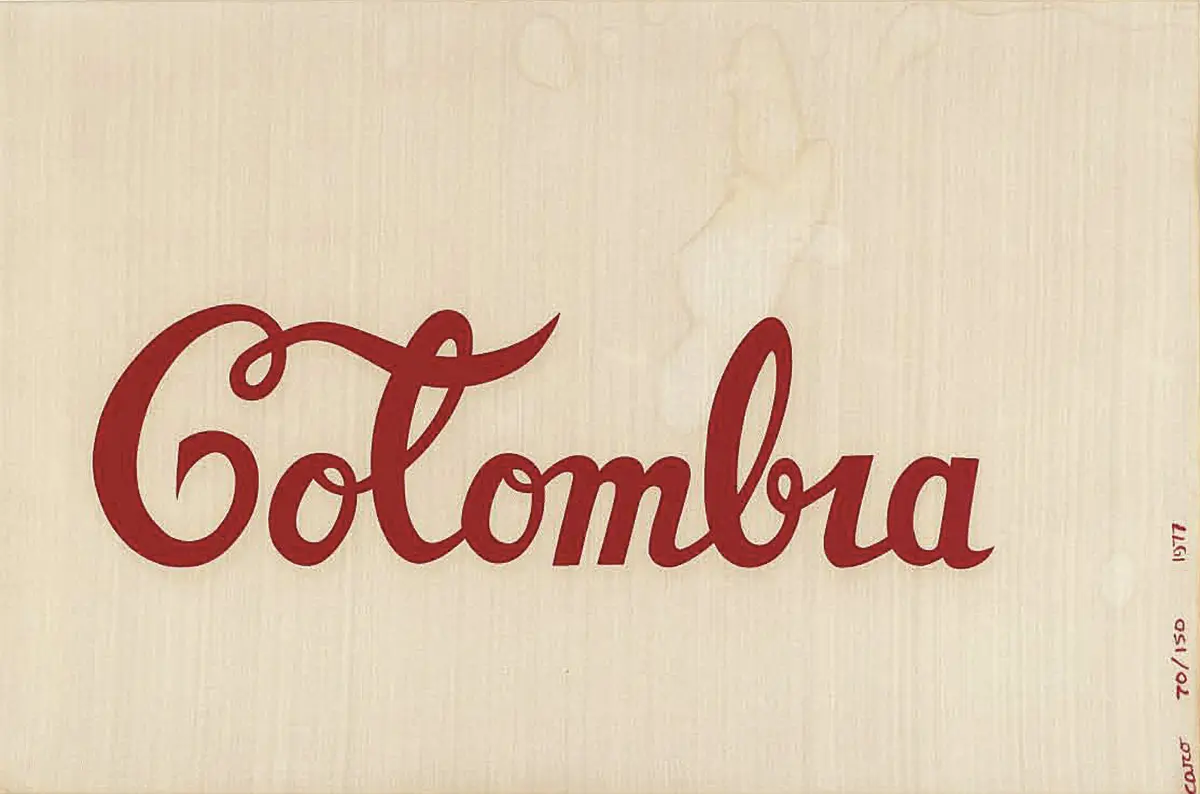
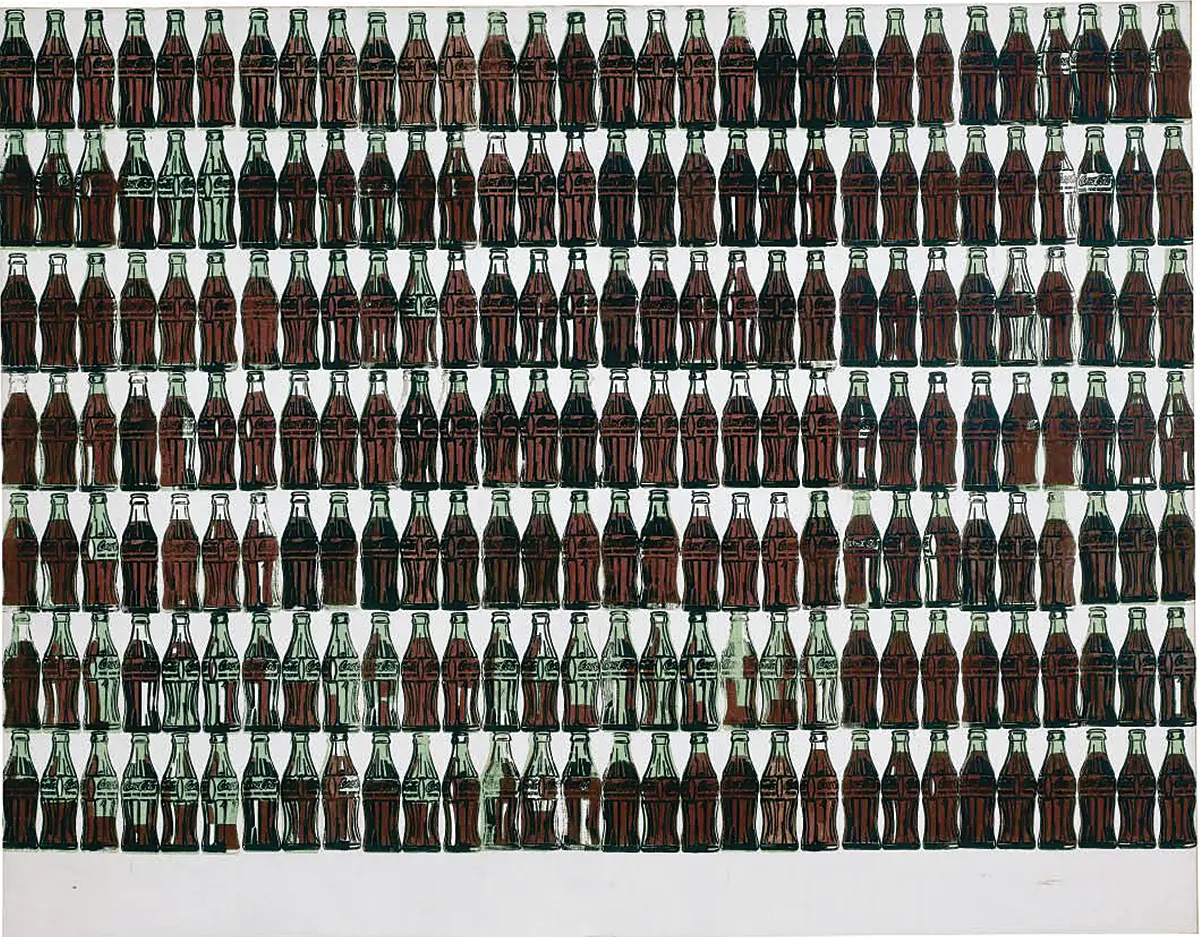
The third section concerns the cultural industry, where post-Fordist capitalism moves toward cultural capitalism and turns the symbolic and knowledge into the great use- and exchange-value. It involves the entertainment and spectacle industry and cultural consumer goods. Works seen in this group are: Vik Muniz’s Andy Warhol: Pantheon, Small Change, Andy Warhol Dance Diagram (6), 210 Coca-cola bottles, Carat, and Two Dollar Bills (40 dollar bills in green); Guillermo Kuitca’s Naked tango (after Warhol); Cildo Meireles’s Inserçônes em circuitos ideológicos 1 – projeto coca-cola; Luis Camnitzer’s Coca-cola bottle filled with a Coca-cola bottle, Two identical objects, and Dollar shelf; Antonio Caro’s Colombia; and Ivan Capote’s Perpetual Mobile. Money/currency and Coca-Cola are the dominant iconographies in these proposals. They are metaphors for the transformation of metal-based exchange values into the symbolic values that have replaced them, as well as a society given to the banality of its culture turned into merchandise. Consumption is what’s most important; to exist is to consume and be consumed, harried in the accumulation of the prestige provided by consumption itself. Exchange value is the social value par excellence, and it has already eclipsed and devoured the use-value of the symbolic. Here, Camnitzer is especially potent with his Dollar Shelf and his Two identical objects. Warhol is the king in this critique, having turned himself into The Spectacle, as Muniz points out in Andy Warhol: Pantheon.
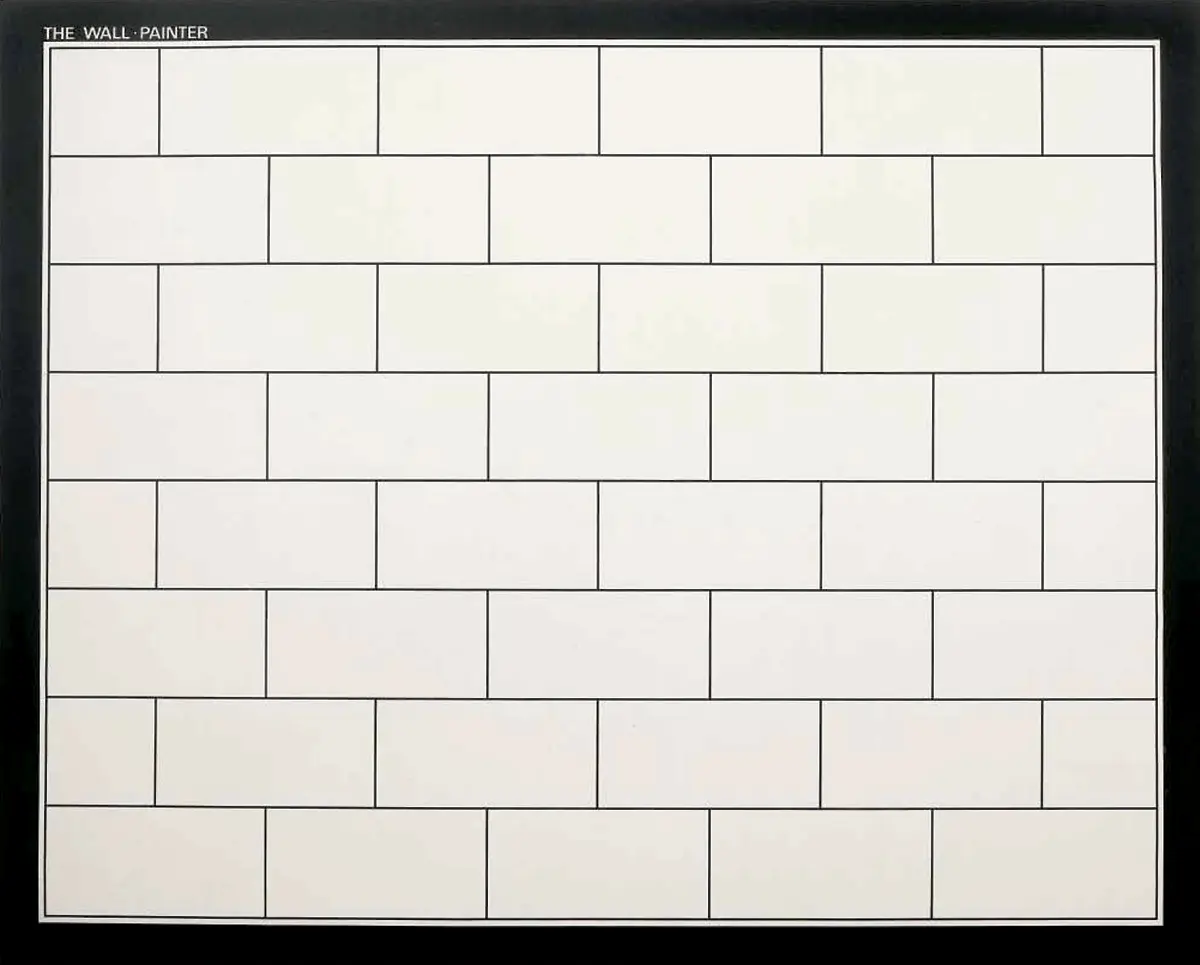
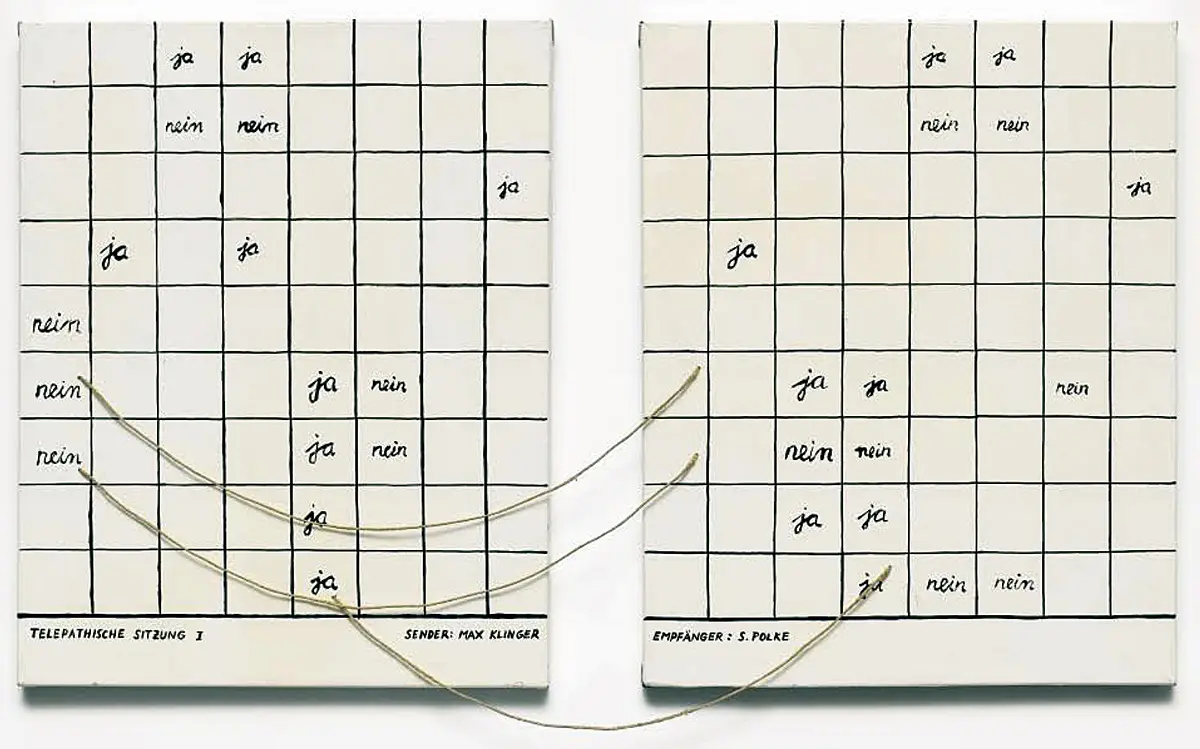
The fourth section focuses on the primacy of the text as the logic of Western knowledge, making it into a visual game. It insinuates the preeminence of the visual for future society, while at the same time leading one toward the cultural construction of language, of truth, and of objectivity. This group includes: Sigmar Polke’s Ohne title, Schimpftuch, and telepathische sitzung I; Tonel’s Drawing with Letters and Numbers; Nelson Leirner’s Answer…If You Can; Ivan Capote’s Dyslexia; Jorge Macchi’s Lifeless Bodies; Rosemberg Sandoval’s Individual Actions; and Priscilla Monge’s Boomerangs.
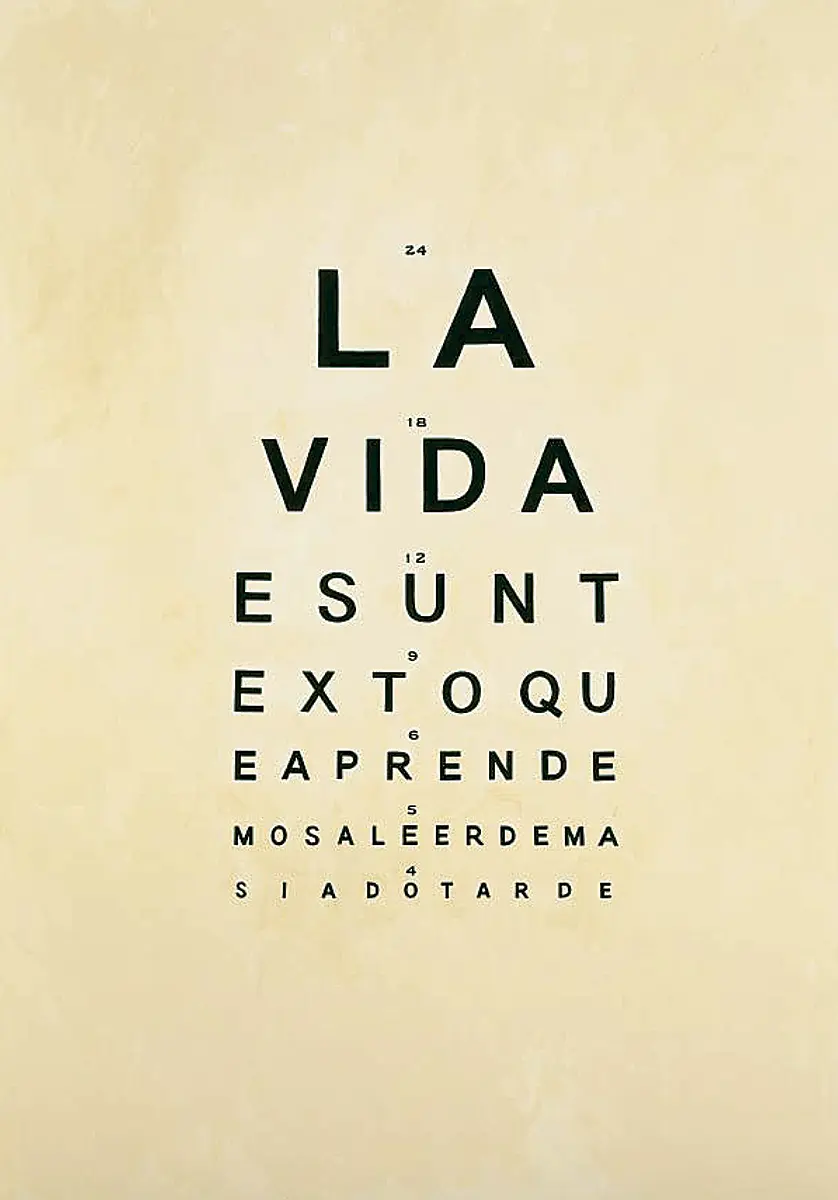
Leirner, Polke, and Tonel evoke the text as an arbitrary convention that can either be left to chance or subjected to error in order to be questioned or simply re-codified. Capote refers expressly to life as a text that needs to be learned (although we suffer from dyslexia), to language as a regulator of the real. Macchi transforms text into image, transposing his capacity for evocation into an image of the body as scattered, using tiny newspaper cutouts where one reads, for instance, “the lifeless body of the 17-year-old marginal...”
The last section of the show explores the issue of the art field as a space of representation that questions the very space of social representation, of “the real.” Art is a matter of accommodation, says Antonio Dias: “Any reduction or enlargement is a matter of accommodation.” Reality is a matter of accommodation; our fears, certainties, conceptions of materiality and its logics, and art itself are subject to the power and to the apparatuses that reproduce them. These might be the underlying texts to Dias’s work From Trama, as well as Camnitzer’s series From envelope and Sol LeWitt’s Three-Part Variations on Three Different Kinds of Cubes.
Reality and what we think of it is a matter of accommodation, one connoted politically by de-centered forces of individuality but which is nonetheless based on a kind of power we all reproduce and are affected by, as it produces us as speaking subjects. Even so, it is possible to interrupt that “reality,” causing arrhythmias and transformations within the culture system. Antonio Dias’s Do it yourself: Freedom Territory challenges the viewer with improbable liberty: to move an architectural quadrant arranged on the exhibition’s floor. Did someone attempt that?
The Daros Collection is also presenting a discussion for each of the two parts of the show, with several of the artists included as well as critics and the general public. On the agenda for the first part was the issue of the meaning of origin, the original context of the works. Some artists, like Camnitzer, pointed out the lack of a Latin American language and the absence of properly peripheral concerns in this show. In the second part, the issue was debated anew, from the opposite end of the spectrum, with the topics “Art is a universal language” and “Is art a local language?” For instance, Carlos Cruz Diez (who surprised everybody with his warm vitality and the currency of his thinking) commented about the beginnings of kinetic art in Paris, of which he was a key part, and which was presented at the time as a Latin American contribution to the international scene and later became a universal proposal.
The entire discussion focused on the internalization of art and the globalization of culture. It was passionate and rather contradictory, given the multiple points of view and mixed nationalities at hand—in itself of interest in this show. Cultural hybridization, interculturalism, globalization, and “glocalism” are keywords that the show posits as the last reflection and are deeply controversial. One reason is that we are all thinking about the internationalization of art and culture from opposite shores.
The exhibition’s dominant idea, which has been in retreat for a while, is that globalization is about one locality imposed on the world thanks to its hegemonic force exercised from a fixed point. Economic and political imperialism makes us all peripheral and blocks the capacity to intervene and contribute from “what is ours,” from local identities that are thus constrained into a voiceless lower class. In consequence, the pretension of a single idea of the global that ignores this is politically naïve, or equally hegemonic.
As this brief text posits, Face to Face puts itself in a different dimension. Here, the global is not a hegemonic construction based on the consensus of local realities but a phenomenon that implies culture flowing in two directions, where centers and peripheries are blurred and enter into a game of cultural hybridization built upon an exchange in which all the agents have a voice. There are of course no “pure products.” Nor are there any atavistic identities. This perspective does not ignore the inequities, and inequalities, or the differences that exist in the global system. However, it gives us Latin Americans the power to intervene in the management of reality without thinking of ourselves as lesser players.
Many things have been thought and said about the perverse consequences of modernity. The history of modernity—which we can locate at the beginning of the world-system in the process of colonization after the discovery of the Americas—in the history of capitalism, of this cultural system that concerns us so much today, being as we are at the threshold of the project of modernity. This slow-cooked system, as demanded by culture has required different perspectives and theoretical assumptions to bring its dynamics into our consciousness at the pace of successive societies and their particularities.
This is a collectively constructed social life—one in which we all act, finely plotted in a knowledge/power relationship, structured in an organizing logic that affects and constitutes us, and in which we are all interested in thinking and confronting solutions. This holds regardless of whether you live in the South or the North, regardless also of your nationality in a world of migration and displacement that is not only physical but also virtual. The subject will always be situated—who can dismiss this consideration? Yet everything is connected. We all have to pay the piper at some point.
The works of Cruz Díez, de Soto, and Le Parc in this show are beautiful illustrations of the complexity of readings and their vital intersections in the world of the perception of the real and of the material implied in a hybrid scenario. On this point, I recall a quote from García Canclini: “Julio Le Parc’s kinetic machines and glasses multiply the form of the real, show its mobile facets, the possible plurality of points of view, the kaleidoscopic and contradictory fugacity of the world.”
* Images of works from the Daros Collection, Switzerland. All others belong to the Daros-Latinamerica Collection, Zürich.
MARÍA BELÉN SÁENZ DE IBARRA
Art critic and National Director of Culture, Universidad Nacional de Colombia.