
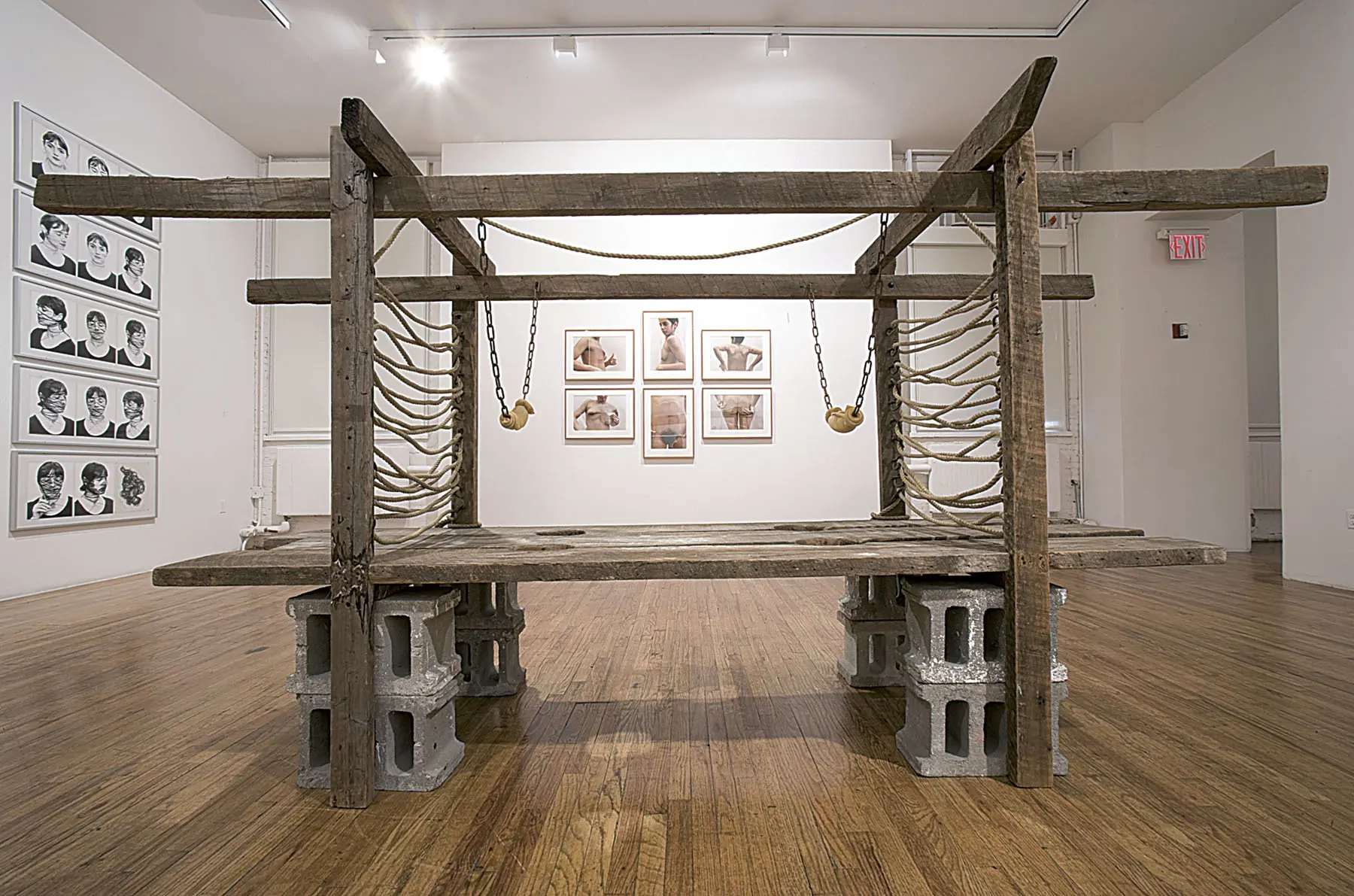
The rise of feminism, as we are well aware
of by now, was a global phenomenon. The exhibition WACK! Art and the Feminist
Revolution showed us how feminism provoked women to forge new ways of making
art between 1965 and 1980 and how this feminism was based on diverse
experiences. Even though the exhibition’s historical narrative was anchored by
the development of feminist art on the East and West Coasts of the United
States during the 1970s, the presence of artists from Latin America, Asia,
Europe, Canada, Australia, and New Zealand stressed how the politics of
feminism inflected artistic practice writ large.
WACK! included the work of 120 artists, installed in thematic groupings. In her curatorial essay, Cornelia Butler explained that she conceived of the themes as “propositions rather than definitive categories.” This light-handedness allowed for an experience of the exhibition that felt wonderfully free and open, unfolding as commonalities and differences among works and artists were discovered. A sense of feminism’s historical timeline underscored the show, but without imposing a strict narrative. Politics also pervaded the works, but political “messages” were too numerous and diverse to be pinned down.
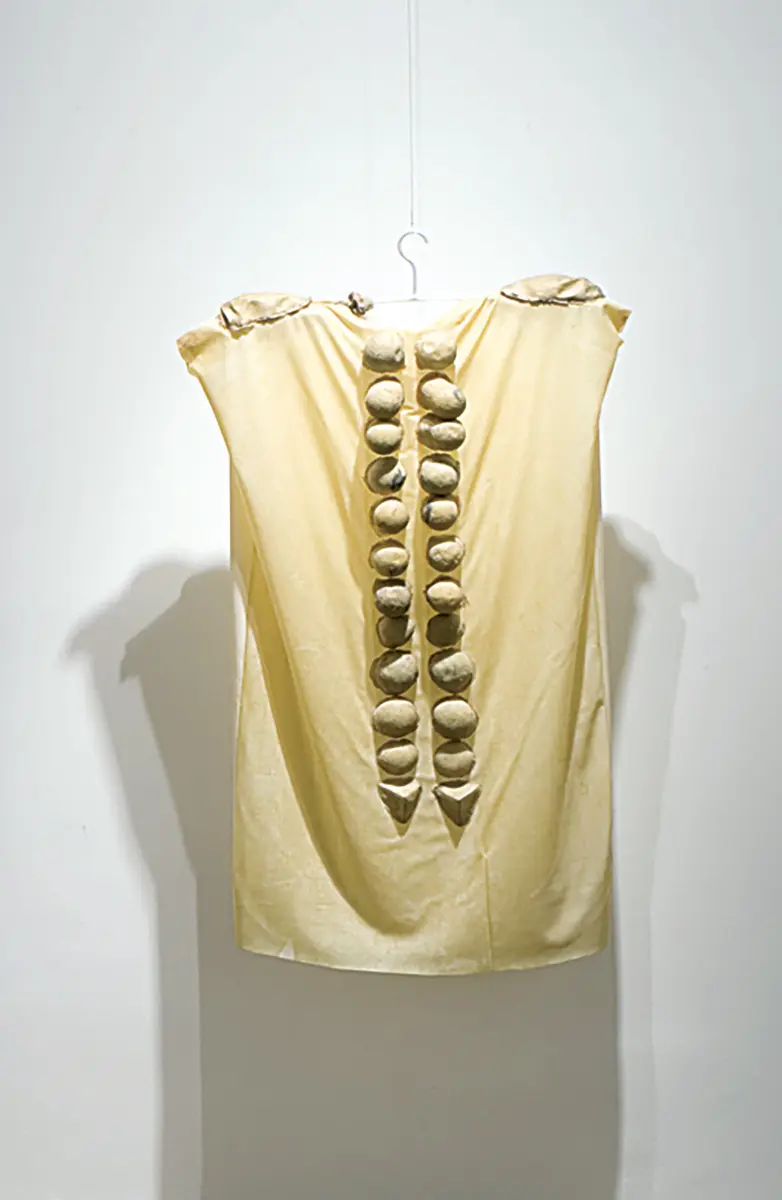
Latin American artists were integrated into thematic groupings in a way that emphasized commonalities more than differences. In a gallery dedicated to abstraction, the 1970s works of Anna Maria Maiolino and Louise Bourgeois were presented side-by-side with provocative results. In Maiolino’s film, titled In-Out (Antropofagy), one encountered a series of tight shots of mouths opening and closing and gashing their teeth to a disturbing soundtrack of groans and howls. A mouth appeared with tape over its lips; another ate strands of red, black, and white string. Hung nearby was a costume from Bourgeois’s performance entitled A Banquet/A Fashion Show of Body Parts, in which various actors wore rubber sheaths covered with bulbous breast-like forms. On another wall was work from Mira Schendel’s series of Objetos Graficos (1967)—a sheet of translucent paper printed and inscribed with letters and gestural marks—hanging close to a collage by Howardena Pindell from the early 1970s in which she hand-punched small circles from white paper, individually numbered them, and pasted them onto a large sheet of paper. Both works showed abstraction produced by process-oriented compulsions.
The mini-retrospectives that emerged amidst these thematic groupings gave well-deserved weight to bodies of work by Ana Mendieta and Lygia Clark. Mendieta’s work appeared at two different points in the show. In a large gallery featuring works about physical trauma, there were six photographs from her 1972 series Untitled (Glass on Body Imprints) as well as thirty-six slides documenting a 1973 performance titled Untitled (People Looking at Blood, Moffitt). Reproduced in color, these works possessed a toughness that recalled Adrian Piper’s early performance-based works, seen in another area of the exhibition. Works from Mendieta’s Silueta series (1973–1980) shared a small gallery with Nancy Spero’s drawings. These included photographs documenting Mendieta’s goddess-like figures shaped out of ice, snow, and fire, as well as videos of related performances. Even if the goddess forms of these works feel outdated, Mendieta’s work is quite relevant to our reconsideration of earth art, performance, and the role of politics in the development of conceptual art in the United States during the 1970s.
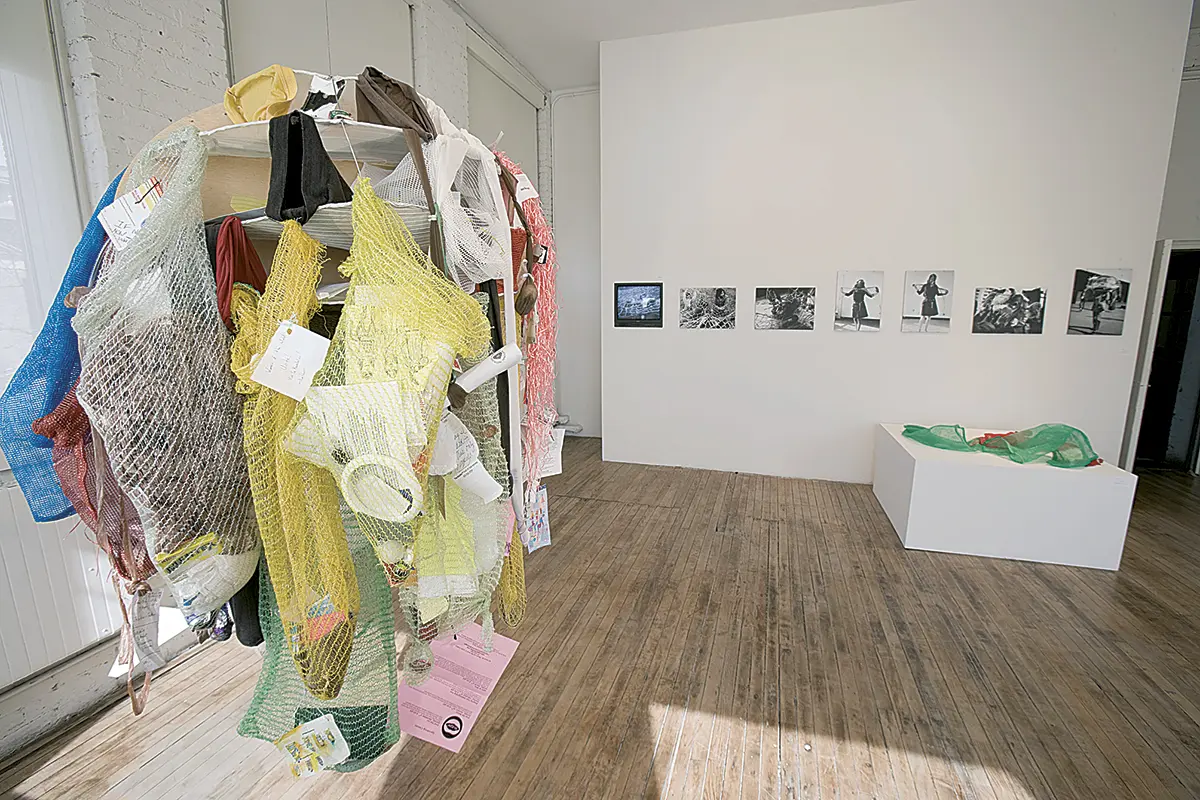
Lygia Clark’s works from the late 1960s and early 1970s also looked strikingly contemporary in WACK! and reminded us of the current trend of sculpture made of humble materials, but with a concrete social purpose. In a small gallery were three works from a series of objects Clark made for viewers to wear and interact with: Elastic Net (1973), a large net of rubber bands for a group of people to pull and stretch; Camisa-de-força (1969), a cape made of plastic tarp for an individual to wear; and Collective Head (1975), a plywood headdress decorated with bits of plastic tarp, ropes, and paper to be worn while walking through urban streets. A video and a series of photographs showed these objects as employed by Clark and a group of students. Clark made these objects while developing her theories about how physical movement and interaction could be used therapeutically.
Broadly speaking, the contributions of the Latin American artists leaned toward conceptualist and performance-based works and were often infused with the political violence that plagued many of their countries from the late 1960s through the early 1980s. Among many of the Brazilian artists included in WACK!, Marta Minujín, Cecilia Vicuña, and Catalina Parra were forced into exile in the U.S. and Europe during their careers. Demonstrating how conceptual and performance-based approaches to protest served women artists in diverse contexts, there were videos by Sonia Andrade from 1974–1977 of a walk along a graffiti-marked wall of Rio de Janeiro and an installation by Monica Mayer from 1977, in which she asked women in Mexico City to complete the sentence “As a woman, what I detest most in the city is...”
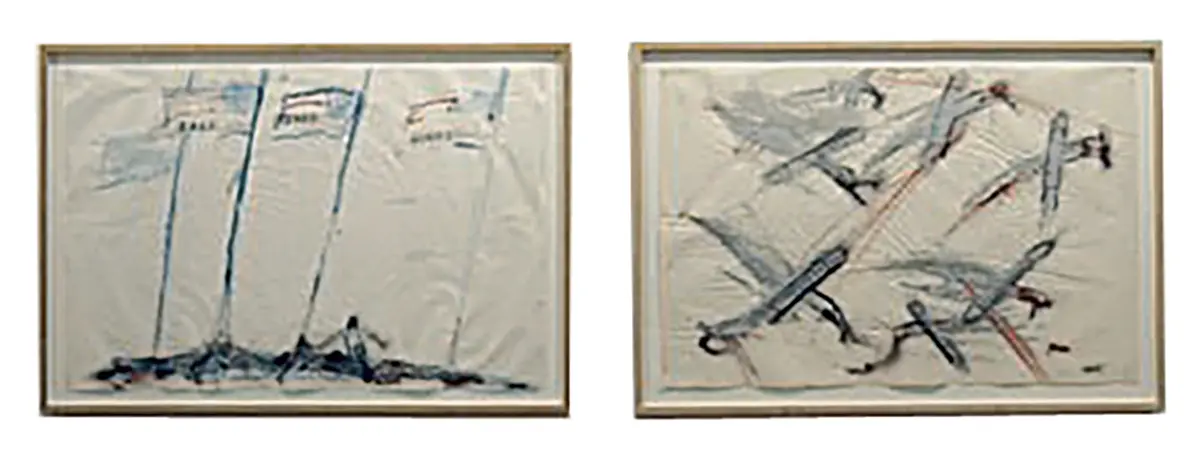
This exhibition encouraged the viewer to reconsider how feminism, which Butler argued was “the most influential international movement” of the postwar period, inflected artistic production globally and how Latin American artists participated in an international phenomenon while also addressing local political concerns. WACK! made apparent the need for art to possess agency in situations where political concerns trump those of the market. It is useful to think about how Latin Americans and artists working in contexts outside of the United States and Europe might provide models for artists in the United States at a time of looming political and economic crisis.
WACK! Art and the Feminist Revolution was curated by Cornelia Butler and organized by the Museum of Contemporary Art, Los Angeles, where it opened in March 2007. It was on view at PS1 Contemporary Art Center February 17–May 12, 2008, and travels to the Vancouver Art Gallery, where it will be on view from October 4, 2008–January 18, 2009. The exhibition catalog was edited by Cornelia Butler and Lisa Gabrielle Mark and co-published by the Museum of Contemporary Art, Los Angeles, and The MIT Press.
* All images illustrating this review are photos by Matthew Septimus.
HARPER MONTGOMERY