
I met Wilfredo Prieto in 1998 in Sancti Spiritus,
his native city in central Cuba, at a group show of local artists. Erena
Hernández brought his work to my attention; visitors could pass by and not
notice the work, which consisted of small interventions outside the exhibition
space. A series of diagonal yellow and black lines appeared in unexpected
places: on the patio, in the bathroom, other unheralded parts of the gallery,
in the street, on a rock. The lines also appeared within the exhibition space,
on a piece of plastic placed in front of a self-portrait by Oscar Fernández
Morera, an old academic painter, and a local hero, included in the show as a
component of Prieto’s work. This initial work by an unknown young artist
contrasted with the overloaded and literal installations that filled the
exhibition and announced some of the features Prieto was to develop:
simplicity, the use of art as a de-sacralized activity, the use of spaces
without aura, the activation of everyday objects, and a minimalist aesthetic.
Precocity has also been a characteristic of Wilfredo Prieto. In the book 100 Latin American Artists, published in Madrid in 2007, Prieto and Federico Herrero, not yet thirty, are the youngest of the region’s most important contemporary artists selected by a group of critics and curators. Such precocity goes hand in hand with early international recognition, something that Cubans tend to enjoy, an extreme example of which was Kcho. In Prieto, precocity is not the result of a “raw,” natural talent: it is tied to early maturity and to a perpetual reflection and self-critique of his work. Nevertheless, it is sort of a paradoxically naïve maturity, due to the artist’s understandable lack of experience given his age and his origin in a country like Cuba. This combination of profiles gives Prieto a freshness, a spontaneity, and even a degree of idealism that are not easily found in the cynical “professionalism” of so much current art. At the same time, this artist is extremely careful with all the details of his work. Besides his good aim, the early international reach of his work demonstrates his rigor and the clarity of his ideas.
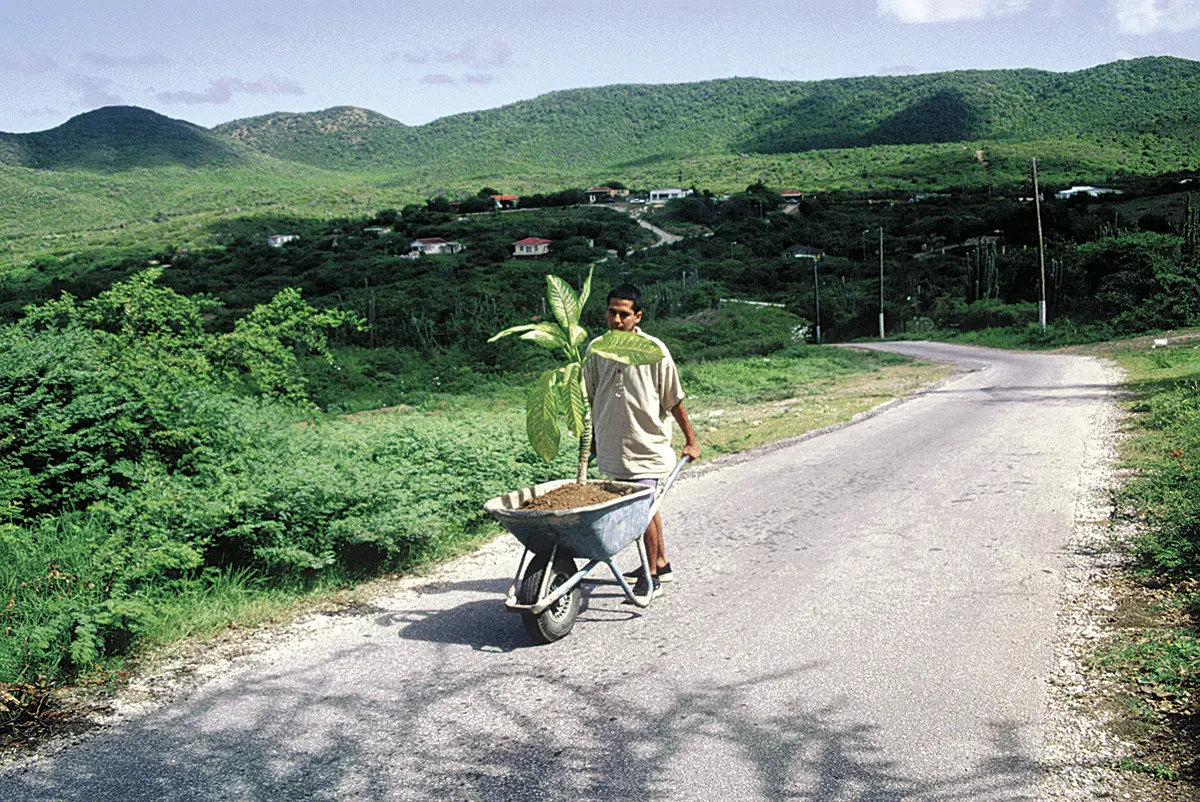
The initial work mentioned earlier also revealed the morphological freedom of Prieto’s production. Resulting in installations, sculptures, objects, interventions, performances, or drawings, his work has included such activities as parading an ornamental plant around the impoverished landscape of Curaçao and filming excrement in a toilet bowl. All of these media have been chosen for their ability to function as ancillary tools, to express ideas that are as simple as they are deep and inciting. Thus, in Prieto there is neither a “constructive” poetics nor a particular taste for the aesthetic possibilities of artistic form. The formal resolution of his works is very direct, entirely focused on synthesizing an idea by creating an image that is open, succinct, and forceful yet rich with a diversity of possible meanings. I think that Wilfredo Prieto would like to match that Chinese poet of Borges’s fiction, who summarized all the marvels of the empire in a single word.
His images do not beat around the bush: they win with a knockout. They are exact, functional, but not really simple in their brevity, and they excite interpretation while pushing it into difficult terrains at once abstract and provocative. A good example is a large crane that tries unsuccessfully to pick itself up, which can refer to the ego, to utopia, to what Francis Alÿs has called “the paradoxes of praxis” (“Sometimes doing something leads to nothing”), and many more things. The story of this work clearly shows Prieto’s artistic intentions. It was produced in 2006 for Madrid Abierto, an urban art event that displays works of art on a central avenue in the Spanish capital. It happened that the tow truck chosen by the artist was too big for the site. Instead of replacing it with a smaller one, Prieto preferred to be absent from the exhibition space, declining the opportunity to have his work seen by the public at the event, and just photographed his work in the outskirts of the city using the outsized truck he intended, convinced that it offered the appropriate contrast. It is true that today’s art is often created more for the photo-op and for the PowerPoint presentation than for the public, more for the indirect technological diffusion into the specialized circles (curators, gallerists, collectors), that construct value and affect the market, then for visitors who come to see the original works in an art show. But in this example, what operates more than anything is the artist’s obsession with creating the image he thought best for his work, which is, above all, for himself. Prieto is an inventor of strong images, a narcissist of the image, at the antipodes of so many contemporary artists who articulate patterns of meaning through a variety of means. In this, Prieto’s work is inscribed in the old tradition of direct visuality: there are no texts to read, archives to review, long videos to watch on a monitor on the floor.
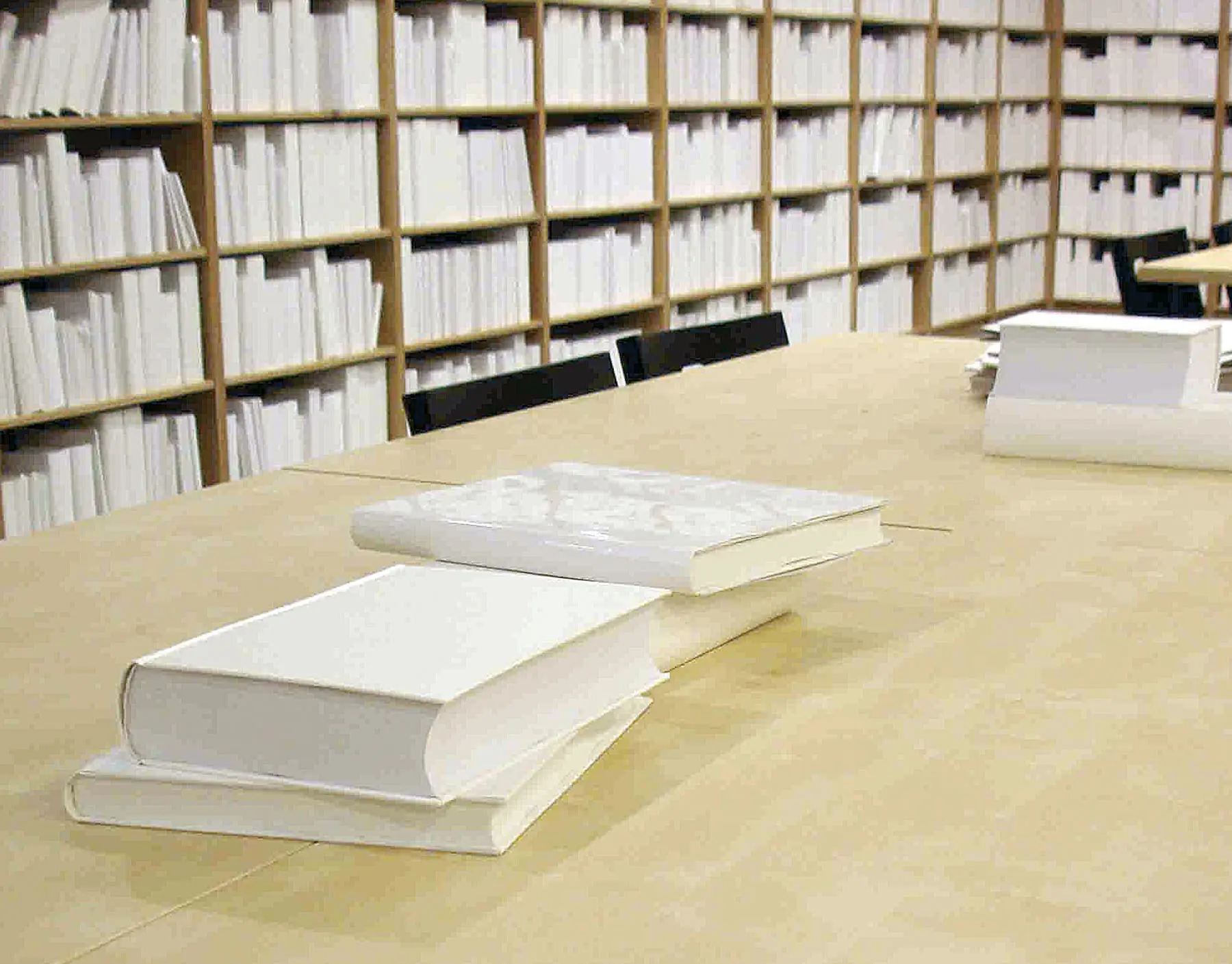
Despite this concentrated poetics, Prieto’s works can be highly ambitious in technical and material terms. Think, for instance, of his “white library,” an untitled 2006 installation composed of hundreds of books in diverse formats, with blank pages. Moreover, some of his plans are practically impossible to execute, as in his project of building a bi-level expressway in the shape of a Moëbius strip, for cars, to run around and always return to their starting point. Apart from their conceptual content and the ideas triggered by them, Prieto’s works almost always have a powerful visual impact often achieved through contrast (big and small, great effort and minimal results); the grouping of objects based on unusual taxonomies; a radical break with habits, conventions, and expectations; the aporias of time and space (like Cildo Meireles, an artist Prieto admires); and the proclamation of the absurd. One can appreciate that the very forms of formal structuring listed above directly construct the content by connoting general issues that are critical for the contemporary world. At times, Prieto’s works display some elements of the spectacle, a welcome contribution today, when we suffer through such boredom in art. However, the spectacle is never created as an end in itself or as a reduction at absurdum of our society of the spectacle (although all of this can occur in the second instance,) but as a function of the different meanings of the works.
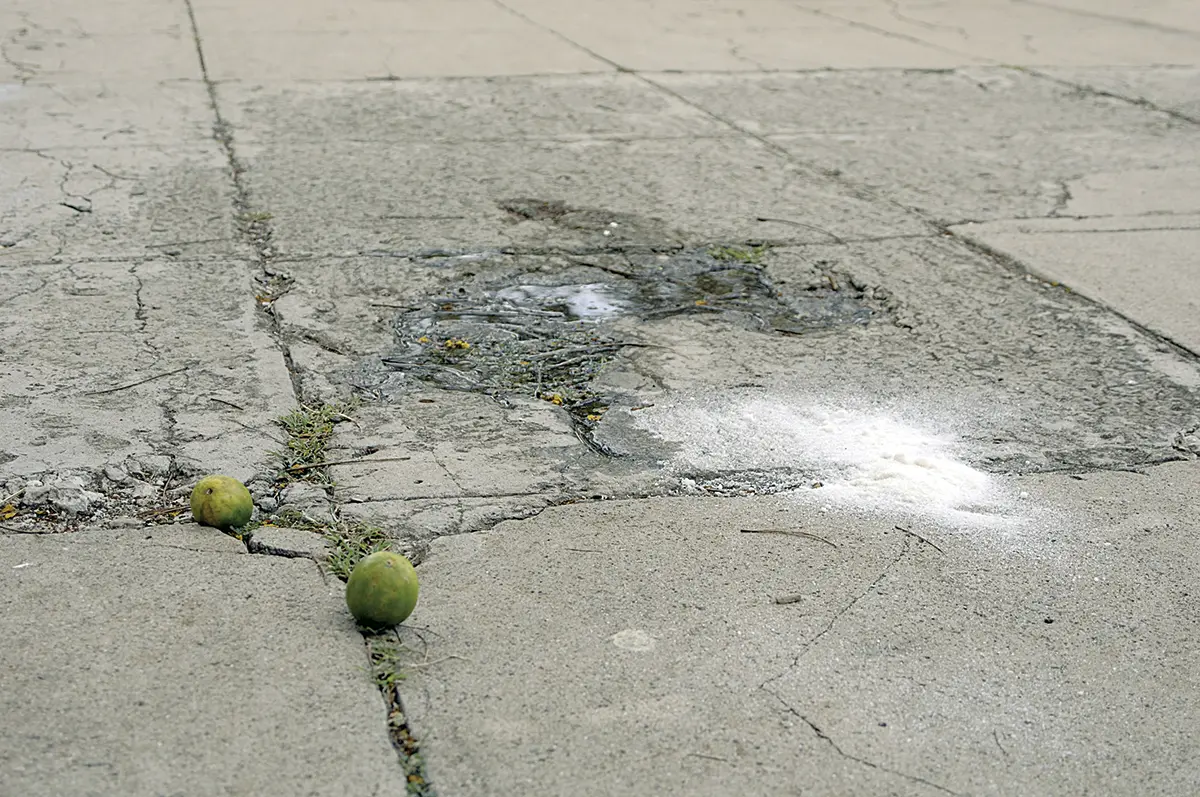
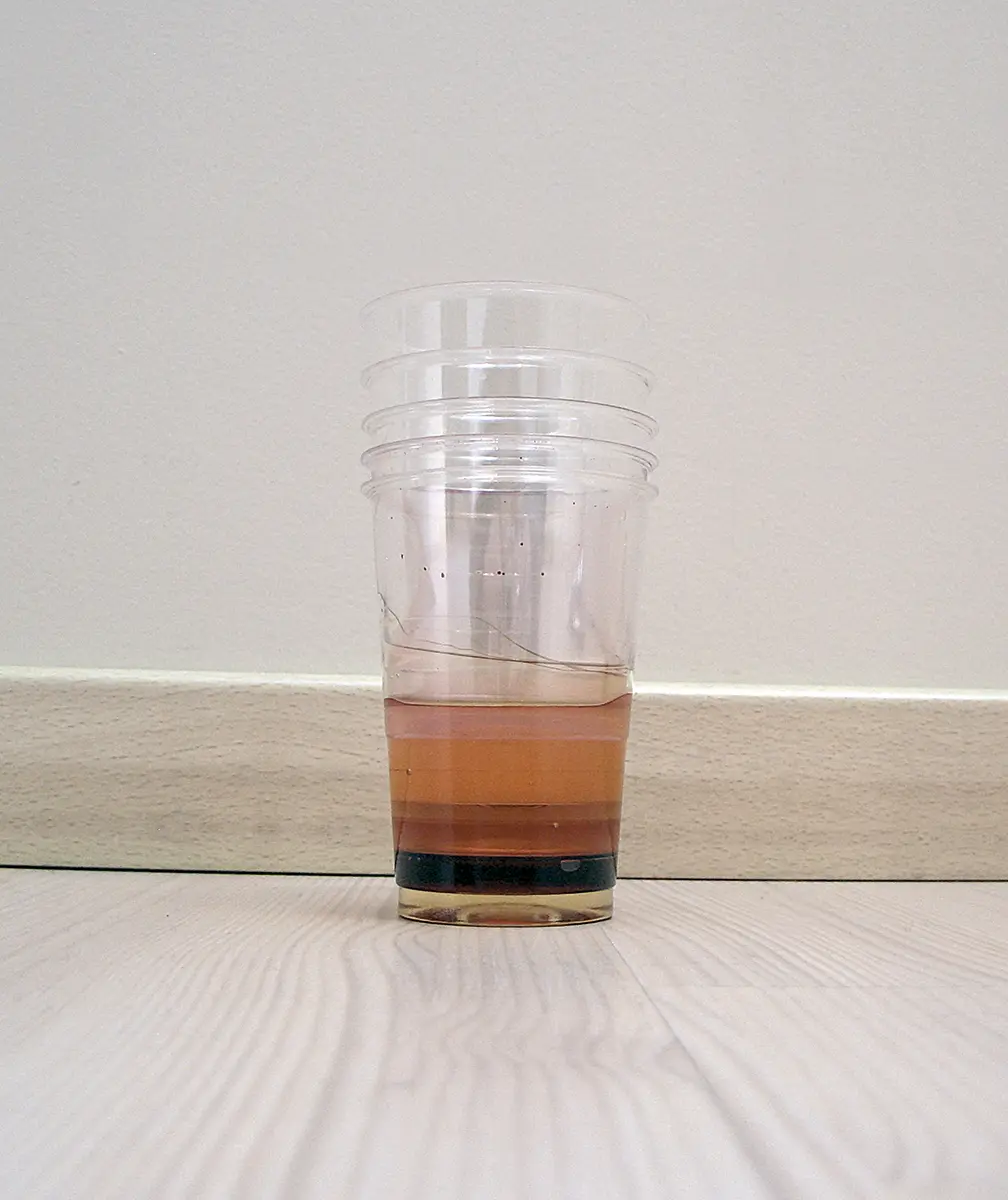
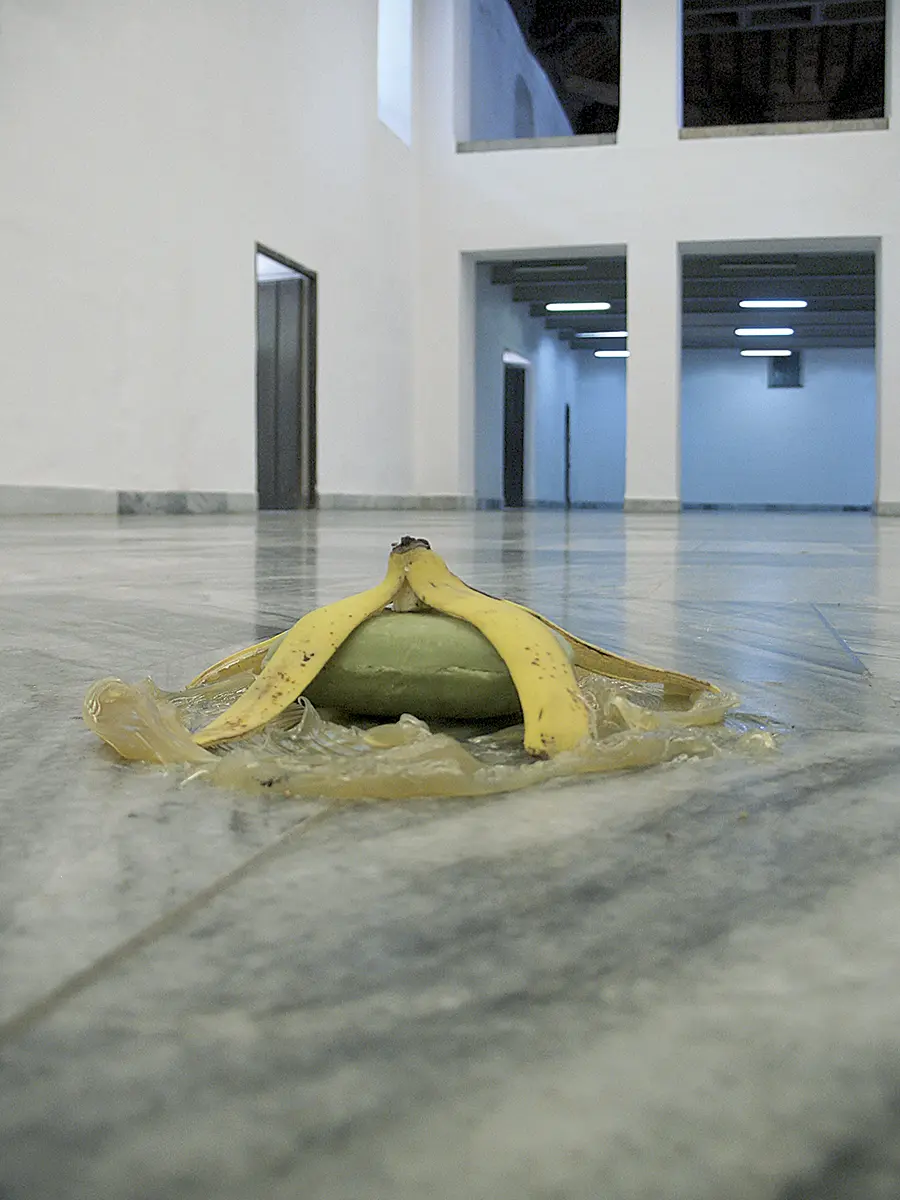
At other times, the works can be minimal and made with simple everyday materials, as in Escala de valores (2001) and Grasa, jabón y plátano (2006). The latter work stands out for the contrast between its materials and the vast space in which they are placed, and for communicating to the viewer the tension of a possible fall, like the uneasiness one feels when faced with a loaded gun. But in other instances, Prieto’s works can remain unnoticed, as noted earlier and as with his recent interventions with rocks, water, excrement, sugar, and other elements in an El Vedado park close to his Havana home.
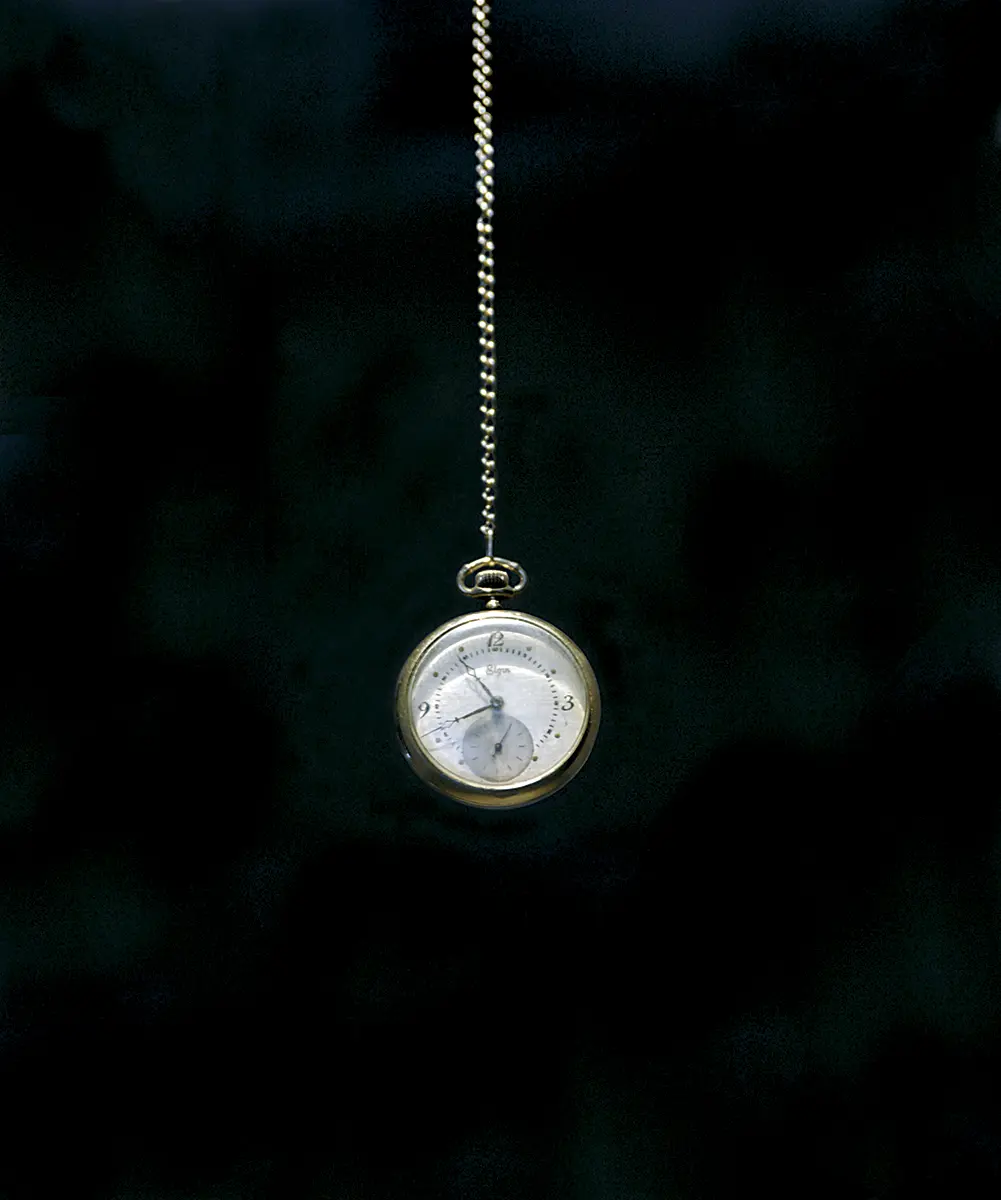
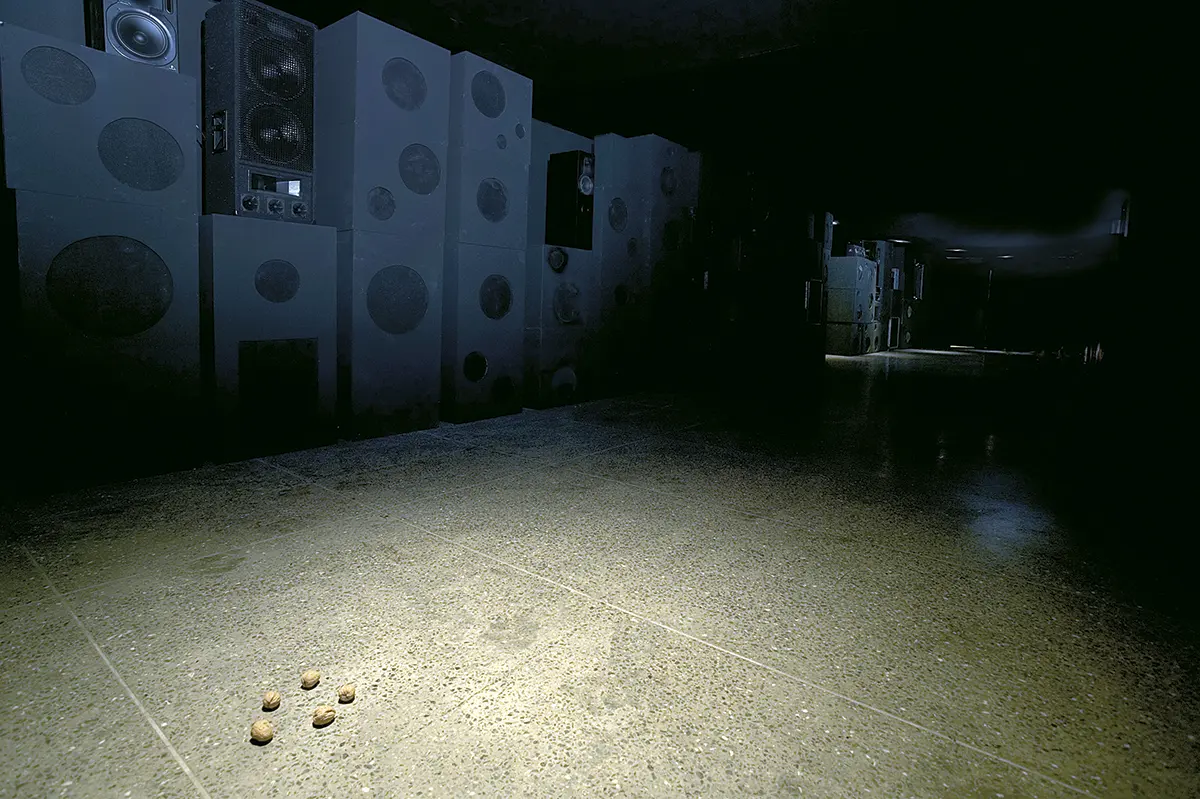
This concern with simplicity can force Prieto into tautology, something he has consciously employed in some of his works and which reveals his classically conceptual spirit. Significant in this respect are his installations El tiempo es oro (Time Is Gold, 2007), consisting of a gold watch hanging from the ceiling, and Mucho ruido y pocas nueces II (Much Noise and Few Nuts II, 2005), composed of the titular elements used in a literal way, at the MUSAC in León. Besides such extreme examples, there is almost always in Prieto’s work a certain tautological or indirectly linguistic spirit. This interest in language does not materialize into texts; the artist attempts to move from language to “reality”—as if to mold in the latter fragments of language’s opacity that blocks us from apprehending the world directly, without the mediation of language. Prieto also plays with the tricks of representation and verisimilitude of the visual languages, such as painting a tree’s green mangoes to make them seem mature and titling the work Arte óptico (Op Art, 1999).
Although Prieto’s work is not intended to amuse, humor is almost always present as a result or as a subtle component that contributes to the critical distance and the artist’s unconventional relationship to his themes and media. In other words, it is not humor in the way of Mauricio Cattelan, Wim Delvoye, or Lázaro Saavedra, but as an ingredient internal to his poetics, which variegates his own resources and accompanies reductio at absurdum of language, relationships, and things. Humor also infuses another habit in his work: the attempt to engage the “big themes” through everyday elements, and at times through everyday life itself.
The marriage of simplicity and depth that we find in Prieto’s work is characteristic of Cuba’s newest artists, who tend toward post-minimalist poetics and produce works with a more international perspective, consonant with the global expansion of art circuits. Thus, the works include texts in English, engage more open and general themes, and respond more to the “international language” one finds in biennials all around the world. Even if these artists continue to work with contextual materials, the discourses of their works are more indirect, abstract, and “universal,” although their references are rarely limited to the art field. However, the critical inclination and the will to articulate ideas remain, as can be appreciated in the work of artists as dissimilar as Iván and Yoan Capote, Jeanette Chávez, Hamlet Lavastida, Adrián Melis, or Ana Olema Hernández.
Although Prieto is an artist of ideas, he is not a critical artist, inasmuch as he doesn’t set out to produce political or social commentary. He seeks to unravel a grid of meanings that opens itself to a long-range perspective. But his work often emanates from its context to the point that his referents are vernacular, especially in his earlier works. Although his intent isn’t to critique that context or even to represent it, the way he constructs meaning in his works refers to his country through suggestions that are as indirect as they are potent. One example is the use of peas in some of his works. Prieto has used this vegetable as a serial element in some early minimalist works, deconstructing the presentational distance of minimalism by deploying organic material. Also, in a transcendental reflection, he has painted the globe on a pea. Yet, the artistic and philosophical content of these works cannot obscure the fact that this vegetable has been a staple of the Cuban diet for decades, and people are sick and tired of it. Also, the dependence on peas reveals the failure of agriculture in the country and the nutritional deficiency suffered by Cuba’s population. In other words, this material is loaded with very concrete local connotations.
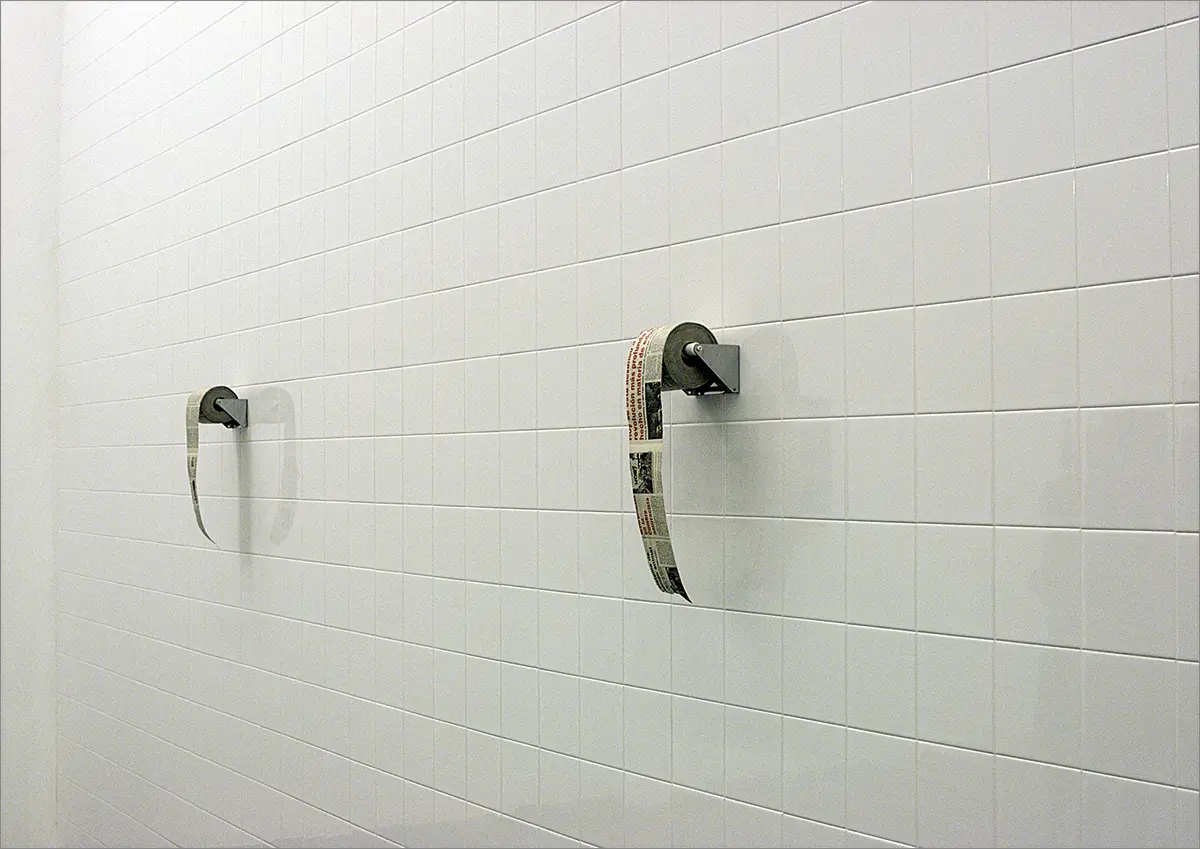
But perhaps the best example is Discurso, a 1999 work that consists of a roll of toilet paper made of sheets from Granma, Cuba’s largest-circulation newspaper and the official publication of the country’s Communist Party. This may seem like a work of political satire, but in truth, it is based on the fact that for decades Cubans have indeed used Granma as toilet paper, due to the scarcity and high cost of the real article. In other words, the artist refers, at a first moment, to the obsolescence of information: there is nothing older or more useless than yesterday’s newspaper. As a result of this, this work also comments, hyperbolically, on the Cubans’ penchant for recycling, appropriation, and ingenuity to circumvent their innumerable scarcities. This central characteristic of the country’s material culture has influenced the work of several artists, and it also informed one of the main lines in the work of the now-defunct Gabinete Ordo Amoris.

But, naturally, critical reading is also present in Discurso, and it is a forceful protagonist. In 1990, Ángel Delgado presented an unexpected performance during the opening of a show in Havana; one component was defecating on the floor over Granma. This was interpreted as an insult against the official publication and not as a thoughtful act on the part of the artist, who covered the floor with the paper before defecating. As a result, Delgado served six hard months in prison among common criminals, the maximum sentence for the crime of public misconduct. His performance was the most harshly penalized in the history of art. Prieto, however, was allowed to exhibit his work in Cuba as part of his first individual show, in 2002. But he was directed to avoid any references to Fidel Castro or reproductions of his likeness in the pages to be used. This prohibition gave the work a new layer of meaning, and it added a significant processual aspect: it was very difficult and laborious to find pieces of the newspaper without the omnipresent reference to Castro, even in the cultural section and the sports pages. Imagine also the censors unfolding the piece and painstakingly reviewing it. We can summarize, then, by saying that Prieto is a critical artist who does not “do” criticism: it emerges from the very context of his works.
In conclusion and following the artist’s own impulse for synthesis, if I were to summarize Prieto’s work in a single formula, it would be “net idea+simple work=maximum meaning.” But, as in the work of Gabriel Orozco, there is always a visual sensibility in action. Sharp, mordant, and at the same time warm and understanding, Wilfredo Prieto specializes in summarizing the most complex issues with an illuminating stroke.
GERARDO MOSQUERA
Art critic and curator.