
The English language has the lovely word
“serendipity,” meaning the chance discovery of agreeable and unexpected things.
It is the word I would use for my first encounter in 1997 with the abstract
work of Esteban Lisa, in the booth of Guillermo de Osma at the ARCO fair in
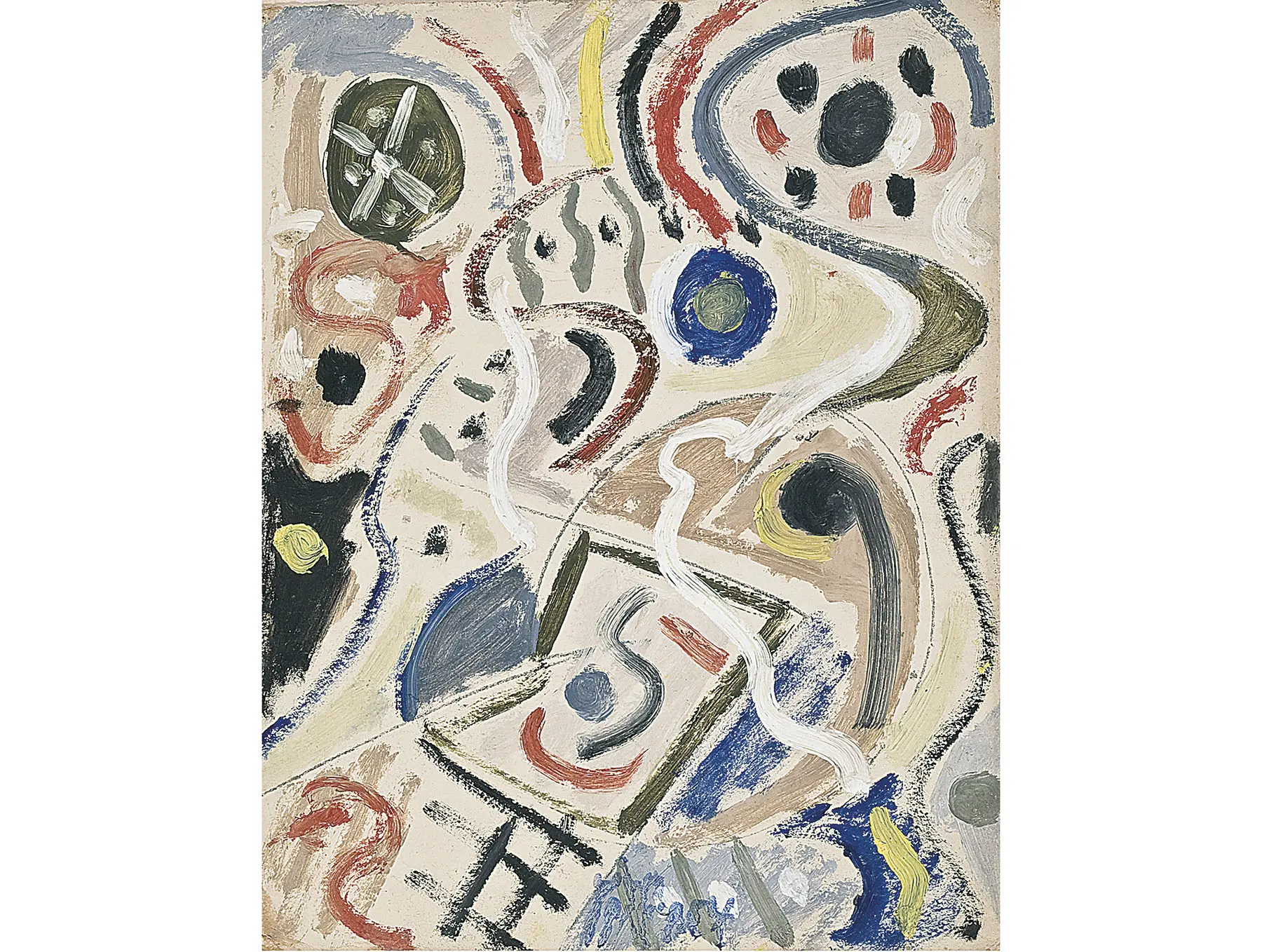
Madrid. I found myself in front of four paintings of the 1950s titled Play with Lines and Colours. I remember
standing before this group for a long time, and above all, I remember the
inexplicable emotion that they aroused in me. I felt that their shapes and
colors became a part of me. What a strange sensation! At that moment I
encountered a harmony in my life and my soul passed into a new universe.
Prior to this experience, I had appreciated the abstract work of great artists such as Kandinsky, Klee, Malevich, Mondrian, and Pollock among others, but none of them had opened this window onto abstraction for me. My sensory existence was rooted in the world of antiquity: classical art and figuration. Esteban Lisa gave me the key to open the door onto a new world and aroused in me a profound interest for an abstract, expanding universe where everything was possible and in which matter, with its latent potential, became life impelled by the world’s energy. I felt as if I was traveling in a spaceship, discovering both the universe and myself at the same time.
This, then, was the beginning of my obsession with and passion for the work of Lisa. From that moment onward, with a key in hand, I embarked on my long journey of spiritual and human enlightenment that has taken me around the world, following the master’s legacy. Thanks to Lisa, I have met remarkable people in Spain, Argentina, Uruguay, the U.S., France, Great Britain, Belgium, Germany, Italy, Switzerland, and China. Like lines in an abstract work, imaginary bridges have stretched between all of these countries, creating a whole based on respect and love for the works of this unique artist.
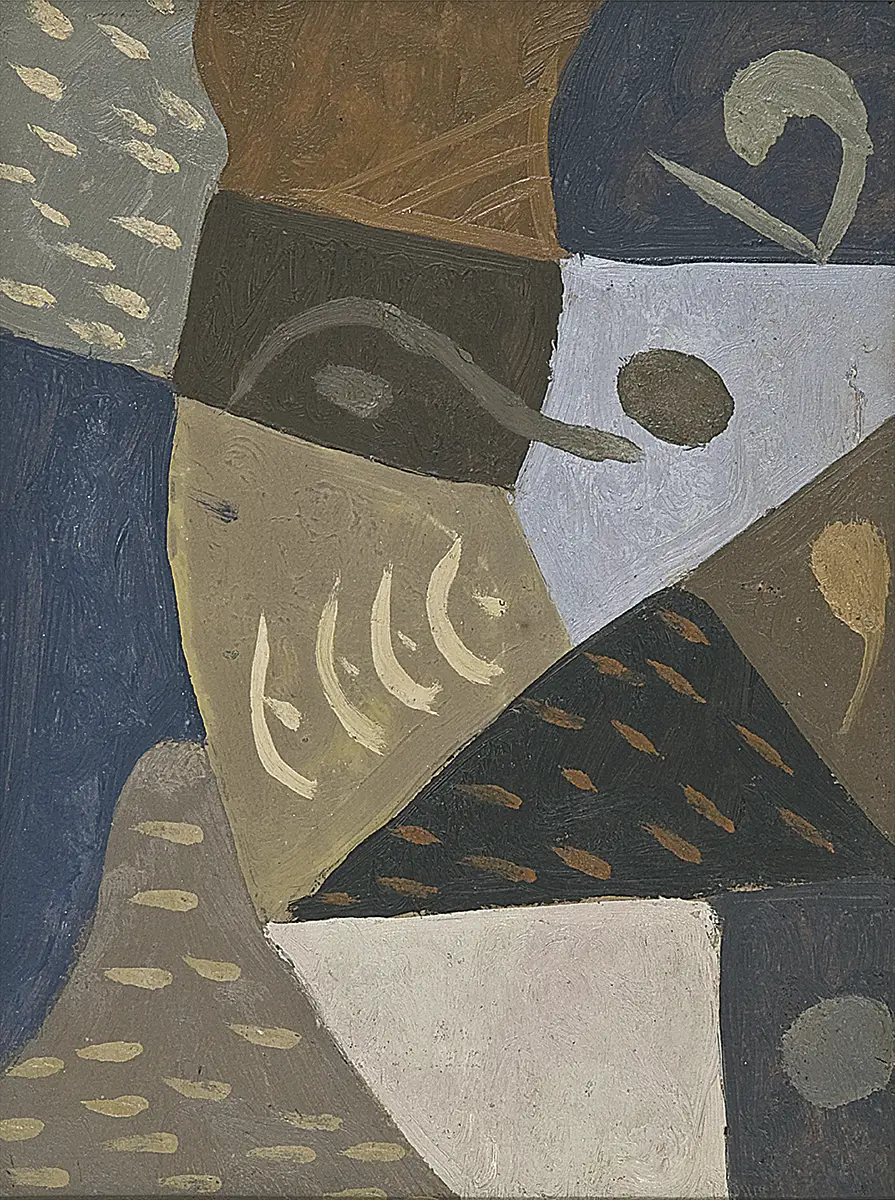
Every work by Lisa in my collection has its own story. At times, when everyone at home is asleep and I feel the night’s solitary weight and silence, I examine them all, one by one. By doing so, I connect with an ideal world in which the exterior chaos that continually threatens us is diminished and replaced by a fundamental experience that makes me feel fused with the universe as a whole and without limits, in which man’s laws have no sense and in which we become part of a “cosmic spirituality” that brings us close to the Divine. Here, there is no fear, nor any sense of moral or social religion. Einstein called this the “cosmic religious feeling,” in which opposites come together and complement each other.
I have often imagined that when I am asleep or away from home, Lisa’s pictures enter into a dialogue with the works of other artists. The murmur of these conversations leads me to think of Lisa discussing the idea of the void in sculpture with Oteiza; of musicality in painting with Klee; of the spiritual in art and the importance of forms and colors with Kandinsky; of harmony and poetry with Miró; while sharing with Calder the playfulness in the rhythms of his 1950s paintings. Regardless of whether or not these artists were contemporary with Lisa, there is a guiding thread that unites them in their art, the vision of life, and intellectual temperament.
I am moved by the opportunity to share these feelings and to be indissolubly linked through the appreciation of beauty and the spiritual to other human beings, whose reasons may be different or similar to my own. This explains why I have felt the compelling need to open the doors of my private space to the outside world. Such is the communion that I feel with Lisa’s universe that I have always said that if there was a fire in my house, the first thing I would save would be a 1930s geometric work by the artist, even though I have other works of much greater value.
For me, Lisa is not just an artist but also an example of how to live. He lived his life with great integrity and was never a victim of appearance; on the contrary, he took refuge in humility and simplicity. This was of such importance to him that throughout his life Lisa never exhibited or sold his work. He taught his pupils and followers the value of ethics, tolerance, understanding, and openness toward others. He wanted them to be thinking individuals. He taught painting to Jews, Arabs, and European immigrants in a poor area of Buenos Aires. He meditated on the grandeur and potential of the human being through the disciplines of aesthetics, philosophy, and science in a profoundly important intellectual endeavor that continues today through the foundation that bears his name in Buenos Aires.
Beyond and above his activities as a painter, Lisa was a committed teacher who believed that, with the support of a solid ethical system, man would progress and free himself from social and political restrictions, reaching a higher level of consciousness and a more profound and complete understanding of society and of himself.
For me, Esteban Lisa’s work gives meaning to life. Through his work, the duality between reason and animal passion within my own being finds equilibrium, allowing me to create an order that spiritually leads me beyond myself. I have often wondered what the key issue is that unites me with Lisa’s work and personality and what it is that we have in common. This has encouraged me to think of Primo Levi’s words in his book If this is a Man. Writing of his memories and his suffering, Levi mentions the beautiful German word heimweh which means “longing for home.” I believe that, with Lisa, I share a longing for home.
Travelling alone at the age of twelve, Lisa took a train from Talavera de la Reina to Barcelona, where a boat took him far from his native Castilla-La Mancha. This physical journey toward the unknown also involved an interior journey toward creativity. At the age of eleven, I also rode on a train that took me far from my beloved Santiago de Cuba to La Habana, where another long journey awaited me, toward an exile in which I have finally found existential harmony through Esteban Lisa’s aesthetic, philosophy, and art. Through this revelation or transferral of the work of another human being, I find the strength to go on, feeling saved from the chaos that surrounds us.
*Translated from Spanish by Laura Suffield.
JORGE VIRGILI