
It seems that today’s cities cannot subsist without an image that identifies and distinguishes them at one glance. Undoubtedly, this demand has historical precedents in the transformation of Rome into the modern era’s preeminent imperial emblem, coined by Piranesi in his famous series of prints devoted to the city’s monuments; in Baron Haussmann’s redesigned Paris, captured in daguerreotypes and Impressionist paintings of cabarets and boulevards; and in New York, the capital of the twentieth-century, whose unique skyline has been reproduced ad infinitum in photographs, films, and postcards. But what is asked of today’s cities is something even more defined, an image that works both as a logotype and corporate image to attract travelers, tourists, and foreign investors, and as means of recognition and identification for its own citizens who, diluted in traffic, mass spectacles, and commercial macro spaces, or isolated in their homes by the TV screen or the Internet, lose the notion of a city—while it surrounds them, it escapes them entirely. The means and strategies to reach a unitary image varies from one city to the next, but there are two that are used frequently. The first is to erect buildings that are immediately, recognizably unique or excessive, as in the case of Sydney’s Opera House, the Guggenheim Museum in Bilbao, or the Petronas Towers in Kuala Lumpur. And the second is to organize a contemporary art event that links the name of the city in question to concepts such as audacity, creativity, innovation, youth, risk, irreverence, and contemporaneity. Facilitating such a connection is the extraordinary attention paid by the media to the largest contemporary art events, especially biennials and mega-exhibitions.
The roster of cities that have organized art biennials in recent years include Havana, Bogotá, Gwangju, Johannesburg, Istanbul, Tirana, Berlin, Prague, Moscow, Shanghai, and Liverpool. The Spanish cities that have hosted biennials include Pontevedra, Valencia, and Seville, and now these are joined by Murcia, which saw the opening in late January of the first edition of a contemporary art exhibition with a clearly biennial vocation, even if the name was avoided: the Proyecto de Arte Contemporáneo (PAC). The decision to add a new biennial to the already saturated biennial the world map was like the ones made by Gwangju and Seville: those cities chose Harald Szeeman as their master of ceremonies convinced that the name of such a legendary curator would contribute prestige to the nascent events and promote them in the media.
The curator chose by the Murcia authorities were France’s Nicolas Bourriaud, one of the brightest stars in the galaxy of international curators and Szeeman’s successor, if Szeeman could possibly be replaced. Bourriaud was, however, discreet enough to reject his superstar status and experienced enough to respond satisfactorily to the demands of the organizers, who wanted the first edition to take into account the specific features of the city of Murcia. In the catalog text, Bourriaud explains that the decision to title this first edition of the PAC estratos and to orient it toward an “archaeology of the present” was due to his immediate fascination for the coexistence of important traces and testimonies of many historical strata in Murcia’s architecture and urban design.
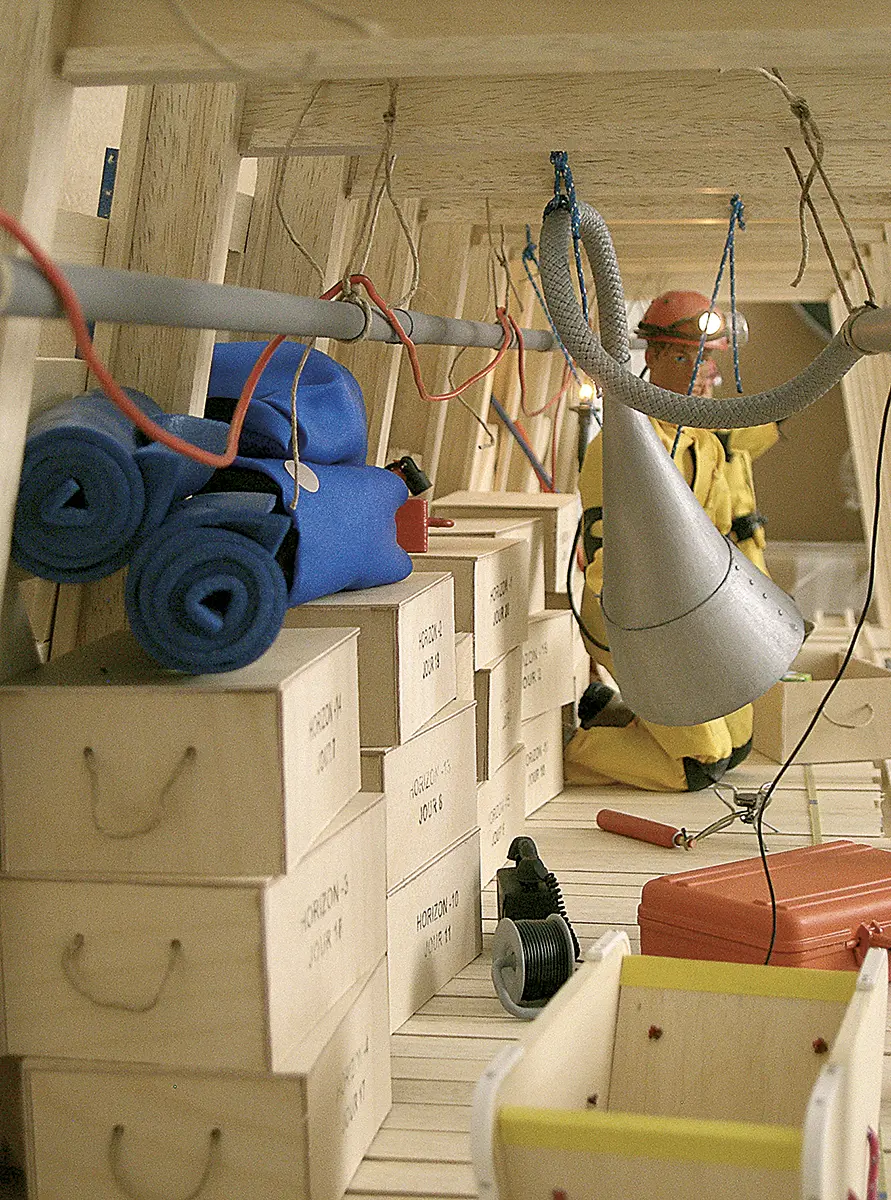
Among the artists selected, Abraham Poincheval and Laurent Tixidor more literally assumed the theme of strata and archeological tactics. Indeed, their Horizon Moins Vingt (H-20) consisted of a twenty-day excavation under the Malecon garden, one of the parks around the river that traverses the city. The excavation, already risky for being in an alluvial area, was made more difficult by the fact that the French artists first excavated a twelve-meter-long chamber which moved forward as if it were a bubble, removing earth as it progressed. This meant that for most of the time the artists were completely surrounded by dirt, eating and drinking the supplies they were able to carry with them and breathing air that was refreshed through pumps and hoses. It was a rather claustrophobic situation.
The rest of the works were less drastic, but they remained close to the ideas chosen by Bourriaud to define his curatorial stance and redefine the concept of the biennial, moving away from the current in order to emphasize analysis of the past as it lives on in the present. Lara Almarcegui, for instance, was able to convince the owner of a demolition service to return the rubble of an old demolished building to its original site. The recovered rubble formed an unexpected magic mountain, situated in one of the lost corners of the city’s historic core, which evoked the multiple strata of Murcia’s ground.
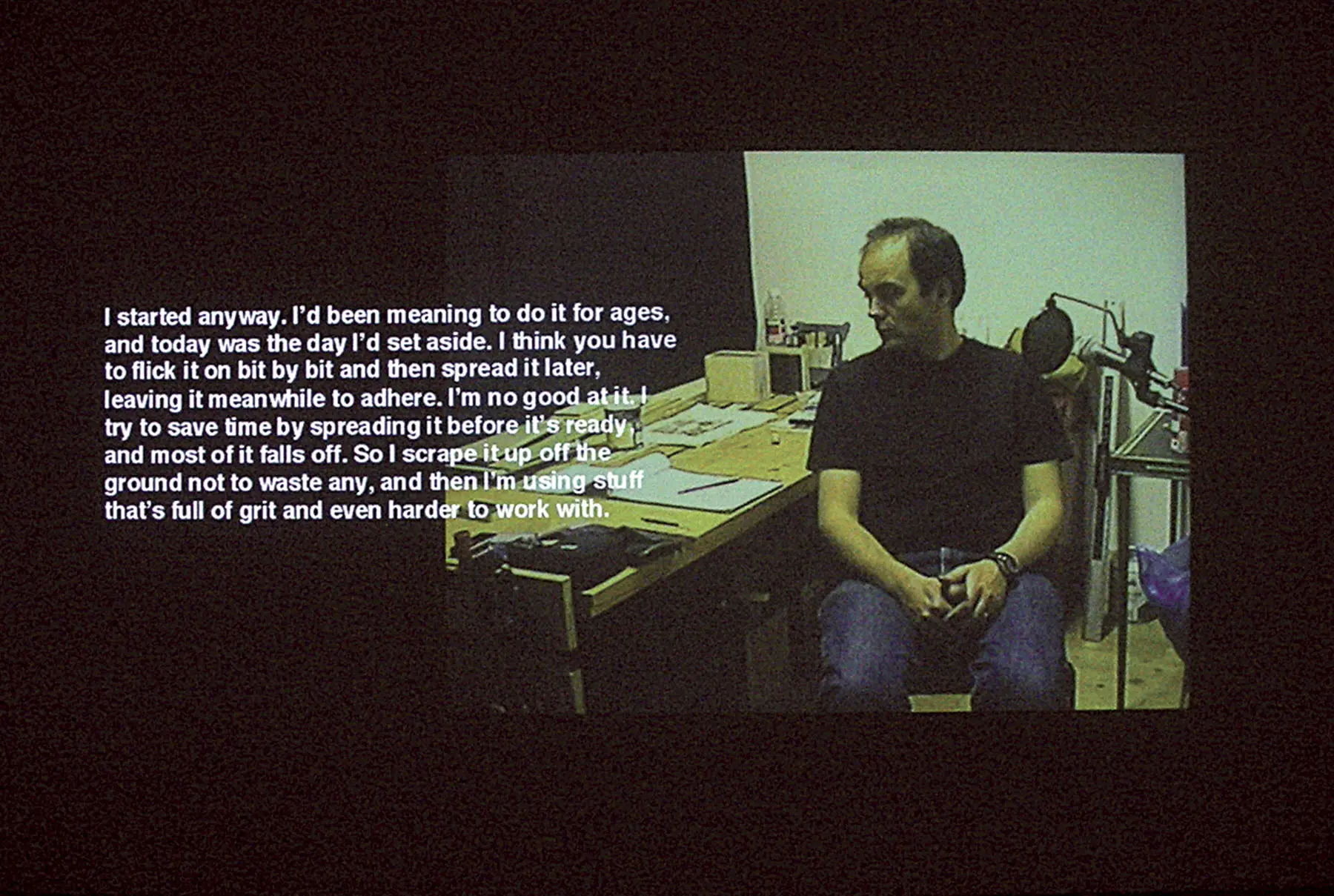
At the Santa Clara Museum (an old Islamic construction that was renovated as a cloistered convent and today combines the latter with a museum displaying archeological pieces and Christian art), Juan Cruz’s exploration of the past was even subtler. Cruz presented a video installation in one of the museum spaces, projecting a loop recorded in his own studio that documented his work processes: his routines, his materials and sources of inspiration, and, above all, his corrosive doubts about whether what he does have meaning, whether he has chosen the wrong profession, whether he should have been a writer. The deeply introspective character of this work echoed the equally introspective activity of the nuns cloistered on the other side of the interior garden onto which the gallery opened.
The artists known as Bleda and Rosa have made a career of photographing archeological sites as famous as those in Africa where the oldest human remains are found, or the locales of crucial battles in European history which today are nothing more than anodyne country landscapes. The artists came to PAC with photographs taken in Knossos, Kerkouane, Bulla Regia, and Glauberg. These are key cities and sites of the civilizations—Greek, Phoenician, Roman, and Germanic—that compose that extraordinary historical sediment that is the Mediterranean basin, where Murcia is located.
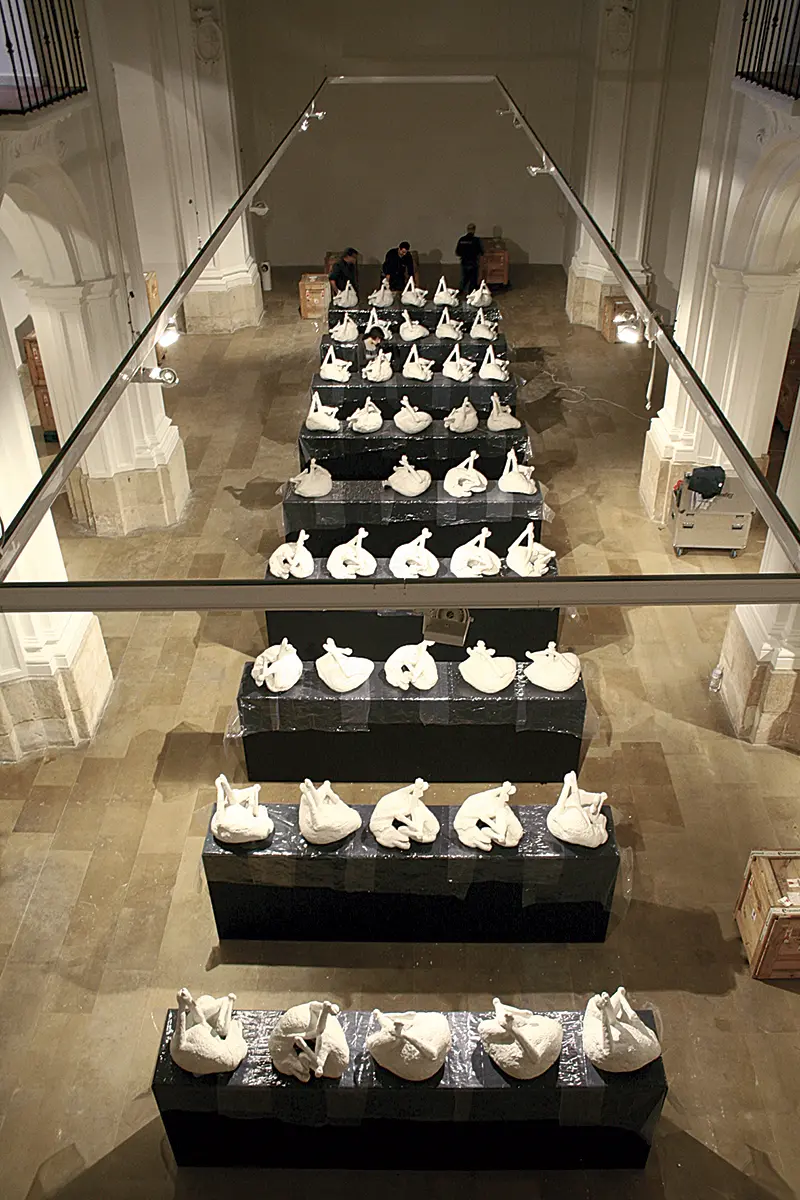
Allan McCollum’s The Dog from Pompeii, installed in a decommissioned Baroque church, consists of forty-eight fiberglass and reinforced hydrocal reproductions of the plaster cast of the famous “chained dog” in Pompeii’s Vesuvian Museum, and it is, in fact, a tribute to archaeology. The body of the original dog, which died after inhaling gases blown by the eruption of Mount Vesuvius in 79 A.D., decomposed and left behind a natural cast, which in turn was reproduced and at the same time destroyed by the explorers who found it in 1874 and poured plaster into it.
As is well known, archaeology began as a scientific discipline with the mid-eighteenth-century excavations in Pompeii and Herculaneum, the cities that were destroyed by Mount Vesuvius. Industrial archaeology emerged in the 1980s with the crisis of the Fordist model caused by the introduction of computerized processes and robotics into the systems of production and the moving of the largest Fordist manufacturing plants to China, India, Indonesia, Mexico, and Brazil. European and American factories, now in ruins became the object of study for a generation of artists who were intent on deciphering them like their archeological predecessors did the ruins of the Mediterranean world. Bernd and Hilla Becher inscribed themselves in this context by systematically photographing industrial ruins with truly documentary-like objectivity. And Bourriaud paid them tribute by exhibiting a magnificent selection of their photographs at the Párraga Center.
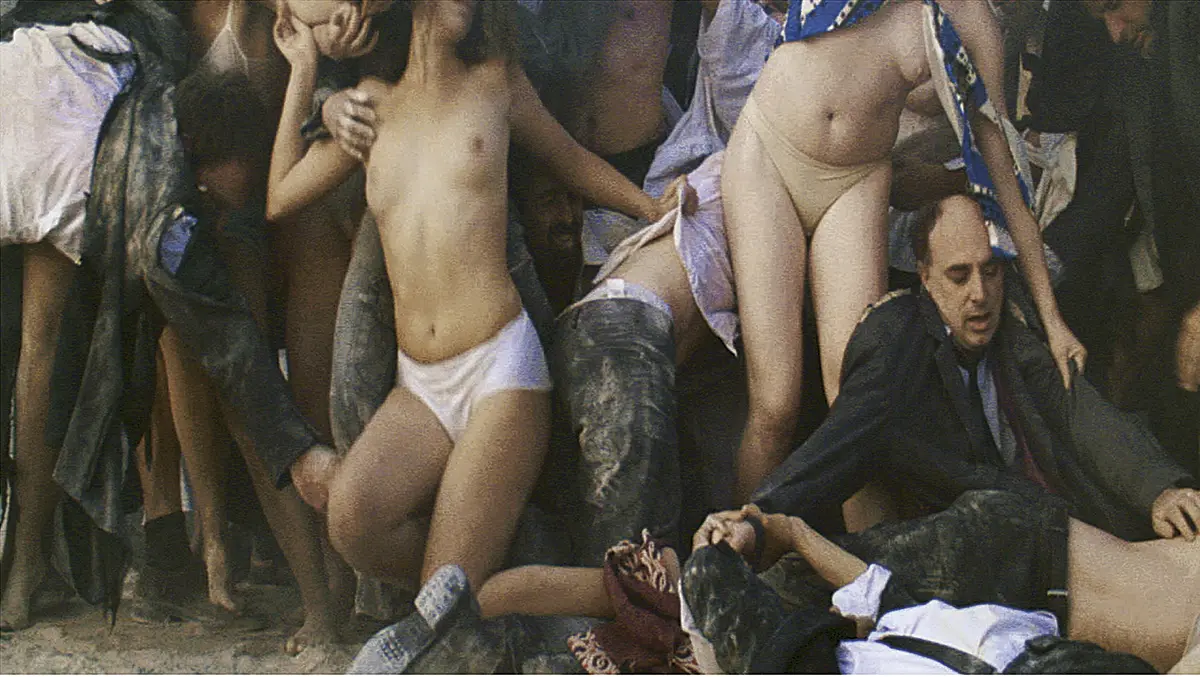
But the key work in this powerful and condensed biennial was The Rape of the Sabine Women, an eighty-minute music video with an opera-like five-act structure presented by Eve Sussman in collaboration with The Rufus Corporation, which recreated one of Rome’s foundational myths, transforming it into a contemporary narrative that involved the gigantomachy that adorns the Bergamo altarpiece, the city of Berlin, and Athens. It was extraordinary.
CARLOS JIMÉNEZ