
Located in Miami’s design district, the Bernice Steinbaum Gallery presented the unique exhibit The Frozen Moment. This show stood out for its intimate character and its dialogue about the human species from an unusual perspective.
Fabian Peña (born 1976, Havana) has been exploring the world of insects for more than two decades. These creatures are present in everyday life but we tend to forget about them. Peña remembers how his grandfather used to roll up the Gramma (the newspaper of the Cuban Communist Party) and smash the flying cockroaches that would enter Havana homes like rockets during the hottest summer evenings. The trace left on the wall by this disgusting insect after the newspaper had squashed it was perhaps the first connection between Peña’s artistic inclinations and his unusual subject.
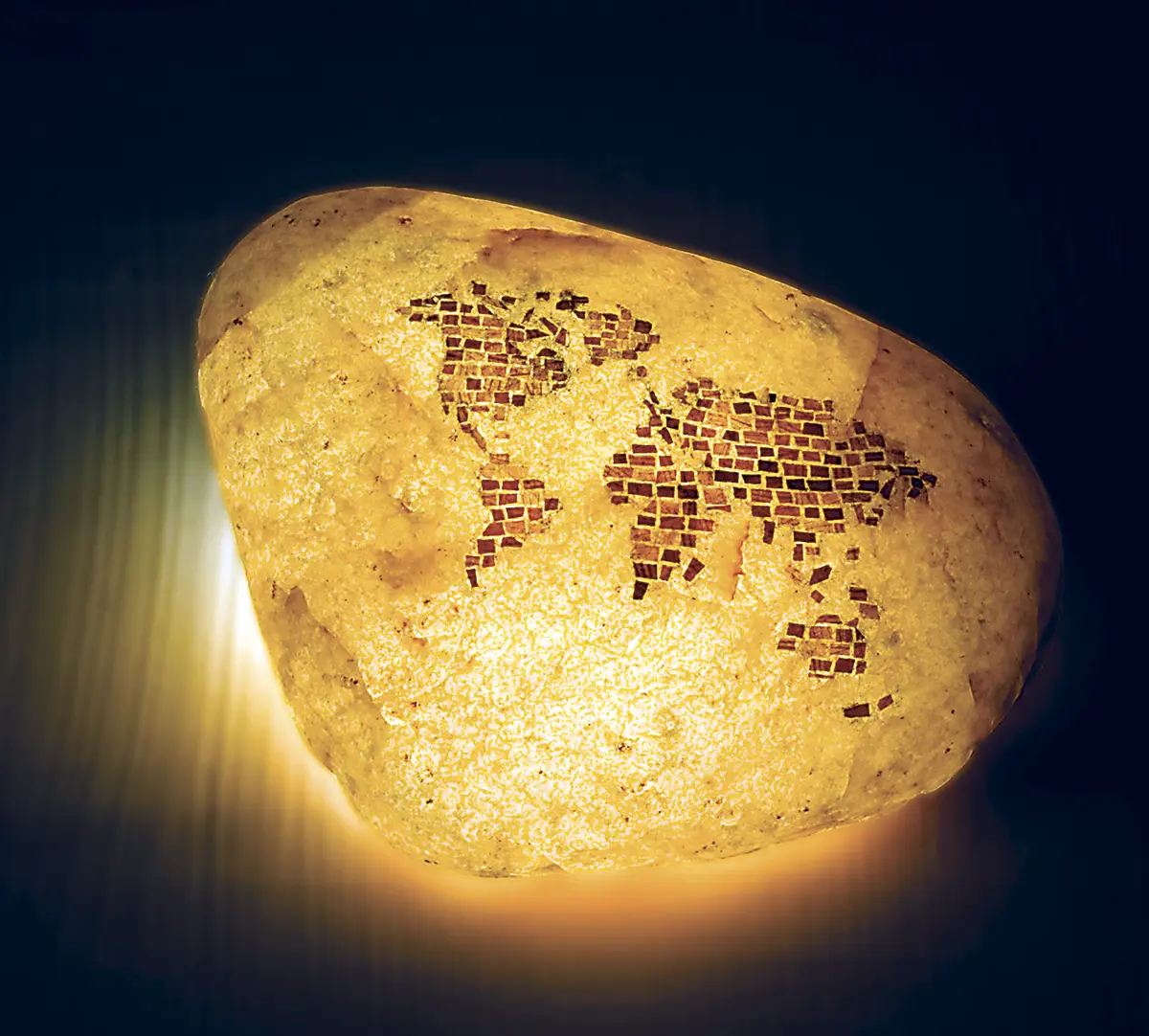
The initial gathering of insects was followed by Peña’s meticulous classification of the material: American cockroaches were rigorously separated according to patterns of colors and sizes. Afterward, the artist delved into the creative phase. This exhibit suggested an interesting counterpoint, a symbiosis in which the minimal, fragmented, and barely significant element became a reconstruction, redemption, and allegory at once.
Consisting of six works, the exhibit was noteworthy for its poetry. The darkened gallery offered delicate and small-format works accentuated by tinted threads of light that enticed the curious spectator. Translucent amber tones of cockroach wings were meticulously employed to create the sensation of depth. The light revealed veins and wings that at times looked like flower petals. Any preconceived notion gave way to the flight and reflection proposed by the artist.
The Impossibility of Storage for the Soul emerged as the central work. In this work, a lightbox illuminated an unusual mosaic: a human skull fashioned entirely of fragments of cockroach wings. This piece was simply beautiful. Here, the presence of man was conjured by an opposing species. Time and relativity formed the axis that moved the piece. On an individual level, the human being emerged as eternal in the face of the ephemeral existence of the insect. Nevertheless, at the species level, the human was defeated and the insect was the only one capable of reconstructing through time, threading here and there, where the memory of humans has no access.
In Fossil, the same metaphor was elevated to a new level. Peña utilized solely one cockroach wing for this piece. It was sufficient to reconstruct a world map. The diminutive egg-shaped piece alluded to the possibility of recovering information through DNA and to the fact that insects have remained and survived nearly everywhere on the planet, becoming a quintessential witness of the passage of the Earth through time.
The exhibit presented the relationship between the beautiful and the ugly through its formal approach and its trompe l’oeil playfulness, which were reaffirmed in two other works: Tattoo and Prosthesis. The first consisted of a Monarch butterflies also made of cockroach-wing fragments. The possibility of transformation and even enchantment that would allow a cockroach to turn into a butterfly suggested a new reading of this exhibit. The selection of a Monarch butterfly—a quintessential symbol of migration—could not be coincidental for Peña, whose work matured in Cuba during the nineties, a time when the pressing migratory problem of the Cuban people reached its peak. Peña, who now lives in Miami is himself an example of that issue. Observed from that angle, the piece became a renaissance endeavor to ensure the possibility of flight via the artifact. The work’s title appeared to reaffirm its autobiographical relationship to the artist.
In Prosthesis—also a butterfly—the wings on the right side were nearly intact actual butterfly wings. Nonetheless, the wings on the left side could barely hold the veins. One witnessed the insect’s reconstruction process that derived from cockroach wings. The formal and functional similarity between the two materials enabled one to accept the breath of life as an allegory as well as a belief.
Frozen Flight consisted of a swarm of fly wings like a veil attached to the skylit ceiling. Through the interplay of lights and shadows and the delicate cadence of the piece, viewers experienced the sensation of seeing a bird flying above their heads. It was as if Peña decided to fulfill the shared human dream of flying through the use of such common and nearly universally loathed species as the fly and the cockroach.
Coagulations added a new level of interpretation. At first glance, the work looked like a map; then, one realized that the image was the splatter left by a roach that was squashed against the wall. This also became a mark of mankind’s destructive intervention against our planet.
The Frozen Moment was a reflexive, poetic exhibition that proposed enlightening symbioses.
JANET BATET