
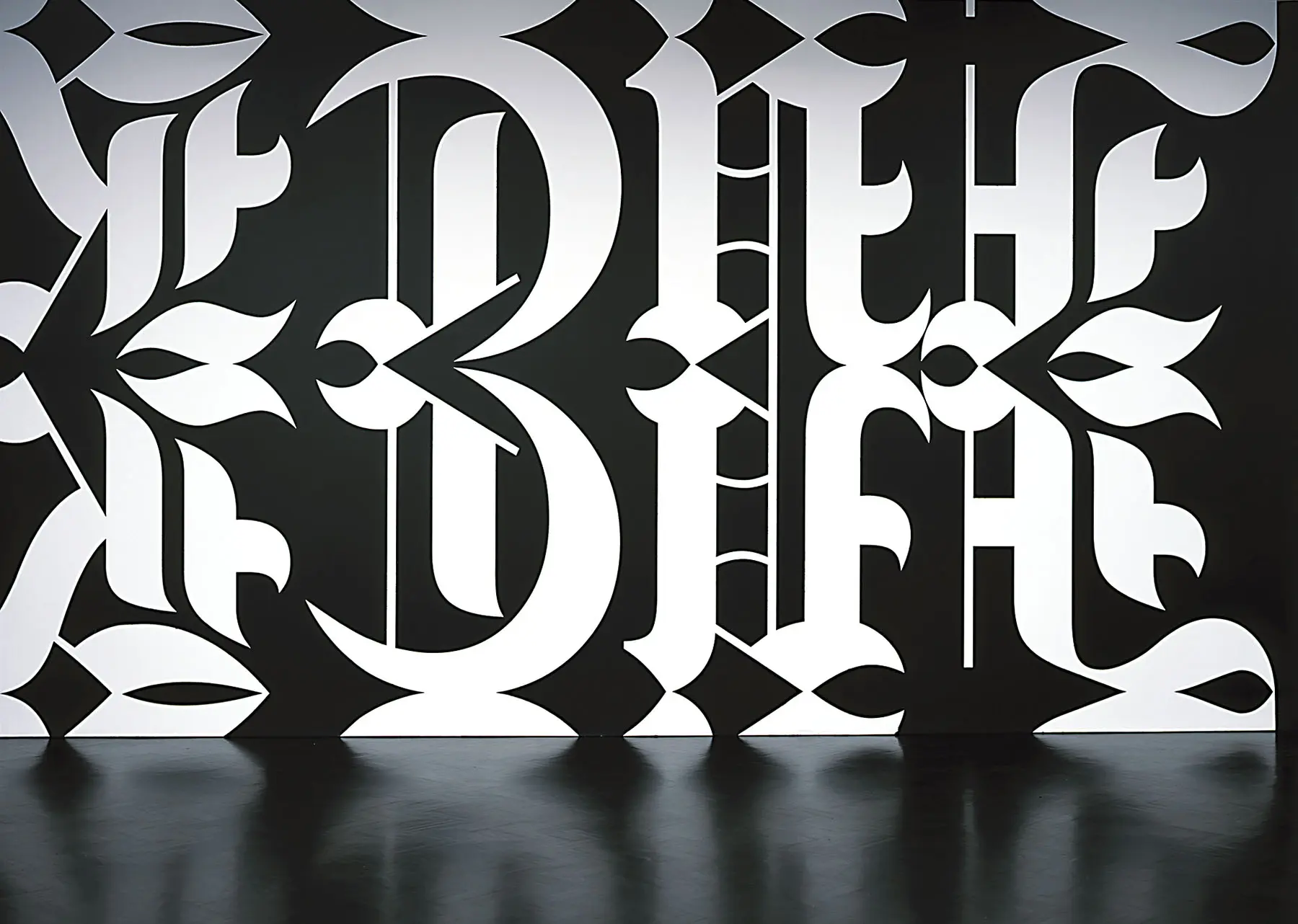
In one of his dialogues with Pierre Cabanne, Duchamp said that the history of art is what is left of a certain period in a museum. These things don’t necessarily correspond to the best of the period, since beautiful things might disappear when the public doesn’t want to safeguard them. The exhibition of the outstanding Isabel and Agustín Coppel Collection (CIAC) at the Museo Universitario de Ciencias y Arte (MUCA) in Mexico City revealed the approval bestowed on our period’s art by today’s art collectors, through their avidity, to possess and preserve much of what is beautiful.
The experience of forging a global vision covering more than two decades of collecting agrees with a decade when the gaze of those who systematically acquire art has come to be a transversal view more then a market force, a way of approaching contemporary art that is an alternative—but not always alien—to the institutional spaces of museums and international fairs. The frameworks proposed by the curator Taiyana Pimentel to explore the works in the collection (From the Object, From the Fragmentation of Time and Space, From the Individual to the Character, From the Body, From the Fractures of Power, and From the Concept and Toward Memory) could be assumed as attempts to build an art history that is porous and, as such, congenial to the nature of contemporary creativity and non-linear, non-hierarchical thinking.
Duchamp would no longer speak of the museum as the space of history, but of the collections as a new space where the public intervened to save the works. This notion was sharpened by the fact that MUCA is a site for viewers with many different backgrounds, where there was a noticeable confluence of youths who reconstructed the thread uniting the works and remade them—as with a couple of spontaneous dancers in front of Pipilotti Rist’s video Cinquante Fifty. Indeed, what unfolded in this show was the interplay of multiple choices inherited from Duchamp. It was perhaps not by chance the last exhibition overseen by the late Olivier Debroise, who understood that creating a contemporary art collection is a form of criticism.
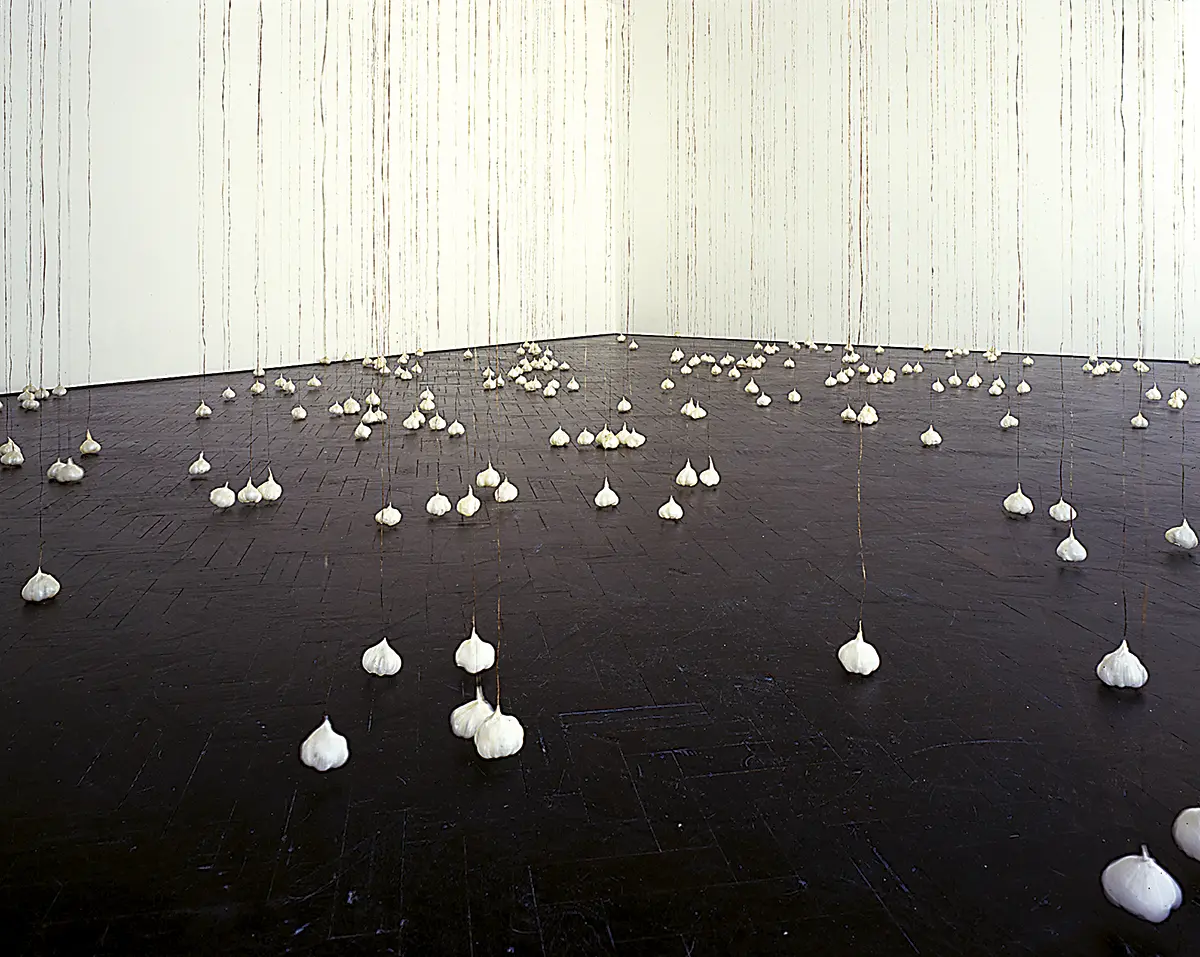
The first section, “Desde el objeto” (From the Object), reflected the deconstruction, and reconstruction, of the concept of sculpture. Some artists expanded it to include notions of light, such as Dan Flavin (represented by a fluorescent-tube work) or Moholy-Nagy (with a show of work created using his light-and-shadow device). Also present were those like Donald Judd, who prioritized form and color through materials never before used in art—aluminum, metal, or Plexiglas—and an emphasis on the artwork’s phenomenological existence in a given space. Of interest was the dialogue with new developments, such as the geometric light shapes by James Turrell that invent the fiction of three-dimensionality. Three sculptural installations stood out not only for their size but also for their concept: Eduardo Abaroa’s BCIN, the most ambitious of his works with nodes of structures made of plastic and cotton swabs; Ernesto Neto’s Cosmovos; and Rivane Neuenschwander’s Suspended Landscape, which incorporated hollowed-out garlic heads that hung down with great formal rigor, activating a kind of synesthesia: a rainfall of smells. There were other keys works, like Jesús Soto’s Pequeña blanca.

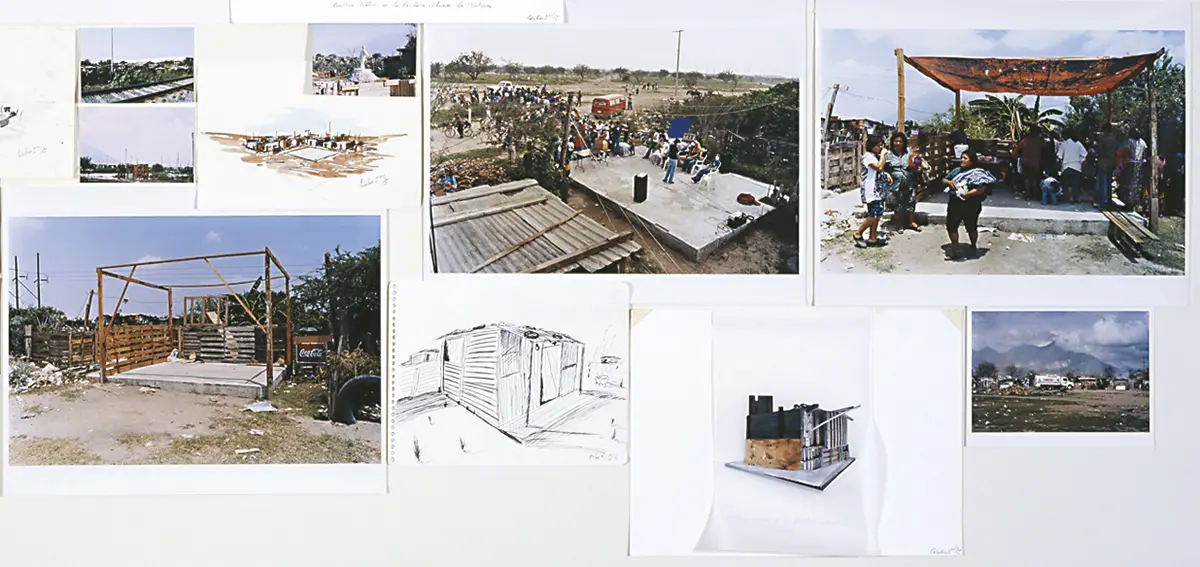
Several of the works included in the section “Desde la fragmentación del tiempo y del espacio” (From the Fragmentation of Time and Space) shared a function in specific spatial-temporal contexts (cronotopos, according to Bakhtin) that in turn function as a form of socio-cultural critique to be applied to similar contexts. These included: photographs taken by Helen Levitt on the streets of New York City, circa 1972; Baldesarri’s montages in Two Faces. Three Figures, One Shadow; the photographic image Demolition, Forbidden City by Zhang Dali, who projected his face on poor areas of Beijing; Dan Graham’s series Homes for America; and Gordon Matta-Clark’s extraordinary project Conical Intersect, at the Les Halles district in Paris, 1974 (the first of his dissections of condemned buildings). In the same way, the 2006 public sculpture by the collective Tercerunqinto in the outskirts of Monterrey triggered actions that became integrated into the urban landscape and provoked dynamics of social change. Two works about “symbols of modernity,” as Pimentel notes, were Damián Ortega’s Geometría Expandida, an excellent sculpture with tensed drums and cymbals, and Atomists: Ascensión, Orozco’s pictorial intervention on an epic sports scene.
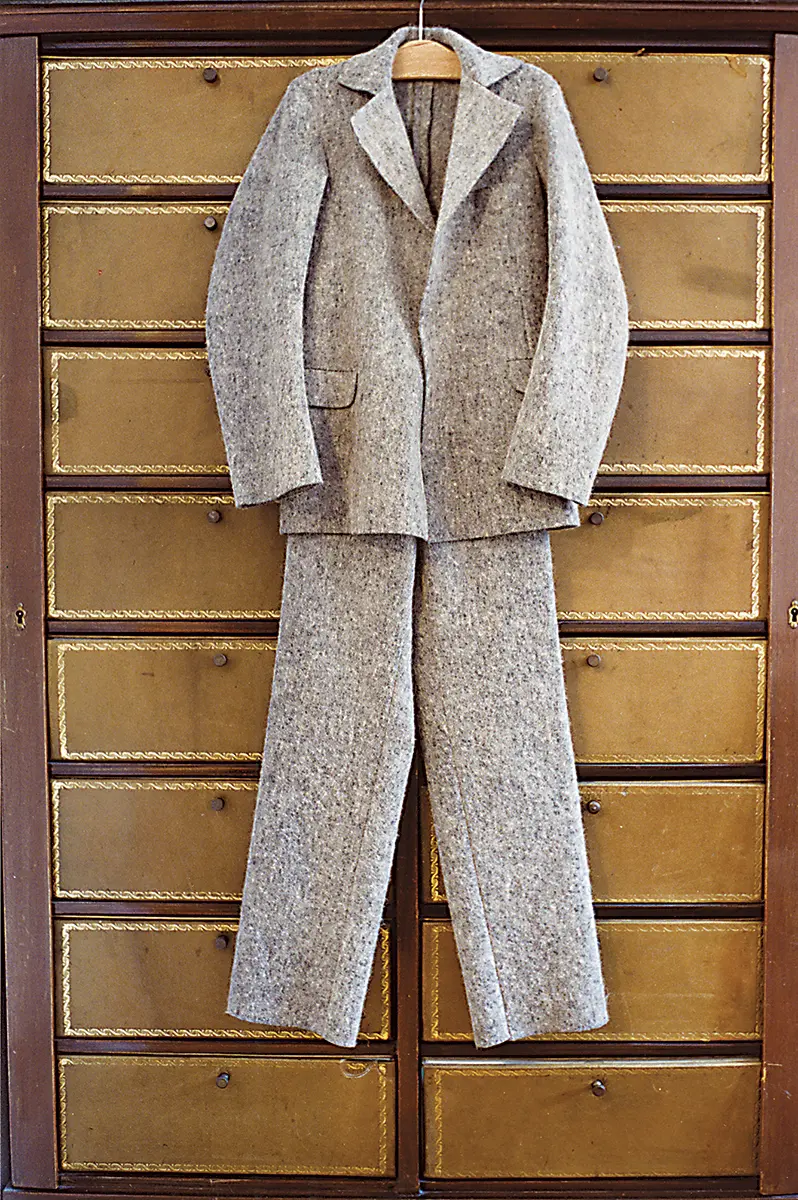
Photography is one of CIAC’s foci. Included in the “Desde el individuo al personaje” (From the Individual to the Character) section were iconic works like Vik Muniz’s portrait of Stieglitz, Herb Ritt’s portrait of Rauschenberg, Wolfang Tillmans’s photographs of friends, Seydou Keïta’s anonymous black-and-white portraits of men and women against abstract backgrounds, Diane Arbus’s photographs in nudist colonies, Richard Avedon’s image of John Ford, and Toumo Manninen’s scene of theater troupes in different places throughout the world. The section “Desde el cuerpo” (From the Body)—one of the most touching both for the autobiographical charge and for the fact that everything in the world is experienced with the body or through it—was also dominated by photography. In Nude with Skeleton, Marina Abramovic laid a skeleton on top of her naked body, to which her breathing transferred macabre mobility—an echo of the Balkans eroded by extreme violence. A selection of pieces explored the limits of resistance, intimacy, and/or representation and allowed the viewer to dissect the period: Matthew Barney’s and Bjork’s self-portraits; Sophie Calle’s strip-tease scenes; Tracey Emin’s confessional drawings; Nan Goldin’s scenes from her friend Valerie’s everyday life. Cristina Lucas’s Las fascistas was a strong staging of utopias that became nightmares using the female body. Equally outstanding were the works by Cindy Sherman and Adriana Varejão, in which the female body breaks from convention. Barbara Kruger’s work Not Stupid Enough, a transformation of Marilyn Monroe’s laugh was appropriately included in the section “Desde las fracturas del poder” (From the Fractures of Power), alongside the work of Kendell Geers. In both cases, the works unveiled power mechanisms associated with consumerism. Demystification was exemplified by works that ranged from Margolles’s approach to deathly violence, to Andrés Serrano’s and Maurizio Cattelan’s iconoclastic operations, to images like Joseph Beuys’s El Moisés or Traje (placed in the section “Desde el concepto hacia la memoria” (From the Concept and Toward Memory). It closed this proposal for writing the history of art within the space of one collection, one ready to be remade with each viewer’s experience.
ADRIANA HERRERA