
Recently, a photography show at the Servando Cabrera Gallery in Havana evoked the seductive power of images cropped from objective reality, from that which can be seen (or which some do not see) and that is there, in plain sight. The works were free of technical manipulations and complex elaborations and stagecraft so common these days in photography, without up-to-date special effects more appropriate for film or video.
José Luis Díaz is a young and virtually unknown figure in the visual arts scene in Cuba, and his work eschews all obsessive attempts to grab the attention of critics and the general public. This simple exhibition featured pure images of every day: a wall with projected shadows; a clothesline; the reflection of rain on glass; the lid of a Cuban electricity gauge; a forgotten boat, sinking in the water. Images in large-format black-and-white, like paintings in which abstract and figurative elements coexisted, were tempered by minimalism that pointed to the simplicity of every composition.
This renewed exploration of the genre, a pictorial trend if properly termed, had already gained acolytes in other shows in recent years in Cuba. Some were group presentations, like El arte no es para entenderlo, an exhibition of the work of six young Cuban photographers curated by Mabel Llevat. Not long ago, Lindomar Plascencia’s large-format photos of architectural fragments attested to this approach to the pictorial that photography is capable of producing and even surpassing.
These young photographers seek a multidisciplinary dialogue, high-culture quotations, and the complicity of a viewer who is well versed in the trends and movements that have enriched the history of photography in Cuba. The excellent show held several months ago at the Fototeca of works by José Manuel Acosta, a pioneer in modern Cuban photography, bore witness to a tradition that remains alive, like many of Cuba’s powerful cultural roots.
Fortunately, there is pluralism in Cuban photography, as in the whole range of contemporary art. One such artist is René Peña, who persists in his poetic, formal explorations, obsessed by the richness of the body, by the amount of languages and dialects the body is capable of producing without a single word. Peña’s show at the 23 and 12 Gallery was again surprising; it was faithful to a personal discourse that extends from the last years of the previous century and that later helped him win First Prize in the Fourth Central American and Caribbean Biennial, held in 2001 in the Dominican Republic, as well as other significant accomplishments of his twenty-first century debut. Peña, the most theatrical of Cuba’s photographers, emphasizes the richness of lights and shadows (always cherished in photography), of human gestures, and of his own skin as a perpetual meta-language. He makes us laugh slyly; he makes us think in the midst of clashing emotions that seek common features with other photographers and other cultures, free from appropriations and crossings filled with beauty, without prejudices in the face of creativity. Although Peña is, perhaps, the Cuban photographer most engaged with a body-based personal aesthetic (which has also been forcefully assumed by Cirenaica Moreira, Daniel Hernández, and Eduardo Moltó), he stands out from what is collectively expressed in the most recent products in the genre, without making himself into a difficult outsider. Instead, he becomes rather unique, something that does not occur with José Luis Díaz Montero, who follows what has been one of the main paths in the history of photography almost since its mid-nineteenth-century invention.
With the proliferation of illustrated magazines (particularly North American ones) as the twentieth century advanced, many photographers attempted to give prestige to the genre by bringing it closer to painting, while fully aware that these media were two very different expressive modes. This was a futile attempt to pay tribute to one of the most established and hallowed of the fine arts, an attempt to accept it as an intimate enemy despite the fact that many saw in photography the inexorable death of painting as it had been employed, especially for portraits and landscapes.
This happens with almost all artistic expressions: it would seem that there is perpetual class warfare at the visual level every time a new medium emerges, when in truth it is an extraordinary and fruitful relay race in the quest for knowledge, for new perspectives for our perception, and for making more visible that which we cannot see or reach with our senses, as they are sometimes occupied with other, more commonplace and down-to-earth matters.
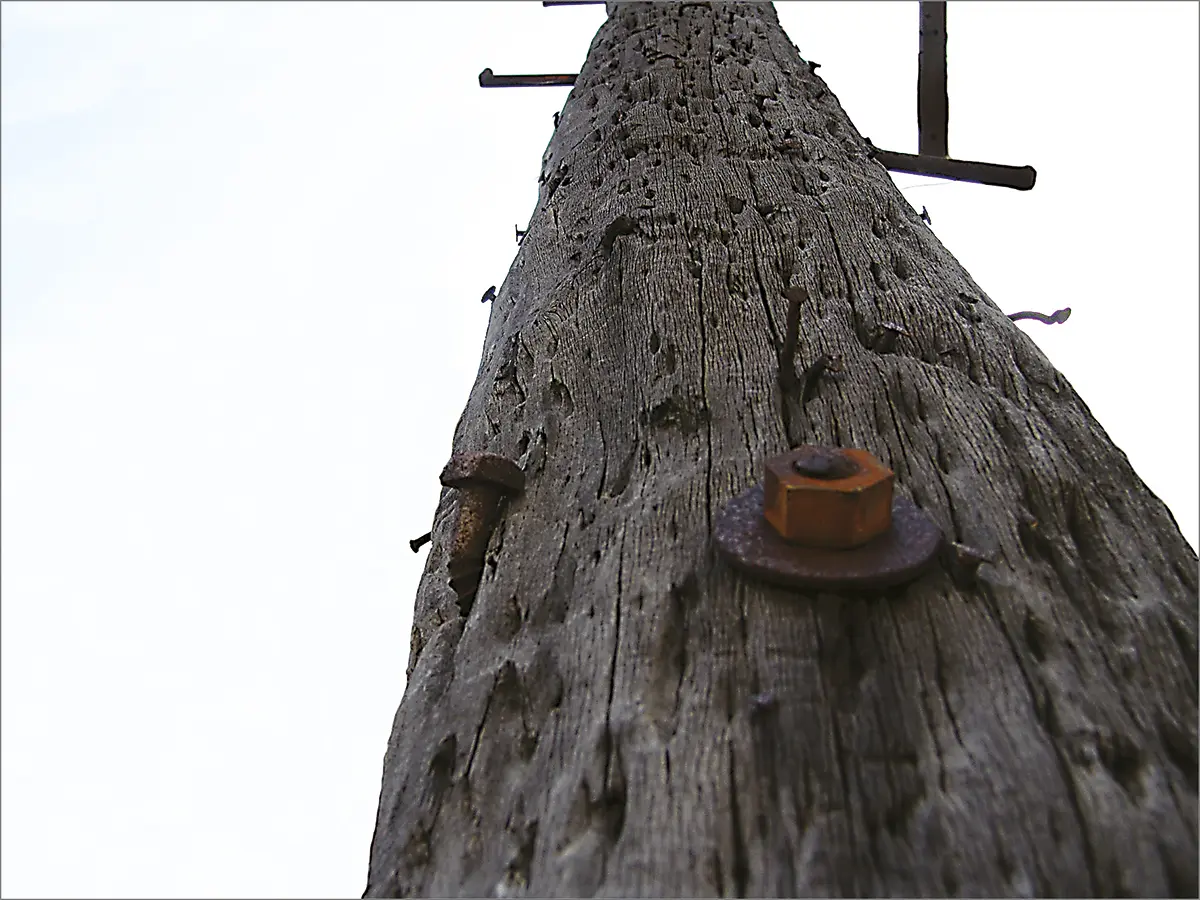
In his recent lectures in Havana, the important German theorist Boris Golz argued that art is nothing more than making visible that which human beings ignore or are unable to properly see. Two of José Luis Díaz’s photographic series work along those lines: Sin pasar por alto and Sombras y reflejos, which were exhibited in the show Ubicuidad. Here, the artist proposed in a coherent and organic way a new vision of the landscape, urban or otherwise; he deployed his image fragments, uninterested in the totality that defined an era in both painting and photography. A rusty screw placed inside the imposing structure of a streetlamp goes unnoticed in the bustling city, yet this photographer ensures we don’t forget it; we delight in and reflect on it.
Almost all of us contemplate the sea or the weak or powerful river, but very seldom do we notice a decaying boat that once rode them and now approaches its end, abandoned. The same dynamic occurs with the dancing movements of a newly washed shirt left to dry under the sun and the wind—it resembles a sculpture. Its digital reflection has been captured by a new type of camera that leaves behind the laborious world of print development, chemicals, and darkrooms.
These objects articulate their own aesthetic codes before our eyes. They are not metaphors for something, or for other lives, but rather they are renewed formal articulations that result from the photographer’s sensibility as he labors to rescue them from their long anonymity. He does this through rich assimilation of textures, lights, and shadows that evoke elements of the traditional language of art in the service of photography, a genre that held onto them despite the changes and transformations it experienced throughout the twentieth century. Photography once again returns to excite our eyes, to prod our curiosity for the material world.
NELSON HERRERA YSLA