
Among Latin American cities, Montevideo must
be the least given to the creation of new museums. The Uruguayan state has no
interest in expanding the range of museums
and doesn’t have the ability to refresh the ones that do exist—of which there
are many, though small and deficient, which are devoted to various aspects of
Uruguayan history. But there are only two for the visual arts: the Museo
Nacional de Artes Visuales, established in 1911 and renovated in 1969, and the
Museo Municipal Juan M. Blanes, established in 1928 and named after the
country’s greatest nineteenth-century painter. Both institutions fulfill their
role vis-à-vis both the past and the present, especially the Museo Nacional,
which hosts large shows coming from abroad. Yet there is a distinct lack of a
contemporary art museum where one can permanently view the new languages that
have emerged in recent years, such as installation, which several Uruguayan
artists have adopted with achievements that deserve greater exposure.
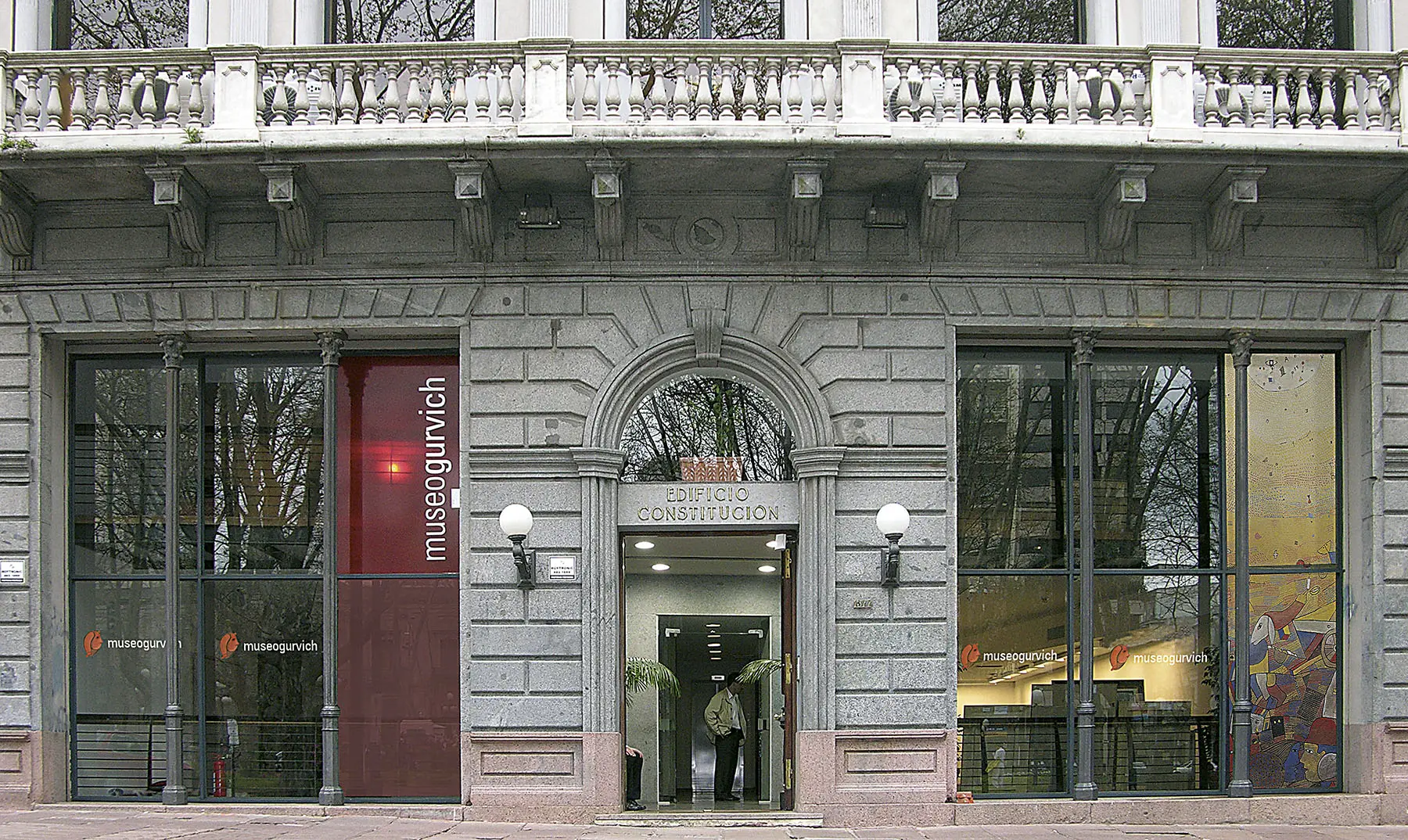
In this respect, private initiatives have been more effective than public ones; two examples are the monographic Museo Joaquín Torres García and, since 2005, the Museo Gurvich, sponsored by the Gurvich Foundation. Located in Ciudad Vieja, an important cultural area that has recently grown, the Museo Gurvich rents an old building adapted to the new function; the façade was declared a national treasure. It occupies 750 square meters, encompassing six galleries on three floors, and holds a collection of 256 works (murals, oils, sculptures, drawings, and objects). On loan to the museum for thirty years, the works belong to the collections of the artist’s descendants, María Julia Añorga de Gurvich and Martín Gurvich. The museum has a temporary exhibit gallery, a library, an archive open to researchers (with over one thousand photographs, letters, original writings, a collection of catalogs and publications related to the Torres García workshop and to José Gurvich himself), a cafeteria, and a small gift shop.
Silvia Listur is the museum’s Executive Director, and her intention is to establish a policy of community participation and dialog, exhibiting the work not only of artists closely linked to the Torres García school but also of current aesthetic trends. From the beginning, the museum developed educational programs of varied interest and accessibility, with concerts, lectures, conferences, interviews with known personalities, children’s plays, and guided tours for schools. Also, the museum promotes research on Gurvich’s work and broader thematic areas, such as art in public spaces.
The Museo Gurvich, like other monographic museums of its kind, allow an in-depth look at the work of a single artist, a journey through his or her expressive modes, and a view of the different periods traversed through an entire life; it encourages comparisons and close observations.
In the startling show Murales TTG (Taller Torres García), held April–July 2007, the Museo Gurvich made an extraordinary effort, assembling many scattered, moveable murals by the members of the TTG: Francisco Matto, Augusto and Horacio Torres, Gonzalo Fonseca, Manuel Pailós, and Guillermo Fernández, as well as plans, sketches, and photographs of murals that cannot be moved. Seeing these works, it was possible to verify the torresgarciana vocation of integrating art into the city: the democratization of a collective language, a language created for the community. The experience was stimulating. Far from converging on a single component, the exhibition revealed diversity within unity, with each artist’s pronounced personality and easily recognized personal discourses as well as their persistence over time, the originality that informed each proposal, and the workshop members’ joyous freedom.
As the case with so many other Jewish artists, nomadism was a characteristic of Gurvich’s life. He was born in the village of Yestmev, Lithuania (like the kind painted by his fellow Lithuanian artist Marc Chagall), on January 5, 1927, and was named Zusmanas Gurvicius. There he lived until the age of six, and the nostalgia-tinged remembrance of his native land—to which he never returned—and of his folktale-infused childhood stayed with him after his family migrated to Montevideo. Always connected to the Jewish community, Gurvich continued his education, alternating long workdays with a vocation divided between music and painting. His visual expression was influenced by Joaquín Torres García, a charismatic figure in Latin American art. Gurvich later lived as a shepherd in an Israeli kibbutz, another decisive experience in his life. He traveled in Europe returned to Uruguay, and finally settled in New York, where he died suddenly at the age of forty-seven.
This nomadism, so characteristic of the Jewish diaspora, did not preclude the maintenance of Gurvich’s cultural identity and his adherence to his adopted land, although, like a biography, his work did record his Israeli and American experiences. Gurvich possessed that rare human quality of feeling comfortable on strange shores, and he adapted to unknown sensibilities and languages, even if with difficulty. He was an open and generous spirit, establishing immediate connections to people as well as with the diverse materials he used in his art. No media was alien to him: pencil, watercolor, oils, clay, printmaking, small and monumental formats, music, poetry. Restless and lively, he was a laborer and a shepherd, pupil, and teacher, illustrator and decorator, craftsman and artist. He did all of this at a sustained and experimental pace, unhurried and without pause, infusing each work with a warm acceptance of otherness and joy of being in the present.
Gurvich met Torres García a few years before his death in 1944. The established parameters of Torres García-style constructivism captured Gurvich’s interest; it was a way to correct spontaneity with an orthogonal composition system and a multiplicity of signs. But Gurvich’s natural non-conformism grew during a trip to Europe during his youth, where he was deeply moved by Brueghel and Bosch at the Prado—artists distant from the Spanish referents like Velázquez that so seduced Torres García in the same museum in Madrid. Gurvich’s sensibility was anchored in the material: in the sensuality of objects and beings, in the tactile. Gurvich’s sojourn through Europe’s museums began his transition toward self-discovery, the discovery of a unique style that would be asserted in his successive creative periods with the internal conviction of a challenge to be met, beyond immediate satisfaction or incidental recognition. The long process that he experienced as a teacher, at the Torres García workshop, and in his own studio, prodded Gurvich’s imagination. The contact with students opened new questions in a Socratic dialogue, exploring the mystery of creation and the artistic adventure.
Surprisingly, Gurvich sought a popular narrative based on neighborhood, which was almost always Jewish in character, intertwining his childhood memories from Lithuania with images of Montevideo (Barrio Sur or Cerro), the collective farm in Israel, or Manhattan. To the initial influence of Torres García, he added new masters, ones he admired in his Surrealist bent: Klee’s and Miró’s contradictory signs, Chagall’s narrative fantasy, Max Ernst’s visual poetry, Henry Moore’s and Hans Arp’s organicism, Horst Antes’s corporeal fragmentation. Gurvich incorporated a strong eroticism, especially in his ceramics and his representations of couples, which became a recurrent and highly symbolic theme.
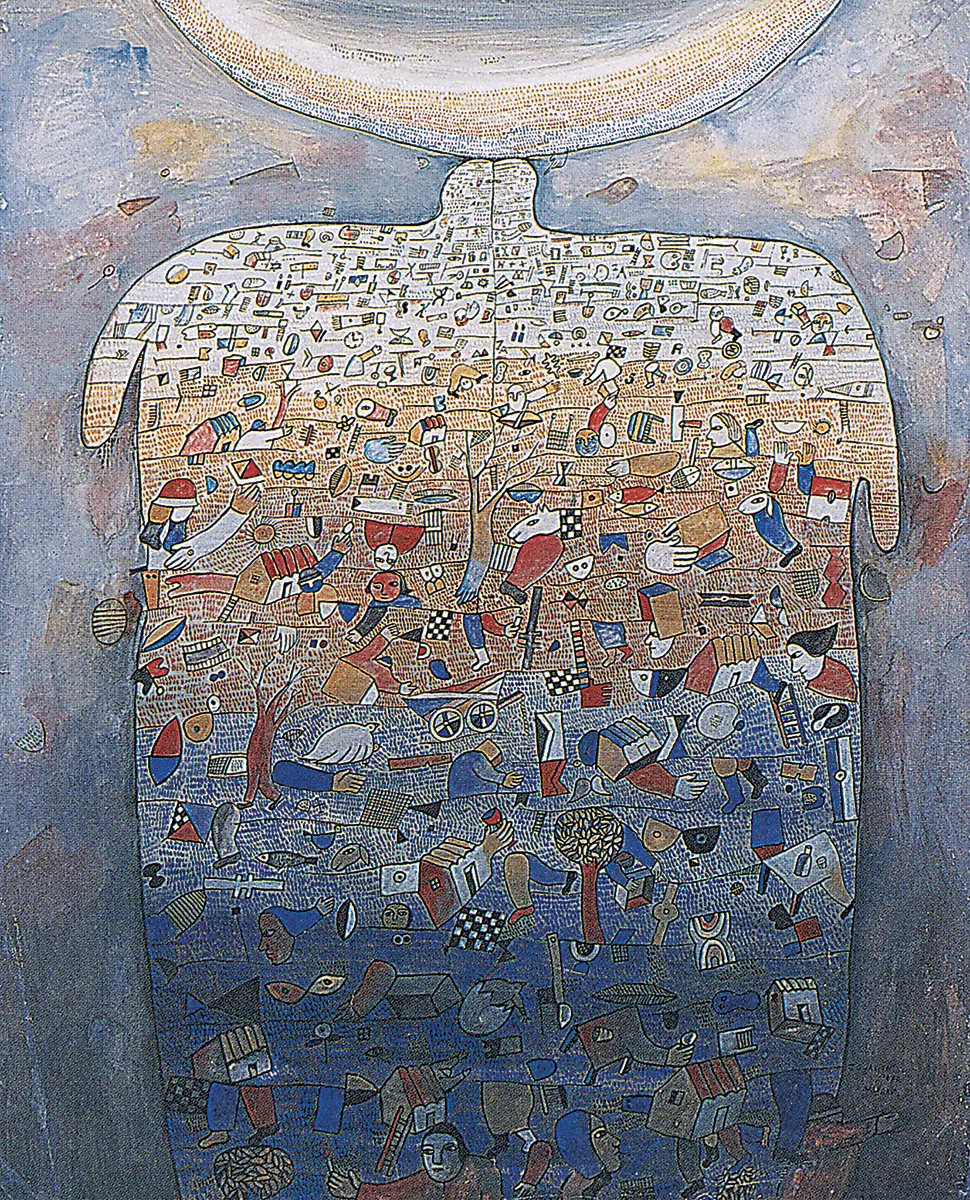
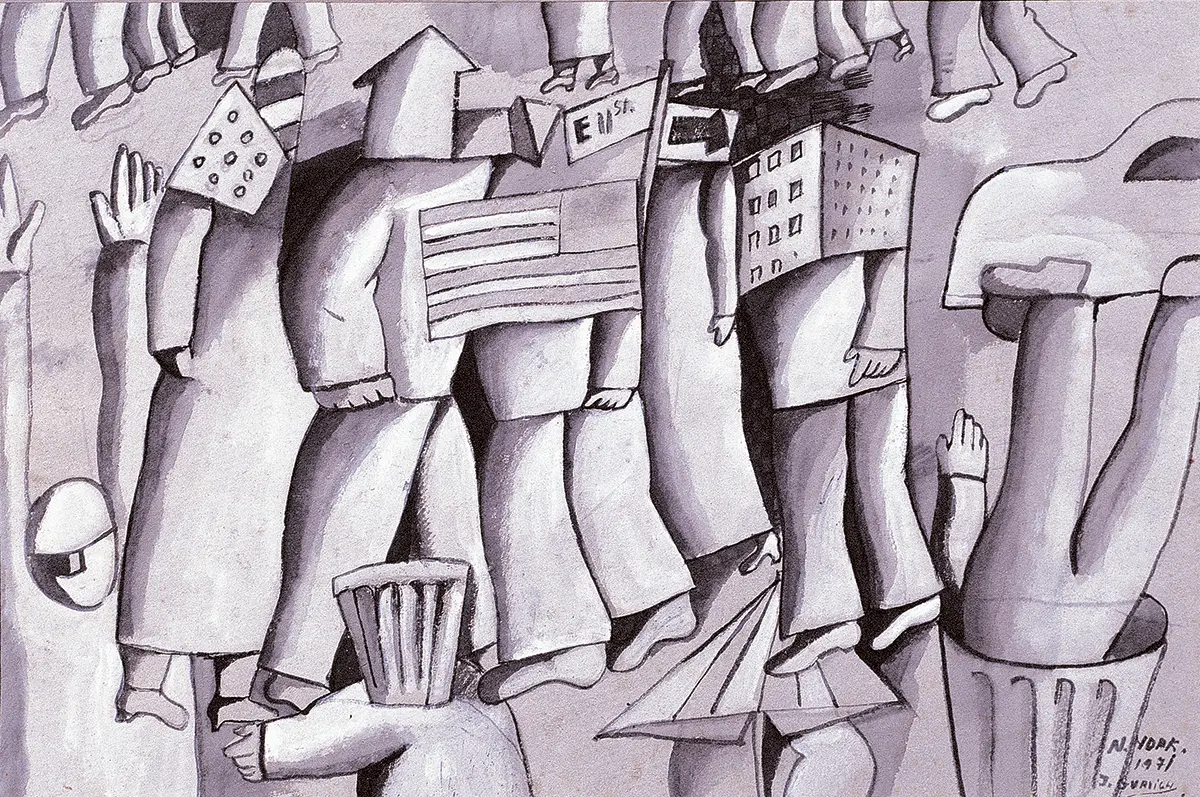
Gurvich spent the last four years of his life, between 1971 and 1974, in New York. In this difficult city, the full effervescence of innovation in art (Pop, Op, conceptualism, happenings, and performances) with a furious commercial dynamic seemed to obliterate any individual that did not fit within its parameters. Gurvich’s adaptation was difficult and, although his wife and son accompanied him, at first he felt lonely and isolated (he didn’t speak English). Courage and determination, however, won the day. In his notebooks, walking around the neighborhood and the city, he recorded the landmarks of his new place. Figurative drawings and watercolors depicted ladies, men, streets, public squares, stores, and skyscrapers—some more naturalistic, some more complexly built—and incorporated comics, the dominant aesthetic, into the visible reality. Torn from his notebooks and framed, these works are on exhibit for the first time at the Museo Gurvich, bearing witness to the creative fecundity of those years and overcoming several objective and subjective missed encounters.
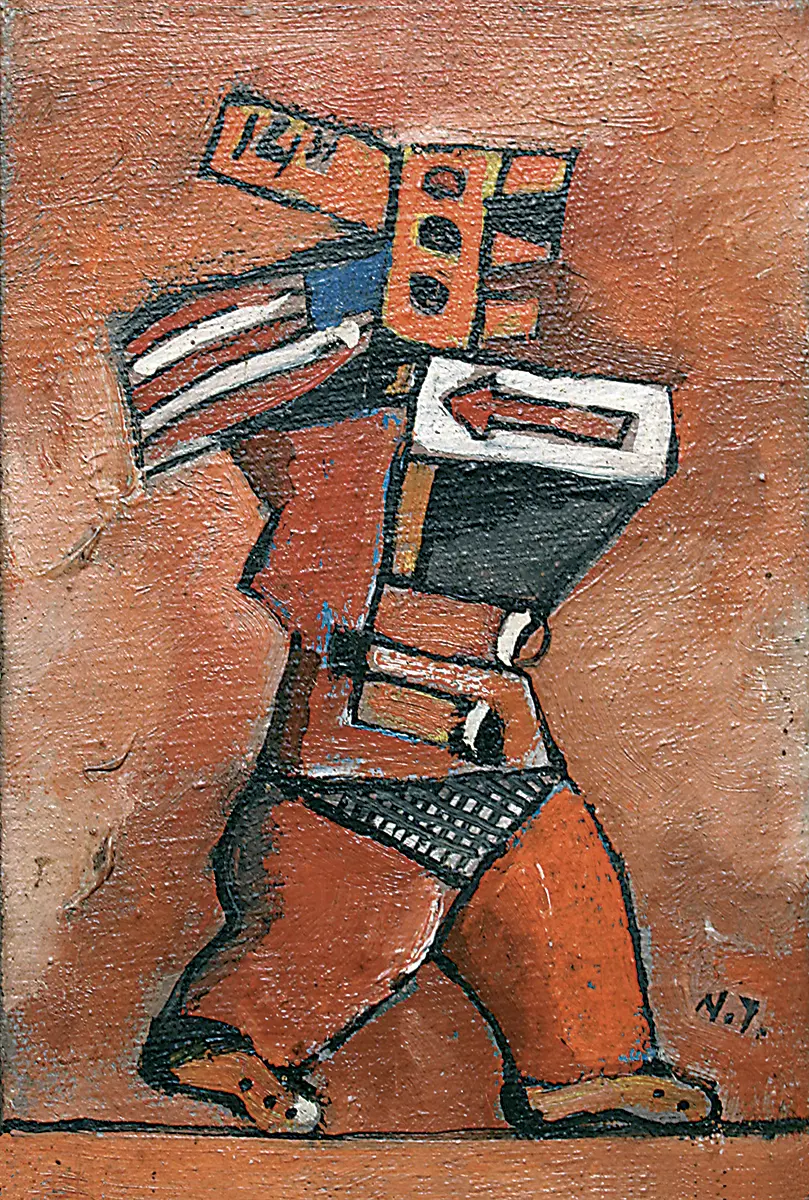
The museum’s second show of this year, open until March, was titled J. Gurvich: New York New York. In these works, the serenity of Montevideo’s slow-paced life was replaced by the vertigo of the Big Apple. Even when bedazzled by New York, by the megalopolis’s overwhelming energy and movement, Gurvich internalized the complex problems of the city and transformed them into a festive, vital celebration. He explored a variety of characters, overlapped reality and fiction, and merged everyday beings with characters from the comics. Complex compositions of different, accumulated anecdotes—some vertical and some horizontal, some more figurative and some more abstract—mixed past and present but above all emphasized the urgency of the immediate, of a life, lived in the moment. There were also projects for monuments, ones strangely symbolic and perhaps difficult to implement. A sense of humor pervaded several compositions. Hombre señal, a small-format work (15.5 x 10 cm), was enormously expressive. Other notable works depicted compact multitudes flying over infinite spaces and monochrome couples drawn with strong lines.
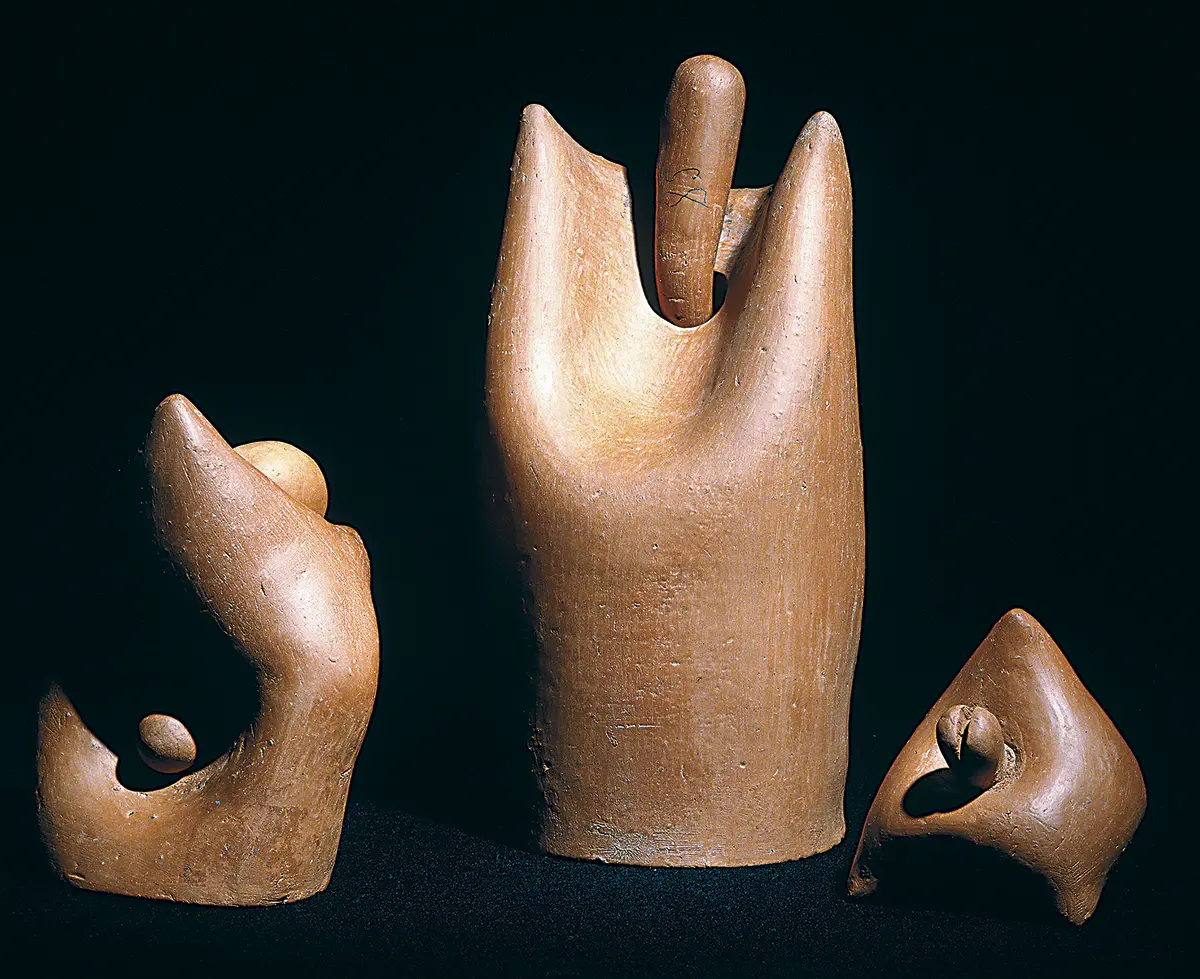
In his ceramics, Gurvich’s unique and innovative style acquired an extraordinary dimension. The erotic impulse was present in each piece; one could see the artist’s obvious joy of modeling the cavities and undulations and his complicit winks to the viewer, which were apparent or elusive in his sexual representations.
The artist’s renewed encounter with the craft of his youth and his joy of living in creative freedom was interrupted by his sudden death. Gurvich had been maturing a system of personal representation, replacing “the orthogonal rationality of constructivism with a vitalist turmoil,” as Angel Kalenberg accurately wrote, adding that Gurvich made explicit Torres García’s implicit spiral, subjecting it to a structural fragmentation. Beginning with the coordinates established by the master, Gurvich freed himself through immersion in Judaism, something that clearly differentiates him from the remaining disciples and colleagues of Torres García. As Gurvich wrote in his notebook: “I have broken almost all the rules to find infinite and free space. I have freed the hidden rules of my spirit and now walk with a fire in my hands. In the beginning, I peeked hesitantly through the doors of imagination... Then I moved to the blackest night. A deep silence. And I started walking. Infinite space and new music started to emerge. And suddenly from nothing, new worlds appear.”
NELSON DI MAGGIO
Art critic for La República Newspaper, Montevideo, Uruguay. Curator, proffesor and contemporary art historian.