
This year, Venezuela’s most prestigious art contest —the Arturo Michelena Salon— was held in unprecedented conditions, divided into two versions of the same event that took place simultaneously and struggled to gain legitimacy among artists and the public. In July 2007, a labor dispute at the Ateneo de Valencia (the institution in charge of organizing the Salon since its inception in 1943) produced the expulsion of the Board of Directors by a group of workers, a circumstance that, due to the lack of a final legal resolution, resulting in the emergence of the so-called “cloned” Salon.
Deciding which was the “clone” and which was the “real” Salon was left to each individual person, however, and was made more complicated by the politicization of both events. Under the current cultural regime, Culture Minister Héctor Soto recently urged salons to “democratize” and give up their “elitist” space. Thus, the “Ateneo de Valencia Working Class Salon” outlined its profile as an “inclusion of marginalized and excluded sectors,” according to Juan Calzadilla, a member of the jury, while the Ateneo’s Board of Directors sent special invitations to certain artists to guarantee that their work would be “treated with silver gloves”, intending to question the quality of the competing Salon.
For some artists, the irregularities of the salons and the political overtones created confusion, rejection, or simply a negative to participate. José Vívenes, the winner of the Alemán Sucre Award at the 2006 Salon, sent his work only to the Board of Directors’ event. According to Vívenes, “One doesn’t know well what the bases are because that Salon [the workers’] has no history. It is great for them to want art to open itself up to the masses, but a little respect for the artist is also necessary. I believe they will just take any work in.”
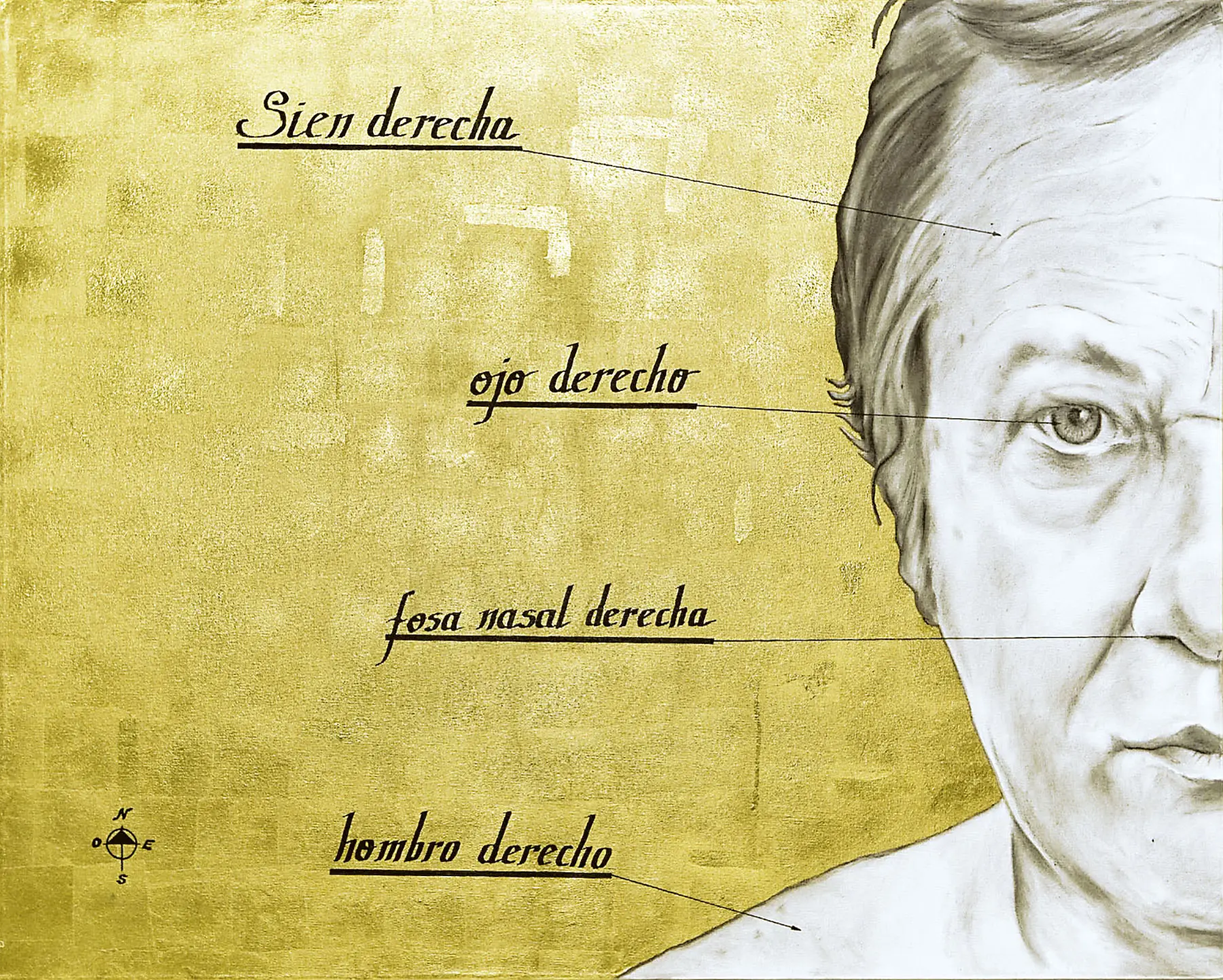
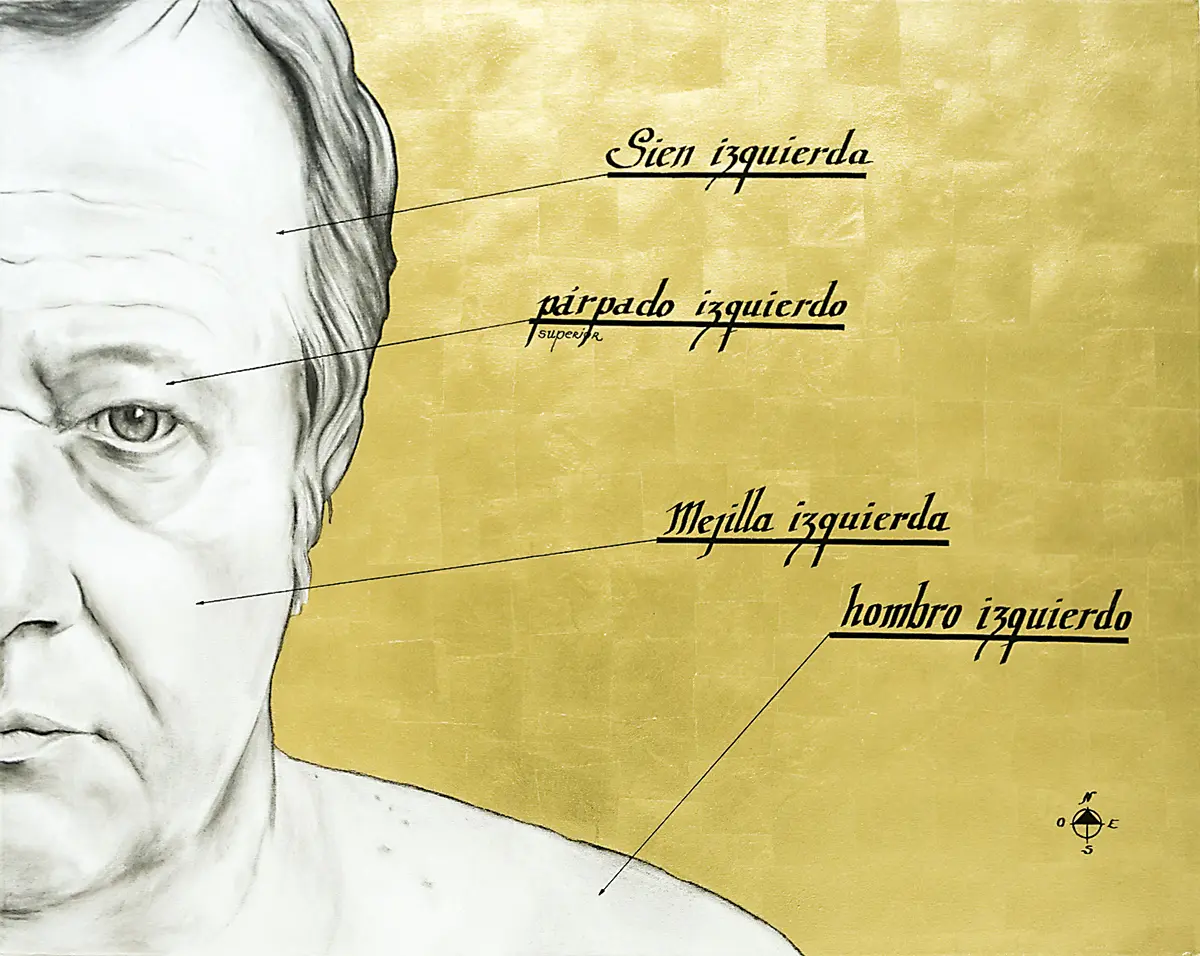
Others took this year as an opportunity to exhibit their work twice, doubling their communication. That was the case of Gustavo Zajac, who outlined the polemical situation by means of a self-portrait. The artist sent one-half of this work to each Salon, as “a call to dialog to meet once again.” For Zajac, this Salon, and salons in general, suffer from “fragmentation of the artistic community and a certain navel-gazing among artists. I believe we should be taking artistic positions regarding reality. I didn’t want to give up space where I could express my opinion.”
Domenica Aglialoro, whose works were also accepted in both salons, lamented that politicization had resulted in several artists writing off the event. “I haven’t stopped participating in any salon or event. I communicate through my work. It is a work of protest, and it is my response to the country’s situation.” She described the worker’s salon as an answer to the persistent, decades-long centralization in the art field in Venezuela, confronted with which traditional spaces were seeing their faces change. “There should be many more salons and alternative spaces. This salon is a portrait of other people.”
For Zuleiva Vivas, a jury member in previous years and in this edition of the worker’s salon, the political issue has little resonance. “Very few artists allude to the political situation. Many more younger artists have participated because the salons are opening up. What is important is for their works to be seen. If something is needed here in Venezuela, it is more spaces for art. The more spaces, the better.”
However, despite this positive reading of the event this year, the unresolved situation will remain for both parties, as they wait for a definitive legal answer to the future of the workers, the Board of Directors, and, of course, the Arturo Michelena Salon.
*The photos used in this text were taken by Francesco Spottorno.
LISA BLACKMORE