
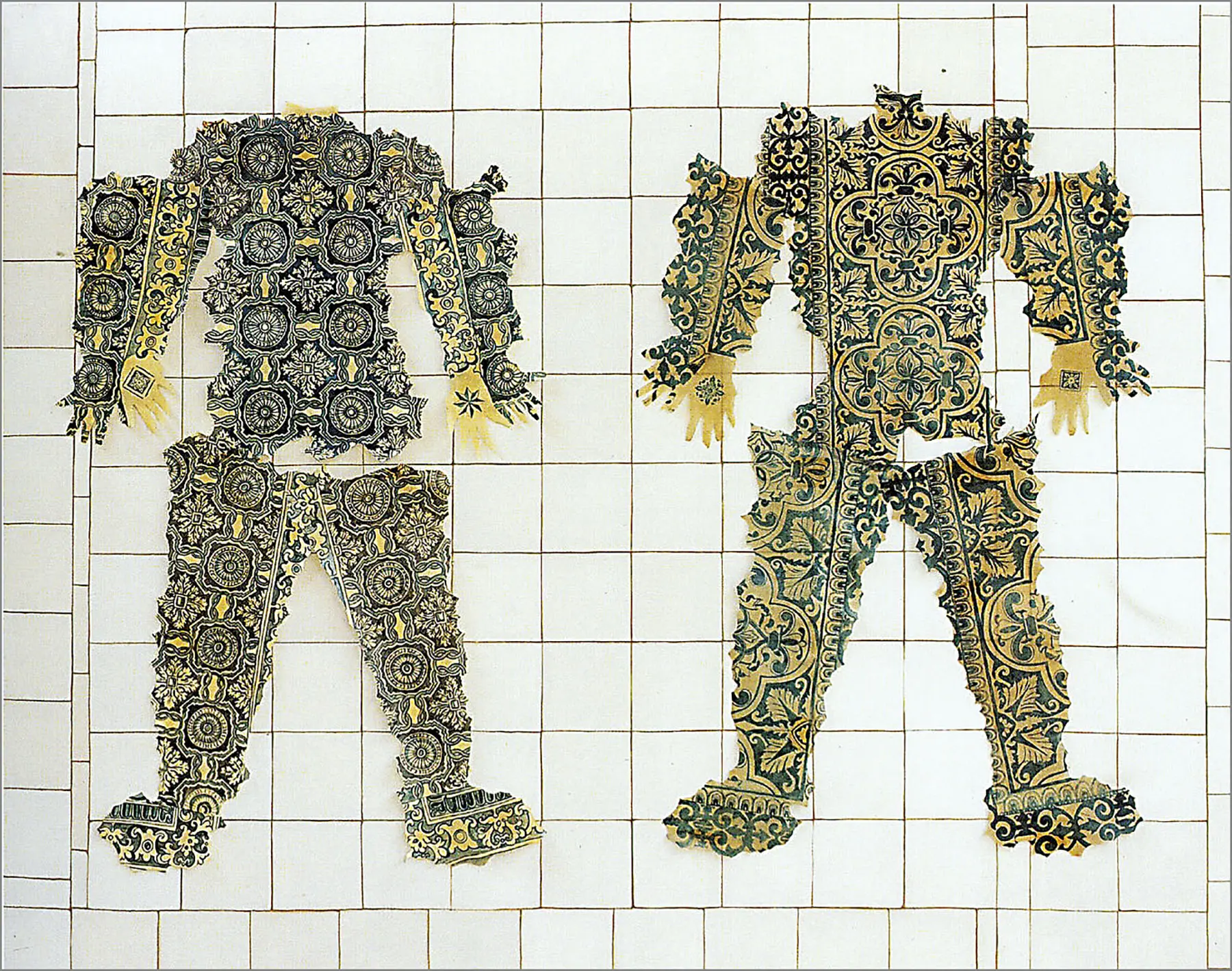
The vast and essential collective exhibition Links of the Gaze was held between May 21st and August 10th, under the general curatorship of Paulo Herkenhoff and including his critical texts. The ample galleries of the Tomie Ohtake Institute hosted this exhaustive show undergirded by an important historiographic, theoretical, and critical effort delving into the roots of Japanese immigration and its close connections with the Modern and current art scene in Brazil. It was, perhaps, the most important exhibition/investigation seen in this cultural center so far in 2008, profusely documented and, together with the valuable corpus of works on the exhibit, able to illuminate a fundamental chapter in what has been and are the artistic, conceptual, formal, and literary inter-discursivities between Japanese and Brazilian culture. I will add on my part that this is not only a continuum of perceptual linkages weaving various art nuclei from one tradition and the other, but also a prolific exchange sustained over more than two centuries of living history, involving every facet of the sensorial dimension and the crossing of modern paradigms with more contemporary ones The meg-show gathered more than 400 works of art from a variety of art systems: paintings, prints, videos, photographs, installations, sculptures, drawings, objects, all intended to underscore those “live” ties between Japan and Brazil. Let us not forget that those ties extend back to the Sixteenth Century when Portuguese conquistadors reached Japan and colonized Brazil a posteriori.
Thus, Positivist documentary photographer José Christiano Júnior (1832-1902) had, with his unadorned realism, pride of place in this unparalleled exhibition, with local-color and historical essays that present, for instance, the arrival of the first Japanese citizens to Río de Janeiro.
In that sense, it is important to remember that Paul Delaroche —one of the greatest practitioners of Academic painting— decreed “the end of painting” after the invention of photography in 1839 —known ever since as “the medium of the fleeting instant”— and was convinced that the language of photography, still in its infancy, was going to be able to materialize and perfect the devices of pictorial representation in their handling of visual illusionism. Indeed, Delaroche believed that Painting’s sole achievement up to that era had been to copy the world, to “clone it” in a way, in scenes that were more or less commemorative.
On their part, France’s most revered artists of the time, such as Delacroix and Ingres, denied any artistic validity to photography, blocking its access to the Olympus of the “Fine Arts.” For them, those were just mechanically reproduced images. Ingres’ sentence is famous: “Photography is beautiful, but we mustn’t say it.”
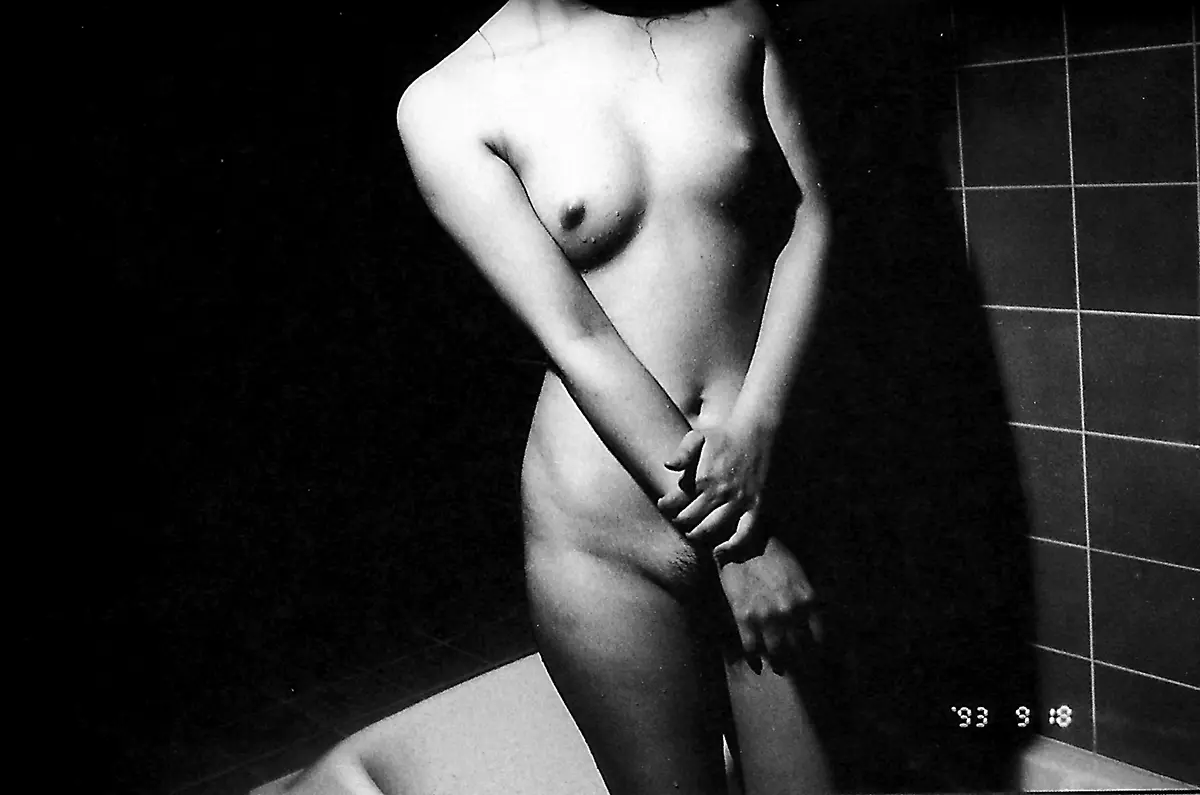
Positivist, analog, testimonial photography in Latin America, however, cleansed itself in its beginnings of all kinds of ornamentation, artifice, and complicated simulacra. It didn’t follow the pictorialist paradox practiced by European photographers, who wanted to emulate oil paint.
This is the context for the production of Portuguese photographer José Christiano Júnior, one of the Nineteenth Century most illustrious points of reference, who was able to capture the aesthetic, the social, and anthropological atmosphere of his times, the shifts, and indelible marks left by those initial waves of Japanese immigration into Brazil. He did all that on the basis of panoramic black and white or sepia views, with a realism that at times becomes exasperating and functions as a historical reference or trace mark of the fortunes of two countries in process of national consolidation.
Christiano Júnior’s visual efficacy resides in his ability to “freeze” in images for posterity the conflicts, contradictions, customs, and manners of a still unstable social fabric, one in the midst of great transformation and expansion. In nations still so young as ours, documentary photography played an essential role, by allowing several generations to discover with their own gaze the cosmopolitan and pluralistic lands in which they were born. His photographic essays illuminate the aesthetic reach of a country in transition.
In the works of Christiano Júnior displayed here, the photographic device —lens, camera, plate, print, etc.— acquires great flexibility as a tool and expressive medium. In consequence, this is not just the tyranny of a mechanical instrument. Noticeable here is the photographer’s skill, which allowed him to generate innumerable vistas like epochal frescoes, individual or group portraits preceded by very simple and literal titles that work as an access key for the viewer. All of this is supported by the photographer’s ability to produce a vast spectrum of interpretations for the images captured on the photographic plate, with or without his own intervention, through the process of development.
For the visitor to the show, it is important to take into account the fact that the work on the negative is the key basis for what emerges into the domain of the visible. It is, then, matter, the foundational element of the image often printed on silver gelatin.
The automatic reproduction of the negative possessed a degree of fidelity that was absolutely inimitable in those times, even becoming taboo.
José Christiano Júnior was born in the island of Flores, in the Azores archipelago, in 1832. In 1855 he settled in Brazil with his wife and children. In 1862 he established his studio in the city of Maceió, in the northern part of the country. In 1864 he moved to Río de Janeiro, where he worked until his move to Argentina.
Christiano Júnior experimented with plates emulsified by hand. This process is called wet collodion.
Laços do Olhar goes beyond the testimonial process of those early encounters between the two cultures, one millenarian, one openly hybridizing and expansive; it delves beyond the symbolic correspondences and affinities forged with the immigration wave of 1908. Starting at that point, Herkenhoff says, the relationships became entirely anthropophagic, a quasi-ontological, quintessential feature of Brazilian culture: its special ability to absorb and re-signify every outside the contribution that reaches it, in this case from Japan. In other words: there is in Brazil an absolute permeability and flexibility to adapt and assimilate such international referents. While it is known that the various waves of immigration are the cultural pillar and economic motor of the city of São Paulo, the integration of the two cultures took place across the country, with the emphasis on other regions are cities like Rio de Janeiro, Brasilia, Rio Grande do Sul, Pará, Paraná and Bahía.
Let’s note the curatorial gambit and the deep investigation, in the different layers of meaning that emerge from this show produced in Brazil, the character of which is posited from the start by Herkenhoff himself: “Laços do Olhar is a constellation of nuclei about encounters and recognition from Japan to Brazil for the integration of Japanese artists into the country’s cultural world.” Regarding the latter, it is not just contemplation of a trajectory with linked micro-narratives. It is much more than the simple fruition of the senses.
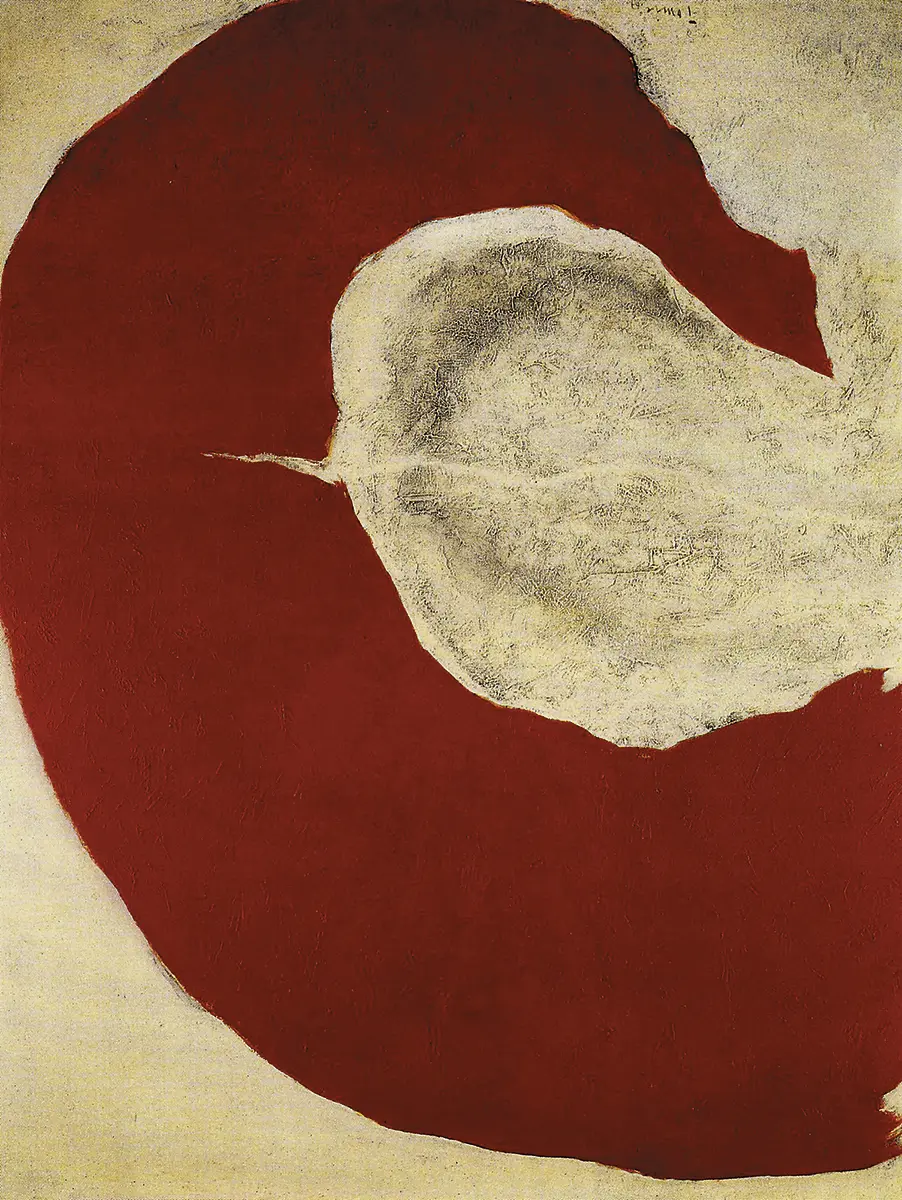
Starting with Brazilian Modernity, most artists of non-Japanese descent saw in this Asian country the image, or better yet the epitome of difference, the "other" as irreducible singularity and alterity. This is what happens with some works by Anita Malfatti, El japonés, La japonesa, to which she gave no name or identification; they are iconic figures of radical exoticism. In turn, many Japanese-Brazilians did work the traditional genre of portraiture as a form of first-person identification; they paint themselves. The first of them was, undoubtedly, Takaoka, who incorporated this iconographic language into the Brazilian art scene, presenting his individual show at the first Modern Art gallery, in 1936. Later, artists’ societies like the SEIBI group emerged with the goal of fostering and widening this racial and cultural integration. We see artists of the stature of Manabu Mabe, Flavio Shiró, Tomie Ohtake consolidate their own poetics through several decades, with contributions of exceptional singularity and novelty.
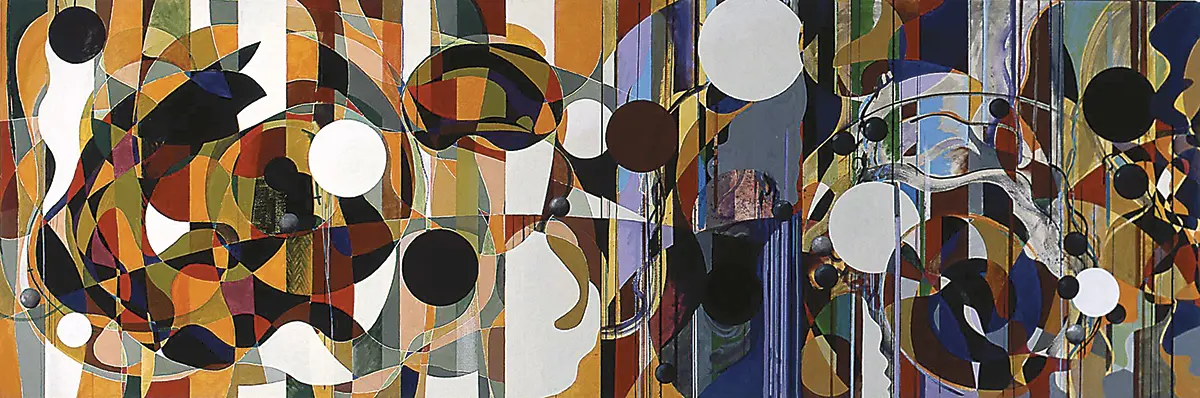
At the same time, on the Brazilian side, artists like Nelson Leirner, Mira Schendel, Amílcar de Castro, Ana María Maiolino recover themes and acetic and stylistic sources of Japanism, such as ideograms, gestural calligraphy, the influence of Zen, to give shape to the Concrete and Neo-Concrete movements, other forms of abstraction based on absolute self-referentiality. The standouts among them are Décio Pignatari, Augusto and Haroldo de Campos, art critic Mário Pedrosa, who traveled to Japan to do systematic studies. Generations of Brazilian artists have been fascinated by this counterpoint of languages, new dictions, admixtures, and hybridizations of an infinite number of modes of expressions and contents. Let’s not forget Geraldo de Barros, Hélio Oiticica, Lygia Clark. The agglutinating idea behind Laços do Olhar is that there is no Brazil without the Japanese contribution, which is extensive.
Younger artists like Varejão and Araki move towards iconographic developments of a hyperbolic character, purposefully playing with the various points of escape in the interpretive discourse about their works.
Architects Paulo Mendes da Rocha, the father of Brutalism and Ruy Ohtake projected and concretized the pavilions for the International Exposition in Osaka, 1969, and in Yokohama, 1990.
Tradition, assimilation, and the transgression of boundaries. Perfectly miscegenated and happily impure models touch hands in Laços do Olhar.
A truly singular aspect of this cohabitation between Japan and Brazil is precisely the way in which it brings to the fore that triadic postulate of contemporary art. Let’s review, if possible, and only as a point, of reference, Le triple jeu de l’art contemporain, by French sociologist Natalie Heinich, which we are slyly informed of how the transgression of such boundaries can be “read,” since that event has been the whole of its inherent vicissitude and also, it is evident here, the extraordinary expansion of its territories and enclaves. The notion of crossing boundaries in this large-scale exhibition should not be interpreted as the total absence of norms, but, rather, as a strategy that works at a high level of complexity, where the challenges line up much better with the economy of communication and information.
This is why the nuclei or sets of works proposed by Herkenhoff have an added value. Some of them can be understood on the basis of those modern paradigms, in which case the value resides on the artifact itself, and everything that is alien to it and hovers over it, the paratext, comes already added to it. On the other hand, the contemporary paradigm implies an intermediate instance between the art of the work of art, aesthetic, and/or artistic communicability, where public or private art institutions already play legitimizing role-playing in both territories, the valuation of the work and the media event.
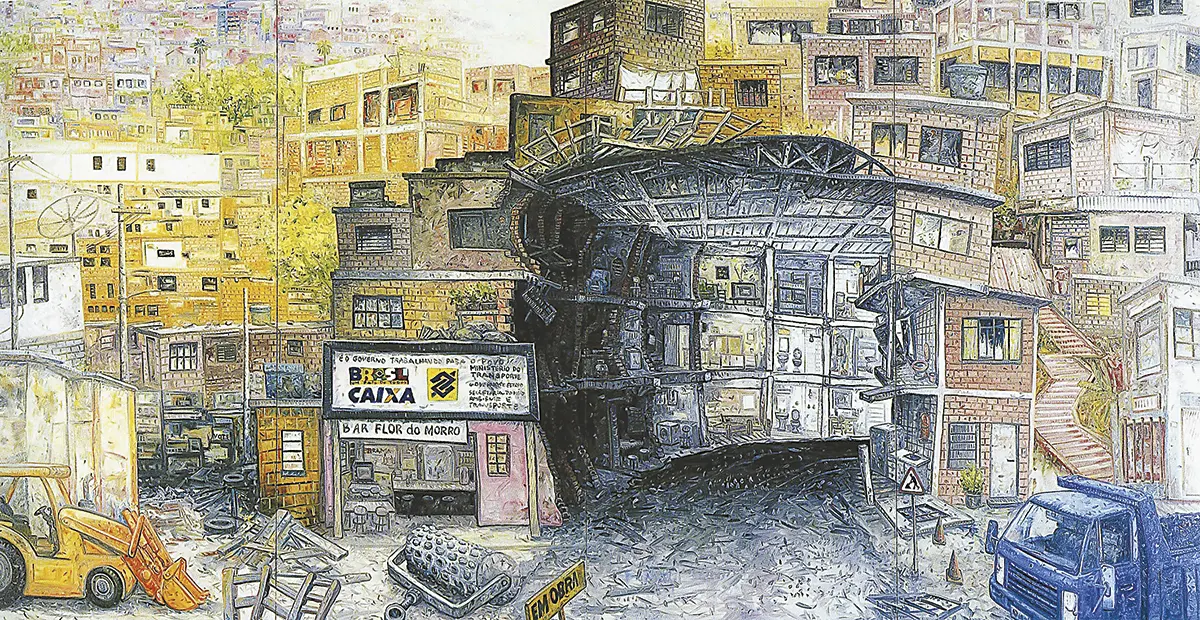
Paulo Herkenhoff notes that one needs to give each thematic gallery some time. For example, we can’t minimize the importance in the show of the section devoted to the contemporary aesthetic validity of manga, cartoons, comics, as can be seen in the work of Oscar Satio Oiwa, like Túnel (Río de Janeiro) and Túnel (Tokio).
Finally, we are left with a curatorial thought that hinges on such reference to the multiplicity of cultural, anthropological, and political universes that criss-cross time and again: “Laços do Olhar’s rhizomatic vision also signals an exhibition that simultaneously offers instants or moments of active contemplation and on-site investigation."
CLAUDIA LAUDANNO