
In his recent exhibition,
Martín Sastre (born in 1976, Montevideo) returned to pop-culture celebrities to
create works filled with humor, eroticism, and desire. In these works, he also
questioned censorship and hypocrisy. This well-known artist, who has lived and
worked in Madrid since 2002, achieves his objectives while also provoking and
amusing his viewers, who could detect the chimeras and subtleties even without
knowing the history of the video images and photographs that were displayed in
the Ruth Benzacar Gallery.
Fiebre Forever (video, 18 minutes, 2007) was a reinterpretation of the mythical and censored film Fiebre (Argentina, 1970), which was written, produced, directed, and acted by Armando Bo (1914–1981, Buenos Aires) and Isabel Sarli (born 1935, Concordia, Entre Ríos), who were partners in art and in life. Opening in Argentina and in Spain in 1972—under the more explicit title Fiebre Sexual—the film tells the story of Sandra, a passionate woman in love with Fiebre, a racehorse. This large-scale soap opera features an exuberant Sarli in the role of Sandra. Married to a boring landowner, she meets a tough lumberjack, the sturdy José María, played by Bo. They fall in love and cannot refrain from illicit encounters. The original film offers irresistible sex, a series of rejections, several deaths, a scene of graphic copulation between Fiebre and a mare, dreamlike sequences, indescribable superimpositions, and impetuous transpositions, among other memorable scenes.
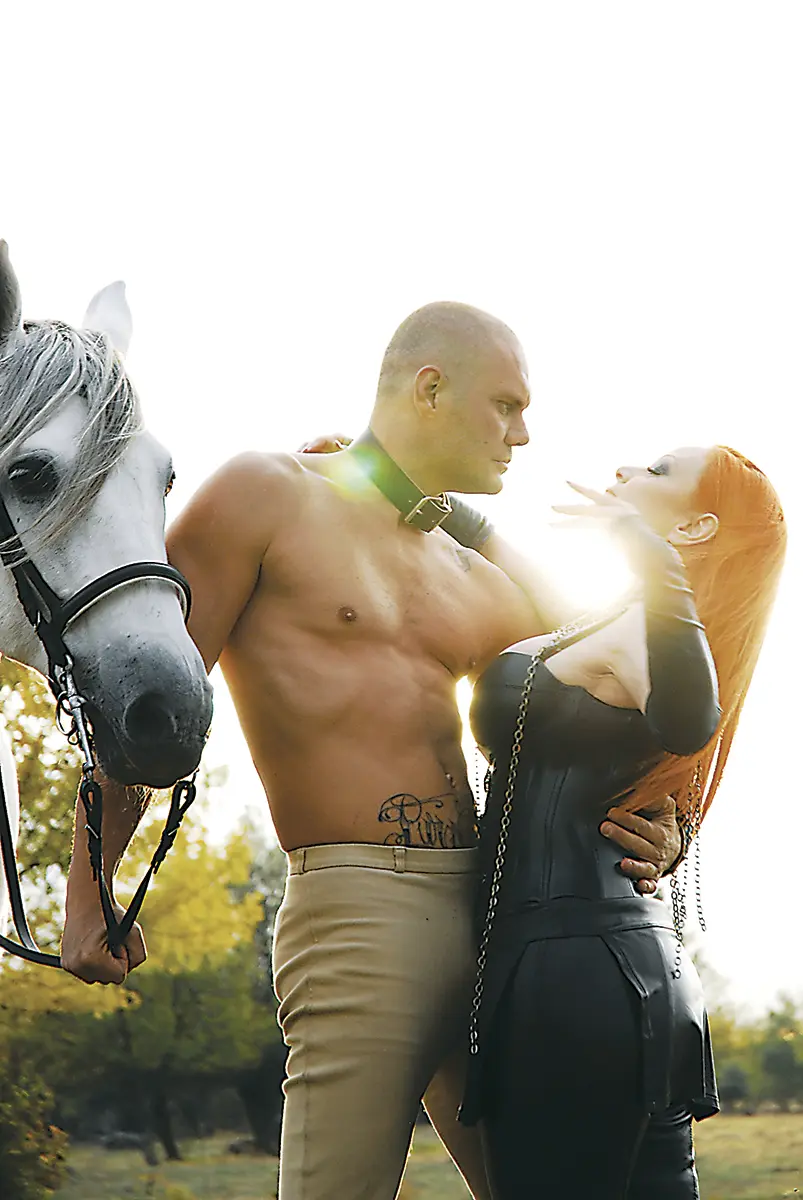
The revisited version was a successful and loving homage to Bo and Sarli, the legendary artistic couple and creators of an uncommon and prolific filmography that excels in its absurdity, cheesiness, and crude eroticism. Fiebre Forever maintained a narrative interest and was well done and full of paradoxes.
Sastre’s interpretation condensed the original film’s eighty-three minutes without losing its essence. The selection of the cast for the video, which was recorded in Spain, was not coincidental. Both the singer-actor Alaska and Nacho Vidal are friends of Sastre and are as intense in their careers as Bo and Sarli (who was known as La Coca to her friends). Nevertheless, unlike the original version, Sastre’s video sublimated more and exhibited less; it addressed the passions and exposed the enthusiasms of the original with mischievousness and satirical tenderness.
There was no nudity or explicit equine sex in Sastre’s video. Burning desires and passionate encounters were presented with images of fires and bucolic landscapes, with pertinent music, retrospective fantasizing, and an off-screen narrator who guided the viewer through the crazy story. Alaska, a pop icon and a central player of the Madrid scene of the 1980s, has acted in some movies (Pepi, Luci, Bom and Other Girls on the Heap) directed by Pedro Almodóvar, whose films unquestionably have elements in common with those by Armando Bo.
Nacho Vidal, a popular star of the international porn movie industry, managed to suggest everything without showing much as he interpreted the male characters (the husband and the lover) in Fiebre. He also played a central role in Pop ‘n’ Porn, a series of ironic photographs in which he appeared alongside figures such as the horse Fiebre, Hello Kitty, and Alf.
Although he studied architecture for some time, Martín Sastre grew up watching all the movies (mainly from the U.S.) that he could find at video clubs, and he went on to take film courses for adolescents at the Cinemateca in Montevideo. It is not surprising that Sastre has utilized popular formats and celebrities (like Jackie Kennedy, Barney, Lady Di, and Britney Spears) in his videos, but these aspects are far from being frivolous in his work. The visual devices are entertaining and witty, but they also possess a critical undertone: they point to an excess of consumption and debate the power of the mass media and of politics. In front of and behind the camera, Sastre does not forget his origins and assumes the role of the “extremely poor artist” from Uruguay and Latin America.
His most recent work, Fiebre Forever represents a change of paradigm. This time, Sastre appears only briefly in the film—as the lady’s servant—and finds nourishment in popular Latin American figures. Sastre knows that while Sarli and Bo were persecuted by the authorities (the latter went to prison) and denigrated by certain intellectuals in Argentina, their movies were nevertheless seen and applauded in the rest of the region.
Martín Sastre paid sensitive and intelligent tribute to the voluptuousness and freedom that are suggested in the images of Fiebre. In this film rampant in clichés, women are in charge and are allowed to choose their partners through the strategically placed hay of the set design. Today, Bo and Sarli are revered figures in the world of the Buenos Aires intelligentsia.
VICTORIA VERLICHAK