

The Portuguese curator Sergio Mah chose “site” as the problem to be addressed in the most recent edition of PhotoEspaña, the international photography festival held in the spring of 2008 in Madrid, Cuenca, and also, for the first time, in Lisbon. And the site was the problem because—as noted originally by Robert Smithson and reiterated later by Marc Auger, the French anthropologist and author of an article about non-places that achieved an undeserved level of recognition—its status is in question. Smithson, it bears repeating, was the first to point out in the 1960s that site—defined by the tradition in terms of rootedness, consistency, and irreducible singularity—was radically subverted by trends of modern economy and culture that produce uprootedness as they generate new realms and new autonomous, perishable, portable, and finally virtual places. Indeed, Smithson’s Non-site series transferred entire swaths of land from specific sites, and photographs of those sites, into the empty and neutral spaces of the art galleries of the time—whose architecture was in itself the negation of the site, tout court.
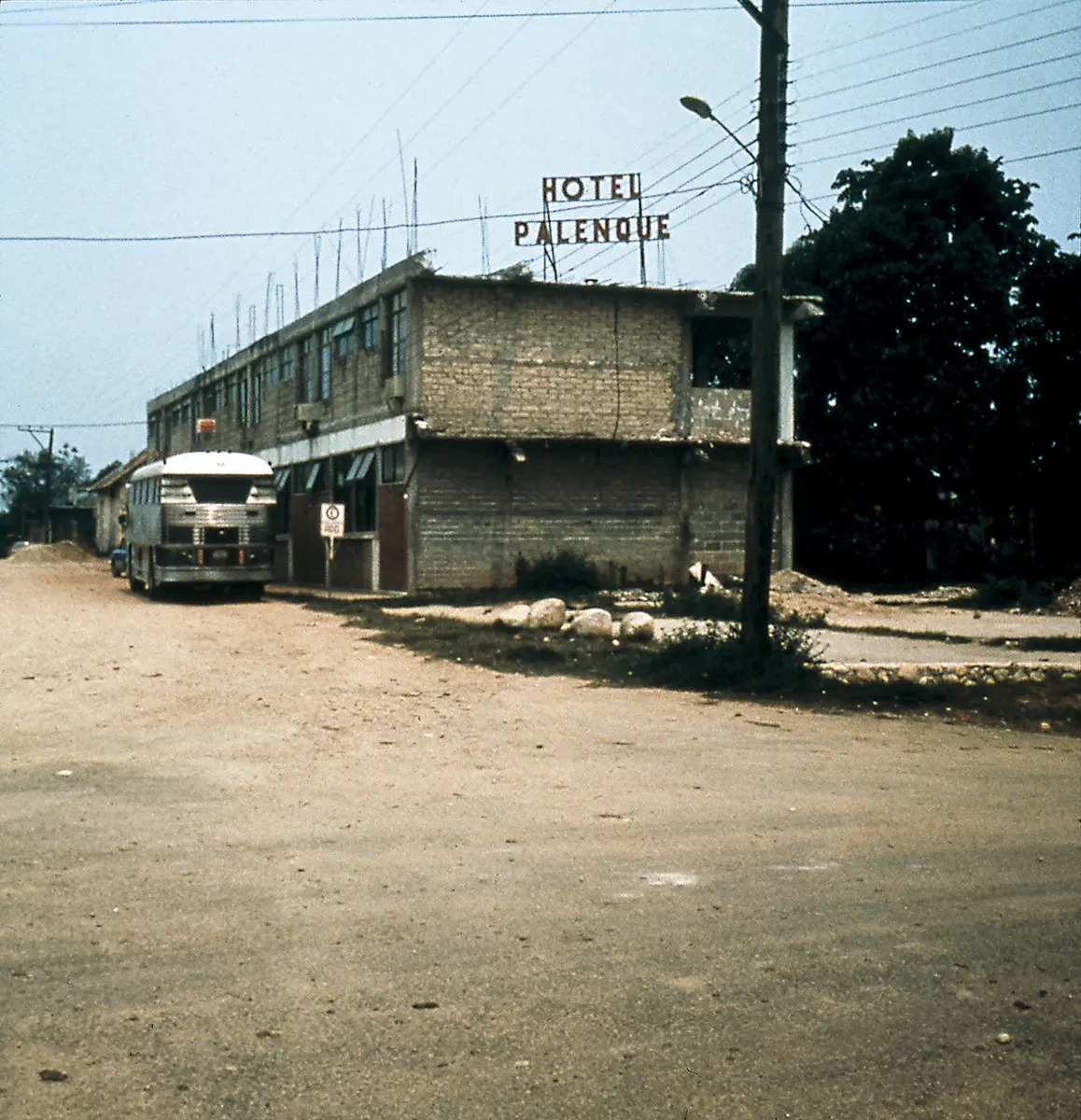
In that context, photography evinced its extraordinary capacity to produce uprootedness. We photograph a landscape, a street, or a square with the same desire of uprooting it and taking it with us as is manifested in photographs of our loved ones and of episodes of our life, we want to preserve, as fossilized forever. It was not a surprise, then, for the Reina Sofía Museum to pay homage to Madrid by presenting in one of its galleries the video Palenque. This work de-territorializes the hotel of that name in Mexico’s Mayan region and at the same time display it as an example of incessant renovation and a characteristic of duration, in contrast to the entropy to which modernity’s architectural, urban, and territorial interventions are subjected. The hotel fascinated Smithson because it was constantly under renovation, with the construction work, never finished and never subjected to the rational schemes, formal homogeneity, and peremptory deadlines that characterize modern projects.
In the recent edition of PhotoEspaña, the extreme example of this kind of de-territorialization was the show by the German artist Thomas Demand. In the Telefónica Foundation galleries, the artist exhibited a group of photographs of an extraordinarily neutral, cold, and technical appearance: architectural models that reconstructed the sites of highly conflictive episodes of contemporary history. One of the series, titled Yellowcake, was devoted to the Republic of Niger embassy in Rome, which became famous when the official papers stolen by unidentified thieves were used to forge documents later exhibited by President Bush as proof of Saddam Hussein’s intent to purchase “yellowcake” uranium for the manufacture of nuclear weapons. It was photographic de-territorialization as a means for the production of simulacra and, at the limit, as a means to grant legitimacy to dangerous forgeries.
Demand’s work is an extreme case because the landscape genre represents the most common and the oldest case of photography’s de-territorializing power. Going back to 1816, the first landscape photograph was shot from a studio in a French village by Nicephore Nièpce, the true precursor of this extraordinary invention. Since then, many and very diverse landscape photos bear witness to the great influence of the Romantic strategy of imaginarily appropriating nature by reducing it to the landscape.
At PhotoEspaña 08, there were many examples of landscape art. The most classical was offered by Florian Maier-Aichen, whose alpine photographs directly evoked the work of nineteenth-century painters like Caspar David Friedrich while his aerial photographs of the California coast monumentalized a landscape that has been visually exploited to the verge of exhaustion by commercial postcard photography and TV series like Baywatch.
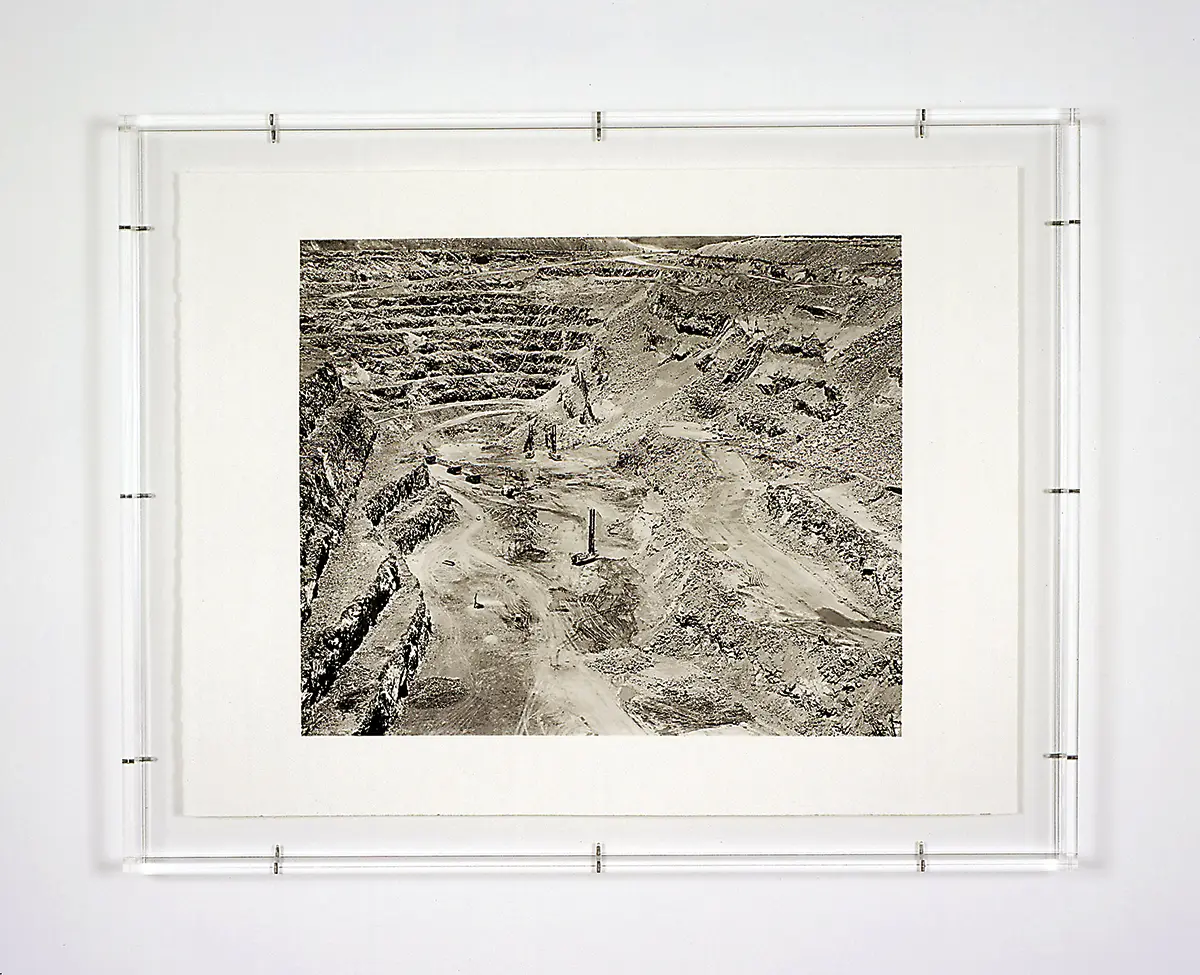
Equally predictable seemed the photographs taken by Mexico’s Pablo López. Taken in 2007 in a remote location in the region of Chiapas, they depicted a group of travelers bathing or basking under the sun next to a river whose banks are covered by splendid vegetation. The banality of these photographs, which did not convey the political and social conflicts taking place in that same forest, did play, however, with other works of similarly anodyne appearance, such as One Ton by Simon Sterling. This work seemed to show an open-sky mine; in reality, it attempted to show the truly exorbitant amount of mineral required to produce a simple photograph. Another example was the series 29 palmeras by Am My-Lé, which were taken in the California desert where U.S. marines carry out military exercises in a landscape similar to the Middle East, where for several years they have been fighting a real, pitiless war. And another was El Rancho Baker, a series by Joachim Koester devoted to the house and land that Charles Manson shared with members of his “family,” who joined him in the savage murder of actress Sharon Tate and a group of her friends. This series underscored the way in which photographic landscape art can sublimate and aestheticize things that can be menacing and horrible.

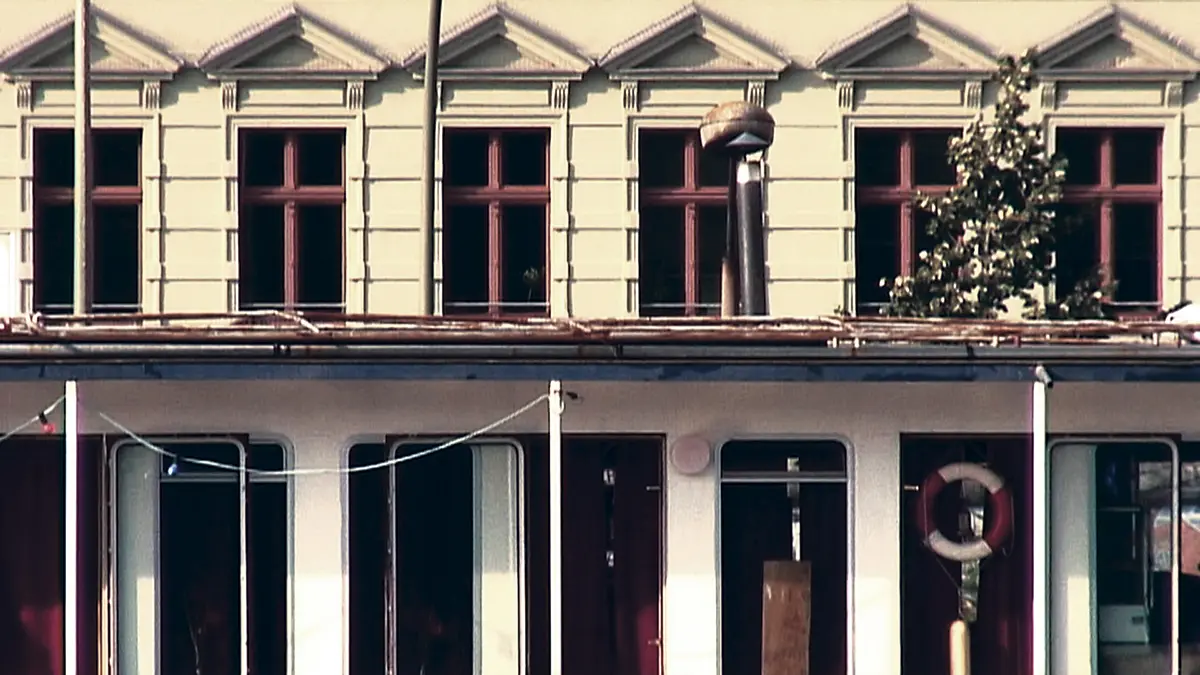
Two Latin American artists opted, in turn, for chance and estrangement when approaching and solving the issue of landscapes. Argentina’s Esteban Pastorino gained notoriety with his enigmatic, nocturnal images of public buildings erected on the periphery of Buenos Aires at the beginning of the twentieth century. On this occasion, at the Antonio Pérez Foundation in Cuenca, Pastorino exhibited a series of photographs taken from the air from a balloon, without his direct choice of moment, frame, and composition. The camera was simply programmed to take a number of photographs at predetermined intervals when it reached a certain altitude. The resulting photographs were in focus at the center and out of focus at the edges, and in their apparent or real triviality, they brought to the fore how much automatism and chance there is in the photographic gaze. Estrangement came by way of Marcellus L., a notable Brazilian artist who achieved renown with videos in which a highly original use of zoom lenses inverted the relationship between a walker and his path, creating the impression that what moved with his steps was not him but the site he traversed, usually a highway. On this occasion, at the Matadero in Madrid, the artist presented a video that was a very long traveling shot of historical and monumental Berlin, recorded from one of the tourist boats that cruise the river Spree and the German capital’s main canals. The frontality of the framing and the systematic use of the close-up turned this work into a panoramic, slow, strange, dream-like vision.
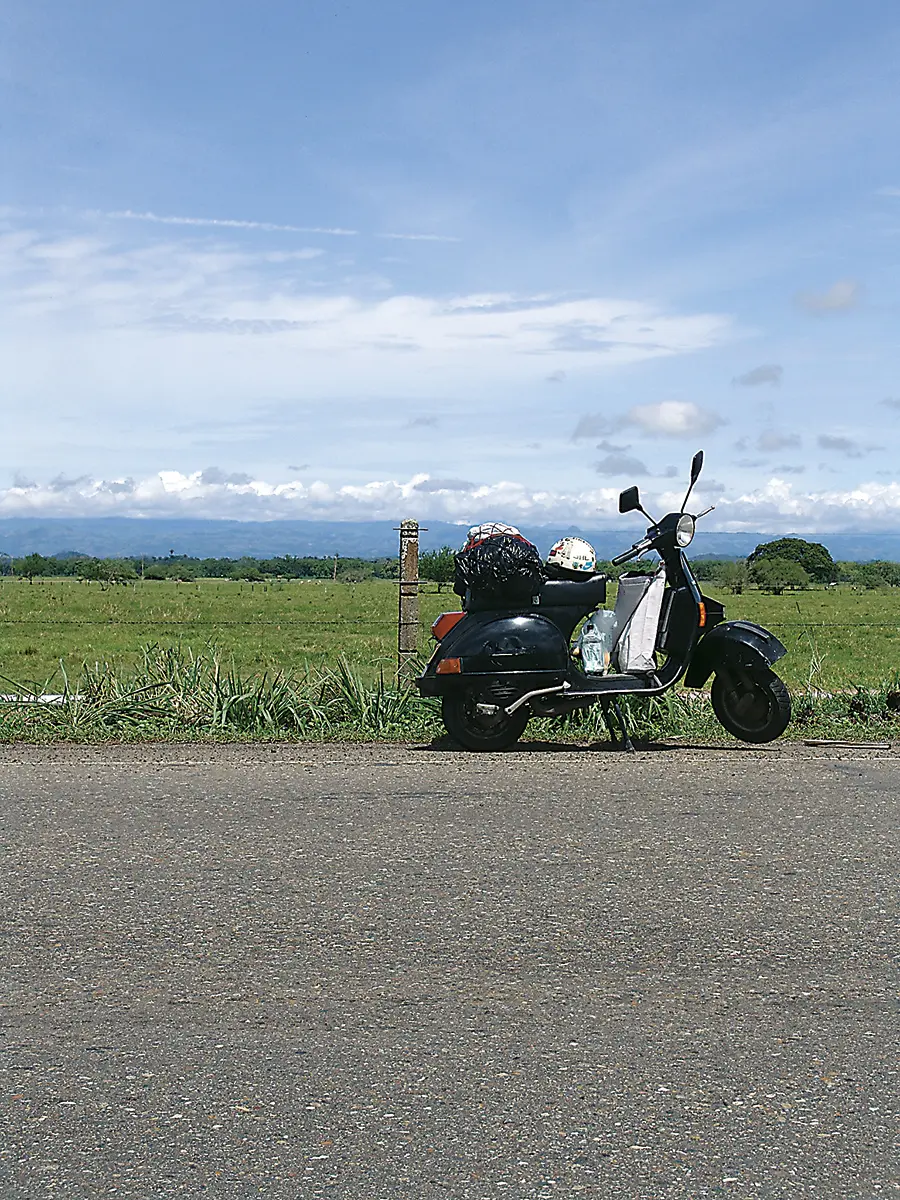
One must certainly mention a couple of travelers and a Colombian artist who literally dove into the landscape, in the way that nineteenth-century tourists or explorers did, with the purpose to document and capture in images what they encountered as they traveled. Argentina’s Ana Paula Paiva and Brazil’s Fernando Martinho traveled with their baby for five months in Bolivia, Peru, Colombia, and Argentina, having started in São Paulo, where they live. The result was a series of photographs and a blog, updated daily, in which they recorded the main incidents in their adventure. Under the title ¡América Latina con un bebé en la mochila!, their work was exhibited at the Cervantes Institute in Madrid, which also housed Diario de motocicleta 2007 by the Bogotá artist Mateo López: a series of photographs, drawings, and found objects gathered during journeys on a Vespa motorbike between the cities of Bogotá, Cali, and Medellín.

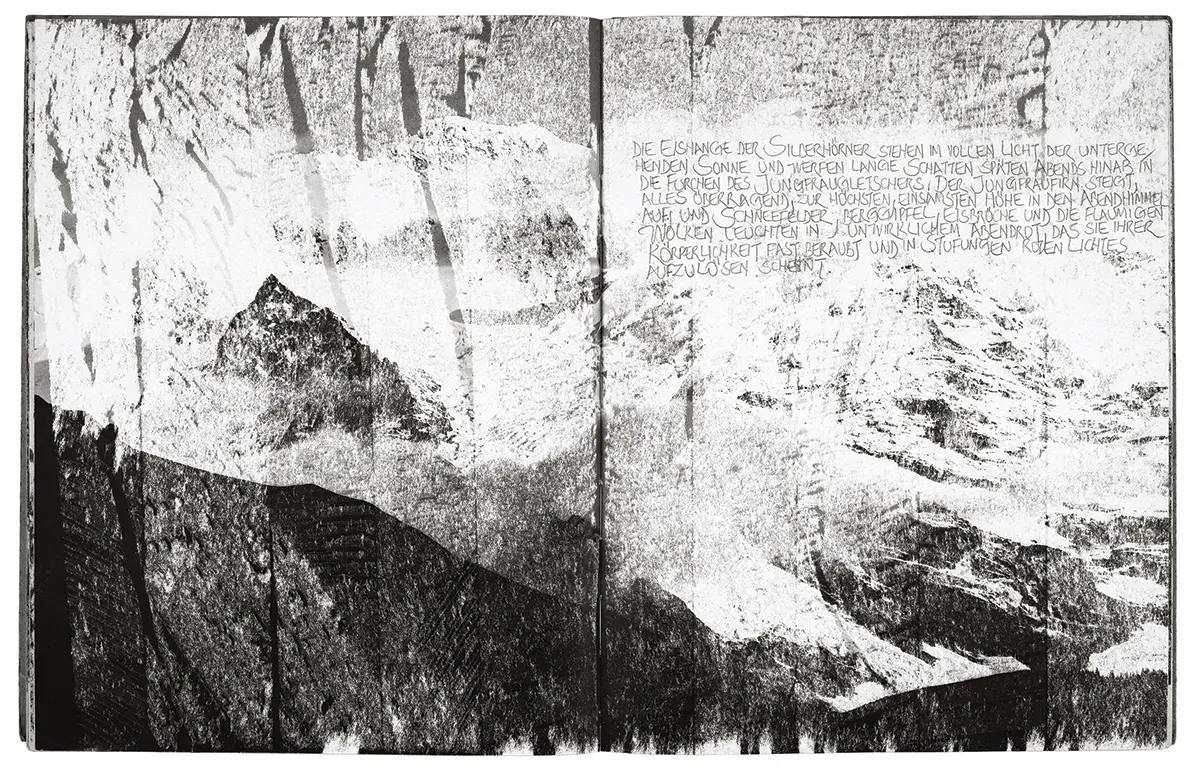
These two groups of works appeared rather naïve when contrasted with the formal and conceptual refinement of paisajes cambiantes. This project by the São Paulo artist Odires Mlászho comprised four artist’s books based on the erasure of images and texts, which in turn produced other images and texts, a new manuscript. It conveyed the journey as a purely mental or imaginary experience recorded not in one’s own photographs but in the profound alteration or the re-elaboration of photographs taken by others at the emblematic sites one would have liked to visit.
The issues of uprootedness and de-territorialization are not matters exclusive to photography, which allows one to reduce a site to an image to be easily carried away. No, it is also a matter of modern architecture, perhaps the essential matter. It is understandable, then, that in this edition of PhotoEspaña, modern architecture was the topic of several exhibitions and specifically of Utopia at the Beraldo Foundation in Lisbon. This was a group show of photographers whose work concerns the current state of the legacy of modern architecture, with the virtue of moving away from its canonical images. Instead of focusing on the work of Le Corbusier, Mathieu Pernot made images of the anonymous suburbs of provincial French cities, designed and built in the 1950s and 1960s following the teachings of the great master. Pursuing different paths and different protagonists, Frederic Chaubin revisited the 50s and 60s modern architecture built in the Soviet Union. John Riddy and Arni Haraldsson concentrated, in turn, on the documentation of some of Le Corbusier’s most important projects. Riddy’s photographs showed the decay of the representative, monumental center of the city of Chandigarh, and Haraldsson’s images spoke of the blighted state of the Unité d’Habitation, erected between 1959 and 1967 in Firminy-Vert, France. The sum of these two series of images could have composed an elegy for the modern movement, proof that, despite the potency of such utopian projects, the site always remains.
Lastly, some exhibitions were eccentric with regard to the festival’s general theme. This category included the Mexican artist Minerva Cuevas, who projected images from two of her works, Aterrizajes and Zoo, in the Casa de América galleries. The former was composed of popular science-fiction images produced in Mexico in the 1950s and 1960s. The latter featured images taken in zoos. None of them, however, were as devastating as Taryn Simon’s photograph White Tiger (Kenny). The subject of this work, a deformed and more faded than white tiger, was the product of selective inbreeding perversely practiced in The United States, with the goal of artificially reproducing white hair, blue eyes, and pink snouts in the great cats. The label next to the image informed the viewer that Kenny is mentally retarded, his caved-in snout causes respiratory problems and the closing of his jaws, his teeth are malformed, and he limps due to an anomaly in the bone structure of his forelimbs. In sum: nature out of place, unhinged, atrocious.
CARLOS JIMÉNEZ
Writer, art critic, and independent curator.