
In 1921, the Mexican avant-garde poet Manuel Maples Arce, the founder of the Estridentista movement, distributed a radical artistic manifesto celebrating modernity and anticipating globalization.1 He believed that the technological innovations of his time—the radio, the telegraph, electricity, etc.—would shrink the world, making possible “the psychological unity of the century.”2 Prophetically, he wrote, “Everything comes closer and moves further apart in the agitated moment. The medium transforms itself, and its influence changes everything. From cultural and generational approximations, profiles and racial characteristics tend to disappear.”3 The changes predicted by Maples Arce took a long time to come to pass in Mexico, which first went through a period of intense nationalism, manifested visually through Mexican muralism and related tendencies in easel painting and the graphic arts. The poet’s writings and the activities of his movement, Estridentismo, spent a long time shrouded in obscurity, dismissed as minor and irrelevant.4
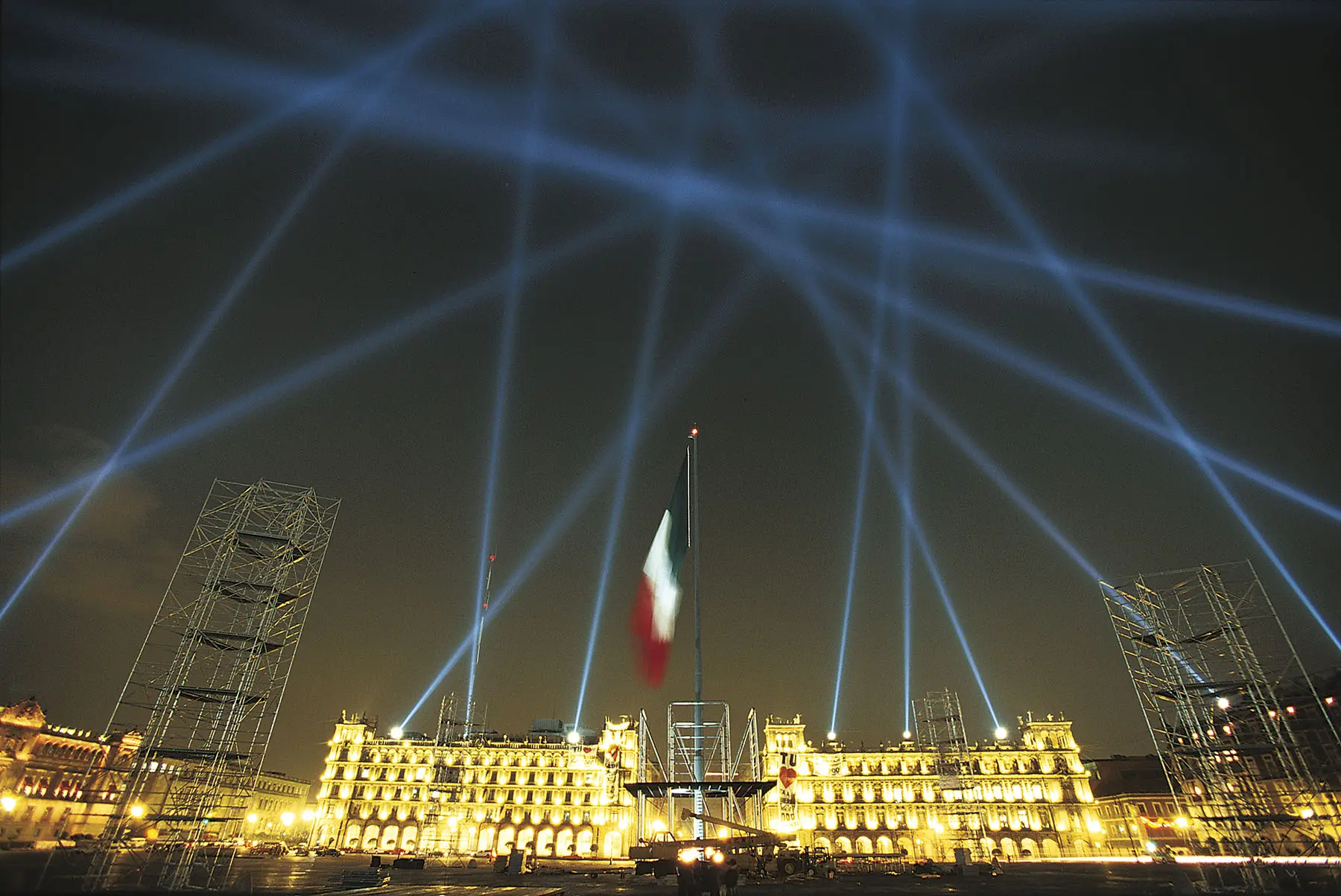
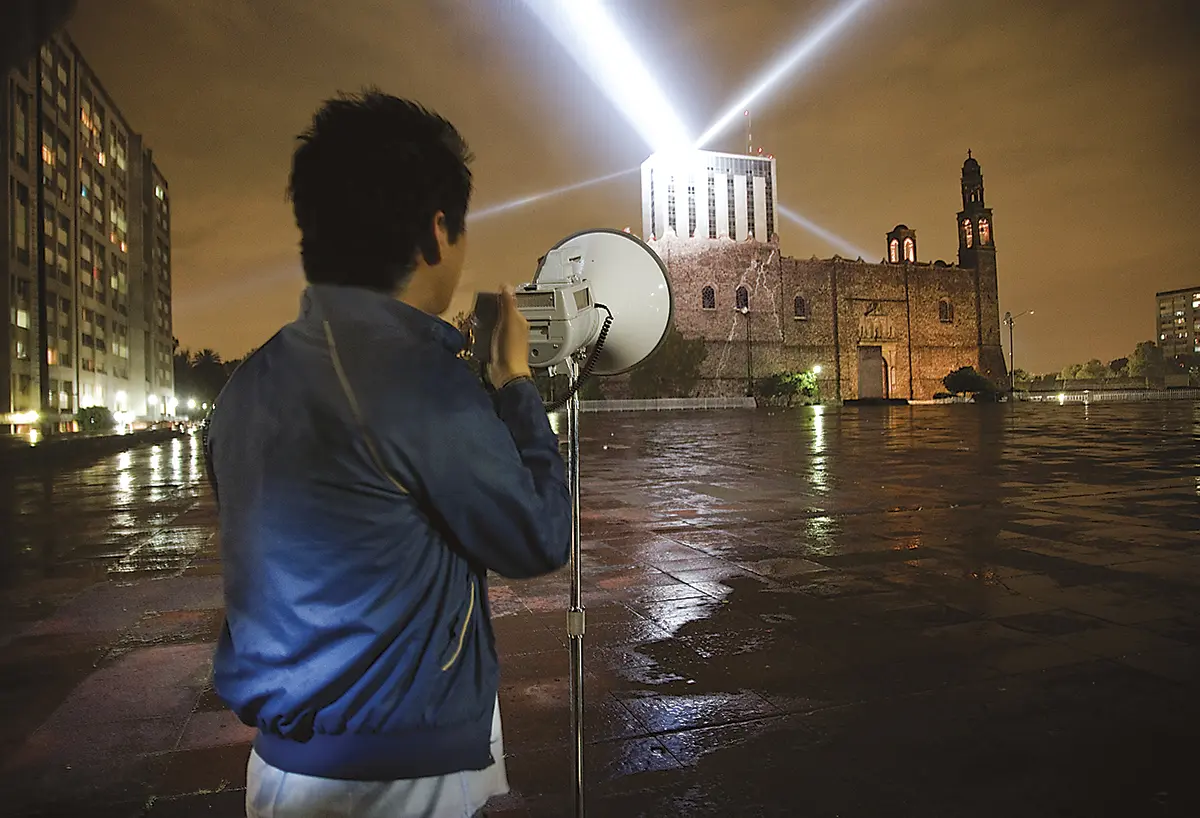
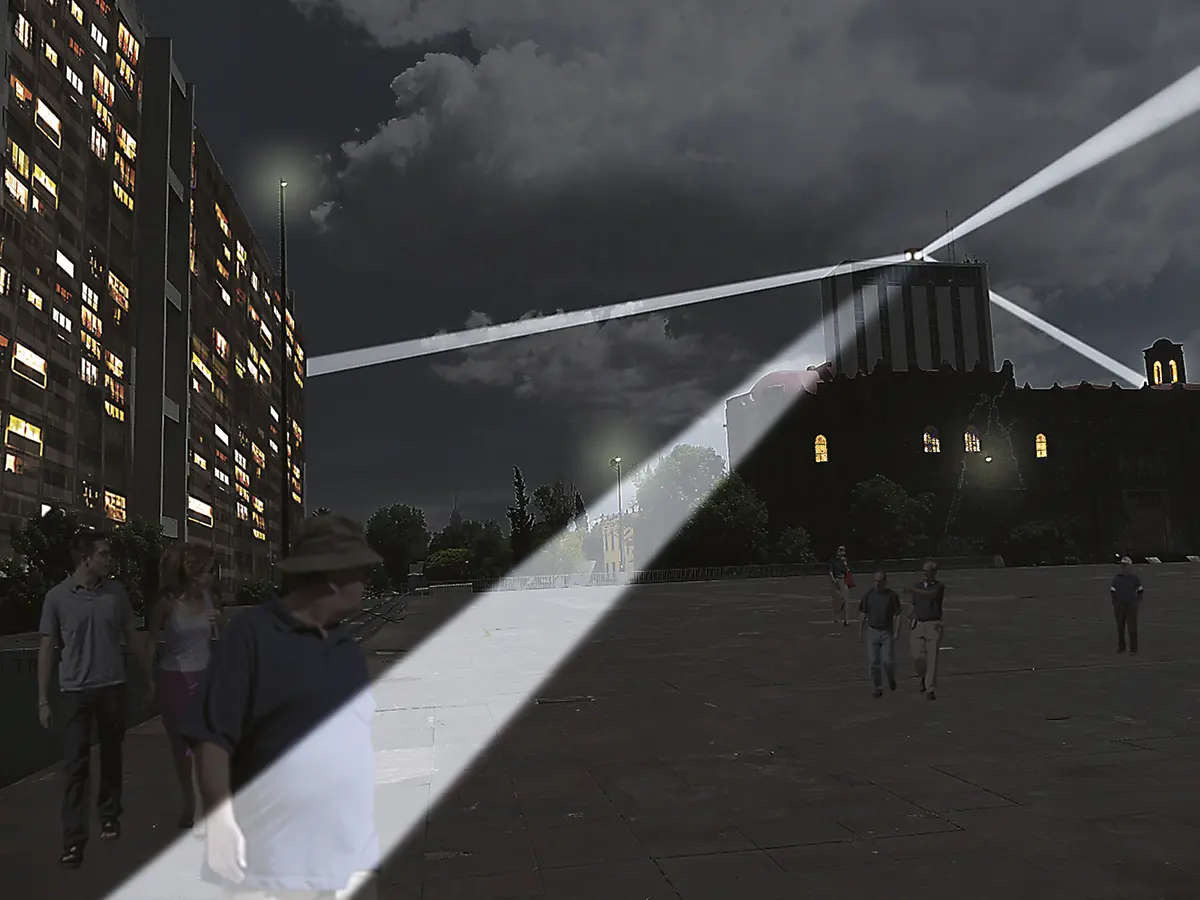
Nothing would have pleased the poet more than to witness the celebration of the turn of the millennium in Mexico City, as it validated his text from almost eight decades earlier. For this symbolic date, Mexico’s most emblematic public space, the Zócalo, played host to a light show quite unlike the spectacular fireworks on view in every other major city at the stroke of midnight. The Mexican artist Rafael Lozano-Hemmer presented the interactive installation Vectorial Elevation: Relational Architecture 4, consisting of eighteen searchlights placed around the perimeter of the plaza which projected beams from 7000-watt xenon lamps into the night sky.5 The lights could be seen from a radius of fifteen kilometers, but they could be manipulated from anywhere in the world through a website.6 Web users could employ an online interface to create and view their designs in a three-dimensional simulation. Once these designs had been programmed, they would be projected in real time and space. In the Zócalo, a new design became visible every six seconds, and each was maintained for long enough to be photographed. The photographs were then posted on the website, alongside the original prototypes.
Through its sophisticated technology, Lozano-Hemmer’s project provided a spectatorial experience that could be both real and virtual. Passers-by witnessed a unique light show, an unexpected one for most, and online participants were able to try their hand at programming and later examine the results. By the end of its two-week run, over 700,000 people from eighty-nine countries had designed light patterns for the installation and countless others had viewed it from the ground. In his engagement with both masses of locals and a global audience, Lozano-Hemmer achieved a milestone in Mexican art. Not only did he validate Maples Arce’s prediction that technology would bring about globalization, but he was also able to address and connect to a mass audience in a way that had eluded the Mexican muralists and other avant-garde artists.
With his use of cutting-edge technology, technical prowess, and ability to conceive and execute projects on a global scale, Rafael Lozano-Hemmer has expanded the boundaries of the visual arts in unexpected and unprecedented ways. Though certainly breaking new ground, his projects also engage—consciously or not—with significant historical models. These connections add depth and nuance to his work while transforming our understanding of the past. In so doing, they correspond to the phenomenon described by T.S. Eliot in his 1920 essay, “Tradition and the Individual Talent”:
[W]hat happens when a new work of art is created is something that happens simultaneously to all the works of art that preceded it. The existing monuments form an ideal order among themselves, which is modified by the introduction of the new (the really new) work of art among them. The existing order is complete before the new work arrives; for order to persist after the supervention of novelty, the whole existing order must be, if ever so slightly, altered; and so the relations, proportions, and values of each work of art toward the whole are readjusted; and this is conformity between the old and the new.7
This essay focuses on Rafael Lozano-Hemmer’s work primarily as it relates to historical precedents and to themes that have preoccupied generations of artists before him. Contextualizing his work within the history of modern Latin American art will make clear how the artist uses technology to revisit familiar problems and also how contemporary circumstances pose new challenges that are best addressed through new media technologies.
When Rafael Lozano-Hemmer received the commission for Vectorial Elevation, he was asked to “refer to a chapter of Mexican history.”8 Well aware of the historical weight of muralism in narratives of Mexican art, he noted, “Perhaps what could have been expected is to have a new kind of virtual muralism, consisting of projections of parading national heroes.”9 Instead, Lozano-Hemmer turned to geometric abstraction as a means to make his art as democratic as possible. The rejection of the dogmatism that came to be associated with social realism in favor of a socially conscious abstract visual language has been a familiar tactic in Latin American art, beginning with the work of Joaquín Torres-García. Furthermore, interactivity has gone hand in hand with geometric abstraction as a means of dehierarchizing the work of art in terms of both form and content, and almost the entirety of Lozano-Hemmer’s work depends on an interactive public to generate meaning. A fascinating dichotomy exists in his oeuvre, however, between figuration and abstraction that employs technology to its full potential. By engaging both figurative and abstract traditions that had been positioned as antithetical, Lozano-Hemmer radically reconfigures both.
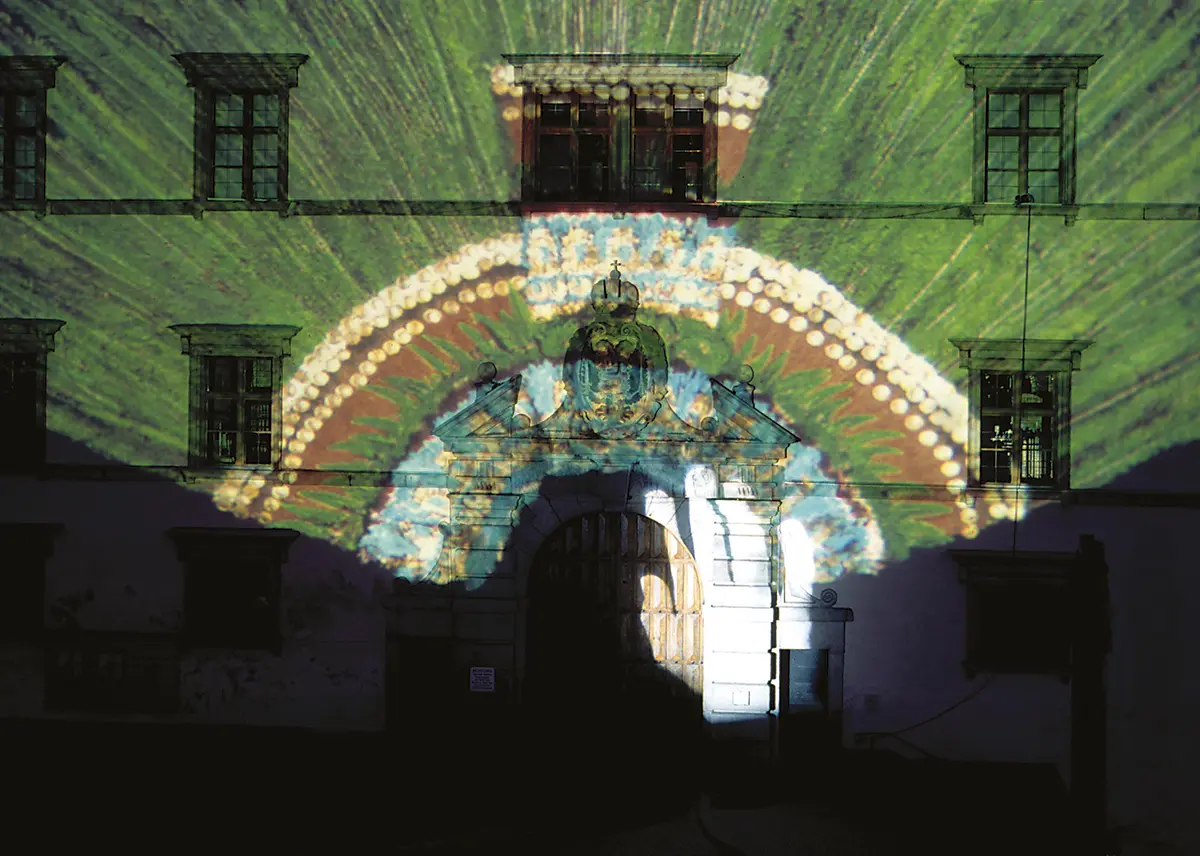
The “virtual muralism” that Lozano-Hemmer refused in Vectorial Elevation has found an outlet in other works that employ photographic projections in public spaces. In 1997, the artist presented Displaced Emperors: Relational Architecture 2 at the Hapsburg Castle in Linz, a project linking the history of Austria to that of Mexico. The piece virtually overlaid the Chapultepec Castle in Mexico City, the home of Emperor Maximilian of Hapsburg from 1864 to 1867, on the ancestral palace in Linz. The work was activated by a spectator fitted with a sensor; when he or she pointed to a part of the building, a projection of an enormous hand appeared on the palace’s façade and revealed the interior of a room of Chapultepec Castle. As the hand moved across the wall, different environments became visible, each set to a different classical composition by a musician who lived during Maximilian’s lifetime. According to the artist, the hand seemed to caress the building and also made reference to a fascist salute. The post-colonial critique extended further. Lozano-Hemmer set up a provisional souvenir shop on the grounds of the palace, selling such kitschy Mexican trinkets as wrestling masks and velvet sombreros. Inside the shop was a red “Moctezuma button,” which visitors could press for the price of ten shillings. When they did so, the images from Chapultepec castle were interrupted, and on the façade appeared a huge projection of Moctezuma’s feather headdress—one of the treasures of Aztec art housed in the ethnological museum of Vienna—set to Mexican music. As the headdress image faded, it was replaced by images of Hapsburg jewels moving along a horizontal axis, suggesting that Austria should give Mexico some of its own cultural patrimonies in exchange. This piece made visible uneven relations of power between Europe and Latin America. Beyond calling people’s attention to the absurdity of Mexican national treasures in Vienna and the fundamental injustice of the colonial legacy, however, the work did not presume to actually remedy the situation. In other words, unlike the muralism of Rivera and Siqueiros, which posited that art could impel a socialist revolution, Lozano-Hemmer’s “virtual muralism” in Displaced Emperors, despite its interactive nature, acknowledged art’s inability to effect profound change.
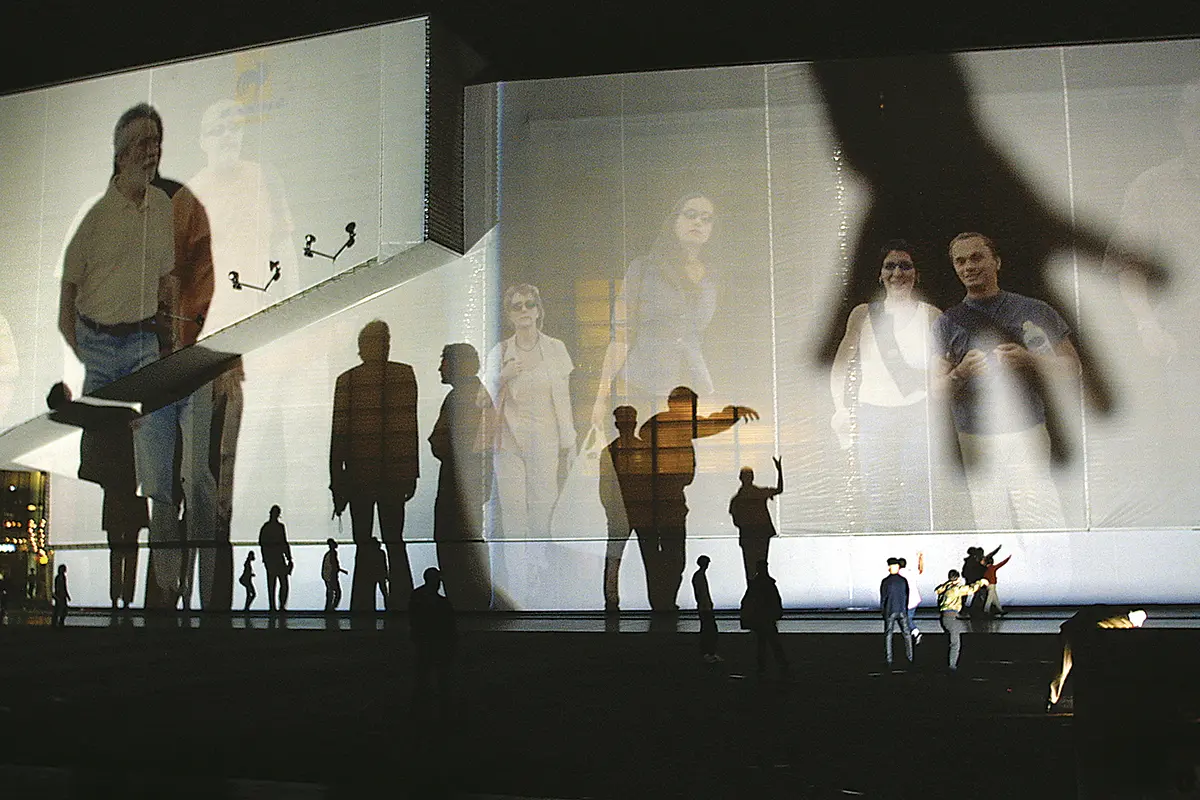
The work Body Movies: Relational Architecture 6, presented from 2001 to 2003 in different European cities including Rotterdam, Liverpool, and Lisbon, also employed interactive photographic projections in public spaces. For the installation, Lozano-Hemmer hired local photographers to take candid portraits of groups of people in Madrid, Montreal, Mexico City, and Rotterdam. The pictures were projected onto a wall lined with a white screen but were only visible within the shadows of the passers-by. These shadows were larger or smaller depending on the distance of the spectators from the wall. The interaction of the audience with the piece often yielded unexpected and humorous results. The portraits seemed to come alive, as spectators moved to inhabit them.10 In other cases, members of the public played with the scale and relationship between the shadows, disregarding the portraits altogether. Every few minutes, the wall projections changed, encouraging the audience to adjust their positions and interact with the work in different ways. By giving the audience control over the images, Lozano-Hemmer shunned any form of passive contemplation. Rather than the static and declarative mural typically associated with the Mexican tradition, the artist presented a dynamic, dialogic piece, an “anti-monument” (a phrase he uses to describe his work) about ordinary people.
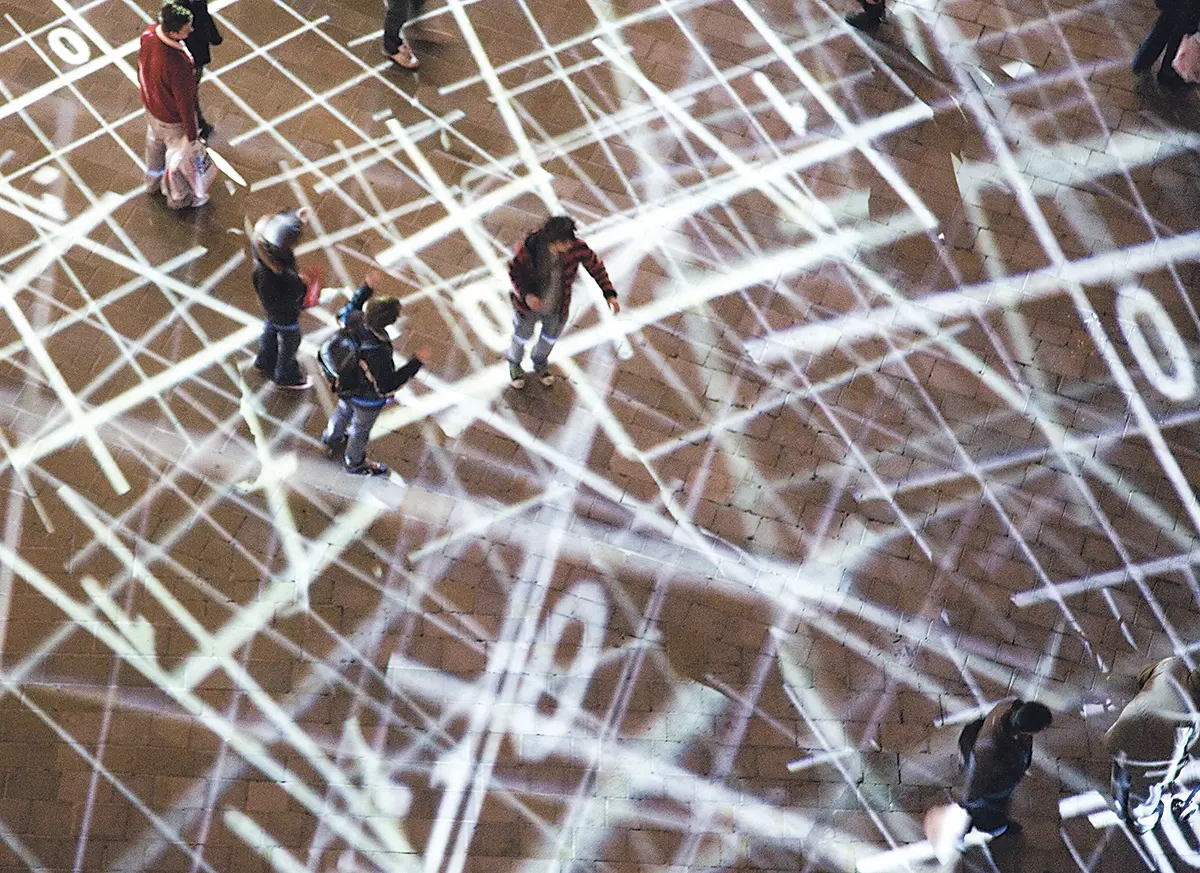
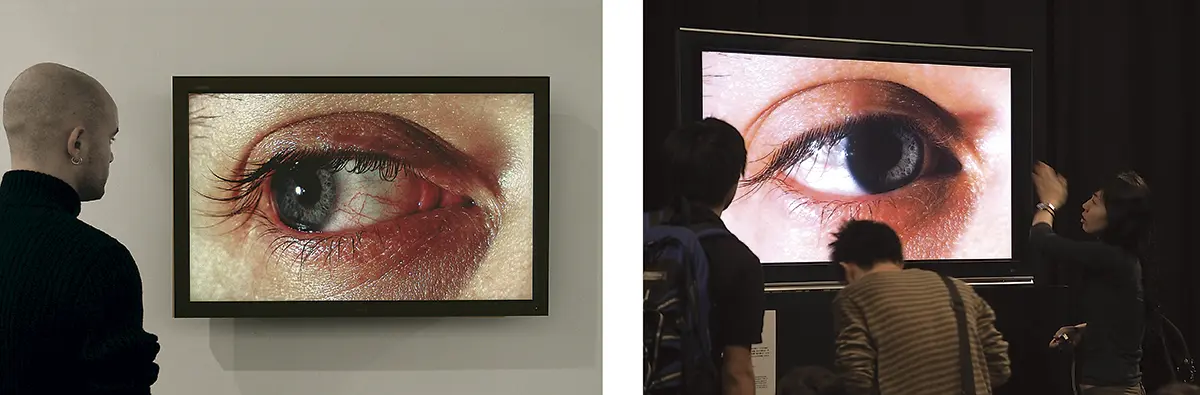
Nowhere is the anti-monumentality of Lozano-Hemmer’s work more evident than in Under Scan: Relational Architecture 11, video portraits projected on the grounds of public squares of several cities in the East Midlands, England, in 2005 and 2006.11 As the unwitting spectators walked through the plazas, a surveillance system tracked their movements and projected the images to appear directly before them. Inhabiting the public’s shadows, the projected portraits seemed to come to life and engage in different activities, such as waving, smiling, or dancing, all while seeming to maintain eye contact with the public. In this project, Lozano-Hemmer sought to endow his portrait subjects with agency to create more of a two-sided dialogue than Body Movies.12 Both the surveillance system and the emphasis on eye contact hark back to an earlier work, Surface Tension (1993), in which a huge blue eye was projected on a screen and followed the spectator around everywhere he or she went. In Under Scan, the un-monumentality of the images appearing on the ground inverted the often hierarchical relationship between public art and its audience; it also had the effect of distracting the spectators from the surveillance system. While Surface Tension was about being watched, the activity of the images in Under Scan diverted one’s attention from the coincidence of their appearance in the spectators’ paths.
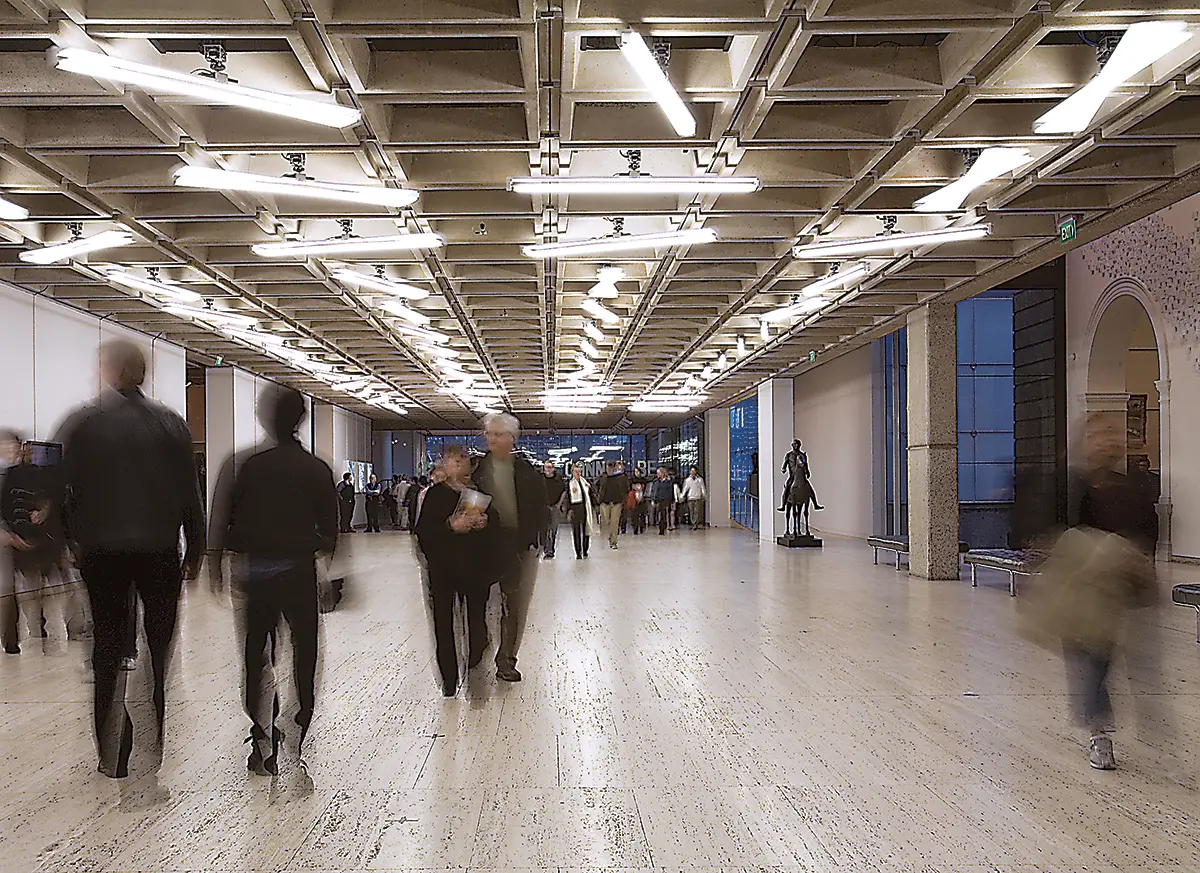
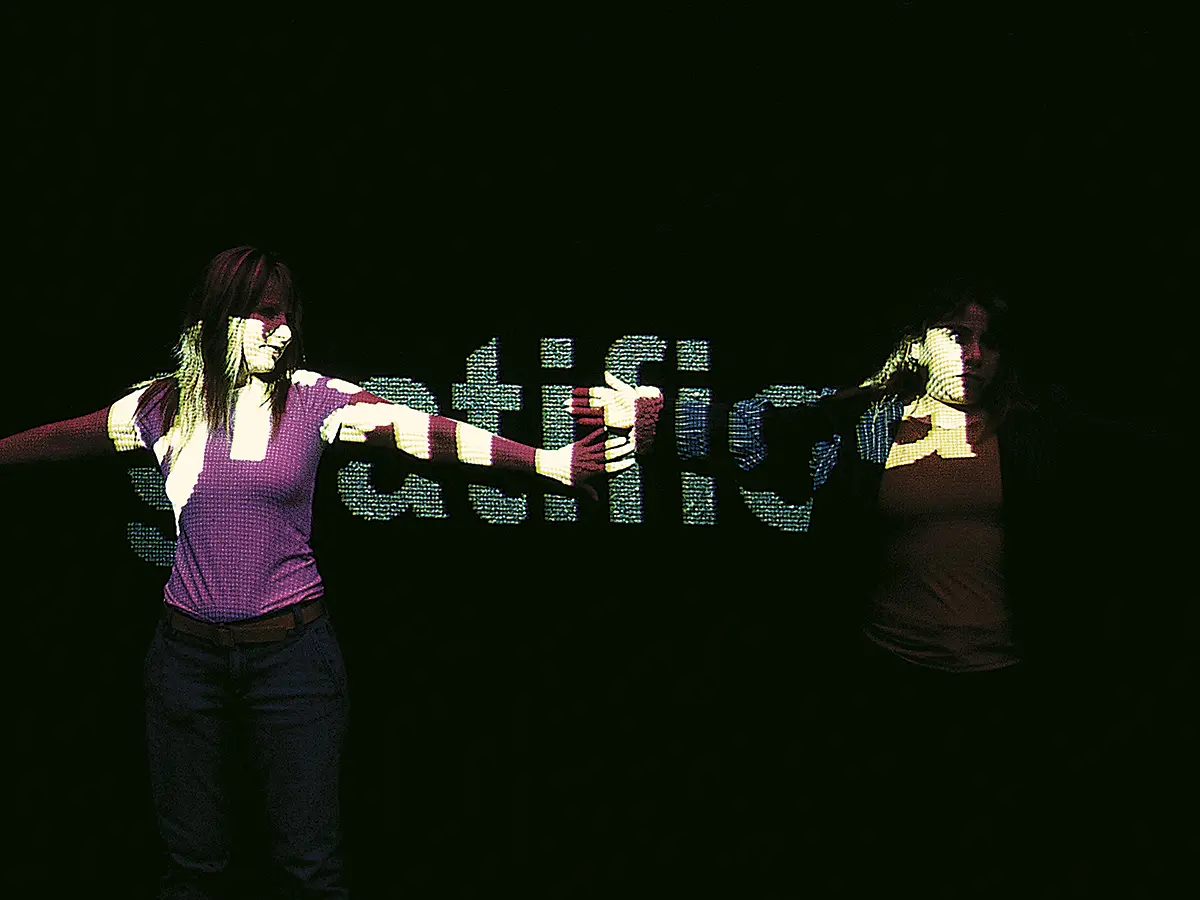
Lozano-Hemmer’s photographic and video installations address issues unique to figurative art, using technology to ponder mimesis and the gaze in new ways while tackling themes of interactivity and surveillance that are also developed in his more abstract work. The artist’s engagement with abstraction takes different forms. In Homographies (2006), a group of fluorescent light fixtures followed the spectators’ movements through space. When only one person was present in the gallery, all of the lights reacted to her or him, but when two or more visitors moved through space, the lights connected their movements, forcing the people to acknowledge the presence of others. In Subtitled Public (2005), each viewer was tagged by a projection on his or her body: a verb conjugated in the third person. The word followed the spectator around, and the only way to rid oneself of it was to touch another person, thus creating a direct exchange of words. Forcing a dialogic relationship between complete strangers, the work fostered a sense of community, but, more forebodingly, it also called attention to the labeling of individuals in the post-9/11 world. A 2008 piece commissioned by the Center for Contemporary Culture in Moscow projected twenty-two columns of light generated by robotic searchlights within a gallery. When the spectators entered the space, expecting to be illuminated, the lights avoided them, to their surprise; the beams, controlled by a computerized surveillance tracking system, were impossible to penetrate. Despite the spectators’ efforts to enter the spotlights, they were shunned by the moving lights. Refusing to allow the audience to walk in the light, Lozano-Hemmer effectively denied the work any spiritual connotations. This and much of his work refute the redemptive potential of the work of art, whether by mystical enlightenment or social commitment. For him, neither technology nor abstraction is a vehicle toward utopia, but, rather, they are simply mediums through which to express the contemporary condition of a globalized world in which individual liberties are slowly being eroded in the name of “national security.” The artist does retain a glimmer of hope, however. In the works in which he forces spectators to interact with each other, Lozano-Hemmer reassures us that the human connection has not disappeared.
Throughout the twentieth century, many artists were guided by the belief that art could change the world. For Maples Arce, technology could only bring about benefits, and many of the muralists used their paintings as vehicles for social transformation. Later, the artists who championed interactive art, whether in Brazil, Venezuela, or Paris, sought to establish a dialogic relationship with their audience as a means of achieving greater social equality. Bridging the gaps between the artist and the spectator and between the spectator and the work of art were seen as steps toward utopia. Rafael Lozano-Hemmer shares many formal and conceptual similarities with his predecessors but harbors no such illusions. He uses technology to make his art accessible to the greatest number of people, and he approaches the work as an open text to be infused with meaning by the spectators and which exists only in relation to them. However, once the viewers animate the work, they often lack control over it, and engaging with it is not necessarily an uplifting experience. Lozano-Hemmer’s extraordinary interventions in public spaces, whether plazas or museums, respond to many of the questions posed by artists who came before him: How will technology change the world? How can art reach the greatest number of people? Is it possible to make art that anyone can relate to? After engaging with Lozano-Hemmer’s work, spectators become fully aware that the art of his predecessors lacked the tools and prescience to properly answer these questions. Though his art elicits as many narratives as there are viewers, in providing formal solutions to long-standing problems, Rafael Lozano-Hemmer closes a chapter in the history of Latin American art.
NOTES
1. Manuel Maples Arce, Actual No. 1 (Mexico City, 1921), reprinted in Luis Mario Schneider, El estridentismo o una literatura de la estrategia (Mexico City: Consejo Nacional para la Cultura y las Artes, 1997), 267–275.
2. Schneider, 272. Translations by the author.
3. Ibid.
4. For an in-depth discussion of Actual No. 1, see Tatiana Flores, “Clamoring for Attention in Mexico City: Manuel Maples Arce’s Avant-Garde Manifesto Actual No. 1,” Review: Literature and Arts of the Americas 69 (Fall 2004): 208–220. The interrelationship between Estridentista art and literature is discussed at length in Tatiana Flores, “Estridentismo in Mexico City: Dialogues Between Mexican Avant-Garde Art and Literature, 1921–1924” (Ph.D. diss., Columbia University, 2003).
5. The light installation was on view from December 26, 1999, to January 7, 2000. For a comprehensive analysis, see Rafael Lozano-Hemmer, ed., Alzado Vectorial / Vectorial Elevation (Mexico City: Consejo Nacional para la Cultura y las Artes, 2000).
6. www.alzado.net
7. T.S. Eliot, The Sacred Wood (London: Methune, [1920]; Bartleby.com, 1996). www.bartleby.com/200/sw4.html. Accessed May 20, 2008.
8. Alzado Vectorial / Vectorial Elevation, 29.
9. Alzado Vectorial / Vectorial Elevation, 57.
10. Videos of this and other pieces are available for viewing on the artist’s website: www.lozano-hemmer.com.
11. For a complete description of this project, see Rafael Lozano-Hemmer, Under Scan (Nottingham: East Midlands Development Agency, 2007).
12. Under Scan, 14.
ACKNOWLEDGEMENTS
I am grateful to Rafael Lozano-Hemmer, for having welcomed me to his studio during an intensely busy time, and to Aura Graciela Andrade for her love and support.
TATIANA FLORES
Assistant Professor of Art History at Rutgers University. She is currently completing a book on Estridentismo and the visual arts in post-revolutionary Mexico and is also working on a research project on art and visual culture under Chávez.