
The sixteenth Paiz Art Biennial opened in Guatemala City on July 5, 2008. Named after a supermarket consortium that has merged with Walmart, this biennial has persisted and survived the calamities of this Central American nation. Despite recent managerial changes, it remains a significant presence in Guatemalan society, one of the few artistic endeavors recognized by all parties. The recent edition, however, transcended the image the biennial had established over the years. For the first time in the event’s history, the directors of the sponsoring foundation enacted a series of changes that have positively impacted the biennial and opened a transitional chapter.
In Guatemala, the figure of the curator is barely recognized as an independent professional. Thus, the process of configuring the biennial rested for many years on decisions made by the foundation, which justified a modus operandi that worked well in the beginning but lost effectiveness over time. With a group of five curators (Valia Garzón, Víctor Martínez, Guillermo Monsanto, Miguel Flores, and Nelson Herrera Ysla as general director), the new edition of the biennial was the beginning of an unusual enterprise. No doubt, the early accomplishments were due to a series of decisions that, while not new, have been essential to the development of the event. The first was the effort to establish channels that facilitate dialogue and interlocution, by simply recapturing the attention of more recent generations of artists who had lost interest in participating in the biennial because of the paucity of tangible challenges, such as a public attuned to the new languages of art. The second was the establishment of a motivating theme for the curatorial plan, something that had never been attempted before or that was barely understood in the management of exhibitions of this size. In sum, the positioning of contemporary art and its practice as well as the specific management of those practices composed the event’s essential point of inflection. Now that some doors have been opened, it is unlikely that the biennial will return to the same state of artistic starvation.
Referring to José Ortega y Gasset, the new managerial idea was accompanied by a statement about Guatemala—concerning both the individual and his circumstance. It underscored artists’ attempts to engage in a dialogue with overwhelming realities. In early 2000, this publication presented a review of the Octubre Azul festival, a delirious urban-art event in Guatemala that brought an extraordinary dynamic to the precariousness of the historical moment. In the festival, public performances and actions involved urban space and triggered important discussions about traditional notions and about the spaces that generated such art. Many of the artists present in the recent biennial, and the generation that followed, shared the legacy of that scene. Among other reasons, this is why the chosen theme not only presented a view of artistic production in recent years but also provoked a reflection about its circumstances. The theme unfurled two perspectives on the artistic practices at hand, paying attention to the eminently social and political circumstances that have supported their past and present and their need for poetics as a survival strategy.
These two words—politics and poetics—might seem irreconcilable. But contemporary art continuously speaks to politics in Guatemala, a place where violence and suffering have taken root. Poetics, in turn, develops in intimate spaces, in individual encounters that resonate with survival. In the biennial’s configuration of eleven galleries and fifty-two projects, both conditions emerged from strategies that attempted to reflect them and reflect on them. At the same time, the event explored intermediate zones that revealed a preoccupation with defining images: the Guatemalan people’s eternal questions about their representation and identity, which touch on the natural environment; the polarized gaze through which we usually debate or understand our surroundings; the fragility that comes from evasion versus the insecurity and exposure of public spaces.
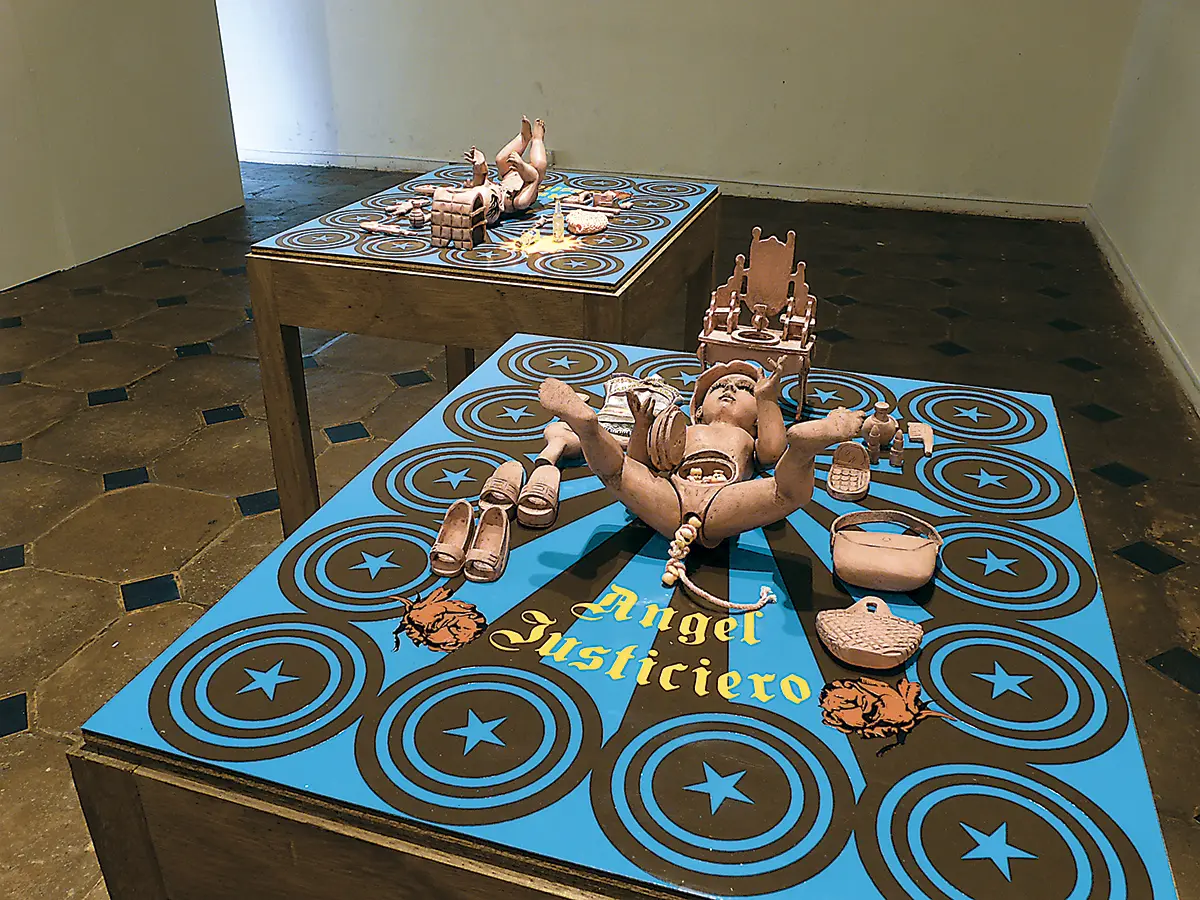
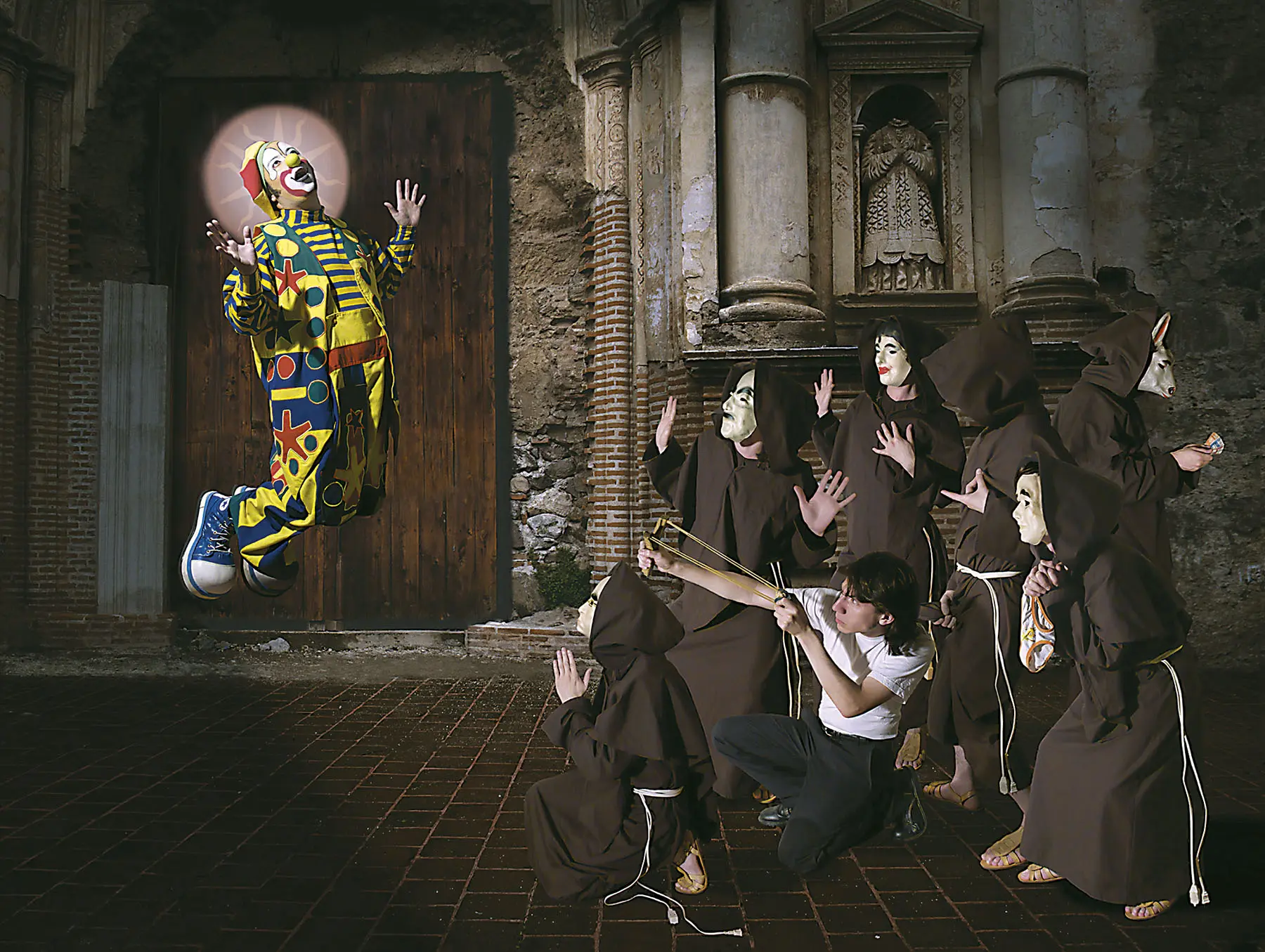
Among the biennial’s most relevant inclusions, the profound work by the La Torana collective won first prize and summarized these conditions. With irony, Latin Toys revealed the didactic intent to recreate, display, and communicate the perversion of a constant state of violence. Regina Galindo exhibited the documentation of an action, in which she experienced an initiation ritual into a youth gang. With three white canvases soaked in human blood, Isabel Ruiz built a memorial to the raw moments of the war in Guatemala. Mario Santizo presented a series of extraordinary photographic montages focused on the characters of a clown and himself. In a re-staging of Velásquez’s La rendición de Breda, transvestism and parody were vehicles for the de-canonization of classical painting or for interrogating the values of a society that so easily tolerates the absurd. Giving another turn to the narrative and introducing the element of humor, Verónica Riedel covered a tuk-tuk (a traditional mass-transport vehicle in southeast Asian countries) with special bulletproof sheets, as well as a myriad of decorations and sound equipment that isolated and protected the vehicle’s user.
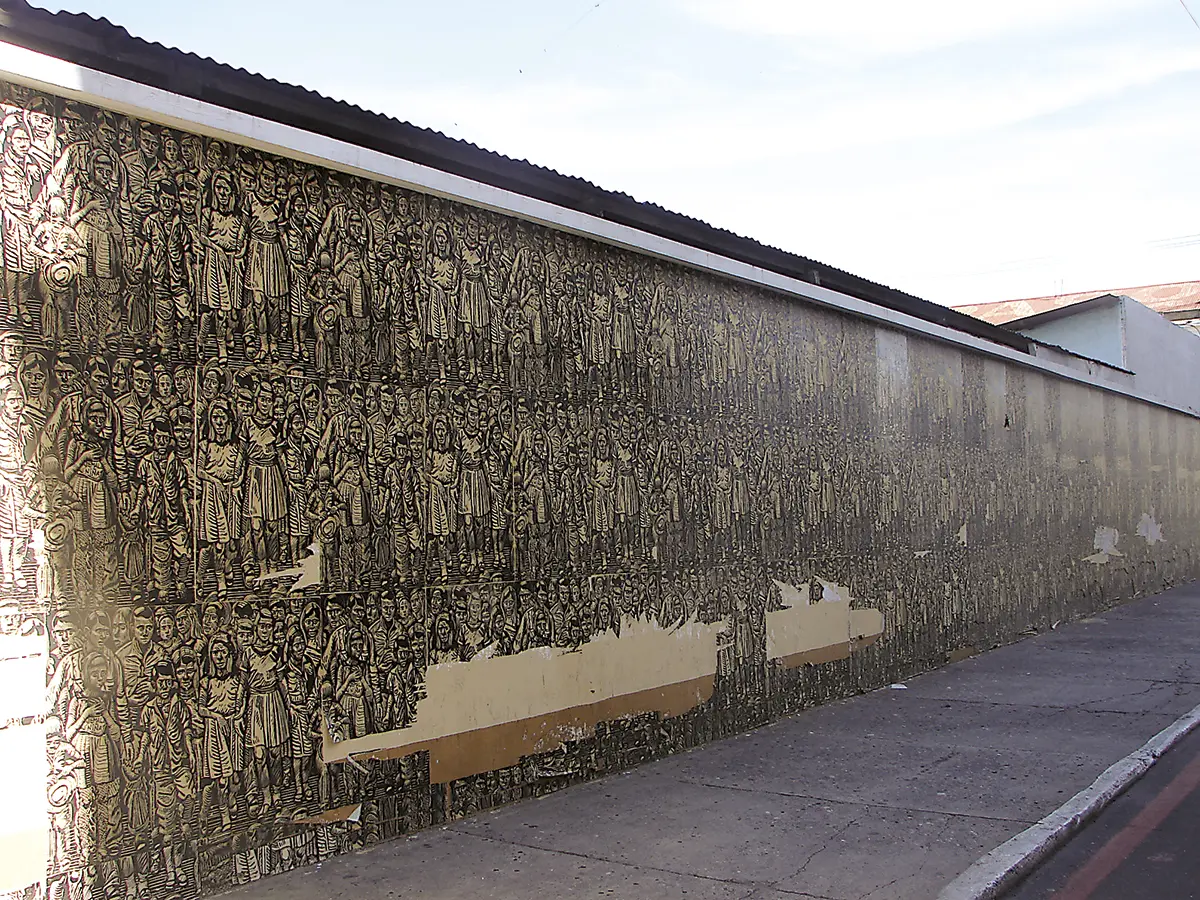
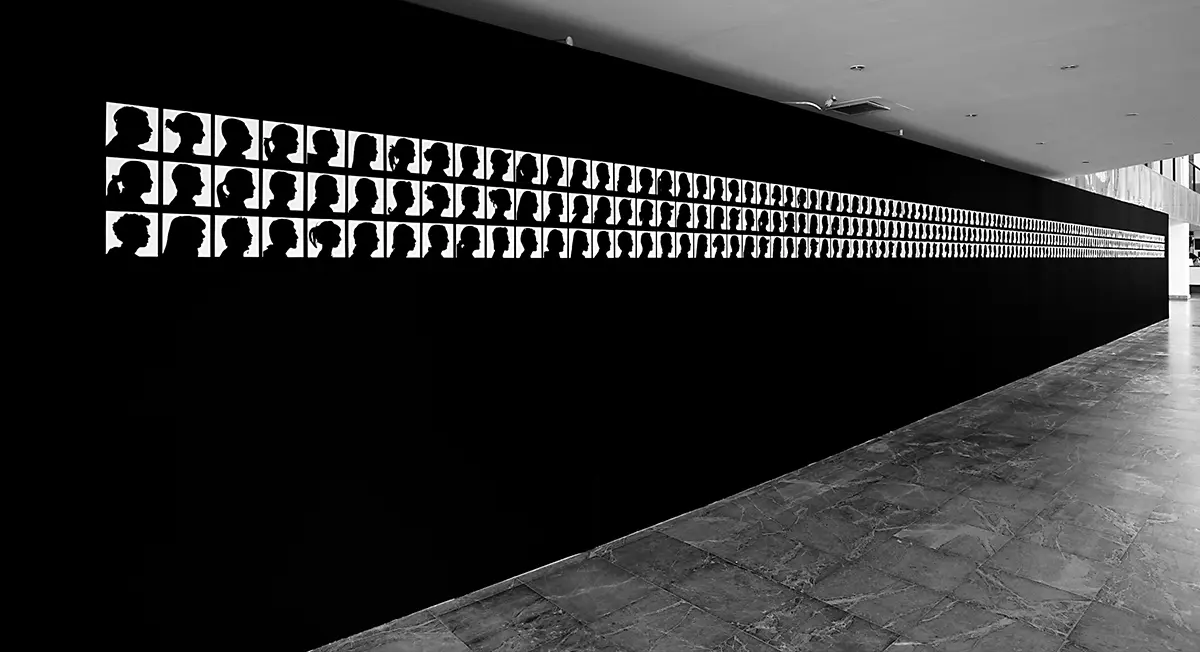
In counterpoint, there were very subtle pieces such as Porque carezco de forma es que existo by Ángel Poyón, composed of a weight scale with its measuring device replaced by a clock that only indicated the passage of seconds. Presenting a dilemma, the subtraction of time and weight, the work suggested the lightness and fragility of existence. In a more anthropological vein, Sandra Monterroso used video to develop the work Meditando el error. In two images that seemed to reflect each other, a female and a male character, tied together by an umbilical cord and wearing outfits that indicated their difference by color, recreated domestic scenes in which renunciation was the perpetual gesture. The video referred to the complexity of human relationships, cohabitation, and its conventions, as inherited or recreated across cultures. Andrés Asturias’s Sin Título (Somos…) gathered 384 high-contrast profile photographs that diluted representation or identification. Evoking metamorphosis and alluding to the different characters that form a society, Rodolfo Walsh’s work focused on the documentation of industrial detritus found on a beach; worn by time and exposure to the elements, it acquired a strange aesthetic quality, one that fused—or cannibalized—nature and human waste. Lourdes de la Riva’s work, a video of frantic sounds and rhythms, confronted the public with the roaring of sugar-windmill sails, while the work by Diana de Solares took the viewer into a private landscape of threads, tree stumps, and pieces of furniture that the artist gathered and arranged according to a well-reasoned process. The idea of the landscape was complemented by Jessica Lagunas’s register of prayers from different faiths, intended to recreate their invasive effect and their self-colonizing character. In the biennial, documentary photography also played a relevant role. Andrea Aragón presented a collection of realistic situations in which the desire to be blond and the connotations of acquired power percolated into the everyday. Hugo Pichillá, relying on the humble snapshot, highlighted the lack of water in his rural community. The work of Guillermo Maldonado, titled Guatemala niña, consisted of an external wall, fifty meters long and covered with hand-printed xylographs on newsprint that repeated images of peasant families with the befuddled gazes of those who are strangers to the city.
Against all predictions, the biennial’s three weeks of exhibitions drew a significant number of visitors, provoking substantive debates and a degree of coverage previously unseen in the mass media. The respectable dynamic of the event swirled the still waters of the culture and underscored the role of art in society: as consciousness, as reflection, as antagonism, and as the possibility of critical analysis. On the other hand, noting that the Paiz Art Biennial was homologous to others in Central America posed a series of questions to the local and regional organizers. They all emphasized the importance of taking professionalism seriously, leaving behind all fears aroused by the word “transition.” Doing otherwise would be to fall into Lampedusa’s paradox: to change in order to remain the same.
ROSINA CAZALI